12-Day Manaslu Circuit Trek: Is the Shorter Itinerary Safe?
3 Nov 2026
Is the 12-Day Manaslu Circuit Trek safe? Explore the itinerary, Larkya La Pass, acclimatization, altitude risks, and trekking safety tips.

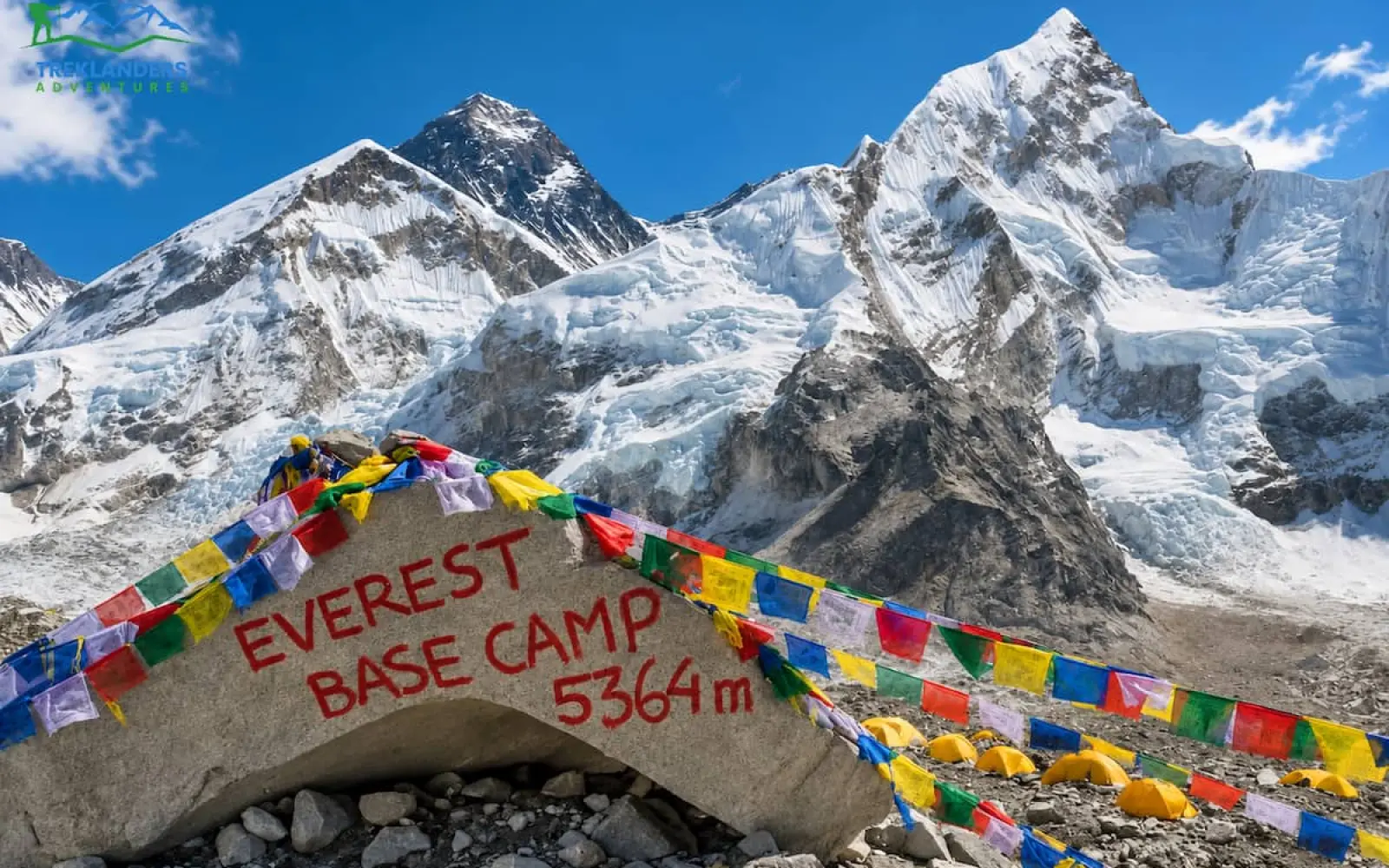
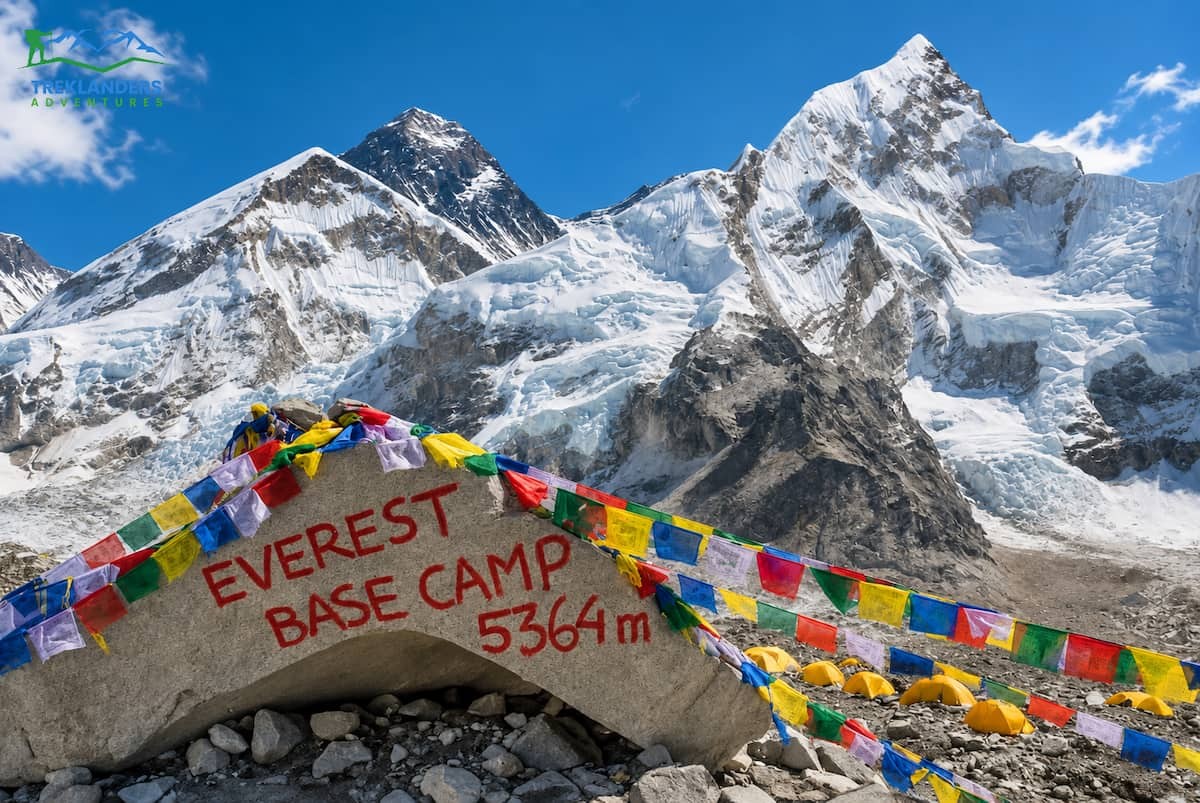
The 12-day Everest Base Camp trek takes you from Kathmandu to the base of the highest mountain on Earth and back in under two weeks. You fly to Lukla, walk up the Khumbu valley, stand at 5,364 m beside the Khumbu Glacier, and climb Kala Patthar at 5,643 m for the closest clear view of Everest on this route. Then you walk down and fly back to Kathmandu.
This guide covers the full 12-day Everest Base Camp trek itinerary that Treklanders Adventures runs from Kathmandu. You get the daily altitude and walking time, the best season, the difficulty, a training plan, the permits, the lodges and the gear. The numbers come from the route as our guides operate it.
Twelve days is a tight schedule. It suits trekkers who are fit, who have walked at altitude before, and who cannot spare the extra days of the 14-day Everest Base Camp trek. The plan includes two rest days, one at Namche Bazaar and one at Dingboche. Those two days make the schedule workable, so read the sections on altitude and acclimatization before you book.
The trek is walking only. You need no ropes, no crampons and no climbing skills. The challenge comes from thin air, cold nights and long days on rocky trail. A licensed guide leads every group and a porter carries gear for every two trekkers, so you carry a daypack and focus on the walk. If you want to compare routes first, the Everest region trek page lists every option we run in the Khumbu.
The trail follows the Dudh Koshi river north from Lukla to Namche Bazaar, the main market town of the Khumbu. It then climbs through forest to Tengboche Monastery and enters the open, treeless valley around Dingboche. From Lobuche you reach Gorak Shep, the last settlement before base camp. You return by the same valley and cover the descent in three days.
You can book the trek as a private departure or join a group trek with other travelers. Either way the itinerary stays the same. You get the same route, the same two rest days and the same daily pace. The Everest Base Camp trek page shows the longer version of this route for people who want more time on the trail.
Most Everest Base Camp itineraries run 12 to 14 days. The 12-day plan removes the slack and keeps the safeguards. You gain height in steps. You spend two nights at Namche Bazaar and two at Dingboche. You sleep no higher than Gorak Shep at 5,180 m, and you reach Kala Patthar on a morning walk from there.
Compare it with the 14-day Everest Base Camp trek. The longer plan adds easier walking days. The 12-day plan asks more of your legs and lungs each day, so it favors people with hiking or altitude experience. If you have never slept above 3,000 m, think about the 14-day option or the longer classic Everest Base Camp trek.
Time is the main reason trekkers choose 12 days. You spend eleven days in the Khumbu and one day flying out, which fits into two weeks of leave with a spare day or two in Kathmandu. The descent also helps. Oxygen levels rise as you lose height, and the schedule takes you from Gorak Shep to Lukla in three days.
Some trekkers want an even shorter plan. The 9-day Everest Base Camp trek with helicopter return flies you out from the mountain after base camp. Others want comfort on the same route, and the Everest Base Camp luxury trek covers that. Pick the 12-day plan when you want the full walk in and out on foot.
Build a buffer into your travel dates. Weather delays flights to and from Lukla, and a missed connection at the end of the trek can make you miss an international flight. Plan one or two spare days in Kathmandu after the trek ends.
This is the day-by-day plan for the 12-day Everest Base Camp trek. Altitudes and walking times follow the schedule our guides use. Your guide adjusts the pace to the weather and to how your group feels.
Most days follow one pattern. You eat breakfast at the lodge, walk to a village for lunch and walk again in the afternoon to the next lodge. Your guide leads and sets the pace. Your porters carry the main bags to the lodge ahead of you. You arrive with daylight left, which gives you time to rest, eat dinner and go to bed early.
You eat an early breakfast and drive to the domestic terminal in Kathmandu. After check-in, you board a small plane for the flight to Lukla, which takes about 30 to 35 minutes. From the window you see Everest, Lhotse and Makalu. The plane lands at Tenzing-Hillary Airport at 2,860 m, where you meet your porters and sort the baggage.
After a short rest you start walking. The trail runs through Lukla town and then rises and falls past farms and villages to Phakding. Phakding sits lower than Lukla, so you sleep at 2,610 m on the first night. That gentle start gives your body a day to adjust before the climb to Namche Bazaar.
The morning walk is easy. The trail drops and climbs in short stretches, crosses several bridges and reaches Monjo. Here you enter Sagarmatha National Park, and officials check your permits. The path then crosses a bridge over the Dudh Koshi river and reaches Jorsalle, where you stop for lunch.
After lunch you walk along the river bank under rhododendron and pine. The trail then climbs to a high suspension bridge. Beyond the bridge, a steady climb of a few hours takes you up to Namche Bazaar. This is the steepest sustained climb of the first half, and you stay in Namche for two nights.
Namche Bazaar is the trading center of the Khumbu. Villagers still hold a market here on Saturdays, which is how the town got its name. Today you rest, but resting means moving a little. A short hike above town helps your body adapt, and the rule is to walk high and sleep low.
The best hike climbs for a few hours to the Everest View Hotel. From its terrace you see Everest, Lhotse and Ama Dablam. The hotel holds a Guinness record as one of the highest hotels in the world. Back in town, visit the museum above the village to learn about Sherpa culture, local wildlife and the history of Everest expeditions. In the afternoon, walk the market lanes, which hold bakeries, cafes, gear shops and money exchanges.
You leave Namche on a gradual trail with open views of Everest and the snow peaks around it. The path then drops to Phunki Tenga, a small settlement where you eat lunch among rhododendron and pine. After lunch you climb slowly for a few hours to Tengboche.
Tengboche Monastery stands on a ridge with Ama Dablam, Everest and Lhotse in view. You can step inside to see the painted walls and the prayer hall. The present building dates from 1993, after fire destroyed the earlier one. It is the largest monastery in the Khumbu. Each autumn, monks hold the Mani Rimdu festival here with masked dances and ceremonies. If your visit matches the daily prayer session, your guide can ask whether you may sit in.
The day starts with mountain views and a walk down to a bridge. You leave the forest behind and climb to Pangboche village. A gentle climb then leads to Somare for lunch, with close views of Ama Dablam. The trail after lunch is open and exposed to wind.
You drop to a stream, then climb for about an hour into the Imja valley. Dingboche sits here, below the north face of Ama Dablam, with Island Peak to the east. The village is large for its height, and its lodges are comfortable. Tonight you sleep above 4,000 m for the first time on this schedule, so drink water and eat even if your appetite is low.
The second rest day lets your body adapt before the high camps. You climb the ridge of Nakarjung above the village in the morning. The ridge gives a wide view of Ama Dablam and Island Peak, and on a clear day you see Makalu far to the east. The hike is short, and you return to the lodge by midday.
Spend the rest of the day at leisure. Wash a few clothes, charge your devices if the lodge allows, and sort your gear for the cold nights ahead. Go to bed early. Sleep can be lighter at this height, and rest during the day makes up for it.
A short, steep climb out of Dingboche leads to a ridge above the Imja valley. From there the trail rises gently to Thugla, a small settlement halfway between the Dingboche and Pheriche routes. You stop for lunch at Thugla.
After lunch the trail climbs steeply for under an hour to a high ridge, then continues with gradual ups. Your pace slows as the air thins, and that is normal. A few hours of walking brings you to Lobuche, where you spend the night. The evening is cold, so put on your down jacket as soon as you arrive. Tomorrow you reach Everest Base Camp.
You start as early as possible and carry a packed lunch. The trail begins on easy ground, then climbs over rocky moraine above the Khumbu Glacier. A short descent leads to Gorak Shep, a small settlement of a few lodges beneath Pumori and Kala Patthar.
After a short stop, you walk on to base camp. The path winds between rocks and glacier ice. At Everest Base Camp you stand among ice, rock and snow, with Lhotse, Nuptse and Pumori around you. The Khumbu Icefall hangs above the camp. You cannot see the summit of Everest from here, because Nuptse blocks the view, but the scale of the place is clear. In spring you may see expedition tents. You return to Gorak Shep for the night.
This is the highest day of the trek and one of the longest. You leave in the dark and climb steeply to the top of Kala Patthar. The summit gives the nearest clear view of Everest on the route, with Pumori in front of you and a ring of snow peaks around the ridge. Watch the first light reach the summit and take your photos quickly, because the wind is cold.
You descend to Gorak Shep for breakfast and start the return. The trail passes Lobuche and Thugla, then follows a different route down to Pheriche for lunch. After lunch you cross a high ridge and descend a long way to Pangboche. The lodge there has views of Ama Dablam. Tired legs make the descent feel slower than the schedule says, so go at an even pace.
You wake to a view of Ama Dablam and walk down to the bridge. The trail then climbs to Tengboche Monastery, and you return to the tree line. The air feels thicker with every hundred meters you drop, and sleep usually comes easier tonight.
Past Phunki Tenga the trail climbs slowly through several settlements and then follows a winding path to Namche Bazaar. You arrive in a town with bakeries and hot drinks. Buy a coffee and a pastry and sit in the sun. You earned it after Kala Patthar.
The last walking day follows the Dudh Koshi valley down. You pass Jorsalle, climb briefly to the national park exit near Monjo and cross the bridge to Phakding, where you stop for lunch. The path then runs gently along the river.
A final climb takes you up to Lukla by late afternoon. This is your last night in the Khumbu, and you can share the evening with your guide and porters.
You transfer to Tenzing-Hillary Airport in the morning and fly back to Kathmandu. The flight takes about half an hour, and you land in the city where the trek began. A transfer takes you to your hotel. The rest of the day is free. Our Kathmandu sightseeing options fill it if you want company.
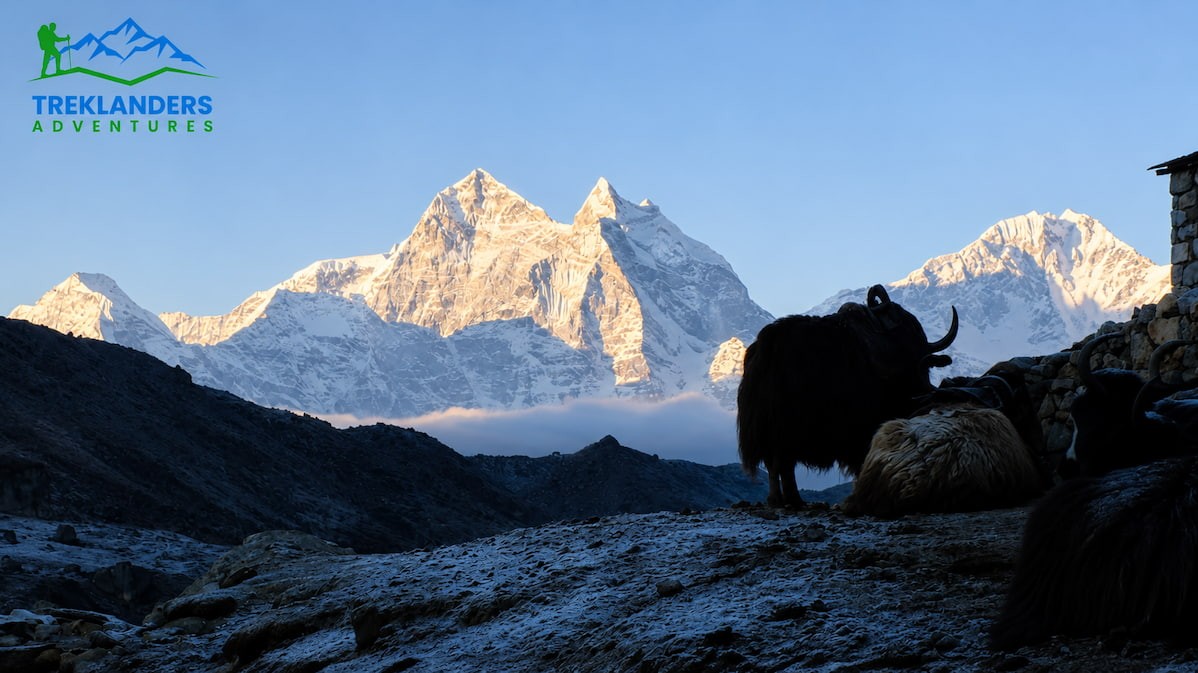
The best seasons for the Everest Base Camp trek are spring and autumn. Spring runs from March to May and autumn from September to November. Nights stay below freezing above 4,000 m in every season, so pack warm clothes whatever month you choose.
Daytime temperatures are comfortable at lower altitudes, and nights stay cold above 4,000 m. Rhododendron forests bloom between Lukla and Namche Bazaar in red, pink and white. Spring is also the main Everest climbing season, so you may see expeditions heading to or from base camp. At Everest Base Camp itself you see the tents of climbing teams.
Autumn is the busiest period on the trail. The monsoon rains clear the air, and most days give sharp views of the mountains from Namche Bazaar onward. Daytime temperatures are pleasant in the lower valleys, and nights turn very cold above Dingboche. Nepal also celebrates Dashain and Tihar in autumn, so you may meet festivals in villages along the way. Book early for autumn departures, because lodges and flights fill up.
Winter trails are quiet. Skies are often clear and sunny, but temperatures fall well below freezing at Namche Bazaar and drop further at Lobuche and Gorak Shep. Some lodges above Dingboche reduce their service or close during the coldest weeks. If you plan a winter trek, ask your guide about lodge availability before you go. You can trek at Christmas and New Year, but daylight is short and mornings are bitterly cold.
Heavy rain hits the lower trail between Lukla and Namche Bazaar, and leeches appear in the forest sections. Clouds hide the mountains for much of the day. Few trekkers choose this season, but the trail stays open and lodges keep operating.
For the 12-day plan, choose spring or autumn. The schedule leaves little room for delay, and stable weather protects your flight dates. To compare dates and find a group departure, see our group departures or send a request through the Plan My Trip form.
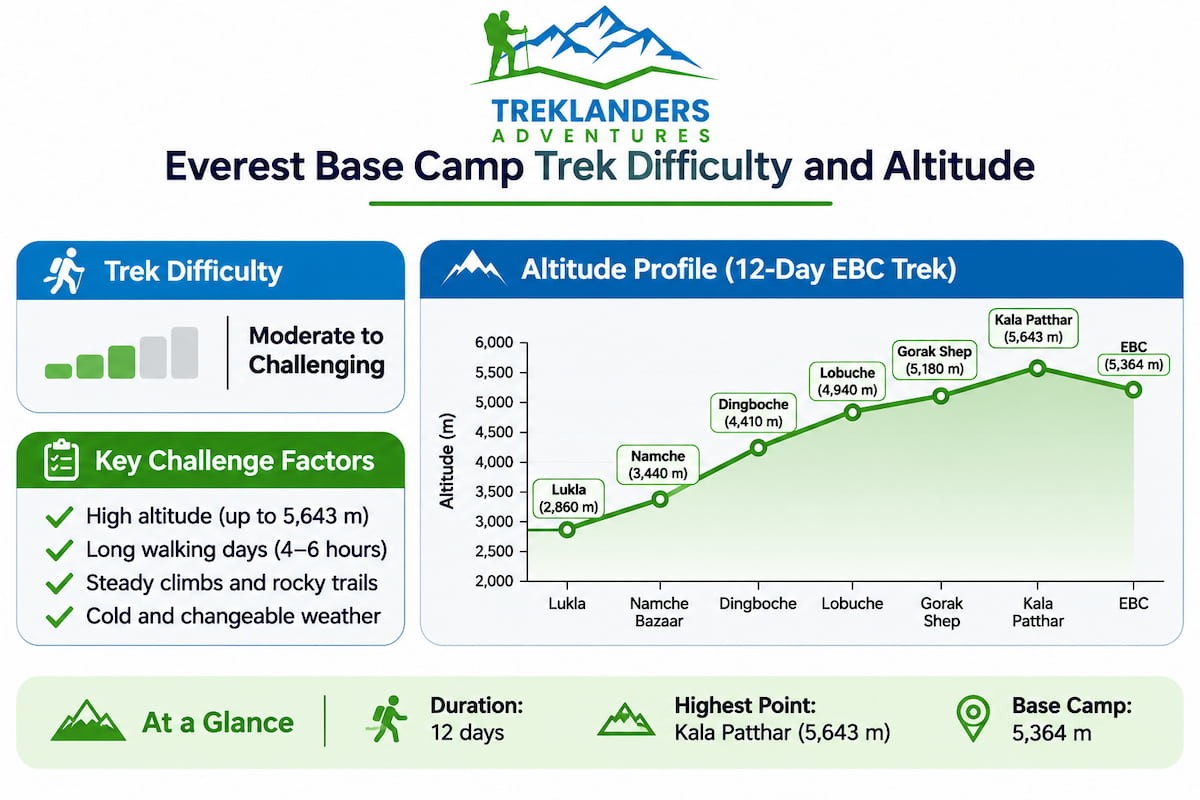
The 12-day Everest Base Camp trek is moderate to challenging. You walk 5 to 7 hours on most days, on steep stone steps, rocky moraine and forest paths. The trek is not technical. Altitude is the main difficulty, and it can affect even the fittest trekkers. Kala Patthar at 5,643 m sits about 2,780 m above Lukla, where you start walking.
Your sleeping heights show how the trek builds. You sleep at 2,610 m in Phakding, 3,440 m in Namche Bazaar, 3,867 m in Tengboche, 4,410 m in Dingboche, 4,928 m in Lobuche and 5,180 m in Gorak Shep. The rest days at Namche Bazaar and Dingboche give your body time to make more red blood cells and adapt to lower oxygen.
Altitude sickness is unpredictable. Watch for headache, nausea, dizziness and unusual tiredness. Tell your guide at the first sign. Your guide checks your condition each day, adjusts the pace and decides whether you continue. Walk slowly, drink water often and do not ignore a symptom to keep up with the group. Take acetazolamide only if your doctor advises it.
Most trekkers between 12 and 65 years old with reasonable fitness and a few months of preparation complete the trek. If you have a heart, lung or serious joint condition, talk to your doctor before you book. First-time trekkers also reach base camp, but the 12-day plan suits them less well than the 14-day Everest Base Camp trek, which adds a gentler pace.
Weather adds to the challenge. Wind and cold increase above Dingboche, and the temperature drops fast once the sun leaves the valley. Pack layers you can add and remove quickly. Eat a full breakfast before the long days, and carry snacks in your daypack.
Start training at least 8 to 12 weeks before you fly. Three to four months is better. Your goal is stamina on long days, strong legs for steep steps and a back that carries a daypack without complaint.
Build cardio first. Walk hills, climb stairs or cycle for 30 to 45 minutes, four to five days a week. Add leg work two or three times a week with squats, lunges, step-ups and calf raises. Core exercises such as planks and side planks, three or four times a week, keep your posture steady on descents.
In the final weeks, add practice hikes with the daypack you will carry on the trek. Do four to six of them, with steep climbs and descents. Use your trekking boots on every hike, because new boots cause blisters. A sample week looks like this:
If you arrive in Nepal a few days early, use hikes near Kathmandu as final practice. The Nagarkot day hike, the Nagarjun Jamacho day hike and the Namobuddha day tour with the Shiva statue all give you steady climbing and a chance to test your gear. For a longer test, the 4-day trekking adventure near Kathmandu and the Chisapani, Nagarkot and Dhulikhel hike cover several days on trail. The 6-day Pikey Peak trek climbs high enough to show how you respond to height. See more options under one day hiking.
You need two permits for the 12-day Everest Base Camp trek. One is the Sagarmatha National Park entry permit. The other is the Khumbu Pasang Lhamu Rural Municipality entry permit. Officials check both at Monjo on the second day.
Treklanders Adventures arranges both permits before you start. You bring your passport and a few passport-size photos. You carry no other paperwork. The Trekkers' Information Management System card, known as TIMS, has not been required in the Everest region since April 2023, because the municipality permit replaced it. Rules can change, so confirm the current list with our team when you book. You can reach the team through the contact page.
Carry a printed or digital copy of your travel insurance too. Your policy must cover high-altitude trekking to at least 6,000 m and must include emergency helicopter evacuation. Many standard policies exclude trekking above a set height, so read the fine print. Share the policy and the emergency number with your guide before you leave Lukla.
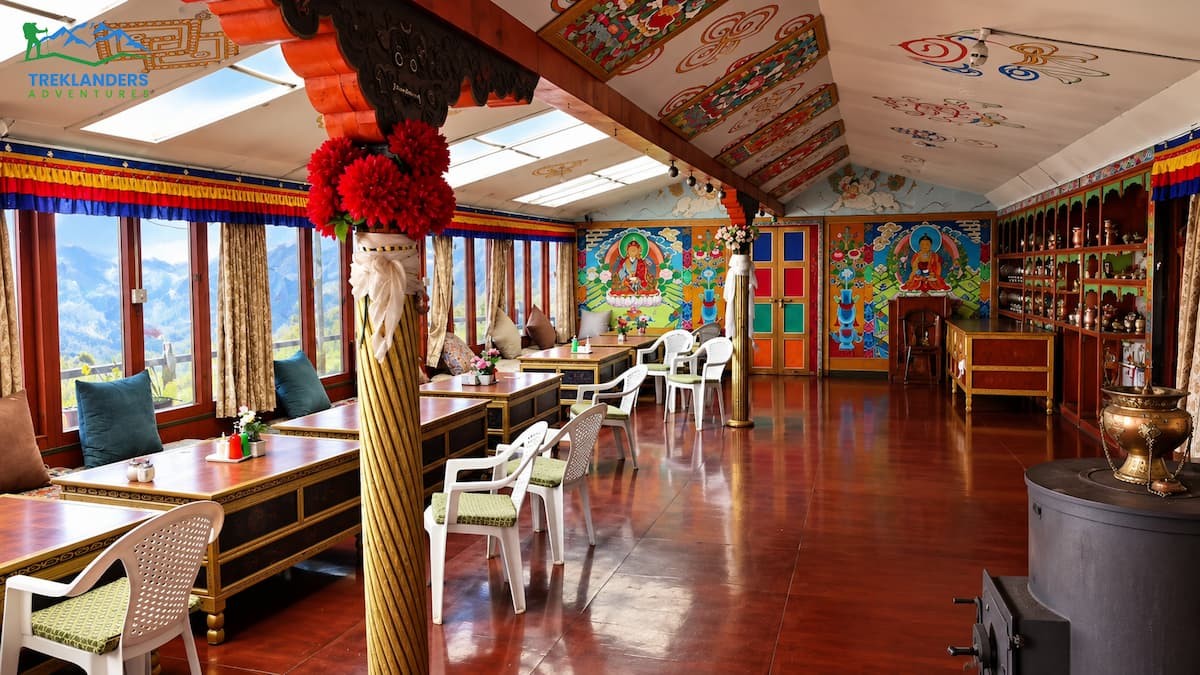
You sleep in tea house lodges every night of the trek. Rooms are usually twin share with shared bathrooms. Some lodges in Phakding, Namche Bazaar and Tengboche have rooms with attached bathrooms. Above Dingboche you find shared facilities only, and hot showers are an add-on because heating water takes fuel at altitude.
The dining room is the social center of each lodge. A central stove heats it, and the fuel changes with altitude from wood to dung to kerosene. Breakfast usually means porridge, eggs, pancakes or Tibetan bread. Lunch and dinner offer dal bhat, noodle soup, fried rice and momo. Many lodges also serve pizza and pasta, but the choice narrows as you climb.
Water is available at every lodge, boiled or treated. Bottled water sells for more with every hundred meters of height, and discarded plastic bottles are a growing problem in the Khumbu. Bring a reusable bottle and purification tablets or a filter. Refill each morning at your lodge.
Most lodges offer charging, usually from solar panels or small hydropower systems. Some lodges bill per device. Wi-Fi works at many lodges, but speed falls as you climb, and you may find no signal above Lobuche. Carry a power bank. Keep batteries in an inner pocket at night, because cold drains them quickly.
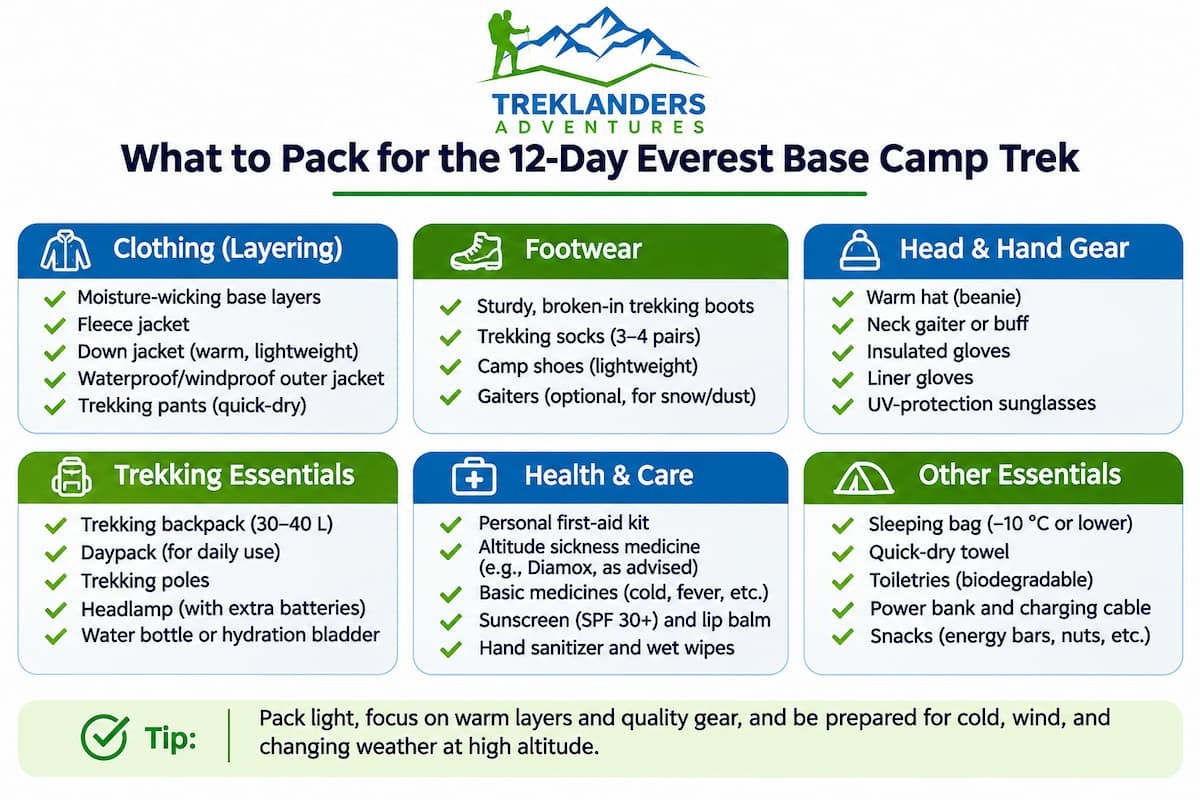
Pack in layers, not in a few heavy items. A moisture-wicking base layer, a fleece or light down mid-layer and a waterproof, windproof shell cover most conditions. Add a warm hat, gloves and a heavy down jacket for the days above Lobuche. Our full packing list sits on the trip page. The main items are these:
Keep your boots in your carry-on bag on the flight to Nepal. A lost duffel can be replaced in Kathmandu, but broken-in boots cannot. Weight matters on the Lukla flight. Airlines allow about 10 kg of checked luggage and 5 kg of hand baggage per person, so pack light and keep essentials in your daypack.
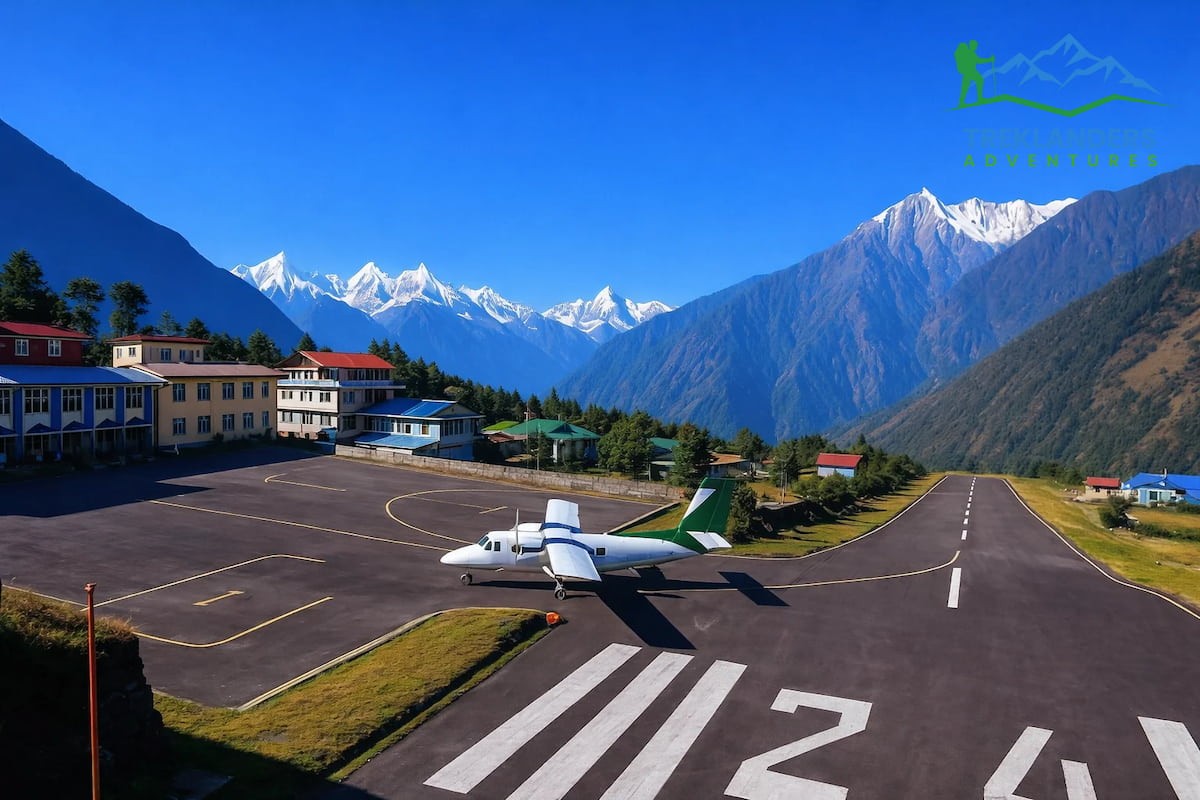
The flight from Kathmandu to Lukla is short and scenic, and it also depends on the weather. Clouds and wind can delay or cancel flights, sometimes for several days in the worst conditions. In the busy months of spring and autumn, airlines may route flights through Manthali Airport in Ramechhap. That means an early morning drive of about three to four hours from Kathmandu, and sometimes a night in a local hotel near the airport.
If flights stop for a long time, a helicopter transfer between Lukla and Kathmandu is possible. The helicopter is not part of the standard package. Keep one or two spare days at the end of your trip so that a delay does not make you miss your international flight. Our team handles the rebooking for you, and your guide stays in contact with the office every day.
If you want to skip the Lukla flight on the way out, the Everest Base Camp trek from Jiri walks the whole route on foot. If you want a faster return, the Everest Base Camp trek with helicopter return flies you back after Gorak Shep.
Treklanders Adventures handles the logistics so you can focus on the walk. The package includes:
You arrange your own travel insurance, personal gear and tips for your guide and porters. Our guides and porters receive fair wages, food, lodging and insurance for the whole trip, in line with Nepal's responsible tourism standards. You can meet the people behind the trek on the team page and read what past trekkers wrote on the reviews page.
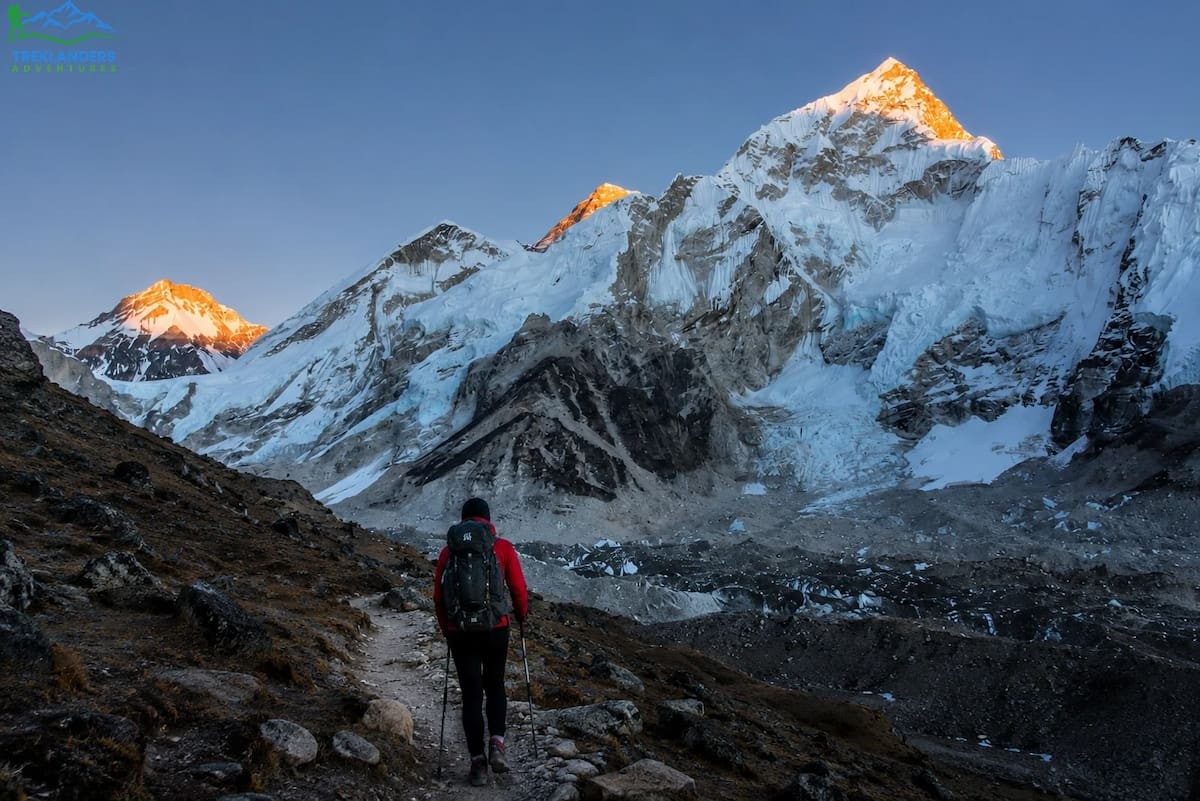
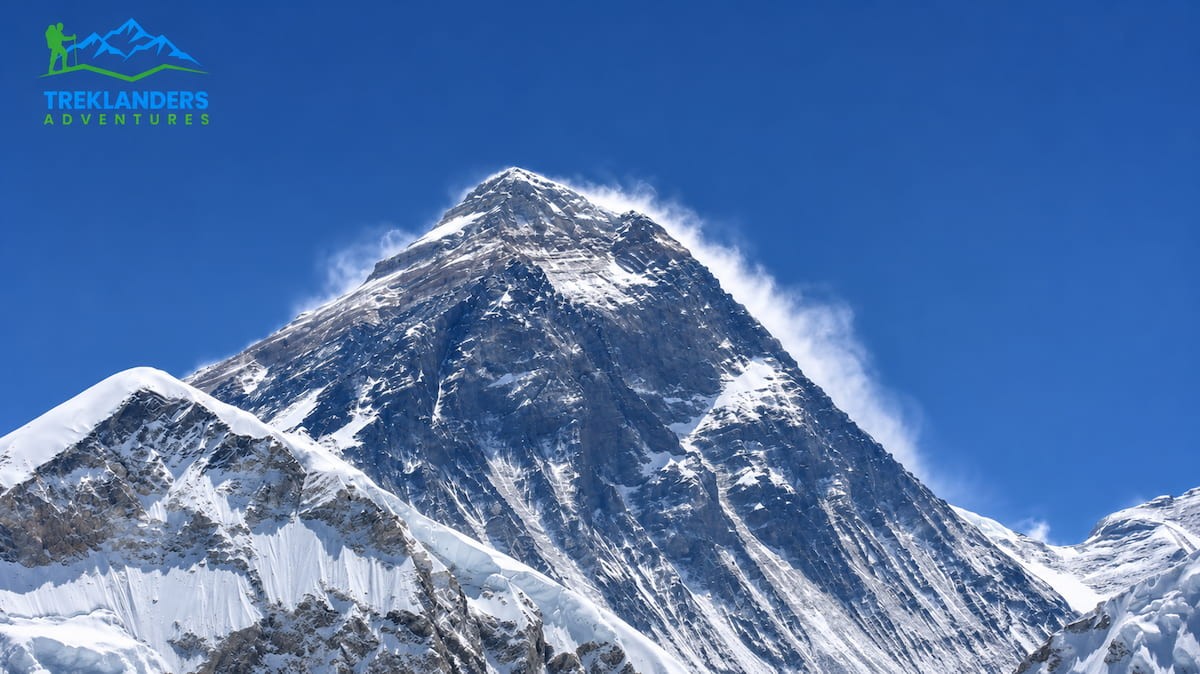
Everest stands 8,848 m tall. The trek takes you to its base, not its summit. At base camp you stand on the Khumbu Glacier, facing the Khumbu Icefall. Climbers cross the icefall on their way up the mountain. You see it from a safe distance after a short, flat walk.
Kala Patthar means black rock in Nepali. It rises above Gorak Shep at 5,643 m. Nuptse blocks the summit of Everest from base camp, so Kala Patthar solves the problem. From its top you see Everest, Nuptse and Pumori catch the first sunlight. You also look down the Khumbu Glacier and across to Changtse and the peaks of Tibet.
Nepal protected this area as a national park in 1976, and UNESCO listed it as a World Heritage Site in 1979. Sagarmatha is the Nepali name for Everest. Sherpas call the mountain Chomolungma, which means Mother Goddess of the World in Tibetan. You walk through forests of rhododendron, fir and birch. Himalayan tahr graze on the slopes above the trail, and Nepal's national bird, the Himalayan monal, lives in the lower forest.
Namche Bazaar is the commercial hub of the Khumbu, and Tengboche is its spiritual center. Namche gives you shops, bakeries and a museum on Sherpa life. Tengboche gives you the largest monastery in the region and a courtyard with views of Everest, Lhotse and Ama Dablam.
Sherpa communities have lived in the Khumbu for generations and follow Tibetan Buddhism. You see mani walls carved with prayers, prayer wheels at village entrances and chortens that mark important points on the trail. Pass them on the left side, so you walk clockwise around them. Namaste works as a greeting everywhere, and most lodge owners speak enough English to handle bookings and menus.
The Khumbu offers more than one route. If you have more time, the Gokyo Valley trek visits a series of glacial lakes, and the 11-day Gokyo Valley trek shortens that route. The Everest Base Camp via Cho La Pass trek links Gokyo and base camp in one loop. The Everest Three Passes trek covers most of the region and suits experienced trekkers.
If you want a shorter walk with mountain views, try the Everest Panorama trek or the 8-day Everest Panorama trek. Trekkers who want to climb can add Lobuche East peak climbing to base camp, or choose Island Peak or Mera Peak. All of these sit under peak climbing and trekking in Nepal.
Other regions offer a different feel. The Annapurna Base Camp trek, the Langtang Valley trek and the Manaslu Circuit trek are options for your next visit. The Annapurna region trek, Langtang region trek, Manaslu region trek and Mustang region trek pages list every route in each area. You can also see Everest without walking. The Everest mountain flight leaves from Kathmandu, and the Everest heli tour lands in the Khumbu. Browse every heli tour we offer. The 13-day Lhasa tour from Kathmandu via Everest Base Camp approaches the mountain from the Tibetan side.
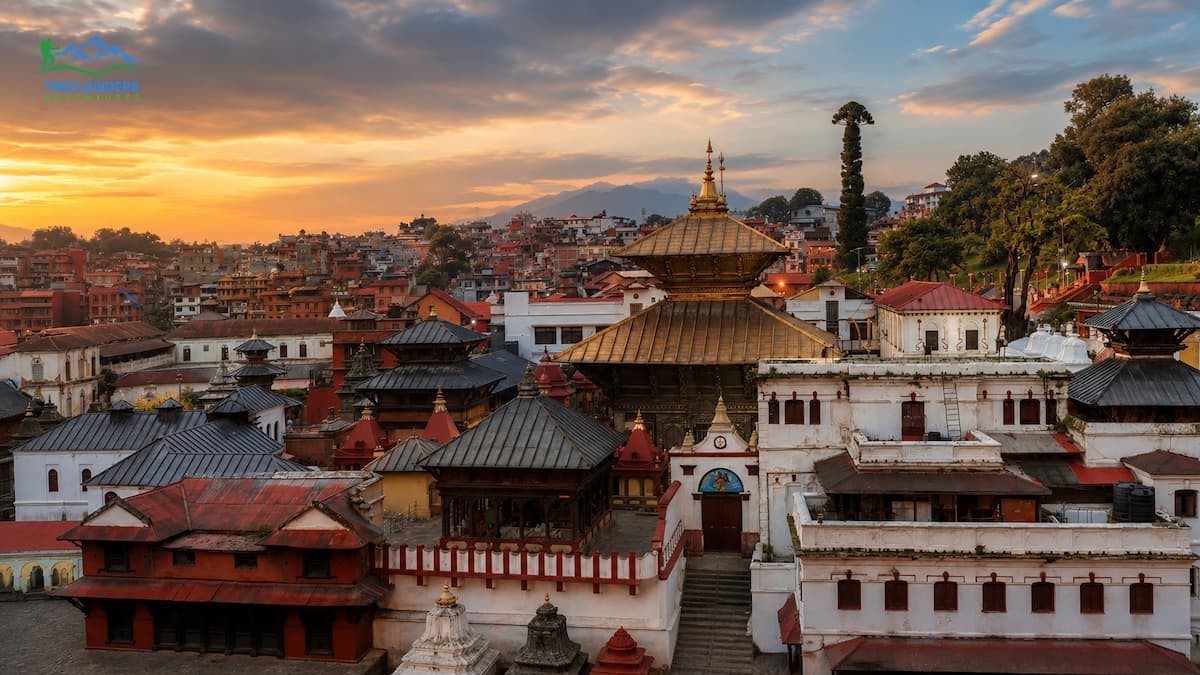
Add a few days around the trek. Before you fly to Lukla, the Kathmandu full-day sightseeing tour and the seven UNESCO heritage sites day tour cover the main monuments. The Patan and Bhaktapur sightseeing tour visits two old royal cities. The Chandragiri cable car tour rides up to a hilltop above the valley.
After the trek, take an easy day. A momo making class in Thamel teaches you to cook the dumplings you ate in the lodges, and the Nagarkot sunrise tour gives you one more mountain view. For a longer break, try the 3-day Pokhara sightseeing tour or the 3-day Chitwan wildlife tour. Browse more ideas under tours in Nepal.
The 12-day Everest Base Camp trek rewards preparation. Choose spring or autumn, train for at least eight weeks, pack in layers and keep a spare day in Kathmandu. Tell your guide about every symptom you notice at altitude. The schedule works because of its rest days and its careful pace, so respect both.
Start with the 12-day Everest Base Camp trek booking page or send your dates and questions through the Plan My Trip form. Read more about our company on the about us page, see photos in the gallery and browse the Treklanders blog for route guides. You can also write to info@treklanders.com or message us on WhatsApp at +977 9851019683.
Is the 12-Day Manaslu Circuit Trek safe? Explore the itinerary, Larkya La Pass, acclimatization, altitude risks, and trekking safety tips.
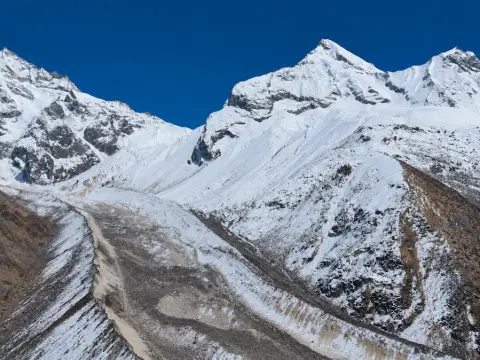
Compare 13, 14, and 18-day Manaslu Circuit Trek itineraries, routes, altitude, acclimatization, difficulty, and Larkya La Pass.
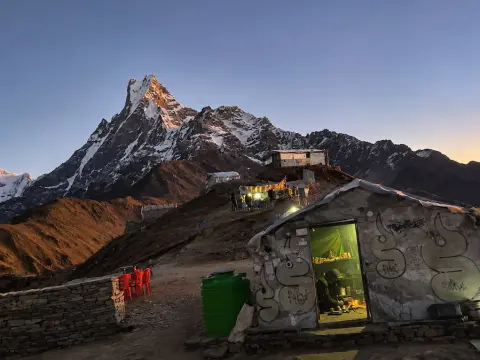
Is the Mardi Himal Trek possible in winter? Explore weather, snowfall, trail conditions, safety tips, and stunning Himalayan views.



