
Manaslu Circuit Trek in Winter: Can You Cross Larkya La Pass?
1 Nov 2026
Can you cross Larkya La Pass in winter? Explore Manaslu Circuit Trek weather, snow conditions, safety tips, and essential winter trekking gear.

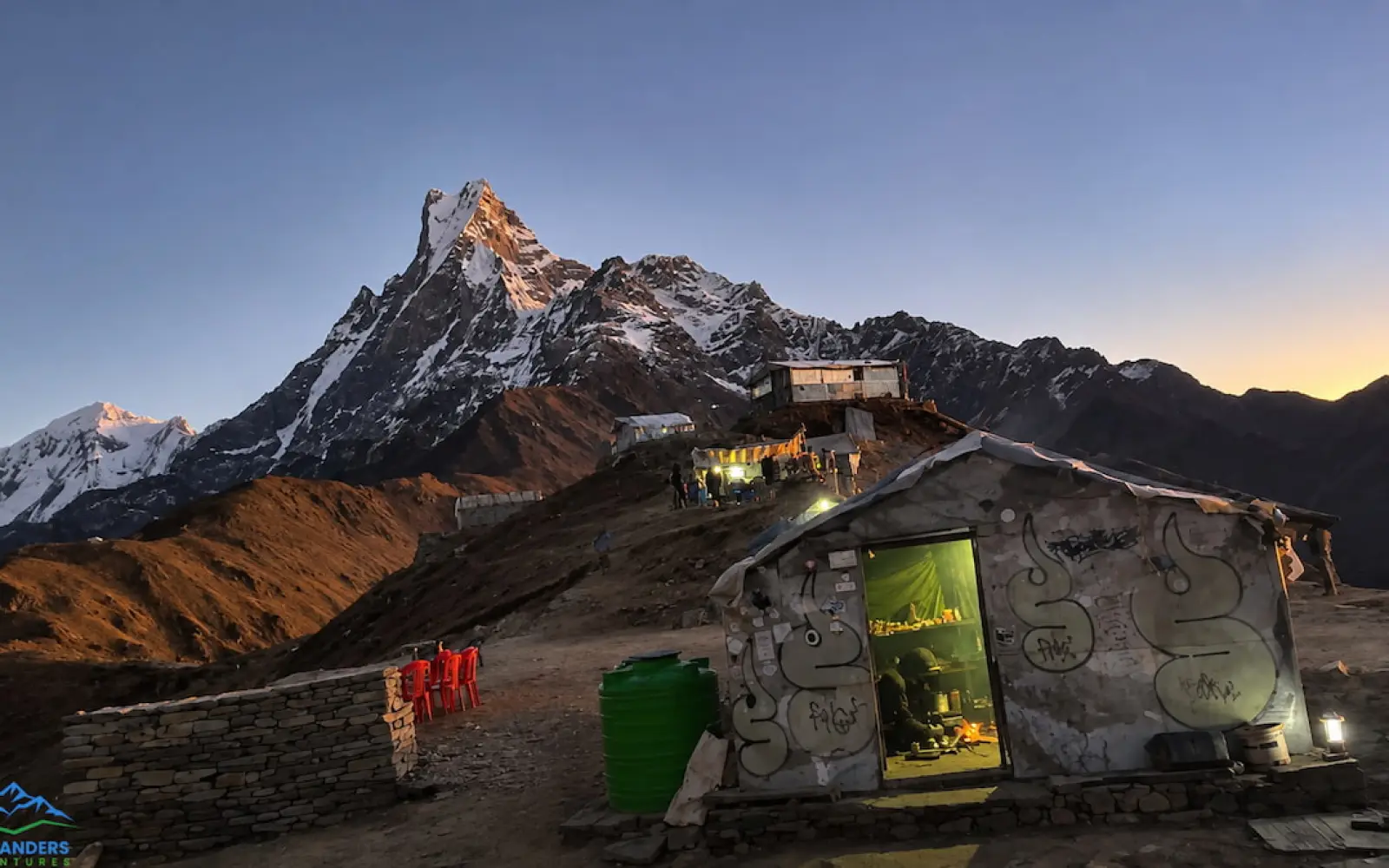
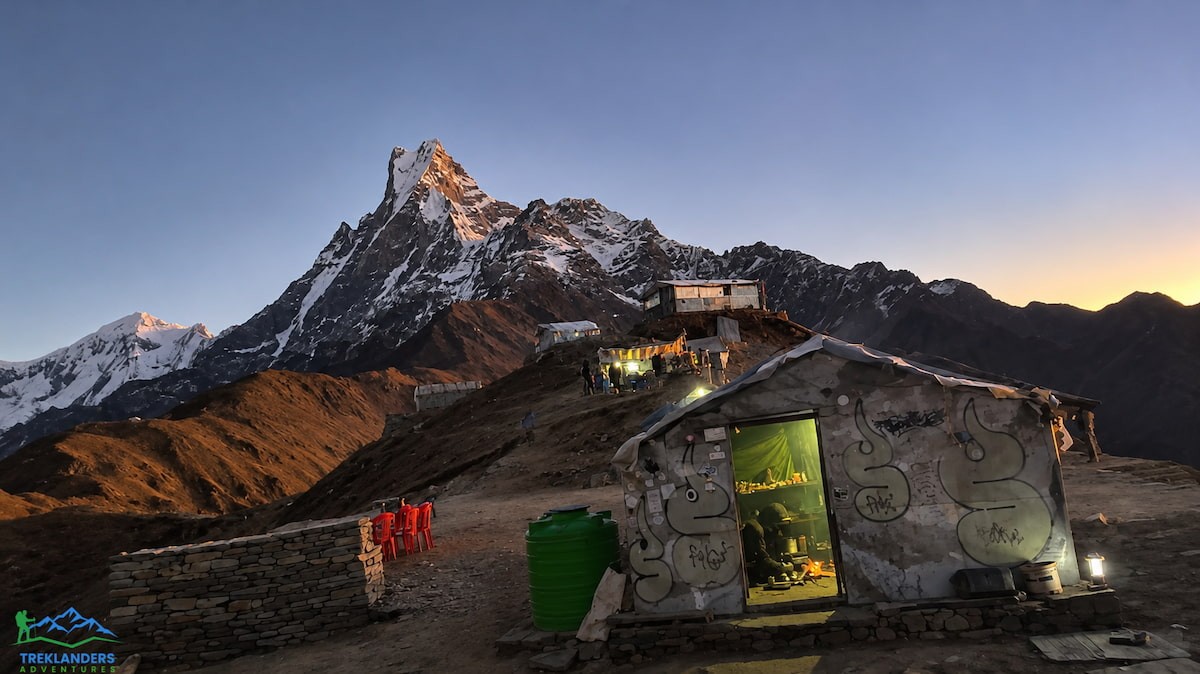
The Mardi Himal Trek in winter is possible. You can walk it from December to February when you carry the right gear, keep your schedule flexible, and travel with a licensed guide. The skies are clear, the trail is quiet, and the views of Machhapuchhre, Annapurna South, and Hiunchuli stay sharp from sunrise to late morning. The nights are cold, and snow can cover the upper ridge. You plan for both.
This guide explains how the Mardi Himal Trek behaves in winter. You get temperature ranges by camp, snow conditions on the ridge, a day by day trail narrative based on the 9 Day Mardi Himal Trek, teahouse conditions, altitude advice, a winter packing list, permit rules, and alternatives if weather closes the upper trail. Treklanders Adventures is a trekking and tour operator based in Thamel, Kathmandu. The company operates this route in the Annapurna region throughout the year, and the notes below reflect how winter departures are planned and run.
| Detail | Winter information |
|---|---|
| Winter window | December to February |
| Easiest months | Early December and late February |
| Coldest month | January |
| Highest point | Mardi Himal Viewpoint, 4,200 m |
| Route | Kathmandu, Pokhara, Forest Camp, Low Camp, High Camp, Badal Danda, Siding, Pokhara |
| Trek length | 9 days total, 5 days walking |
| Coldest camp | High Camp, 3,700 m, nights near minus 8 degrees Celsius or lower |
| Permits | ACAP and TIMS |
| Guide | Licensed guide advised in winter |
| Skip in winter | Extension to Mardi Himal Base Camp, 4,500 m |
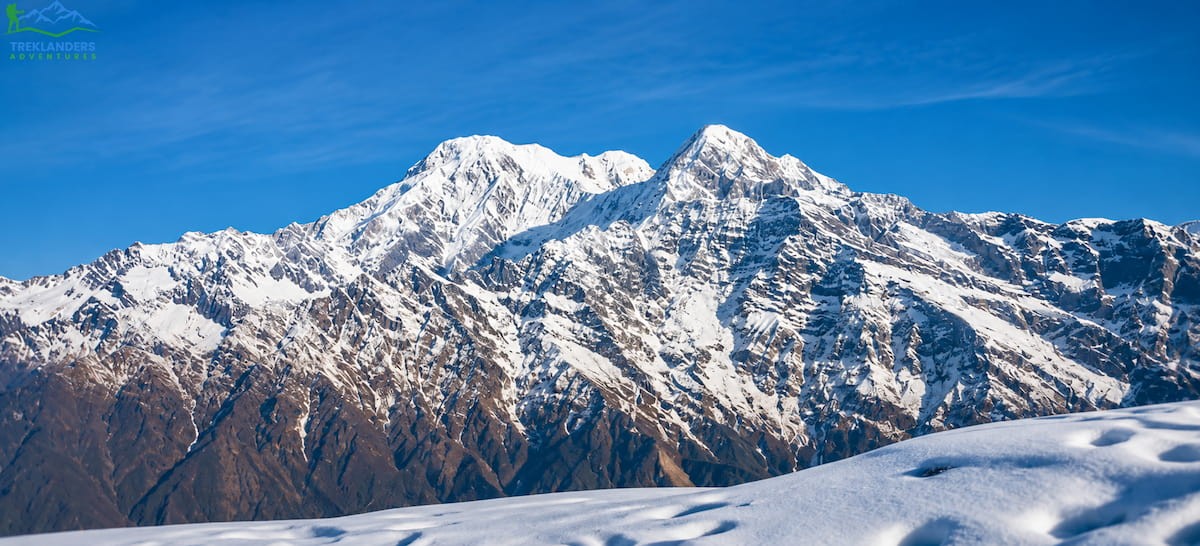
Yes, you can. Winter on the Mardi Himal trail runs from December to February. Treklanders lists the Mardi Himal trail as workable in these months, with colder temperatures, quieter paths, and occasional snow near High Camp and the viewpoint. The route needs no technical climbing, no ropes, and no crampons in normal conditions. It needs warm clothing, steady pacing, and a guide who reads the weather each morning.
The lower half of the trail feels like a late autumn walk. You pass through Gurung villages, stone staircases, and forests of oak, pine, and rhododendron, and you rarely meet deep snow below Forest Camp. The upper half changes character. Above Low Camp the trees thin, the wind picks up, and the ridge holds snow after a storm. The walk from High Camp to the Mardi Himal Viewpoint at 4,200 meters decides whether your winter trek succeeds.
Early December and late February give the easiest conditions. The monsoon dust has settled, the days lengthen in late February, and the snow line sits higher. January is the coldest month. You still reach the viewpoint on many January days, but you accept a higher chance of a delayed start or a turnaround.
Winter suits trekkers who have walked at altitude before, who sleep well in cold rooms, and who enjoy empty trails. It suits you less if this is your first multi day trek and you dislike cold nights. In that case, the 5 Day Mardi Himal Trek from Pokhara in spring or autumn gives you the same route in milder weather.
A few lodges at the top can close after heavy snowfall. Your guide phones ahead from Low Camp to confirm rooms and meals at High Camp and Badal Danda before you climb. That call prevents most winter logistics problems.
You can pair the ridge with another Annapurna walk if you have time. The 10 Day Ghorepani Poonhill with Annapurna Base Camp Trek and the Annapurna Semi Circuit Trek cover other parts of the region, and the Annapurna Base Camp Trekking page lists a longer route to the sanctuary. Check each route against the season before you book, since snow changes what is open.
Temperature drops with every camp you reach, so you read the weather by elevation and not by month alone. Pokhara sits at 860 meters and feels mild. High Camp sits at 3,700 meters and feels like a different season.
| Camp | Elevation | Typical winter night |
|---|---|---|
| Pokhara | 860 m | 6 to 9 degrees Celsius |
| Forest Camp | 2,520 m | Close to freezing |
| Low Camp | 2,970 m | Below freezing |
| Badal Danda | 3,210 m | Around minus 5 degrees Celsius |
| High Camp | 3,700 m | Minus 8 degrees Celsius or lower |
In Pokhara, winter days reach roughly 18 to 22 degrees Celsius, and nights fall to around 6 to 9 degrees. At Dhampus, 1,580 meters, mornings feel crisp and afternoons stay comfortable in a fleece. Forest Camp, 2,520 meters, sees daytime temperatures near 8 to 12 degrees in sun and nights close to freezing.
Low Camp, 2,970 meters, drops below freezing most nights from December to February. Water left in a bottle by the window can freeze. At Badal Danda, 3,210 meters, expect nights around minus 5 degrees and a steady ridge wind. High Camp, 3,700 meters, is the coldest bed on the route. Night temperatures commonly fall to minus 8 degrees or lower in January, and wind chill makes the morning feel colder. These figures describe typical winter conditions and shift with each storm.
Daylight is short. The sun rises around 6:45 in the morning and sets around 5:20 in the evening in December and January, which gives you about ten and a half hours of usable light. You start walking soon after breakfast and arrive at your lodge by mid afternoon. Cloud often rolls up the valley after noon, so the clearest mountain views come before 10 a.m.
Winter weather follows a pattern. Most days begin with a clear sky and a hard frost. By late morning, cloud builds along the lower slopes. Evenings clear again above Badal Danda and High Camp, and the stars show brightly. Western disturbances bring snow in January and February. They arrive as a two to three day system, and the sky clears afterward with fresh snow on every peak.
Compare this with the other seasons. Spring and autumn give mild days and stable weather. Winter trades warmth for the clearest air of the year. If you accept the cold, you gain visibility that spring haze and autumn crowds rarely match.
Snow decides how winter on this route feels. Most winter days bring no new snow, but old snow stays on shaded ground for weeks after a storm.
Below Forest Camp, you walk on dry stone steps and forest soil. A light dusting can appear in January, and it melts by midday. Between Forest Camp and Low Camp, snow patches appear in shaded sections. They are short and easy to cross with boots that have a firm tread.
Between Low Camp and High Camp, the trail climbs along an open ridge. After snowfall, the path turns white, and the trail marks disappear under fresh powder. Your guide knows the line of the ridge and keeps you on the safe side of it. Ice forms on the packed path overnight, and it softens by mid morning.
The final push from High Camp to the viewpoint runs on an exposed ridge. Fresh snow here slows you down. Wind can blow powder across the path and reduce visibility to a few meters for short periods. On a clear morning after a cold night, the snow is firm, and the walk feels straightforward. On a day after a storm, your guide may delay the start by an hour so the sun softens the surface, or may turn the group around at a lower point.
Microspikes help on icy sections and weigh little to carry. Gaiters keep snow out of your boots. Trekking poles give you balance on the ridge. You do not need ropes or an ice axe on the standard route.
Skip the extension to Mardi Himal Base Camp at 4,500 meters in winter. The terrain beyond the viewpoint narrows, the wind increases, and the return becomes slow in snow. The viewpoint at 4,200 meters gives you the frontal view of Machhapuchhre that makes the trek worth doing, and it keeps your risk low.
Your guide sets a turnaround rule before the summit push. If you have not reached the ridge by a set time, you descend. You follow that rule even when the sky looks clear above you, because cloud and wind arrive faster than they appear to.
Check conditions the night before each climb. Lodge owners at High Camp and Badal Danda report snow depth, wind, and cloud to your guide by phone, and guides coming down the trail share the same details. You combine those reports with your own view of the sky at 5 a.m. and decide together whether to leave that morning.
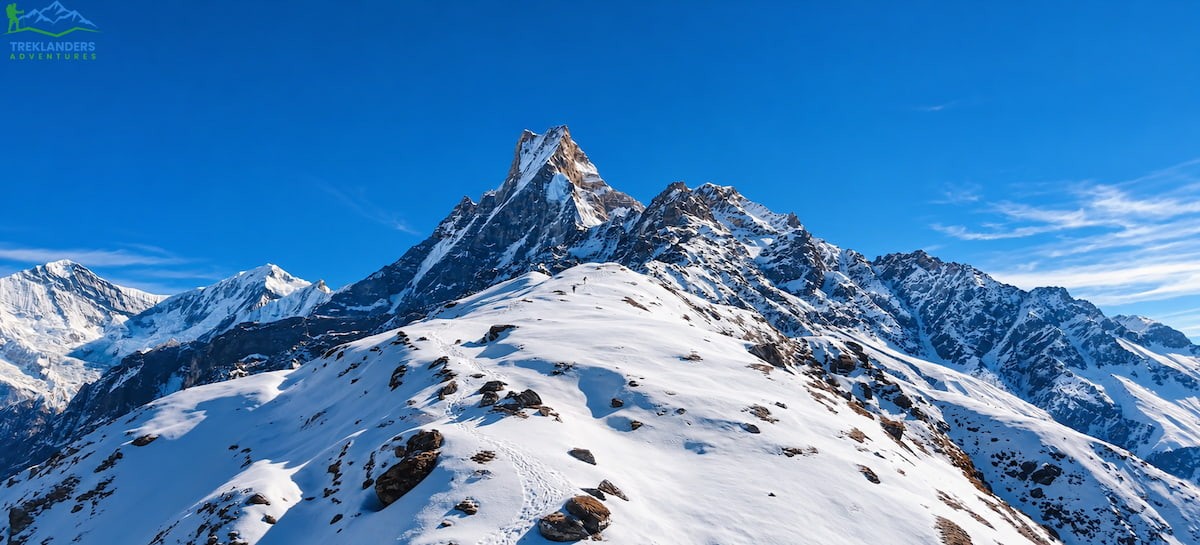
The Treklanders itinerary runs nine days from Kathmandu to Kathmandu, with five days on foot from Pokhara. The route is Kathmandu, Pokhara, Forest Camp, Low Camp, High Camp, Mardi Himal Viewpoint, Badal Danda, Siding, Pokhara, and Kathmandu. The sections below describe what each day feels like from December to February.
You land at Tribhuvan International Airport, where the team meets you and drives you to your hotel. Kathmandu is cool in winter, with fog in the early morning and a clear afternoon. After check in, you rest. If you feel energetic, you walk through Thamel, where you find trekking shops that rent down jackets, sleeping bags, and Microspikes at fair rates. Winter trekkers should check their gear here. A short briefing covers the route, the weather outlook, and your equipment.
If you arrive a day early, the Kathmandu full day sightseeing tour and the seven UNESCO heritage sites day tour fill the time well, because winter light makes the old city squares easy to photograph.
After breakfast, you drive west along the river valleys, past terraced farmland and small hill towns. The drive takes six to seven hours. Morning fog can slow the first hour in winter, and the road clears by mid morning. Pokhara feels warm after Kathmandu, and Phewa Lake reflects the Annapurna range in the evening. You check into your hotel and walk the Lakeside for a final shop for gloves or a warm hat.
A short domestic flight replaces the drive if you prefer. The flight takes 25 to 30 minutes, and winter mornings give the clearest air of the year for views of the Himalayas out of the window.
A short drive takes you from Pokhara to Dhampus, and the trek begins. You walk through the Gurung villages of Dhampus and Potana on stone staircases, then pass Pritam Deurali. The trail enters quieter forest paths, and the villages fall away behind you. Winter makes this day easy. Mornings are cool, the trail is dry, and the forest is silent without the leeches of the monsoon.
Forest Camp is the first overnight at altitude. You sleep at 2,520 meters, which sits well below the point where altitude affects most trekkers. The lodge dining room has a stove, and you dress in a down jacket by 5 p.m. as the temperature falls toward freezing.
You climb steadily through dense oak, pine, and rhododendron. The forest is bare of flowers in winter, and the bark is wet with frost in the morning. Fewer settlements appear on this section, and the quiet is more noticeable in the cold season because few other trekkers share the trail. The tree line begins to thin, and the first clear views of Machhapuchhre open through the branches.
You reach Low Camp in the early afternoon. The five hour walk leaves you time to rest and acclimatize. If the sky is clear, Fishtail stands directly ahead, with the Annapurna massif beside it. Nights at Low Camp fall below freezing. You wear a hat and gloves in the dining room and use a hot water bottle in your sleeping bag.
This is the first day where winter conditions matter. You leave Low Camp, and the trail turns open and alpine. You walk above the tree line, with the Mardi Himal ridge, Machhapuchhre, and Annapurna South unfolding along the way. The air is cooler and thinner, and your guide keeps the pace slow.
Snow lies on shaded patches, and ice forms on stone steps in the early morning. You wear boots with a firm tread and carry poles. The walk takes about six hours with rest stops, and you reach High Camp before the afternoon cloud builds. The camp sits on wide ridges with mountains on every side, and sunset turns the snow orange and pink. The temperature falls fast after sunset. Eat early, drink warm fluids, and sleep in your full layering.
You wake before dawn and leave with a headlamp. The climb to the Mardi Himal Viewpoint at 4,200 meters is the highest point of the trek. In winter the path is cold and firm, and the wind is strongest right before sunrise. Your guide watches the weather and the group closely.
The reward is the frontal view of Machhapuchhre, with Annapurna South, Hiunchuli, and Mardi Himal itself standing close. The air carries no haze, and snow covers every ridge. You spend time at the viewpoint, take photographs, and return to High Camp for breakfast. After breakfast, you descend carefully to Badal Danda, a ridge settlement that offers sunset and sunrise views over the Annapurna range. In winter, cloud often fills the valley below, and you sleep above it.
The trail descends steeply from Badal Danda through forest and terraced farmland to Siding Village, a traditional Gurung settlement that few trekkers visit. The walk takes about six hours. Winter warms as you drop, and by Siding you walk in a shirt. Knees take the load on this descent, and poles help. After Siding, a two hour drive on a rough mountain road returns you to Pokhara. A hot shower and a meal by the lake finish the trek.
You drive back through the river valleys and hills. In Kathmandu you check in, shop for souvenirs, and join the farewell dinner.
The team transfers you to the airport for your flight.
You can also compress the route. The 5 Day Mardi Himal Trek from Pokhara removes the Kathmandu days and starts from Pokhara. The shorter schedule gives you less time to acclimatize and less buffer for snow delays, so winter trekkers often prefer the longer plan.
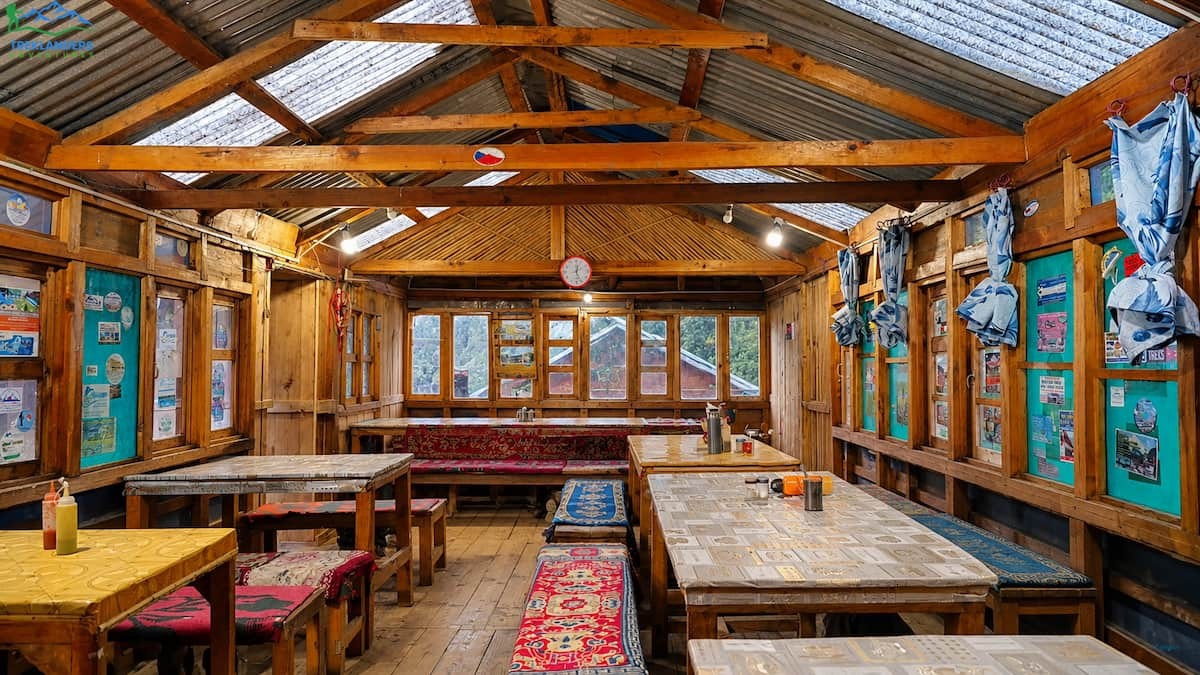
Accommodation follows the standard teahouse system, with simple lodges run by local families. Winter changes how you use them. The dining room becomes your living room, and your bedroom becomes a place to sleep only.
Most lodges heat the dining hall with a wood or kerosene stove, and trekkers gather around it from late afternoon. Bedrooms have no heating. Rooms are usually twin or triple sharing, with wooden beds, a thin mattress, a pillow, and blankets. At High Camp and Badal Danda the rooms are the most basic on the route. The accommodation on the Mardi Himal Trek improves with careful choice of lodge, and your guide books the warmest rooms available.
A sleeping bag rated between minus 10 and minus 15 degrees Celsius suits winter. You can rent one in Kathmandu or Pokhara. Add a liner and a hot water bottle. Ask the lodge for boiled water before bed and place the sealed bottle at your feet. It keeps the bag warm for hours.
Hot showers are less reliable in winter. Lower lodges at Dhampus and Forest Camp often run solar or gas showers, and these carry a small fee. Higher up, water pipes freeze, and hot water may not run at all. Plan on wet wipes and a quick wash at altitude. Cloud also weakens solar power, so charging a device may need payment and may not be possible every evening. Carry a power bank and keep it inside your jacket at night, because cold drains batteries fast.
Food stays warm and filling. Dal bhat is the most common meal. It comes with rice, lentil soup, vegetables, and pickle, and most lodges offer refills. Noodles, soups, pasta, fried rice, potatoes, momos, eggs, and porridge round out the menu. Hot drinks matter more in winter. Ginger tea, lemon honey tea, black tea, and hot chocolate keep you hydrated and warm. Avoid alcohol at altitude.
Drinking water needs treatment. Streams and taps may freeze at higher camps, so you rely on lodge supplies. Carry purification tablets or a filter bottle and a thermal flask. Fill the flask with hot tea in the morning and you have a warm drink at the viewpoint.
Compared with the Annapurna Circuit or Everest Base Camp, the Mardi Himal lodges stay quiet in winter. You often have a dining room to yourself, and the owners have time to talk. Many trekkers describe that quiet as the best part of the season. Your guide can adjust overnight stops when weather requires it, and the Plan My Trip form records your requests before you leave.
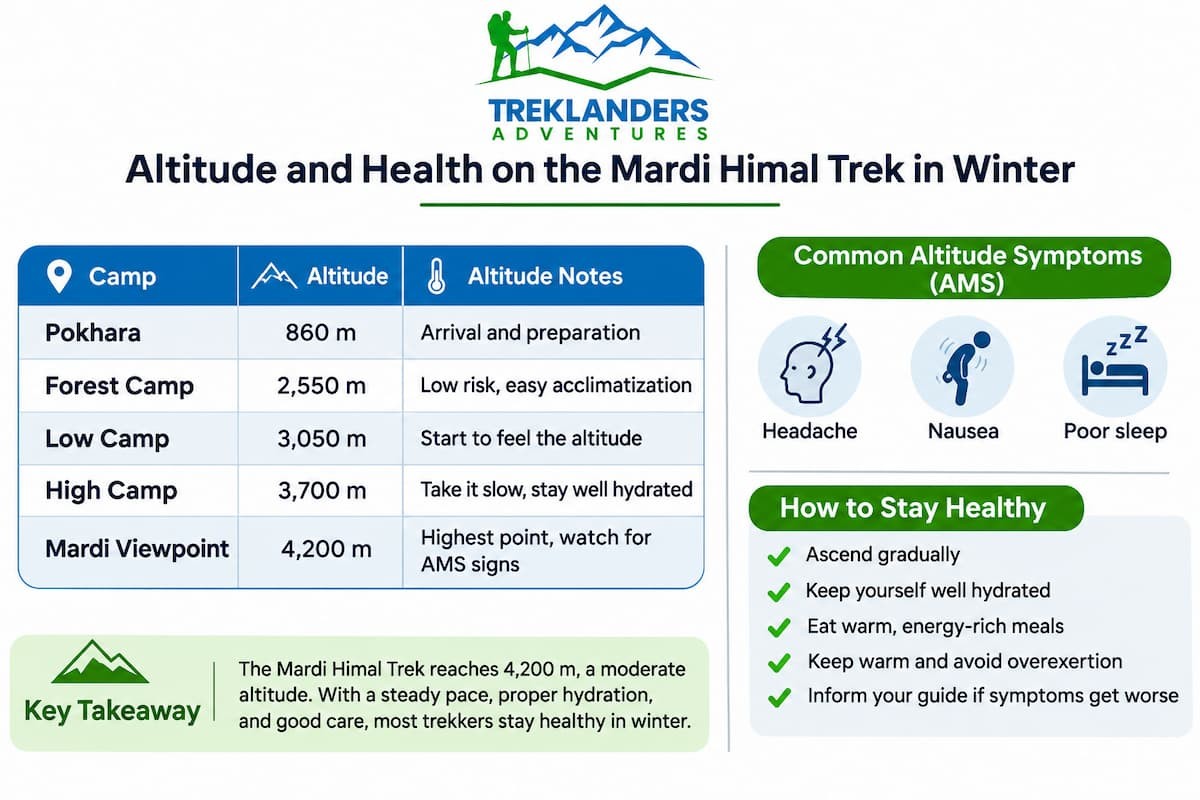
The highest point of the trek is the viewpoint at 4,200 meters, and altitude affects some trekkers at that height. The itinerary gains height gradually. You sleep at 2,520 meters, 2,970 meters, and 3,700 meters before the summit push, which gives your body time to adapt to altitude.
Acute mountain sickness shows as headache, dizziness, nausea, loss of appetite, and poor sleep. You prevent it with slow pacing, steady hydration, rest, and no alcohol. If symptoms worsen, you descend. Descent is the most reliable treatment, and your guide makes that call without delay. Diamox is a matter for you and your doctor, and you take it only on medical advice.
Winter adds cold related risks. Hypothermia develops when you stay wet or underdressed in wind. Frostbite affects fingers, toes, ears, and nose on exposed mornings. You prevent both with layers, dry socks, insulated gloves, a hat, and regular checks. Tell your guide when your fingers or toes lose feeling. Dry winter air also dehydrates you faster than humid seasons. Drink three to four liters a day, and use warm fluids to keep the habit easy.
You need moderate fitness. The trek involves five to seven hours of walking on steep paths with uphill and downhill sections. Wear your boots in before the trek to prevent blisters.
Medical facilities along the trail are basic. Some teahouses carry first aid supplies, and no hospitals exist on the route. Serious cases go to Pokhara or Kathmandu, often by helicopter. Pack a personal first aid kit with blister treatment, pain relief, and any prescription medicine you use.
Travel insurance is essential. Your policy should cover trekking to at least 4,500 meters, emergency medical treatment, and helicopter evacuation in Nepal. Standard policies often exclude high altitude trekking, so read the details before you buy. Carry a printed copy and share the policy details with your guide before the first day of walking.
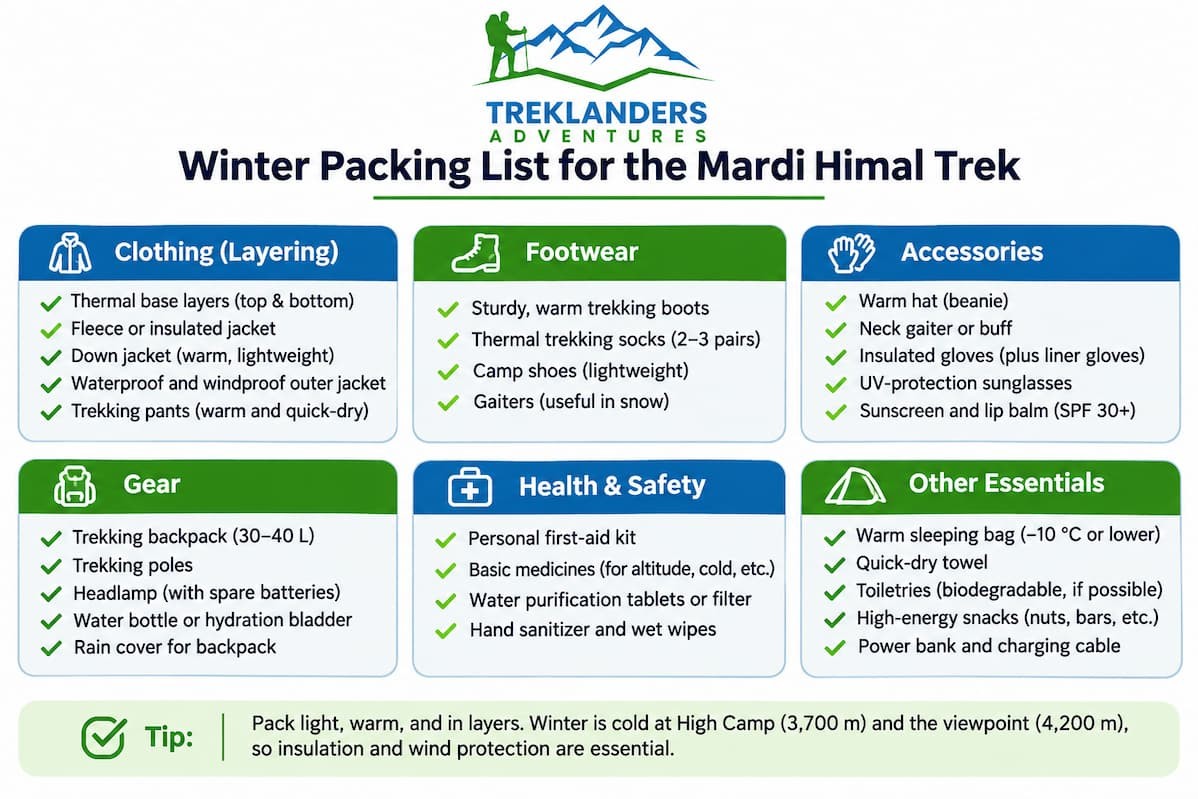
Winter packing follows one rule: layers. You add and remove clothing as you move between forest, ridge, and high camp. The 9 Day Mardi Himal Trek page lists the full packing guide, and the points below focus on winter.
Base layers sit against your skin. Pack two or three moisture wicking T shirts in synthetic or merino wool, one or two long sleeve thermal tops, one or two thermal bottoms, and several pairs of wicking underwear. Cotton holds sweat and makes you cold, so leave it behind.
Mid layers trap heat. Bring a fleece jacket, a light down or synthetic insulated jacket, and insulating pants. A soft shell jacket helps on windy ridges.
Outer layers block wind and moisture. Pack a waterproof hard shell jacket and pants. A heavy down jacket is essential for winter evenings at High Camp and Badal Danda. Bring a wool hat, a buff or neck gaiter, a sun hat, thin trekking gloves, and heavy insulated gloves or mittens. UV blocking sunglasses in category 3 or 4 protect your eyes from snow glare.
Footwear matters most. Wear waterproof trekking boots with ankle support, broken in before the trek. Pack two or three pairs of wool or synthetic trekking socks and one pair of thick socks for cold mornings. Bring camp shoes for the lodge. Add gaiters for snow and Microspikes for ice.
Essential accessories include:
Keep your passport copy, permits, cash in small notes, and insurance papers in a waterproof pouch.
You can rent or buy most items in Kathmandu and Pokhara. Thamel and Lakeside stock both international and local brands. Renting a sleeping bag and a down jacket beats buying new gear and works well for one winter trek.
The Mardi Himal Trek is safe in winter for prepared trekkers who walk with a licensed guide, carry cold weather gear, and respect turnaround times. You need two permits for the Mardi Himal Trek. The Annapurna Conservation Area Permit, known as ACAP, covers entry into the conservation area and funds trail maintenance and community projects. The Trekkers Information Management System card, known as TIMS, tracks trekkers for safety. Both come through the Nepal Tourism Board offices in Kathmandu or Pokhara, or through a licensed agency. When you book with Treklanders Adventures, the team handles both, and you provide a passport copy and passport size photographs.
Checkpoints along the route inspect permits, and trekkers without them face fines or a forced return.
A guide matters more in winter than in any other season. The trail is clear and well marked in autumn. In winter, snow covers markers, ice forms on steps, and weather shifts quickly. A licensed guide reads the sky, monitors your health, sets the turnaround time, and handles lodge bookings by phone. A porter carries your duffel, usually up to 20 to 25 kilograms shared between two trekkers, and lets you walk with a light daypack. On the 9 Day Mardi Himal Trek, the team includes a government licensed guide and one porter for every two trekkers.
Safety habits make a winter trek work. Check the forecast each evening. Start early each morning. Keep your hands warm and your feet dry. Drink warm fluids. Tell your guide when you feel unwell. Accept the turnaround decision, since the mountain will stay in place for your next attempt.
Build buffer days into your schedule. Snow can delay a departure or close the road from Siding to Pokhara for a few hours. If you have a tight international flight, add one or two spare days in Pokhara or Kathmandu. Spare days also let you enjoy the 3 Day Pokhara sightseeing tour if the weather turns against you.
Each season gives the Mardi Himal Trek a different character, and your choice depends on what you value.
Spring runs from March to May. Rhododendrons, magnolias, and wildflowers bloom across the lower forest, and the trail becomes a colorful corridor. Days are mild, and nights at the higher camps stay cool. Mountain views are strong in the early morning and evening.
Autumn runs from September to November and is the peak season. The monsoon rain clears the air, the sky turns deep blue, and the weather stays dry and stable. Photographers favor this season for long range views and consistent light at sunrise and sunset. Lodges are busier, and rooms at High Camp fill fast.
Winter runs from December to February. It brings the coldest nights, the lowest crowds, and clear skies. Snow may cover sections near High Camp and the viewpoint. It rewards prepared trekkers with solitude and strong visibility.
The monsoon runs from June to August and is the least suited season. Heavy rain, slippery trails, leeches, and cloud hide the views.
For first time trekkers, spring and autumn remain the safest choice. They offer predictable weather, reliable lodge services, and better acclimatization conditions. For experienced trekkers who want empty trails and sharp views, winter gives the best return on the effort.
Some winter days close the Mardi Himal ridge. If you want a warmer or lower option, several treks in the same region work well in the cold season.
The 4 Day Ghorepani Poon Hill Trek from Pokhara reaches a famous sunrise viewpoint at a lower elevation. The longer Ghorepani Poonhill Trek adds more village time. If you want a base camp, the 7 Day Annapurna Base Camp Trek from Pokhara and the 11 Day Annapurna Base Camp Trek cover the sanctuary. Winter snow and avalanche risk affect the upper sanctuary, so your guide checks conditions before you commit.
The Mohare Danda Trekking route stays on lower ridges with views of Dhaulagiri and Annapurna, and the Khopra Ridge and Khair Lake Trekking route suits trekkers who want a quiet path with more time at altitude. In other regions, the Everest Panorama Trek and the Helambu Trek offer cold season walks at moderate elevations. For a short break from Kathmandu, the 4 Day Trekking Adventure near Kathmandu and the Chisapani Nagarkot to Dhulikhel hiking route give you mountain views without high altitude.
If you wonder how a higher route behaves in winter, read the Treklanders guide to the Manaslu Circuit in winter. It shows why Mardi Himal is the gentler choice for cold season trekking. You can browse every trekking route in Nepal and compare regions on the Annapurna region page before you decide.
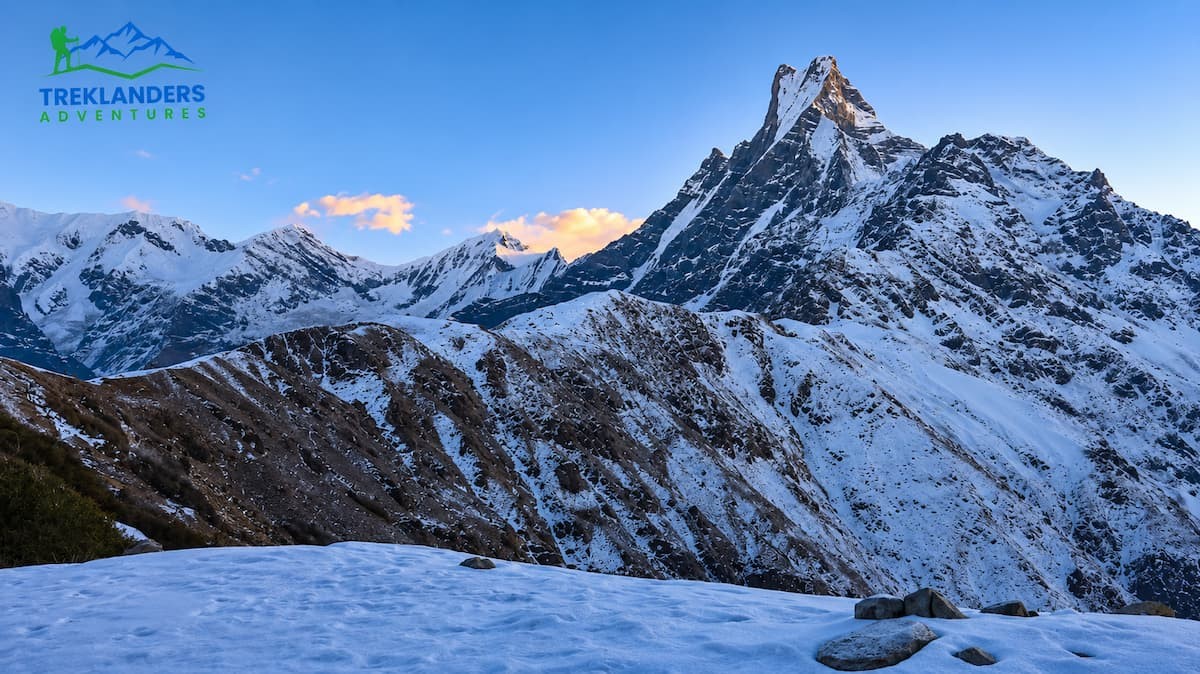
Winter gives photographers the cleanest air of the year. Dust and haze settle after autumn, and the snow adds contrast to every ridge.
Plan your best frames around three places. The first is Low Camp, where Fishtail fills the frame in the afternoon sun. The second is the Mardi Himal Viewpoint at sunrise, when the first light hits the summit of Machhapuchhre and moves down the face. The third is Badal Danda at dusk, where cloud fills the valley below and the Annapurna range glows above it.
Cold shortens battery life. Keep spare batteries and your phone in an inside pocket, and swap them as they cool. Wear thin liner gloves under your insulated gloves so you operate the shutter without exposing bare skin. Carry a small tripod or a beanbag for the pre dawn light at the viewpoint, because wind and cold make hands shake.
You can practice before the trek. The Nagarkot Sunrise Tour shows how winter light behaves on the Himalayan skyline, and the Everest Mountain Flight gives you a view from the air on a clear morning.
Winter weather can delay a departure, so a flexible schedule gives you more than safety. It gives you time to enjoy Nepal at the cool end of the year, when lowland temperatures feel pleasant.
In Kathmandu, the Patan and Bhaktapur Sightseeing Tour covers two Newar cities with brick squares and wood carved temples. The Chandragiri Cable Car Tour lifts you above the valley for mountain views without a walk.
In Pokhara, the 3 Day Pokhara Sightseeing Tour gives you boat time on the lake, viewpoints, and caves.
Chitwan is the warmest part of Nepal in winter. The 3 Day Chitwan Wildlife Tour offers jungle walks, canoe rides, and a chance to see rhinos in mild weather. If you want a longer holiday, the 7 Day Kathmandu, Pokhara and Chitwan Wildlife Tour combines these places with the trek.treklanders.com/trips/nepal-round-trip-of-Kathmandu-Pokhara-Lumbini-and-Chitwan-tour) adds the birthplace of the Buddha.
A good winter plan starts with dates. Choose early December or late February if this is your first winter trek. Choose January if you want the quietest trail and accept more risk. Build two spare days into the schedule, confirm that your insurance covers 4,500 meters and helicopter evacuation, and book gear rentals in Thamel on arrival.
Pick the itinerary that fits your experience. The 9 Day Mardi Himal Trek gives the most time to acclimatize and includes hotels, meals, permits, transport, and a guide and porter team. The 5 Day Mardi Himal Trek from Pokhara suits trekkers who already have time in Pokhara. The Mardi Base Camp Trekking page covers the longer plan that adds buffer days.
Treklanders arranges custom dates, private departures, and winter specific adjustments. You can send your dates through the Plan My Trip form or the general trip planner. You can also reach the team through the contact page, read traveler feedback on the reviews page, or learn about the company on the about us page. More route guides and seasonal updates sit on the Treklanders blog, and the full range of treks sits on the Treklanders Adventures homepage.
The Mardi Himal Trek in winter rewards the trekker who prepares. You walk through quiet forest, sleep above the clouds at Badal Danda, and stand at the viewpoint with Fishtail in front of you under a clear sky. The cold is real, and the snow is manageable with a guide.
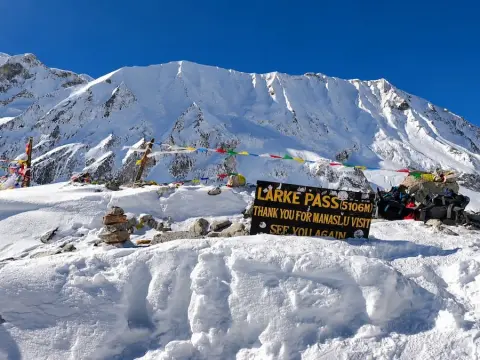
Can you cross Larkya La Pass in winter? Explore Manaslu Circuit Trek weather, snow conditions, safety tips, and essential winter trekking gear.
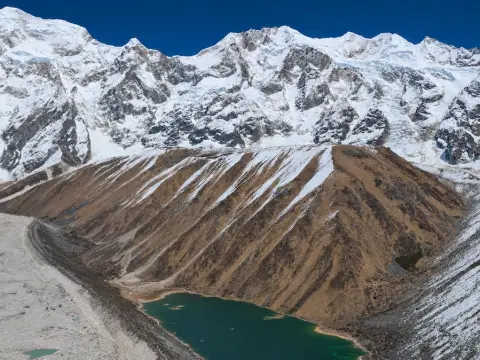
Is the 12-Day Manaslu Circuit Trek safe? Explore the itinerary, Larkya La Pass, acclimatization, altitude risks, and trekking safety tips.
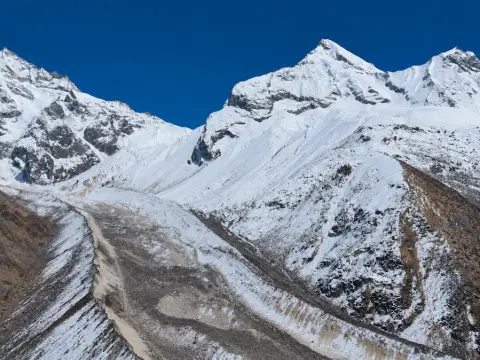
Compare 13, 14, and 18-day Manaslu Circuit Trek itineraries, routes, altitude, acclimatization, difficulty, and Larkya La Pass.



