
Manaslu Circuit Trek Difficulty: Is It Harder Than Annapurna Circuit?
30 Oct 2026
Discover whether the Manaslu Circuit Trek is harder than the Annapurna Circuit, comparing altitude, terrain, walking hours, and overall difficulty.

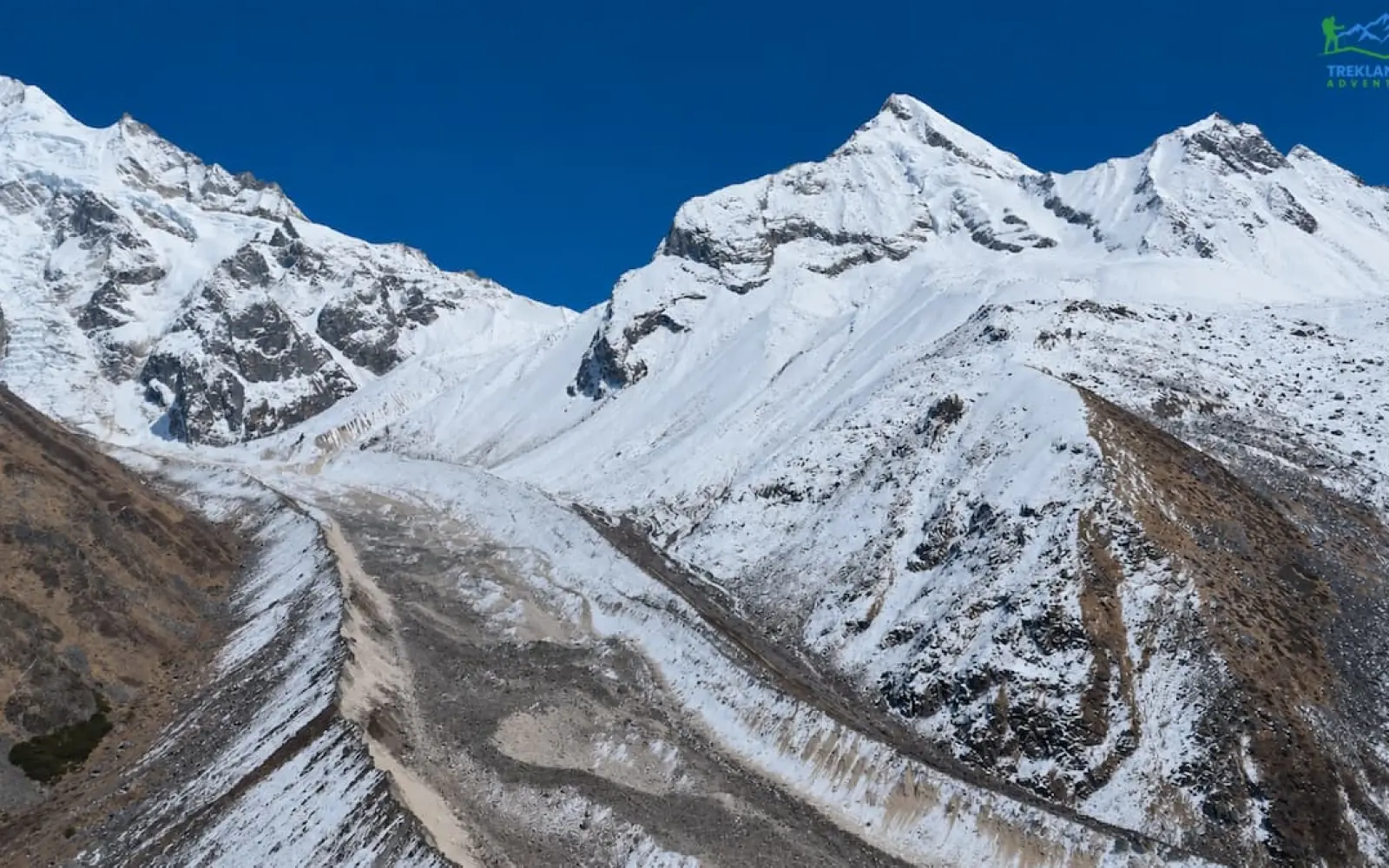
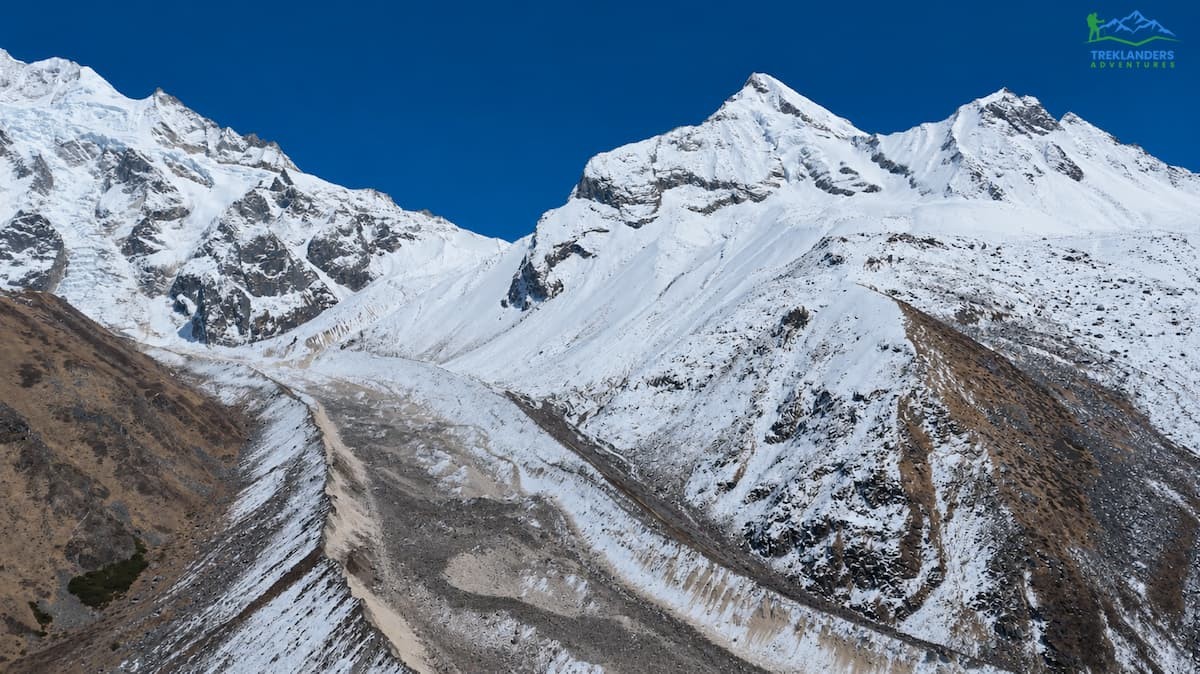
A day-by-day guide to three Manaslu Circuit routes, with sleeping altitudes, walking hours, and the reasons behind each overnight stop
The Manaslu Circuit trek follows the Budhi Gandaki River north from the Gorkha foothills, passes through Tibetan Buddhist villages, and crosses Larkya La Pass at 5,106 m before it drops to Dharapani. You can walk it in 13 days, 14 days, or 18 days. The number you choose decides how much rest your body gets before the pass and how much room you have if weather or a landslide changes the plan. This guide compares the three versions of the Manaslu Circuit trek itinerary and explains which one suits your experience and your calendar.
Treklanders Adventures runs a 13-day Manaslu Circuit trekking package, a 14-day Manaslu Circuit trek, and an 18-day Manaslu Circuit trek from Kathmandu. Every version uses the same trail, the same permits, and the same pass crossing. The differences come from arrival days, drive days, the Kathmandu sightseeing day in the longer plan, and the number of nights you sleep in the upper valley before you climb to Larkya La.
| Itinerary | Total days | Kathmandu arrival day | Namrung night | Samagaun rest day | Gho night after pass | Best for |
|---|---|---|---|---|---|---|
| 13-day | 13 | No | Yes | Yes | Yes | Experienced high-altitude trekkers with limited time |
| 14-day | 14 | Yes | No | Yes | No | Trekkers who want a briefing day and can handle a long climb |
| 18-day | 18 | Yes | Yes | Yes | Yes | First-time high-pass trekkers who want a gentler pace |
If you want one line of advice, choose 13 days for efficiency and experience, 14 days for a structured arrival, and 18 days for the most recovery. The 13-day and 14-day plans are fixed departures on the Treklanders calendar. The 18-day plan follows the same trail and includes a Kathmandu sightseeing day, a separate night in Besisahar, and a free day before you fly home. You can also request a custom version through Plan My Trip.
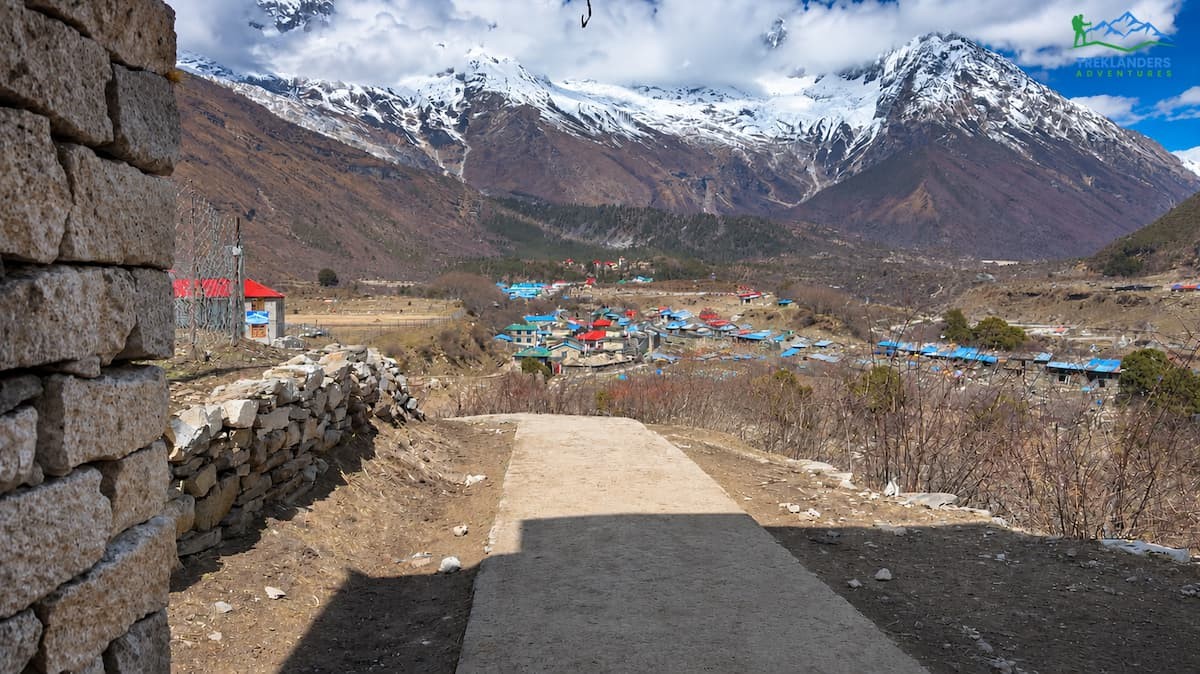
The Manaslu Circuit circles Mount Manaslu, which rises to 8,163 m and ranks as the eighth highest mountain on Earth. The trail starts at Machha Khola in Gorkha district at about 900 m. It climbs along the Budhi Gandaki through Jagat, Deng, Namrung, Lho Gaon, Samagaun, and Samdo, then crosses the pass and ends at Dharapani in Manang district at 1,820 m. At Dharapani the route meets the Annapurna Circuit, which means you can keep walking if you want a longer trip. The Annapurna Circuit trek begins from that junction.
Nepal kept the upper valley closed to foreign visitors until the early 1990s. That history explains why the Manaslu region feels quieter than the main trekking routes. You share the path with villagers, yak herders, and mule trains rather than long lines of trekkers. Treklanders runs its Manaslu departures from the same region page as its other routes, so you can compare them on the Manaslu region trek page.
Larkya La is the high point of every itinerary. You sleep at Dharmasala (Larke Phedi) at 4,450 m, leave before dawn, and walk about eight hours to Bhimthang. Before that day the route passes through five landscape belts: warm lowland farms, sal and pine forest, rhododendron highland, alpine pasture, and glacial terrain. Each belt asks something different from your body, which is why the number of days matters.
All itineraries start and end in Kathmandu and use teahouse lodges on the trail. Treklanders arranges the permits, a government-licensed guide, porters at one porter for two trekkers, ground transport, and all meals during the trek. You can read more about the company on the About Us page and meet the leaders on the team page.
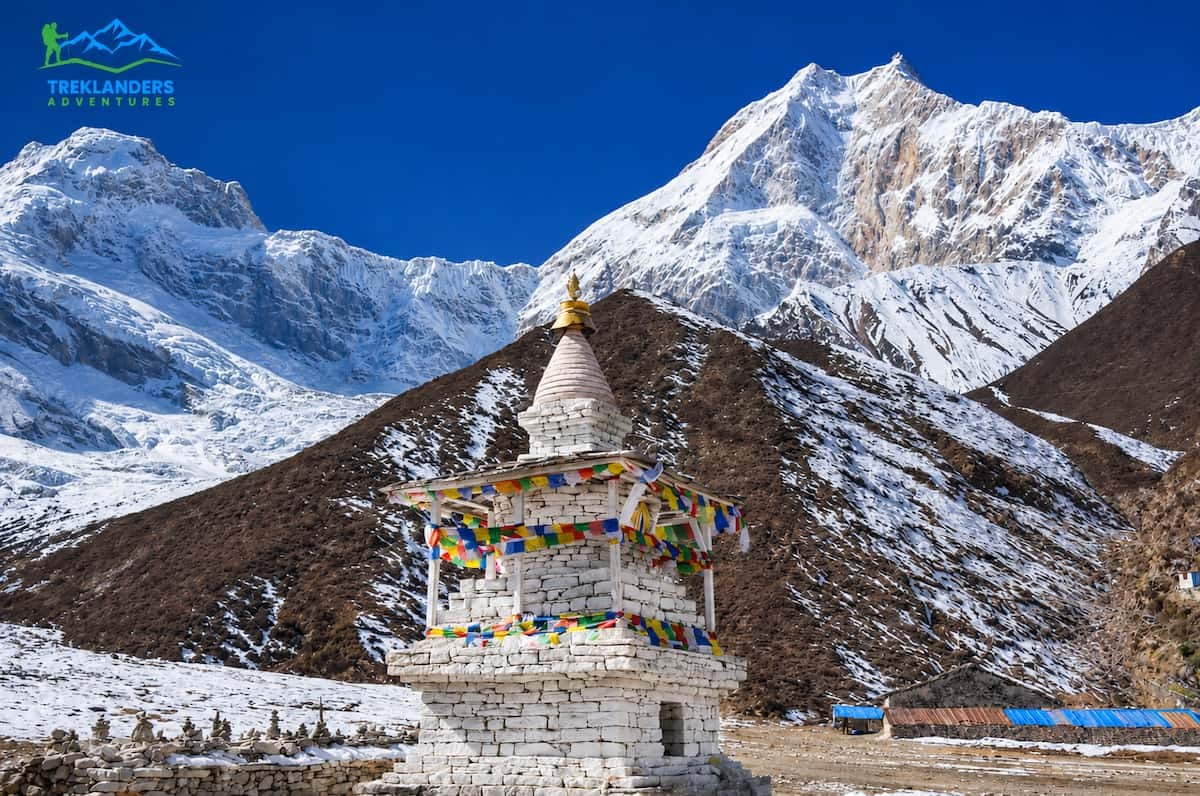
The 13-day route has 12 nights on the trail and in villages, with the trip running from Kathmandu to Kathmandu. The highest point is Larkya La at 5,106 m. The grade is moderate to adventurous, and the walking days run from about four to eight hours.
| Day | Route | Sleeping altitude | Time | Key point |
|---|---|---|---|---|
| 1 | Kathmandu to Machha Khola | 900 m | 7 hr. drive | Start of the trek |
| 2 | Machha Khola to Jagat | 1,340 m | 7 hr. | Restricted-area checkpoint |
| 3 | Jagat to Deng | 1,860 m | 6 hr. | Tibetan Buddhist culture begins |
| 4 | Deng to Namrung | 2,660 m | 6 hr. | Important acclimatization stop |
| 5 | Namrung to Lho Gaon | 3,180 m | 5 hr. | First major Manaslu views |
| 6 | Lho Gaon to Samagaun | 3,500 m | 6 hr. | Two-night stay |
| 7 | Samagaun rest day | 3,500 m | Optional hike | Climb high, sleep low |
| 8 | Samagaun to Samdo | 3,875 m | 5 hr. | Gradual altitude gain |
| 9 | Samdo to Dharmasala | 4,450 m | 4 hr. | Pass preparation |
| 10 | Dharmasala to Bhimthang via Larkya La | 3,590 m | 8 hr. | Pass at 5,106 m |
| 11 | Bhimthang to Gho | 2,535 m | 4 hr. | Recovery after the pass |
| 12 | Gho to Dharapani, drive to Besisahar | 760 m | 7 hr. | Trek ends, jeep transfer |
| 13 | Besisahar to Kathmandu | 1,365 m | 5 hr. drive | Trip concludes |
Day 2 is the longest first walking day in the 13-day plan. You drive for about seven hours and then walk for roughly the same time, so start slowly and drink more water than you think you need. The trail passes Dovan, Tatopani with its hot spring, and Khorla Besi before the climb to Jagat. Officials check your permits at Jagat, the stone-paved gateway to the restricted area.
Days 3 and 4 take you through Philim, a large Gurung farming village, and Prok before Namrung. From Namrung you see the north face of Manaslu for the first time. Day 5 passes Lihi and Sho, and in the afternoon you can walk up to Ribung Monastery near Lho Gaon. Many trekkers find that the monastery visit is the day's most memorable moment, so leave time for it.
On day 7 at Samagaun, hike to Pungyen Gompa or toward Birendra Lake and return to sleep. Day 10 is the pass. You leave in the dark with a packed lunch, climb past moraine and frozen ponds, and descend about 1,500 m to the meadow at Bhimthang. Day 11 is a short walk by design, because your legs need an easy day after the crossing. Day 12 ends at Dharapani, where the trail meets the Annapurna Circuit, and a jeep carries you through Tal, Chamje, and Syange to Besisahar.
The 13-day Manaslu Circuit trekking page lists the same route with the group pricing and departure dates. If you have only two weeks, this is the shortest version that still keeps the Namrung night and the Gho night, which are the two stops that help most with acclimatization and recovery.
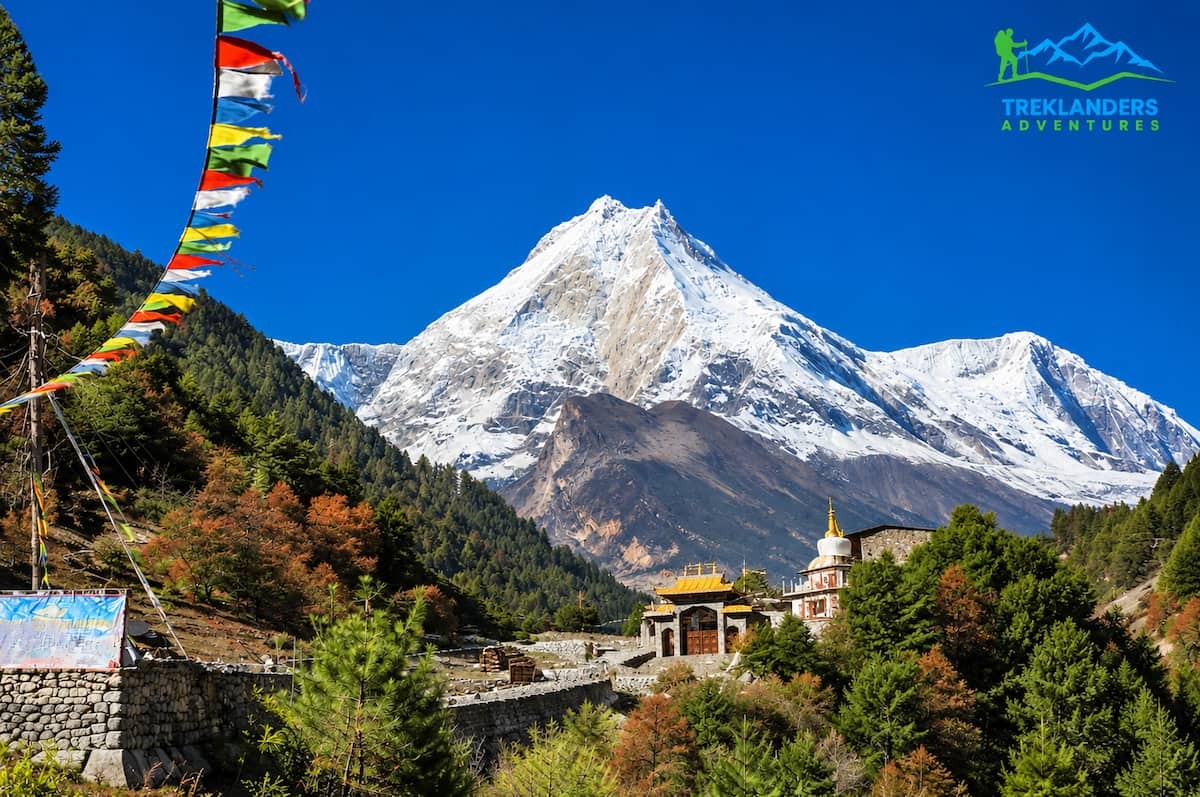
The 14-day plan adds a Kathmandu arrival day and rearranges the upper valley stops. The jump from Deng to Lho Gaon is a sleeping gain of 1,320 m, and this plan skips the Namrung night. That is the main safety trade-off of this itinerary, so read it carefully before you book the 14-day Manaslu Circuit trek.
| Day | Route | Sleeping altitude | Time | Key point |
|---|---|---|---|---|
| 1 | Arrival in Kathmandu | 1,365 m | Airport transfer | Trek briefing and welcome dinner |
| 2 | Kathmandu to Machha Khola | 930 m | 8 to 9 hr. drive | Start of the trek |
| 3 | Machha Khola to Jagat | 1,340 m | 6 to 7 hr. | Permit checkpoint |
| 4 | Jagat to Deng | 1,860 m | 6 to 7 hr. | Narrow gorge walking |
| 5 | Deng to Lho Gaon | 3,180 m | 6 to 7 hr. | 1,320 m sleeping gain, skips Namrung |
| 6 | Lho Gaon to Samagaun | 3,530 m | 4 to 5 hr. | Short, easy day |
| 7 | Samagaun rest day | 3,530 m | Optional hike | Climb high, sleep low |
| 8 | Samagaun to Samdo | 3,875 m | 4 to 5 hr. | Near the Tibetan border |
| 9 | Samdo to Dharmasala | 4,460 m | 4 to 5 hr. | Pass preparation |
| 10 | Dharmasala to Bhimthang via Larkya La | 3,720 m | 8 to 9 hr. | Pass at 5,106 m |
| 11 | Bhimthang to Tilje | 2,300 m | 6 to 7 hr. | Forest descent |
| 12 | Tilje to Dharapani, drive to Besisahar | 760 m | 3 to 4 hr. walk, 4 to 5 hr. drive | Trek ends |
| 13 | Besisahar to Kathmandu | 1,365 m | 6 to 7 hr. drive | Farewell dinner |
| 14 | International departure | 1,365 m | Airport transfer | Trip ends |
The hotel in Kathmandu on the arrival night is a three-star property, and it gives you a quiet place to sleep off the flight. Day 5 carries the most risk in this plan. Walk slowly, drink water at every stop, and tell your guide about any headache, because the jump in sleeping altitude happens in a single day with no intermediate night.
The 14-day plan gives you a structured start. On day 1 your guide meets you at the airport, you attend the briefing, and you learn how teahouse days work. Use that evening to check your gear list and to mention any health concern you have. The next morning the drive to Machha Khola takes 8 to 9 hours on a road that turns rough near the end, so pack snacks and water in your daypack.
Between Jagat and Deng the gorge narrows and the trail runs close to the river. On day 5 you pass Ghap, with its prayer flags and mani walls, and climb into alpine terrain on the way to Lho Gaon. That day is the longest climb of the plan. Eat a full breakfast, keep your pace slow, and rest at every village. Lho Gaon gives you your first close view of Manaslu, and that view tends to make the effort easy to remember.
Day 6 is short on purpose. You walk 4 to 5 hours past yak pastures and monasteries to Samagaun. Day 8 to Samdo and day 9 to Dharmasala follow the same open valley as the 13-day plan. After the pass on day 10 you descend to Bhimthang, then continue to Tilje on day 11. Tilje sits at 2,300 m, so the night feels much warmer than the cold of Dharmasala, and sleep comes more easily.
From Samagaun the 14-day plan matches the 13-day route until the pass. After Larke Pass you sleep in Tilje instead of Gho, which means a longer descent of 6 to 7 hours but a warmer and lower night. Trekkers who want to compare the two routes can read the Manaslu Circuit trek difficulty guide, which explains how the trail compares with other circuits.
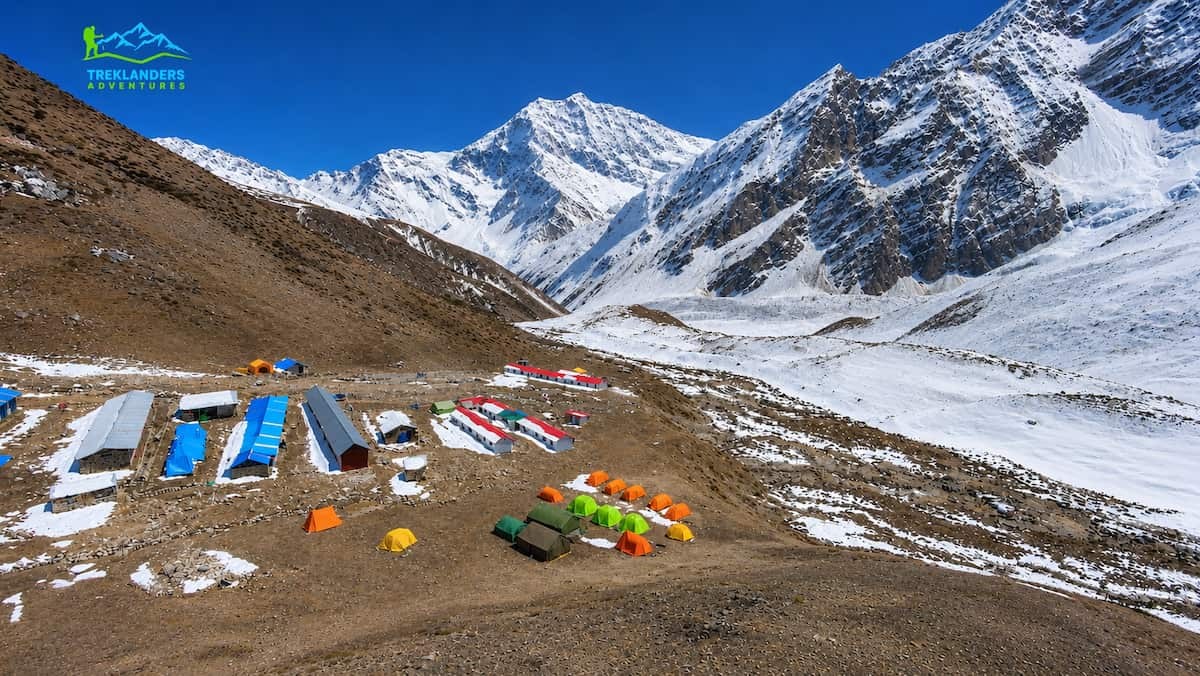
The 18-day plan is the gentlest ascent in this guide. It keeps Dovan, Jagat, Namrung, Samagaun, and Gho as separate recovery-oriented stops, and it adds a Kathmandu heritage day and a separate night in Besisahar before the flight home. The Manaslu Circuit trek page lists this as the standard 18-day departure, and you can ask Treklanders to adjust any night through Plan My Trip.
| Day | Route | Sleeping altitude | Time | Key point |
|---|---|---|---|---|
| 1 | Arrival in Kathmandu | 1,365 m | Airport transfer | Briefing and welcome dinner |
| 2 | Kathmandu heritage sightseeing | 1,365 m | Half-day tour | Temples and old city squares |
| 3 | Kathmandu to Machha Khola | 900 m | 7 hr. drive | Start of the trek |
| 4 | Machha Khola to Dovan | 1,070 m | 4 hr. | Short first walking day |
| 5 | Dovan to Jagat | 1,340 m | 4 to 5 hr. | Permit checkpoint |
| 6 | Jagat to Deng | 1,860 m | 6 hr. | Tibetan culture begins |
| 7 | Deng to Namrung | 2,660 m | 6 hr. | 800 m sleeping gain |
| 8 | Namrung to Lho Gaon | 3,180 m | 5 hr. | Manaslu north face views |
| 9 | Lho Gaon to Samagaun | 3,500 m | 6 hr. | Two-night stay |
| 10 | Samagaun rest day | 3,500 m | Optional hike | Climb high, sleep low |
| 11 | Samagaun to Samdo | 3,875 m | 4 hr. | Last permanent village |
| 12 | Samdo to Dharmasala | 4,450 m | 4 hr. | Pass preparation |
| 13 | Dharmasala to Bhimthang via Larkya La | 3,590 m | 8 hr. | Pass at 5,106 m |
| 14 | Bhimthang to Gho | 2,535 m | 4 hr. | Recovery after the pass |
| 15 | Gho to Dharapani, jeep to Besisahar | 760 m | Walk and drive | Trek ends |
| 16 | Besisahar to Kathmandu | 1,365 m | 5 hr. drive | Return to the capital |
| 17 | Kathmandu free day | 1,365 m | Leisure | Shopping, rest, farewell dinner |
| 18 | International departure | 1,365 m | Airport transfer | Trip ends |
The Kathmandu heritage day on day 2 is the main difference from the other plans. You visit the old city, the stupas on the western hills, and the palace squares in Patan or Bhaktapur, depending on your interests. Trekkers who want a shorter city day can book the Kathmandu full day sightseeing tour or the Seven UNESCO heritage sites day tour and keep the rest of the day free.
After the city, the drive to Machha Khola takes about seven hours, and day 4 is a short walk of about four hours to Dovan. A small village with a hot spring at Tatopani sits along the way, and a short afternoon walk toward the river gives you time to adjust. Day 5 to Jagat takes 4 to 5 hours and ends in time for lunch. You use the afternoon to rest and to prepare your permits for the checkpoint.
From Jagat the route climbs to Deng and Namrung with no walking day above six hours. Namrung at 2,660 m gives you a night at moderate height before Lho Gaon at 3,180 m, so your body meets 3,000 m in a gentle step. You then spend two nights at Samagaun and continue to Samdo and Dharmasala. On day 13 you cross the pass and sleep at Bhimthang. Day 14 to Gho is a four-hour recovery walk. Day 15 ends at Dharapani, where a jeep takes you to Besisahar for a separate night.
The final days are relaxed. Day 16 is the drive back to Kathmandu, and day 17 is a free day in the city. Use it to buy souvenirs, to rest, or to take the Chandragiri cable car tour if you still have energy. Day 18 is your flight. The extra days give you room to absorb a weather delay at the pass, which is one of the biggest advantages of this plan.
| Plan | Nights above 3,000 m | Biggest daily sleeping gain | Rest day | Pass-day margin |
|---|---|---|---|---|
| 13-day | 6 | Deng to Namrung: 800 m | Samagaun | Moderate |
| 14-day | 6 | Deng to Lho Gaon: 1,320 m | Samagaun | Lower on the ascent |
| 18-day | 6 | Deng to Namrung: 800 m | Samagaun | Best |
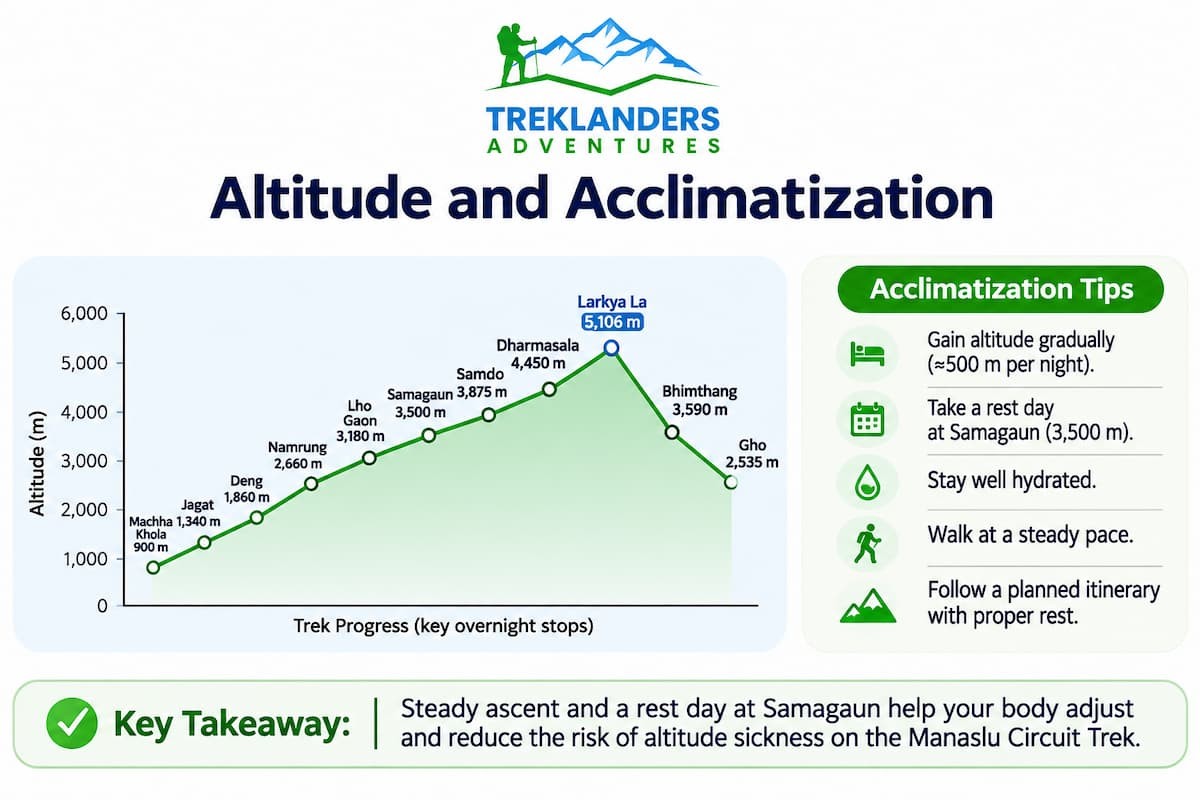
The table counts six nights above 3,000 m: Lho Gaon, two nights at Samagaun, Samdo, Dharmasala, and Bhimthang after the pass. All three plans give you the same amount of time at height. The difference is how quickly you reach it and how many easy days come before the pass. The 13-day plan reaches Lho Gaon after four walking days. The 14-day plan reaches it after three, and the 18-day plan reaches it after five.
The 14-day plan has the steepest single step of the three, and the 18-day plan has the most gradual approach. If you are unsure which pace suits you, ask your agent to show you the altitude profile before you commit. The Manaslu region trek page and the Everest Base Camp trek page both explain how Treklanders builds acclimatization into high routes, and the same principles apply here.
Climb high on the rest day and return to sleep at Samagaun. The hike to Pungyen Gompa takes 3 to 4 hours both ways. Birendra Lake sits on the trail toward Manaslu Base Camp, and the base camp hike suits strong walkers. Guides choose the hike based on how the group feels at breakfast, so be honest about your energy in the morning.
Watch for headache, nausea, dizziness, and unusual tiredness. Tell your guide at once. Drink water often, avoid alcohol, and walk slowly on the final days toward Dharmasala. If you plan to use acetazolamide, speak to your doctor at least four weeks before you travel. Shorter schedules carry more altitude risk, and the 12-day Manaslu Circuit trek safety guide explains why in more detail.
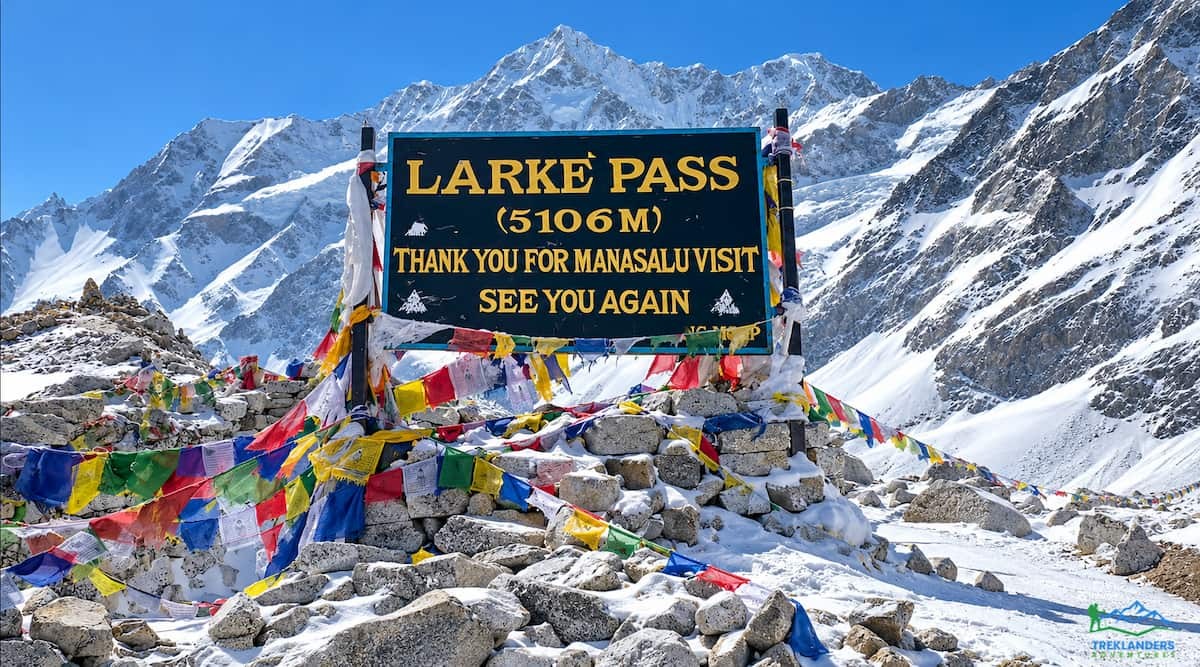
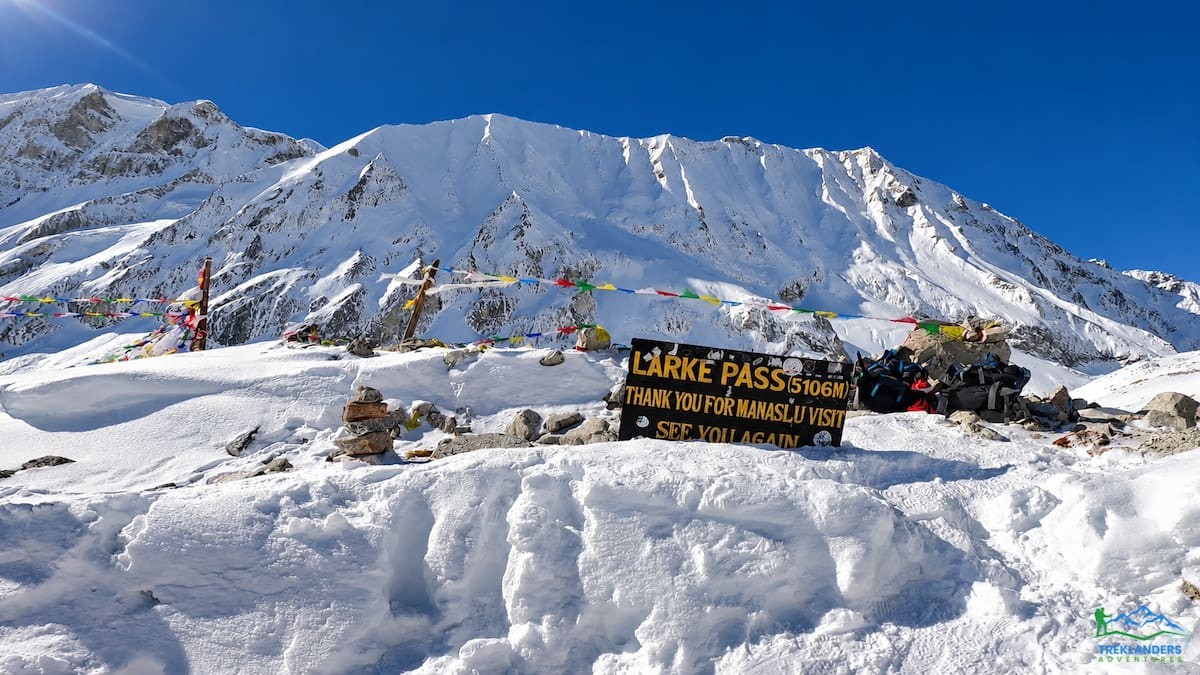
You wake in the dark at Dharmasala, eat breakfast, and carry a packed lunch. The path climbs steeply over moraine, drops briefly to a small glacial pond, and continues across rocky ground past frozen ponds. A final climb brings you to hundreds of prayer flags and a stone cairn that marks 5,106 m. The pass forms the boundary between Gorkha and Manang districts, so you cross from one administrative area into another on the way.
From the top you see Manaslu, Himlung Himal, Cheo Himal, Annapurna II, and, far to the east, Ganesh Himal. The descent is long, about 1,500 m in one day, over loose stone and stairs. Trekking poles protect your knees. Reach Bhimthang by late afternoon and eat a large dinner, because the next morning you will feel the effort in your legs.
Carry two layers, a shell jacket, gloves, a warm hat, sunglasses, sunscreen, a headlamp, water, and snacks. Fill two bottles, since no lodge stands along the whole climb. Walk at a pace that lets you speak in short sentences. Stop if a headache gets worse, and tell your guide right away.
Guides decide whether the group continues, waits, or turns back based on weather and on how each trekker looks. A slow start or a grey sky does not always mean the day is off, but your guide has the final say. Ask the team how they handle these calls before you leave, so the decision does not surprise you on the trail. Trekkers who want to cross the pass outside the main seasons should read the Manaslu Circuit trek in winter guide, which explains how snow changes the plan.
Choose the 13-day plan if you have walked above 4,000 m before and your calendar is tight. The 13-day route gives the shortest total trip, and it keeps the Namrung night and the Gho night that the 14-day plan skips. Trekkers who pick it should arrive in Kathmandu a day early, because day 1 starts with a drive and there is little slack in the schedule.
Choose the 14-day plan if you want an arrival day and a briefing before you leave Kathmandu. The 14-day Manaslu Circuit trek fits people who have trekked at altitude and can handle one long climb. Talk to your guide before day 5 if you feel tired or sleep badly, because that day leaves little room for error.
Choose the 18-day plan if this is your first trek above 4,000 m or if you simply prefer short walking days. It also suits people who want a Kathmandu heritage day and a free day before the flight. If you want the same trail with a different rhythm, you can compare it with the Annapurna Circuit trek, which uses a similar pass-day structure.
A shorter schedule gives less margin for weather. If snow closes the pass for a day, a 13-day plan has little time to absorb the delay, while the 18-day plan can absorb it without cutting a stop. Trekkers who have limited holiday time but want the 18-day pace can ask Treklanders whether a custom length fits their dates through the contact page.
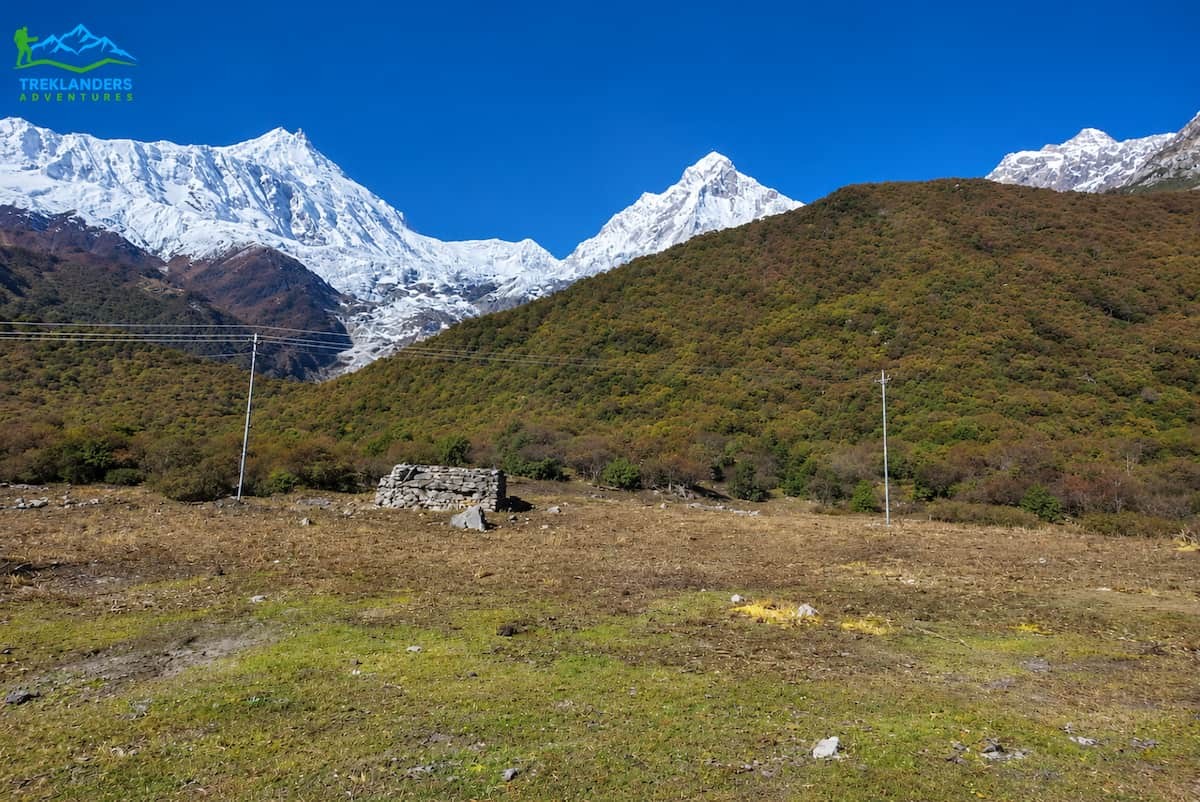
Days follow a steady rhythm. Expect to wake at about 6 am, pack your duffel for the porter, and eat breakfast in the lodge dining room. Walking starts between 7 and 8 am, when the air is cool and the views are clearest. You stop for tea after two hours and for lunch around noon, usually in a village restaurant along the trail.
The afternoon walk is shorter. You reach the lodge by mid-afternoon, wash, and rest. Tea and snacks come at 4 pm. Dinner arrives early, between 6 and 7 pm, and the dining room stays warm until bedtime. Plan to sleep by 8:30 pm. Early nights help you recover at altitude and prepare you for the next morning.
Your guide checks the group at every stop. Expect questions about your appetite, sleep, headache, and energy. Answer honestly. A guide who knows how you feel can adjust the pace and the daily plan, and every itinerary above leaves room for that. The Treklanders team page introduces the people who lead these treks.
Start eight weeks before departure. In weeks one and two, walk 45 minutes on four days a week and add stair climbing twice a week. In weeks three and four, extend one walk to two hours and carry a daypack with 5 kg. Add squats, lunges, and step-ups twice a week.
In weeks five and six, hike on hills for three to four hours once a week with your loaded daypack. Keep the other sessions short and steady. In weeks seven and eight, repeat one long hike with the full load and reduce the other sessions so that your legs stay fresh. Break in your boots during these hikes, because a blister on day three can slow the whole group.
Training for descents matters as much as climbing. The 1,500 m descent after the pass strains your knees and quads. Walk down stairs slowly, and use trekking poles on your long hikes so you know how to set them. Trekkers who want to build endurance before the trip can also try a shorter warm-up trek, such as the Langtang Valley trek or the Mardi Himal trek, to test their gear and their pace.
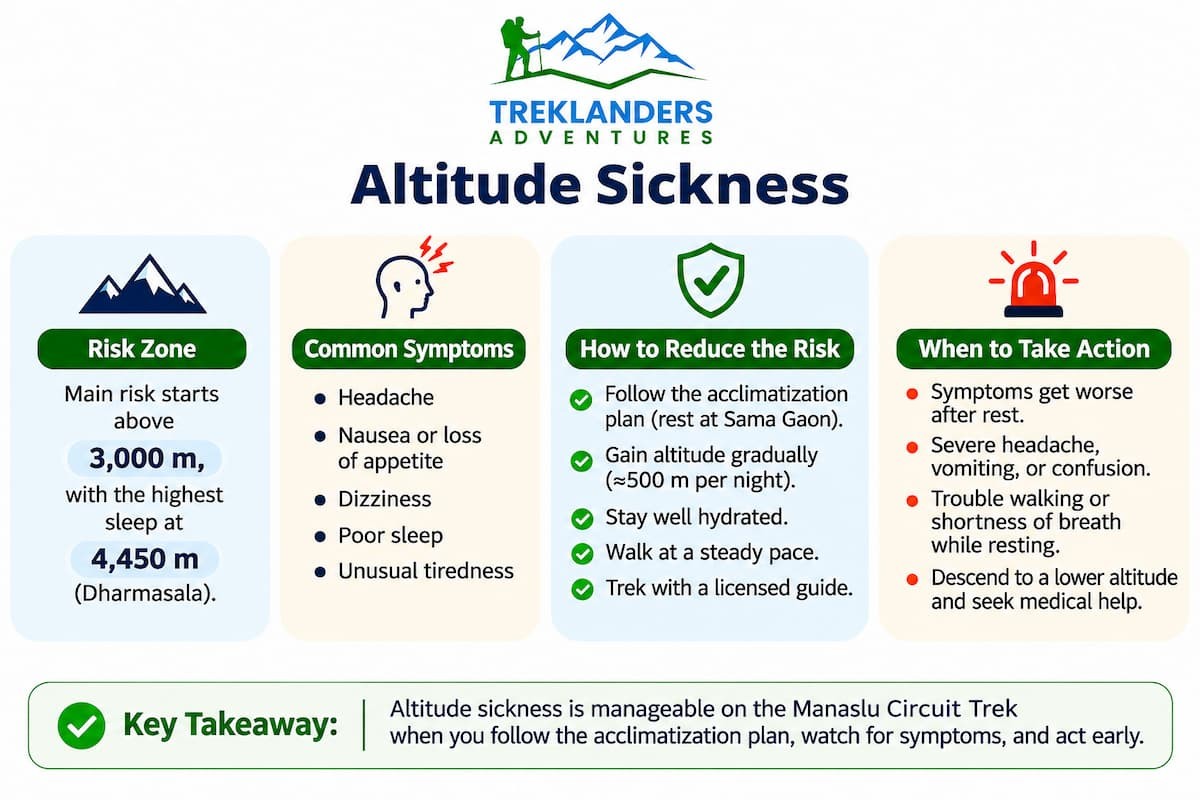
Acute mountain sickness starts with a mild headache, poor appetite, and trouble sleeping. These signs are common at 3,500 m and above. Rest, water, and a slower pace often clear them. If the headache grows, if you feel nausea, or if you stumble when you walk, tell your guide at once. Do not climb higher while symptoms get worse.
Your guide has three options. The first is to rest where you are. The second is to descend to a lower village. The third is to arrange an evacuation. The decision depends on how serious the symptoms look, and it protects you better than pushing on. The 18-day plan gives you the most room to rest, and the 14-day plan gives you the least on the climb to Lho Gaon.
Never take the decision lightly. Altitude sickness can affect fit people, and it can arrive without warning. Your insurance must cover helicopter evacuation, and your guide needs a copy of the policy before you leave. Treklanders can explain the evacuation process during your briefing, so ask about it before you need it.
The trek starts with a drive from Kathmandu to Machha Khola. The highway follows the Trishuli River, then a rough dirt road runs along the Budhi Gandaki through Arughat. The drive takes 7 to 9 hours depending on traffic and road conditions, and you travel by private vehicle arranged by Treklanders. Sit near a window, take motion tablets if you need them, and keep water close.
After the trek, a jeep takes you from Dharapani to Besisahar, and a second drive follows the Marsyangdi and Trisuli rivers back to Kathmandu. The road joins the Pokhara highway at Dumre. Landslides sometimes slow the road in monsoon and early autumn, so leave a buffer day before an international flight. If you want to extend the trip after the circuit, ask about the 13-day Annapurna Circuit trek when you inquire.
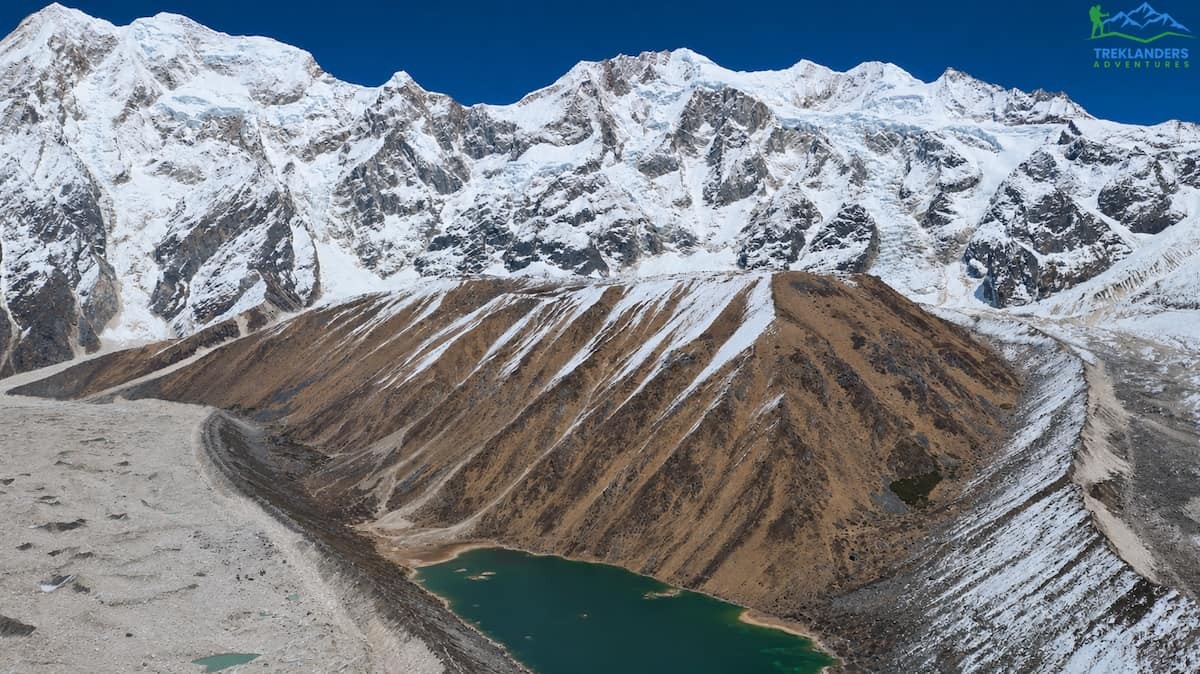
Spring, from March to May, brings rhododendron blooms and long clear days. Autumn, from September to November, brings the sharpest mountain views after the monsoon, though October is the busiest month. Winter is possible only for experienced trekkers because snow can block the pass. Monsoon trekking is not recommended for most people, although the upper valley sits in a rain shadow and sees less rain than the lower hills.
Mornings are cold above 3,000 m in both seasons, and the sun feels strong by midday. Spring afternoons can turn cloudy with light snow, so keep a shell jacket in your daypack at all times. Teahouses fill quickly in April and October, so book early if those are your preferred months. Treklanders also runs a range of other routes across the year, including the Everest Base Camp trek and the Gokyo Valley trek, so you can compare seasons across regions.
Manaslu remains a restricted-area trek. A registered agency must arrange the permits, and a licensed guide is required. Recent rule changes have removed the previous minimum-two-trekker requirement for some restricted-area permits, but confirm the current policy with your operator before booking. Ask Treklanders what applies to your dates, because the rules sometimes change faster than printed guidebooks.
| Requirement | Required | Notes |
|---|---|---|
| Manaslu Restricted Area Permit | Yes | Arranged through a registered agency |
| Manaslu Conservation Area Permit | Yes | Required for the conservation area |
| Annapurna Conservation Area Permit | Yes | Needed for the Dharapani exit side |
| Licensed guide | Yes | Mandatory for the restricted-area route |
| Insurance | Required | Cover trekking to at least 5,200 m and helicopter evacuation |
Bring your passport, visa, passport photos, and insurance details. Carry printed copies of your permits for checkpoints at Jagat, Philim, and Samagaun. Treklanders handles the paperwork for every plan, and the same permit set applies to the 20-day Manaslu Circuit with Tsum Valley trek if you extend the route later. Your policy must also cover medical treatment, because clinics on the route are limited and serious cases move to Kathmandu by air. Send a copy to Treklanders before departure.
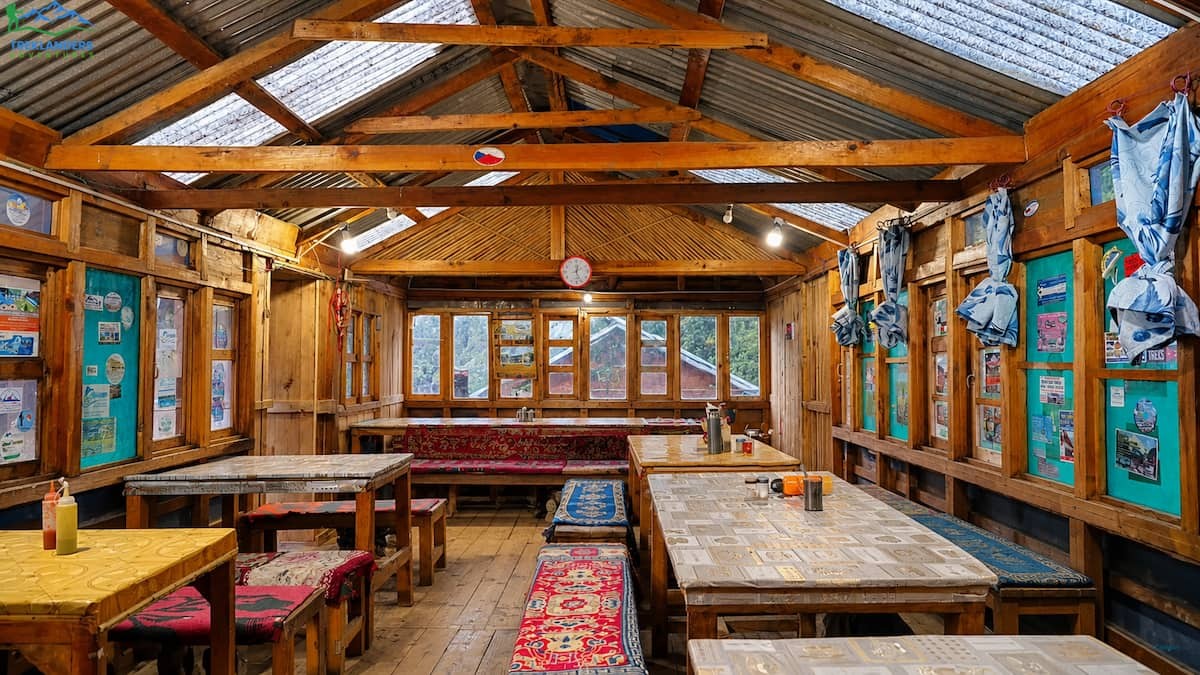
Lodges at Machha Khola, Dovan, and Jagat are basic but functional, with twin beds and shared bathrooms. Quality improves from Namrung onward. Lho Gaon, Samagaun, and Samdo have larger dining rooms, wood stoves, and better bedding. Dharmasala is the exception. It has dormitories and tents because few lodges stand at that elevation.
Dal bhat is the standard meal and usually comes with free refills. Breakfast offers porridge, Tibetan bread, eggs, and pancakes. Meat appears in the lower villages but is best avoided above Samagaun, where supplies arrive slowly. Bring a reusable bottle and purification tablets, and refill from boiled water at lodges. Hot showers and device charging cost extra, and mobile coverage fades above Jagat.
Teahouse menus change a little with the season, so pick simple dishes you know agree with you. Eat the same breakfast most days if it works for your stomach. Many trekkers say the hardest part of teahouse life is the monotony rather than the food, so bring a book, a card game, or a small notebook for the evenings.
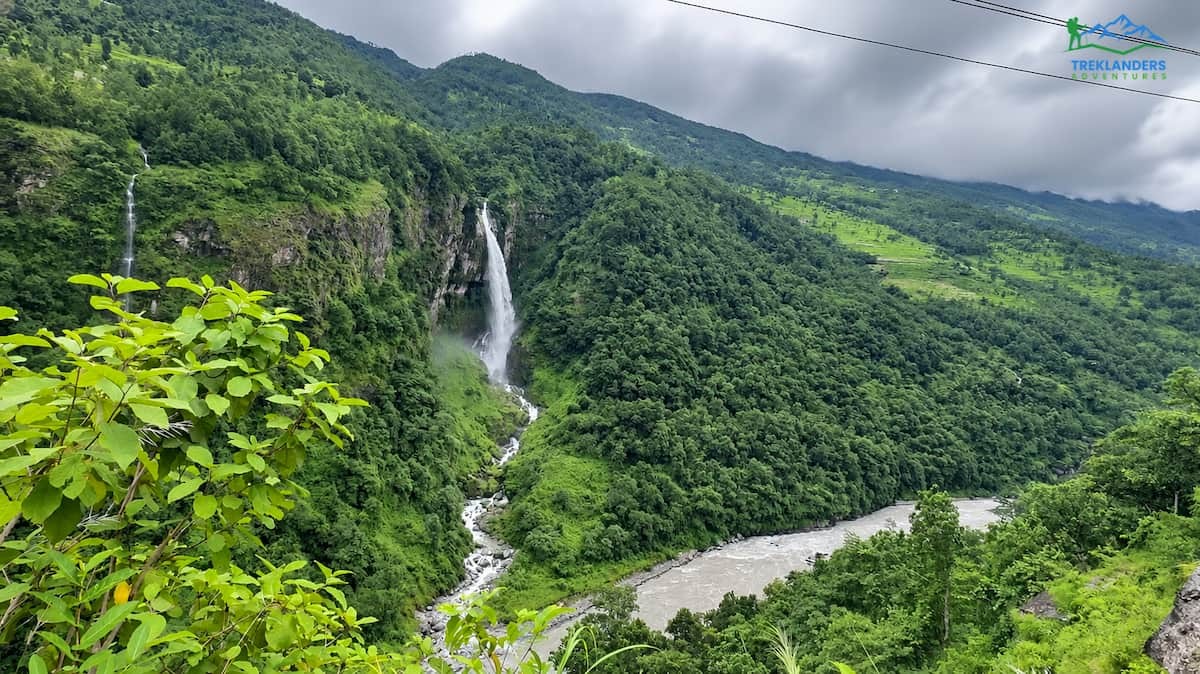
The lower valley feels warm and green. Terraced fields climb the hillsides, and the trail crosses long suspension bridges above the river. Sal and pine trees shade the path between Machha Khola and Jagat. Above Jagat the gorge narrows, the river runs fast, and the trail climbs on stone-paved stairs along the cliffs.
Bamboo gives way to oak and rhododendron forest near Deng and Namrung, and mani walls appear at the entrance of each village. Between Lho Gaon and Samdo the forest thins. Juniper and birch replace taller trees, barley fields surround the villages, and yaks graze on open slopes. The walk covers all of these changes in a few days, which is one reason many trekkers call this route varied.
The southern hills hold Gurung and Magar villages, and the Manaslu region shifts to Tibetan culture north of Jagat. You pass mani walls, chortens, and prayer wheels. Walk clockwise around them, the same direction the local people use. Ribung Monastery near Lho Gaon and Pungyen Gompa near Samagaun are two of the older religious sites on the route.
Ask permission before you photograph people or monks, and remove your shoes inside monasteries. Festivals, prayer ceremonies, and seasonal trading shape village life across the upper valley. Locals welcome visitors who show respect for customs and religious spaces, and a simple greeting in Nepali goes a long way. For a broader look at Nepali culture before you leave Kathmandu, the Patan and Bhaktapur sightseeing tour gives useful context.

Layers matter more than bulk. Pack two or three base layers, a fleece, a down jacket rated for high-altitude conditions, and a waterproof shell. You need sturdy waterproof boots, trekking poles, warm gloves, a hat, and a sleeping bag rated to minus 10 degrees Celsius. A headlamp is essential for the pre-dawn start on pass day. Keep your power bank in your daypack so the cold does not drain it overnight.
Treklanders gives every trekker a packing list at the briefing, and the same list supports the Mera Peak trek and climb and the Island Peak trek and climb for anyone who later wants to try higher routes. If you rent gear in Thamel, check zippers, straps, and sleeping bag loft before you leave the shop.
Samagaun is the base for the rest day on every plan, and the village offers three useful hikes. Pungyen Gompa is an old monastery on the hillside above the valley, and the round trip takes 3 to 4 hours. Birendra Lake is a glacial pond on the path toward Manaslu Base Camp, and it shows the ice and moraine you will meet near the pass. The base camp hike is the longest option and suits strong walkers who feel well.
Pick the hike that matches your energy. A short walk to a viewpoint still helps your body adapt, because the goal is to climb a few hundred meters and then return to sleep at 3,500 m. A day spent only indoors gives less benefit. Take water, a shell jacket, and sunscreen, and stay with your guide on all three routes. The rest day appears in the daily plans of the 13-day route, the 14-day route, and the 18-day route.
Mobile coverage works in lower villages such as Machha Khola and Jagat, and it fades above them. Samagaun, Samdo, and Dharmasala have weak or no signal. Some lodges offer Wi-Fi, though it runs slowly and drops in bad weather. Download offline maps before you leave Kathmandu, and tell your family that messages may arrive late.
Most villages have electricity from solar or small hydro plants. Lodges charge a fee per device, so a power bank of 10,000 to 20,000 mAh saves you from queues. Keep the bank in your daypack during the day and in your sleeping bag at night, because cold drains lithium batteries quickly. Your guide carries emergency communication, and the Treklanders office can reach you through the guide if a family matter comes up.
Base layers sit against your skin. Pack two or three moisture-wicking shirts, one or two thermal tops, and one or two thermal bottoms. Avoid cotton, which stays wet and cools you down. Mid layers hold heat. Bring a fleece jacket and a light down or synthetic jacket. Outer layers block wind and water. Bring a hard-shell jacket, waterproof trousers, and a heavy down jacket for the nights at Samdo and Dharmasala.
For your hands and head, bring trekking gloves, insulated mittens, a wool hat, and a neck gaiter. For your feet, bring broken-in waterproof boots with ankle support, two or three pairs of wool socks, and camp shoes for the evenings. Add sunglasses with strong UV protection, sunscreen with SPF 50, and lip balm. A first aid kit with blister care, pain relief, and water purification tablets completes the list. The Everest Panorama trek page includes a similar packing guide that works well for the Manaslu region too.
A flash flood on the Budhi Gandaki on October 11, 2026 damaged roads, bridges, and trail sections in the lower valley. The Trekking Agencies' Association of Nepal reported that the Manaslu Larke Pass trail reopened with partial repairs, and it advised trekkers to proceed with care. Operator reports describe a short bypass near Yaru Bagar that replaces a damaged stretch. The Tsum Valley side trail stayed closed at the last report, so check the status of the 20-day Manaslu Circuit with Tsum Valley trek before you plan around it.
Conditions change quickly after floods. Ask Treklanders for the current route status through the contact page before you lock your dates, and expect your guide to adjust the schedule on the trail if a section needs a detour. The longer 18-day plan absorbs these changes most easily, because it has spare days that a 13-day plan does not.
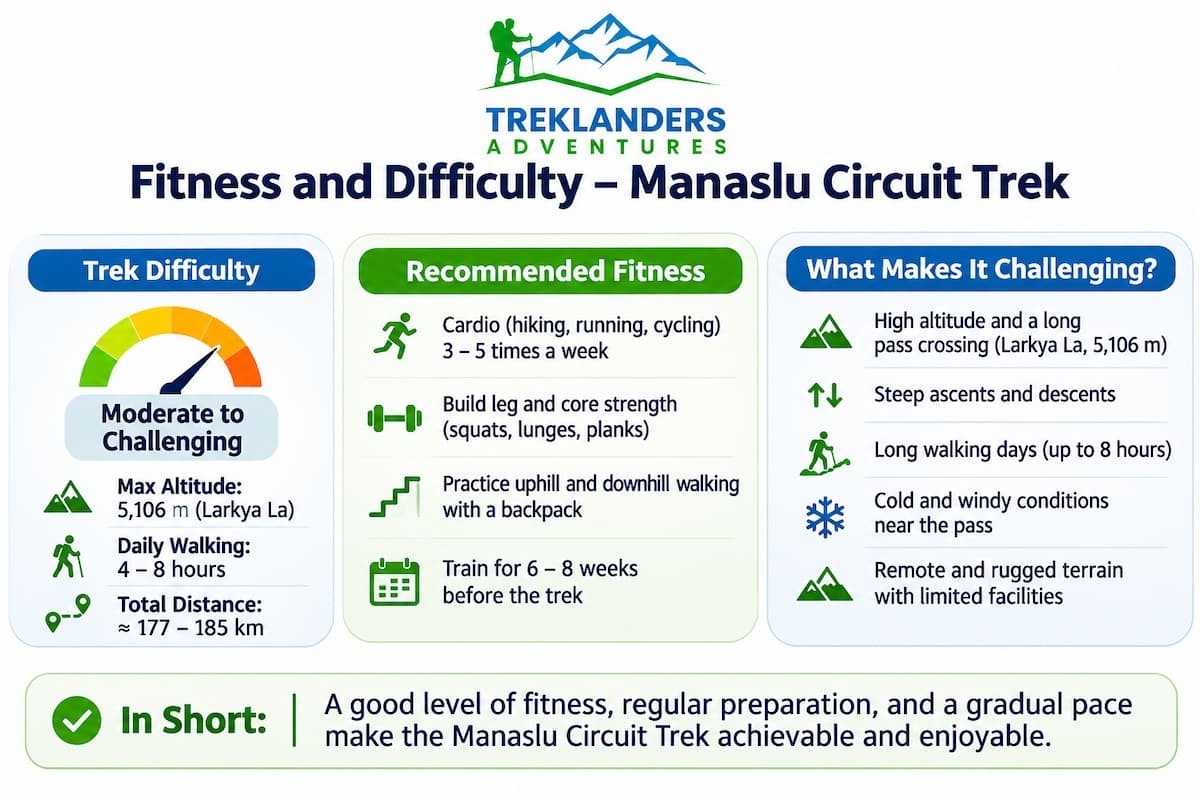
The Manaslu Circuit is rated moderate to adventurous. Days run 4 to 8 hours, and pass day is the hardest. Start training six to eight weeks ahead with hiking, stair climbing, and leg strength work. Walk with a loaded daypack so your shoulders and hips learn the weight. The difficulty comparison with the Annapurna Circuit explains the effort in more detail.
Mental preparation counts as much as fitness. Expect cold mornings, sore legs, and grey days when the pass feels far away. Trekkers who accept those moments and keep a steady pace tend to enjoy the circuit most. Your guide sets a comfortable pace from the first day and adjusts the schedule to the mood of the group. If a day feels too hard, say so early.
Dharapani sits on the Annapurna Circuit, so you can keep walking after the Manaslu loop. The Annapurna Circuit trek, the Nar Phu Valley with Thorong La Pass trek, and the Tilicho Lake Base Camp trek all branch from this area. If you prefer a shorter extension, the Ghorepani Poonhill trek gives you rhododendron forest and sunrise views without a second high pass.
Trekkers who want a different region after Manaslu can look at the Everest region trek or the Langtang region trek. Each offers a different landscape and a different culture, and the Treklanders regions page lists all of them in one place.
The Manaslu Conservation Area has limited waste infrastructure. Carry a reusable bottle, take wrappers and batteries back to the lower villages, and walk clockwise around mani walls. Treklanders pays guides and porters above the national minimum wage and limits porter loads. Tip your guide and porters at the end of the trek, and follow the guidance your team gives you on how much is customary.
Trekkers can support local economies by eating in village lodges, buying handicrafts directly from makers, and choosing operators that publish their policies. Read the company's reviews and blog to see how other trekkers describe their experience. The reviews page collects comments from past groups, and the Treklanders blog covers route updates and practical tips.
Some trekkers arrive in Nepal with a list of routes rather than a single trail in mind. Treklanders runs several other high-altitude programs, and each one shares some planning logic with the Manaslu Circuit. The Everest Base Camp trek with Lobuche East Peak climbing expedition adds a climbing section to the usual Khumbu walk. The 12-day Everest Base Camp trek and the 14-day Everest Base Camp trek show how the same destination can be shaped into shorter or longer schedules. Trekkers who want to return by air can compare the Everest Base Camp trek and returning via heli with the 9-day Everest Base Camp trek with helicopter return. Those who prefer a longer Khumbu loop can read about the Everest Three Passes trek, and the Everest Base Camp trek from Jiri follows the older overland approach.
On the Annapurna side, the Annapurna Base Camp trek is a popular choice for first-time trekkers, and the 11-day Annapurna Base Camp trek gives you more time at each village. Those starting from Pokhara can book the 7-day Annapurna Base Camp trek from Pokhara. The Annapurna Semi Circuit trek offers a middle path between a single valley and a full loop, and the Khopra Ridge and Khair Lake trek suits walkers who prefer ridge views over high passes. The Mohare Danda trek is another lower-altitude option.
The Langtang region has its own character. The Langtang Valley trek and the 7-day Langtang Valley trek cover the valley above Syabrubesi, while the Gosainkunda Lake trek and the Helambu trek head toward lakes and forest villages. The 14-day Tamang Heritage trek with Langtang Valley combines culture and mountains in a single itinerary.
Farther north and west, the Upper Mustang trek follows a desert landscape on the Tibetan plateau edge, and the Upper Dolpo trek is a remote route for experienced trekkers. The Kanchenjunga trek reaches the eastern end of the Himalayan range. Those who want to explore beyond Nepal can read about the Mt. Kailash and Lake Manasarovar tour or the 8-day Bhutan tour from Kathmandu.
If you have only a few days in Nepal, the Nagarkot day hike and the one-day Trishuli river rafting adventure give you a taste of the country without a long trek. The 3-day Chitwan wildlife tour and the 3-day Pokhara sightseeing tour pair well with a mountain route. Evenings in Kathmandu suit a cooking class in Thamel, and the 7-day Kathmandu, Pokhara and Chitwan wildlife tour covers three contrasting parts of the country.
You can browse the full catalogue by activity on the trekking in Nepal page or the one-day hiking page. Destination pages for Nepal, Tibet, and Bhutan group trips by country, and the Annapurna region page and the Mustang region page list the routes in each area.
Teahouses fill quickly in spring and autumn, so book early for October and April. Compare the 13-day, 14-day, and 18-day pages side by side, and check the arrival day, the number of walking days, and the nights you spend in Namrung and Gho. Ask the team how many days of buffer exist before your flight home, and send your dates through the contact page to request a written plan.
If you want a custom length, use Plan My Trip. Treklanders adjusts the plan to your pace, and you can add days in Namrung, Samagaun, or Bhimthang. Share your previous trekking experience and your highest altitude so the team can suggest the right length. If you want to browse other options first, the group departures page lists upcoming dates for shared treks, and the gallery shows photos from earlier groups on the trail.
Discover whether the Manaslu Circuit Trek is harder than the Annapurna Circuit, comparing altitude, terrain, walking hours, and overall difficulty.
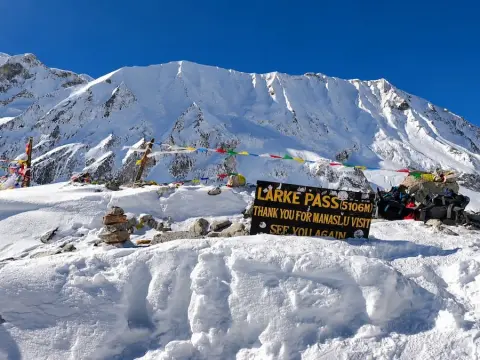
Can you cross Larkya La Pass in winter? Explore Manaslu Circuit Trek weather, snow conditions, safety tips, and essential winter trekking gear.
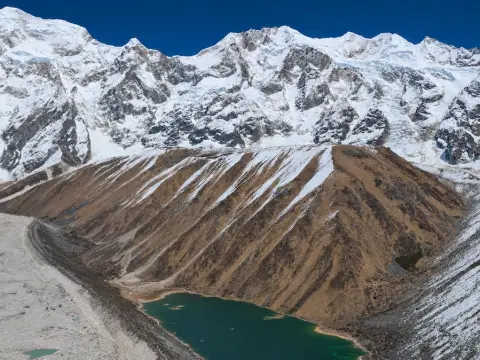
Is the 12-Day Manaslu Circuit Trek safe? Explore the itinerary, Larkya La Pass, acclimatization, altitude risks, and trekking safety tips.



