How to Cross Thorong La Pass (5,416m): Complete Guide for Annapurna Circuit Trekkers
27 May 2026
Complete guide to Thorong La Pass with trekking tips, altitude safety, acclimatization, permits, and route details for the Annapurna Circuit Trek.

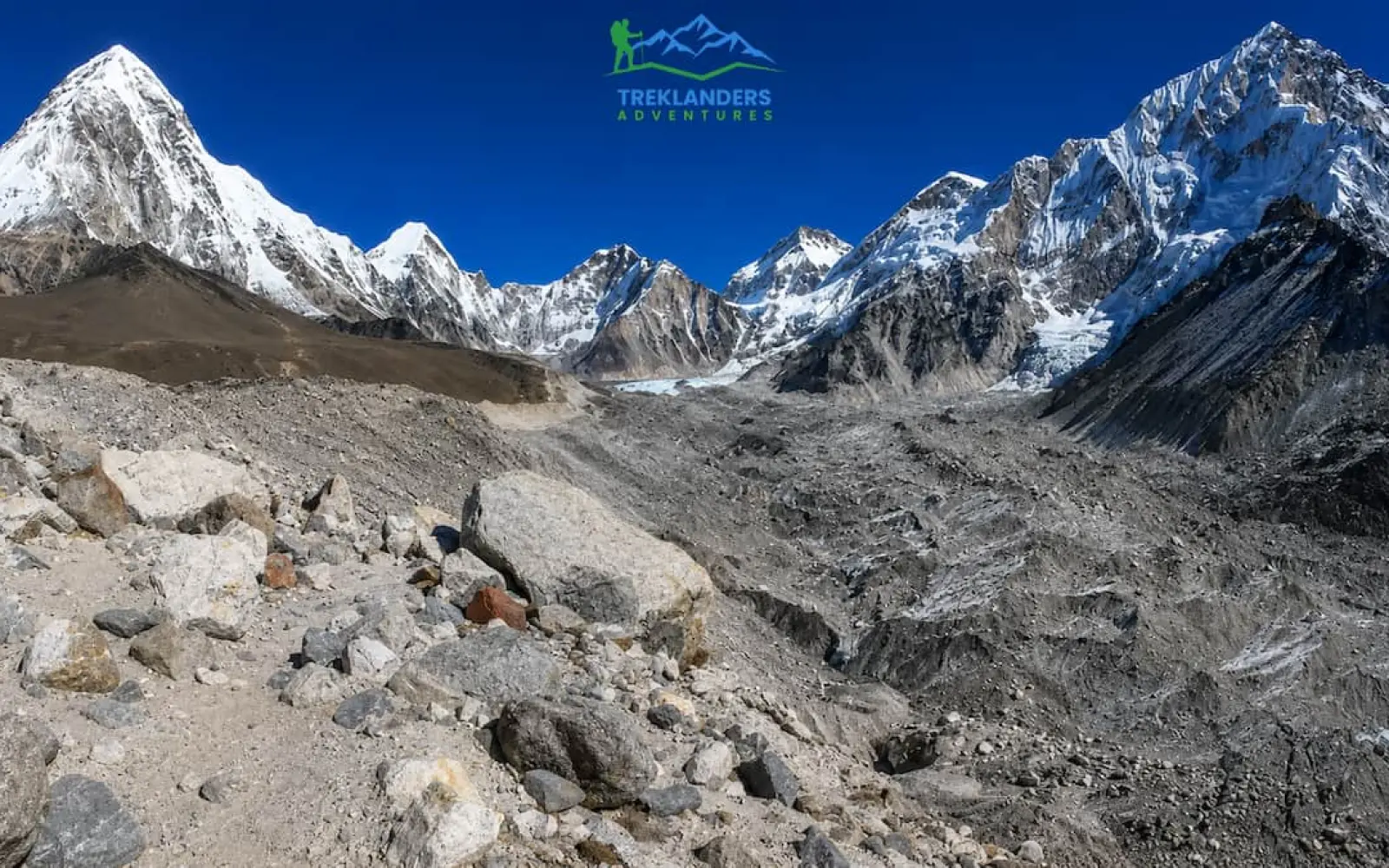
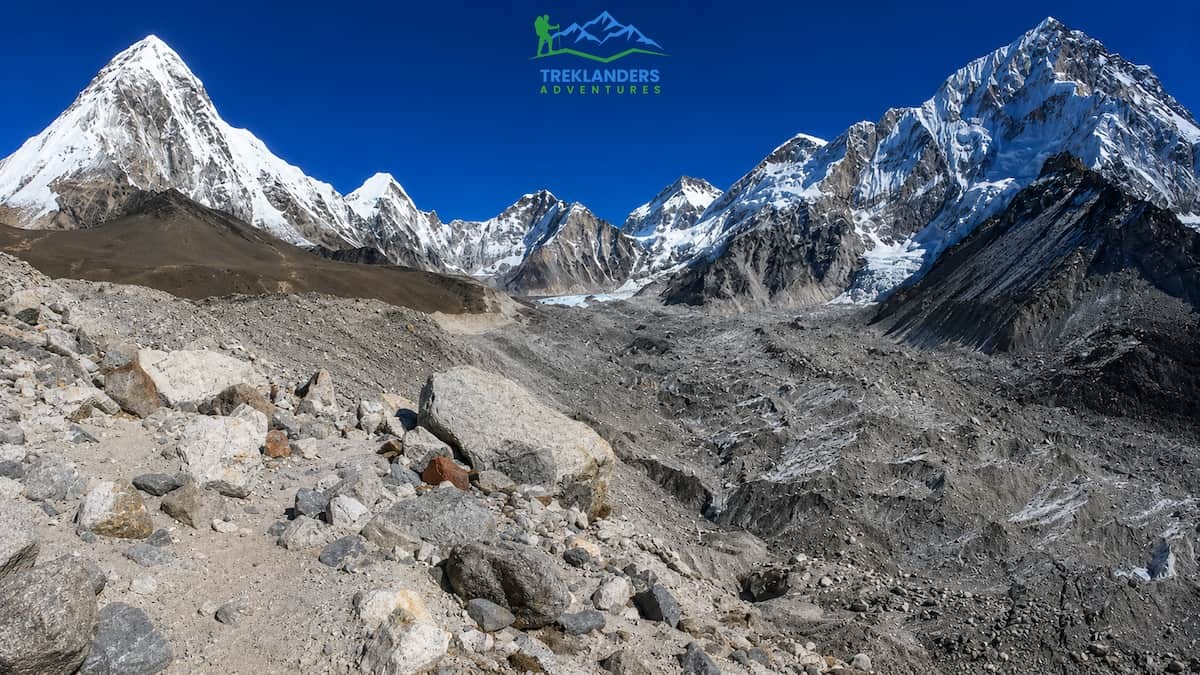
An essential choice is awaiting EBC trekkers before they book an Everest Base Camp trip: Should they stick to the famous EBC path, or should they go for Gokyo Valley and cross Cho La Pass? Both routes have the same closing point. Both come from Lukla. However, the nature of the two experiences, in terms of scenery, level of difficulty, length, and the amount of challenge required to safely finish the trek, is quite different.
For those unfamiliar, this guide is a detailed review of these two routes by contrasting all significant aspects, destination, surface, altitude, time, price, and safety of the pass. All the data presented here has been directly obtained from Treklanders Adventures, which is regarded as one of Nepal's premier trekking companies located in Thamel, Kathmandu. It has several years of experience taking tourists through the Khumbu area.
Nepal's Everest area attracts tens of thousands of trekking lovers every year. Most of them follow the main path northeast from Namche Bazaar toward Tengboche and Dingboche. The less populous, more ambitious group takes the northern fork to Gokyo and then joins back via the Cho La Pass. These climbers see a side of the Khumbu that the majority of EBC trekkers do not.
If you understand the true differences between these two paths, including the precise dangers of the pass crossing and how to handle them, you will have the information to make the right decision in terms of your physical fitness, plan, and trekking ambitions.
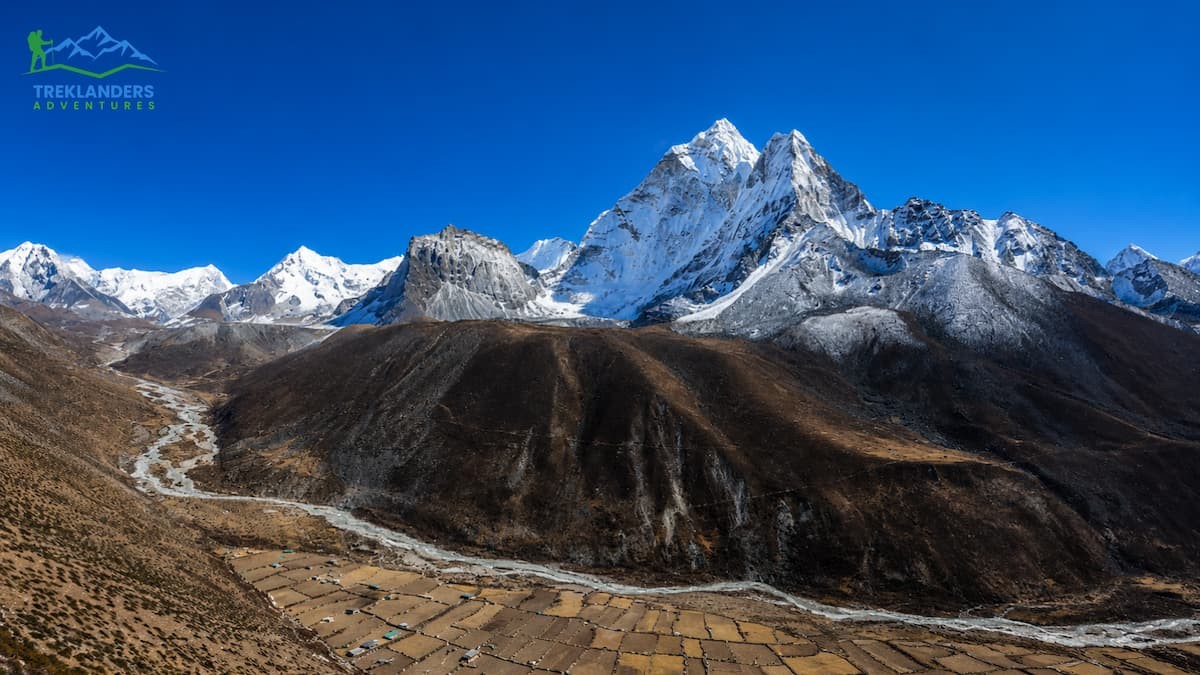
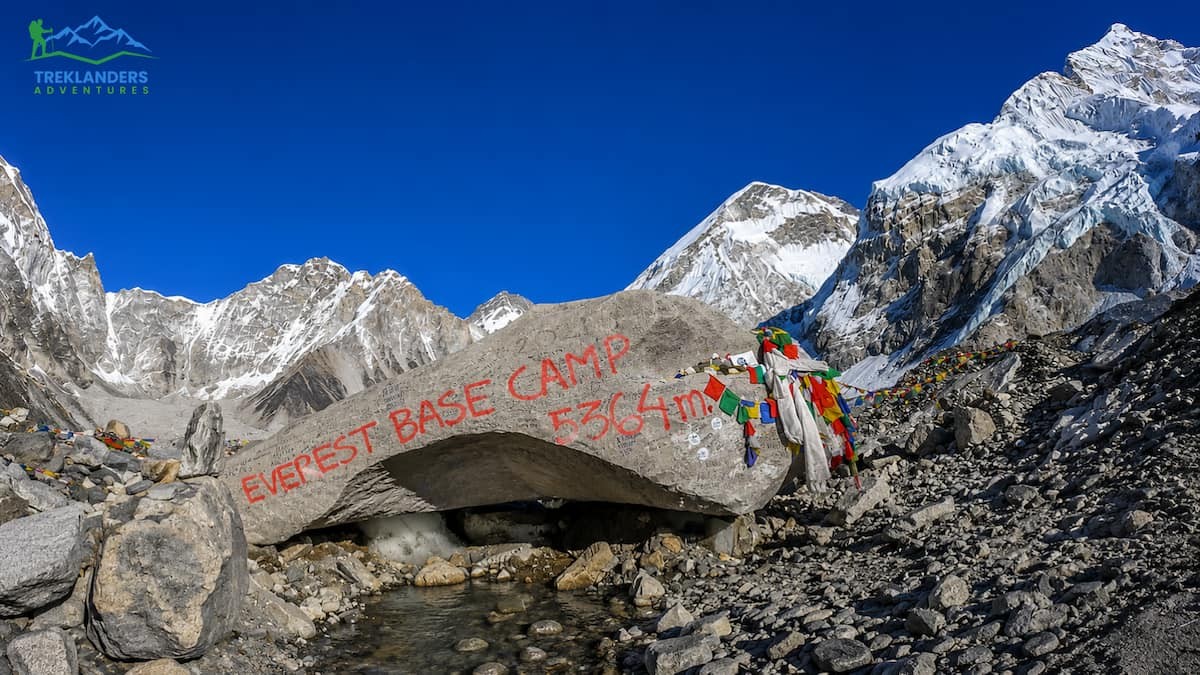
The standard EBC Trek basically traces the steps of the famous Hillary and Tenzing 1953 British expedition. After flying into Lukla, you will hike from Lukla to Phakding, then to Namche Bazaar. From there, the route goes through Tengboche, Dingboche, Lobuche, and Gorakshep on the way to Everest Base Camp (5,364m). You would come back along the same trail.
EBC via Cho La Pass from Gokyo Valley is the same path with an extra separate valley. From Namche Bazaar, the trail goes in a north direction towards Dole, Machhermo, and eventually Gokyo Lake at 4,800m. You will enjoy the climb to Gokyo Ri at 5,357m for sunrise views and then cross the Cho La Pass at 5,420m leading down to Dzongla. From there, you link up with the traditional route at Lobuche and proceed to base camp.
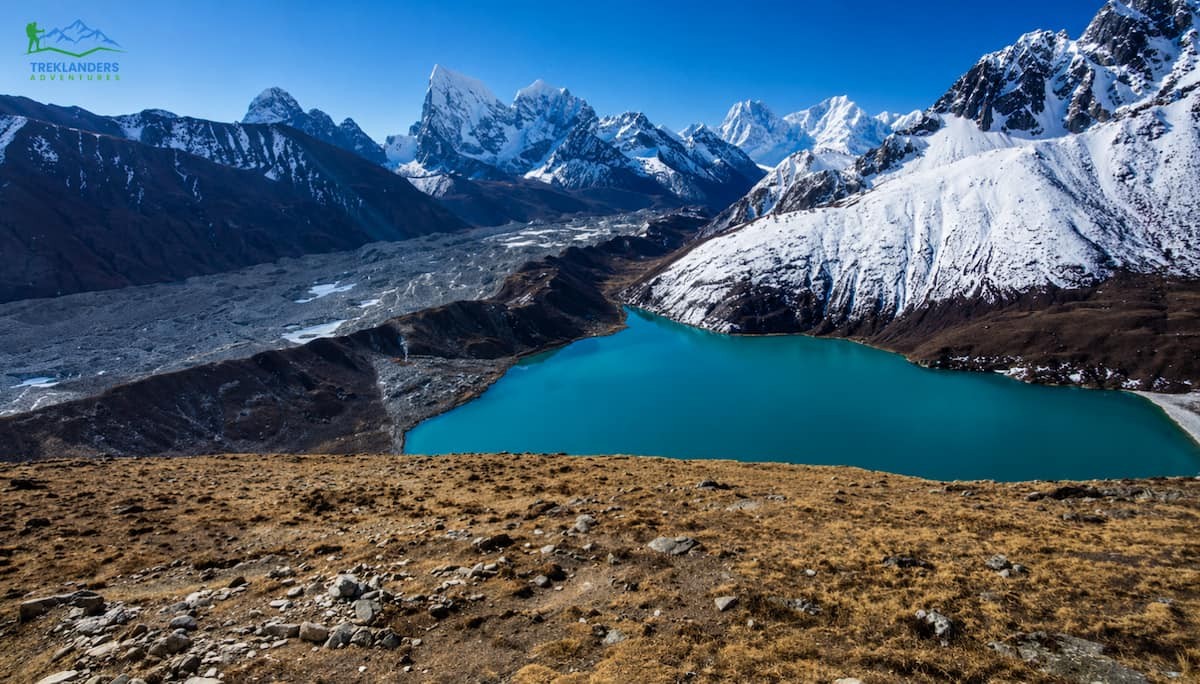
Along the Cho La Pass way, there`s an amazing sight: five of the world's highest peaks can be seen from the same viewpoint at Gokyo Ri: Everest (8,848m), Lhotse (8,516m), Makalu (8,463m), and Cho Oyu (8,201m). The trail is right next to the Ngozumpa Glacier, which is the longest glacier in Nepal.
The regular route just directs you to EBC. The Cho La Pass path allows you to experience the Gokyo Valley and EBC, catching everything that the standard route features, plus adding major new landscapes.
Standardly, from Namche Bazaar, the trail goes in a northeast direction. Along the way, you'll get to see Tengboche, which is one of the most photographed locations in the Himalayas due to the monastery that offers views of Everest and Ama Dablam. Your body will get used to the altitude in Dingboche or Pheriche, you will have to pass along the Thukla pass, walk through Lobuche and Gorakshep before finally arriving at the base camp. Going back is along the same trail. It is a well-marked path, and there will be teahouses for rest after every couple of hours.
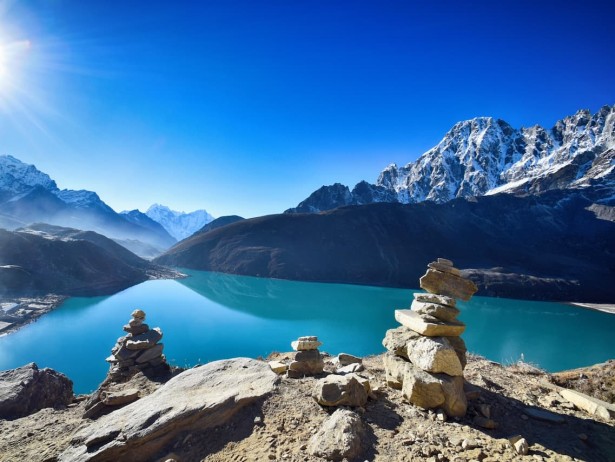
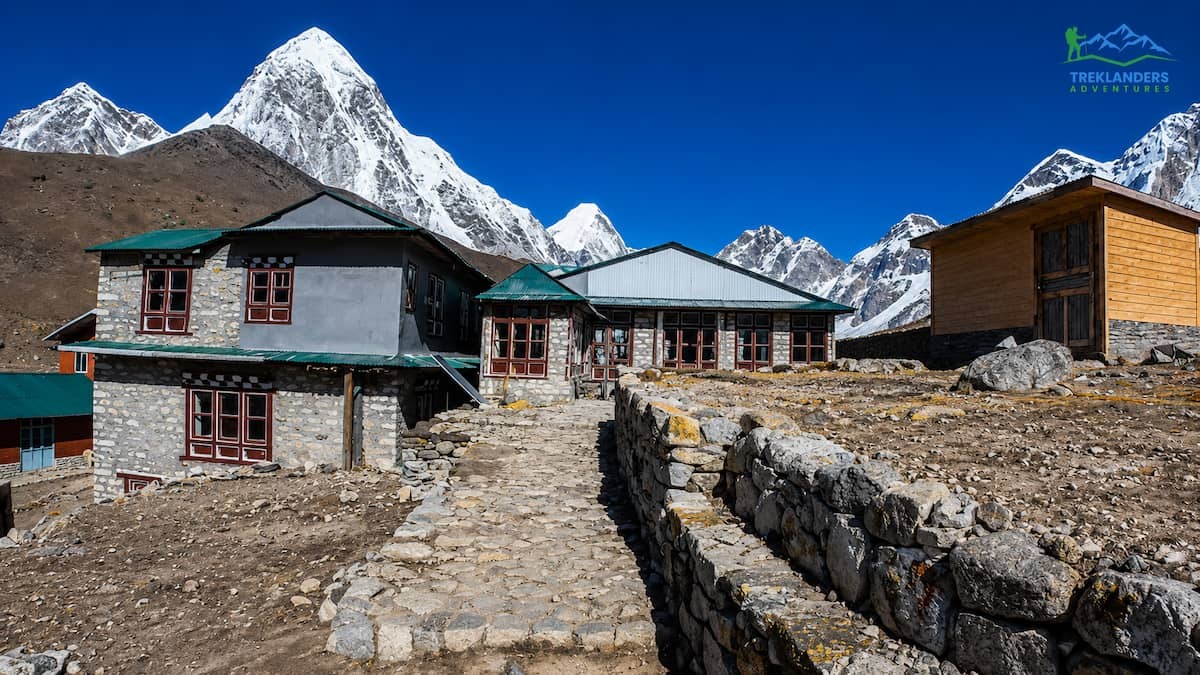
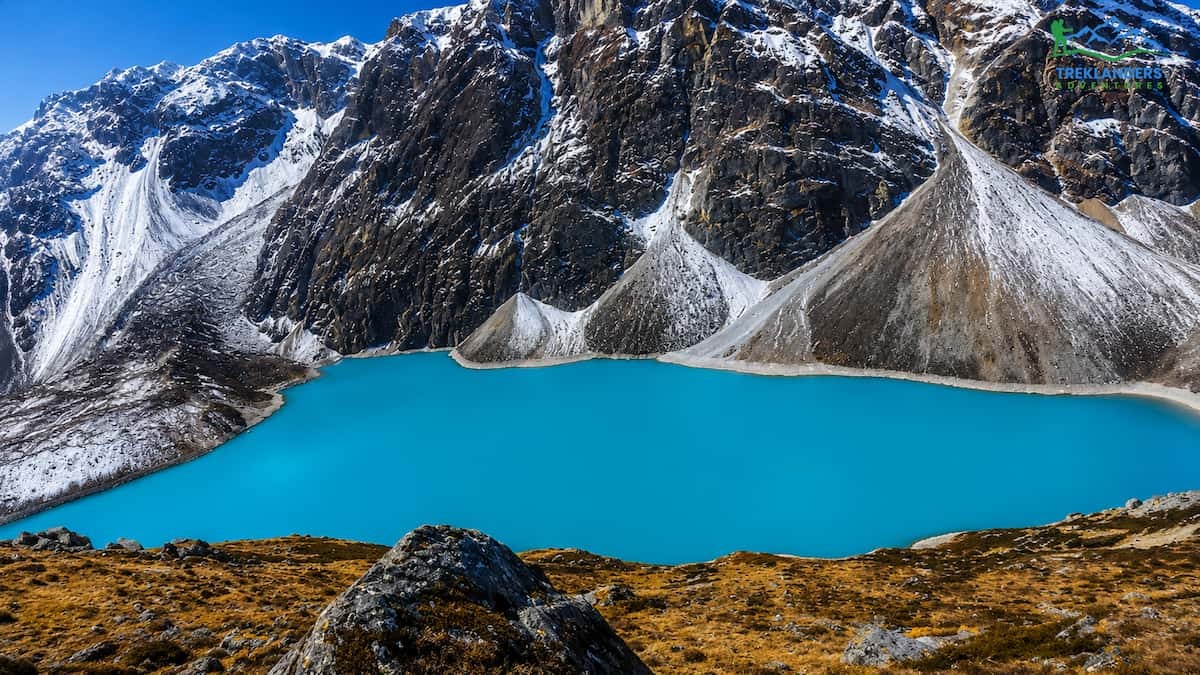
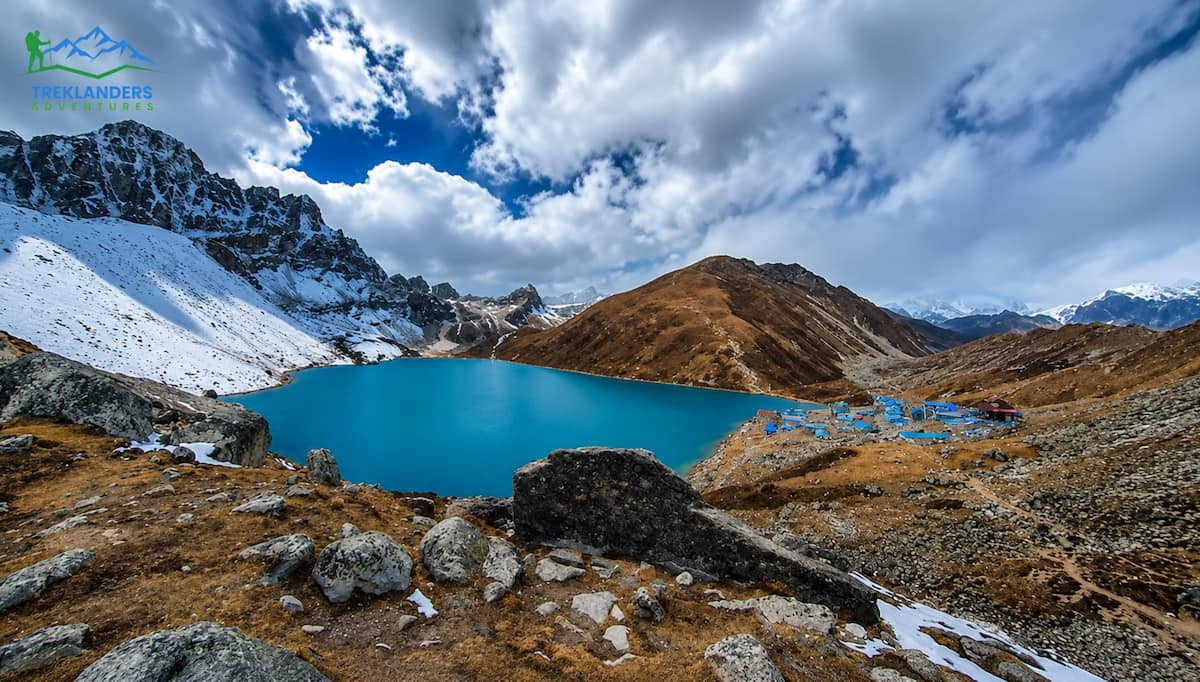
On the way to Cho La Pass, the trail from Namche leads northwards. You climb into the river gorge covered with dense rhododendron and pine forest, finally reaching the small settlement of Dole at 4,110m. From Dole, you hike to Machhermo at 4,470m. From Machhermo, there is a north view of Mt. Cho Oyu, the sixth-highest peak in the world at 8,201m, located on the Nepal-Tibet border, dominating the horizon. Gokyo at 4, 800m hosts five glacial lakes. Dudh Pokhari, the third lake, is where the main settlement is located. The lodges here are cozy and the mountain scenery is among the most striking in all of Nepal.
Originally, Gokyo Valley used to be a summer grazing ground for yaks. However, due to the valley's stunning nature and closeness to Cho Oyu and Everest, it was eventually discovered by trekkers and became a popular destination.
Kathmandu, Lukla, Namche Bazaar, Dole, Machhermo, Gokyo Lake, Thangnak, Cho La Pass, Dzongla, Lobuche, Everest Base Camp, Namche Bazaar, Lukla, Kathmandu
Understanding the elevation profile of each route helps you plan acclimatization correctly. Altitude sickness becomes a real concern above 3,000m. Both routes push well past 5,000m.
Key elevations of the Standard EBC Trek
Additional key elevations if you are doing EBC via Cho La Pass
The Cho La Pass route reaches 5,420m at the pass crossing, then descends before ascending again to Kala Patthar at 5,643m. This dual high-altitude push across two different high points is what separates this route from the standard trek in terms of physical demand.
Duration defines the number of weekdays, vacation days, and acclimatization days you will require. Trying to do either trek in a hurry significantly increases the risk of altitude sickness and diminishes the quality of the experience.
Standard EBC Trek: The majority of the itineraries are about 12 to 16 days from Kathmandu to Kathmandu, based on the number of acclimatization stops.
EBC via Cho La Pass through Gokyo Valley: The Treklanders' schedule is 18 days in total, with 13 nights and 14 days spent on the trekking portion between Lukla to Lukla. The extra days cover the Gokyo Valley part, the Gokyo Ri climb, the Cho La Pass crossing, and a weather-related flight delay contingency day in Kathmandu.
The extra days are not simply optional padding. The Gokyo Valley detour will add 3 to 4 days of walking to the regular EBC timeline. The Cho La Pass crossing is an 8 to 10-hour day. You will definitely need a good rest at Thangnak before going for the pass.
With very little time on your hands and a wish for a direct route to EBC, the standard trek in this case is the logical option. If you are willing to spend 18 to 20 days, you will significantly gain by taking the Cho La Pass route, which exposes a lot more of the Khumbu region.
Each option is rated from moderate to strenuous. You both need good cardiovascular fitness, proper acclimatization, and mental toughness at a high altitude, but if you decide to go with the Cho La Pass, you'll be the one that demands you more.
Basic EBC Trek Problems
For the Cho La Pass route, there are a few extra difficulties besides those standards to the EBC trek, which are
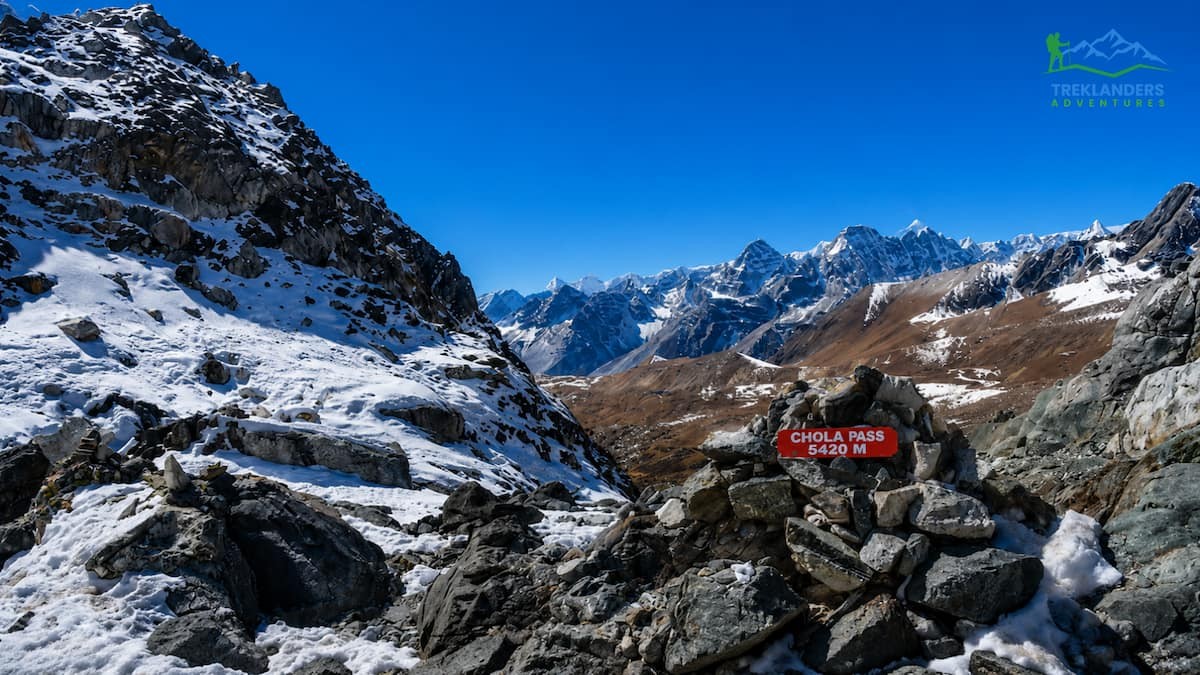
Treklanders writer calls the Cho La Pass route "moderate to adventurous, " a level higher than the regular EBC trek. The guide leads through steep rocky trails and crosses moraines made of rocks. The top of the pass is decorated with stone piles and Buddhist prayer flags; however, it's a really challenging journey to get there.
There are two reasons why your passage may be stopped completely: being in poor physical condition or heavy snowfall and icing of the trails. Both are real possibilities. Before deciding to go for the pass day, always have a backup plan with your guide.
There is a very specific fitness level that you have to meet. For a trek, your cardio endurance counts more than sheer strength. If you are unable to keep up a steady walking pace for 6 to 8 hours, 4 to 5 days in a row, then the Cho La Pass route will be almost impossible for you.
Prepare your physical condition in the 8 to 12 weeks before the trip. Jogging, cycling, stair climbing, and hiking with a loaded pack are all efficient methods of preparation. Having strong legs and ankles lessens the feeling of tiredness on steep descents, especially on the rocky terrain below the pass.
Altitude also requires mental toughness. At 5,000m and higher, your body needs to work extra hard to get oxygen. Things will seem more demanding. Climbing to Cho La Pass is almost vertical, and there are places with loose rocks. So, staying calm, pacing yourself, and trusting your guide are the main tools to get you to the summit.
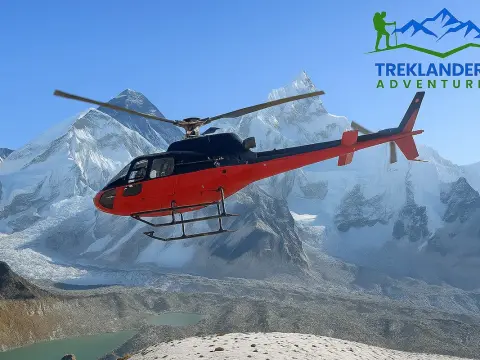
The scenery on both routes is stunning.
In fact, the main difference is in the variety and scale of views.
Standard EBC Trek Highlights:
Additional Highlights on the Cho La Pass Route
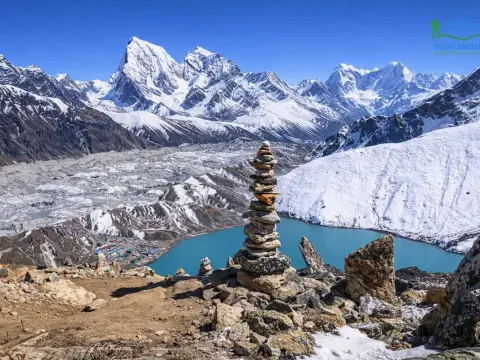
Gokyo Valley is actually the second most visited place in the Khumbu region after Everest Base Camp (EBC), according to the description. It is located between the high passes of Renjo La and Cho La, and initially, it was the summer pasture for Yak grazing. The emerald lakes and the wide view from Gokyo Ri provide a totally different visual experience compared to anything on the standard EBC trail.
From the viewpoint at Gokyo Ri, one can see the whole Gokyo Valley, all five lakes, and the Ngozumpa Glacier, which is the longest glacier in Nepal. This is a scene that you cannot get on the regular EBC route.
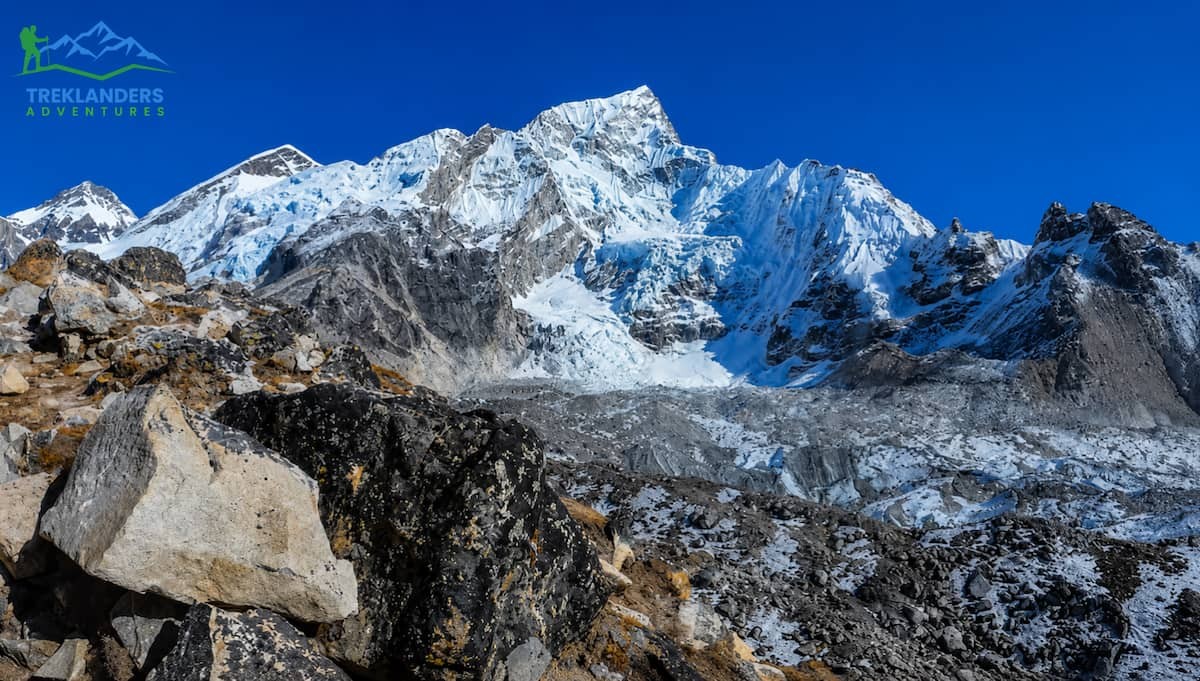
The Cho La Pass will give you the best views of the surrounding peaks you will see from the summit at 5420 meters. The peaks of Cholatse and Lobuche (East and West) are in close view with Nirekha in the foreground, and the view is also extended towards Cho Oyu. You descend into Dzongla, a small summer pasture settlement, and from there you join the main EBC trail at Lobuche. From Lobuche, the trail goes back to the main EBC route via Gorakshep to Everest Base Camp and then up to Kala Patthar.
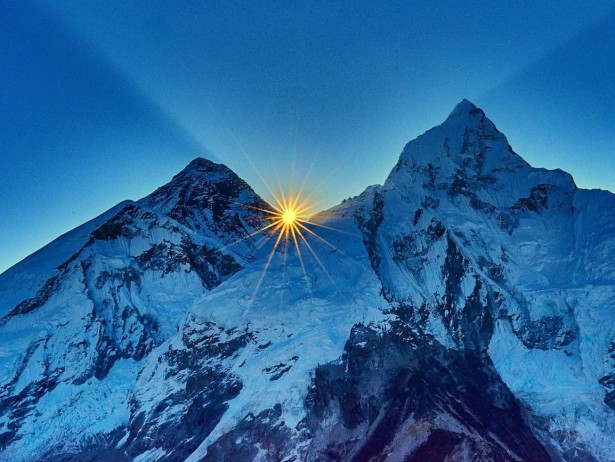
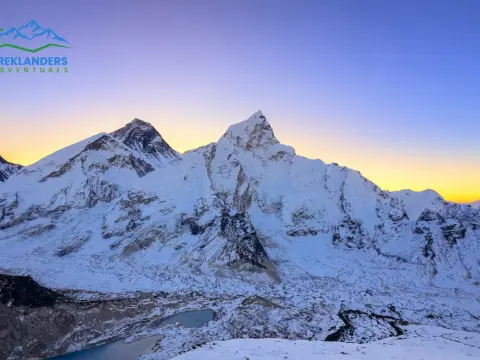
Kala Patthar at 5,545m is the highest point of the trek. This is where one can get the closest unobstructed views of Everest's south face. Most trekkers get to the top before sunrise as they want total drama: the Himalayan giants are first lit up by the rays of the sun; Pumori is on the west side, and the Khumbu Icefall is directly below Everest's summit.
The regular EBC route offers views of Tengboche Monastery and the Khumbu Glacier. Both of them are absolutely stunning. However, the Cho La Pass route includes Gokyo's lakes and the four-peak panorama in addition to everything that is on the standard route. You won't give up any of the usual highlights, and in fact, you get a lot more to see.
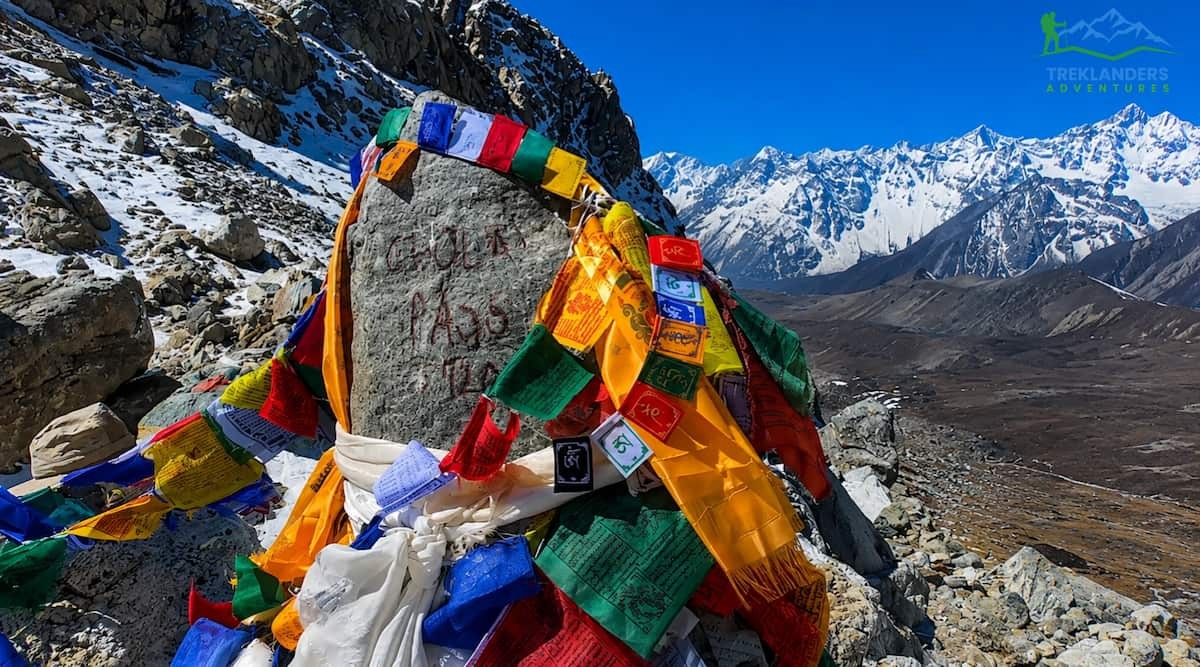
Cho La Pass is not only the toughest and most technical part of the entire trek, but also a place where one mistake can cost you dearly. Either make a proper plan or turn back. Here is how to deal with it in detail.
To start, leaving Thangnak by 5 or 5:30 a.m. will allow maximum daylight and thus even stable weather for the crossing.
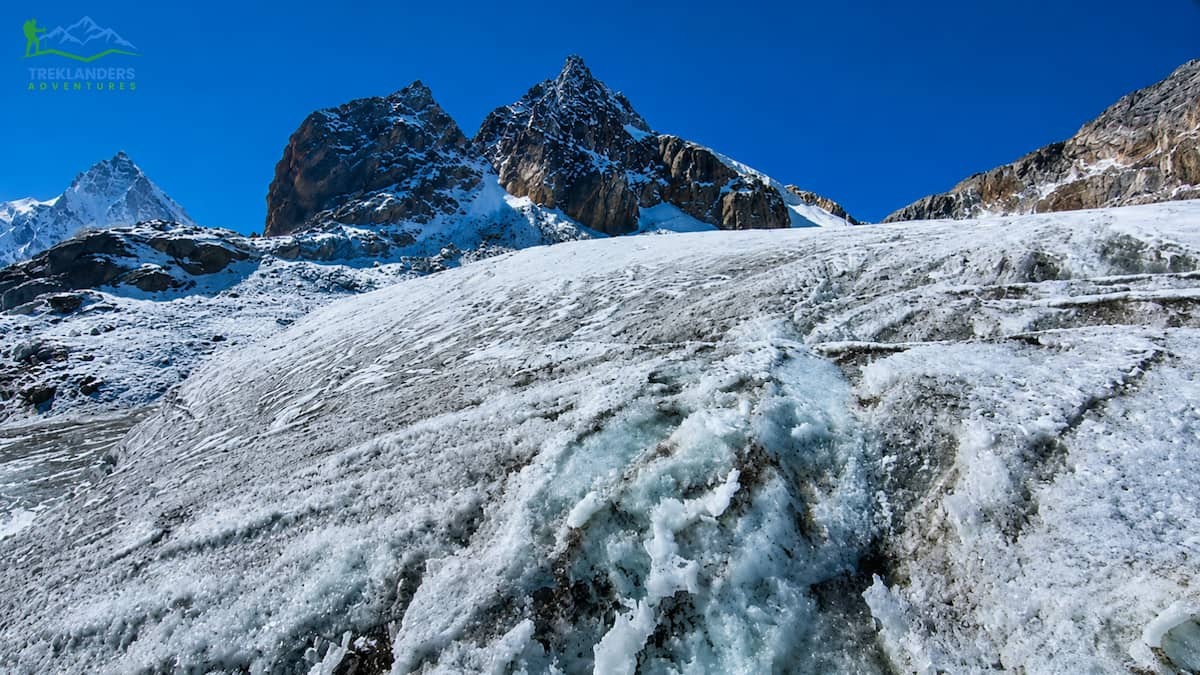
There is a glacier in the upper part of the pass. You may see ice even in October. Your guide will decide whether it is safe to continue. If they say no, you must say no. Don't take any risks on the glacier part; it can be the difference between life and death.
Take the above-mentioned, even if you don't think you're going to need them. The pass stands at 5,420 m. The overnight changes in conditions are possible. An icy surface without traction will get dangerous very quickly.
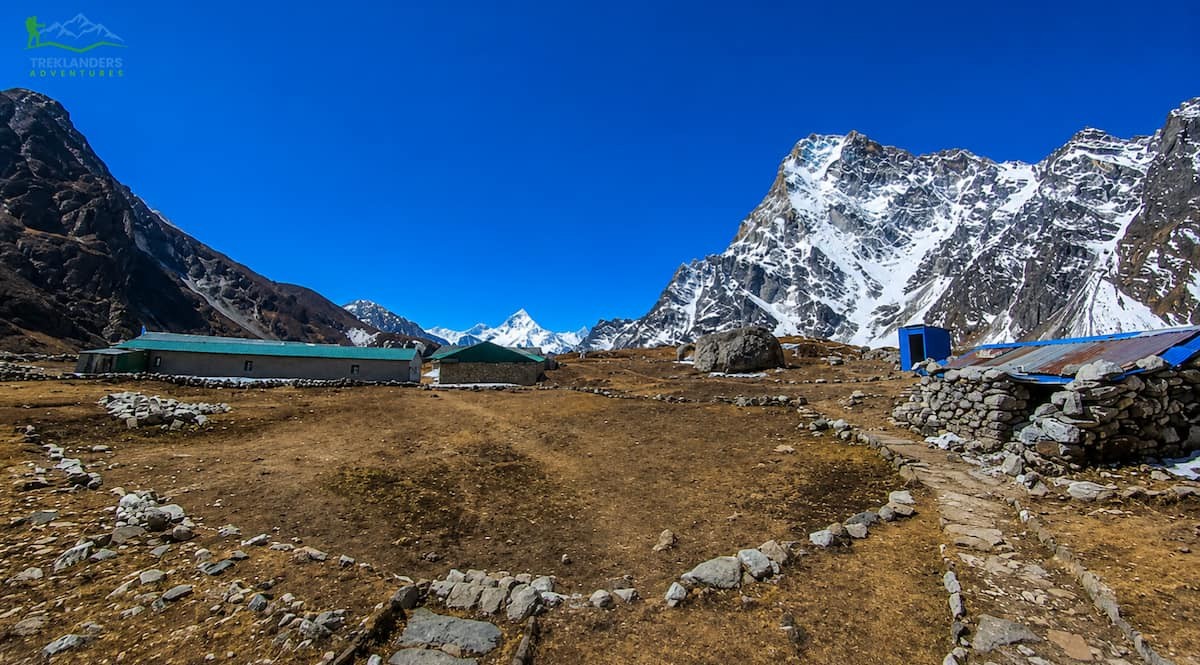
Between Thangnak and Dzongla, there will be no tea houses. Finally, plan your eating before leaving the lodge. The day will be an 8-10-hour day. Planning for good snacks along your way and packing a meal is the right course of action.
At altitude, dehydration is one of the factors that makes altitude sickness symptoms worse. Take in at least 3 to 4 liters of water during the day, even if you don't feel the resulting thirst.
In fact, there is a long descent after the summit, which finally reaches the flat ground around Dzongla. The descent can be slippery. Trekking poles also come in very handy as far as your balance on the steep downhill parts is concerned.
If clouds build heavily before you start, consult your guide. The pass can close after snowfall. A one-day delay is always better than turning back midway.
From the pass, Treklanders' guide confirms the top is marked with rock cairns and prayer flags. You get close views of Cholatse and Lobuche East, West peaks with Nirekha, and views extending toward Cho Oyu. The hard climb rewards you with a full Himalayan panorama.
Acclimatization is necessary at altitudes above 3,500m. Both trekking options include acclimatization days; however, the Cho La Pass trek requires quite a bit of careful planning, since there are two distinct high-altitude areas on this trek Gokyo and the pass crossing.
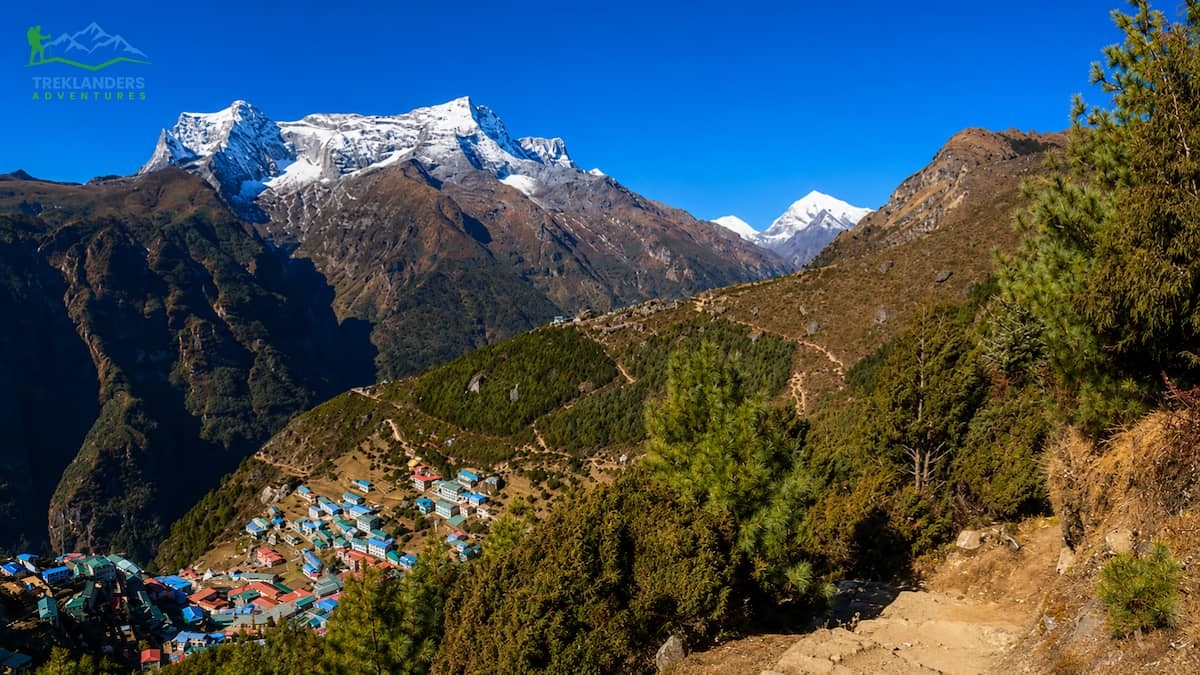
Namche Bazaar (3,440m): One entire day for rest here is sufficient. Going to the Everest View Hotel at 3, 880m is considered the best acclimatization activity because you go up in altitude and come back down to sleep at a lower altitude. By the way, a visit to the Park Museum will provide you with cultural insights.
Machhermo (4,470m): The reason for the short day from Dole to Machhermo is that it gives your body time to adjust to the gradual change in altitude, before you move on to Gokyo at 4, 800m. You should make use of the afternoon at Machhermo for a light uphill trek, rather than complete rest.
Gokyo (4,800m): Ascending to Gokyo Ri at 5, 357m serves as the acclimatization trek that gets you ready for the pass crossing. You make the climb, stay for a while at a higher altitude, and then return to your sleeping altitude of 4, 800m. In this way, your body is ready for Cho La Pass at 5,420m.
Thangnak (4, 760m): Have a sleepover here a day before the pass. It is not advisable to try to cross the pass the same day that you get back from Gokyo. Take a rest day, organize your equipment, and go to bed early to have a fresh start before dawn.
"Climb high, sleep low" is the common guideline for high-altitude trekking. The itinerary of the Cho La Pass route is designed to implement this principle. So, don't skip nights or rush days to save time.
Acute mountain sickness (AMS) can manifest through the following symptoms: headache, nausea, dizziness, loss of appetite, and sleep disruption. If you notice these symptoms, refrain from ascending the mountain until they go away. If the symptoms become more severe, make a descent.
Diamox (acetazolamide) is occasionally used for the prevention of altitude sickness. It promotes deeper and faster breathing, thus increasing the amount of oxygen being taken in by the body. You should have a physician consultation before going on the trek. Diamox partially hides the symptoms of AMS while it is still possible to accumulate dangerous levels of altitude, so it should be used only under medical supervision.
The Himalayan Rescue Association (HRA) operates a facility in Pheriche, which is on the route back from Cho La Pass. If you get seriously ill with AMS and your symptoms do not improve even after decent, the HRA post serves as a useful medical point. Treklanders guides carry a first aid kit throughout the trek, and the company maintains 24/7 support.
Hydration is one of the most effective methods of AMS prevention. From Namche Bazaar onward, drinking 3 to 4 liters of water daily will not only decrease the frequency of headaches but also help the kidneys function better at high altitudes. Do not consume alcohol when you are above 4, 000m. Besides dehydrating you, it also speeds up the symptoms of AMS.
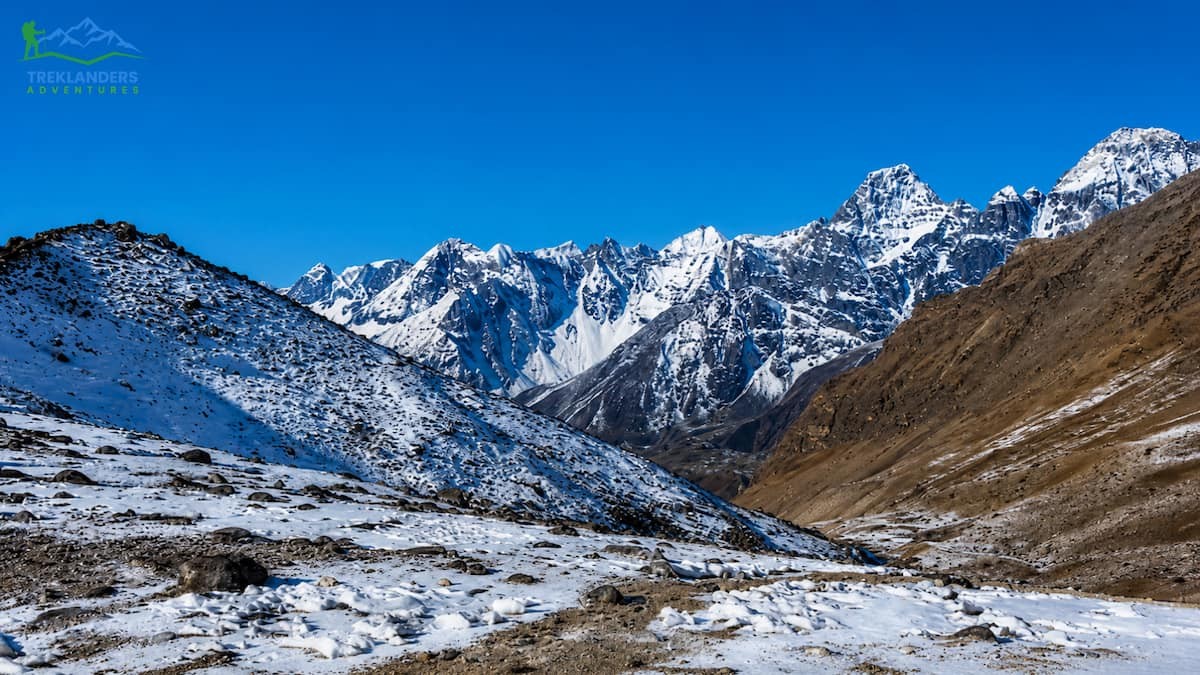
Season selection directly affects pass safety. The Cho La Pass sits at 5,420m and collects heavy snow in winter and the monsoon. Attempting it outside the recommended windows significantly raises the risk.
Spring: March to May. The best season overall. Days are bright with clear skies and sunny mornings. Wildflowers bloom at lower elevations. Snow is possible at high altitudes, but conditions are generally predictable. Most trekkers find March less crowded than April, which sees the highest footfall.
Autumn: September to November. The second-best season. Skies are clear after the monsoon ends in September. Views are crisp. Days are shorter than in spring, and temperatures drop faster in the late afternoon and at night. October is the peak month.
Winter: December to February. Possible but not recommended for the Cho La Pass. Clear sunny days at lower elevations give way to freezing temperatures and heavy snowfall at the pass. The crossing becomes technically demanding and sometimes impassable. Only experienced trekkers with professional guides should attempt a winter crossing.
Monsoon: June to August. Avoid this window for the Cho La Pass route. Heavy rainfall and unpredictable snowfall at altitude make the pass dangerous. Trails become slippery. Visibility drops. Treklanders specifically exclude this period from recommended trekking windows.
The Treklanders itinerary confirms: the best season is spring from March to May and autumn from September to November.

You must have both permits to enter the area. Treklanders will take care of all the necessary documents for you as part of their service. You will not have to do any applications on your own or go to the government office. The package price includes all the permit fees. Permits may be required to be shown at various points during the trek. It is a good idea to keep the paper copies of the permits with you at all times.
Air travel to Lukla: The trek begins for both options with a flight from Kathmandu to Lukla (Tenzing and Hillary Airport) at an altitude of 2, 846m. The name of the airport is in honor of the first climbers on Mt. Everest. During busy trekking times, the Nepal Civil Aviation Authority sometimes reroutes Lukla flights to Manthali Airport at Ramechap, which is about 150km from Kathmandu (a 4 to 5-hour drive). The Ramechap to Lukla flight duration is 20 to 25 minutes. Treklanders inform all trekkers about this change ahead of time and also provide ground transport from Kathmandu.
The mountain weather frequently causes flight delays and cancellations at Lukla. To be able to accommodate these, Treklanders included a buffer day in the 18-day schedule. You should not arrange your international departure flights for less than two days after your expected return to Kathmandu.
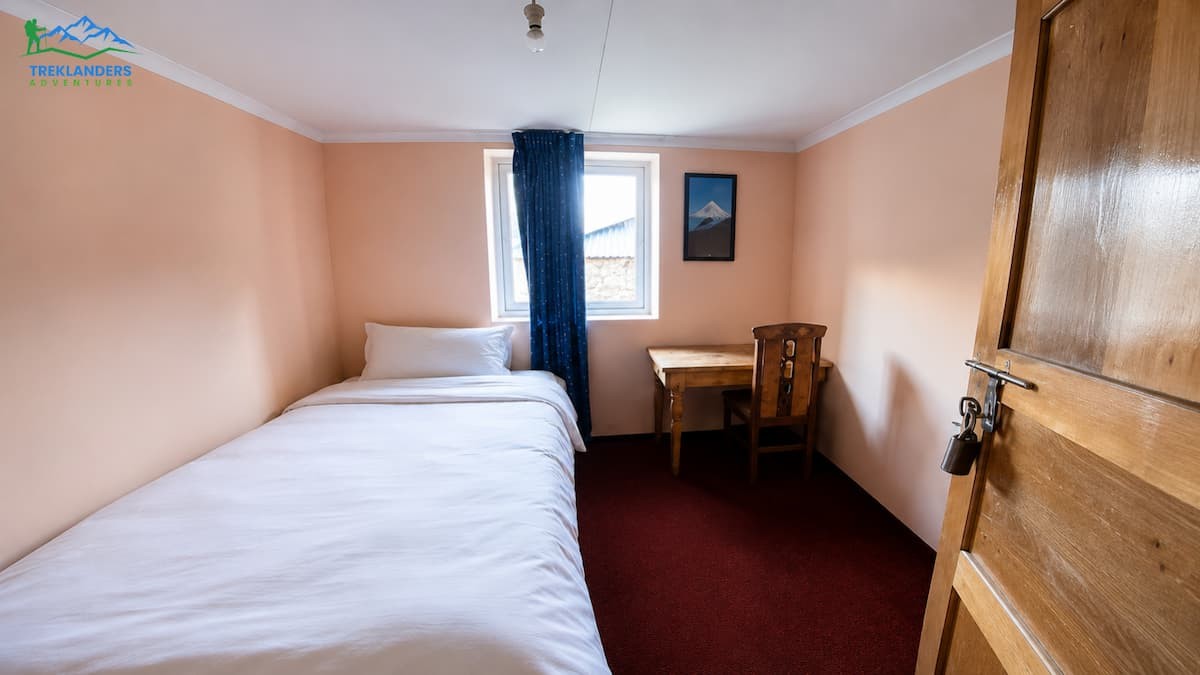
Nights in Kathmandu will be spent in 3-star-rated hotels. Along walking the circuit, your lodging will be teahouses. These are guesthouses that are usually operated by local families, allowing you to have meals and shared or private rooms. Besides Lukla, teahouses at every overnight stop are available in Gokyo Valley and along the EBC trail. The teahouses at the highest elevations of Thangnak, Dzongla, and Lobuche are not as comfortable as those in Namche Bazaar or Gokyo. You should, therefore, anticipate the use of shared bathrooms, limited heating, and at times, no hot water. Most dining rooms are equipped with smoking yak-dung stoves that emanate warmth to communal areas during the evenings.
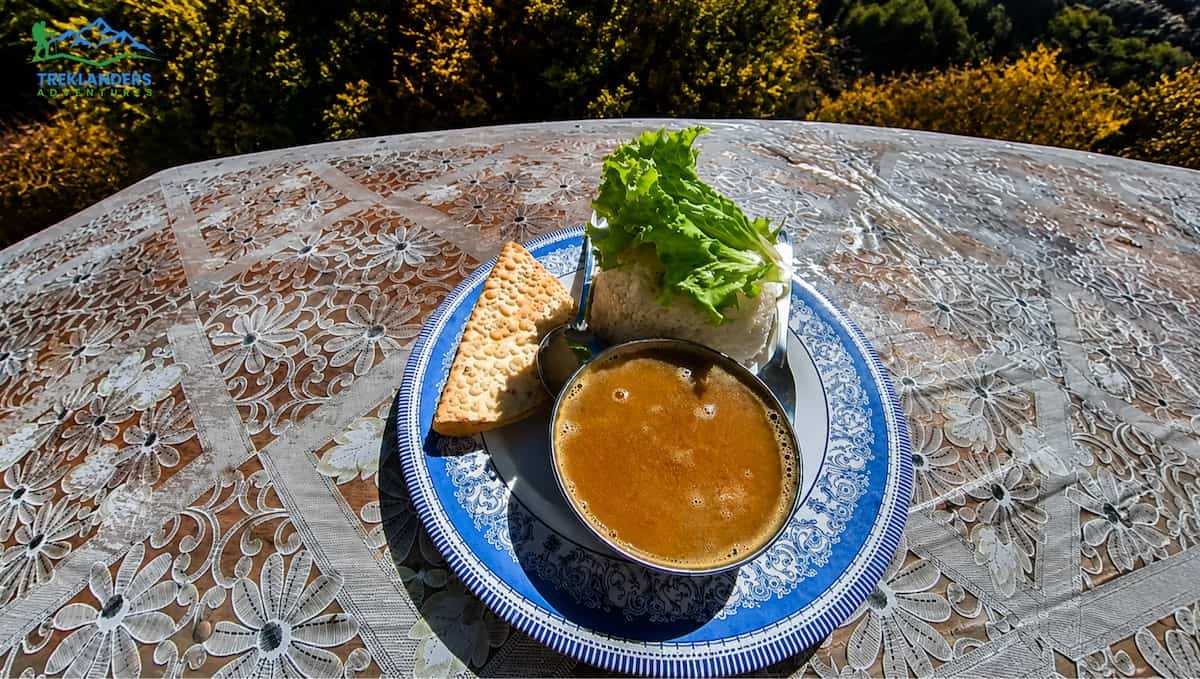
Each teahouse has a very extensive menu. Apart from continental breakfast items, Nepali dal bhat, Tibetan noodle soup, pasta, fried rice, and bakery goods are among the standard offerings. Elevation increase means higher prices of the same items because porters or yaks are used to carry everything. At most teahouses, a charging fee is applied when you charge your electronic devices.

The standard EBC trek runs shorter and costs less, starting from around USD 1,000 for a 12-day package. The Cho La Pass route's premium reflects additional days, more terrain, and a more complex logistics operation.
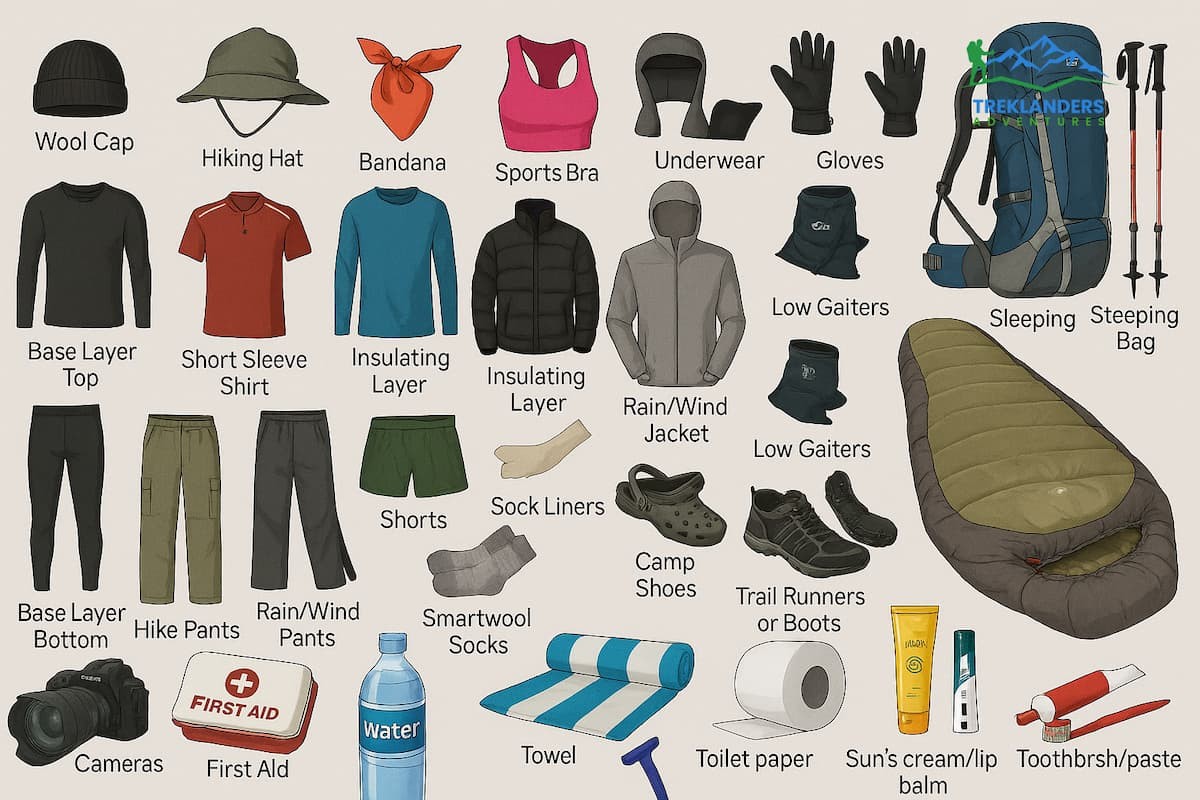
The crossings over Cho La Pass call for a few extra items of clothing and equipment that you wouldn't normally have to take with you on the regular EBC route. So, here's a warning: no matter what time of year you decide to do this walk, you should have these things with you.
At night, keep your electronics in your innermost pockets. The batteries lose power rapidly in freezing temperatures.
The appropriate route is determined by three factors: the time that you have, your level of fitness, and what you wish to get from the experience.
Take the Standard EBC Trek if:
Take EBC via Cho La Pass if
Both ways are possible with the right preparation, a licensed guide, and a little altitude respect. The standard EBC trek is one of the world's great long-distance walks. The Cho La Pass route is all of that, plus the Gokyo Valley, plus one of Nepal's most rewarding high-mountain crossings.
Treklanders Adventures provides both itineraries with experienced, government-licensed guides who are familiar with every part of these trails. Their 18-day EBC via Cho La Pass trek has room for Lukla flight delays, all meals on the trek, and a farewell dinner in Kathmandu. Group discounts open the door for solo trekkers joining a group departure and for private groups of up to 30 people.
Those who have walked the two routes report that the Cho La Pass route is more physically demanding but at the same time more rewarding. Spending a few more days in the Gokyo Valley changes the whole pace of the trip. You stay longer in a less noisy nature. The Gokyo part of Khumbu has many fewer trekkers than the main EBC corridor. If you go early in the season, March and early April, you may be almost alone at Gokyo Lake. That kind of quiet is a luxury rare in the Everest region.
Crossing the Cho La Pass is the highlight of the whole route. When you get to 5,420m, come face-to-face with Cholatse, and look back down the valley from where you came over from Gokyo. You see why people decide to take this route rather than the easier one. The physical intensity is significant, and the level of commitment is very real. But the sight from the top of the pass, and the great feeling of walking down to Dzongla with the thought of Everest Base Camp being only two days away, is precisely the kind of experience that stays with you.
Do your preparation, hire a guide from Treklanders, pack the right gear, and give yourself enough days. This route rewards trekkers who respect what it asks of them.
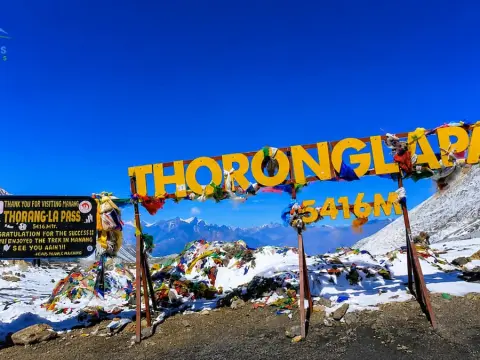
Complete guide to Thorong La Pass with trekking tips, altitude safety, acclimatization, permits, and route details for the Annapurna Circuit Trek.
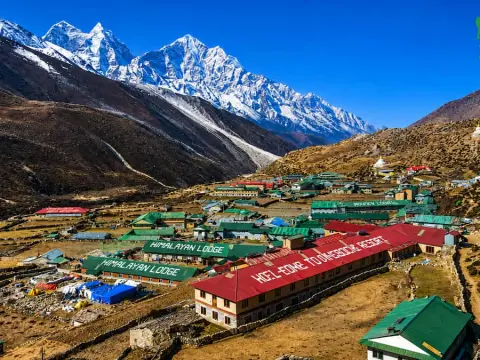
Dingboche vs Pheriche: Which acclimatization stop is better for a safer and more successful Everest Base Camp Trek?
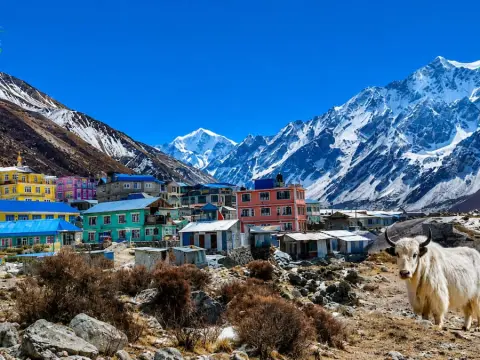
Discover the best time to trek the Langtang Valley after monsoon with trail conditions, weather, and essential safety tips.



