My Monsoon Trek to Gosaikunda Lake: A First-Hand Journey Through Rain, Clouds, and Sacred Waters
16 Jun 2026
A first-hand journey to Gosaikunda Lake through misty forests, monsoon trails, and sacred Himalayan landscapes.

You were standing at Everest Base Camp. Before dawn, you scaled Kala Patthar and witnessed the first sunlight touching Everest's peak while your hands slowly turned numb inside gloves. After your return, you narrated the tale several times, and then you started to think about your next adventure. The regular EBC trail now seems like a familiar place to you, a route you could even draw in your mind, lodge by lodge.
The Three Passes Trek uses the same Khumbu valley but transforms it into a much larger journey: three high-altitude passes, a complete Gokyo valley loop, and about seven days of additional trekking at altitudes most EBC trekkers don't reach. This manual is for trekkers who already have a basic understanding, the altitude routine, the teahouse rhythm, and the early starts, and want a detailed account of the changes once the route diverts from the trail they have already walked. It is a day-by-day breakdown of the travel, adopting the schedule that Treklanders Adventures uses in Nepal, so you can directly compare it with the EBC trip you remember rather than starting anew.
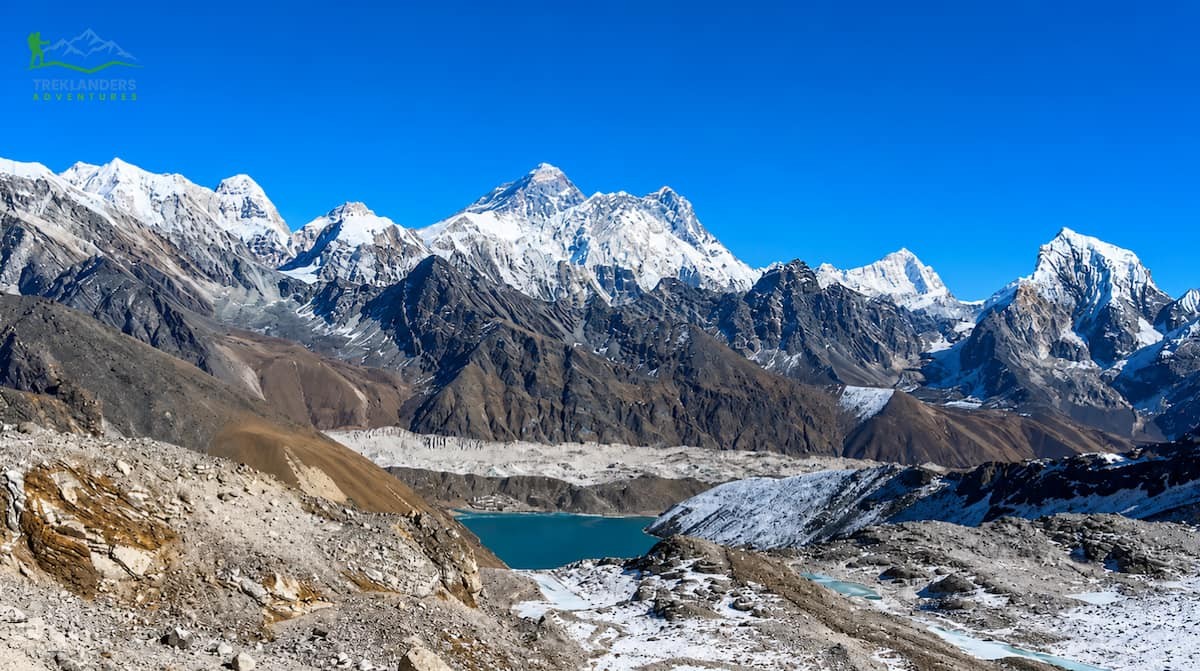
The EBC trekkers move up a valley in a single line, then back down it again. On your way to Namche, Tengboche, Dingboche, and Gorakshep, you will get a glimpse of these places. On your return journey, you will virtually walk back all your steps. The Three Passes Trek changes that line into a circuit. Cross Kongma La into the Khumbu Glacier basin, descend through Cho La into the Gokyo valley, then exit west over Renjo La into the Bhote Koshi valley near Thame.
Four separate valley systems: Khumbu, Imja, Gokyo, and Bhote Koshi are combined into one continuous walk instead of four separate trips you would otherwise have to plan individually.
The EBC trek reaches a maximum altitude of 5,364 meters, and Kala Patthar gives a short early morning climb to 5,643 meters. With the Three Passes itinerary, you stay eight nights above 4, 500 meters and walk over three passes above 5,300 meters in a total of six days.
You had already adjusted to thin air once. Now, your body needs to maintain that adaptation for a longer duration as you are going to be in the environment, including glacier crossings, exposed ridgelines, and snow-covered scree, that the standard EBC trail never requires you to handle.
The reward follows the effort. You still get Everest Base Camp and Kala Patthar, the two places that most trekkers come to Nepal for. But you also have the stunning lakes of Gokyo, the majestic peak of Gokyo Ri, and three passes, each of which leads to a different valley with its own light, wind patterns, and crowd of trekkers or the lack of one. Namche is always busy, no matter which route you take, but Dzongla, Thagnak, and Lungden see only a small fraction of the foot traffic that the main EBC trail carries. Very few treks in Nepal offer such a wide range of variation, both in terms of scenery and difficulty, in a single itinerary, and even fewer groups on the trail will have covered the same ground as you by the time you reach Thame.
This route also rewards trekkers, particularly because they already have a baseline. You know what altitude headaches feel like at 4,000 meters. You know how your appetite changes above 4,500 meters, and how your sleep gets lighter the higher you climb. That experience enables you to spend less energy guessing how your body will react and more energy on managing the technical requirements of three consecutive pass crossings, which is precisely where this trek demands the most from you.
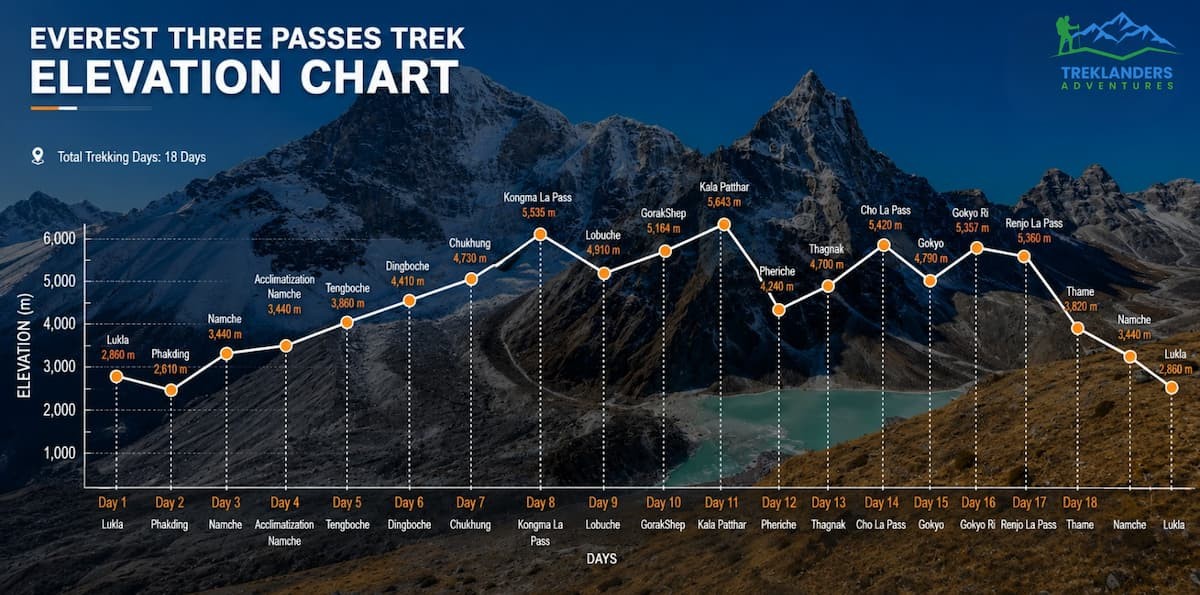
Those who trek to EBC will normally ascend and descend their altitude following an almost linear wave, except for one rather prominent summit. Three Passes' profile, on the other hand, resembles a triangular saw blade, featuring three distinct ascents above 5,300 meters each, followed by descents to 4,300 or 4,700 meters before the next climb.
Therefore, on this route, guides usually maintain a stricter ratio of trekkers to staff than in ordinary EBC groups since days involving passes lead to closer pacing and more frequent mood assessment and checking on how altitude and the terrain are affecting everyone.
Upon EBC adventuring more than two years ago or if you have not gone high-altitude trekking since then, a shorter Gokyo Valley or Cho La trip will be an excellent refresher for you before you take all three passes back-to-back. Those who kept some degree of altitude fitness in the years between trips, not just those who did EBC once and thought that the experience would last them forever, are the ones rewarded by Everest Three Passes.
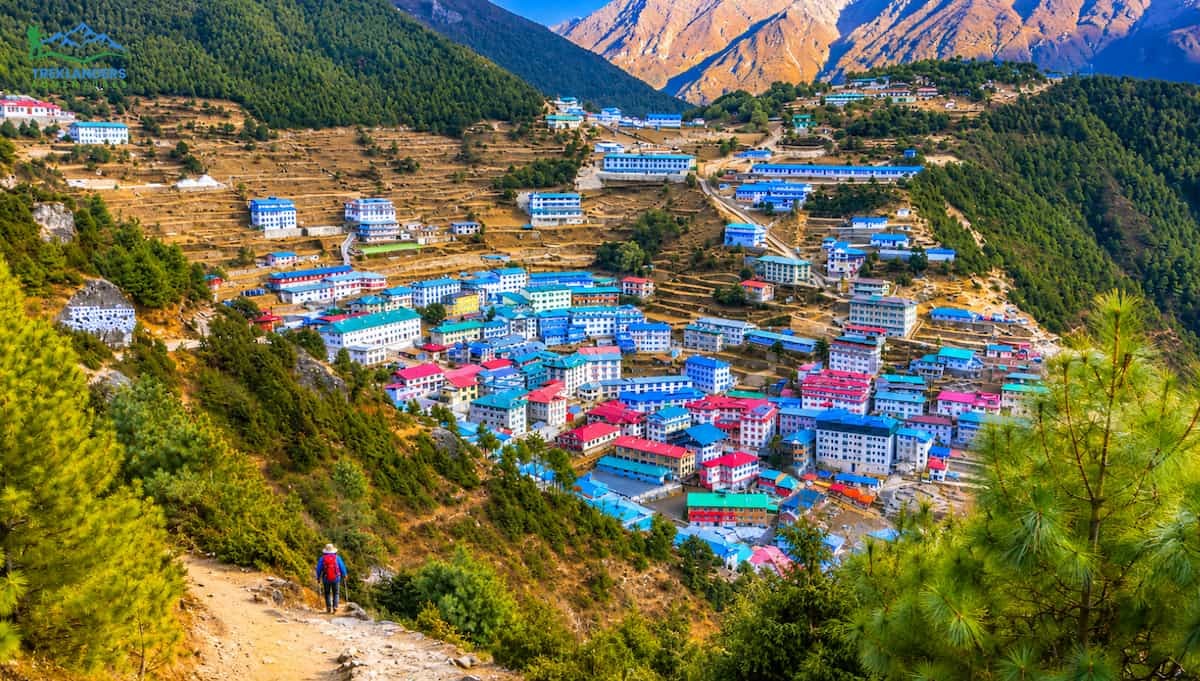
The initial four days of trekking are almost the same as your EBC journey. You fly to Lukla, walk to Phakding, go up to Namche Bazaar, and have an acclimatization day there. If you previously trekked EBC, this portion might feel like reopening your old footsteps, even to the extent of the same lodges, the same teahouse menus, and, of course, the views of Thamserku and Kongde Ri from the trail above Namche.
Things get different after Dingboche. Following EBC, you go straight from Dingboche to Thukla and then to Lobuche, sticking to the usual glacier-side path that majority of trekking groups use. With Three Passes, you first make a short detour east to Chukhung where you spend a night, then you ascend Kongma La, the highest of the three passes, and come to Lobuche from the totally opposite direction. The way from there to Everest Base Camp and Kala Patthar is just like the standard route.
The actual difference starts after Kala Patthar. Usually, after Kala Patthar, the common way to return is to go down to Pheriche and then to Namche. But instead of going that way, your path leads you south to Dzongla. You first go up to Cho La, then come down into the Gokyo valley. After that, you get to the top of Gokyo Ri for sunrise. Next, you go over Renjo La and arrive in the Bhote Koshi valley and the village of Thame.
It is only during the last two days of trekking that the path merges with the one you took when you came, through Namche Bazaar and down to Lukla.
The complete duration of the Three Passes Trek from the day you land in Kathmandu to the day you leave internationally is 22 days, out of which 18 days are spent trekking between Lukla and Lukla. By choosing this trek, you'll get a week extra on the trail than a usual EBC itinerary, with most of it being at altitudes above 4,000 meters. Permit regulations remain straightforward. The same Sagarmatha National Park entry and the Khumbu Pasang Lhamu Rural Municipality permits that were needed for your EBC trek are also valid for the Gokyo and Three Passes routes. So, there is no need to do extra paperwork before taking the flight to Lukla. Every valley where the trail passes through is unique in its own way, and perceiving the change makes you realise why the trek seems longer than the mere day count suggests.
You traverse through a heavily forested and busy Dudh Koshi valley packed with trekkers going towards EBC on the way to Namche. The Imja valley - located near Dingboche and Chukhung - is characterized by wider, drier areas based on the backdrop of Island Peak and Lhotse. The Gokyo valley has an entirely different feel - it is glacial and lake-studded, also has a quietness that you rarely get on the main EBC trail. The Bhote Koshi valley, close to Thame, gives you the last part of your journey with a quiet, traditional Sherpa environment that is completely missed by most EBC itineraries.
Roughly speaking, the first four days and the last two days of the trek share the same ground as a standard EBC itinerary, around a third of the total trekking days. The remaining two thirds cover new terrain: Chukhung, Kongma La, Dzongla, Cho La, the full Gokyo valley, Renjo La, Lungden, Marlung, and Thame. That ratio is worth keeping in mind when you picture the trip, since it explains why returning EBC trekkers often describe the first week as a warm-up and the second and third weeks as the trek they actually signed up for.
Your initial two days in Kathmandu would include your arrival, a briefing for the entire group by your guide, and a half-day tour of the city's heritage spots, only if you wish. Most people doing the Everest Base Camp trek for the second time discard the sightseeing and use the time for checking gear, as they already know which things they forgot to pack last time. Take advantage of this time to double-check your equipment and relax before your flight to Lukla. Keep in mind that flights are sometimes redirected via Manthali airport located in Ramechhap district due to air traffic congestion at Kathmandu, which can imply an early checkout from your hotel and a four to five-hour drive the previous evening for your scheduled flight. Weather delays on this route can also interfere with your plans, so it is advisable to have extra time built in early instead of having to borrow it later from your acclimatization days.
On Day 3, after a quick flight to Lukla at 2,846 meters, the day continues with a four-hour hike down to Phakding at 2,645 meters. In reality, one loses elevation when landing at altitude and is about to climb again, which surprises first-time trekkers every year. Thinking of a porter? If you haven't booked one yet, Lukla is the right place to get one, as several porters are waiting at the airstrip for new trekkers. The path runs alongside the Dudh Koshi river and leads you through a chain of small Sherpa villages, where you will meet stone mani walls and prayer wheels that will make your body comfortable before the difficult days start. A local SIM card purchased either in Kathmandu or Lukla will serve most of the lower valley, but as you ascend, the coverage becomes patchier.
On day 4, you will be trekking from Phakding to Namche Bazaar (at a height of 3,440 meters) for a period of approximately six hours. Along the way, you will be passing through Monjo and the entrance gate to Sagarmatha National Park, where you will have to present your permits before you continue to Jorsalle for a possible lunch break. From there, the path leads you across the Dudh Koshi on a high suspension bridge before the long, zigzagging climb that brings you to Namche. This is the very same climb you recall from EBC, and it still deserves its reputation as one of the hardest, single-day climbs on the entire trail, even for those who have arrived in excellent shape.
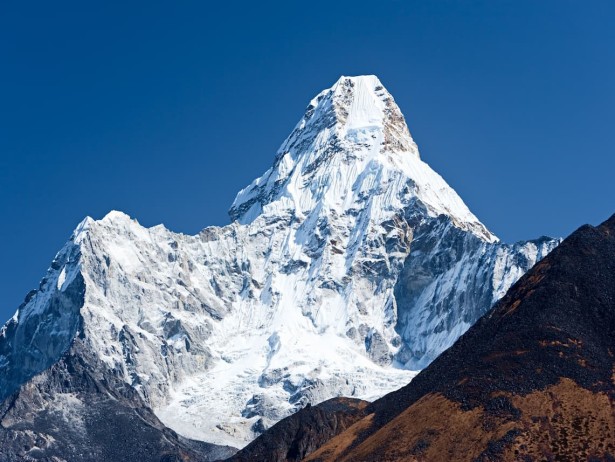
Day 5 is your first acclimatization day, and you'll spend it right in Namche where you can also take a short hike to the Sagarmatha National Park Museum or up to the Everest View Hotel at 3,880 meters for a spectacular view of Everest, Lhotse, and Ama Dablam.
If you're not too tired, you can enjoy Namche at a leisurely pace, with its bakeries, gear shops, and a Saturday market that still brings traders down from the higher villages.
For a getaway, if you want fewer trekkers around you on a rest day, a small side trip to Khumjung or Khunde, two villages set on a ridge above Namche, might be the answer, plus it is a quieter alternative to the busier hike toward Everest View Hotel.
Plan your day well. The altitude gains on Everest Three Passes will be accumulating faster later in the trek than they were on your Everest Base Camp trip, and a mediocre acclimatization day here will cost you more than it saves by the time you get to Chukhung and Kongma La.
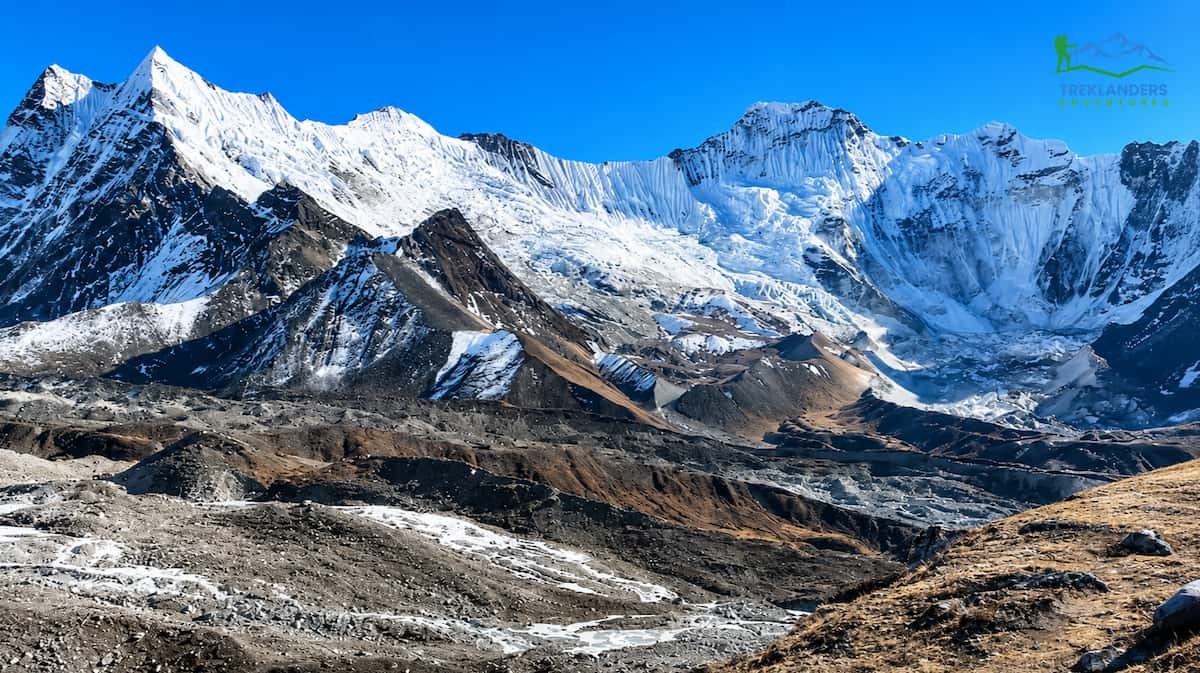
At Day 6, you will reach Tengboche Monastery located at 3,867 meters, a five-hour trek that initially ascends out of Namche, then environmental changes continue with the trail passing through rhododendron and pine forests to cross the Imja River at Phunki Tenga, followed by a final climb to the large plateau where the monastery is situated. Stay alert for wildlife along this path, such as musk deer, Himalayan thar, and vibrant pheasants, which can be seen more frequently here than on the more crowded trail sections closer to Lukla.
In case your Everest Base Camp trekking, package included a night stay at Tengboche, this day will seem very similar to you, including a monastery visit and also the same wide views of Ama Dablam framed by the forest below, as well as the opportunity to step inside and view the large Buddha statues and religious artwork if the monks are not in afternoon prayer.
Day 7 journey to Dingboche, 4,340 meters, is yet another five-hour day among others that lead you through Pangboche, the last permanent village on the way to the valley, and Somare, a usual place to have lunch under the great mountain of Ama Dablam. Dingboche, in fact, is situated in a wide, open, windy basin where stone walls have been constructed to protect barley and potato fields from wild animals and wind. In addition, chortens and prayer flags are fluttering at the settlement boundaries.
Day 8 gives you a second acclimatization day at Dingboche, with an optional hike up Nangkartshang hill for sweeping views over the Imja valley toward Island Peak, Lhotse, and Lhotse Shar. The climb takes most of a morning and gains enough elevation to genuinely help your acclimatization, rather than serving as a token rest-day activity, which makes it worth the effort even if your legs are still tired from the walk in.
Day 9 is where the Everest Three Passes route splits from Everest Base Camp for good. Instead of continuing toward Thukla and Lobuche, you walk a short four hours east to Chukhung at 4,735 meters. This small settlement sits at the base of Island Peak and serves as your launch point for Kongma La the next day. Trekkers who only know the EBC trail often skip Chukhung entirely, so this is your first taste of terrain outside the standard route, and a good afternoon hike up Chukhung Ri gives you a preview of the high passes ahead, along with close views of Lhotse and Lhotse Shar rising directly above the village.
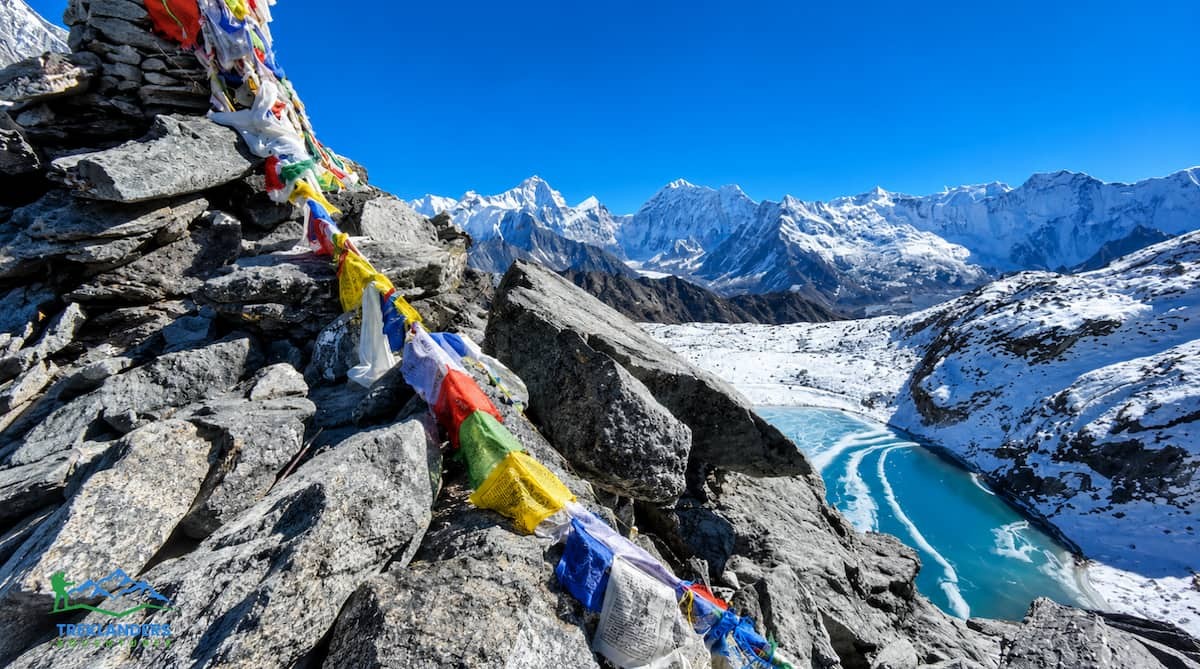
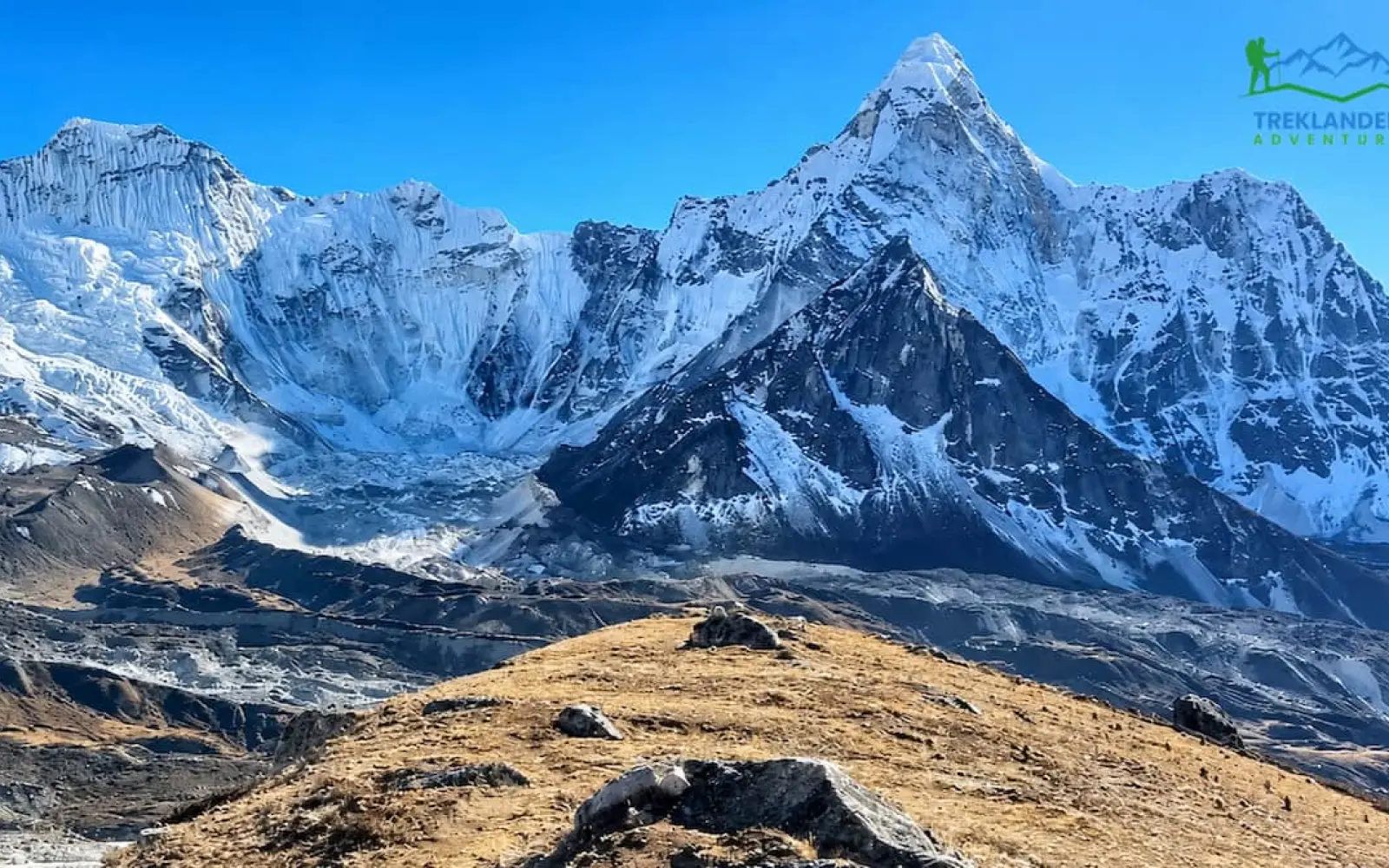
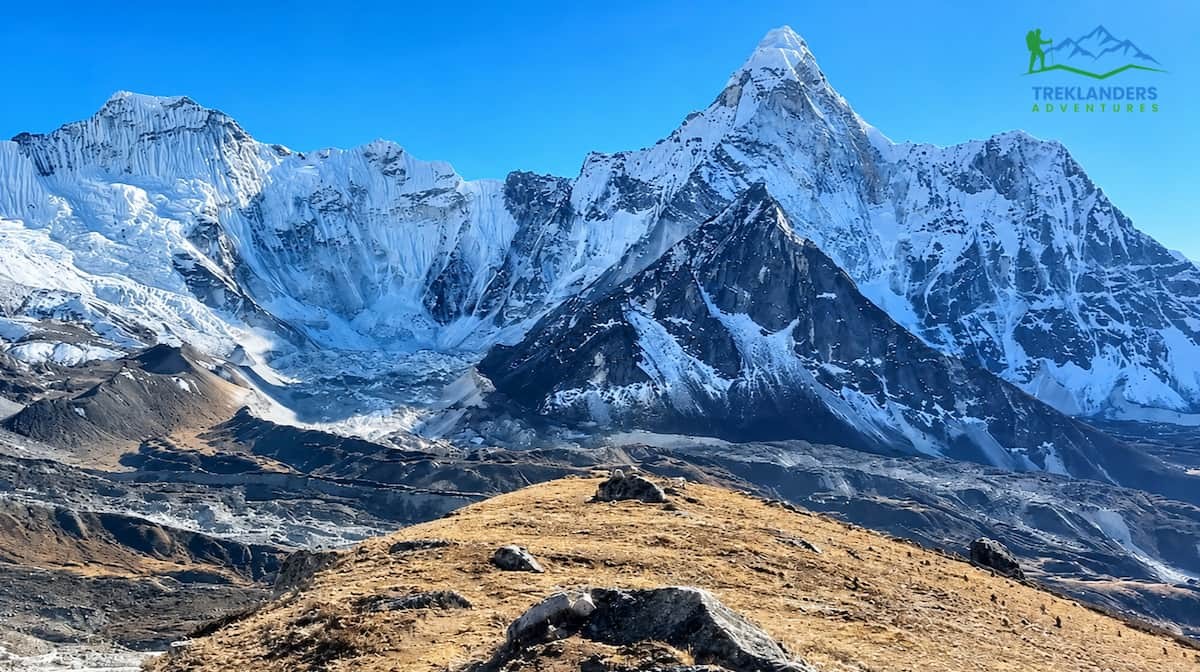
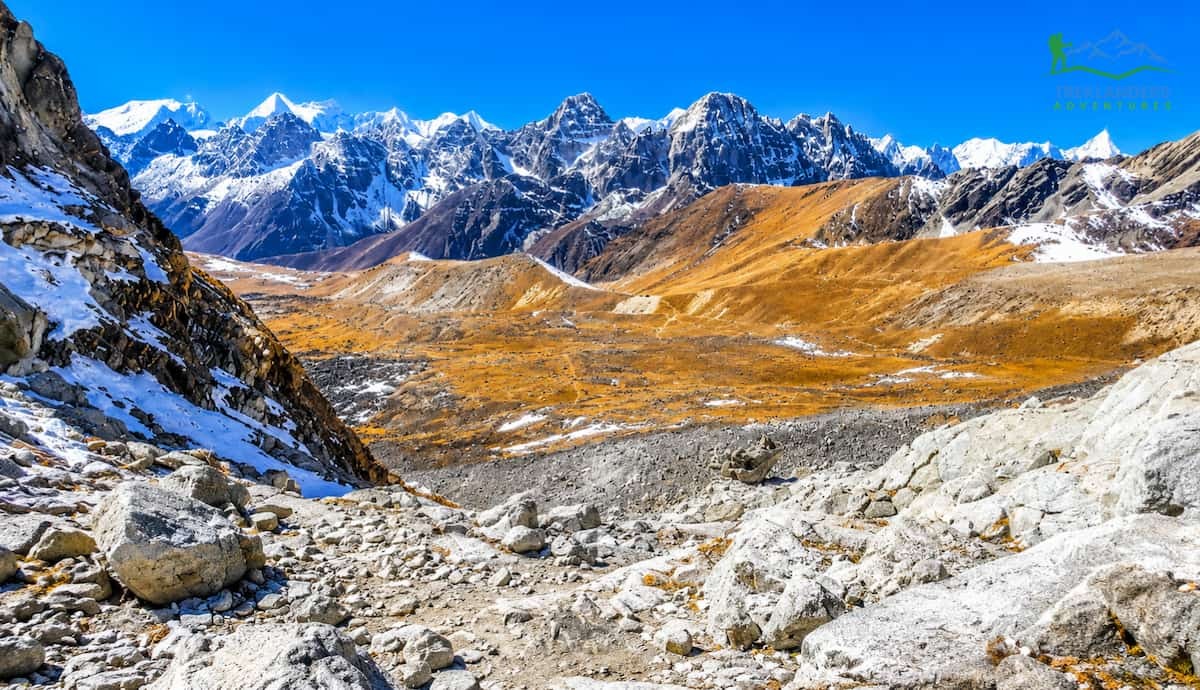
Day 10 is the longest and toughest day so far: a 5,535 m eight-hour trek over Kongma La, the highest of the Everest three passes. You will be leaving Chukhung very early with your packed lunch and following the high trail above the Imja valley near Fibre. Later, the path will plunge into a deep, narrow gorge between the rocky walls of Nuptse and Pokalde. Before reaching the pass, you follow a very faint path, which is why a guide who is most familiar with the route is needed more here than on any other single day of your EBC trip. The pass stands on a narrow gorge with cairns and prayer flags and great views of Cholatse, Pokalde, Nuptse, Lhotse, Makalu, and Ama Dablam all visible from the same spot. The descent crosses the Khumbu Glacier, then climbs a final rocky dune before reaching Lobuche at 4,960 meters. A day's early beginning is as important for the glacier crossing as for the pass itself, because the loose rocks and the ice underfoot during the descent remain more stable in the cooler morning hours than when the sun has softened the surface later in the day. Expect rock scrambling, loose scree, and exposure that EBC's standard trail never demands, even on its steepest days, and plan for a longer, slower pace than you used on comparable EBC trekking days.
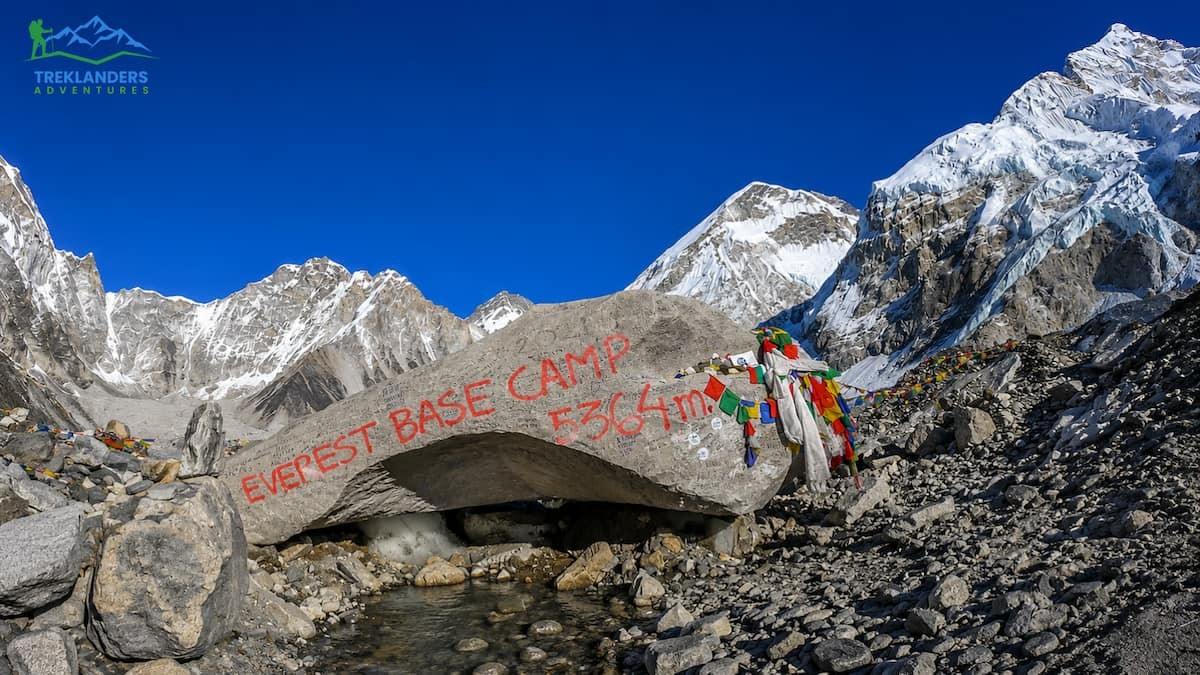
On Day 11, you will make a visit to the famous Everest Base Camp, which is a six-hour round trip from Lobuche through Gorakshep, perched at 5,160 meters. If you have already done an Everest Base Camp trek, you will recognize this part as the same moraine trail, with the view of the Khumbu Icefall, which is the icefall of Everest's shoulder, and the crowd of trekkers and climbers (during springtime) ready for summit attempts. As there are no overnight facilities at base camp, the procedure will be the same as what you remember at EBC: walk, take pictures near the markers and prayer flags, and then go back to Gorakshep for the night. Though getting here after crossing Kongma La makes a big difference in the experience. You've already been through areas that are tougher than anything most EBC trekkers will face, and base camp is simply a stop along a longer journey rather than the final moment of the trip.
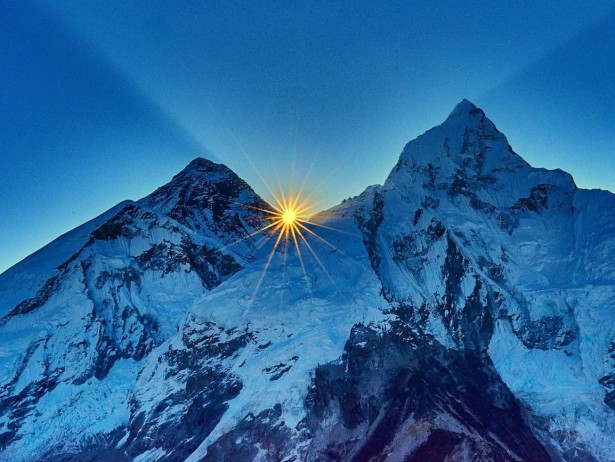
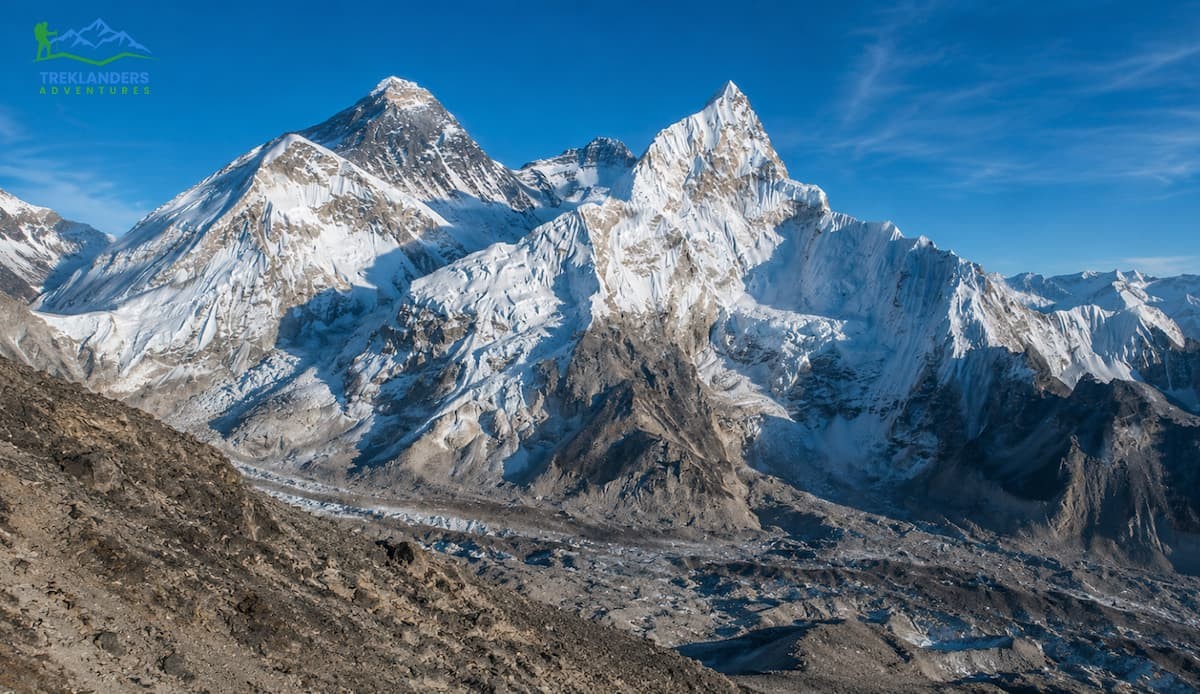
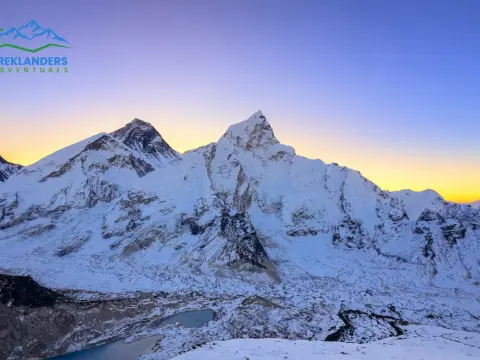
Before dawn, day 12 begins by taking the steep trail up to Kala Patthar, standing at 5,643 meters. This is not only the highest elevation of the whole trek, but also the nearest and most unobstructed spot from where one can see the summit of Everest. Usually, trekking groups schedule their ascent such that the sun rises just as they reach the peak, sequentially illuminating Everest, Nuptse, and Pumori. Upon descending to Gorakshep for breakfast, the rest of the day is made up of heading back south along the same route used on the way up, then turning off toward the less busy Dzongla, the settlement at 4,750 meters. Dzongla is located at the foot of the Cholatse and Taboche peaks in a small valley, which most EBC trekkers never see, as the standard route ends the loop well before this point.
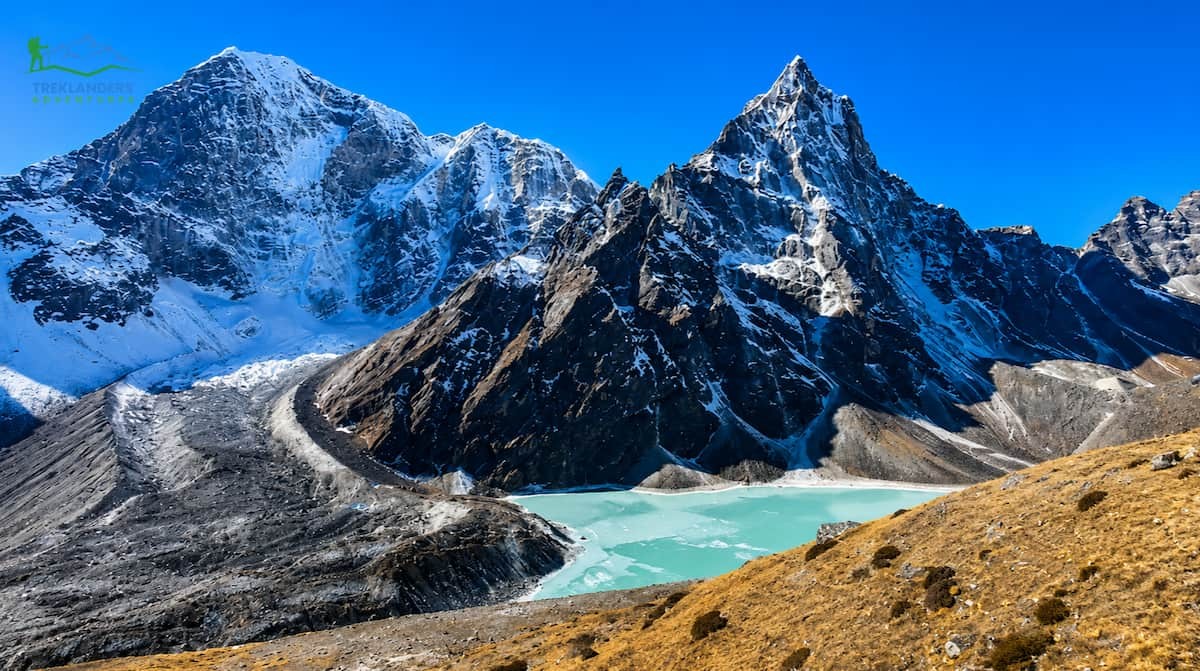
Day 13 marks the beginning of the second big challenge: Cho La, situated at 5,420 meters. It is a very demanding day of eight hours, and the terrain is rocky and sometimes icy during the ascent as well as the descent. After walking along a valley floor for quite some time, the ascent starts on rocky ledges, some of which are so slippery that they are covered with ice due to the freezing of the small creeks flowing down. To get to the fixed rope or to cross the glacier may be necessary for a very short section of the top, whereas your guide will be able to assess the spot with other groups or the lodge owners in Dzongla before deciding that it is definitely the day. Microspikes, which weigh next to nothing, have their genuine reason for existence here, mostly in early spring or late autumn when the ice forms the newly passed sections of the pass. Besides that, you can enjoy the top and have the almost divine view of Lobuche East and West mountains with the Nirekha peaks, yet the long descent over the rocky moraine brings you to Thagnak at 4,765 meters. Thagnak is located on the western edge of the Gokyo valley. This pass is more challenging with technical footing than Kongma La, and the trekkers who found the EBC's terrain straightforward often say that Cho La is the most demanding single day of the whole trip.
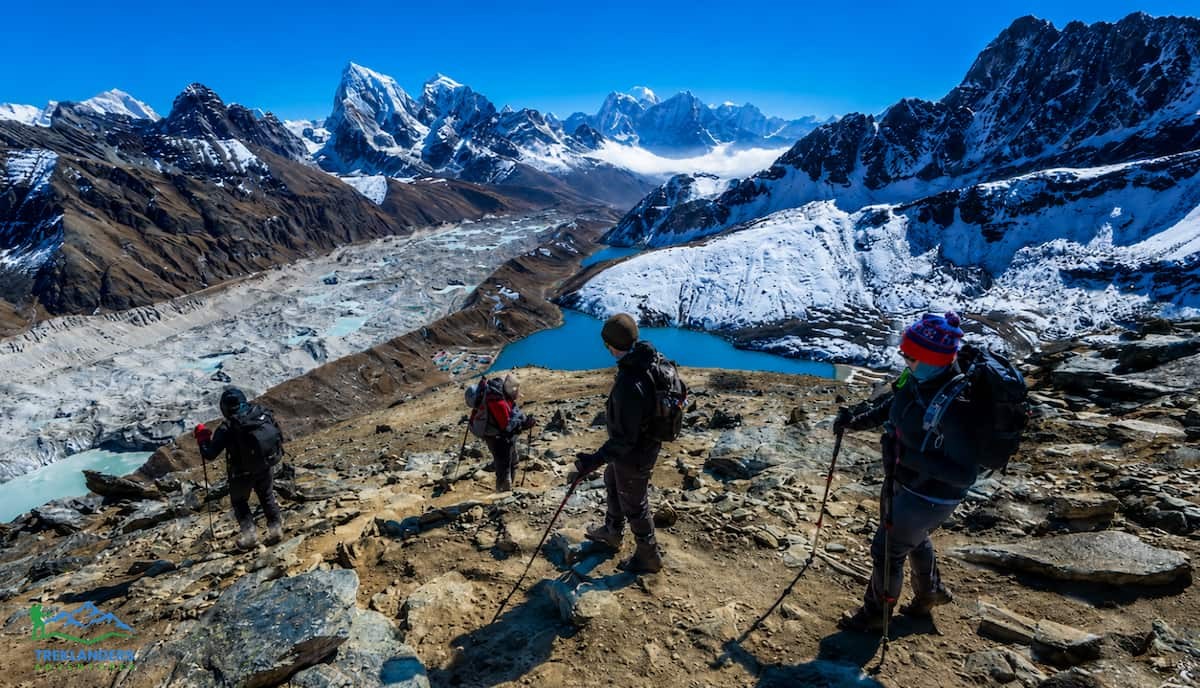
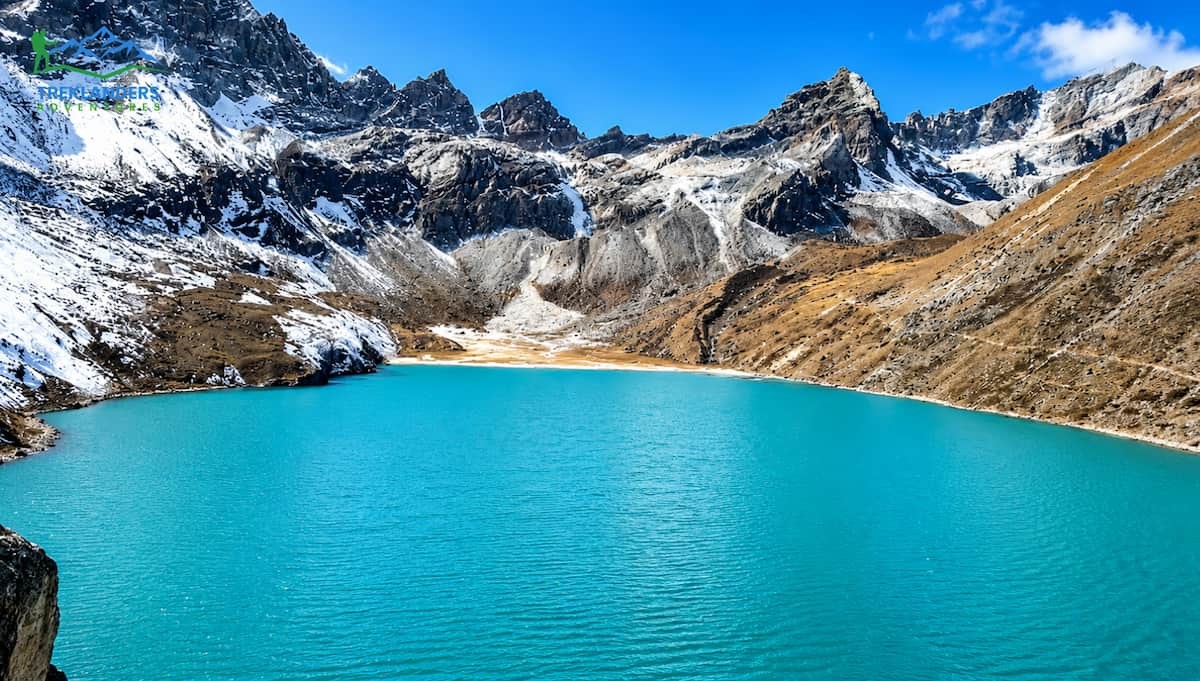
On the 14th day, the main objective is to take a really short four-hour walk beyond the smaller village of Na to arrive at Gokyo, which is situated beside the third lake among the Gokyo lakes at an altitude of 4,800 m. Along the way, you will see the first and second lakes, which are smaller and less frequented, whereas the third lake is where the main village and most hotels are located. The local people name the third lake as Dudh Pokhari, meaning Milky Pond, and they regard it as a sacred place. The stunning turquoise water and the enclosing walls of the peaks, including Cho Oyu 8,201 m, make this area look entirely different compared to the rocky and quite bare landscape near EBC and Gorakshep.
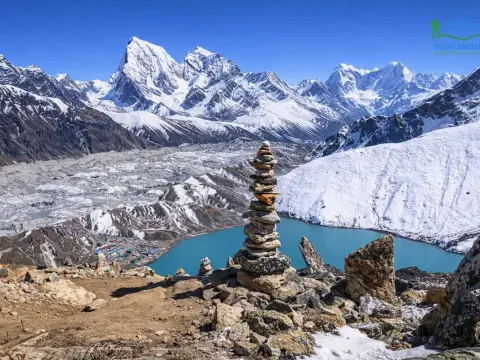
On day 15, after reaching 5,357 meters at Gokyo Ri, it is planned to have a difficult climb before breakfast along the shore of the third lake and then onto the grassy slopes. At the top, one can see four of the world's tallest peaks from one spot: Everest, Lhotse, Makalu, and Cho Oyu, all of them on a clear morning. Most of those who have been to Kala Patthar before say that Gokyo Ri is the better viewpoint of the two because the panorama is more extensive, and the foreground has lakes and glaciers instead of rocks and moraine. Below, the Ngozumpa Glacier, the longest in the Himalayas, is the most prominent feature of the valley. Most Everest Base Camp trekkers will never come across this glacier or this viewpoint because the standard route goes through a different valley and doesn't cross into Gokyo.
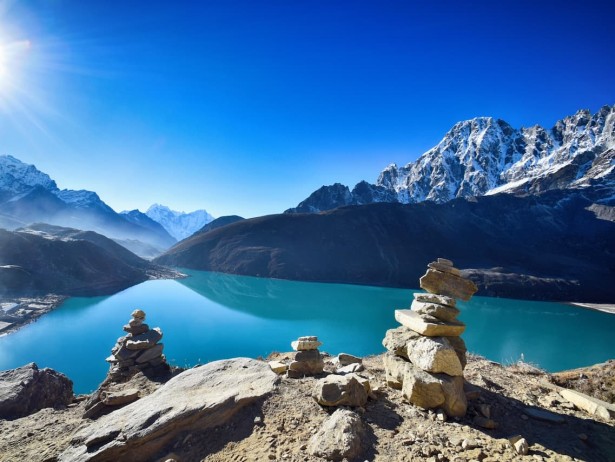
Day 15 is planned around getting up early to do the climb, and the rest of the day is free. You will have a nice rest for your legs before the final pass crossing. Sometimes, trekkers with some spare energy and time choose to walk to the fourth and fifth Gokyo lakes, which are further up the valley below Cho Oyu. However, the standard itinerary does not call for the detour, and most trekkers prefer to rest after the morning climb.
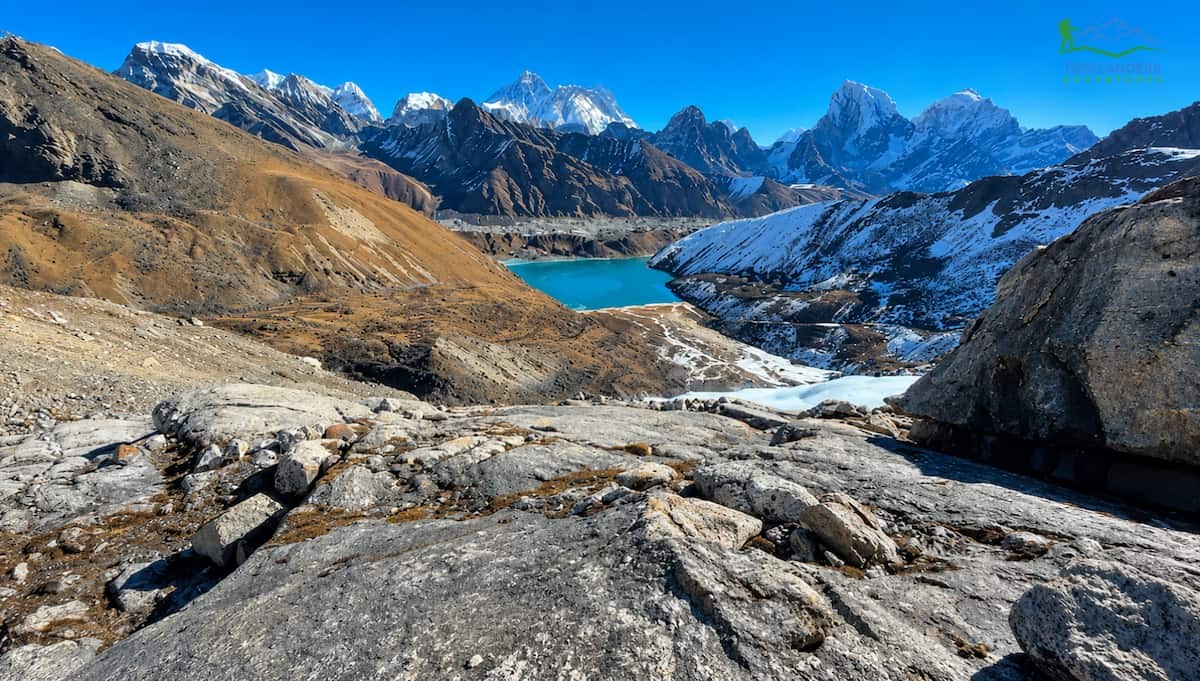
Day 16 is all about the third and last pass, Renjo La, at 5,360 meters. The seven-hour trek that begins beside the third lake of Gokyo and then goes up quite steeply to the pass. The panorama from the top is as good as Gokyo Ri, with Everest, Lhotse, Cho Oyu, and Makalu being seen from different angles, along with an obviously direct view of the Kwangde peaks.
The way down goes past a series of small icy ponds and rocky areas before finally reaching the flat grassy land near Lungden at 4,340 meters, which is a tiny village with just teahouses and nothing more.
On the 17th day, your path will take you to Marlung, essentially a small village that gets pretty much exposed to winds, and Thame, which is situated at an altitude of 3,880 meters. The journey will last six hours, during which you will have to cross the Bhote Koshi river, the same river that has its source in the Tibetan mountains. Besides that, you will see several yak herder settlements along the way. Thame is located near the old trade route to Tibet, and the high Tashi Lapcha pass that leads to the Rolwaling valley. And unlike Namche, it is one of the places that is least visited by trekkers. With the passage of time, this village has been home to some great Sherpa mountaineers, and it also features an ancient monastery that is seen almost hanging in the air over the main town. This way, you get a quiet cultural stop before you get back on the main trail the next day. Those trekkers who had skipped cultural stops in their EBC trip in order to reach base camp quickly have often said that of all the villages along the Everest Three Passes route, Thame is the one they can remember most vividly because it is not dominated by tourism but actually feels like a living place. Instead of lodges and souvenir shops that line up the main trail near Namche, you get stone houses, yaks grazing, and a slower daily rhythm.
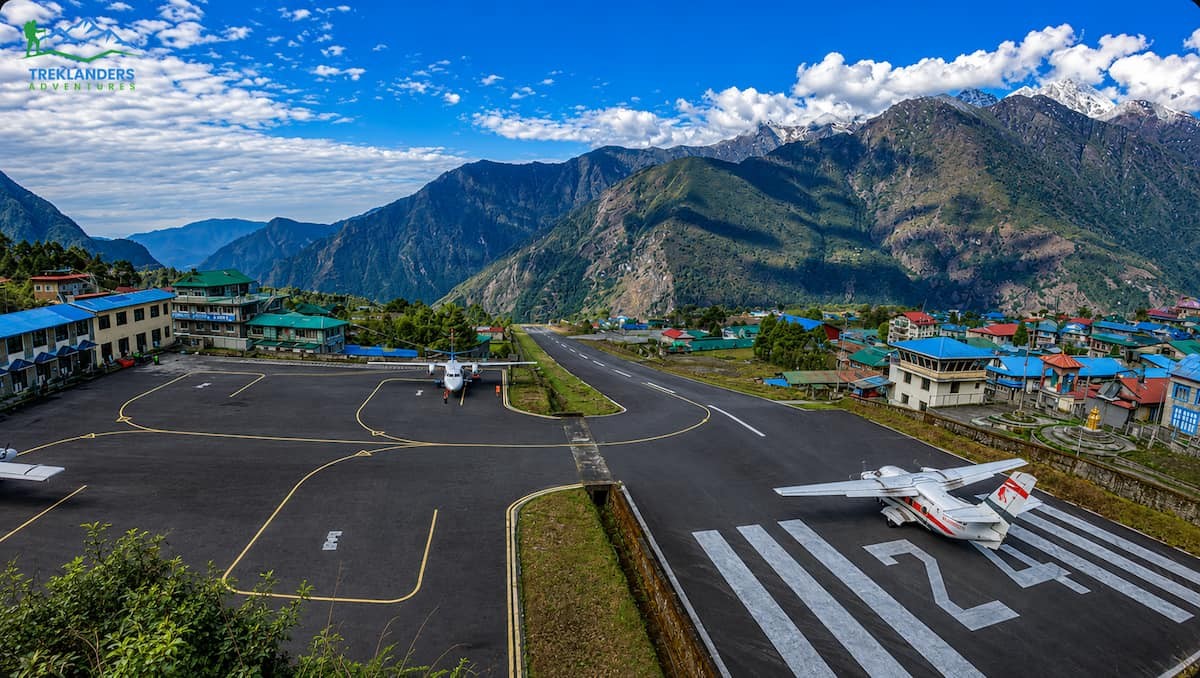
On day 18, you will walk for five hours from Thame to Namche Bazaar, while the route first takes you to a high ridge near Thamo from where you will get back to the trail which you climbed on day 4. On day 19, the path will be the same as the one through Namche Monjo Phakding leading to Lukla. The day will be six hours long and will complete your circuit by taking you back to the point where the trek started. At this stage, the difference between your EBC trip and this one will be so obvious that it could not have been missed even on the way in. You will be walking out after having crossed three passes above 5,300 meters and having looped through four valley systems that the standard route doesn't even touch, instead of just walking back the same trail that you took on your way up.
The remaining days cover the flight back to Kathmandu, a contingency day held in reserve for weather delays at Lukla, and your international departure. Most trekkers use that contingency day for a second look at Kathmandu's heritage sites, last-minute shopping in Thamel, or simply resting before a long flight home. The final night in Lukla usually brings a celebration dinner with your guide and porters, a good moment to reflect on how different this trip felt from the version of the Khumbu you walked through on your first visit.
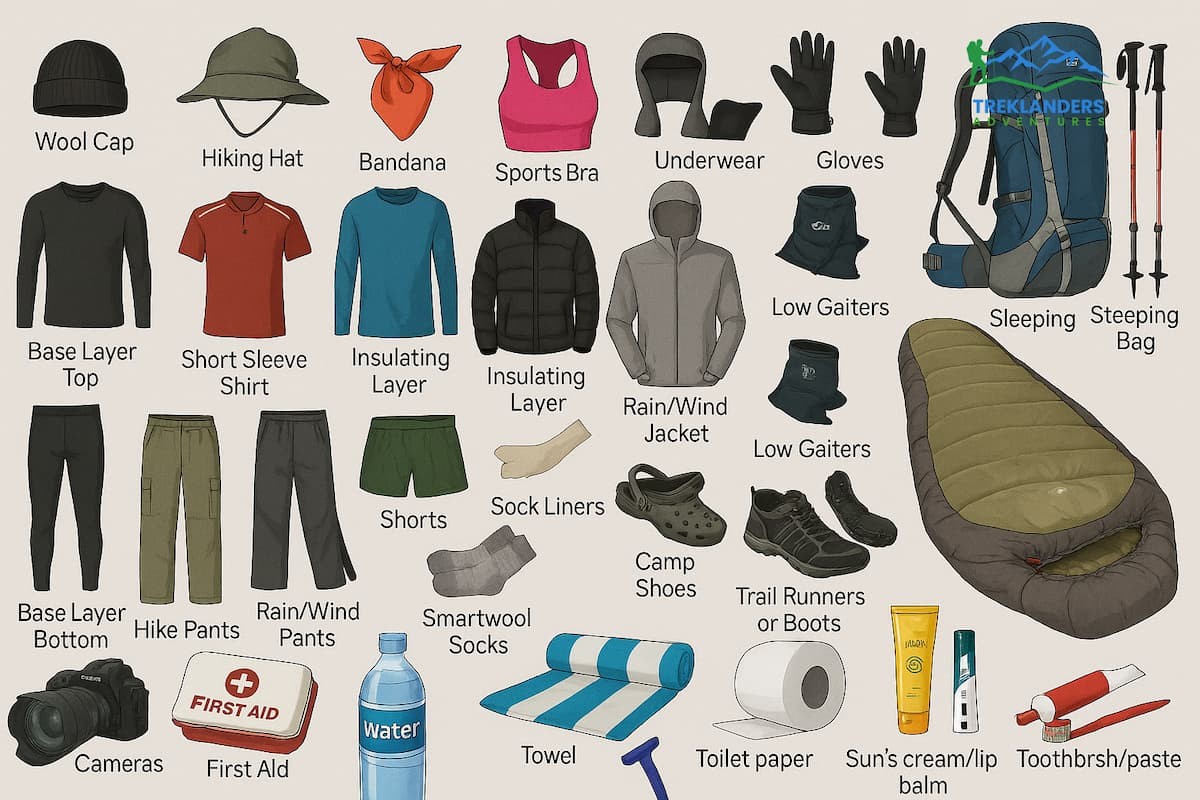
Your EBC kit will cover you in most aspects, but if you're going for the Everest Three Passes route, then there are a few items in particular worth packing. One is microspikes, which are an important gear item here more than at the EBC, because both Kongma La and Cho La passes have quite a bit of ice even deep into the trekking season, up to late spring. A second pair of heavy gloves or mittens is also a valuable investment in terms of weight, because the pass mornings are extremely cold and remain this way until you reach the drop in elevation on the other side of the climb.
Your sleeping bag should be rated for temperatures in the -15 to -20 degree Celsius range, even colder than what most EBC trekkers bring, as from Dzongla, Thagnak, and Lungden, these places are more exposed, less developed than the lodges along the main Everest Base Camp trail. Trekking poles are quite useful on this route as well, considering the loose scree and uneven footing on both Kongma La and Cho La descents, where relying on stable third and fourth points of contact helps preserve your knees on long downhill stretches. Also, bring along a compact personal first aid kit containing blister treatment, simple painkillers, and any medication prescribed by your doctor for altitude sickness before you depart. Keep it handy rather than buried deep inside your duffel because pass mornings begin in darkness, and you want to be able to get access quickly to it if something comes up.
Gaiters get a nod for your gear for snow-covered sections near all three mountain passes. In addition, a water purification system is even more important here than on the EBC, as some of the smaller settlements between passes have less reliable, bottled water supply than Namche or Dingboche. At the pass sections, you should be carrying a fully charged power bank. Namche, Tengboche, and Dingboche have reliable electricity and Wi-Fi, just like your EBC trip, but going beyond Dzongla, Thagnak, and Lungden, there is hardly any solar power and the signal is lost on long stretches, so you cannot count on charging your devices until you reach Gokyo or Thame.
Even if the EBC boots you wore fared well on your trek, you should give footwear serious consideration. Boots that are broken-in, waterproof, and sturdy in the ankle area will be able to withstand rough ground better than light trail shoes. Besides, some trekking enthusiasts bring a second, lighter pair of insulated boots for the coldest summit pushes of the day if their main boots happen to be narrow or thin. And of course, layering is just as important as any other item. Ideally, you want to get a moisture-wicking base layer first, then a fleece or light insulated mid layer, and lastly a windproof, waterproof outer shell. To top it all off, carry a heavy down jacket for those early morning starts at Kongma La, Cho La, and Renjo La, when temperatures are drastically below what you had experienced during your EBC trekking days.
Physically, you need more than EBC fitness. Daily distances run similar to what you covered before, but you spend far more consecutive days above 4,500 meters, and three of those days involve technical pass crossings rather than straightforward trail walking. If your Everest Base Camp trek felt comfortable by the second week, you have a reasonable baseline for this route. If it felt difficult throughout, build in extra training time before attempting Everest Three Passes, focusing on stair climbing with a loaded pack, longer back-to-back hiking days, and some scrambling on uneven terrain if you have access to it, since there is less margin for an off day when a pass crossing sits on the schedule.
March to May is the spring period when the weather starts to warm up, and nature comes alive with the blooming of rhododendrons. Still, there is a downside as afternoon clouds and occasional snowfall at higher altitudes are quite common. However, autumn (September to November) is considered the best season for the trek as it offers the most stable weather and the best visibility. In fact, many trekkers who have already been to the EBC prefer the autumn season for the Three Passes Trek because the weather windows around Kongma La and Cho La are more stable, making it easier to plan clear mornings.
For most trekkers, winter and the monsoon season are not the best times to go trekking. Heavy snow and low visibility can make it dangerous to cross the passes.
Plan your acclimatization days in such a way that they coincide with the pass crossings rather than viewing the crossing points as simply checkpoints. Suppose you don't feel well in Dingboche or Chukhung, then it would be better to spend an extra day there instead of rushing to Kongma La. The three passes offer tough terrains not only for the altitude but also for fatigue. So, before each crossing, timing will matter more than speed, and an experienced guide will keep reminding you of that.
Travel insurance that explicitly covers trekking and helicopter evacuation is essential because of the remoteness of Dzongla, Thagnak, and Lungden. Confirm that your policy covers the altitude reached, since some standard plans cap coverage below 5,500 meters.
Pack a map. Whiteout conditions can hide trail markers, and faint paths near Kongma La and Renjo La leave little room for navigation errors. Drink more water on pass days because altitude, exertion, and cold air increase dehydration.
After returning home, allow recovery time. Three weeks above 4,000 meters with three demanding pass days takes more from your body than a standard EBC trek. Plan a few easy days before resuming normal activity.
You already proved you can handle altitude and long days on Everest Base Camp. The Everest Three Passes Trek rewards preparation and punishes shortcuts. Walk it with discipline, and the three passes will feel like a natural next chapter rather than a leap into the unknown.
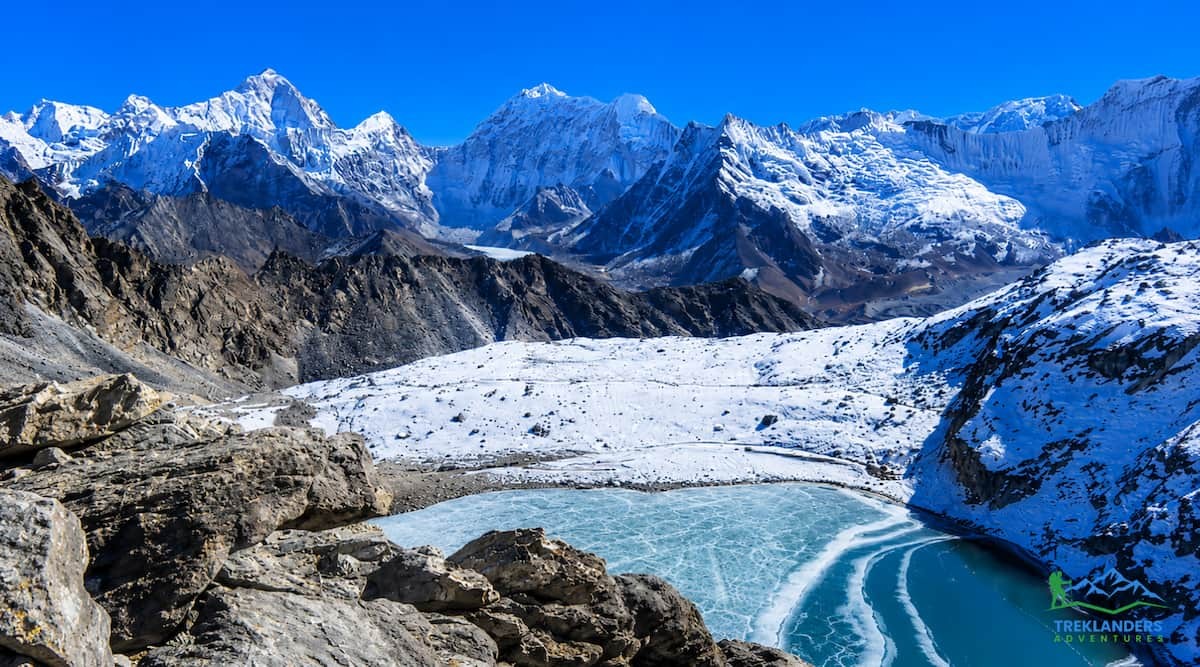
The Everest Three Passes Trek is a completely different type of trek, using Khumbu as a starting point instead of a destination. You have experienced the altitude, the sleeping in teahouses, and the early morning starts. Yet, you have not yet explored the glacial lakes of Gokyo, the secluded valleys after Dzongla and Thame, and the sensation of being on three different ridgelines at over 5,300 meters in just one week.
Such a difference justifies the extra preparation. Bring the microspikes. Train for consecutive days of high altitude. Design the acclimatization plan around the passes rather than comfort. Finally, go through the walk with the same dedication that helped you get to Everest Base Camp the first time.
EBC gave you a glimpse of Everest from one perspective, at one time. Everest Three Passes Trek unveil the whole range it is a part of, from every path that can be walked to it. That, more than any single viewpoint or altitude number, is what makes this the right next step.
A first-hand journey to Gosaikunda Lake through misty forests, monsoon trails, and sacred Himalayan landscapes.
Explore the Tilicho Lake Trek with this guide to the route, difficulty, permits, and best time to visit Nepal's iconic high-altitude lake.
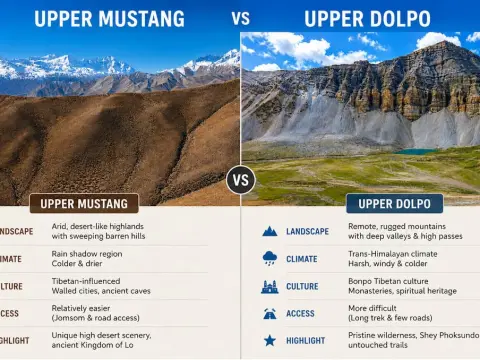
Compare Upper Mustang and Upper Dolpo to discover which of Nepal's most remote treks is right for you.



