Manang Village: The Cultural and Acclimatization Heart of the Annapurna Circuit Trek
11 Jun 2026
Explore Manang, the cultural heart of the Annapurna Circuit Trek, famous for Himalayan views, monasteries, and acclimatization hikes.

Most trekkers avoid Nepal during the monsoon. I realized, only an hour after leaving Dhunche, why it is so. Four of us started our journey with one purpose: to reach Gosaikunda, the holy lake at an altitude of 4,380 meters, spend a night near it, and see the sun rise over its calm waters. We allotted three days for the round trip, two nights on the trail, and one opportunity for a clear morning by the lake.
This is what happened over those four days. The ascents, the downpour, the freezing night by the lake, and the ceremony I underwent in the early morning. Mostly, I'm writing it down for myself, but also for anyone who is considering a monsoon trek to Gosaikunda and whether the trekking in the mud is worthwhile.
But the path to Gosaikunda truly starts much earlier than putting on your hiking boots. Indeed, it was 5:30 in the morning at the Macchapokhari bus park in Kathmandu, where our group of four, me, Krijan, Saurav, and Chejal, stuffed ourselves into a local bus with our daypacks between our legs and a chicken crate somewhere at the back. The Prithvi Highway runs to the North of Kathmandu, and at Trishuli Bazaar, the monsoon's haze had already made the hills look like a dull grey-green shadow.
The road to Dhunche runs through Rasuwa district and is gradually climbing towards the Langtang region. Significant parts of this road had been reconstructed after the 2015 earthquake, but monsoon rains are nature's ruthless opponent, and road edges with landslide debris freshly uncovered were after a few kilometers. Our driver showed an amazing level of calm while driving that indicated either, he was very skilled or very indifferent. We decided to think the first one was true. Five and a half hours after leaving Kathmandu, we arrived in Dhunche at roughly 1,966 meters elevation, stiff in the legs but quite excited.
Dhunche is the door to Langtang National Park and also the office of the Rasuwa district. On a rainy day, it gave a vibe of a leisurely pace on a main street with tea shops, lodges, and shopping for provisions, together with some other trekkers who were making last-minute gear checks outside their teahouses. We got our TIMS cards and Langtang National Park entry permits at the checkpoint, had a plate of dal bhat at a local hotel, and slept in a very simple tea house room that smelled of damp wood and incense. It was just right.
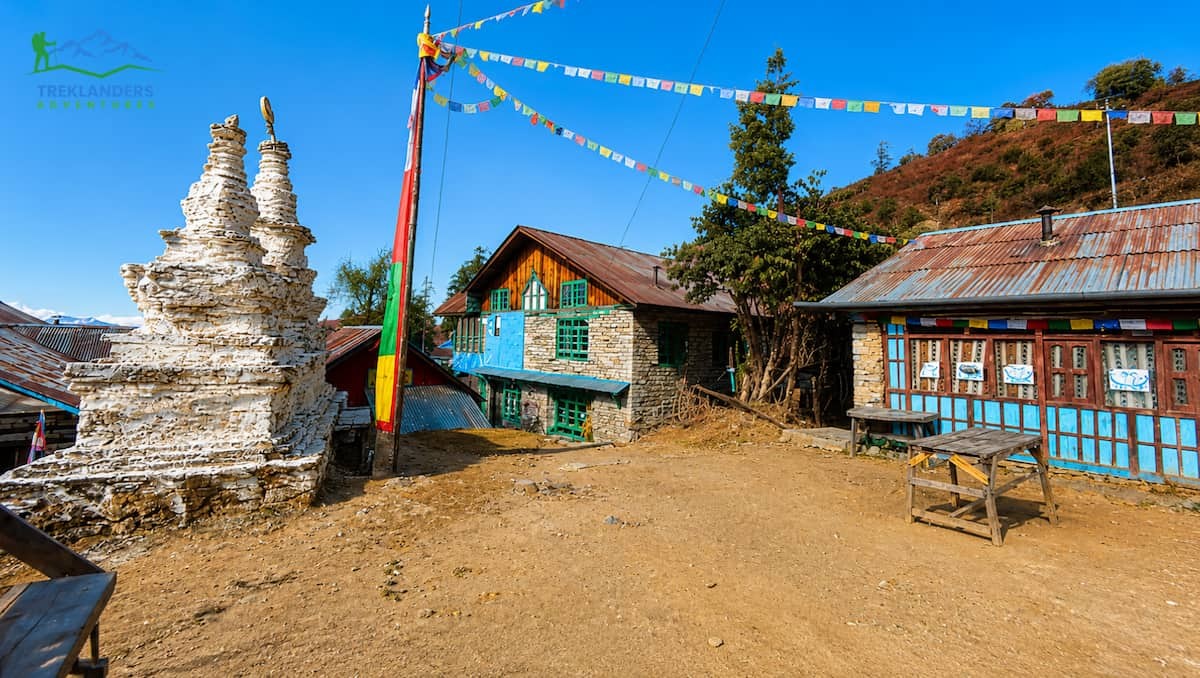
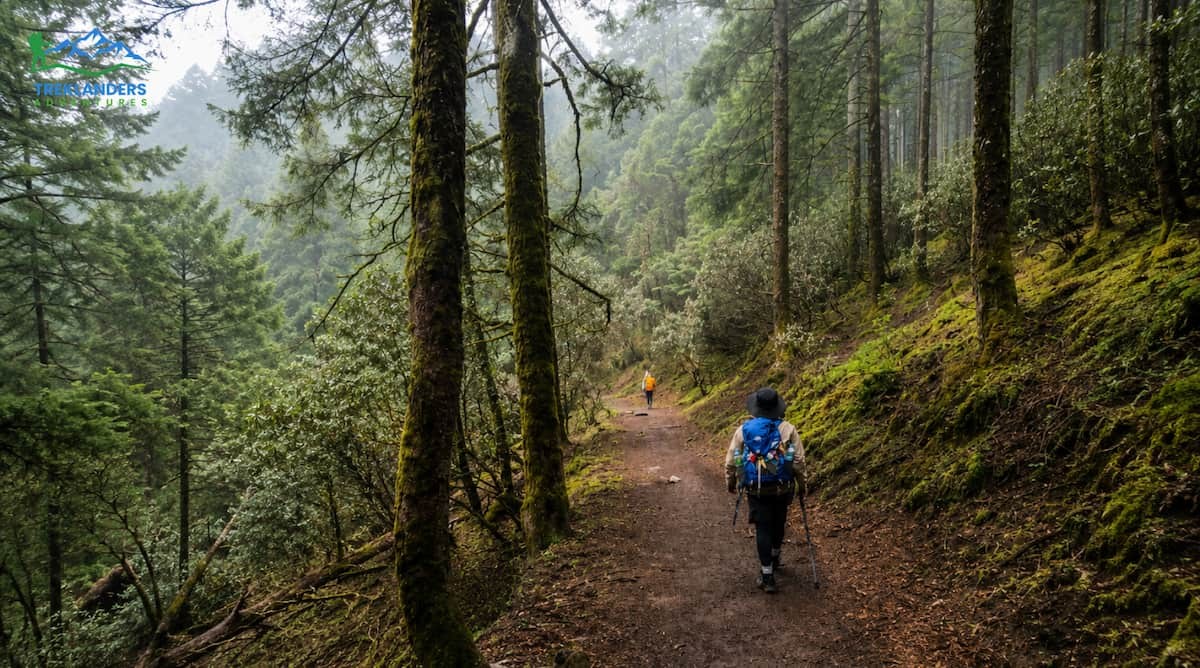
The following morning, we left at 7:30 am while the trail was still wet from the rain that had fallen during the night. The path leading out of Dhunche goes up steeply, and nearly immediately, we found ourselves pushing through the dense rhododendron forest, which in the monsoon season is such a deep and vibrant shade of green that it almost looks like it's been colour-graded. Water was dripping off every leaf. The trail itself was a narrow passage amongst the roots and red mud, and within the first half an hour, Chejal had not only slipped two times but had also punctuated the morning air with a string of colourful Nepali phrases.
The distance one must cover to reach Sing Gompa from here is about eleven kilometers; however, the elevation gain is roughly 1,400 meters, thus the final altitude the trek ends at is some 3,330 meters above sea level. If it's the dry season, you can get up there in an uncomplicated four-to-five-hour ascent. When it is the monsoon, though, and the trails have been softened by cuts of rain and the visibility at times reduced to the length of a football pitch, then it really tests one's endurance and patience. We continued in a single file, each of us watching out for the next step carefully.
Besides taking away the magnificent views, the monsoon brought with it wonderful opportunities to enjoy the spirit of the place. The forest was just amazing. Giant ferns were running along the trail on either side. Thick, wild mosses of brilliant green had taken over even the smallest surfaces of each rock. The birds' chirping was coming from every angle, thrushes laughing, warblers, and once what Krijan claimed was a cuckoo, though Saroj gently reminded her that the cuckoo sound was actually coming from her phone. There was something so deeply alive about that forest in the wet season. We might as well have been climbing a living creature that was breathing and dripping around us.
The clouds came in properly around mid-morning. Not dramatically, there was no sudden darkening or theatrical rumble. They simply arrived, rolling in from the west with quiet efficiency, wrapping the ridge above us and softening the world to shades of grey, green, and white. The temperature dropped, and I pulled on a fleece that would stay on for most of the next two days. Visibility, which had already been limited by the tree canopy, shrank further. There were moments on that ridge walk where I could barely see more than twenty or thirty meters ahead, and the trail disappeared into whiteness like a road into fog.
It should have been frustrating. It was occasionally. But it was also strangely meditative. When you cannot see the destination, you focus entirely on the step-in front of you. The trail. The breath. The aches in your thighs on the steep sections. The rhythm of your poles. Trekking in low visibility does something to the mind; it strips the experience down to its most elemental, and what remains is simply the act of moving forward through space, which turns out to be more satisfying than you might expect.
We reached Sing Gompa in the early afternoon, breaking out of the tree line to find the small settlement sitting in a clearing at the edge of the subalpine zone. Sing Gompa, sometimes written Chandanbari, is named for the small monastery that sits above the village, and it serves as the main stopover between Dhunche and Gosaikunda. The settlement has a handful of tea houses, a famous yak cheese factory that has been producing cheese here for decades, and the kind of quiet that only high-altitude communities seem to carry.
In a tea house, we had soup and yak cheese toast. The tea house was run by a very cheerful woman named Devi, who kept refilling our cups of ginger tea without us even asking. We all agreed that she must be one of the most wonderful people we have ever met. The fog stood white against the windows. Prayer flags outside were hanging between the rooftops, their colours were subdued due to the moisture, while the wind had died down, and their motion was practically at a standstill.
We played cards for two hours before dinner and went to bed early, listening to rain tap lightly on the tin roof above our bunks.
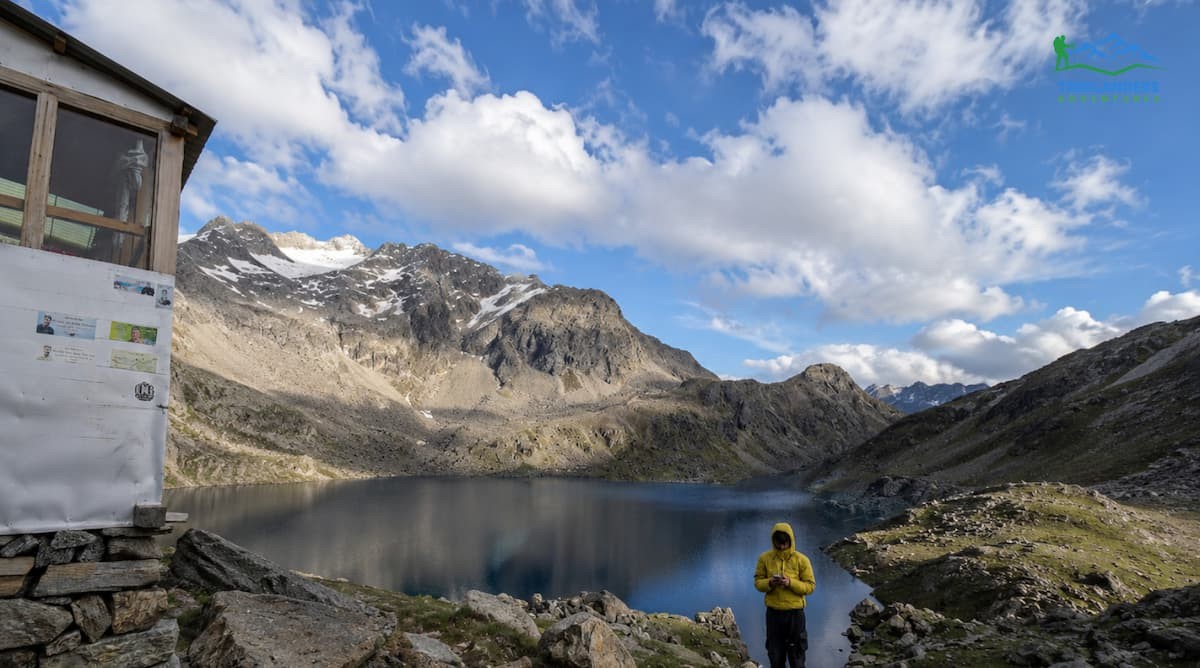
Early on the morning of the third day, the weather was dull and soft, and we had our breakfast in the tea house quite silently but very determined, as it often happens to trekkers when they know the upcoming day is going to be really challenging. For us, it was the day of Gosaikunda. The day of the lake. Devi gave us tea in thermoses and reminded us that the main rule on a trek is to pace yourself and keep drinking water. Essentially, it is good advice for everything in life.
The path from Sing Gompa to Gosaikunda is around seven kilometers and rises from an altitude of 3,330 meters at the start to 4,380 meters at the end, so the elevation gain is more than a thousand meters for this section alone.
You also experience very different types of landscapes as you go up. The rhododendron groves at the bottom become less dense and eventually turn into patches of alpine shrubs. You then come to the open grassy meadows at this height and eventually to the top, where the trail is just a rock field with some big stones around.
During the monsoon, the meadows were ridiculously covered with all types of wildflowers, yellow, purple and white, and water drops on the petals reflected light, making even the cloudy morning sparkle.
We had a true feeling of high altitude only after crossing 3,800 meters, and the very body decided without even telling the mind that we should slow down. At the higher altitude, the body side with the argument "be patient".
We took many breaks, partly to catch our breath and partly because the beautiful scenery, even when covered with clouds, forced us to look around. Before reaching Gosaikunda, there are several smaller lakes and amongst them are Saraswati Kunda and Bhairavkunda. All of them were unveiled from the fog with the calmness of a sort of theater play. Rocks and dark water make them seem as if no one has disturbed the reflections of the grey sky above.
Chejal really was finding it hard by now. Not seriously enough for him to be in danger, no headache, no nausea, just the kind of disoriented heaviness in the legs that indicates a person's body getting used to a higher altitude. Without saying anything, we walked along with him at his pace because the unwritten rule on a trek is that the group moves at the speed of its slowest member, and nobody makes it a point of discussion. Krijan and I whiled away the moments by coming up with more and more complicated stories about what Gosaikunda would look like when we got there, some being quite realistic, others mythologically impossible.
Then, around 11 a.m., on a part of the path which bent left around a big pile of boulders, I caught sight of it.
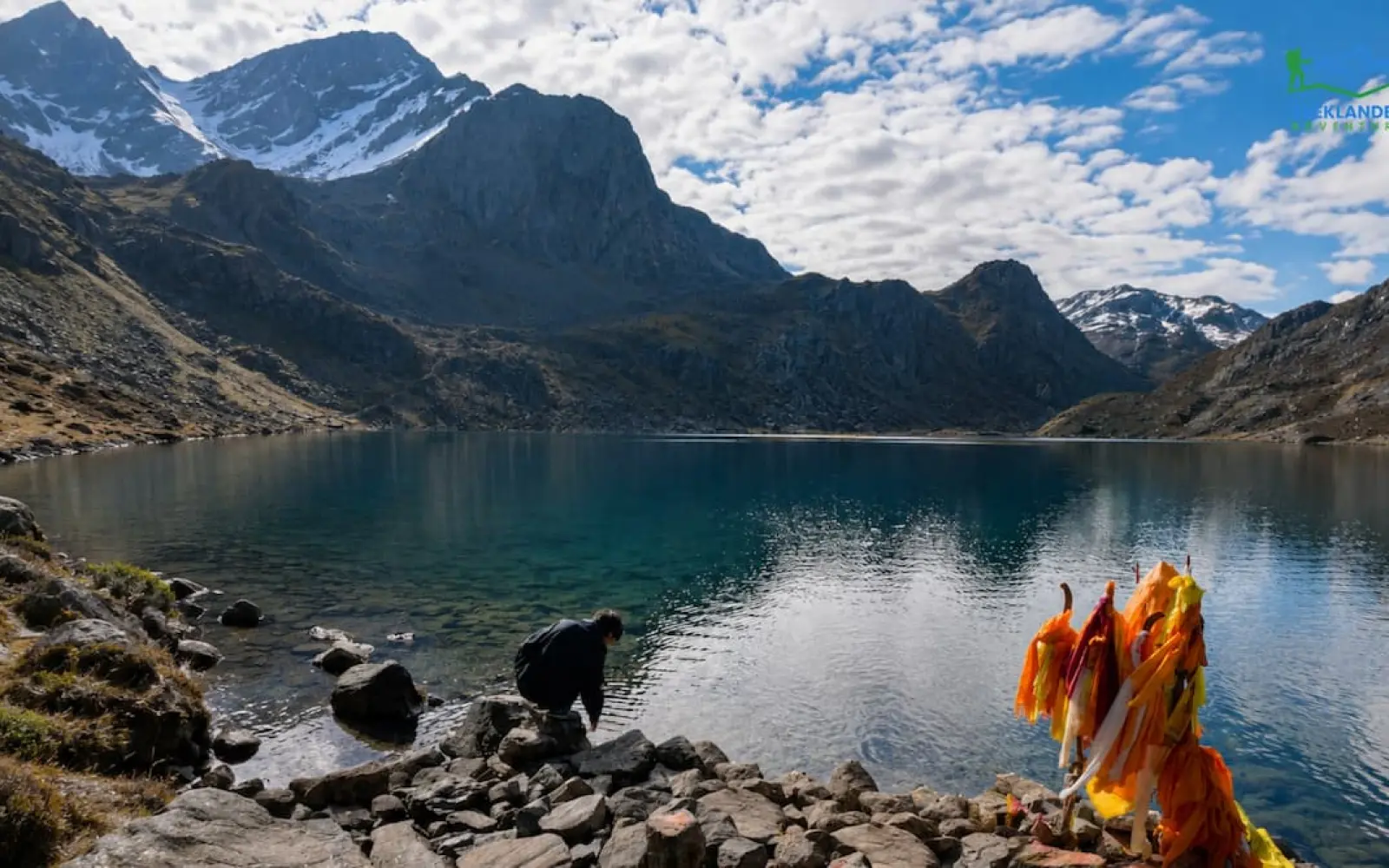
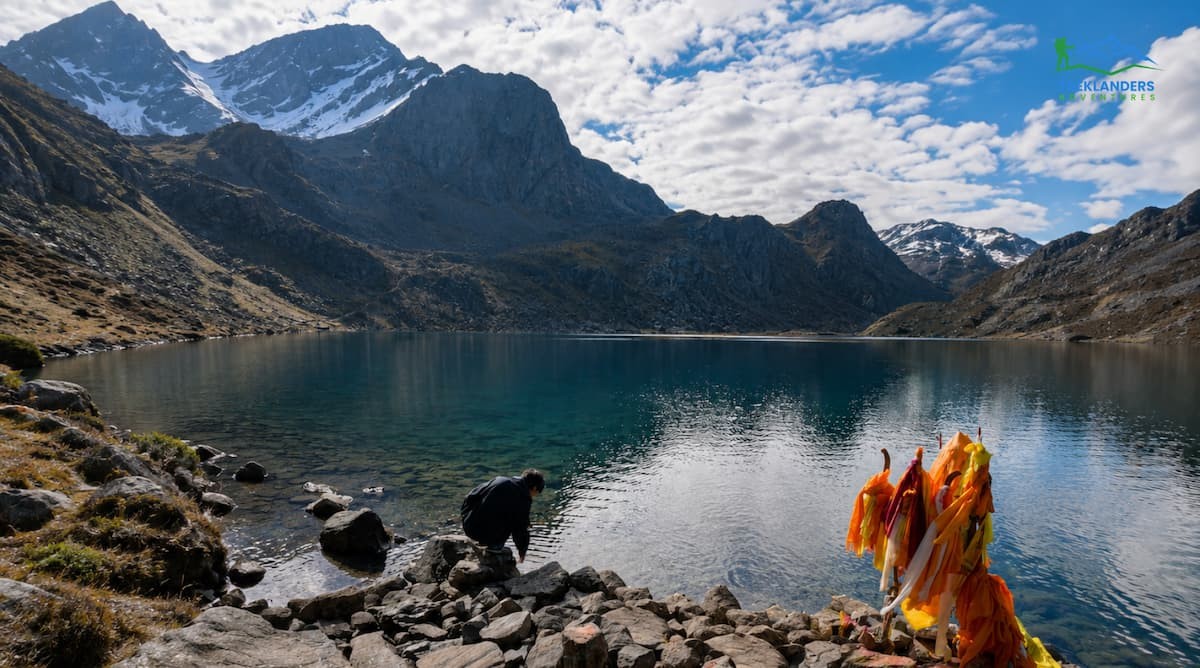
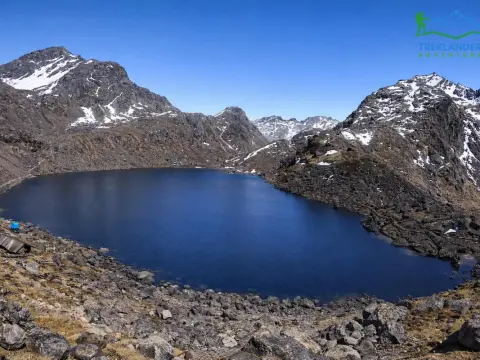
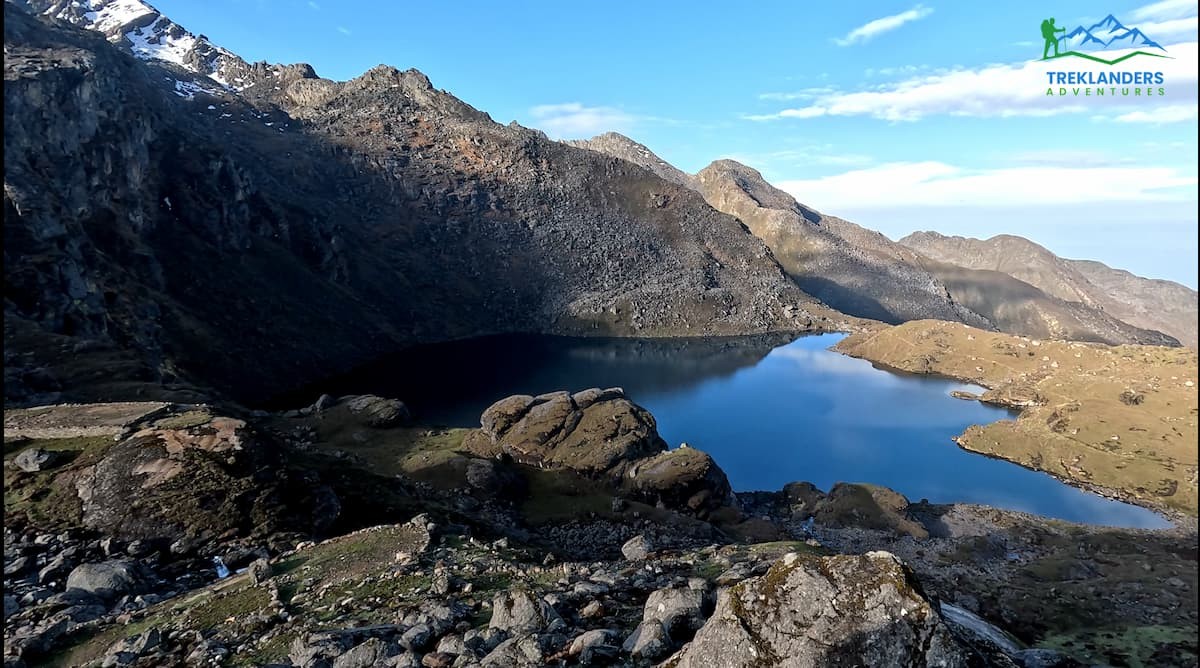
The fog had lifted unexpectedly, not gone completely, just thinned. And through that thinning, along a short stretch of open air, was Gosaikunda. I was so surprised at the size of the lake. It was a vast, dark, leaden blue lying in its old basin, bounded by rocky shores and the ridgelines that rose and disappeared into the clouds. The water was mirror-like. On the other side, hardly discernible through the haze, was the small white shape of the Shiva temple right beside the water.
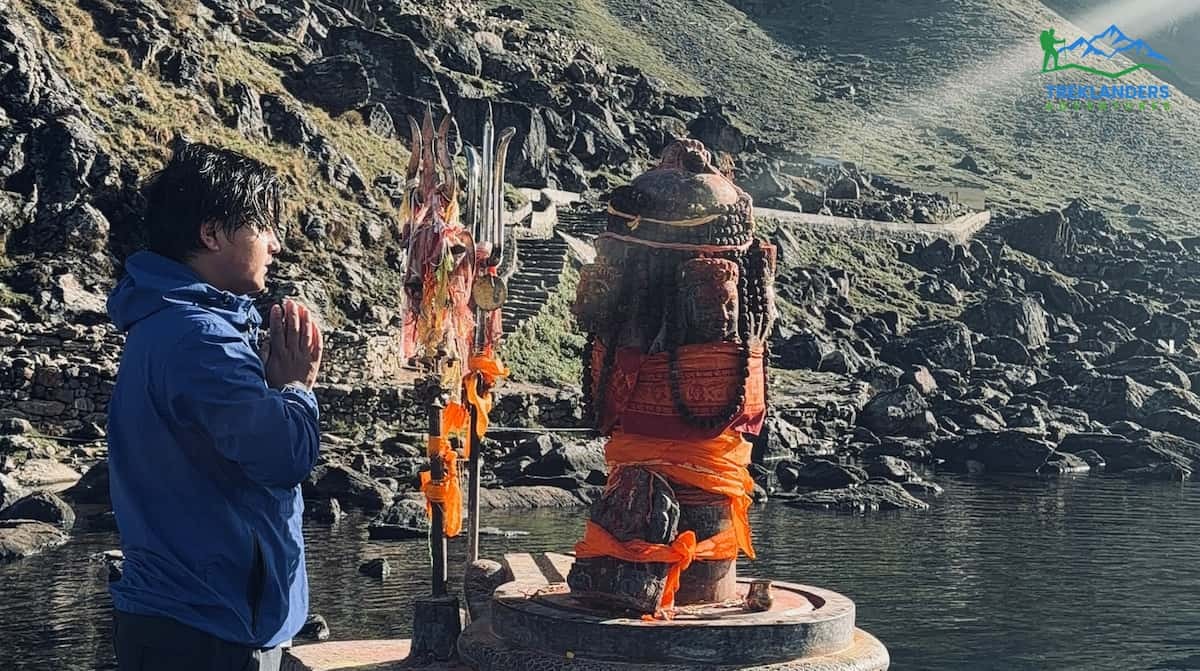
Gosaikunda is more than just a lake. It should be said clearly and early, because if you view it simply as a natural feature, a glacial lake at 4, 380 meters, about 1.5 kilometers long, located in the Langtang National Park, you will not have any understanding of what the place really is. Gosaikunda is among the most sacred lakes to Hindus. It is considered the dwelling place of Lord Shiva, who, as the story goes, made the lake after the poison that was released when the cosmic ocean was churned made him drink it, and so he thrust his trident into the mountain to let the water flow out. Every year during the festival of Janai Purnima in August, thousands of pilgrims come and have a dip in the lake and get blessed.
We had not come during Janai Purnima, the festival was still a few weeks away, but the holy nature of the place was very clear even in the stillness of a cloudy monsoon morning. Prayer flags were hanging from stone to stone all around the lakeshore. Mani walls were along the path, with each stone engraved with Om Mani Padme Hum by skillful hands. The Gosaikunda temple, which honors Lord Shiva, was a small, white building right at the water's edge; with its little compound kept very clean no matter the altitude and the remoteness.
The four of us made our way around the eastern shore of the lake to the temple. A pujari, a priest, was present, an older man in saffron robes who greeted us with the unhurried warmth of someone who has welcomed tired trekkers at this altitude for many years. We removed our boots at the temple entrance. The stone floor was cold under my socks. Inside, in the dim interior fragrant with incense and butter lamps, sat the Shivalinga, the sacred emblem of Lord Shiva, garlanded with fresh marigolds that someone must have carried up the mountain.
Each of us gave the tika and a tiny prasad. The pujari marked our foreheads with vermillion and whispered his incantation, low and steady in the hushed interior. I do not consider myself a religious person in the formal sense, still standing at 4,380 meters inside that temple. After climbing the jagged path through rain and clouds, something about the ritual deeply resonated with me.
Maybe the ritual, in essence, is the deliberate stopping, the recognition of a higher power, the little red dot on your forehead saying I was here, and I was present, which all encapsulate the true meaning, ignoring the theological framework around it.
We remained on our rocks beside the lake for a very long time. Instead of disappearing, the cloud drifted around us, so the views of the surrounding ridges stayed out of sight, but the lake itself was very clear, very near and somewhat huge. The lake's edge was as clear as crystal; every stone lying on the bottom of the shallow area could be recognized before the water turned into a very dark color, resembling both blue and black at the same time, which is a characteristic feature of mountain glacial lakes. Krijan tossed a stone across the water.
Saurav ate an apple. Chejal made entries in the notebook, which he carries everywhere and which he will never let anyone read. I mainly just gazed at the lake.
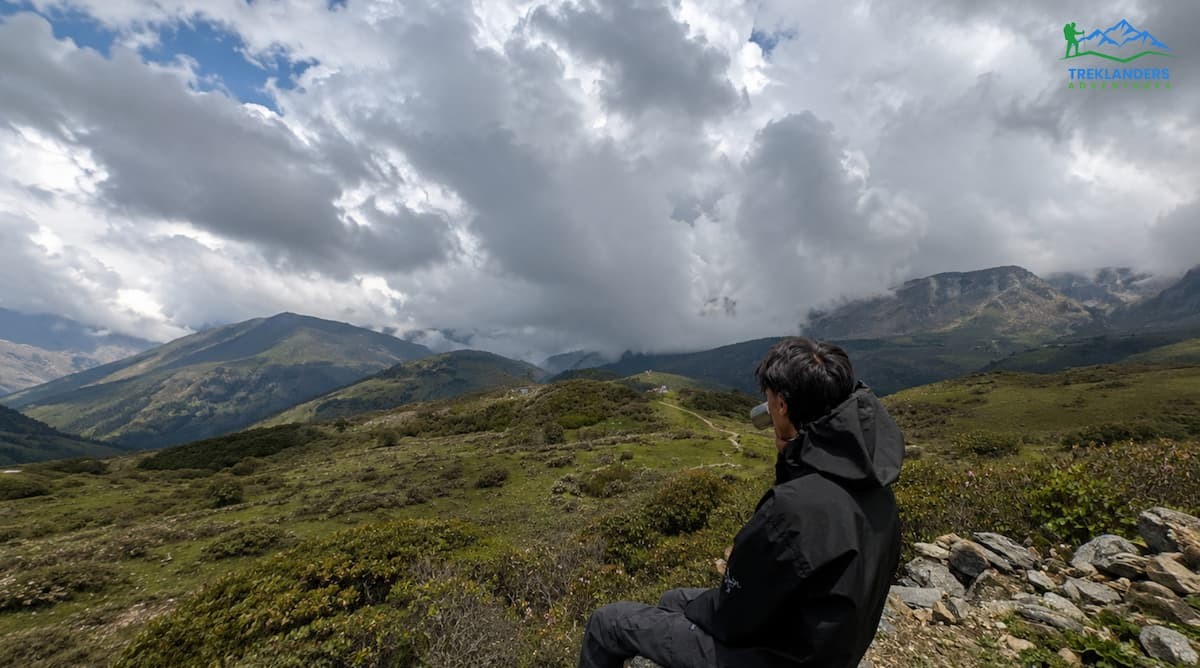
I want to advocate for the monsoon trek because it truly merits one. The traditional travel advice about Nepal in October is that it is peak season for a reason; you can't go wrong in autumn if you are after the views. Those clear days of October with the Himalayan panoramas stretched to the horizon and the sky so vividly blue that it hurts the eyes are really magnificent. I have done such treks. I totally get their charm.
But the monsoon is presenting you with something totally different and, to my mind, even something more special. The paths were only ours. Just during the three days of our trek from Dhunche to Gosaikunda, we came across maybe twelve trekkers total, a few Nepali pilgrims walking to the lake, two French tourists in very unusual rain gear, and one solo trekker from Jharkhand who seemed to be in a hurry as if he had some very important place to get to. The tea houses were rather empty. Devi of Sing Gompa even invited us to sit down and chat about her daughter studying in Kathmandu. The person performing the puja at Gosaikunda was also keen to share the significance of the different sacred points around the lake. Not being one of the hundred other tourists competing for attention, the people you meet have time for you.
Besides, the landscape attracts attention. The Gosaikunda trail in July is so full of life that it can almost be called aggressively. The rhododendrons, mainly flowering in April and May, have now shed their petals; their leaves are of a deep green, and around them, the forest floor is covered with thick layers of ferns and wildflowers. Above the tree line, the meadows serve as fertile pastures, and you are very likely to see yaks and their hybrids, dzokyos, moving slowly through the mist with an air of indifference as if they have never been even slightly affected by the altitude. The waterfalls on this path, which are basically mall streams, turned into large cascades due to the monsoon, some of them even flowing right over the trail, so getting wet was inevitable regardless of how good your rain jacket was.
The only compromise, naturally, was the views. The well-known mountains of the Langtang area, Langtang Lirung at 7,227 meters, Ganesh Himal to the west, and the pointed outline of Jugal Himal were hidden from us during the whole trek. We saw only one, very short, stretch of a ridge on the afternoon of the second day when a hole in the cloud briefly exposed perhaps three hundred meters of the rocky skyline before disappearing again. That was enough. If I went back in October and had the chance to see the whole panorama, I am sure it would be breathtaking. Yet I keep with me what I saw and what I felt, and it does not feel like something lacking.
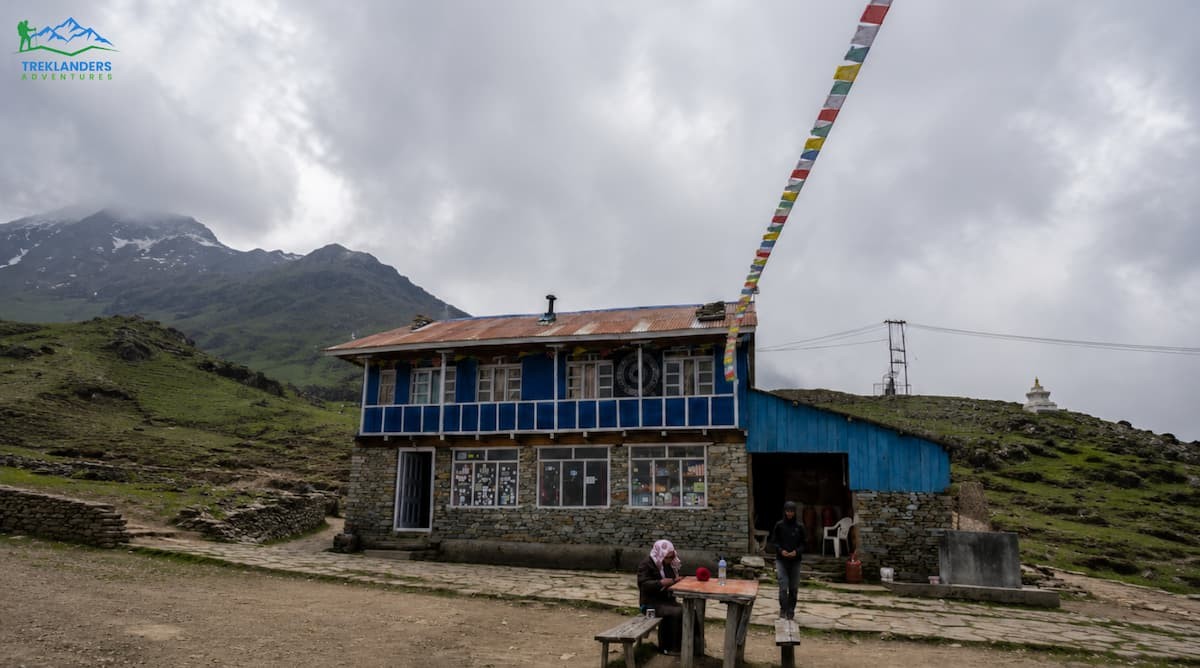
One of the underrated pleasures of the Gosaikunda route is that it is genuinely accessible. You do not need a high-altitude acclimatisation schedule. You do not need a guide, though hiring one supports local livelihoods and enriches the experience. You do not need a tent or sleeping bag; the tea houses on this route, while simple, provide blankets and meals and the particular warmth of a wood stove in a stone room after a rain-soaked day of trekking. What you need is reasonable fitness, appropriate gear, and a willingness to be present in whatever weather arrives.
The tea houses between Dhunche and Gosaikunda are family-run establishments that have been providing shelter to trekkers and pilgrims for generations. Rooms are basic, typically a wooden bed frame with a foam mattress, shared bathrooms, and walls thin enough that you learn a great deal about your neighbors' sleeping habits. The food, on the other hand, is everything you need it to be. Dal bhat lentil soup, rice, vegetable curry, papad, and pickle appear at lunch and dinner and are endlessly refillable in the Nepali tradition, where refusing a second helping is practically impolite. We also ate noodle soup, chapati with vegetable curry, and at Gosaikunda itself, a genuinely good pot of instant noodles that tasted better than anything I have eaten in a restaurant, because at 4,380 meters and hungry, anything hot is magnificent.
The permit's part is quite easy: you will require a Langtang National Park entry permit and a TIMS card, both of which can be acquired in Kathmandu at the Nepal Tourism Board office near Bhrikutimandap, or at the checkpoint in Dhunche itself. Those trekking during the monsoon should be aware that the Gosaikunda Conservation Area fee is charged separately above Sing Gompa. Make sure you have cash; beyond Dhunche, there are no ATMs, and you will find very limited connectivity, yet you will soon realize that it is not much of an inconvenience after all.
When it comes to monsoon gear, certain essentials should never be compromised: a truly waterproof rain jacket (not just water-resistant, truly waterproof), gaiters or quick-dry trousers that you don't mind getting completely muddy, trekking poles for the slippery climbs and descents, and a dry bag or waterproof pack liner for your electronics and anything else that you simply can't afford to get wet. Having a firm hold on your boots is extremely important, especially on those sections of the trail where the clay turns into an ice-rink-type slippery surface in the rain. Layering is very important as the temperature at Gosaikunda, even in July, falls quite substantially after sunset and can hover around zero during the night.
We spent the night at the tea house in Gosaikunda, which is a tiny, solid building operated by a family from Rasuwa whose father had been offering tea and shelter at the lake for more than twenty years.
When the wind picked up, the temperature fell rapidly. We grabbed some food on the communal table alongside two Nepali pilgrims, a couple from Birgunj who have been making this journey every year for the last ten years, as the woman explained, they had made a vow at a point of serious trouble without going to detail but the way she spoke of it with a sort of quiet resolve indicated to me it must have been a life-changing experience for them.
At 5 am, I opened my eyes to silence, which is a type of sound itself, especially at a high altitude. I put on clothes fast and went out into the chill predawn. The cloud had moved a bit during the night, and through a break in the grey I could see a single star, only one, but really big and very bright, and it had that particular quality of the stars as if you could only see them at high altitude where the atmosphere is thinner. I remained there for maybe five minutes before the cloud covered it again. That was more than enough for me.
Four days, More painful for the knees than the gradient. The long downhill parts through the rhododendron forest challenged quads that were still recovering from the ascent for two days. The trail was more slippery than when we were going up because last night's rain had turned some areas into shallow streams that flowed along the path. We carefully chose our steps, and Chejal, while doing so, slipped once, unexpectedly sat down on the muddy slope and in the face expression of blaming, which was so funny to us that we could not stop laughing, so we had to stop walking.
The forest on the descent felt different from the forest on the way up, or perhaps we were different, moving through it. The initial excitement of the approach had been replaced by something more settled. There was time to notice things: a particularly beautiful arrangement of moss on a boulder, a section of trail lined with enormous ferns that arched overhead like a tunnel, the way sound in a monsoon forest is softened and rounded by all that moisture in the air, so that voices and birdsong and the distant rush of water all arrive at the same quality of gentle. We were back in Dhunche by mid-afternoon. We ate a late lunch of thukpa, Tibetan noodle soup, at a roadside restaurant, changed into dry clothes in the tea house where we had started, and caught the evening bus back toward Kathmandu as the light softened and the hills around the Trishuli valley faded into their monsoon haze.
I've been attempting, ever since my arrival in Kathmandu, to articulate what Gosaikunda actually accomplishes to a person. The problem is that it does not produce anything spectacular. The intensity of the mountain illumination doesn't reveal any spiritual awakening. The clouds don't deliver messages. There isn't a single moment when everything makes sense all of a sudden, like travel writing occasionally does!
What it does is much more subtle than that. It invites your spirit to be gradually guided through a difficult situation. It asks you to put up with misbehaving weather, a physically exhausted body, and trails that save themselves by disappearing in the clouds. It demands that you reach a sacred place, be in the moment there, and not insist that the place entertains you. And well, if realizing these things even in bits and pieces, being patient, slow, and with even a little bit of sincere attention, the lake is what it offers you: a presence that is dark, still, ancient, and completely detached from your coming. And strangely, it is that very detachment that you drastically needed.
The monsoon version of the Gosaikunda Trek revealed a simple truth: difficulty and reward are inseparable. The clouds that hid the mountains made each brief clearing over the lake unforgettable. The rain that soaked our boots gave life to forests glowing with colour and sound. Slippery trails slowed us down and forced us to notice every detail. On the journey home, we spoke less but understood more. I remembered the dark lake at 4,380 meters, a lone star through the mist, and a red tika at a lakeside temple. In the monsoon, Gosaikunda feels quieter, deeper, and completely alive and timeless.
Writer :- Alice Adhikari
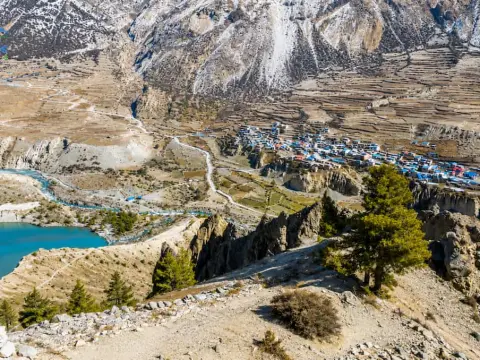
Explore Manang, the cultural heart of the Annapurna Circuit Trek, famous for Himalayan views, monasteries, and acclimatization hikes.
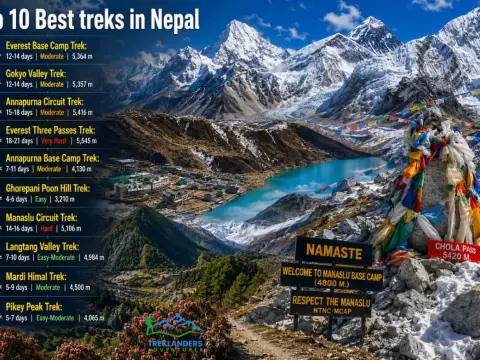
Explore the best treks in Nepal, from Everest Base Camp to Annapurna and Langtang, and find the perfect Himalayan adventure for you.
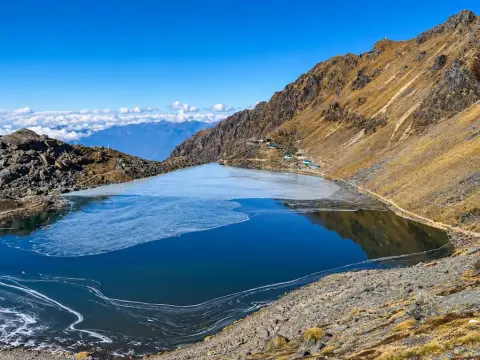
Complete guide to the Gosaikunda Lake Trek with permits, best season, altitude tips, itinerary, and essential trekking advice in Nepal.



