Gosaikunda Lake Trek: Complete Guide, Essential Tips & Travel Advice Before You Go
15 Jun 2026
Complete guide to the Gosaikunda Lake Trek with permits, best season, altitude tips, itinerary, and essential trekking advice in Nepal.

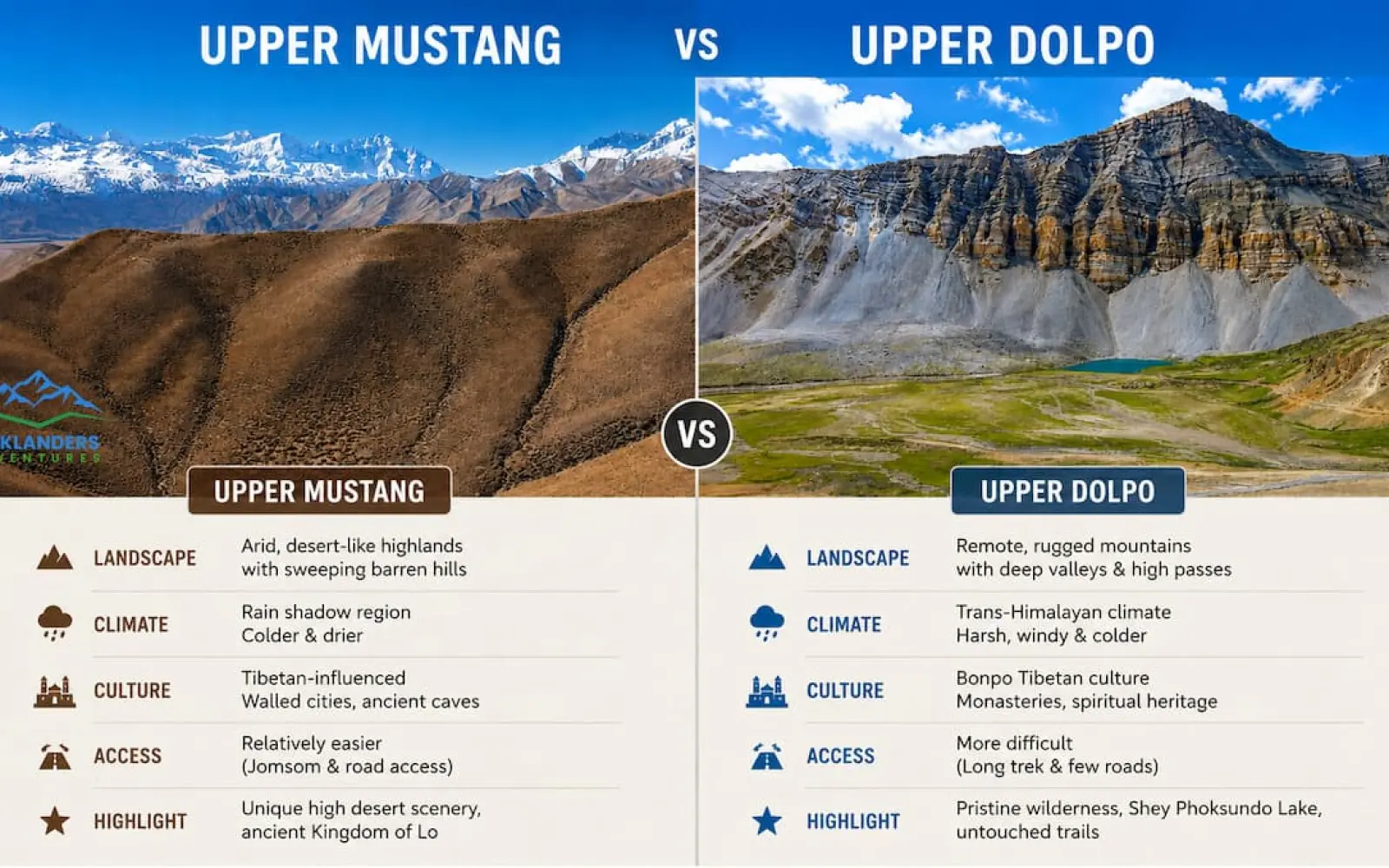
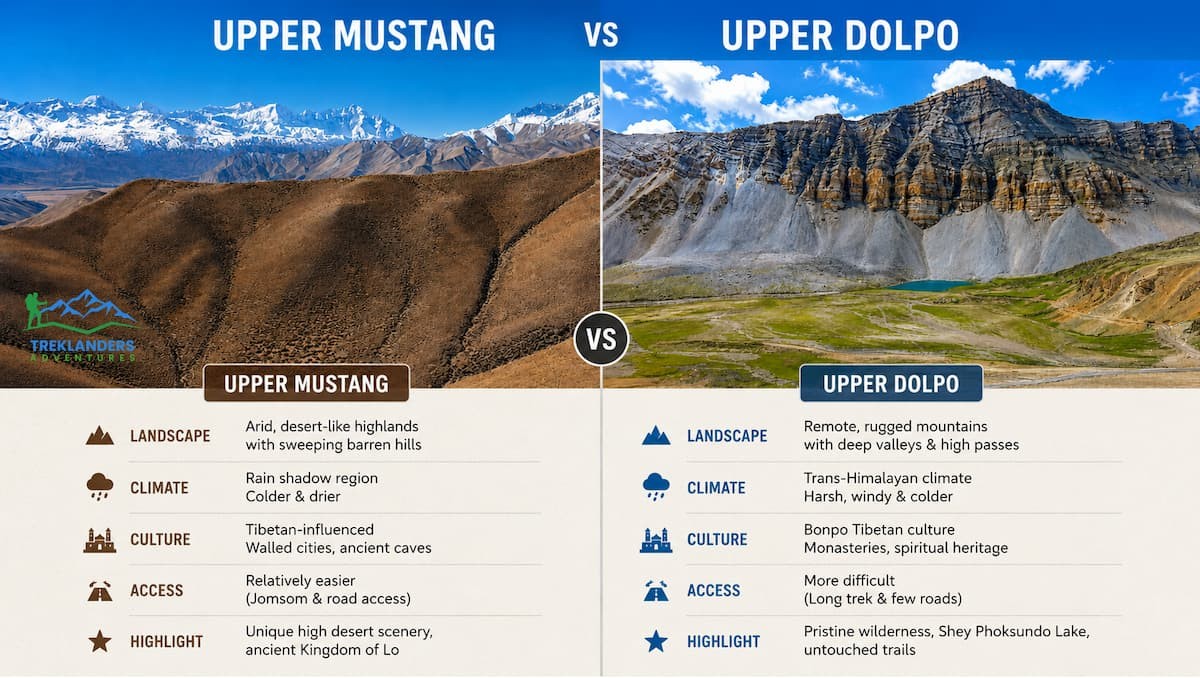
Nepal has many restricted trekking zones, but only two are significantly different from the rest. Upper Mustang and Upper Dolpo are very exclusive areas, almost like a secret, lying in the Himalayan rain shadow, far from the tea-house circuits that most trekkers ever see. Both appear under the same label: restricted. Both are comparable to Tibet. Both require planning, permits, and a licensed guide before you even start. However, they are on quite different treks. Not even close.
The question of which one is "more remote" is asked quite often, and the honest answer will depend totally on what definition of that word you use. If remoteness means altitude and camping over lodge nights, then Dolpo is the winner. If it means cultural isolation and a landscape that looks like another planet, then Mustang has a very strong case. If it means logistical difficulty, permit complexity, and sheer distance from the rest of the world, then Dolpo wins its hands down.
This comparison breaks down both treks across the factors that actually matter when you are planning an expedition of this level: access, terrain, altitude, cultural depth, accommodation, permits, and the kind of trekker each route suits. Treklanders run both trips, and the contrast between them tells you a great deal about what each place truly is.
Upper Mustang and Upper Dolpo are both areas where the Nepal government requires a special restricted area permit.
You are not allowed to go to either of these places without a trekking agency, a guide, and official permission to open the way, all of which are regulated by the government of Nepal.
This is not just a formality. Officers at the checkpoints will ask you to see your papers.
Individual trekkers without a guide are turned away.
Located right along Nepal's border with Tibet, Upper Mustang is a border area where the Nepalese authorities partly control the entry of people in order to manage the sensitive situation of the boundary and partly because they want to limit the number of visitors to the fragile high-altitude ecosystem. The former Kingdom of Lo was closed to the outside world until 1992. Even today, there are limits to the number of visitors per day. The permit fee for the whole year is quite high when compared to other Himalayan trekking areas.
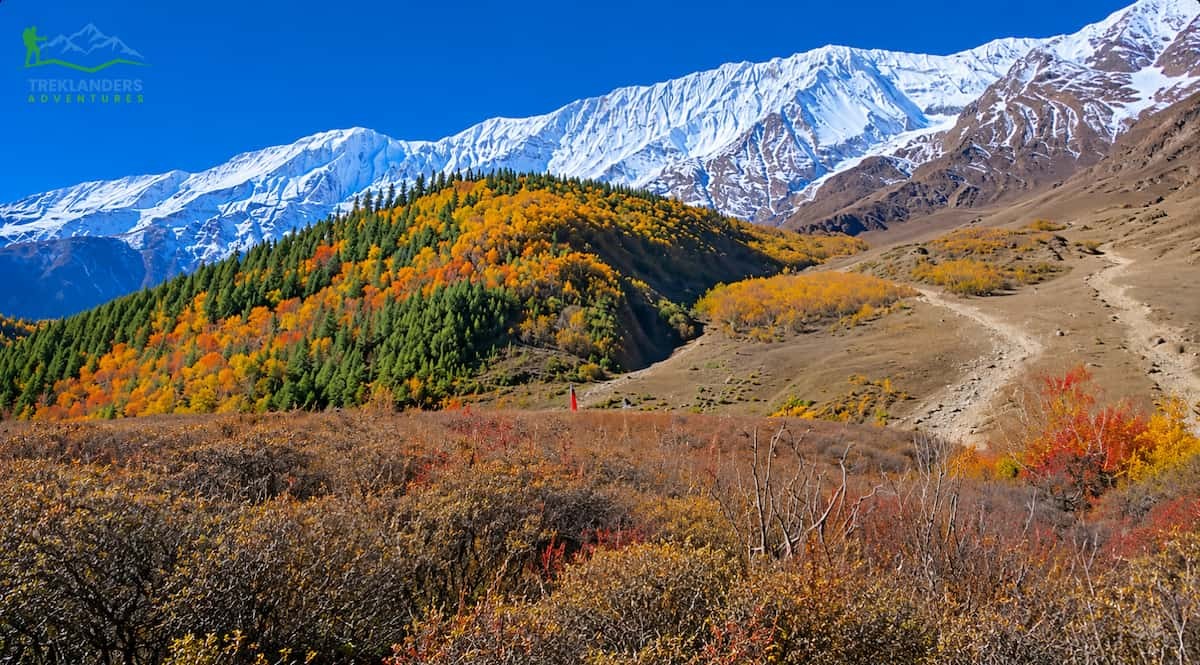
Upper Dolpo is unique in its type of restricted status. Not only does it share a border with Tibet, but the area itself only really came into the spotlight globally after Peter Matthiessen wrote a book called "The Snow Leopard" based on his 1973 trip to Shey Gompa. The restriction here is equally for conservation and border management. This area is located in Shey Phoksundo National Park, which is safeguarding one of the last remaining Tibetan plateau ecosystems within Nepal. The permit system is a way of keeping out those who are not really serious about visiting. The result of that filter is what you get inside: land and a way of life pretty much unaffected by the trekking industry.
The Upper Dolpo permit price is quite a bit more than the Upper Mustang weekly permit price. Also, the length of stay is greater. Lastly, the facilities are hardly there. These obstacles are, in fact, a kind of isolation in themselves.
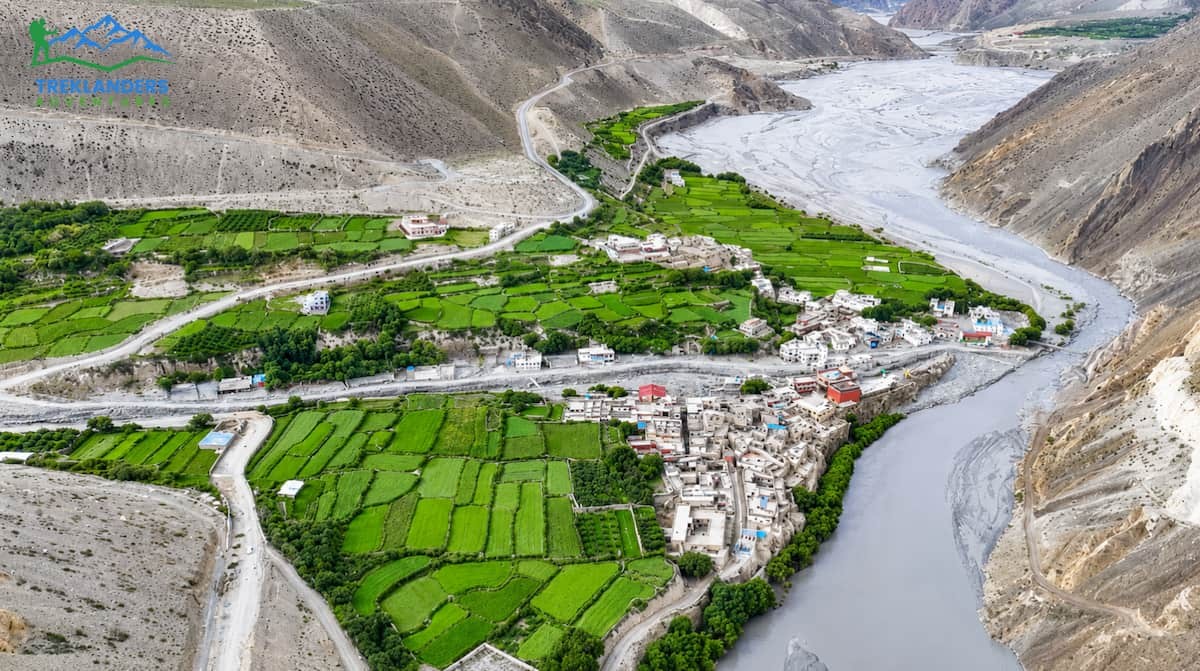
Upper Mustang begins in Kagbeni. You fly there from Pokhara to Jomsom in roughly 20 minutes on a small twin-prop aircraft, one of the most dramatic short flights in Nepal, with the Kali Gandaki gorge below and Dhaulagiri and Nilgiri filling the windows. From Jomsom, you drive or walk to Kagbeni, the last village before the restricted zone begins. The first checkpoint is clean, organized, and sees steady traffic during the trekking season.
The route from Kathmandu to the trailhead takes roughly two days, including travel time, and the road infrastructure from Pokhara to Jomsom is solid by Himalayan standards.
Upper Dolpo does not offer this convenience.
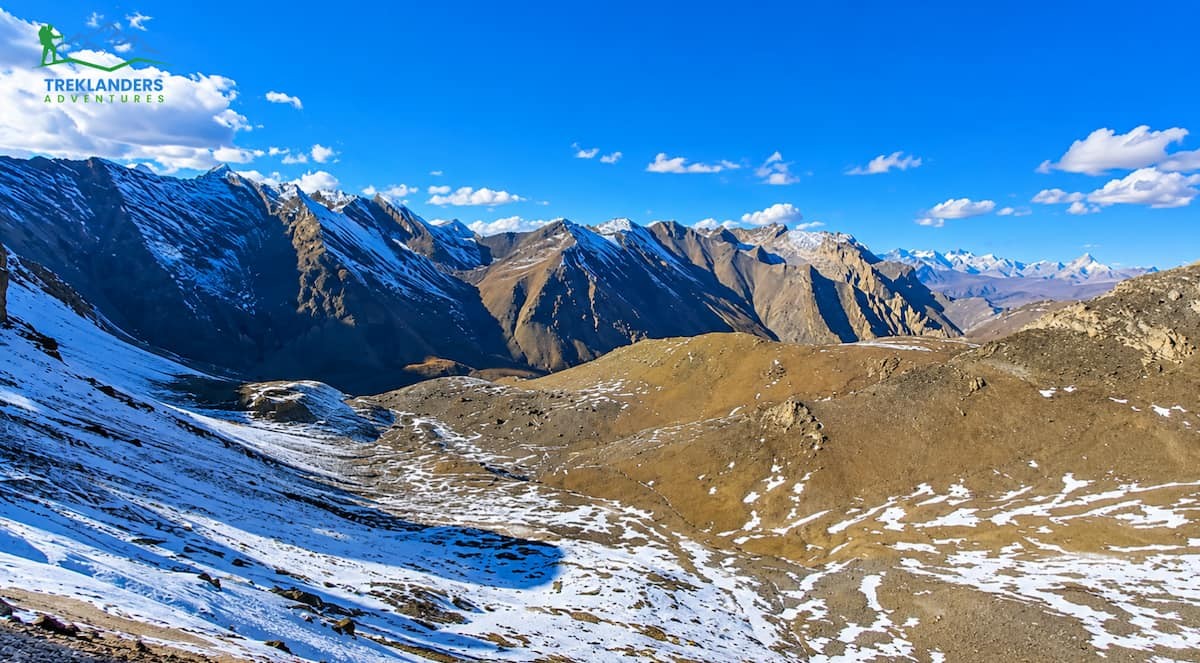
The Dolpo trailhead is accessible by a flight from Kathmandu or Nepalgunj to Juphal, the district headquarters of Dolpa district. Juphal is located at an altitude of 2,475 meters. The flights are weather-dependent and are carried out with small aircraft, for which there are weight limits. Getting delayed for one to three days is a regular thing. Some of the groups even end up waiting for a longer time. If the flights get cancelled time after time, you either get a charter at a high extra cost or wait.
Once you are at Juphal, your mode of transport will be on foot. The route to Upper Dolpo via Dunai and Phoksundo is already initiated before you enter the restricted zone. By the time you arrive in the Inner Dolpo, you will have completed several days of exertion just to get to the permit checkpoint. There are no shortcuts. There isn't even a vehicle that can take you further.
The gap in logistics between these two points of departure is quite large. While Upper Mustang is reachable, Upper Dolpo hardly ever is.
There is also the question of what happens if something goes wrong. In Upper Mustang, you are never more than a day or two from Jomsom, which has an airstrip. Helicopter evacuation, while expensive, is a realistic option across the region. Phone signals exist in several villages. Your guide can reach Jomsom by phone from most points on the route.
In Upper Dolpo, evacuation logistics are genuinely complicated. Helicopter access exists but depends on weather, altitude, and availability. Communications are sparse across the inner restricted zone. This is not a reason to avoid Dolpo, but it is a reason to approach it with serious preparation, comprehensive insurance, and an experienced crew who knows the terrain.
Upper Mustang is a moderate trek. The Treklanders itinerary covers 17 days in total, with the trekking section spread across 12 days between Kagbeni and Lo Manthang and back. The highest point on the standard route is Nyi La Pass at 3,950 meters. Most of the walking sits between 2,800 and 3,800 meters. The terrain is dry, dusty, and windswept, but the paths are clear and well-established. You sleep in lodges every night.
The physical challenge in Upper Mustang comes from the wind and the dryness rather than altitude or technical terrain. Afternoon gusts in the Kali Gandaki corridor are among the strongest anywhere in Nepal. Dust gets into everything. But you are walking on defined trails, arriving at villages with food and beds each evening. The risk of altitude sickness is real but manageable at a sensible pace.
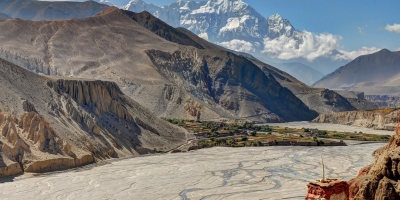
The trekking route from Kagbeni to Lo Manthang takes you through some of the most spectacular and unique landscapes of the Himalayas. The Mustang plateau is located at a geological boundary where the Tibetan plateau and the Himalayan uplift meet, and this is why the beautiful ravine formations that you will be walking along are so exceptional. The trail is flanked by towering, eroded cliffs of red, grey, and ochre that soar hundreds of meters above you. Ancient caves, some housing Buddhist murals and relics, which scholars believe to be over a thousand years old, are scattered along the cliffs. You will be crossing the passes of Yamda La and Nyi La that offer magnificent vistas of the plateau around you, but neither one is arduous or involves glacier trekking.
The Treklanders Upper Dolpo Trek takes 26 days. The path goes over several high passes above 5,000 meters, including Nagdalo La and Kang La. Shey Phoksundo Lake is at 3,611 meters, but the path goes much higher on the passes. The land here is so rough that the word "barely" is hardly accurate; very few places have signs, and you will need to keep your fitness level high for many consecutive days.
This is a camping trip. There aren't any teahouses for the most part in Upper Dolpo. Your team will carry your tents, cooking utensils, and food. You'll have what the cooking staff prepares for you at the camp. In case you run out of supplies or have an emergency, extraction will be slow and depend on helicopter access (which is weather-dependent) or long days of walking to the nearest point with communication.
The altitude requirements here are also very high. It's very common to have days when you go from 4,000 meters to over 5,000 meters and then back down again. Acclimatization is a must. It is planned in the itinerary, and the roughness of the grounds will show you that you have to do it.
In terms of physical and logistical difficulty, Upper Dolpo is a different category of trek from Upper Mustang.
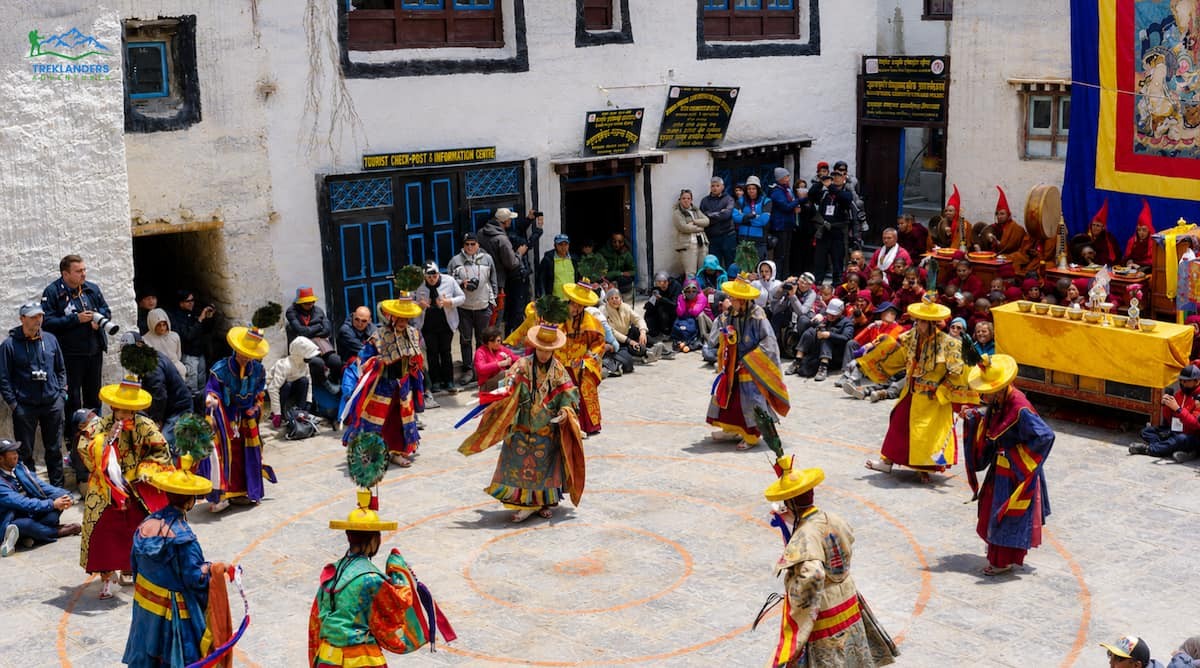
Both regions preserve Tibetan Buddhist culture at a depth that is rare anywhere in the world today. But the character of what you encounter differs.
Upper Mustang is mainly about Lo Manthang, a fortified city that was the seat of the Kingdom of Lo. The city of Lo Manthang is located at a height of 3,780 meters and has more than 150 houses enclosed within a whitewashed wall, which was constructed by King Ame Pal about 1380 AD. Inside, there are four main monasteries: Namgyal Gompa, Champa Lakhang, Thubchen Gompa, and Chyodi Gompa. The king's former palace is in the village center. The last king, Jigme Parbal Bista, who reigned till 2016, last occupied the palace.
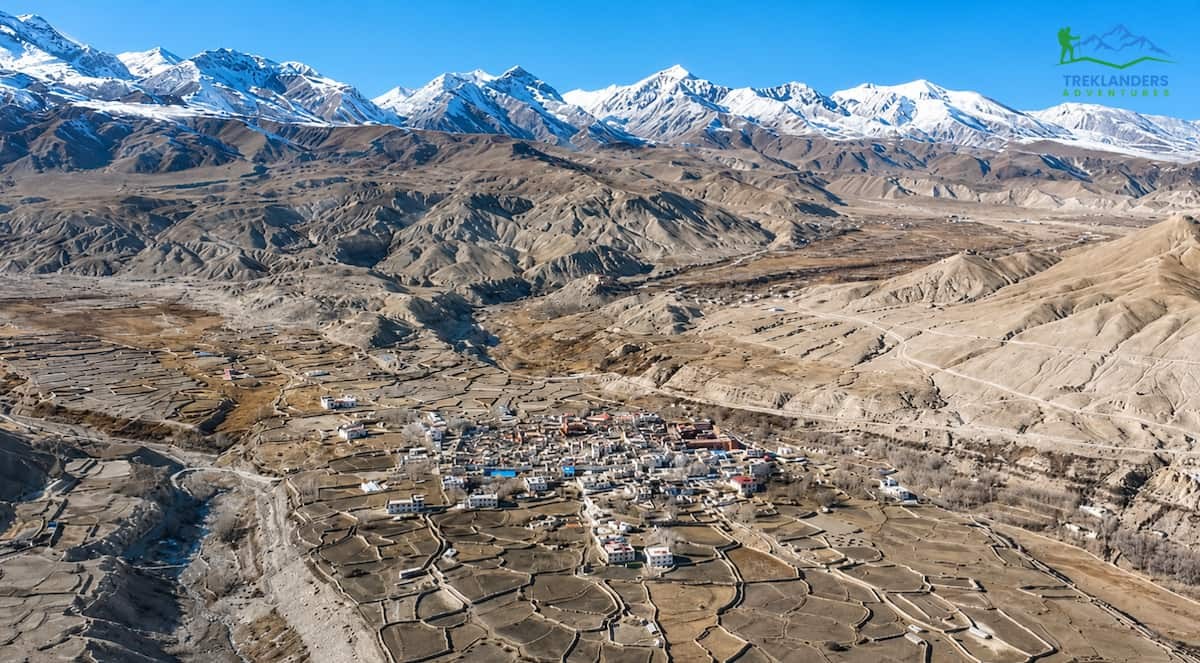
The cultural events of Lo Manthang are quite deep and well-planned. You have a whole free day to visit the monasteries, the palace, and the winding stone lanes. The Tiji Festival in May turns the town upside down with masked dances, ceremonial processions, and the kind of living rituals that the tourist-heavy trekking regions have considerably lost. The story of Tiji shows a deity named Dorje Jono defeating a demon, and this three-day festival brings different Lobas of Upper Mustang to Lo Manthang. This is one of the most important cultural festivals of the trans-Himalayan region and is held within the walled city in a manner that hardly fascinates visitors.
Each of the villages along the way, Chusang, Samar, Ghiling, and Tsarang, have a monastery and a distinct character, but the main attraction is Lo Manthang.
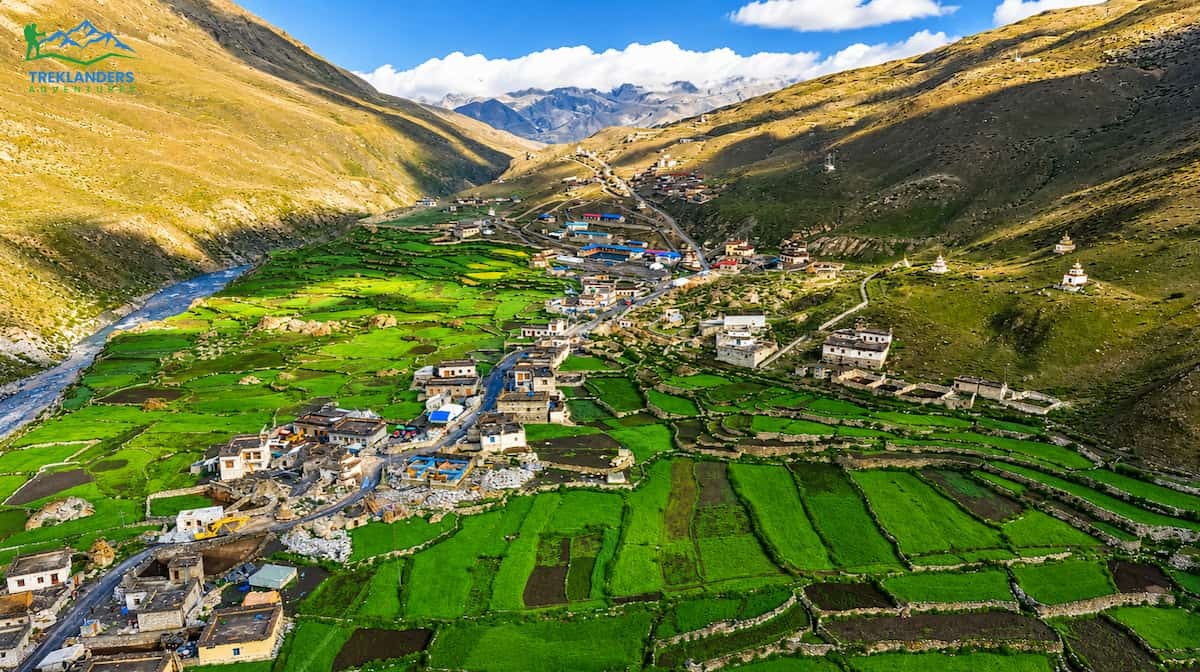
Upper Dolpo holds on to a heritage that is quite different: Bon religion. If Upper Mustang practices the form of Tibetan Buddhism known as Sakya, much of Dolpo remains faithful to Bon, the ancient pre-Buddhist religion of Tibet. Shey Gompa, a monastery complex located at the base of Crystal Mountain near the Tibetan border, is one of the most important pilgrimage sites for Bon practitioners. The villages you will trek through in Upper Dolpo have had the least contact with the outside world compared to almost all other inhabited areas of Nepal. Cultural interaction is less staged and more natural.
The inhabitants of Dolpo, the Dolpa-pa, still live a lifestyle that scholars and anthropologists have described as being among the most preserved in Nepal. Yak herding, barley farming at high altitudes, and seasonal migrations between the highlands and lowlands are the main activities that have remained unchanged for centuries. You will meet these communities not in a village that has been co-opted for trekkers but in a setting where your presence is truly a rarity.
Both regions offer cultural depth. Upper Dolpo offers cultural isolation.
Upper Mustang is a trek run entirely by teahouses between Kagbeni and Lo Manthang and back. The quality of accommodation has naturally improved over the period of three decades of trekking as the route has developed. Kagbeni and Jomsom have guesthouses offering the option of an attached bathroom with a hot shower that is quite reliable. Further down the restricted zone, the rooms are more basic, the bathrooms are usually shared, and getting hot water might take a small extra payment. Lo Manthang has a basic guesthouse as well as relatively comfortable ones by high altitude standards.
The Upper Mustang route's food menus offer a range of choices, including Nepali, Tibetan, Chinese, Indian, and Continental dishes. Dal bhat, thukpa, tsampa porridge, and apple brandy from Marpha are all available at teahouses along the way. You will certainly not go hungry or eat poorly.
This infrastructure exists because Upper Mustang has been open to trekkers since 1992 and has had decades to develop a trail economy. The Lobas, the native people of Upper Mustang, have built guesthouses, opened restaurants, and oriented part of their livelihood toward trekking groups. The route is better equipped for visitors than most restricted zones in Nepal. You can plan your daily stages with confidence that a lodge will be there at the end of each walking day.
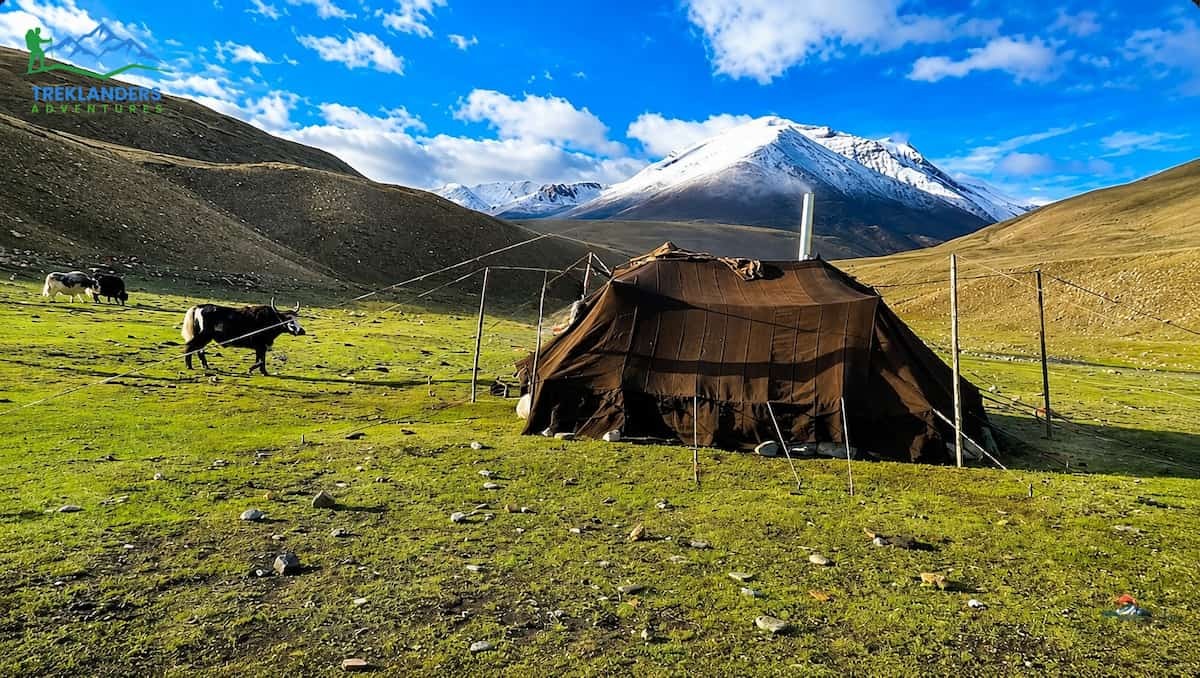
The Treklanders Upper Dolpo trek is a complete camping trip. Your crew is the one who carries all of your stuff: tents, sleeping mats, cooking utensils, food, and fuel. The size of the crew is bigger than for an average Himalayan lodge trek. The kitchen team runs their operations out of portable equipment at high camps and even at the river flats. Meals are served hot three times a day, but these are the dishes your team prepares, not house dishes selected from the menu.
There are a few simple lodges in Dunai and near Phoksundo Lake, but as one goes beyond these points, camping is definitely the only way.
This isn't a disadvantage at all. After all, it's the nature of the locality, and it enables the visitor to choose campsites that even the most luxurious accommodation could not dream of e.g. a flat surface next to a turquoise glacial lake, a grassy terrace above a mountain pass with Tibetan peaks all around, a valley bottom where the only sounds are the wind and the bells of a yak herd.
Well, you definitely will need an alternative preparation method, a somewhat altered packing list, and a much more competent support group.
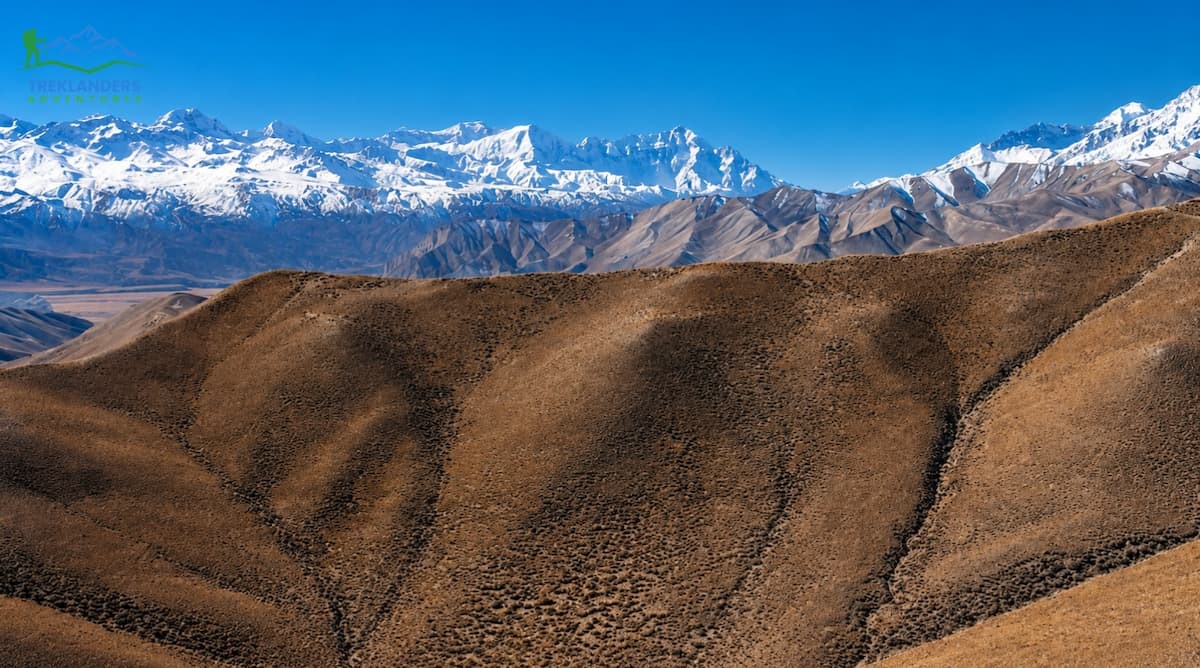
Upper Mustang's epitomic visual feature is the naturally eroded cliff scenery: the red and ochre canyon walls that have been shaped by the elements, the caves that fragment the rock faces of the high cliffs near Chusang and Samar, the vast desert plateau surrounding Lo Manthang that is decorated with chortens and prayer flags under an expansive sky.
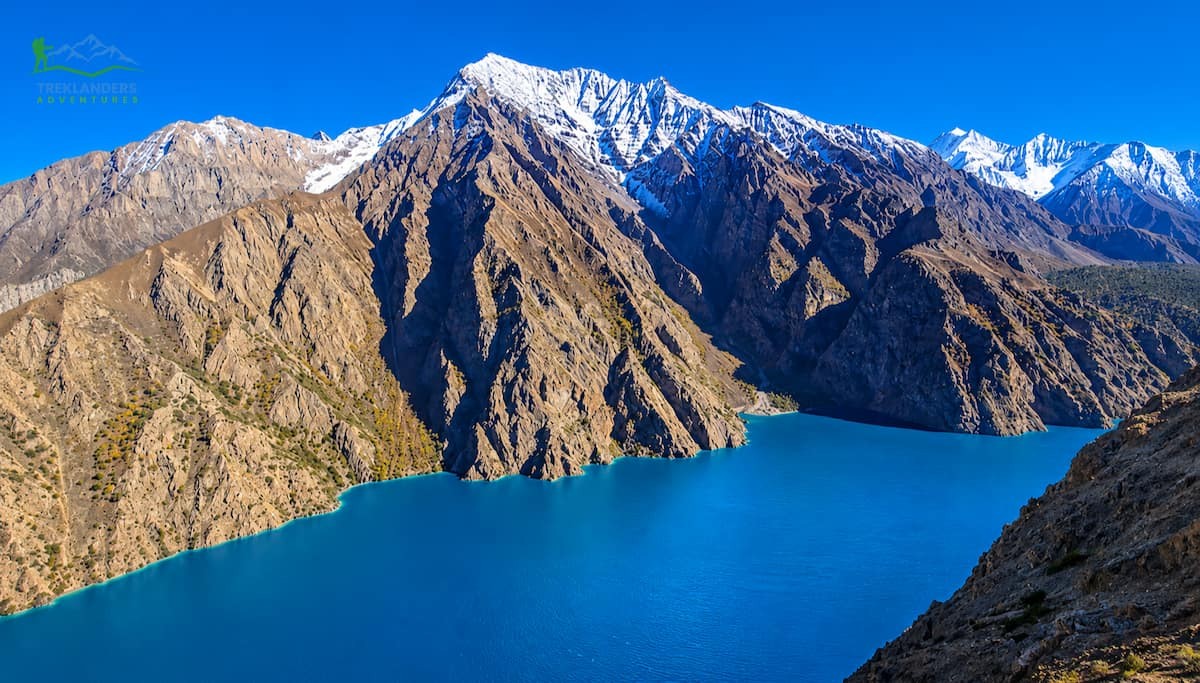
Phoksundo Lake is the deepest lake in Nepal, with a depth of 145 meters. It is located at an altitude of 3,611 meters in a glacial cirque area surrounded by cliffs and snowfields, and it is fed by waterfalls that flow from the plateau above. The lake's watercolor is a rich turquoise that changes to jade under various lights. A lake like this does not exist in Upper Mustang, and there is nothing similar to it in the entire Himalayan range.
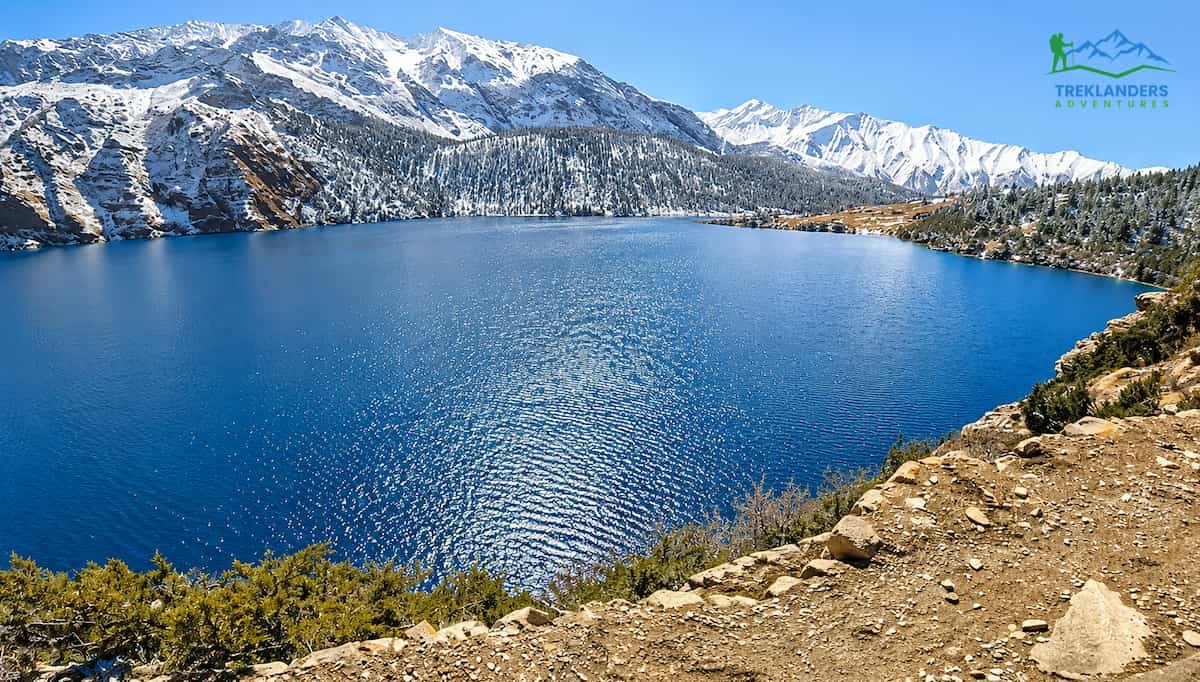
The lake is named after the Phoksundo National Park, and the area around it witnesses more tourists than the deep interior of Dolpo, but still just a small portion of what any route in the Everest or Annapurna regions sees. From Phoksundo, the Upper Dolpo trail continues further into the restricted area towards Crystal Mountain and Shey Gompa, where the feeling of isolation becomes stronger day by day.
Crystal Mountain, locally known as Tise or Kang Rinpoche in the traditions of some areas, stands towering over the Shey Gompa plateau. Devotees walk around it during the Festival of the Full Moon in August. The monastery itself is very old, with its murals and manuscripts that historians date back many centuries, being cared for by a small group of monks residing at one of the most isolated monastery locations in Nepal.
Going to Shey Gompa is metaphorically the highlight of the Upper Dolpo trail in the same way that Lo Manthang is the highlight of Upper Mustang; however, the path to Shey Gompa is far more challenging.
If you are deciding between the two treks in part because of the one defining experience, Phoksundo is difficult to contest. Upper Mustang's Lo Manthang is a wonderful blend of architecture and culture. Phoksundo is among the great natural spectacles of Nepal.
The Annapurna Conservation Area Project (ACAP) permit, along with the Upper Mustang Restricted Area Permit, is what will be needed for the Upper Mustang area. As for the restricted area permit, this is priced at USD 500 per person for the first 10 days and then USD 50 for each additional day. And in addition, this permit is tied to a specific itinerary and is to be obtained through a registered trekking agency. That is, independent trekking in the restricted zone cannot be done. Both permits are included in the Treklanders package.
Upper Dolpo requires the Shey Phoksundo National Park entry permit and the Upper Dolpo Restricted Area Permit. Upper Dolpo restricted area permits are priced at USD 500 for the first 10 days per person, the same as Mustang; further days are charged daily. Since the Dolpo trek lasts for 26 days, the permit costs will be elevated accordingly. Lower Dolpo trek, which only covers the Phoksundo Lake area without entering the inner restricted zone, has a lower permit rate; however, Lower Dolpo and Upper Dolpo are separate itineraries.
Both treks require a minimum group size of two persons for permit purposes, and both require a licensed guide registered with the Nepal government.
The permit structure is an accurate signal of access. These are not places you visit casually. The government uses the permit system to control visitor numbers and fund conservation in both areas.
Upper Mustang and Upper Dolpo are both located in snow leopard habitats. The rugged trans-Himalayan area on either side of the border is home to Panthera uncia populations, but even regular trekkers hardly ever get to see the animal.
The wildlife scene in Upper Dolpo is stronger. The creation of Shey Phoksundo National Park was one of the measures taken to conserve snow leopards, and the vicinity of Crystal Mountain is home to a good number of bharals, the Himalayan blue sheep, which is the main food source of the snow leopard. Wildlife surveys conducted by George Schaller during the 1970s, together with Peter Matthiessen, as found in "The Snow Leopard," made Dolpo a location for wildlife researchers and serious trekkers.
Wildlife in Upper Mustang is found, but the area animals haven't been studied and recorded as thoroughly as in other places. Due to its dry and more open nature, the Mustang plateau is ideal for bharal and Himalayan wolves. Various raptors find refuge in the eroded cliff faces.
Besides the cultural and geological aspects, wilderness hardly defines the region. People mainly visit Upper Mustang to experience Lo Manthang and the incredible landscape, rather than for getting close to the animals.
The wilderness nature of Upper Dolpo is much more comprehensive. The presence of a natural ecosystem, along with a very low human population, and the area being very far from civilization, are the factors that make it one of the few places in Nepal where the natural systems are still functioning without heavy human interference.
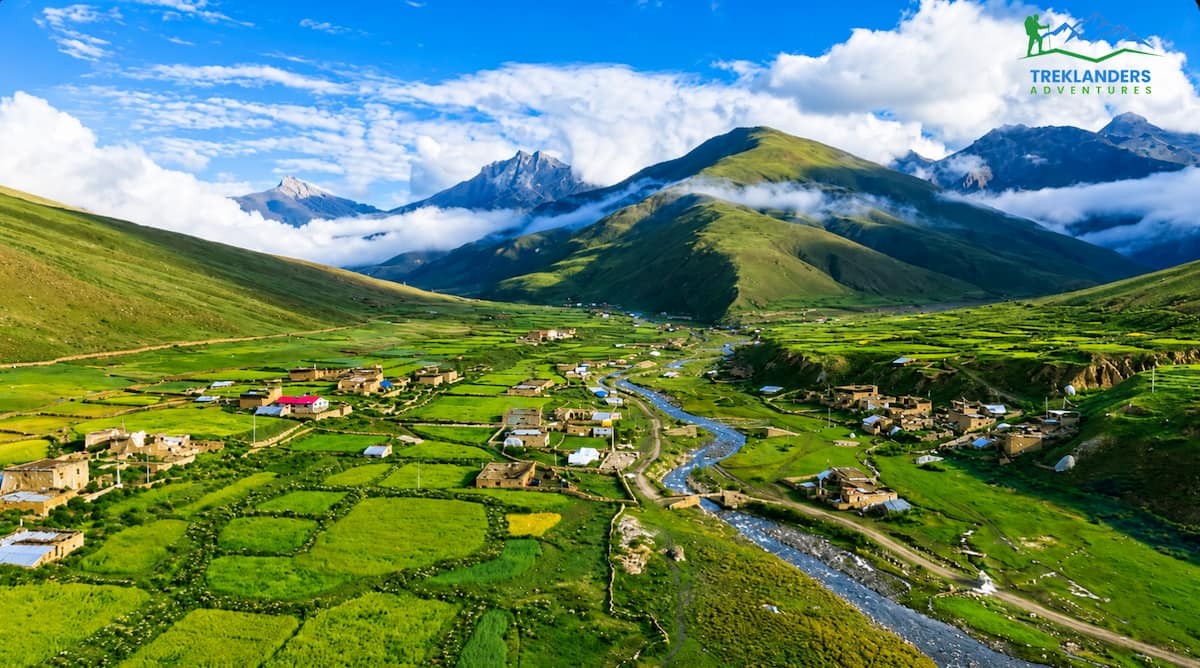
Upper Mustang is one of the few trekking destinations in Nepal that works well during the monsoon. Because it sits in the Himalayan rain shadow beyond the main Himalayan range, the monsoon clouds that drench the rest of Nepal largely fail to reach it. July and August are dry and clear in Upper Mustang while Pokhara and Kathmandu receive heavy rain. Spring from April through June is the most popular season, with October being the second main window.
The Tiji Festival in May is the single most important cultural event on the Upper Mustang calendar. If you can time your trip to coincide with it, the experience is worth the extra coordination.
December through February is cold in Upper Mustang. Most villages and lodges close for winter as the Lobas migrate to lower elevations. Trekking is possible but requires very warm gear and prior confirmation that lodges along your route will be open.
Upper Dolpo shares the rain shadow advantage during monsoon season, but the longer approach and higher altitude of the passes make timing more critical. The best windows are pre-monsoon May to mid-June and post-monsoon September to November. The high passes above 5,000 meters can be snow-covered outside these windows, and flight delays in and out of Juphal are more common in unsettled weather at any time of year.
If your travel dates are flexible, spring offers longer days and the chance to see the high alpine flora in bloom. Autumn offers stable weather and excellent visibility. Both seasons work well for both treks; the difference is mainly in what you prioritize.
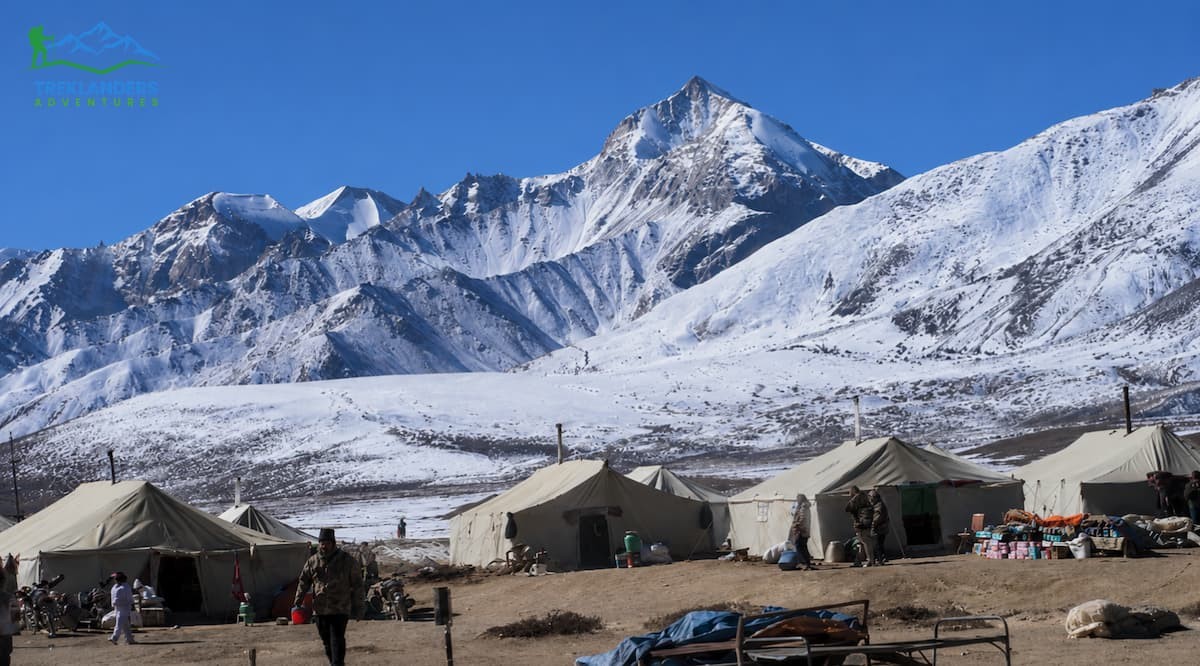
Upper Mustang works for a wide range of trekkers. The Treklanders itinerary is rated moderate. If you have trekked in Nepal before and completed routes like the Annapurna Circuit or Everest Base Camp, Upper Mustang is achievable without a significant step up in fitness or technical skill. If you are new to high-altitude trekking but physically fit and comfortable with multi-day walking, you can complete it with good preparation.
The cultural draw makes Upper Mustang popular with older trekkers who want historical depth alongside the landscape. The lodge-based format keeps logistics manageable. You carry a daypack; your porter carries the rest. Evenings are spent in guesthouses with hot food and a reasonable chance of hot water.
The minimum group size is two persons, and Treklanders can connect solo travelers with other departures. The permit, the guide, and the fixed itinerary structure mean you are never navigating this independently, which lowers the decision-making burden considerably.
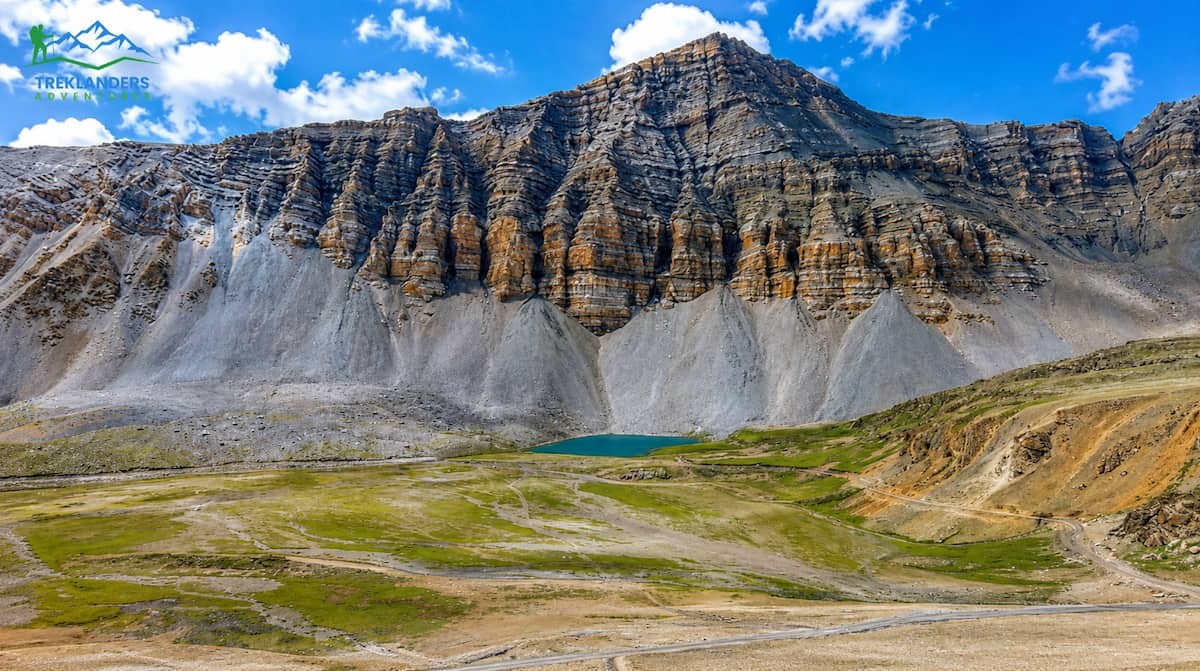
Upper Dolpo is an entirely separate matter. The duration of 26 days, camping-type trek, very high-altitude passes at over 5,000 meters, and authentic remoteness makes Upper Dolpo more of an expedition. Prior to high altitude trekking experience is necessary. Before planning for Upper Dolpo, you should have already done trekking like the Annapurna Circuit or Everest Base Camp. Your level of physical fitness should be such that you can endure long days in difficult terrain for several weeks in a row without having the recovery of a lodge environment.
The reward for meeting that bar is access to something that very few people see. Visitor numbers in Upper Dolpo are a fraction of Upper Mustang's already-limited traffic. You will spend days without seeing another trekking group. The Dolpa-pa communities you encounter are not oriented toward tourism in the way that Mustang villages have become. That is precisely the point.
Visitor numbers to restricted zones in Nepal are recorded annually by the government through the granting of permits. Since its opening in 1992, Upper Mustang has experienced a steady rise in visitor numbers. In the years when the region was at its busiest before the COVID disruptions, it received a few thousand trekkers annually, with the majority arriving in April, May, and October. Though the figure is relatively small when compared to the Everest or Annapurna trek routes, where tens of thousands of permits are granted every season, it is still significant.
Upper Dolpo attracts a very small percentage of the total visits. Annual trekker figures for the Upper Dolpo restricted zone are in the hundreds rather than thousands. Some years, the number is even lower. The combination of longer duration, higher permit fee, requirement of camping, and logistical complexity of Juphal inaccessibility together constitutes a natural barrier that eliminates most potential trekkers who would otherwise be interested.
The government keeps annual records of visitors to restricted areas in Nepal through the system of issuing permits. Since the launch of Upper Mustang in 1992, visitors to this area have been recorded to be continuously increasing. Before the COVID pandemic disruptions, the region was at its busiest and received a few thousand trekkers every year, the main seasons being April, May, and October. Even though the number is really small when compared to the Everest or Annapurna trek routes, where tens of thousands of permits are granted every season, it still has an impact.
A very small percentage of total visits comes from Upper Dolpo. Trekkers' yearly figures for the Upper Dolpo restricted zone are in hundreds rather than thousands. Some years, the number is even lower. The combination of longer duration, higher permit fee, requirement of camping, and Juphal's inaccessibility stepwise complexity together function as a natural barrier that removes most of the potential trekkers who would have otherwise been interested.
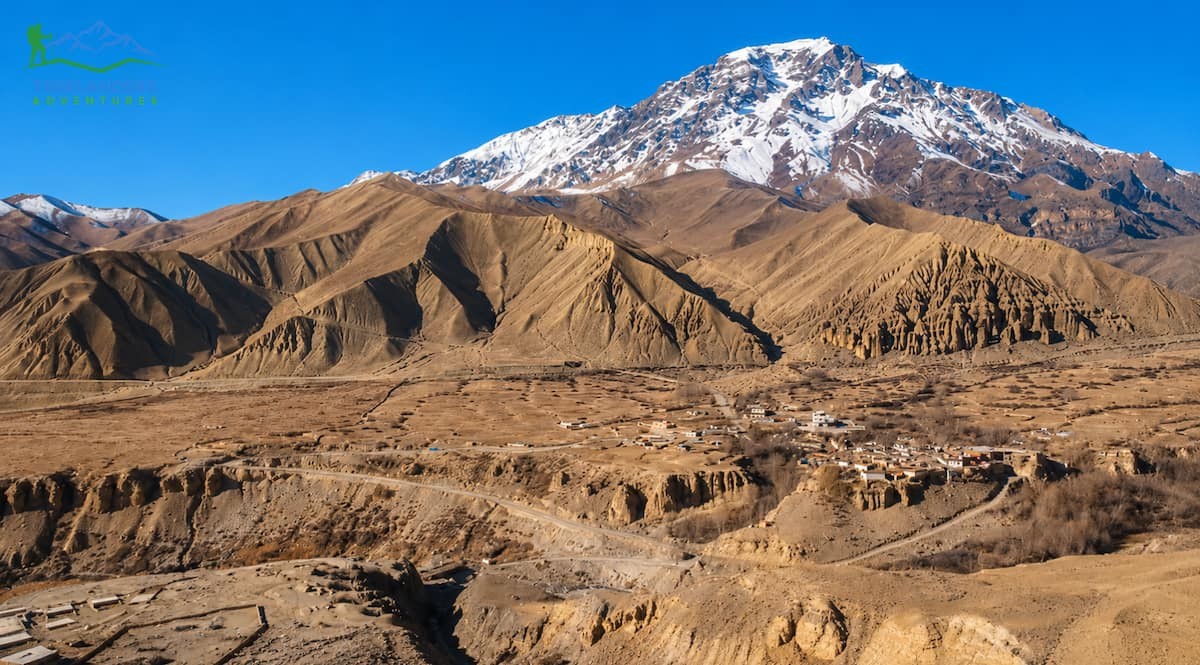
Upper Mustang is remote by the standards of most Himalayan trekking. It requires a special permit. It is a long way from Kathmandu by any measure. Its landscape is unlike anything on the standard routes. Lo Manthang is a genuinely extraordinary place.
But Upper Dolpo is more remote. By every measurable dimension, it is harder to reach, harder to traverse, thinner in infrastructure, more demanding in altitude, and lower in annual visitor numbers. A trekker who has done both will tell you this without hesitation.
The more useful question is not which one is more remote, but which one is right for you. Upper Mustang delivers a contained, structured expedition into a Tibetan-plateau landscape with serious cultural depth, manageable logistics, and a clear climax at Lo Manthang. It is one of the best treks in Nepal for experienced trekkers who want something well beyond the standard circuit routes without committing to a full expedition.
Upper Dolpo is for those who want full commitment. The longer duration, the camping format, the altitude, the passes, Phoksundo Lake, Crystal Mountain, and Shey Gompa form a journey that takes you further from the rest of the world than almost any other trek in Nepal can.
Treklanders operate both routes. The Upper Mustang Trek runs 17 days. The Upper Dolpo Trek runs 26 days. The choice depends on your experience, your available time, your fitness level, and how deep you want to go.
Both are worth it. One demands more.
Complete guide to the Gosaikunda Lake Trek with permits, best season, altitude tips, itinerary, and essential trekking advice in Nepal.
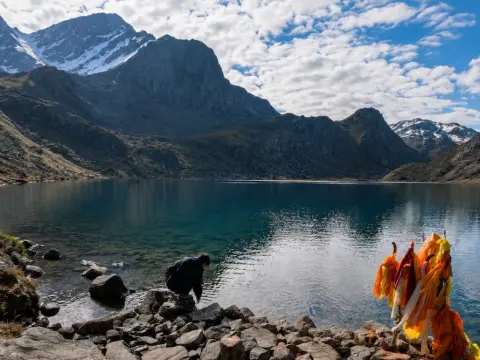
A first-hand journey to Gosaikunda Lake through misty forests, monsoon trails, and sacred Himalayan landscapes.
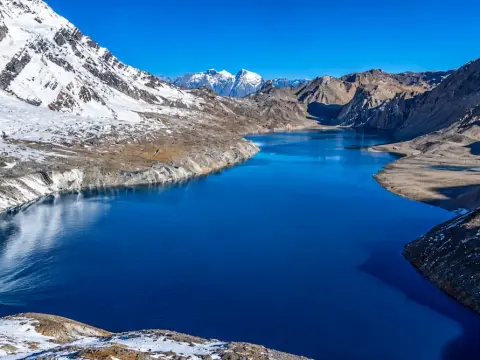
Explore the Tilicho Lake Trek with this guide to the route, difficulty, permits, and best time to visit Nepal's iconic high-altitude lake.



