Langtang Trek Route Update 2026: Safe Alternate Way via Dhunche
26 Oct 2026
Discover Langtang’s alternate route via Dhunche, with 2026 trail updates, an 8-day itinerary, and essential safety tips.

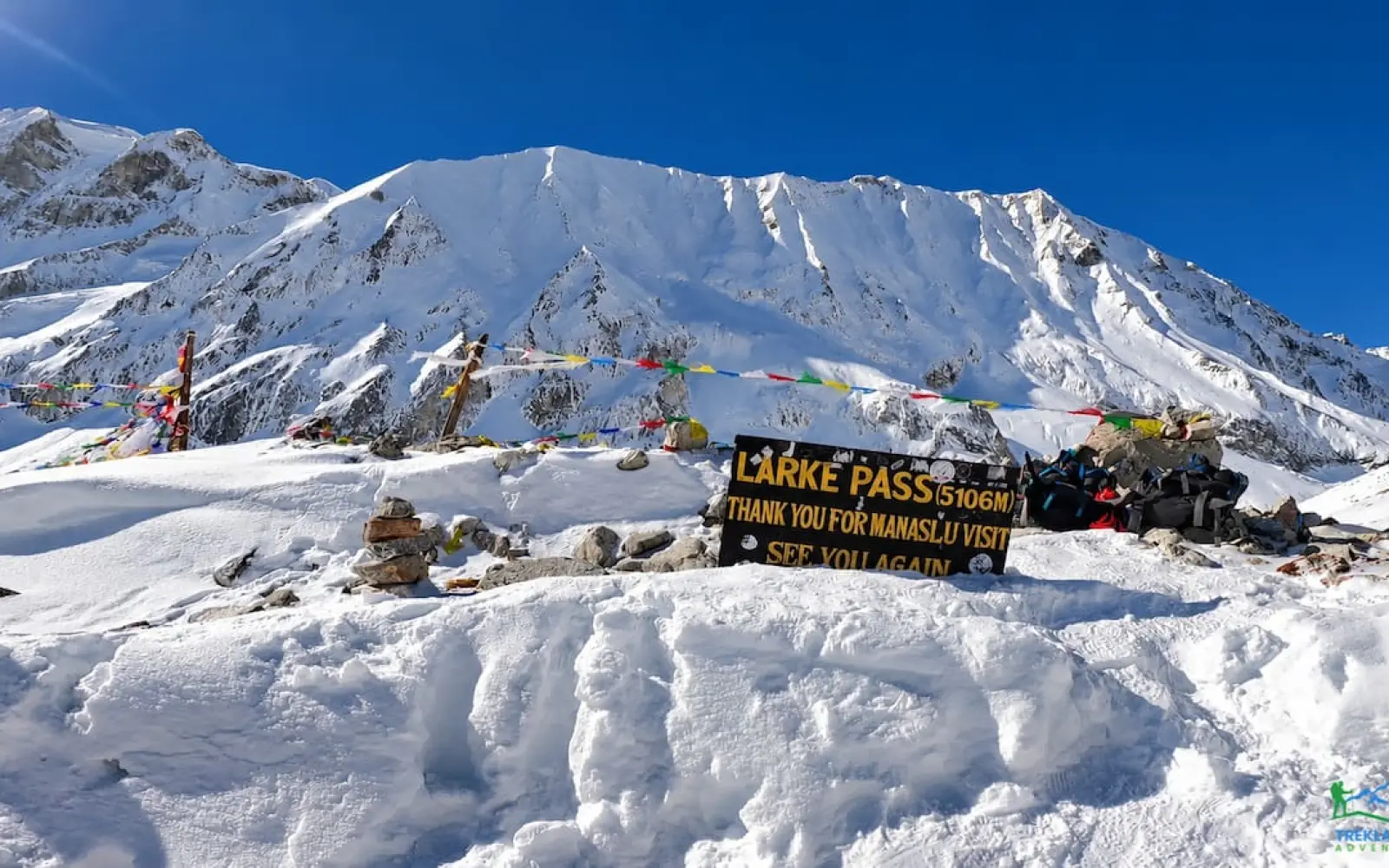
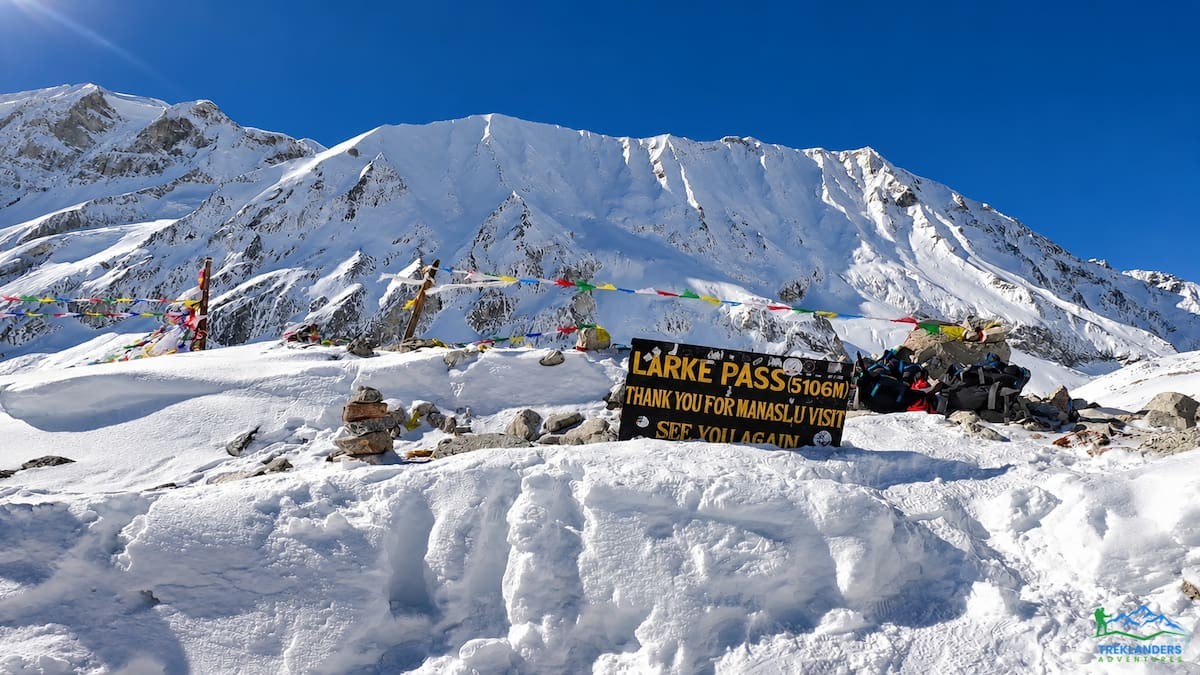
You can cross Larkya La Pass in winter, but only on the right day. At 5,106 meters, the pass decides the whole trek. Between December and February, snow, wind and cold determine whether you walk over it or wait at Dharmasala.
This guide covers the Manaslu Circuit Trek in the cold months. You will read about winter weather, the trail from Machha Khola to Dharapani, the crossing itself, gear, permits and the 2026 flood repairs. The route follows the 18-day Manaslu Circuit itinerary that Treklanders Adventures runs in the main seasons.
If you prefer a safer window, the 13-Day Manaslu Circuit Trekking and the 14 Day Manaslu Circuit Trek suit spring and autumn. The Manaslu region trek page lists every route in the area.
Yes, you can cross Larkya La in winter. No, you cannot count on it. The pass sits on the border between the Gorkha and Manang districts, and in December, January and February it behaves like any high winter pass. A clear spell opens it. A storm closes it for days.
Treklanders gives its position on the Larkya La Pass trek page. Winter suits only very experienced trekkers who accept deep cold and the chance that snow blocks the route. Our guides hold the same view.
Three conditions decide each attempt. Snow depth on the moraine matters first, because deep snow slows every step and hides the path. Wind matters second, because a strong wind on the ridge turns minus 15 degrees Celsius into a danger. Visibility matters third, because a whiteout removes landmarks on a route that has few of them.
You need a plan that treats the pass as a decision, not a date. Add buffer days to your itinerary through the Plan My Trip form, and agree with your guide in advance that the turnaround call belongs to the guide. Plan for a possible turnaround from the first day, and the trek stays enjoyable whatever the pass decides. Keep that mindset on every stage.
The valley changes character as you climb. In the lower section near Machha Khola at 900 meters, daytime temperatures in winter range from about 5 to 15 degrees Celsius. You walk in a base layer and a fleece, and you take off the fleece by noon.
Above Namrung the numbers drop quickly. Nights at Sama Gaon and Samdo fall well below freezing. At Dharmasala, the night before the pass, temperatures can reach minus 10 or lower, and January is the coldest month. On the pass itself, readings below minus 15 degrees Celsius are possible when wind adds its chill.
Winter skies on the Manaslu side are often clear between storms. The upper valley sits in a rain shadow, so it stays dry compared with the rest of Nepal, and snow arrives in short, heavy bursts rather than long wet seasons. After a storm, the air clears and the peaks appear sharp above the snowline.
Daylight is the limit you notice most. In December you get roughly ten hours of usable light, so a six-hour walking day leaves little spare time. Your guide sets early starts to finish each stage before the afternoon cold arrives.
Compare this with the Everest Base Camp Trek in the same months. Everest trails see more traffic, more open lodges and more rescue options. Manaslu gives you fewer people and fewer fallback choices, which is why the experience requirement is higher.
The three winter months do not behave alike. Your choice of month changes your odds more than any other decision you make.
Early December often feels closest to late autumn. Snow from the autumn storms has settled, lodges in the lower valley still run, and the pass sees occasional crossings. Some experienced trekkers pick this window because the days are short but the weather tends to hold in longer spells.
January is the coldest month. Nights at Dharmasala drop hardest, snow depth on the moraine peaks, and more lodges above Namrung shut for the season. If you choose January, you choose the strongest solitude and the highest chance of a turned-back day. Bring more buffer days than you think you need.
February starts to warm slowly. Days lengthen and the cold eases a little. Old snow still lies deep on the pass, though, and a late storm can close it. March brings the first reliable melt, and the 13-Day Manaslu Circuit Trekking schedule suits that month and April far better than any winter date.
Winter strips away the crowds. In October the lodges at Dharmasala fill with groups and the trail forms queues at the pass. In December you share the route with a handful of walkers, local porters and the occasional yak caravan. Our blog explains the effect in why the Manaslu Circuit is quieter than Everest Base Camp, and the effect doubles in winter.
The light improves too. Low winter sun lengthens shadows across the snow and gives the north face of Manaslu a sharp edge in the early morning. Photographers who carry a wide lens collect their best frames above Sama Gaon.
The trade-off for that quiet is comfort. Some lodges above Namrung close for the season. Rooms stay cold, because wood stoves burn only in the dining hall. Water pipes freeze, so you wash less and carry more. Meals take longer when kitchens run on fewer staff.
Read what past trekkers wrote in the Treklanders reviews before you decide. Several describe the Larkya La day as challenging and worth the effort, and one reviewer on the 18 days Manaslu Circuit Trek describes it as one of the best experiences of two friends' lives.
Your trek begins in Kathmandu at 1,365 meters. Our staff meet you at the airport, drive you to a three-star hotel and hold a briefing that covers the trail, the lodges and the rules of the restricted area. A welcome dinner with Nepali food and a cultural program follows.
On the second day a city guide takes you through the heritage sites. The Kathmandu Full Day Sightseeing Tour covers the main squares, and the Seven Unesco Heritage Sites Day Tour in Kathmandu adds the stupas and temples. If you arrive early, the Patan and Bhaktapur Sightseeing Tour fills a spare day, and the Chandragiri Cable Car Tour gives a first look at the Himalayan skyline.
Use any spare days for conditioning. The Nagarjun Jamacho Day Hiking route and the Nagarkot Day Hike build leg strength in cold air. The Nagarkot Sunrise Tour lets you test your winter layers at dawn. For a longer test, the 4-Day Trekking Adventure near Kathmandu and the Chisapani-Nagarkot to Dhulikhel Hiking trail give you multiple days of walking with a pack.
You leave Kathmandu early and drive about seven hours to Machha Khola at 900 meters. The road follows the main highway first, then turns onto a rough dirt track at Arughat in the Gorkha district and runs beside the Budhi Gandaki River. Winter keeps the track dry, though dust and cold mornings replace monsoon mud. The name Machha Khola means fish stream.
The next morning you walk four hours to Dovan at 1,070 meters. The trail follows the river upstream through sal and pine forest, crosses the Tharo Khola and the Machha Khola, and reaches the hot spring at Tatopani. The warm water feels better in December than in autumn. Dovan sits where the Shari and Sarpu streams meet. Afternoon temperatures stay mild here, so you walk in a light layer and wear a fleece at night.
Jagat at 1,340 meters comes after a steep climb to Louri and Thado Bhanjyang, a walk of four to five hours. Jagat is the checkpoint for the restricted area, and your guide presents the permits here. Beyond this village the trail enters the former closed country of Upper Manaslu.
From Jagat you walk six hours north through Philim, where millet terraces climb the hillside, and past Ekle Bhatti, a rest stop whose name means lonely hut. Steep climbs through gorges lead to a crossing of the Budhi Gandaki and a bamboo forest before Deng at 1,860 meters. Tibetan Buddhist culture dominates from this point.
The next six hours take you to Namrung at 2,660 meters. You pass Bihi, cross two bridges, enter fir, oak and rhododendron woods near Ghap and walk stone-paved stairs into the village. Namrung is where winter starts to bite. Frost covers the barley and buckwheat fields, shade stays frozen until midday and the first snow peaks rise above the valley. This stretch also took flood damage in September 2026, which the flood section below explains.
A five-hour climb through pine woods brings you from Namrung to Lho Gaon at 3,180 meters. You pass Lihi, cross a stream fed by the glacier of Lidanda peak and reach Sho, where Simnang Himal rises ahead. Lho Gaon has mani walls, chortens and stupas, and on a clear winter morning Manaslu fills the sky above the roofs.
Six more hours lead through a cold forest to Shyala and then to Sama Gaon at 3,500 meters. You cross a stream from the Pungyen glacier on the way. Sama Gaon is the main village of the upper valley, and you stay two nights. The rest day matters more in winter than in any other season. You can climb to Pungyen Gompa, a round trip of three to four hours, or walk to Birendra Tal, the glacial lake. Either hike gives your body a higher altitude to learn from, and it gives your guide time to read the weather. Your guide asks local families and passing porters about the snow above Samdo.
The walk to Samdo takes four hours and gains height slowly. You follow grazing pastures, pass through birch and juniper and cross the Budhi Gandaki on a small wooden bridge before a short steep climb into the village at 3,875 meters. Samdo is a Tibetan style settlement and the last permanent village before the pass. In winter some lodges here may close, so your guide confirms beds and fuel before you commit to the next stage.
Dharmasala sits four hours beyond Samdo at 4,450 meters. You pass old mani walls, cross the river for the last time on a wooden bridge and follow the Larke streams to camp. Dharmasala is also called Larkya Phedi, and the name means shelter for travelers. The lodges are basic, with a large dormitory and tented space outside. Order dinner early and claim your bed on arrival. Nights here in December and January fall far below freezing, so you sleep in every layer you carry. Spend the afternoon resting and looking up at the Larke glacier and the peaks of Larke and Manaslu.
The whole trek builds toward this day. You wake in the dark, eat breakfast, pack your lunch and follow your guide by headlamp. The route climbs steeply over moraine, drops briefly to a small glacial pond and continues across rocky ground and frozen ponds. The last climb leads onto the pass, where thousands of prayer flags and a signboard mark the highest point at 5,106 meters.
From the top you see the Manaslu range around you, including Sringi, Larke, Himalchuli and Annapurna. The pass forms the boundary between Manang and Gorkha. A long descent of about 1,500 meters follows to Bhimthang at 3,590 meters, where comfortable lodges wait. The full day takes about eight hours. In winter, expect snow over the moraine, ice on the ponds and wind on the ridge. You get a short window for photographs before the cold sends you down.
The day after the pass is short. You walk four hours down through pastures and forest to Gho at 2,535 meters, where rhododendron, magnolia, pine and fir surround a small lodge. The air feels thicker and warmer than at Dharmasala, and your legs recover.
Another five hours take you through Tilje, over the Marsyangdi River on a bridge and up a short climb to Dharapani at 1,820 meters. The Manaslu route joins the Annapurna Circuit here. Trekkers with spare days can continue on the 13-Day Annapurna Circuit Trek in a milder season, or add the Nar-Phu Valley With Thorang-La Pass Trek or the Tilicho Lake Base Camp Trek.
A four-hour ride in a four-wheel-drive vehicle takes you from Dharapani down the Marsyangdi valley to Besisahar at 760 meters. The next morning you drive about five hours to Kathmandu by way of Dumre and the Trisuli River road. Your last day is a transfer to the airport.
Winter days follow a fixed rhythm. You wake before sunrise, because the sun reaches the valley floor late and the best walking hours sit between mid-morning and early afternoon. Breakfast comes first, usually porridge, eggs, bread or Tibetan flatbread with tea. Your guide checks the sky and the trail ahead, then sets the pace.
You walk four to six hours on most days. A lunch stop falls in a village or a lodge along the way, often around midday when the sun is warmest. Dal bhat remains the best energy source on the route, and many lodges in Namrung and Sama Gaon also serve thukpa, momos, pasta and potato dishes. Butter tea gives warmth in the cold, and you may need a day or two to enjoy the taste.
You arrive at the next lodge by mid-afternoon, change out of damp layers and sit by the stove in the dining room. Tea houses in this region are family-run, so every meal you order supports the families who live in these villages. Boiled water is available for a small fee, and you use purification tablets or a filter for the rest. Avoid single-use plastic bottles, since the conservation area has limited waste collection. Our guide to the tea house food and rooms on the shorter itinerary describes the same lodge system in more detail.
Dinner arrives early, and most trekkers go to bed by eight. Rooms are unheated, so you climb into the sleeping bag with a hot water bottle, a trick that keeps your feet warm until morning. Charging points exist in most lodges, though winter solar output drops and power can run short, so ration your devices.
Preparation starts the evening before. At Dharmasala you lay out your clothes in the order you will put them on, fill two bottles with hot water and check your headlamp. Cold drains batteries fast, so keep spares inside your jacket.
Your guide wakes the group in the early hours. The winter start comes earlier than the autumn start because the descent needs daylight, and the climb alone takes four to five hours. You eat while you dress, then leave with a packed lunch and a thermos.
The first section climbs steep moraine. In winter, snow packs between the stones and ice coats the flat rock, so a slip happens easily. Microspikes grip the ice, and trekking poles take weight off your knees. Some ground looks flat but hides loose stone under snow, so you place each step and follow the guide's line exactly.
Your guide sets a turnaround time before you leave. If the group has not reached the top by that hour, the group turns back, whatever the view looks like. Fresh snow can also load the slopes above the route, and your guide judges that risk before you commit. Accept the call. Experienced trekkers know that a turned-back pass is a normal outcome in winter and not a failure.
Pace decides your energy. Take slow, steady steps, breathe through each one and eat small snacks every hour. Sip from the thermos often, because dry cold air dehydrates you faster than you notice. At the top you stay a few minutes at most. The wind chill drives you down, and the long descent of about six to seven hours still waits.
The descent hurts the knees. Poles help, and so does a steady rhythm. Low winter sun leaves the north side in shadow for long stretches, so keep your gloves and hat on until you reach the pastures above Bhimthang. Our post on Manaslu Circuit Trek difficulty explains how this day compares with other famous crossings, and you can meet the people who lead these days on the Treklanders team page.
Heavy snowfall can block Larkya La completely. When it happens, movement between northern Gorkha and Manang stops until the snow settles or the route is broken again. The wait can last a day or several days, depending on the storm.
Local knowledge helps. Porters and villagers read the sky above Samdo better than a forecast app, and your guide builds on that knowledge each evening. Ask for a weather check at Sama Gaon and again at Samdo, and agree on a decision rule before you leave Dharmasala.
The standard 18-day plan has no spare day. In winter that leaves you exposed to every delay. Ask for two buffer days between Sama Gaon and Bhimthang, and build them in before you fly. The Plan My Trip option lets you shape the schedule around the weather, and the team confirms the extra lodge nights in advance.
If the pass stays closed, you have two choices. You can wait at the highest village with working lodges and watch the weather, or you can retrace the Budhi Gandaki valley to Machha Khola and drive to Kathmandu. Our guides carry medical kits and plan emergency evacuation routes back to the capital for every group. A turned-back trek still leaves you with a fortnight of valley walking, mountain views and Tibetan villages.
Use the extra days well if you return early. The Everest Mountain Flight from Kathmandu takes one morning and shows the high peaks from the air. The Everest Heli Tour offers a longer view for those who want to see Khumbu without walking.
Start training six to eight weeks before departure. Build endurance with running, cycling, swimming or fast uphill walks, and add squats, lunges, step-ups and calf raises for your legs. If your city has no hills, climb stairs with a loaded daypack. Train in cold weather when you can, because cold changes how your body uses energy.
Walking days on this route last four to eight hours, and the pass day lasts about eight. Your legs need to handle long descents on loose ground, and your lungs need to work at altitude. Mental readiness matters as much as fitness. You will face cold mornings, sore legs and grey days when the pass feels far away. Trekkers who stay patient and keep a steady pace enjoy the route most. Read the Manaslu Circuit Trek difficulty comparison for a realistic picture of the daily effort, and check the highlights on the Manaslu Circuit Trek page before you start training.
The route climbs from 900 meters at Machha Khola to 5,106 meters at the pass, a gain of about 4,200 meters in roughly ten days. Most fit trekkers acclimatise well on this profile because the itinerary spreads the gain across many days. The Sama Gaon rest day at 3,500 meters is the most important part of that plan.
Winter adds two problems. Cold air dries your lungs, and cold nights make you drink less, which raises the risk of dehydration. Dehydration worsens altitude symptoms. Aim for three to four liters of fluid each day, and add hot soup at lunch and dinner. Skip alcohol above Sama Gaon.
Sleeping at Dharmasala at 4,450 meters is the hardest part for most people. Headaches and light sleep are common. Nausea, dizziness, confusion or a headache that does not ease with rest means you descend, even if the pass is near. Tell your guide at the first symptom.
Talk to your doctor about Diamox at least four to six weeks before you travel. Do not decide the night before your flight. The Treklanders team carries extra oxygen and medical kits on this route, and the staff plan evacuation back to Kathmandu if a trekker needs it. For deeper preparation, read the training advice on our blog and review the acclimatisation approach on the 14 Day Everest Base Camp Trek to see how Khumbu itineraries build height in a similar pattern.
Cold is a hazard on its own, apart from altitude. Frostbite attacks fingers, toes, ears and nose first. Numb, waxy or white skin means you stop, warm the area gently and tell your guide. Never rub frozen skin. Change wet gloves and socks at once, because damp fabric loses heat quickly.
Hypothermia develops slowly and often goes unnoticed by the person who has it. Shivering that will not stop, slurred speech and clumsy hands are warning signs. Trekkers watch each other on pass day, and the buddy check is a simple habit that works. Ask your partner how they feel every hour, and answer honestly when they ask you.
Snow glare causes snow blindness, a painful eye injury that appears hours after exposure. Wear dark, well-fitting glasses all day above the snowline, even when clouds cover the sun. Reflected light is strong at 5,000 meters.
Carry a small first aid kit with blister treatment, an elastic bandage, ibuprofen, rehydration salts and medicine for stomach trouble. Your guide carries a larger kit, but your own supplies let you treat small problems fast. Write your blood type and any allergies on a card and keep it with your permits. Buy travel insurance that covers high-altitude trekking and evacuation before you leave home.
Winter on this route asks for more insulation than any other season. The full list sits on the Manaslu Circuit packing list, and the winter changes are below.
Start with the layers. A moisture-wicking base layer sits against your skin. A fleece or light down jacket goes over it. A heavy down jacket is essential at 5,000 meters, and a waterproof, windproof shell goes on top. Add insulated trousers for Dharmasala and pass day. Skip cotton entirely.
Your hands and head lose heat first. Bring thin liner gloves for photographs, warm trekking gloves and heavy insulated mittens for the pass. A wool hat, a balaclava or neck gaiter and a sun hat cover the head. Category 3 or 4 sunglasses protect your eyes from glare off the snow, and goggles help in wind.
For your feet, wear waterproof boots with ankle support, broken in well before you arrive. Carry gaiters for snow and microspikes for ice. Pack two or three pairs of wool socks, one thick pair for the pass and a pair of camp shoes for the lodges.
Bring a sleeping bag rated to minus 20 degrees Celsius. The lodge blankets thin out with altitude, and Dharmasala is the coldest night. A liner adds warmth. Carry a thermos and insulated bottle covers, because water freezes in an open bottle on pass day. Keep your power bank and phone inside your jacket, since cold drains lithium batteries fast.
Pack sunscreen at SPF 50 or higher and lip balm with SPF. Snow reflects strong ultraviolet light at altitude, and exposed skin burns quickly. Keep your main bag under 12 kilograms, the porter limit that Treklanders enforces to protect porter welfare.
The villages of the upper valley follow Tibetan Buddhist traditions, and winter is a quiet season for them. Treat lodges, monasteries and prayer walls with care. Walk clockwise around mani walls, chortens and stupas, and pass on the left side. Ask before you photograph people, especially monks and older residents. Remove your shoes before you enter a monastery.
Pungyen Gompa, close to Sama Gaon, is one of the oldest Tibetan Buddhist monasteries in the area, and the hike to it ranks among the best acclimatisation walks on the route. Visit quietly and leave a small offering if you wish.
Carry out your waste. Wrappers, batteries and packaging belong in the bins of lower villages that have collection, and nothing belongs at high camps or beside the trail. Eat in family-run lodges, buy local crafts and tip your guide and porters fairly. These choices keep tourism income in the community and give the villagers a reason to protect the valley. The Treklanders gallery shows the monasteries, flags and villages you will meet.
The upper Manaslu valley is a restricted area, so three permits apply. The Restricted Area Permit covers the section beyond Jagat. The Manaslu Conservation Area Permit covers the protected area. The Annapurna Conservation Area Permit covers the final days from Dharapani toward Besisahar. Only a registered agency can obtain the restricted area permit, and Treklanders handles all three.
Nepal does not allow solo trekking in this area, so a licensed guide is mandatory. Your guide also carries copies of your permits and presents them at the checkpoints. Carry your own passport copy and a document showing travel insurance that covers high-altitude trekking.
Learn more about the company behind your trek on the Treklanders about page, and browse the wider trekking in Nepal section to see how the permit rules differ between regions.
The 2026 monsoon left marks on this valley. A flash flood on September 6 damaged the trail near Namrung, and local communities built an alternative trail and a wooden bridge over the Therang Khola within days. A second flood in October hit the Budhi Gandaki system further upstream and isolated the Tsum Valley side.
By late October, trekkers were again moving from Jagat toward Larkya La, and local residents reported that the trail from Nyak Phedi to the pass stayed in good condition. The trail into Tsum Valley was still under repair at that time. If you plan the 20 Day Manaslu Circuit with Tsum Valley Trek, ask about the current status before you book.
Winter snow can add to flood damage, and temporary bridges can ice over. Confirm conditions with the team through the Treklanders contact page a few weeks before departure and again in the final week. Read our latest trek update blog posts for the newest advisories. Our Langtang guide on the safe alternate way via Dhunche shows how we report route changes in other regions.
A winter crossing suits trekkers who already have high-altitude experience. If you have crossed a pass above 5,000 meters in cold conditions, you know what the effort feels like. Good examples are Thorong La on the Annapurna Circuit Trek, Cho La on the Everest Base Camp via Cho la Pass from Gokyo Valley Trekking route or all three passes on the Everest Three Passes Trekking circuit. Climbers who finished the Island Peak Trek & Climb or the Mera Peak Trek & Climb bring the right skills.
You also need a flexible schedule. A trek that must end on a fixed flight home leaves no room for a snow day, so you risk pressure to push on in poor conditions. Choose winter only if you can add days to the plan.
Wait for spring or autumn if this will be your first high-altitude trek, if you feel the cold badly or if you need a guaranteed crossing. The Tilicho Lake Base Camp with Thorong-La Pass route and the Khopra Ridge and Khair Lake Trekking route make good first steps toward higher goals.
Not every winter plan has to include Larkya La. Several lower routes stay accessible in the cold months, and they give you mountain views without a pass crossing.
In the Annapurna region, the Ghorepani Poonhill Trek and the 4-Day Ghorepani Ponnhill Trek from Pokhara reach a famous sunrise viewpoint at moderate altitude. The 10-Day Ghorepani Poonhill with Annapurna Base Camp Trek and the 7-Day Annapurna Base Camp Trek from Pokhara suit spring better, as does the Annapurna Base Camp Trekking schedule. The 9 Day Mardi Himal Trek and the 5-Day Mardi Himal Trek from Pokhara offer close ridge views in clear months.
Near Kathmandu, the Helambu Trek and the 6 Day Pikey Peak Trek keep elevation modest. In Khumbu, the 12-Day Everest Base Camp Trek, the Everest Panorama Trek and the Gokyo Valley Trekking route offer well-supplied trails. In the rain shadow of Mustang, the Upper Mustang Trekking itinerary stays dry. The Langtang Valley Trek and the 7-Day Langtang Valley Trek give short alternatives with a different cultural feel.
If distant regions interest you, the Kanchenjunga Trek and the Upper Dolpo Trek belong on a spring or autumn calendar. Browse the full peak climbing and tour in Nepal pages for options beyond trekking.
Start with your dates, your experience and your tolerance for cold. Share them through the Plan My Trip page, and the team builds a winter schedule with you that includes buffer days. If you already know your plan, the booking page takes your details, and the group departures page shows trips with other walkers.
Look at the Treklanders gallery for photos of the route, and read the trekker reviews for honest accounts. For questions you can write to info@treklanders.com or send a message through the contact page.
A winter Larkya La crossing rewards patience, warm gear and a flexible plan. Pick your dates carefully, bring the right layers and let the weather make the final call.
Discover Langtang’s alternate route via Dhunche, with 2026 trail updates, an 8-day itinerary, and essential safety tips.
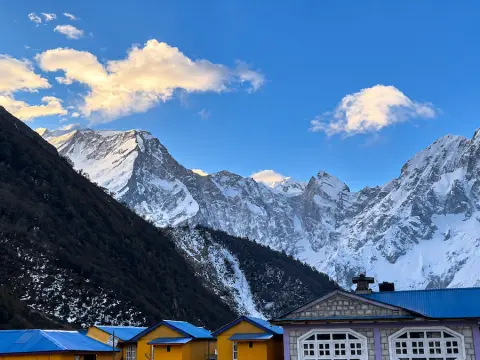
Discover why the Manaslu Circuit Trek offers a quieter, less crowded Himalayan adventure than Everest Base Camp.
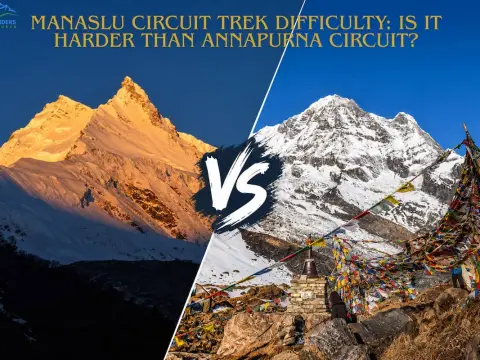
Discover whether the Manaslu Circuit Trek is harder than the Annapurna Circuit, comparing altitude, terrain, walking hours, and overall difficulty.



