What Everest Sherpas Really Do: 10 Life-Saving Tasks Climbers Overlook
15 May 2026
Discover the hidden role Everest Sherpas play in keeping climbers safe and making Everest summits possible.

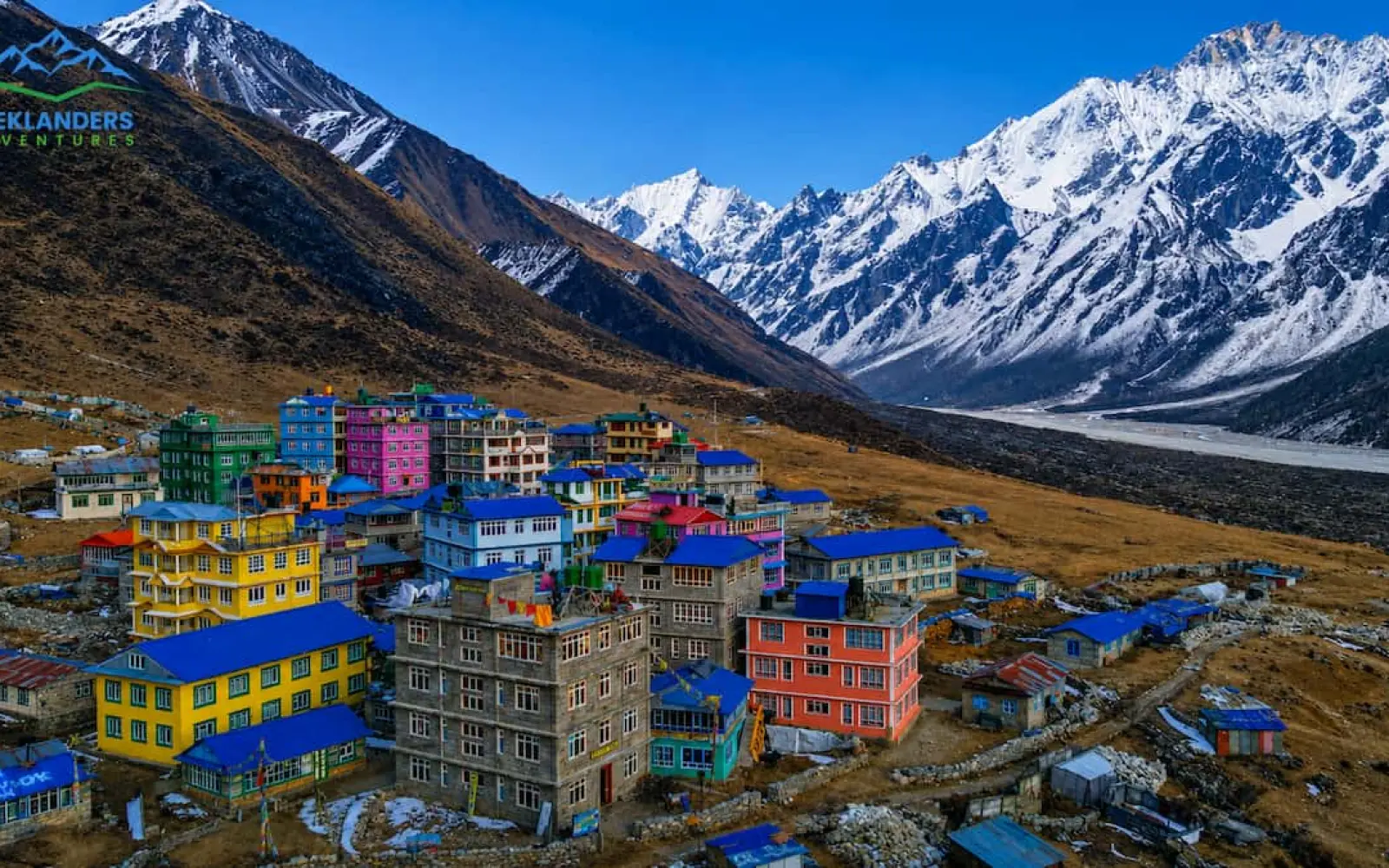
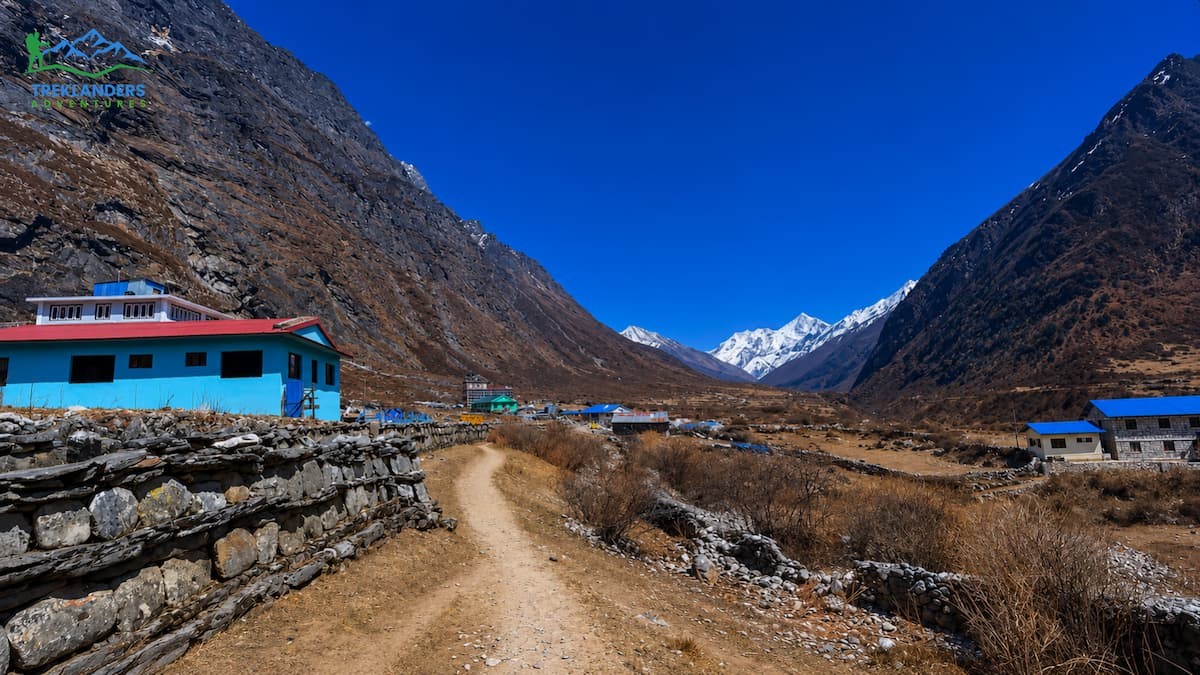
The Langtang Valley Trek is the most rewarding of all of Nepal's high-altitude walks. You will be treated to the spectacular Himalayan scenery, the fascinating Tamang culture, and a varied and dramatic landscape. Back in Kathmandu, these elements are combined in only a few-day ' walks. Having trekked to Mundu Village, you will have already realized your 'altitude legs', your body will be adapted, the weights are burning, and the valley will be a part of something huge and numinous.

But this last stretch from Mundu to Kyanjin Gompa is where everything really kicks in. But these final 3km are not a small stretch with impact.
The route navigates across broad glacially formed moraines, through scattered upland plants, and deposits you at the foot of the magnificent Langtang Glacier. When you see the Kyanjin Gompa in front of you, with its monastery, the cheese factory and the circle of peaks floating above it, you will see why trekkers keep coming back.
This perfect tidbit about what to expect on this section of the trail covers just about everything you need to know: the trail, the mountains, what you'll encounter, the effect of elevation accommodations, food, acclimation, and side trips you'll want to take once you're there. Also included are the basic differences between 7 Langtang Valley Trek packages- and 9-day Langtang Valley Trek packages from Treklanders that may help you decide "this" is the itinerary that most "matches" your pace.
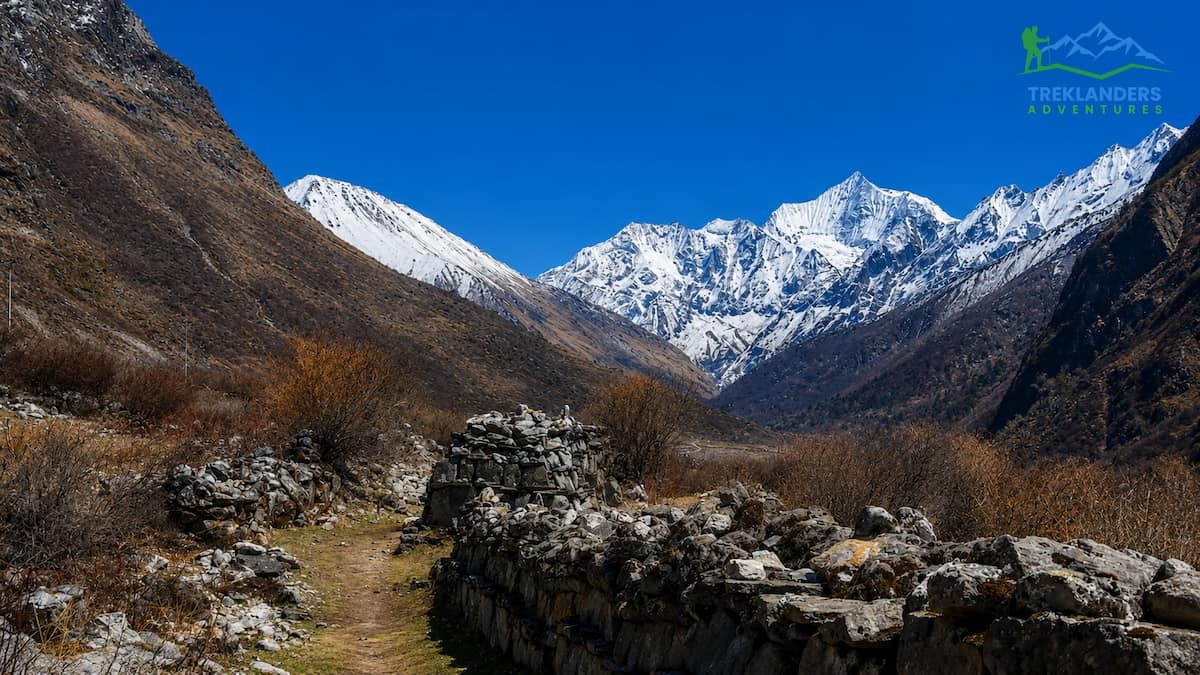
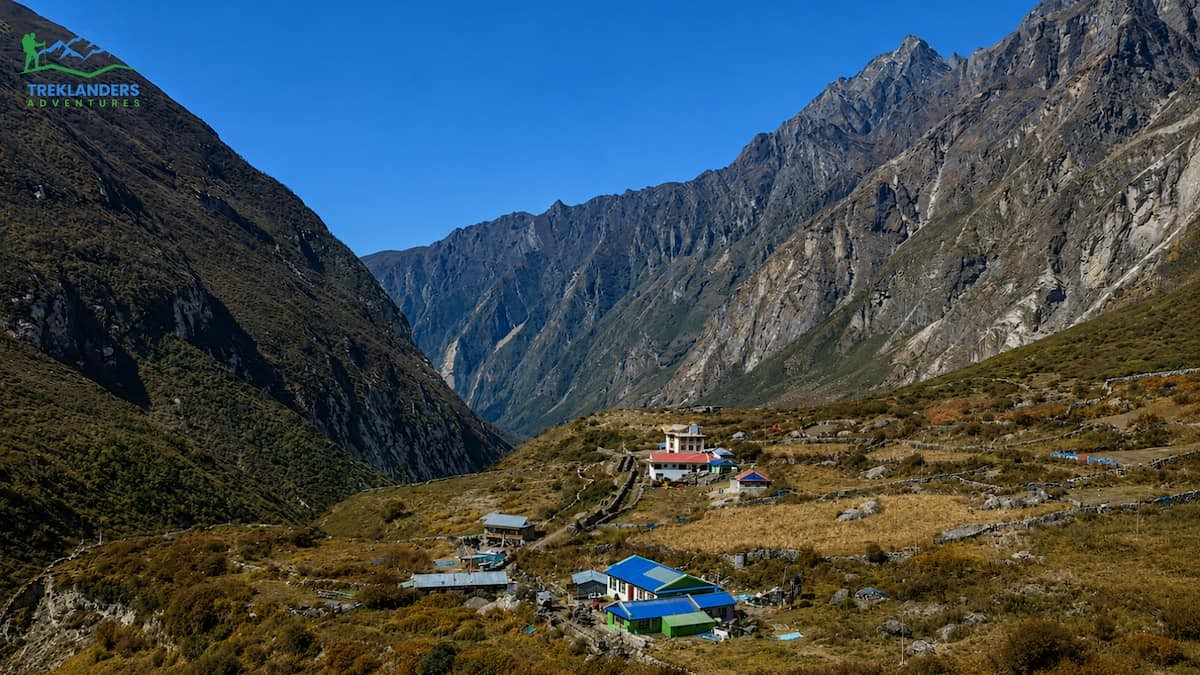
Mundu is a handful of stone teahouses and lodges perched on a rocky ridge top overlooking the tributary of the Langtang River. At approximately 3,550 meters it is already above the tree line. The terrain here feels desolate and barren. Windswept meadows scrub the valley bottom while bare ridgeline shot up starkly toward the sky. Prayer flags flutter.
Apart from that, most trekkers have a flat, non-comfortable stay at Mundu after a long day climbing Kyanjin Gompa from Lama Hotel or Langtang Village. But there is an exception, some travellers come from Langtang Village on the same day and go to Kyanjin Gompa have this plan only when you start early in the morning and trek at a swift pace. In the morning, you leave Mundu at around 7:30/8:00.
The trail is clear and easy to follow. Along the trail, you pass north-west along the valley floor, following the Langtang River as it heads west and then east.
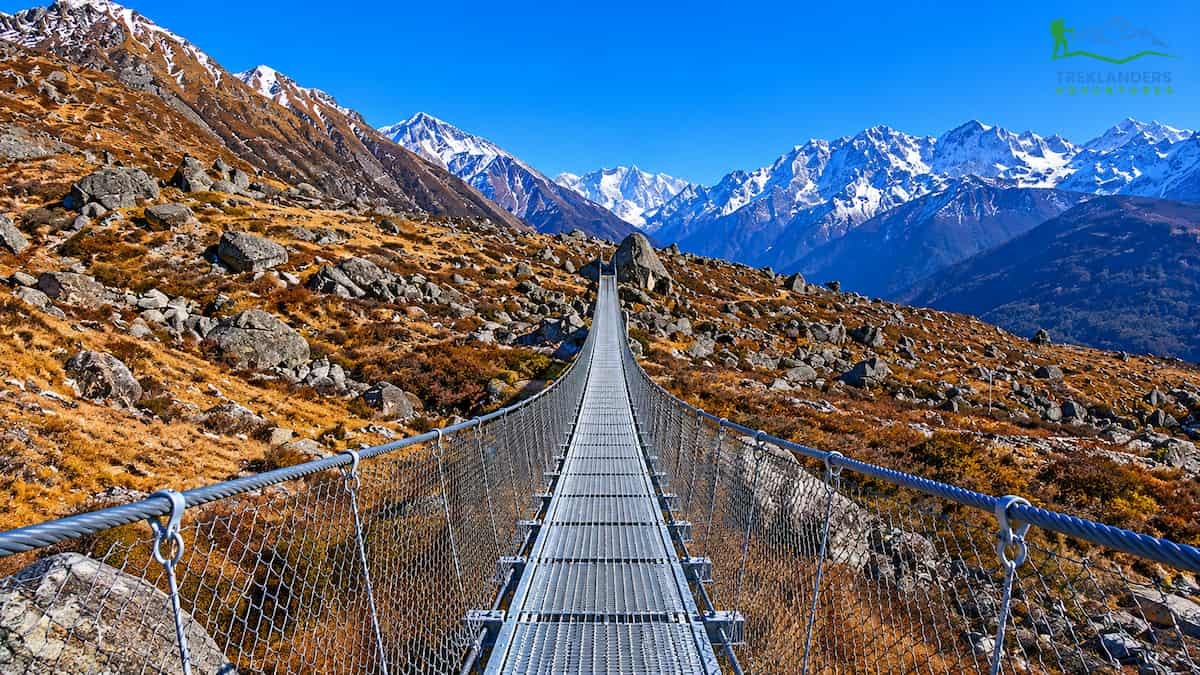
After about 10 minutes out of Mundu, the terrain suddenly morphs. The track is completely open. No trees at all. You are walking on broad rocky grassland. The river roars strongly next to you. The summits fill the sky ahead. The trail is mainly level with a steady upward slope. There are no technical sections. You cross over a few small streams that are crossed with basic stone bridges. The surface is a mixture of compacted earth, gravel, and loose rock.
Well broken-in trail shoes or lightweight trekking boots manage quite comfortably. Looking up as you walk, you will see the Langtang Glacier coming into view. A lateral moraine is a long dark ridge of rock and debris dumped by a glacier over many thousands of years.
The glacier itself is higher up and out of the way, giving birth to the river under your feet, one of the first moments of proximity to glacier climbing on the trek. Clockwise to your right, the valley walls ascend sharply.
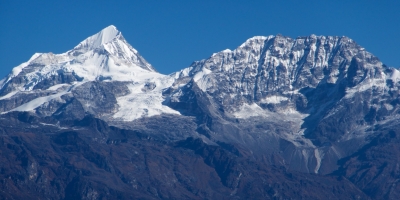
The summits on the ridge of the Langtang Himal include Langtang Lirung (7,227 m) on the horizon to the north, Kimshung (6,781 m) northeast, and Naya Kanga (5,846 m) to the south. They're not just shapes in the distance. They are right in front of you. On a clear, sunny morning, the sun illuminates the snow ice faces in such a way as to make you freeze up!
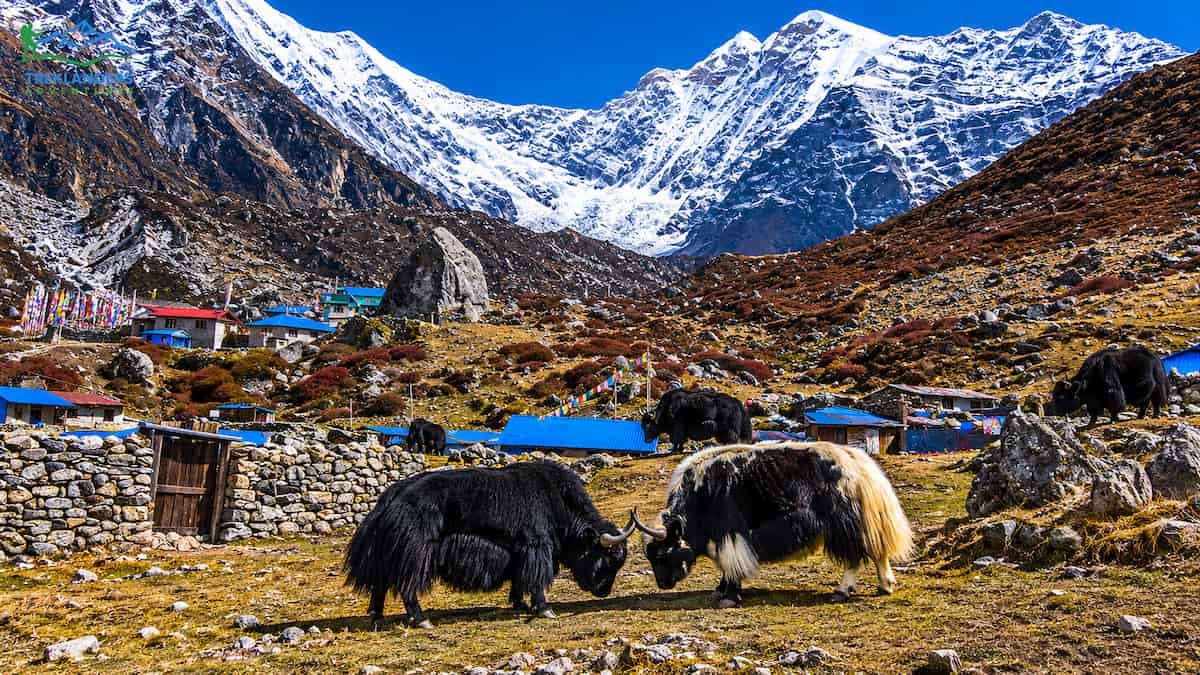
Yak herders lead their animals to and from pasture between Mundu and Kyanjin Gompa. Small herds may be on or near the trail. Yield to yaks, pass on the uphill side whenever you can, and don't rush. Never place yourself between a yak and the drop side of the trail.
Fuel in the form of yak dung is all over this part of the valley. Dried cakes of it are piled against the stone walls. The smell is earthy and barefaced, and you know this is part of the experience; it is not trying to give you a carefully managed tourism-focused corridor.
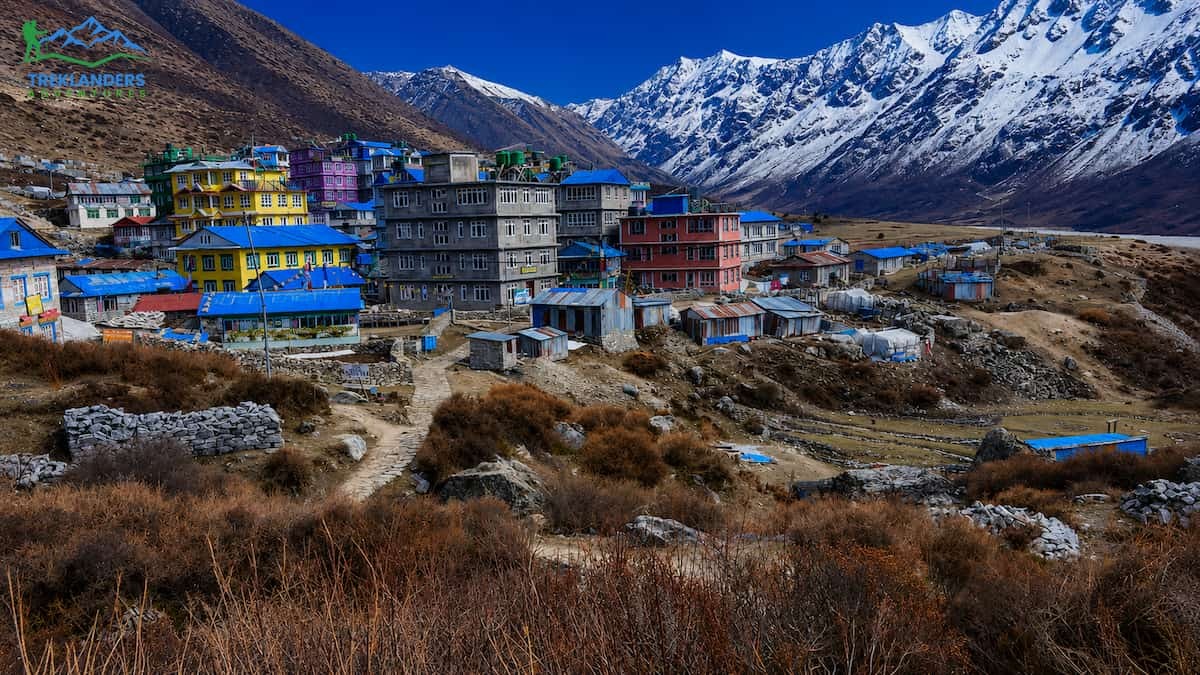
It is revealed slowly, first a chorten, a stone stupa, on a ridge. Then the tops of the lodges come into sight. Then the monastery itself is a low, painted building with bright wooden shutters and a flat roof.
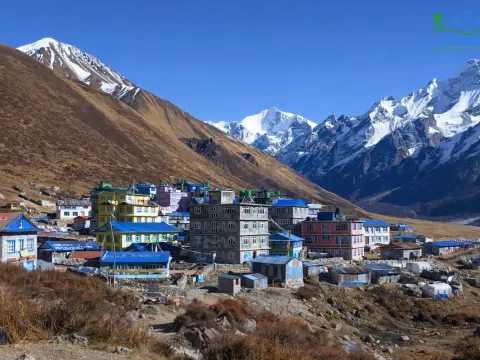
Kyanjin Gompa is at 3,870m in a broad glacial bowl, and the country is stony and treeless. The gompa, which is the Tamang name for this settled area, is the oldest building in the area and the settlement takes its name from it. A Gompa is a Tibetan Buddhist monastery.
The settlement also contains
The atmosphere at Kyanjin Gompa is not like the villages below. The altitude makes the air clear. The sound travels differently. The wind flows off the glacier in chuffs. The sky is crowded with stars when it is dark. When the sun rises, the peaks get the first glimpse of light before anything under them.
Kyanjin Gompa is at an elevation of 3,870 metres, which puts it very high above the risk of acute mountain sickness. The usual limit of the risk of AMS is about 2,500 meters, which means you're more than 1,300 meters above the limit! The rule of thumb is not to go higher than 300-500 meters a day when trekking above 3,000 meters.
The Langtang Valley Trek itinerary has been planned to keep you within that range. The elevation climbs from Langtang Village (3,430 meters) or Mundu (3,550 meters) to Kyanjin Gompa (3,870 meters) are feasible if you are moving at a reasonable pace and drinking lots of fluids.
At this altitude, mild symptoms are expected. Having a headache on your first afternoon at Kyanjin Gompa is not a sign you are in trouble. Rest, drink 3-4 liters of water, stay away from alcohol, and eat a light meal. Up to 24 hours, most mild AMS will resolve.
But serious symptoms are a whole different case. HAPE and HACE become medical emergencies, and if you or anyone in your group experiences confusion or disorientation, inability to walk straight or severe breathlessness even at rest, or a persistent, productive cough with pink or frothy mucus, go down straightaway. No waiting until the morning. No taking painkillers and hoping for the best.
The 9-Day Langtang Valley Trek package from Treklanders offers two nights at Kyanjin Gompa with a full day of acclimatization in between; this is the most crucial difference. 1 acclimatization day allows your body to make more red blood cells and get used to the decreased level of oxygen at altitude.
You also have the chance to go higher, which speeds up the process.
On the 7-day Langtang Valley Trek, you reach Kyanjin Gompa and start back down the next day (which is great for seasoned high-altitude trekkers who know how their bodies are acclimating). But for the average trekker (most of whom will be trekking over 3,500m for the first time in their lives), those additional two days in the 9-day package more than justify the cost.
This is not a transit point. Kyanjin Gompa rewards you for staying.
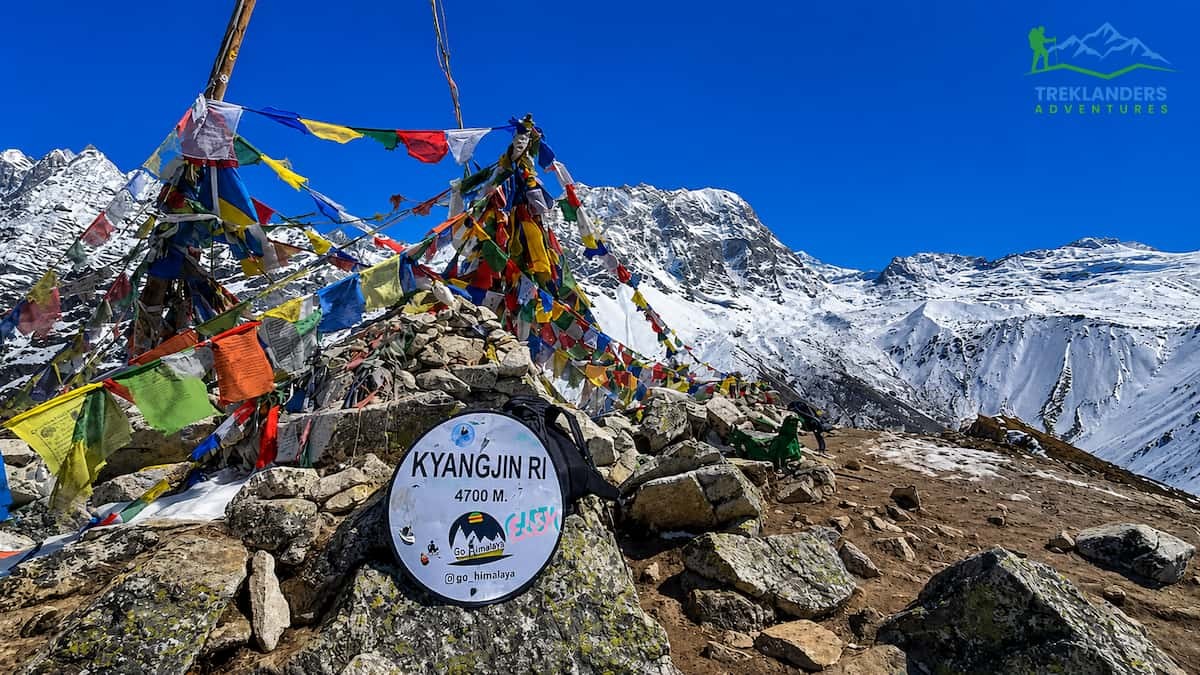
Kyanjin Ri is the ridge just above the settlement. It rises to 4,773 meters, and the walk up there is a three- to four-hour round trip. It is the most frequent half-day walk originating from the village.
The route leaves the back of the village and gradually rises zig-zag wise over the ridge through loose rock and short alpine grass. Technical climbing is not required. The gradient is consistent, but there are no extreme sections. It should be comfortable if you have completed the entire approach.
The view from the summit of Kyanjin Ri encompasses a full 360 degrees of the Langtang Himal. To the north is Langtang Lirung, and to the south, the valley opens behind you as far as the heavily wooded reaches near Lama Hotel. To the east, the Gangchempo range is shaped like a skyline.
The Langtang Glacier is exposed directly beneath you. Wake up early and start your climb by 5:30 to 6:00 AM if you want to have clear views. By mid-morning, clouds accumulate very rapidly during the pre-monsoon season.
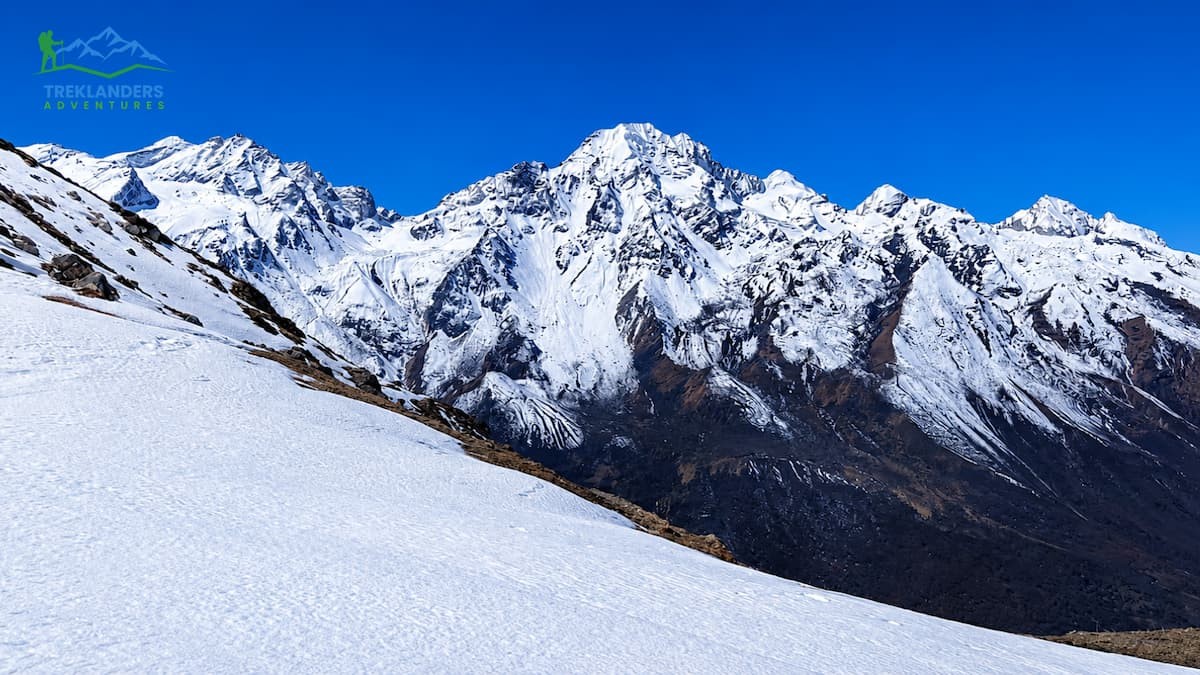
Tserko Ri is at an altitude of 4,984 meters (16,356 ft) and is the highest peak reachable on a day walk from Kyanjin Gompa. The return walk is from 7 to 9 hours and calls for a significant altitude gain of over 1,100 meters from the village. Not for unacclimatised or unfit trekkers.
Starting early is essential, 5:00 AM or so, and bring food and clothes for the cold. It takes you over high pastures and some rocky ground on the way up to the summit.
The perspectives from Tserko Ri are arguably the best in the whole of the Langtang area. You get a glimpse of Tibet towards the north. The entire expanse of the Langtang Himal is clearly visible.
On a clear day, you should be able to find the Dorje Lakpa (6,966 m) to the east.
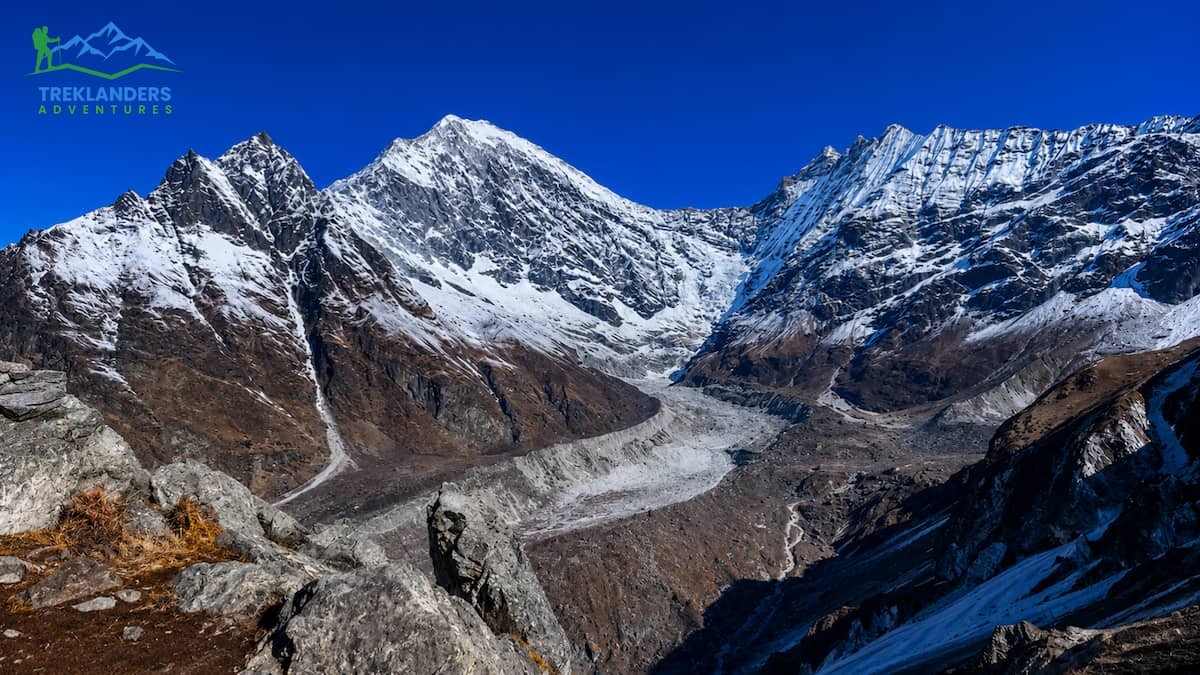
The glacier snout is about 1 hour past Kyanjin Gompa along a rough trail on the moraine. This is an easy walk without an ascent. You walk across the boulder fields and south along the path of the lateral moraine until you arrive at the glacier snout. Standing at the toe of the glacier, which is actively
flowing, is viscerally awe-inspiring. The ice is dull, grey, and dirty with dust and glacial debris. The gutters of meltwater rushing underneath you are loud and ice-cold. Suddenly, you can really get a grasp of the magnificent scale of the geological process that is at work.
This is the area that was affected by the 2015 earthquake with huge falls of rock. The glacier tongue and the landscape around it have moved a lot since then. Your guide can identify the areas and tell you about the changes that have taken place.
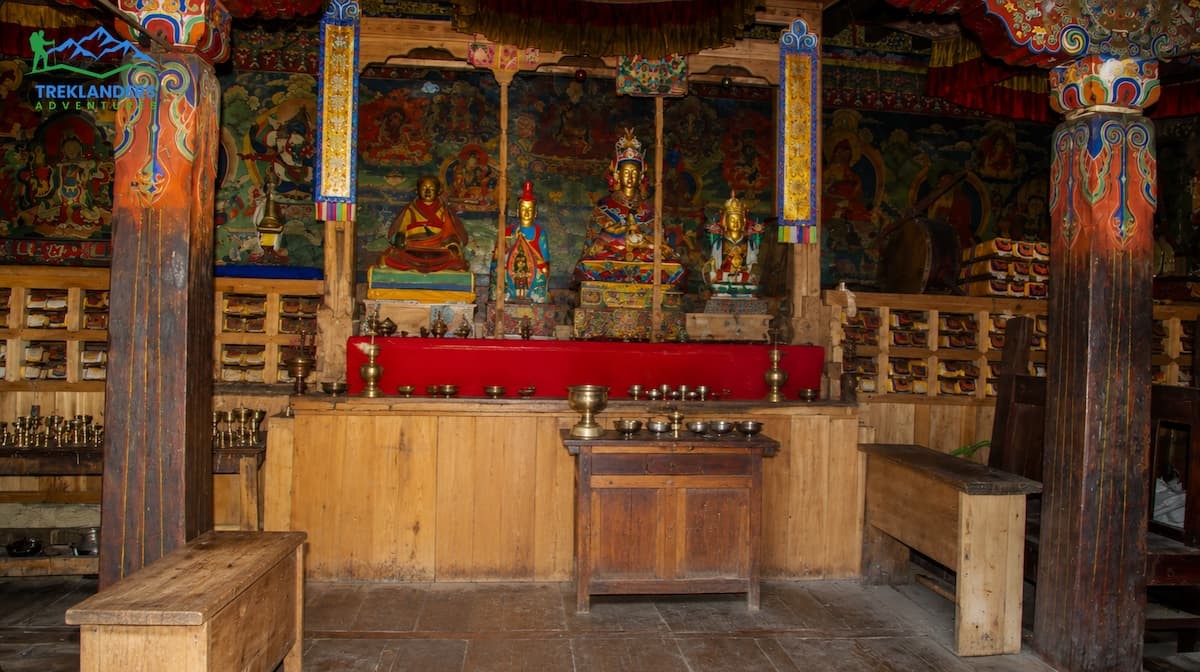
The monastery of Kyanjin Gompa is open for viewing. It is worth visiting early in the morning, but as the monks hold their prayers between 6 and 8 AM.
It is very dark in the monastery decorated with religious scroll paintings called thangkas and offerings of butter lamps, while the air is filled with the smell of juniper incense.
Shoes off! Walk clockwise outside and inside the monastery where the prayer wheels are.
Take photographs inside the monastery only if no one minds. Often, the lama at the monastery can cast blessings upon trekkers. They will tie a tiny thread around your neck and rest their hands on your forehead. You may accept or decline, but it is definitely there as a blessing, not a show for tourists.
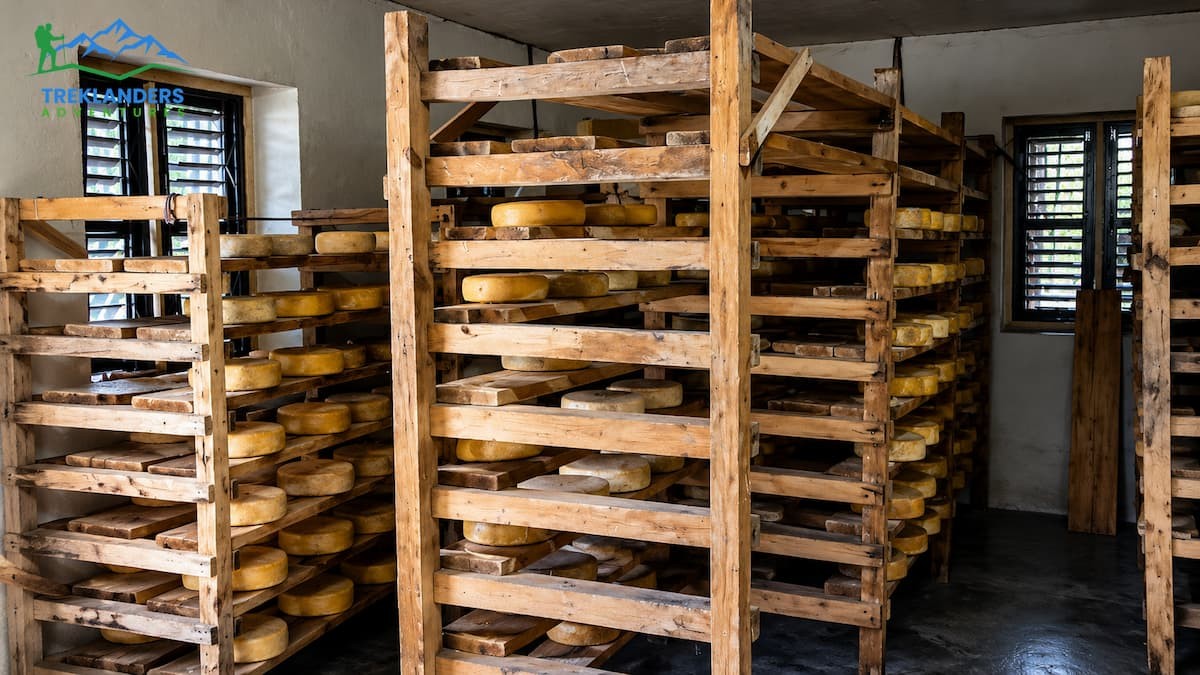
Kyanjin Gompa cheese factory: semi-hard yak cheese with a sharp and slightly sour taste. Available, fresh, or mature.
The yoghurt is very good and can be enjoyed with the honey sold in some lodges. Walking with a cheese backpack down the trail is just as viable; it keeps for days at trekking temperatures and is a fine gift or trail snack to take away.
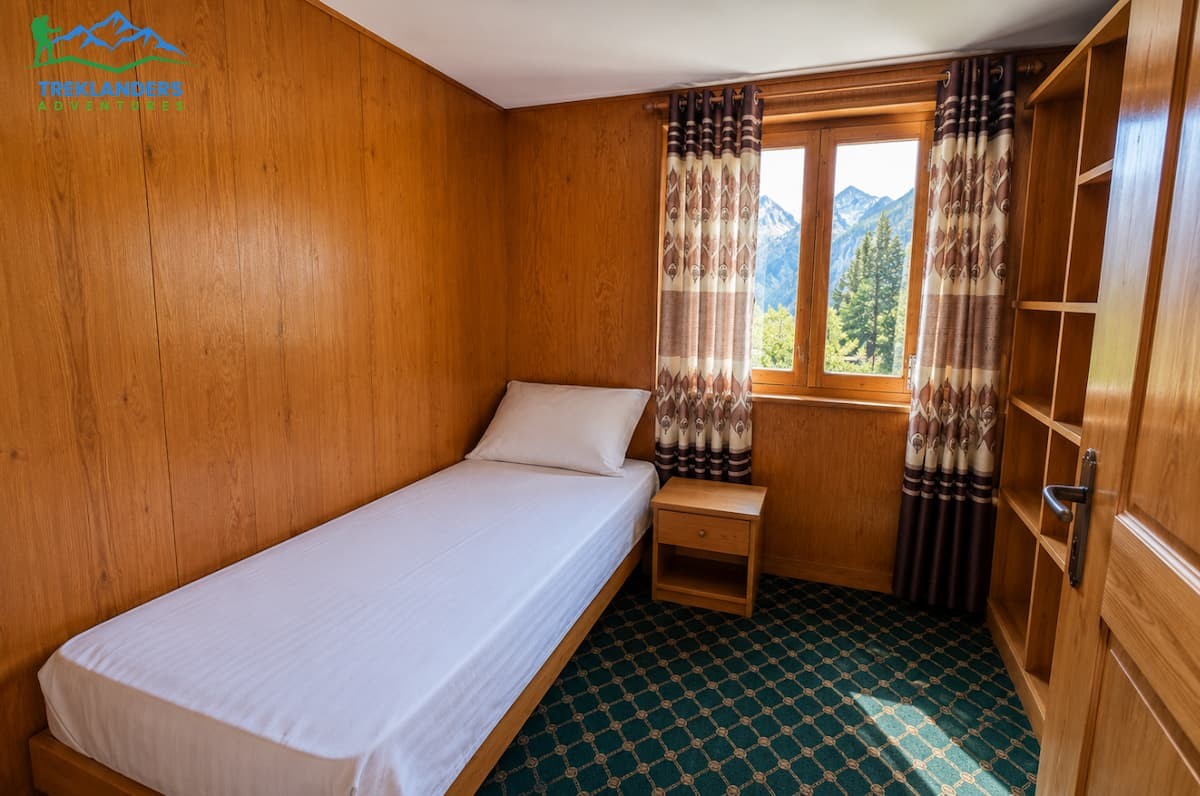
Kyanjin Gompa accommodation is pretty basic but fine. The stone lodges have dormitory rooms and a few double rooms. Beds are provided with mattresses and blankets (bring a sleeping bag for additional warmth).
Electricity through solar panels, in theory, is available. Most lodges have a common dining room and a wood or yak dung stove. These rooms are the social heart of the camp in the evening, and trekkers from several groups sit and eat together and exchange stories.
The food available:
Tea is your best friend here. Hot lemon with ginger and honey soothes the throat and helps you stay warm. Avoid coffee after 2:00 PM if you already struggle with sleep at altitude.
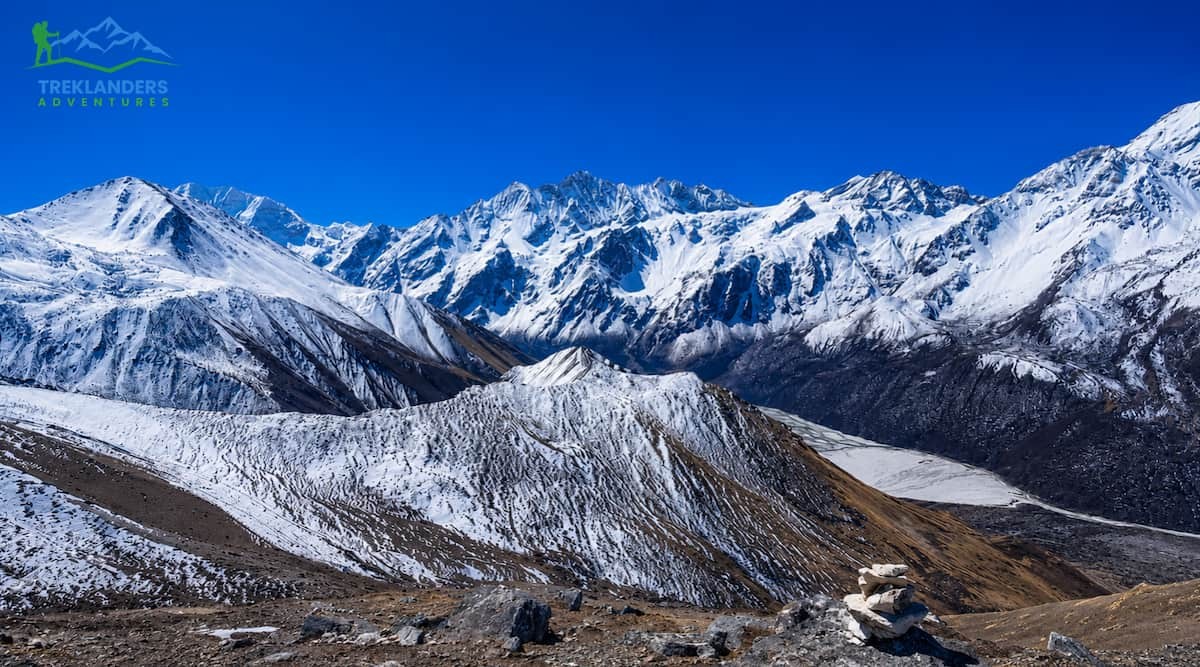
Weather at the Kyanjin Gompa 3,870m in the upper Langtang Valley (accessible in a day's walk from the Ghoda Tabela side trek starting point) is highly variable and can change suddenly without warning. In reality, spring and autumn are the main trekking seasons; one should always be prepared for sharp changes in temperature, strong seasonal mountain wind and unpredictable weather during any trekking trip. The nights often reach below freezing in October/November, but during the winter months (December-March), there are averages below 20. The wind from the glaciers increases late in the afternoon, so the air temperature becomes much colder than it feels, as on an exposed ridge it is up to minus 10 degrees Celsius. Clouds can also form rapidly after sunrise, covering the peaks by around 10:00 or 11:00, so early starts are recommended to preserve the mountain views and make for easier walking. Snow can fall at any time of the year above 3,500 m.
Proper gear is critical for Kyanjin Gompa because the altitude and exposure make it difficult to carry a bag. You should bring a good down jacket or a synthetic insulated jacket to keep you warm on cold evenings and early morning hikes. Pack a waterproof shell jacket and trousers to shield yourself from wind, snow or wet weather. Thermal ski underwear will keep you warm without becoming too cold at night when the teahouse rooms are iron cold, and warm gloves and a thermal hat are just as important when the sun sets and the temperature plummets. Because of the powerful ultraviolet rays at altitude, you should also bring SPF 50 or higher sunscreen, UV protection glasses, and a broad-brimmed sun hat for hiking during the day. A dependable headlamp and a set of spare batteries are a necessity for early morning departures, power cuts, and trekking around the village at night.
On 25 April 2015, a 7.8 magnitude earthquake hit Nepal. One of the most badly affected areas was the Langtang Valley. A large avalanche and subsequent landslide, caused by the quake, buried much of the village of Langtang.
Over 200 people were killed, including a large number of trekkers and nearly all of those living in the upper village. Kyanjin Gompa was damaged but not destroyed. The community has grown back slowly. The lodges we stay in today are new, erected between 2016 and 2018, and the monastery has been repaired.
The trail has been cleared and, in places, rerouted. Today, trekking in the Langtang Valley is helping with recovery. The main source of income for the valley's settlements is tourism. If, as a trekker, you employ a local guide, use locally run teahouses, and purchase domestic products and food, the money remains in the community and aids its sustained reconstruction.
The memorial near Langtang Village commemorates those lost in 2015. Take a few minutes to stop there. It is a quiet, dignified site, and the act of acknowledging what happened here carries weight.
The journey back down will be along the same path as before, but in the opposite direction. With the elevation dropping, your body can already tell. The warm, thick air makes breathing easier, and your energy improves as you head for home. Descending is often physically tougher on the knees than climbing.
Trekking poles can be really helpful here, in particular the very steep descent from Ghoda Tabela to Lama Hotel. As for the 7-day itinerary, the schedule for the return journey is rather compressed and calls for a strenuous day to reach Syabrubesi before the car journeys back to Kathmandu.
For the 9-day itinerary, the schedule is more comfortable and relaxing.
The route back moves through
Choosing Between the 7-Day and 9-Day Trek
This is the most common question that trekkers ask before booking.
The 7-day Langtang Valley Trek suits you if
The 9-day Langtang Valley Trek suits you if
Both packages are guided, including accommodation and most meals, and follow the same core route. The additional two days in the 9-day package are not filler; they are the days when the most memorable experiences happen.
View the full 7-day Langtang Valley Trek details at Treklanders
View the full 9-day Langtang Valley Trek details at Treklanders
Requirements for Trekking in Langtang National Park
Issued at Langtang National Park headquarters in Dhunche, or at the Department of Immigration in Kathmandu. Price: USD 30 per person (subject to change, please check current prices before booking).
Price: USD 10 - 20, depending on if you are trekking independently or with a trekking agency. When booking with Treklanders, we take care of both of these permits for you as part of your package.
The starting point of the trek is in Syabrubesi, which lies around 120 km northwest of Kathmandu. It takes about 6-8 hours by road, depending on the road conditions. There are private jeeps as well as local bus services that run regularly to Syabrubesi. Transport will be arranged as part of your Treklanders package.
Tamang is one of Nepal’s largest ethnic groups, and they call the Langtang Valley home. Groups of Tamang have lived in this valley for centuries, migrating between high pasture in the summer and lower elevation villages in the winter.
When you stay at Kyanjin Gompa and in the villages below, you’ll experience Tamang culture first-hand. From the style of lodges to prayer flags hanging from every knoll and summit to stone mani walls peppering the trail, to the gompa itself, and to the daily routines of locals who graze yaks, harvest highland barley, and simply live at serious altitude.
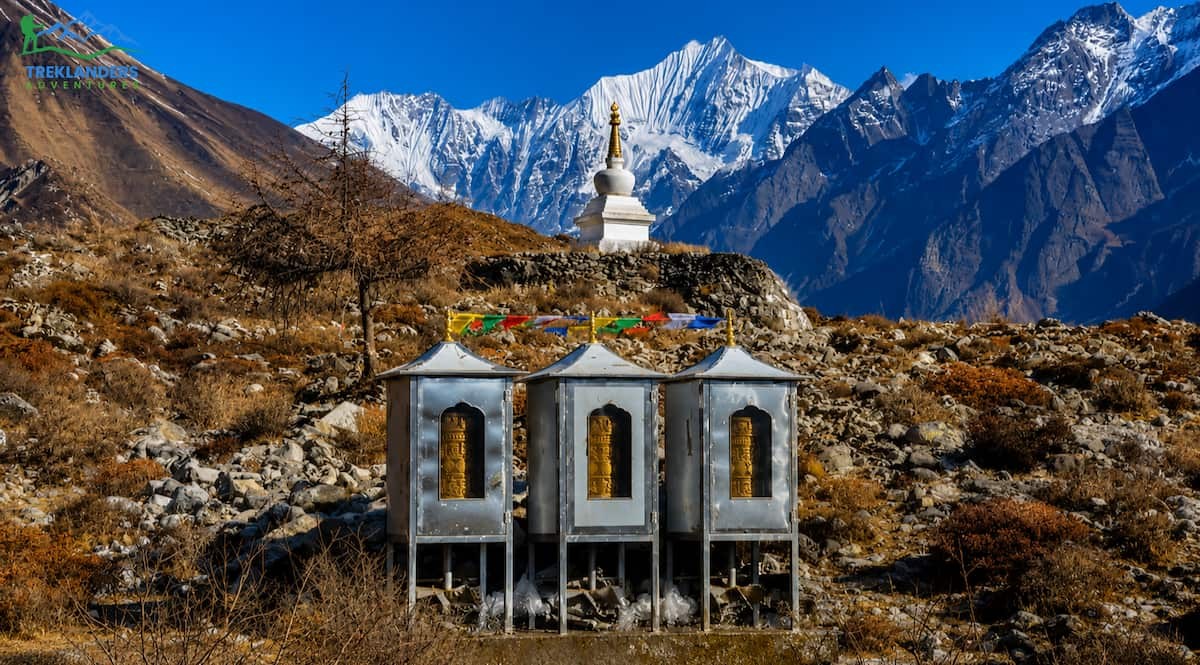
Tamang practice Tibetan Buddhism, and there is no divide between the religious and secular aspects of life. Prayer wheels whisk by lodge entrances. Butter lamps illuminate household shrines. The village lama who lives at the monastery is a man of real power and influence.
A couple of notable cultural customs to know before you visit:
Long walls built of stone with prayer inscriptions carved into every stone. Circumambulate clockwise with the wall on your right-hand side. It's standard everywhere on Buddhist trail systems in the Himalayas.
Flags of different colors strung between poles or across mountain passes contain printed prayers. As they flap in the wind, they spread the prayers across the landscape. Don't touch or move them. Don't use them as clotheslines.
Wait to be asked before entering someone's home. At the monastery, take your shoes off and walk clockwise around the altar. Avoid pointing your feet at the altar.
Ask permission before taking pictures of people, especially elders and monks. Many will say yes, enthusiastically. Some will say no. That is okay, too. Sometimes I carry printed cards I can leave behind as a small gift if someone wants me to pay for the privilege of taking their photograph. This isn't expected.
When the earthquake struck Nepal in 2015, it devastated the Tamang community of Langtang. Most of the upper village was buried. Families lost their homes. Their stores. Everything they owned. While what remains of that community rebuild, keep in mind the people who greeted you that first morning and opened their home to you. Trekking through the Langtang Valley worked diligently to reconstruct the lodges, replant the fields, and clear away the trail within two years of losing everything. It's not bragging to thank them directly.

Langtang National Park encompasses one of Nepal's most valuable mountain ecosystems. The trail from Mundu to Kyanjin Gompa weaves its way through alpine landscapes lined with a variety of largely elusive wild animals.
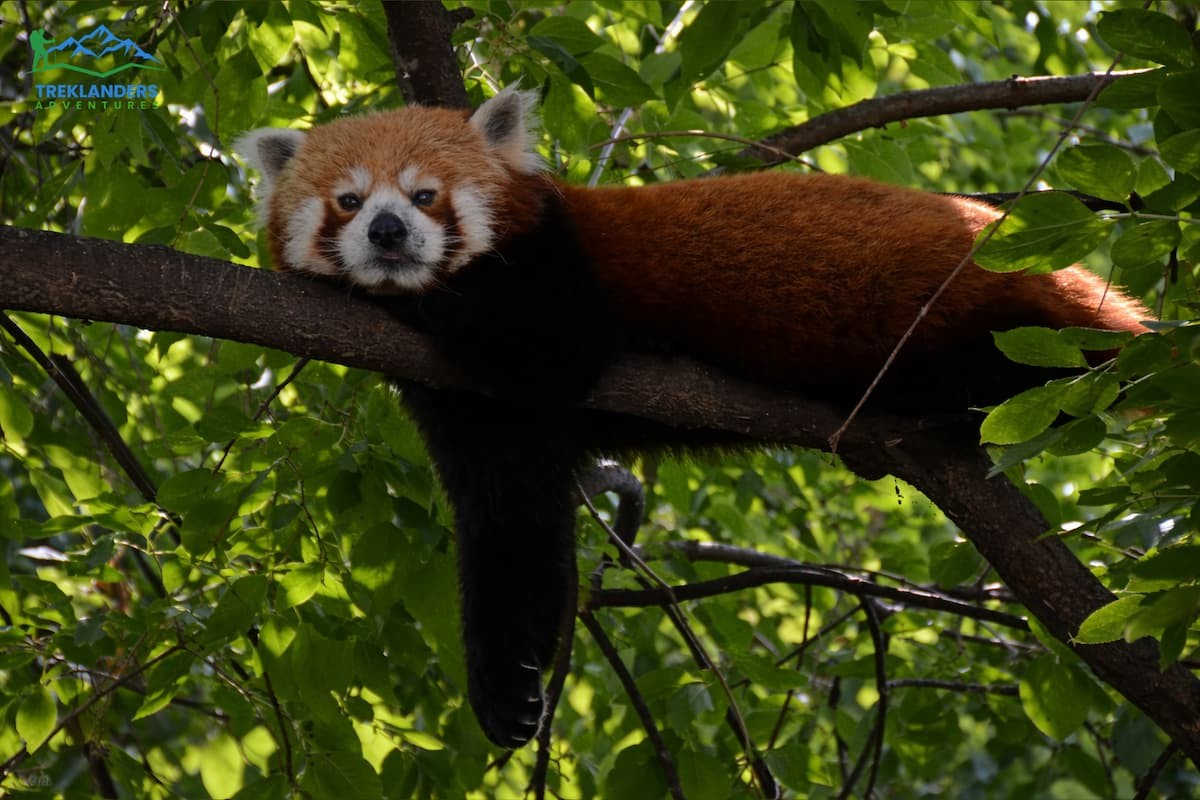
1. Red panda: This is what most trekkers are looking for. Red panda (Ailurus fulgens) is found in lower elevations through mixed forest and bamboo zones of the valley (2,200 to 4,800m). The best possibility of seeing one of these is early morning in the forested portions between the Lama Hotel and Ghoda Tabela.
2. Himalayan tahr: Occasional in the upper valley, these wild goats (related to the alpine chamois) are shy but not impossible to find on the rocky slopes above the forest. Males have huge, curved horns. They are sometimes seen moving down the valley early in the morning.
3. Snow leopard: Found in the park but very seldom seen by trekkers. The population of Langtang seems to have a few scores of animals. You are not going to see one on your trip. If you do, then it is going to be one of those moments you remember for the rest of your life.
4. Musk Deer: Smaller than the tahr and just as elusive. Located in the forest zones. The population has been impacted due to poaching for the musk gland, which is highly prized in the markets for traditional medicine.
5. Birds: Good birding in the upper valley. You may see blood pheasant, the imperial Himalayan monal- Nepalese national bird, a shimmering, spectacular sight in good light, and many accentors and redstarts, and different raptors such as lammergeier- the large-winged vultures which float above the ridgelines on thermals with almost a 3 meter wingspan.
Wildlife sightings increase when you move quietly, start early, and avoid large groups. A pair of binoculars significantly improves your chances of identifying birds and spotting mammals on distant slopes.
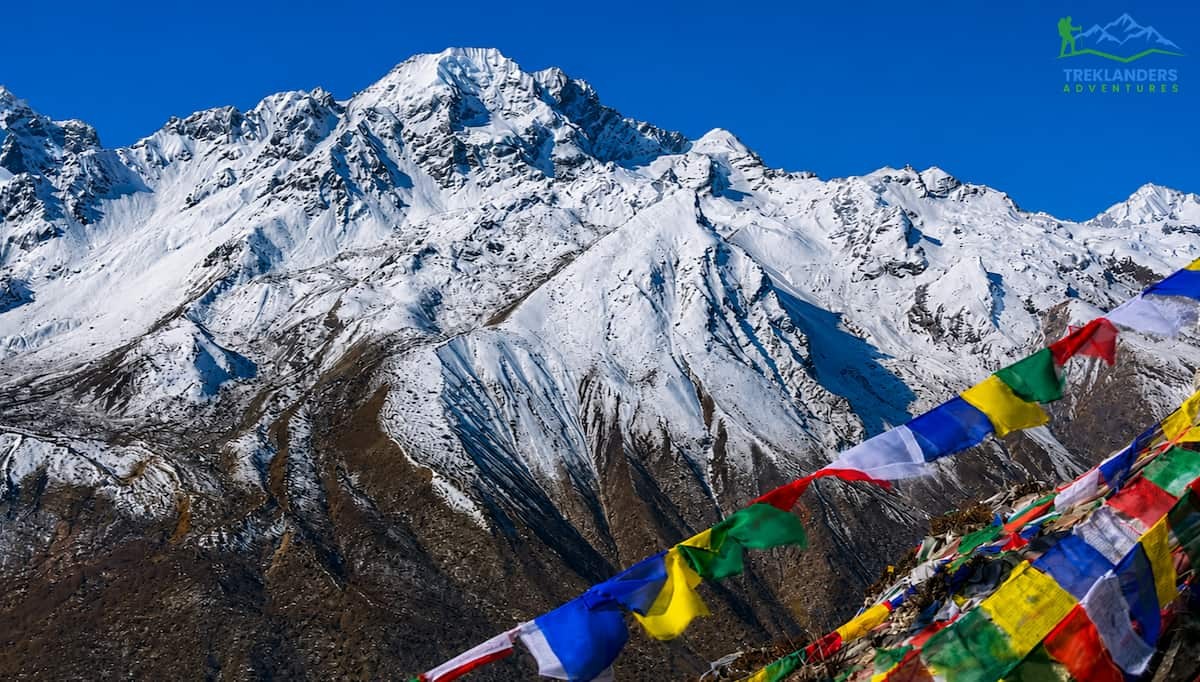
The Langtang Valley Trek is not a difficult trek by Himalayan standards. It does not require ropes, crampons, or technical climbing skills. It does require physical preparation, proper gear, respect for the altitude, and enough time to do it right.
The final stretch from Mundu to Kyanjin Gompa is short enough to feel easy on paper. In practice, it delivers complete experience. The glacial terrain, the open sky, the monastery, the view from the first ridge you climb above the settlement. This is what you came for.
Give yourself enough days to be fully present at Kyanjin Gompa. Do not rush through it. The mountain is not going anywhere.
Discover the hidden role Everest Sherpas play in keeping climbers safe and making Everest summits possible.
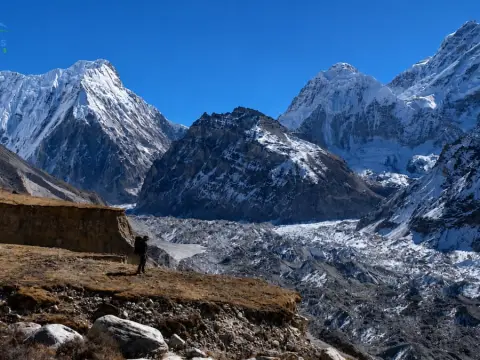
Discover Nepal’s best hidden treks with peaceful Himalayan trails, authentic culture, and breathtaking mountain views away from the crowds.
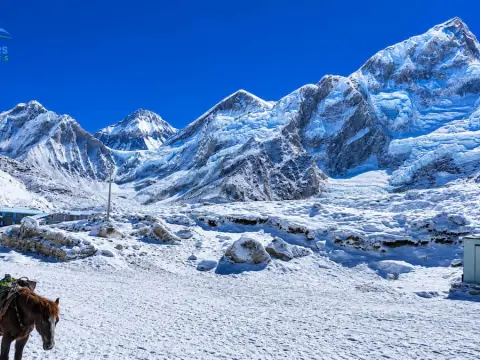
Complete fitness and training guide for the Everest Base Camp Trek, including cardio, strength, altitude preparation, endurance, and hiking workouts.



