[{"name":"Everest Base Camp Trek","duration":"16","image_url":"https:\/\/www.treklanders.com\/storage\/trip-galleries\/1\/thumb_419a755c003cc609f3030ee332965ebe.jpg","offer_price":1405,"url":"https:\/\/www.treklanders.com\/trips\/everest-base-camp-trek"},{"name":"Gokyo Valley Trekking","duration":"16","image_url":"https:\/\/www.treklanders.com\/storage\/trip-galleries\/2\/thumb_676d1021b574aeba4d19d3f2a0b04ed2.webp","offer_price":1205,"url":"https:\/\/www.treklanders.com\/trips\/gokyo-valley-trekking"},{"name":"Annapurna Circuit Trek","duration":"23","image_url":"https:\/\/www.treklanders.com\/storage\/trip-galleries\/3\/thumb_2a9a92ea23c62f41de27b37f5e3e8c17.webp","offer_price":1495,"url":"https:\/\/www.treklanders.com\/trips\/annapurna-circuit-trek"},{"name":"Everest Panorama Trek","duration":"12","image_url":"https:\/\/www.treklanders.com\/storage\/trip-galleries\/4\/thumb_35c9f677ea2e88b1ff11a9f43daa3ddb.jpg","offer_price":1100,"url":"https:\/\/www.treklanders.com\/trips\/everest-panorama-trek"},{"name":"Everest Base Camp Trekking from Jiri","duration":"22","image_url":"https:\/\/www.treklanders.com\/storage\/trip-galleries\/6\/thumb_14763592492417b294aa66bf0ebf4e64.webp","offer_price":1400,"url":"https:\/\/www.treklanders.com\/trips\/everest-base-camp-trekking-from-jiri"},{"name":"Everest Base Camp via Cho la Pass from Gokyo Valley Trekking","duration":"18","image_url":"https:\/\/www.treklanders.com\/storage\/trip-galleries\/7\/thumb_d4e470e98d4e9e2ab8e93e39b8b7d252.jpg","offer_price":1405,"url":"https:\/\/www.treklanders.com\/trips\/everest-base-camp-via-cho-la-pass-from-gokyo-valley-trekking"},{"name":"Everest Three Passes Trekking","duration":"22","image_url":"https:\/\/www.treklanders.com\/storage\/trip-galleries\/8\/thumb_b413b221e913171500bb3dfd5c08ceea.jpg","offer_price":1635,"url":"https:\/\/www.treklanders.com\/trips\/everest-three-passes-trekking"},{"name":"Annapurna Base Camp Trekking","duration":"14","image_url":"https:\/\/www.treklanders.com\/storage\/trip-galleries\/9\/thumb_2e71f2ffe116c659fa66b01c2d571b4e.webp","offer_price":845,"url":"https:\/\/www.treklanders.com\/trips\/annapurna-base-camp-trekking"},{"name":"Mardi Base Camp Trekking","duration":"14","image_url":"https:\/\/www.treklanders.com\/storage\/trip-galleries\/10\/thumb_d7b2d2dc638f6bbf2c31c167ac68029d.webp","offer_price":845,"url":"https:\/\/www.treklanders.com\/trips\/mardi-base-camp-trekking"},{"name":"Mohare Danda Trekking","duration":"12","image_url":"https:\/\/www.treklanders.com\/storage\/trip-galleries\/11\/thumb_a384c8d35d789d29b19991c1d675c910.webp","offer_price":755,"url":"https:\/\/www.treklanders.com\/trips\/mohare-danda-trekking"},{"name":"Khopra Ridge & Khair Lake Trekking","duration":"15","image_url":"https:\/\/www.treklanders.com\/storage\/trip-galleries\/12\/thumb_c0f50461ddc74acfb553ba85be00fab0.webp","offer_price":855,"url":"https:\/\/www.treklanders.com\/trips\/khopra-ridge-khair-lake-trekking"},{"name":"Upper Mustang Trekking","duration":"17","image_url":"https:\/\/www.treklanders.com\/storage\/trip-galleries\/13\/thumb_7aa4dfdb69186b0f224a303d80a25c95.jpg","offer_price":1715,"url":"https:\/\/www.treklanders.com\/trips\/upper-mustang-trekking"},{"name":"Langtang Valley Trek","duration":"12","image_url":"https:\/\/www.treklanders.com\/storage\/trip-galleries\/14\/thumb_8650b4b1a3c160cff75da65369398353.webp","offer_price":735,"url":"https:\/\/www.treklanders.com\/trips\/langtang-valley-trek"},{"name":"Gosainkunda Lake Trek","duration":"11","image_url":"https:\/\/www.treklanders.com\/storage\/trip-galleries\/15\/thumb_bfe94c14e760c48234e117021105be84.webp","offer_price":735,"url":"https:\/\/www.treklanders.com\/trips\/gosainkunda-lake-trek"},{"name":"Chisapani-Nagarkot to Dhulikhel Hiking","duration":"7","image_url":"https:\/\/www.treklanders.com\/storage\/trip-galleries\/16\/thumb_468defe9a4000ee3129cd7e6421ee105.webp","offer_price":565,"url":"https:\/\/www.treklanders.com\/trips\/chisapani-nagarkot-to-dhulikhel-hiking"},{"name":"Kanchenjunga Trek","duration":"23","image_url":"https:\/\/www.treklanders.com\/storage\/trip-galleries\/17\/thumb_51f43fa4203106cc49aaedc89d76e01d.jpg","offer_price":1725,"url":"https:\/\/www.treklanders.com\/trips\/kanchenjunga-trek"},{"name":"Helambu Trek","duration":"12","image_url":"https:\/\/www.treklanders.com\/storage\/trip-galleries\/18\/thumb_0fe8e3fa1299d2e43bf1fb5977875ce2.jpg","offer_price":685,"url":"https:\/\/www.treklanders.com\/trips\/helambu-trek"},{"name":"Upper Dolpo Trek","duration":"26","image_url":"https:\/\/www.treklanders.com\/storage\/trip-galleries\/19\/thumb_d6080d490e1db83b0a711e7304000864.jpg","offer_price":3005,"url":"https:\/\/www.treklanders.com\/trips\/upper-dolpo-trek"},{"name":"Manaslu Circuit Trek","duration":"18","image_url":"https:\/\/www.treklanders.com\/storage\/trip-galleries\/20\/thumb_1fdd224e849f4f328e73d2d12b3d282d.jpg","offer_price":1225,"url":"https:\/\/www.treklanders.com\/trips\/manaslu-circuit-trek"},{"name":"Tilicho Lake Base Camp Trek","duration":"19","image_url":"https:\/\/www.treklanders.com\/storage\/trip-galleries\/21\/thumb_eba8ac5e029e6543e0c17630ebd9e2fb.jpg","offer_price":1220,"url":"https:\/\/www.treklanders.com\/trips\/tilicho-lake-base-camp-trek"},{"name":"Nar-Phu Valley With Thorang-La Pass Trek","duration":"21","image_url":"https:\/\/www.treklanders.com\/storage\/trip-galleries\/22\/thumb_43597423a5a366fe9c8937fb30d2fe2a.jpg","offer_price":1315,"url":"https:\/\/www.treklanders.com\/trips\/nar-phu-valley-with-thorang-la-pass-trek"},{"name":"Nepal Round Trip of Kathmandu-Pokhara-Lumbini and Chitwan Tour","duration":"10","image_url":"https:\/\/www.treklanders.com\/storage\/trip-galleries\/23\/thumb_32497d170b2ab340b0a1b3310e91e784.webp","offer_price":845,"url":"https:\/\/www.treklanders.com\/trips\/nepal-round-trip-of-kathmandu-pokhara-lumbini-and-chitwan-tour"},{"name":"Nagarkot Day Hike","duration":"2","image_url":"https:\/\/www.treklanders.com\/storage\/trip-galleries\/24\/thumb_a5a654930fd8ba7852e41738105bacfc.webp","offer_price":105,"url":"https:\/\/www.treklanders.com\/trips\/nagarkot-day-hike"},{"name":"Nagarkot Sunrise Tour","duration":"1","image_url":"https:\/\/www.treklanders.com\/storage\/trip-galleries\/25\/thumb_17dc28a29cfa44381ad503f0a75ee84f.webp","offer_price":22,"url":"https:\/\/www.treklanders.com\/trips\/nagarkot-sunrise-tour"},{"name":"Namobuddha Day Tour with Shiva Statue","duration":"1","image_url":"https:\/\/www.treklanders.com\/storage\/trip-galleries\/26\/thumb_beeb34202f9077764aa08c67ef2867f9.webp","offer_price":45,"url":"https:\/\/www.treklanders.com\/trips\/namobuddha-day-tour-with-shiva-statue"},{"name":"Kathmandu Full Day Sightseeing Tour","duration":"1","image_url":"https:\/\/www.treklanders.com\/storage\/trip-galleries\/27\/thumb_d045fc0f1acee2cfa6b3c95f3c656d18.jpg","offer_price":30,"url":"https:\/\/www.treklanders.com\/trips\/kathmandu-full-day-sightseeing-tour"},{"name":"Patan and Bhaktapur Sightseeing Tour","duration":"1","image_url":"https:\/\/www.treklanders.com\/storage\/trip-galleries\/28\/thumb_750eacac3424b5dba686dd93656ab87c.jpg","offer_price":30,"url":"https:\/\/www.treklanders.com\/trips\/patan-and-bhaktapur-sightseeing-tour"},{"name":"Upper Mustang Heli Tour","duration":"1","image_url":"https:\/\/www.treklanders.com\/storage\/trip-galleries\/29\/thumb_0b785f69a15557f8660c805c76fda14e.webp","offer_price":1250,"url":"https:\/\/www.treklanders.com\/trips\/upper-mustang-heli-tour"},{"name":"Everest Heli Tour","duration":"1","image_url":"https:\/\/www.treklanders.com\/storage\/trip-galleries\/30\/thumb_dc45f2beb36a3699e0decf0de41a6f17.jpg","offer_price":1495,"url":"https:\/\/www.treklanders.com\/trips\/everest-heli-tour"},{"name":"Island Peak Trek & Climb","duration":"21","image_url":"https:\/\/www.treklanders.com\/storage\/trip-galleries\/31\/thumb_a0f3e3468c92a8e436045cf8b2fbf361.jpg","offer_price":2295,"url":"https:\/\/www.treklanders.com\/trips\/island-peak-trek-climb"},{"name":"Mera Peak Trek & Climb","duration":"18","image_url":"https:\/\/www.treklanders.com\/storage\/trip-galleries\/32\/thumb_3e8128a23c36f02fa38135475e811b9e.jpg","offer_price":2815,"url":"https:\/\/www.treklanders.com\/trips\/mera-peak-trek-climb"},{"name":"Chandragiri Cable Car Tour","duration":"1","image_url":"https:\/\/www.treklanders.com\/storage\/trip-galleries\/33\/thumb_faa70b716449eada6d7f1450335edbb3.jpg","offer_price":30,"url":"https:\/\/www.treklanders.com\/trips\/chandragiri-cable-car-tour"},{"name":"Everest Base Camp Trek and Returning via Heli","duration":"13","image_url":"https:\/\/www.treklanders.com\/storage\/trip-galleries\/34\/thumb_11190941866206e1d578db11986ebc73.webp","offer_price":2100,"url":"https:\/\/www.treklanders.com\/trips\/everest-base-camp-trek-and-returning-via-heli"},{"name":"Annapurna Semi Circuit Trek","duration":"15","image_url":"https:\/\/www.treklanders.com\/storage\/trip-galleries\/35\/thumb_30ddd8ba818cdcb52efd5eb0a017bcdb.jpg","offer_price":965,"url":"https:\/\/www.treklanders.com\/trips\/annapurna-semi-circuit-trek"},{"name":"Everest Base Camp Luxury Trek","duration":"14","image_url":"https:\/\/www.treklanders.com\/storage\/trip-galleries\/39\/thumb_6079aea3c5dd83e745a16fd6162270dc.jpg","offer_price":2685,"url":"https:\/\/www.treklanders.com\/trips\/everest-base-camp-luxury-trek"},{"name":"Mt. Kailash & Lake Manasarover Tour","duration":"15","image_url":"https:\/\/www.treklanders.com\/storage\/trip-galleries\/41\/thumb_cf3fededfd7dd2b40399af399e04f95a.jpg","offer_price":2205,"url":"https:\/\/www.treklanders.com\/trips\/mt-kailash-lake-manasarover-tour"},{"name":"Ghorepani Poonhill Trek","duration":"11","image_url":"https:\/\/www.treklanders.com\/storage\/trip-galleries\/43\/thumb_602d9a56976e1b836ba8adc69b8d09c5.webp","offer_price":720,"url":"https:\/\/www.treklanders.com\/trips\/ghorepani-poonhill-trek"},{"name":"11 Days Gokyo Valley Trekkking","duration":"11","image_url":"https:\/\/www.treklanders.com\/storage\/trip-galleries\/45\/thumb_ab552c3c91de392f94230a937b1c4801.jpg","offer_price":900,"url":"https:\/\/www.treklanders.com\/trips\/11-days-gokyo-valley-trekkking"},{"name":"9-Day Everest Base Camp Trekking with Helicopter Return","duration":"9","image_url":"https:\/\/www.treklanders.com\/storage\/trip-galleries\/46\/thumb_9a8ba2b582500cd86786be056902c31a.webp","offer_price":1990,"url":"https:\/\/www.treklanders.com\/trips\/9-day-everest-base-camp-trekking-with-helicopter-return"},{"name":"12-Day Everest Base Camp Trek","duration":"12","image_url":"https:\/\/www.treklanders.com\/storage\/trip-galleries\/47\/thumb_d12c9ef776c0b395ceea817fe05c5892.jpg","offer_price":1000,"url":"https:\/\/www.treklanders.com\/trips\/12-day-everest-base-camp-trek"},{"name":"8-Day Everest Panorama Trek","duration":"8","image_url":"https:\/\/www.treklanders.com\/storage\/trip-galleries\/49\/thumb_c81ae3a8ac757a317a9362e6872e2dcb.jpg","offer_price":850,"url":"https:\/\/www.treklanders.com\/trips\/8-day-everest-panorama-trek"},{"name":"7-Day Langtang Valley Trek","duration":"7","image_url":"https:\/\/www.treklanders.com\/storage\/trip-galleries\/50\/thumb_99c2904df5475ab028c9e3633ea95ef3.jpg","offer_price":420,"url":"https:\/\/www.treklanders.com\/trips\/7-day-langtang-valley-trek"},{"name":"4-Day Trekking Adventure near Kathmandu","duration":"4","image_url":"https:\/\/www.treklanders.com\/storage\/trip-galleries\/51\/thumb_594681060514dc57be1959236a6996d0.jpg","offer_price":275,"url":"https:\/\/www.treklanders.com\/trips\/4-day-trekking-adventure-near-kathmandu"},{"name":"4-Day Ghorepani Ponnhill Trek from Pokhara","duration":"4","image_url":"https:\/\/www.treklanders.com\/storage\/trip-galleries\/53\/thumb_eede04edac01f983d9af2c16f55d03e8.webp","offer_price":500,"url":"https:\/\/www.treklanders.com\/trips\/4-day-ghorepani-ponnhill-trek-from-pokhara"},{"name":"7-Day Annapurna Base Camp Trek from Pokhara","duration":"7","image_url":"https:\/\/www.treklanders.com\/storage\/trip-galleries\/55\/thumb_547e91c74088c491111ebe31a759cfbb.jpg","offer_price":420,"url":"https:\/\/www.treklanders.com\/trips\/7-day-annapurna-base-camp-trek-from-pokhara"},{"name":"13-Day Manaslu Circuit Trekking","duration":"13","image_url":"https:\/\/www.treklanders.com\/storage\/trip-galleries\/56\/thumb_aef1af4f0c4a2a9622d518ad5959542b.jpg","offer_price":1050,"url":"https:\/\/www.treklanders.com\/trips\/13-day-manaslu-circuit-trekking"},{"name":"5-Day Mardi Himal Trek from Pokhara","duration":"5","image_url":"https:\/\/www.treklanders.com\/storage\/trip-galleries\/57\/thumb_dcd598d556c14835f0a18169afafcbc6.webp","offer_price":420,"url":"https:\/\/www.treklanders.com\/trips\/5-day-mardi-himal-trek-from-pokhara"},{"name":"Nagarkot Sunrise Tour with Day Hike","duration":"1","image_url":"https:\/\/www.treklanders.com\/storage\/trip-galleries\/58\/thumb_7cdfa1f16719486da2a0718da45b1f2f.webp","offer_price":30,"url":"https:\/\/www.treklanders.com\/trips\/nagarkot-sunrise-tour-with-day-hike"},{"name":"Seven Unesco Heritage Sites Day Tour in Kathmandu","duration":"1","image_url":"https:\/\/www.treklanders.com\/storage\/trip-galleries\/59\/thumb_92aed7b9c67e76740000aab9313dced7.jpg","offer_price":40,"url":"https:\/\/www.treklanders.com\/trips\/seven-unesco-heritage-sites-day-tour-in-kathmandu"},{"name":"10-Day Ghorepani Poonhill with Annapurna Base Camp Trek","duration":"10","image_url":"https:\/\/www.treklanders.com\/storage\/trip-galleries\/60\/thumb_d4c2c089497950ccb5f8541d76e1269b.webp","offer_price":835,"url":"https:\/\/www.treklanders.com\/trips\/10-day-ghorepani-poonhill-with-annapurna-base-camp-trek"},{"name":"3-Day Chitwan Wildlife Tour","duration":"3","image_url":"https:\/\/www.treklanders.com\/storage\/trip-galleries\/61\/thumb_fc4de9cbf5bc83d67491b41df5725552.jpg","offer_price":150,"url":"https:\/\/www.treklanders.com\/trips\/3-day-chitwan-wildlife-tour"},{"name":"3-Day Pokhara Sightseeing Tour","duration":"3","image_url":"https:\/\/www.treklanders.com\/storage\/trip-galleries\/62\/thumb_a79a253f1a8bcbbf288eefc1d2f4038f.jpg","offer_price":230,"url":"https:\/\/www.treklanders.com\/trips\/3-day-pokhara-sightseeing-tour"},{"name":"7-Day Kathmandu Pokhara and Chitwan wildlifeTour","duration":"7","image_url":"https:\/\/www.treklanders.com\/storage\/trip-galleries\/63\/thumb_4f963fc141d7ef39e8a6a3c60317ae9b.jpg","offer_price":545,"url":"https:\/\/www.treklanders.com\/trips\/7-day-kathmandu-pokhara-and-chitwan-wildlifetour"},{"name":"Nagarjun Jamacho Day Hiking","duration":"1","image_url":"https:\/\/www.treklanders.com\/storage\/trip-galleries\/64\/thumb_85867eb85c60c8228e44f927341f67d1.jpg","offer_price":30,"url":"https:\/\/www.treklanders.com\/trips\/nagarjun-jamacho-day-hiking"},{"name":"Everest Mountain Flight from Kathmandu","duration":"1","image_url":"https:\/\/www.treklanders.com\/storage\/trip-galleries\/65\/thumb_1a66526d340ec175023842c38efd8a95.webp","offer_price":120,"url":"https:\/\/www.treklanders.com\/trips\/everest-mountain-flight-from-kathmandu"},{"name":"One Day Trishuli River Rafting Adventures","duration":"1","image_url":"https:\/\/www.treklanders.com\/storage\/trip-galleries\/66\/thumb_55ba0ea676c9c625f99f3d41bda224fb.jpg","offer_price":35,"url":"https:\/\/www.treklanders.com\/trips\/one-day-trishuli-river-rafting-adventures"},{"name":"13-Day Annapurna Circuit Trek","duration":"13","image_url":"https:\/\/www.treklanders.com\/storage\/trip-galleries\/67\/thumb_859e7a1fbb468a9252d365cab8379f10.jpg","offer_price":815,"url":"https:\/\/www.treklanders.com\/trips\/13-day-annapurna-circuit-trek"},{"name":"15-Day Tilicho Base Camp with Thorong-La Pass Trekking","duration":"15","image_url":"https:\/\/www.treklanders.com\/storage\/trip-galleries\/68\/thumb_56a5fd1506c9b9f1f83844353dc55edf.jpg","offer_price":920,"url":"https:\/\/www.treklanders.com\/trips\/15-day-tilicho-base-camp-with-thorong-la-pass-trekking"},{"name":"Cooking Class in Thamel-Full Course Meal","duration":"1","image_url":"https:\/\/www.treklanders.com\/storage\/trip-galleries\/69\/thumb_ed5cfbc0d94b624642d347c0776d36bb.webp","offer_price":30,"url":"https:\/\/www.treklanders.com\/trips\/cooking-class-in-thamel-full-course-meal"},{"name":"Cooking Class in Thamel-Full Course","duration":"3 Hours 30 Minutes","image_url":"https:\/\/www.treklanders.com\/img\/default.gif","offer_price":30,"url":"https:\/\/www.treklanders.com\/trips\/cooking-class-in-thamel-full-course"},{"name":"Cooking Class in Thamel-Full Course Meal","duration":"3 Hours 30 Minutes","image_url":"https:\/\/www.treklanders.com\/img\/default.gif","offer_price":30,"url":"https:\/\/www.treklanders.com\/trips\/cooking-class-in-thamel-full-course-meal"},{"name":"Momo Making Class in Thamel","duration":"1","image_url":"https:\/\/www.treklanders.com\/storage\/trip-galleries\/72\/thumb_a36e5ceca4d5c4cb0ecda367505b31d3.webp","offer_price":20,"url":"https:\/\/www.treklanders.com\/trips\/momo-making-class-in-thamel"},{"name":"8 Days Bhutan Tour from Kathmandu","duration":"8","image_url":"https:\/\/www.treklanders.com\/storage\/trip-galleries\/73\/thumb_df319d7d3ac21bcd9cf728cb1a70ea09.webp","offer_price":2275,"url":"https:\/\/www.treklanders.com\/trips\/8-days-bhutan-tour-from-kathmandu"},{"name":"10 Days Bhutan Tour with Druk path Trek","duration":"10","image_url":"https:\/\/www.treklanders.com\/storage\/trip-galleries\/74\/thumb_c7d4a4b89aceaf5d3aac313265729bb3.webp","offer_price":5715,"url":"https:\/\/www.treklanders.com\/trips\/10-days-bhutan-tour-with-druk-path-trek"},{"name":"9 -Day Langtang Valley Trek","duration":"9","image_url":"https:\/\/www.treklanders.com\/storage\/trip-galleries\/75\/thumb_65e69cec8917e39091c9e40ae06df3da.webp","offer_price":620,"url":"https:\/\/www.treklanders.com\/trips\/9--day-langtang-valley-trek"},{"name":"14 Day Everest Base Camp Trek","duration":"14","image_url":"https:\/\/www.treklanders.com\/storage\/trip-galleries\/76\/thumb_446e7f33a5f43896c9cdf470cd7be947.webp","offer_price":1175,"url":"https:\/\/www.treklanders.com\/trips\/14-day-everest-base-camp-trek"},{"name":"Lhasa Tour from Kathmandu: 10-Day Tibet Overland Journey via Gyirong","duration":"10","image_url":"https:\/\/www.treklanders.com\/img\/default.gif","offer_price":null,"url":"https:\/\/www.treklanders.com\/trips\/lhasa-tour-from-kathmandu-10-day-tibet-overland-journey-via-gyirong"},{"name":"13 Day Lhasa Tour from Kathmandu via Everest Base Camp","duration":"13","image_url":"https:\/\/www.treklanders.com\/storage\/trip-galleries\/78\/thumb_8a2bfb2abd99ba9ddc902b768e7b0759.webp","offer_price":2565,"url":"https:\/\/www.treklanders.com\/trips\/13-day-lhasa-tour-from-kathmandu-via-everest-base-camp"},{"name":"11 Day Annapurna Base Camp Trek","duration":"11","image_url":"https:\/\/www.treklanders.com\/storage\/trip-galleries\/79\/thumb_4e48a19c538c00cc8c36160ca97c5f21.webp","offer_price":720,"url":"https:\/\/www.treklanders.com\/trips\/11-day-annapurna-base-camp-trek"},{"name":"9 Day Mardi Himal Trek","duration":"9","image_url":"https:\/\/www.treklanders.com\/storage\/trip-galleries\/80\/thumb_8214945c5614ac9a84e5ca0b58b1f5a3.webp","offer_price":735,"url":"https:\/\/www.treklanders.com\/trips\/9-day-mardi-himal-trek"},{"name":"14 Day Manaslu Circuit Trek","duration":"14","image_url":"https:\/\/www.treklanders.com\/storage\/trip-galleries\/81\/thumb_b3ec98cd4036da5cb6e92250afa0d59e.webp","offer_price":1085,"url":"https:\/\/www.treklanders.com\/trips\/14-day-manaslu-circuit-trek"},{"name":"20 Day Manaslu Circuit with Tsum Valley Trek","duration":"20","image_url":"https:\/\/www.treklanders.com\/storage\/trip-galleries\/82\/thumb_b8c202cf8e16197517811d535f2a6795.webp","offer_price":1765,"url":"https:\/\/www.treklanders.com\/trips\/20-day-manaslu-circuit-with-tsum-valley-trek"},{"name":"15 Day Langtang Gosaikunda Lake Helambu Trek","duration":"15","image_url":"https:\/\/www.treklanders.com\/storage\/trip-galleries\/83\/thumb_a9c7bbb74f733cdc9a3469a448df7109.webp","offer_price":985,"url":"https:\/\/www.treklanders.com\/trips\/15-day-langtang-gosaikunda-lake-helambu-trek"},{"name":"14 Day Tamang Heritage with Langtang Valley Trek","duration":"14","image_url":"https:\/\/www.treklanders.com\/storage\/trip-galleries\/84\/thumb_57fe1b0ad2b7d0489273633b906d2f43.webp","offer_price":895,"url":"https:\/\/www.treklanders.com\/trips\/14-day-tamang-heritage-with-langtang-valley-trek"},{"name":"6 Day Pikey Peak Trek","duration":"6","image_url":"https:\/\/www.treklanders.com\/storage\/trip-galleries\/85\/thumb_f69c5c05ac7a2100c9010f66292efc86.webp","offer_price":550,"url":"https:\/\/www.treklanders.com\/trips\/6-day-pikey-peak-trek"},{"name":"Everest Base Camp Trek with Lobuche East Peak Climbing Expedition","duration":"17","image_url":"https:\/\/www.treklanders.com\/storage\/trip-galleries\/86\/thumb_9e7f330ecdbd7f74fe6f16202d3fed28.webp","offer_price":2295,"url":"https:\/\/www.treklanders.com\/trips\/everest-base-camp-trek-with-lobuche-east-peak-climbing-expedition"}]
Nagarkot Sunrise Tour from Kathmandu: Best Himalayan View, Everest Sight, Timing & Complete Guide
Nagarkot Sunrise Tour from Kathmandu: Best Himalayan View, Everest Sight, Timing & Complete Guide
The Nagarkot Sunrise Tour is one of the most popular short tours departing from Kathmandu. Many tourists who want to witness the first light of the day over the Himalayan range opt for this tour, as it is less time-consuming. The hill station is located 32 kilometers east of Kathmandu, and the elevation is approximately 2,175 meters. This spot offers wide mountain views and a serene environment away from the chaos of the city.
Typically, the tour commences very early morning. Depending on the season, most tourists depart Kathmandu between 4:00 AM and 5:00 AM. The journey takes about one and a half hours and passes through small towns, wooded hills, and quiet rural roads. As the car goes up, the air becomes cooler and the scenery changes from city buildings to green hills and terraces of farmland.
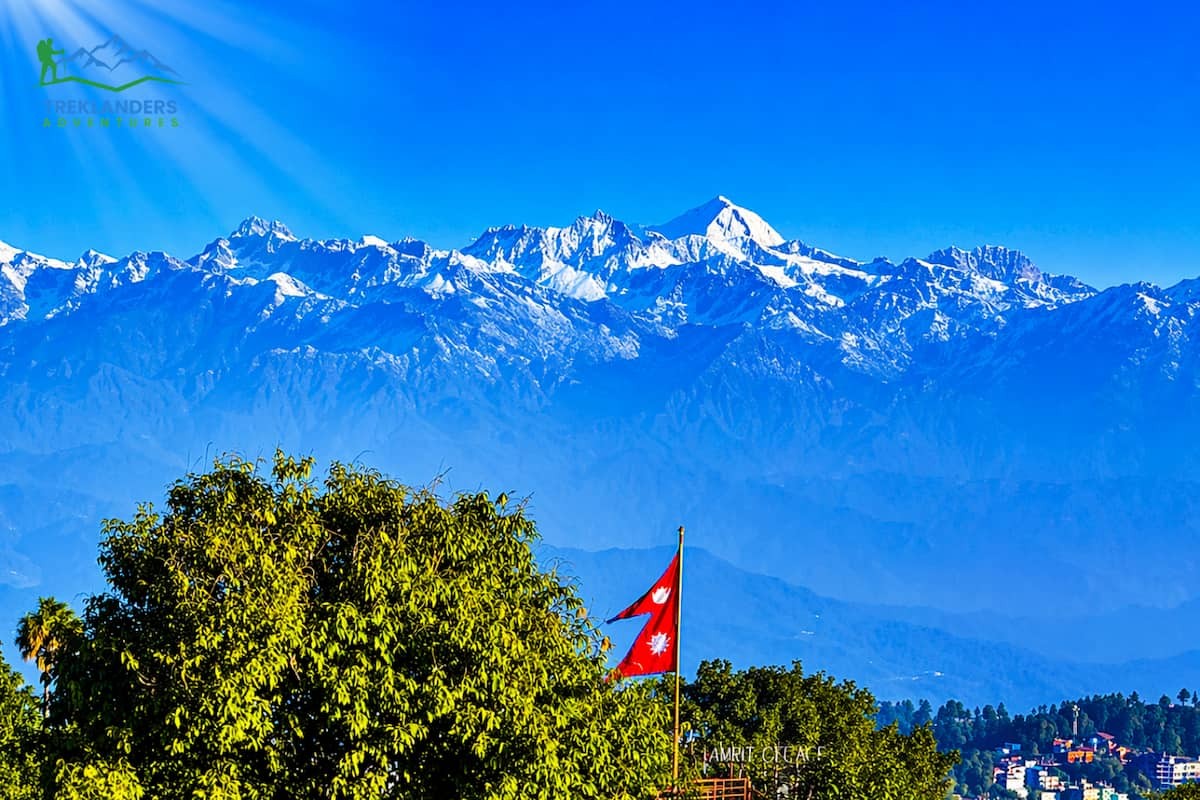
The sunrise over the Himalayas is the main attraction of the tour. The first light of the sun slowly illuminates the snow-covered peaks and bathes the mountains in golden colors. In the case of a clear day, the visitors can see a continuous line of Himalayan peaks stretching to the horizon. The view is so far-reaching that it includes the world's highest mountain, Mount Everest, along with other peaks in the Langtang Himal range and parts of the Annapurna Range.
Nagarkot is most celebrated for its sunrise viewpoint. Before the sun even rises, many tourists assemble around the viewing tower. The tranquility, the fresh mountain air, and the spectacular landscape of the valley make it a remarkable experience. Photographers, too, are among the visitors to Nagarkot as the early morning sunlight brings about perfect conditions for taking landscape photos.
This quick tour is great for almost anyone. It does not require any prior experience in trekking or a high physical fitness level. Even families, students, and time-limited travelers can enjoy the trip easily. In fact, many tours also cover a breakfast at a hilltop hotel after sunrise, where visitors can soak in the mountain scenery while having the meal.
The Nagarkot Sunrise Tour works well for people who only have a short time to experience the glory of the Himalayas. A scenic drive, serene hill landscapes, and breathtaking mountain views make this journey one of the best early morning scenes near Kathmandu. Besides, it is a very accessible way of getting close to Nepal's natural beauty for people staying in Kathmandu Valley for many days without going out.
Located about 32 km east of Kathmandu and at an altitude of around 2175 meters, Nagarkot is a hill station that offers panoramic views of the hill country and far-off Himalayan peaks. Thanks to its elevated position, Nagarkot is definitely considered one of the best places near Kathmandu to watch sunrise and get a glimpse of the mountain landscape.
Besides a few stops for breakfast and refreshments, the trip is mostly focused on the sunrise. Travellers leave Kathmandu before dawn at about 4:00 to 5:00 AM, depending on the season. After travelling for an hour to an hour and a half, those on the road will pass through the small villages, wooded hills, and farmland terraces before reaching Nagarkot.
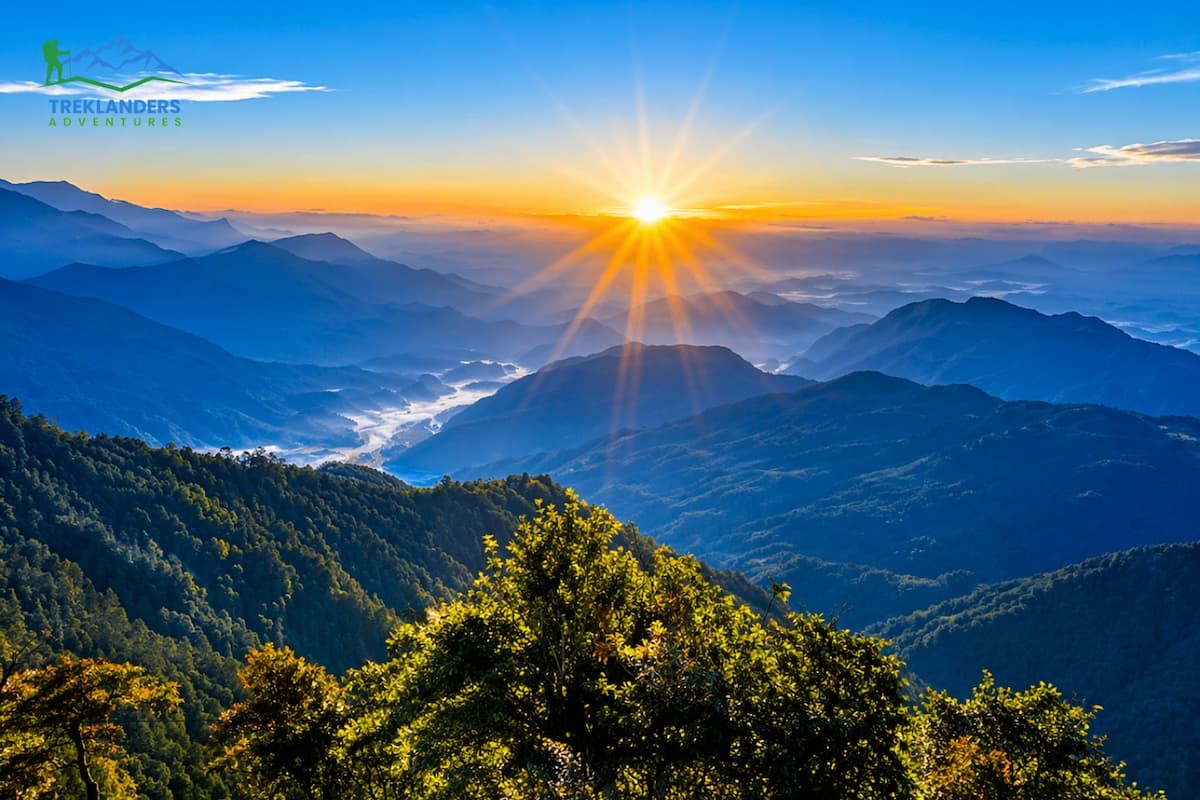
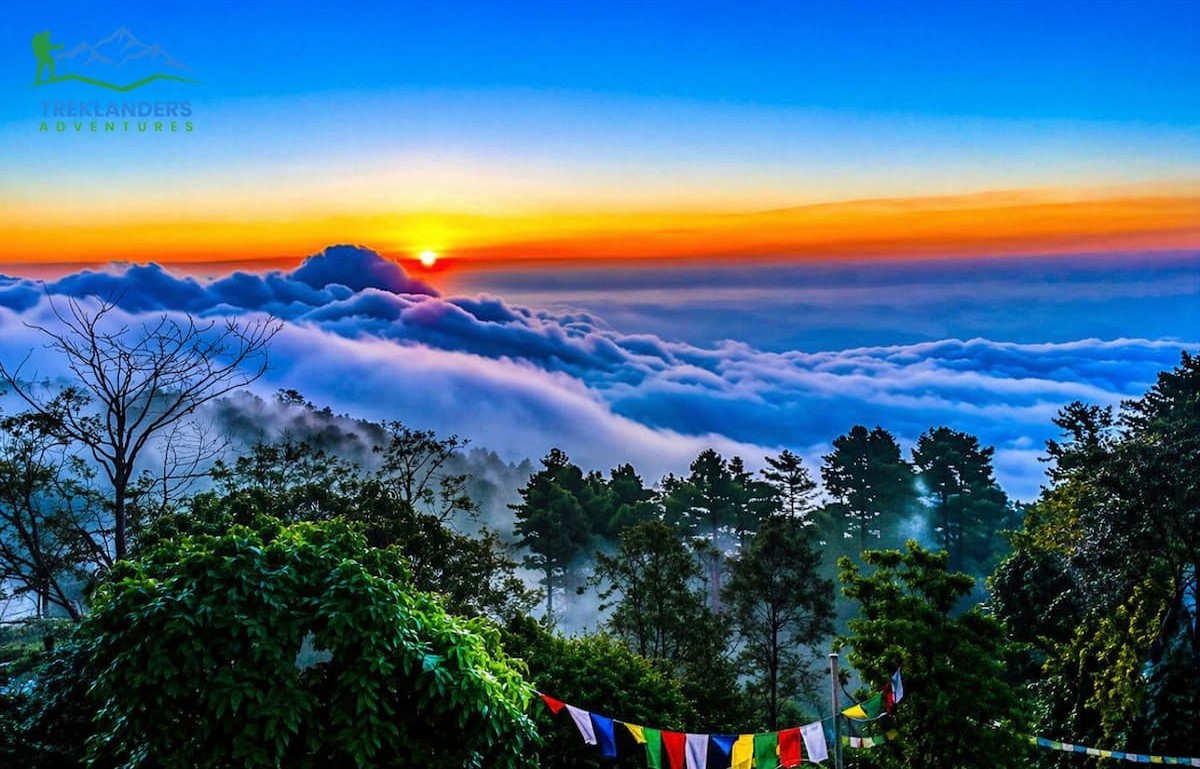
The first thing after arrival at the viewpoint is to wait for the sunrise. When the sun first appears over the eastern horizon, the sunlight gradually falls on the snow-capped mountains. The colours of the peaks shift from dark blue to light orange and gold. This natural phenomenon is so stunning and peaceful that many visitors are drawn to it.
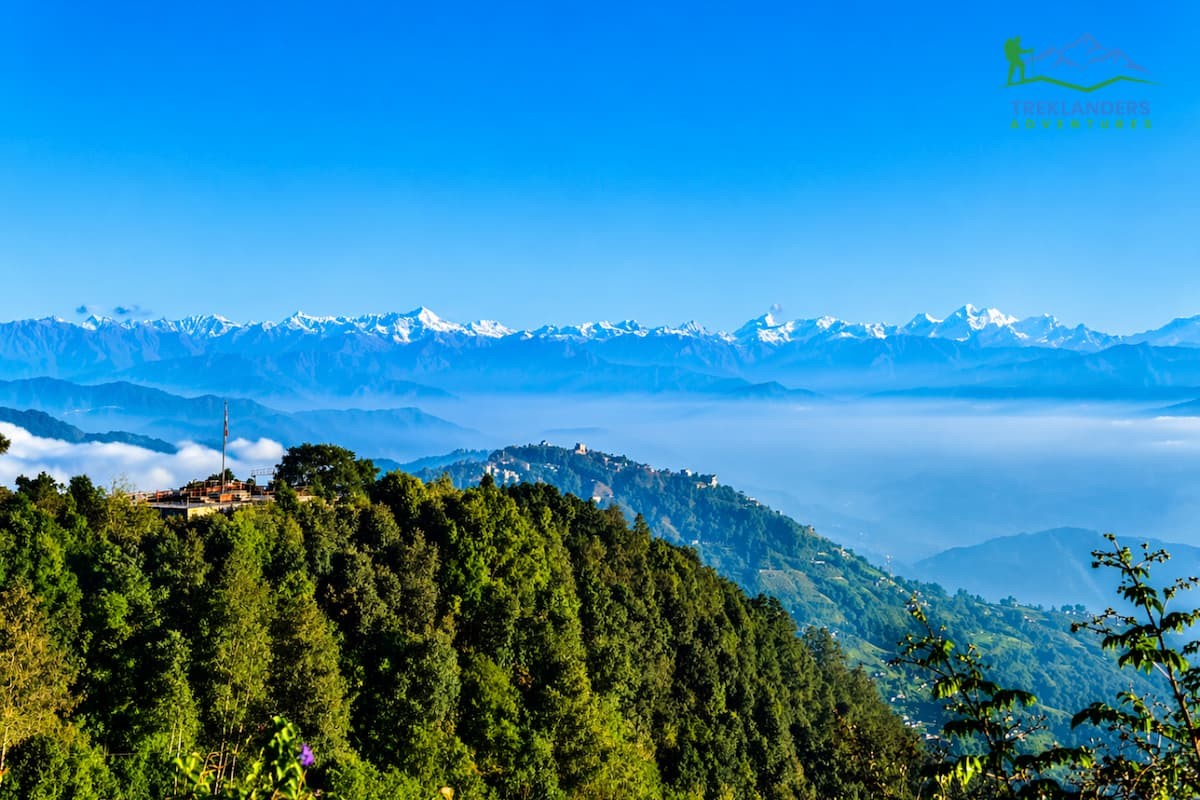
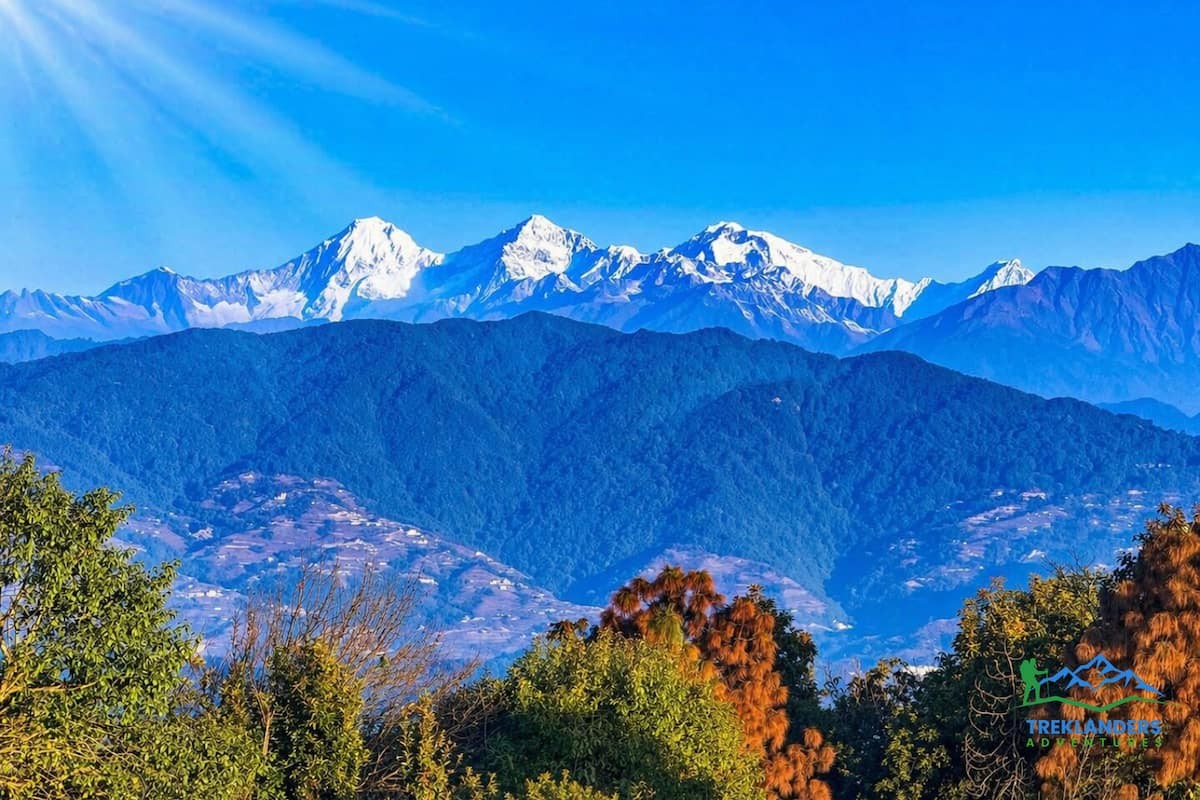
On clear days, from the viewpoint in Nagarkot, one can enjoy a long panoramic view of the Himalayas. People often spot the Langtang Himal range along with other snow-capped peaks of central and eastern Nepal. On exceptionally clear days, even the faraway peaks, including Mount Everest, may be visible on the horizon.
After sunrise, some tourists follow the program with breakfast in a hotel or lodge in Nagarkot. While enjoying their meal, guests can take deep breaths of fresh mountain air and have their eyes gladdened by the beautiful views of hills and valleys. Some tourists go for brief strolls around the hill station before going back to Kathmandu.
A sunrise in Nagarkot is a wonderful time to set out on a day tour. Suitable for all ages, the tour does not require any prior trekking experience and only takes a short drive from the city. Being easily accessible and a treat to the eyes, this tour continues to be one of the most favorable ways of getting glimpses of the Himalayas during a brief visit to Kathmandu.
How to Get There from Kathmandu?
Although travellers can conveniently get to Nagarkot from Kathmandu, the hill station is located approximately 32 kilometers to the east of the city, and the trip normally takes 1 to 1.5 hours, depending on traffic and road conditions. Most people prefer travelling early in the morning to catch the Himalayan sunrise. Various means of transport are available.
Private car or taxi
This is the most popular and comfortable one. Several hotels and local travel agencies in Kathmandu provide private vehicles for the Nagarkot sunrise excursions. Usually, the driver will collect you from your hotel very early in the morning, most probably between 4:00 AM and 5:00 AM.
Advantages:
Direct hotel pickup and drop off
Comfortable travel
Flexible schedule
Ideal for families or small groups
The route usually follows the road from Kathmandu toward Bhaktapur and then climbs through forested hills to Nagarkot.
Tour package
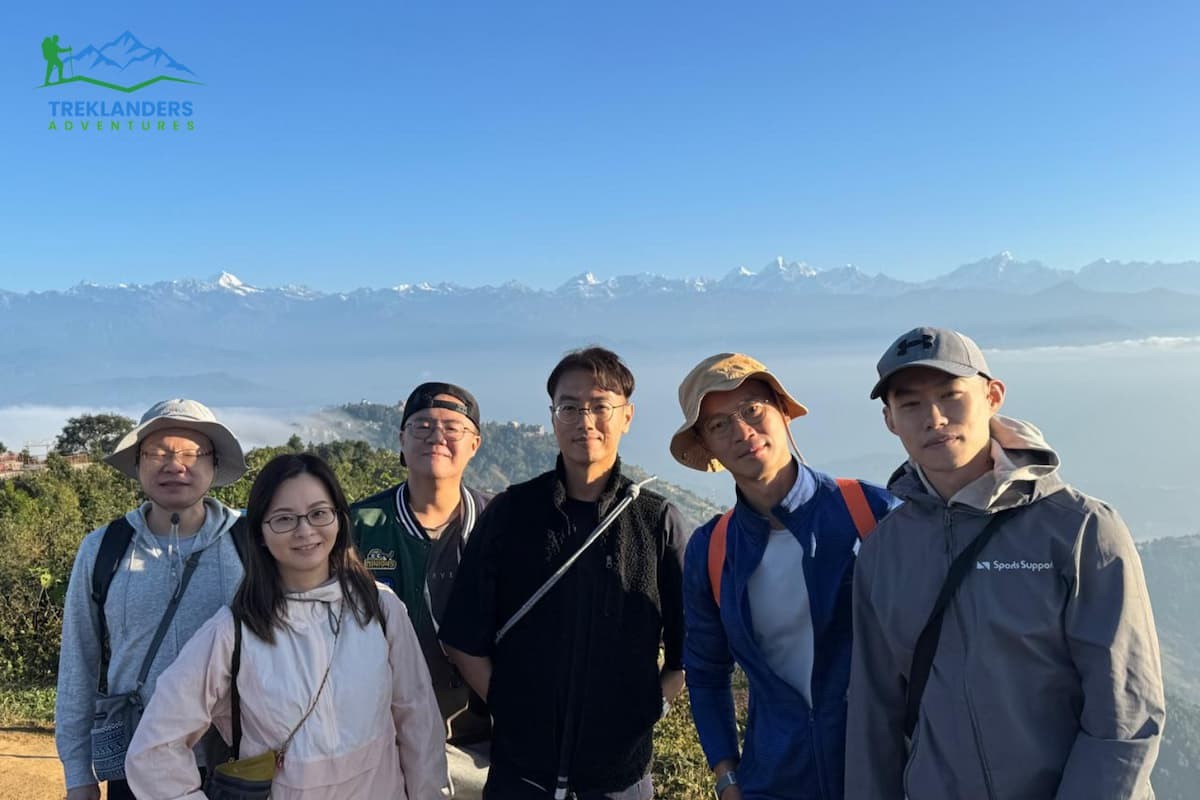
Beautiful view from Nagarkot with the Treklanders group.
Many travel companies offer organized sunrise tours. These tours include transportation, a driver or guide, and sometimes breakfast at a hotel in Nagarkot.
Typical tour features:
Early morning hotel pickup
Transport by car or tourist van
Stop at the Nagarkot viewpoint
Optional breakfast with Mountain View
This option works well for visitors who want a simple and organized trip.
Local bus:
Sometimes, budget travelers via local buses from Kathmandu to Nagarkot. The bus usually departs from the bus park near Ratna Park or Bhaktapur. The journey takes 2 to 3 hours as buses keep stopping for passengers along the route.
Important points:
Buses do not run very early in the morning
You may miss the sunrise if you travel the same morning
Many travelers go to Nagarkot the day before and stay overnight
Motorbike
Some visitors rent motorbikes in Kathmandu and ride to Nagarkot themselves. The road passes through Bhaktapur and climbs into the hills with many scenic viewpoints.
Safety tips:
Start early to avoid traffic
Drive carefully on hill roads
Check weather conditions before leaving
What to Expect at Sunrise?
Nagarkot Sunrise Tour
Watching the sunrise from Nagarkot is a peaceful and unforgettable experience. The hill resort is located at a very high altitude above the valley, which allows one to have panoramic views of the Himalayan range. A lot of tourists come early in the morning to see the first ray of light over the mountains.
Most tours to Nagarkot for sunrise set off from Kathmandu and reach the destination around 5:30 AM to 6:00 AM, depending on the season. At that time, the sky is mostly dark, or it can even be a little blue. The air is fresh and still. Visitors generally go to the main viewpoint or the observation tower to catch the sun.
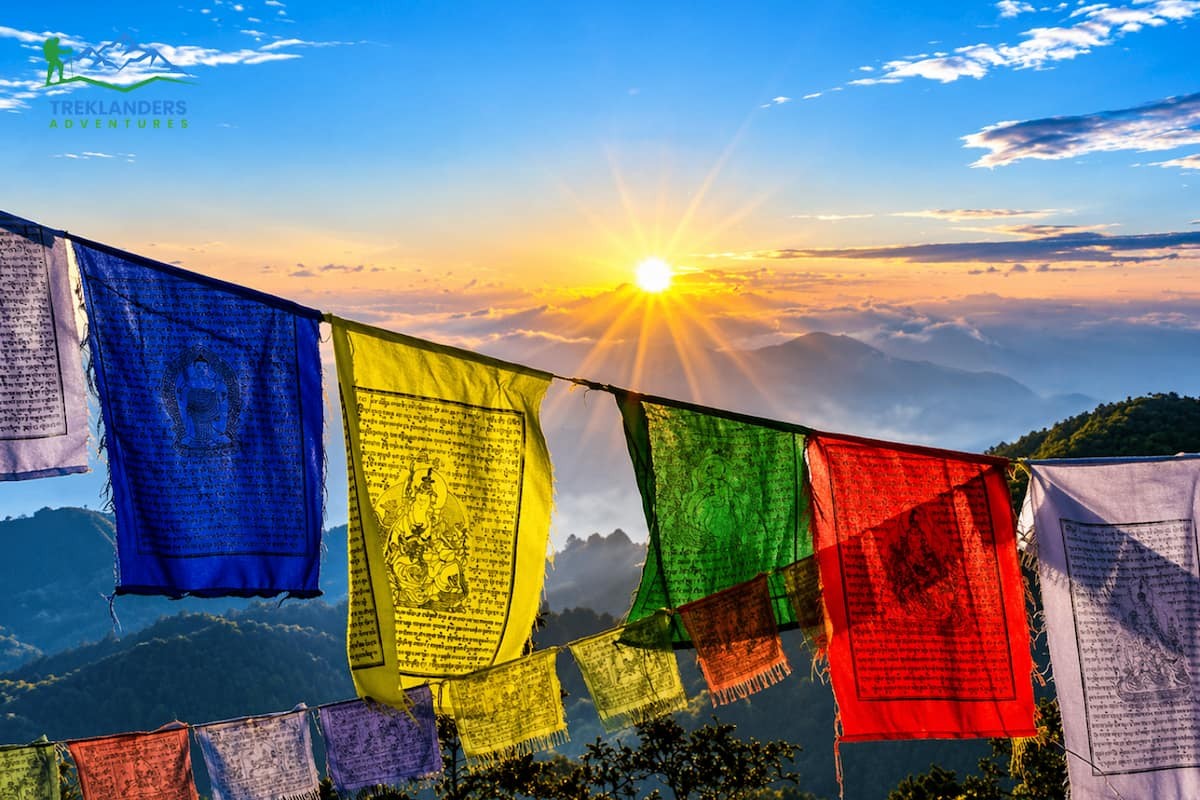
Before the sun surfaces, the blue of the morning changes gradually. Gentle colours of blue, pink, and orange reach the skyline. The first light of the day touches the mountain peaks, which remain dark for the most part. The sun will brighten them gradually.
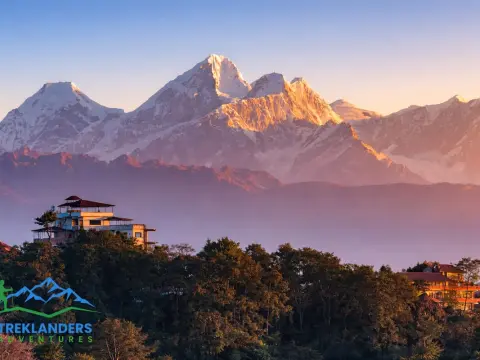
The beauty is most intense when the sun peeps out. It is the first light that strikes the mountaintops that are covered with snow. For quite a while after the sunlight bathes the peaks, they are transformed into a warm and glowing gold and orange colour. Photographers mostly love this moment because of the striking mountain views it produces.
On days with no clouds, tourists get to see the Himalayan range in its entirety, stretching far and wide across the horizon. It is common to clearly spot peaks from the Langtang Himal range. Moving further east, one might even catch a glimpse of the most famous mountain, Mount Everest, though it will be just a tiny but well-known feature on the skyline.
Underneath the mountain range, the Kathmandu Valley is enveloped by green hills and river valleys. The terraced farmlands, the little villages, and the forested ridges, all together, make a scene of tranquility. When the rays of the sun gently touch the valley, the whole setting turns livelier and more pleasant to the eye.
It can get rather chilly in the morning at the crack of dawn, particularly during the winter season. People who come to visit generally carry a warm coat, mittens, or a cap. Besides, the fresh air and the silence are perfect complements that uplift the mood of the sunrise.
When the sun is up in the sky, the mountains gradually change back to their original white colour. Lots of tourists go on enjoying the scenery for a longer time, clicking photos, or strolling in the hill resort. Also, some trips feature having breakfast at a mountain-view hotel before heading back to Kathmandu.
Photography Tips
Stunning sunrise view seen from Nagarkot.
One of the best things about photographing the sunrise from Nagarkot is that there are wonderful moments to take pictures of the Himalayas. The wide view, the changing light, and the mountain setting work together to form very good conditions for taking pictures. Being well-prepared and knowing the right time to do it usually leads to better results. Get there early. Make sure that you arrive at the viewpoint 20 to 30 minutes prior to sunrise. With that, you can adjust your camera and find a nice spot. Besides, getting there early will give you the chance to take pictures of the sky changing colors before the sun comes up.
Pick a solid place where you can work. Several photographers take advantage of the tower for the view or the open viewpoints of Nagarkot. These zones also give a good line of sight to the Himalayan horizon. If you can, stay away from the crowded spots. A quiet place will aid you in planning your shots in a more relaxed fashion.
Take a tripod with you when you can. To be exact, in sunrise photography, one will often use a slower shutter speed because the light level is really low before the sun comes up. A tripod will prevent the camera from shaking, and the pictures will be clearer. Change your camera settings for small light.
To reduce the graininess, start with the lowest ISO setting, such as 100 or 200. Also, for landscape pictures, it is better to use a small aperture like f/8 or f/11. Thus, both the mountains and the foreground will be sharp. Change the speed of the shutter based on how bright the scene is.
Capture the changing light. The best colours appear just before the sun rises. The sky can be colored pink, orange and blue. Keep taking photos after the sun is up and hitting the mountain peaks. The light on the snow is sharp and colourful. Add foreground elements. Great landscape photos usually have more than just faraway mountains. Use trees, roofs, or hill ridges from the Nagarkot area to show depth in the photo. That makes the composition more attractive.
Keep an eye on the weather and visibility. Clear mornings are the best for very distant peaks like Mount Everest and the nearby ranges of Langtang Himal. Even if it is a bit cloudy, the clouds that move can make the light patterns on the mountains quite strong and beautiful. Work with various focal lengths. A wide-angle lens is great for taking in the entire Mountain View. A zoom lens is useful for focusing on a single peak or a specific feature of the landscape.
Don't pack up your camera immediately after sunrise. Sometimes the best light is a few minutes after the sun has gone up. The light falls on the hills and valleys, which equals good lighting for landscape photography. With timing and simple tricks, one can take beautiful pictures of Himalayan sunrises from Nagarkot.
Practical Information:
Preparing for a sunrise trip to Nagarkot is not complicated. It is a hill station located approximately 32 kilometers away from Kathmandu. The majority of sunrise tours leave at a very early hour so that they can be at the viewpoint before the first ray of the sun.
Best time to visit
Beautiful Himalayan ranges seen during the Nagarkot Sunrise Tour.
The months with the best chance to see a clear mountain sunrise are from October to April.
There is generally a lot less cloud cover during this time, and the mountains tend to be visible much better.
On the other hand, mornings in autumn and winter are pretty much when the Himalayas appear the clearest. It is advisable to avoid the monsoon season, June to September, because there is quite a lot of cloud cover and rain.
In fact, these seasons essentially prevent one from seeing the mountains at all.
Departure time
Most tours leave Kathmandu between 4:00 AM and 5:00 AM. The exact time depends on the season and the sunrise schedule. The drive takes about one to one and a half hours. Leaving early ensures you arrive at the viewpoint before the first light.
Transportation options
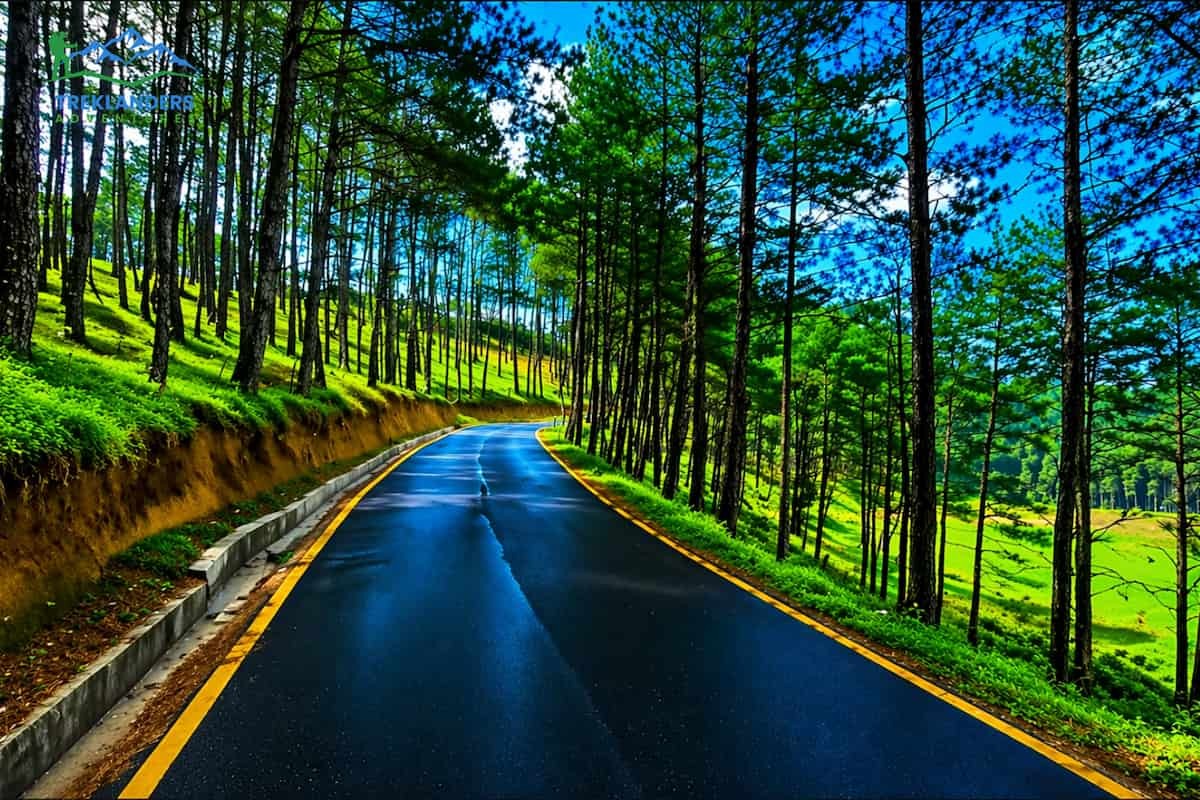
Smooth road access during the Nagarkot Sunrise Tour.
The usual way to go around is by private car/taxi/tour vehicle arranged by the travel agent. A private vehicle is definitely the most efficient means. In addition, some tourists make the trip to Nagarkot via Bhaktapur since it is located on the way from Kathmandu to Nagarkot.
Clothing and weather
Due to the higher altitude of Nagarkot, it is usually colder there in the early morning than in Kathmandu. Temperatures may go down quite a bit even before the sun comes up, and this is especially the case in winter. Apart from warm jackets and hats, there is also a need for comfortable walking shoes.
Food and facilities
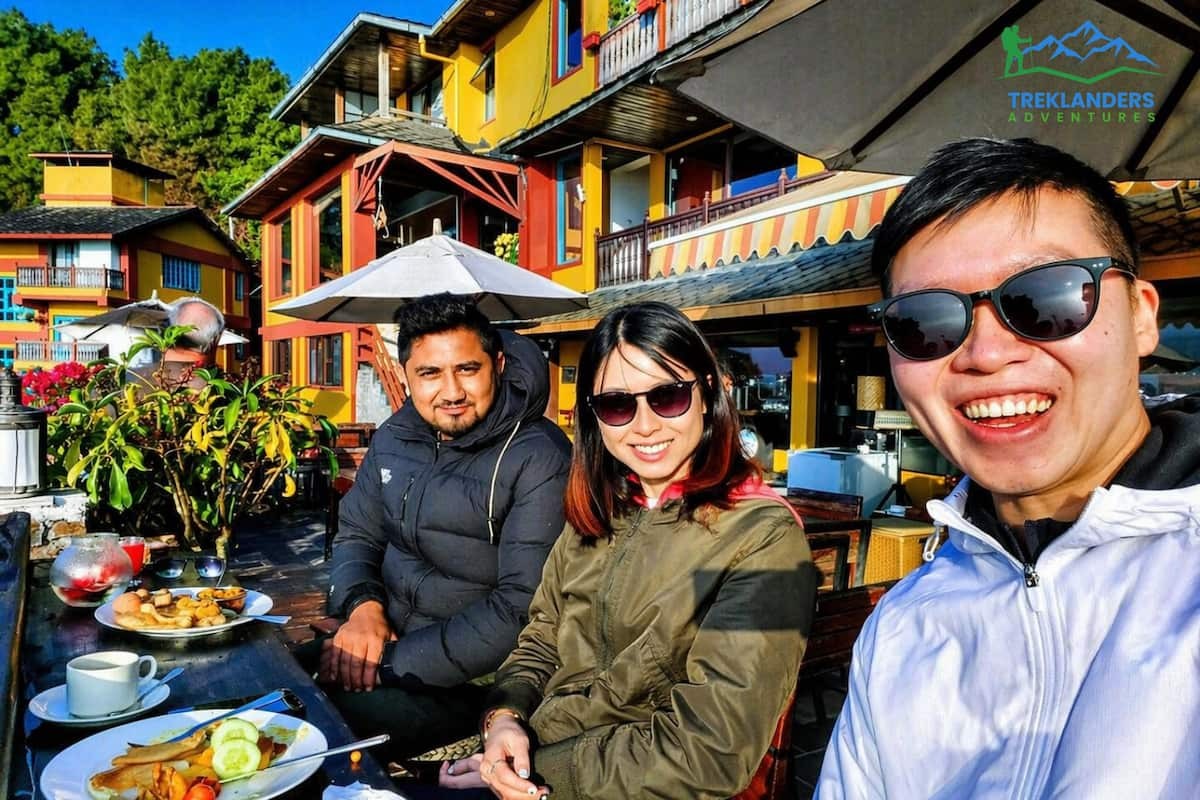
Breakfast in Nagarkot during the Nagarkot Sunrise Tour.
A number of hotels and small eateries are running businesses in Nagarkot. Breakfasts at hilltop-featured hotels are commonly included in the schedules of sunrise tours after the tourists watch the dawn. Basic amenities like restrooms, tea shops, and small cafes are accessible around the principal viewing points.
Altitude and comfort
At 2,175 meters above sea level, Nagarkot is probably at the right height for the majority of visitors, who should also be very unlikely to suffer from altitude sickness. People are able to walk around the area and breathe fresh mountain air without any difficulty. With a little planning, a Nagarkot Sunrise Trip is an extremely easy and enjoyable experience. The short journey from Kathmandu, along with stunning Himalayan panoramas, places Nagarkot among the most accessible mountain viewpoints in the vicinity of the capital.
Best Viewpoints in Nagarkot (Beyond the Tower)
Nagarkot might be best known for its sunrise tower, yet it's the other viewpoints around the hill station that can offer you some of the finest views of the Himalayas. These are quite often less crowded and reveal the mountain from a different perspective. Getting off-the-beaten-path from the main tower can be a nice way to have a serene time appreciating the view without the crowds.
Nagarkot View Tower Area Hillsides
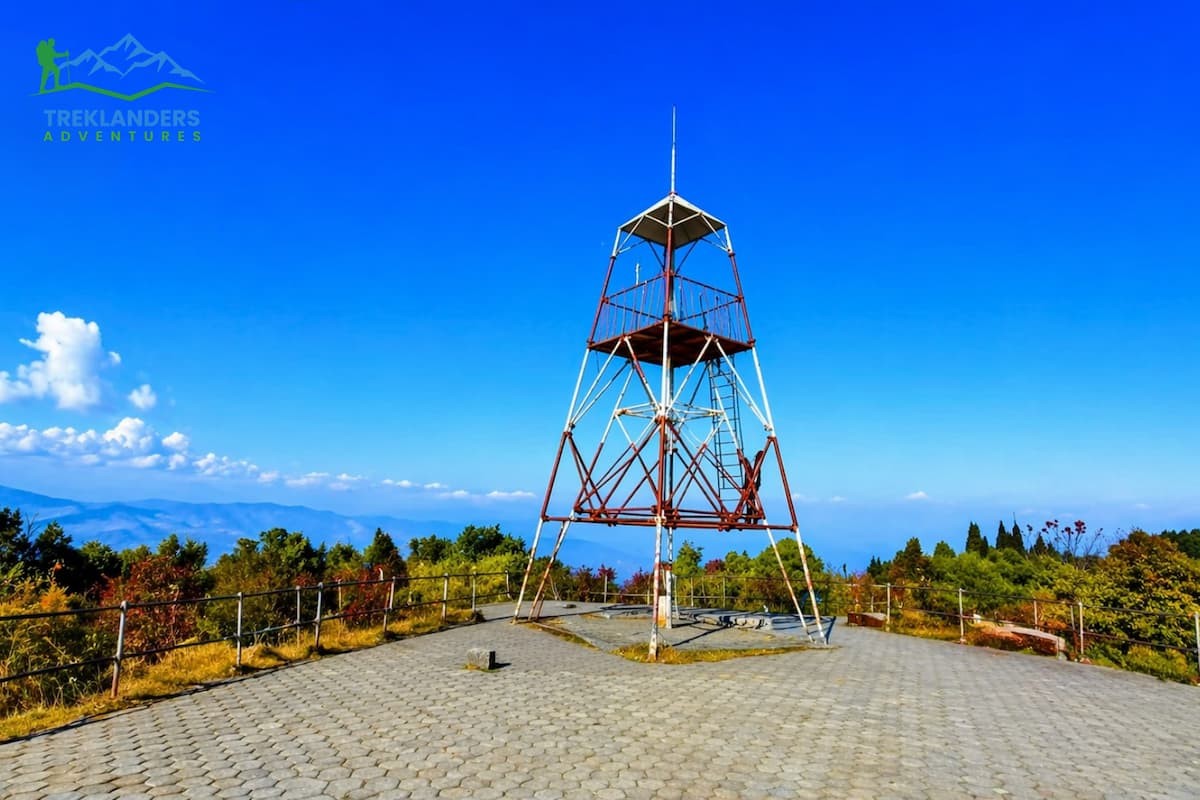
Nagarkot View Tower
The green hills and forests around the tower area offer some of the best viewpoints for the mountain ranges. A little walk around the terraces usually reveals some isolated viewing angles where one can enjoy the natural settings peacefully. From these vista points, the harmonious mingling of nature and culture can be well admired through the lush green hills, fertile terraces, and snow-capped Himalayas far away.
Hotel View Terraces
Hotels in Nagarkot are mostly built on top of ridges that allow for stupendous Mountain View terraces. For instance, Hotel Country Villa, together with Hotel Himalayan Villa have open balconies and garden areas towards the mountains. It is not surprising to find guests enjoying, among other things, a cup of tea or breakfast, and simultaneously watching the magnificent sunrise from these terraces.
Nagarkot Panoramic Hiking Trail
There are natural viewpoints dotted along the hiking trail in Nagarkot. Parts of the trail that you walk through forested areas that suddenly seem to open up to vast panoramic views, perfect for those who want to take some pictures and soak in the natural beauty with a few lungful’s of fresh air.
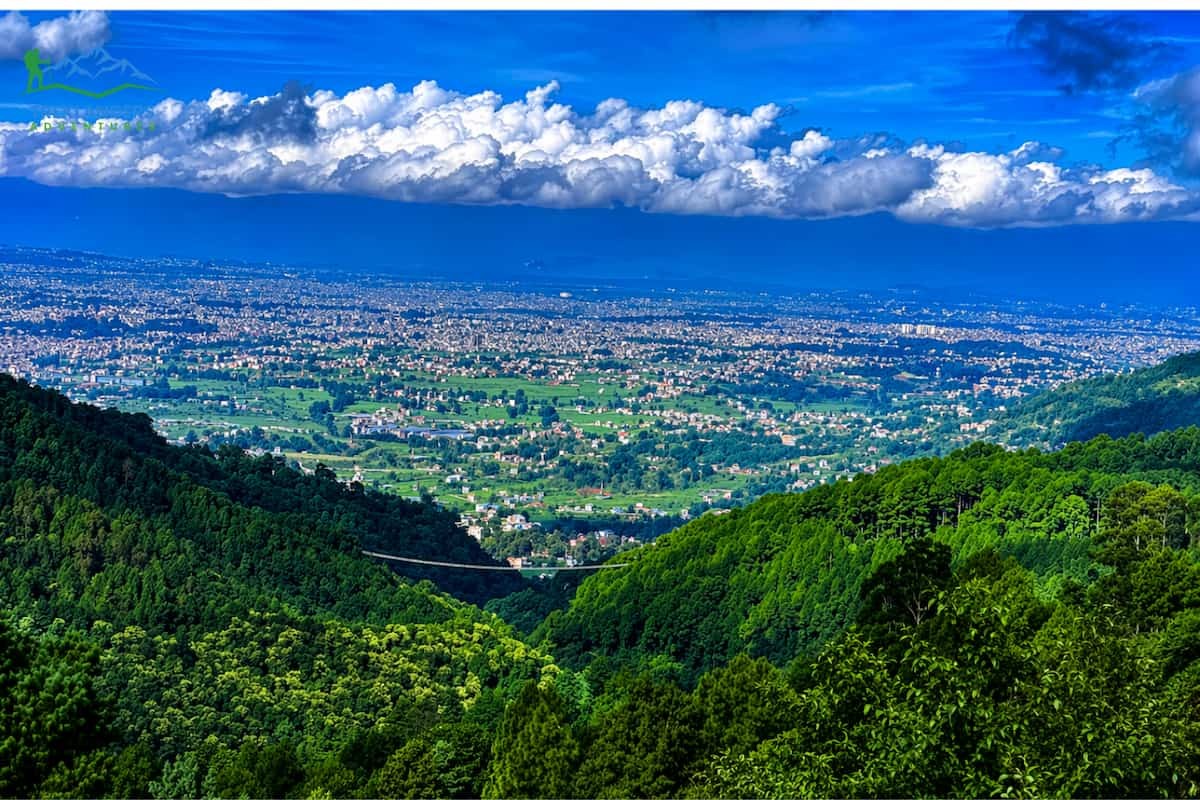
Viewpoints toward Bhaktapur Valley
Viewpoints toward Bhaktapur Valley
The western points of Nagarkot are among the few that face Bhaktapur and the Kathmandu Valley. Beautifully illuminated by the first light of the sun are not only the hills and lush green valleys but also the cozy settlements, terraced fields, and forests; thus, you get a whole different experience in the morning light apart from just nearby snow mountains as usual.
Hidden Ridge Viewpoints
A few smaller ridges situated around Nagarkot provide a spectacular view of the Himalayas with hardly any visitors. Local guides and hotel staff usually advise these less crowded areas. Such vantage points are perfect for photographers who want direct mountain views and serene surroundings without many people. These spots can offer a breathtaking view of the magnificent Himalayan skyline stretching at a great distance if the sky is clear. Travelers may even be able to identify various peaks from the Langtang Himal range and other snow-capped mountains of central Nepal. In cases of extraordinary clarity, one can catch a glimpse of the Mount Everest peak lying way down the eastern horizon.
When people explore these viewpoints, they get the chance to see Nagarkot from several perspectives. The assortment of ridges, paths, and terraces makes it possible for visitors to enjoy the Himalayan scenery far and wide without being limited to only the main tower.
The weather in Nagarkot changes throughout the year. These changes affect sunrise quality and mountain visibility. Travelers planning a sunrise trip from Kathmandu should understand which months offer the clearest Himalayan views.
January to February
Clear sky is one of the most common features of winter months. Besides, cold air acts as a natural purifier by removing suspended particles thereby enhancing visibility over a long distance. Morning views of the Himalayas are extremely well defined during this time of the year. At the peak of winter, the temperature in Nagarkot in the early morning going to be at freezing level of 0 degree Celsius. Those coming want to prepare for the cold by putting on warm jackets, gloves and hat. As for snow, it hardly ever falls but cold winds are quite often.
March to April
The time of year ushering in spring is when one can expect a bit warmer climate and more exposure to the sunlight as the days get longer. Mornings are mostly clear, which means one can make good use of this time for shooting sunrises. Hills is the surrounding areas get covered with red rhododendron flowers at this time. It is getting a little hazy later in the day, but in the morning, it still offers great visibility for sunrises.
May
It's getting hot and humid as well. Mornings can still offer good visibility. However, haze has the effect of making mountains very slightly visible from a distance. Still, sunrises are very interesting, though the image of the farthest mountains is a bit filmy. This month, the onset of the monsoon season has arrived.
June to September
These months belong to the monsoon season of Nepal. Very often there are heavy clouds, rain, as well as fog that envelop the hills of Nagarkot. Sunrise scenes are not to be relied on during this period. In fact, many mornings are overcast, and hence one rarely gets to see mountain peaks. The good thing is that one can still go around and even small trips can be made, but one must be totally resigned to the idea of not getting the clearest views of the Himalayas.
October
Among the months when one can visit Nagarkot, October is a top choice. The monsoon rains wash away the dirt and pollution in the air, and as a result, the atmosphere becomes not only cleaner, but one's ability to see very far is also enhanced notably. Sunrise scenes tend to be extensive and very bright. One can spot very long chains of the Himalayan Mountains stretching to the horizon.
November
Typical weather for November is that of an Indian autumn with clear skies for the most part. Autumn, by definition, means cooler mornings and with dry air, mountains are clearly visible for a great part of the day. Many people decide to go to Nagarkot at that time because almost every day the sunlight is seen, and it is also very comfortable for outdoor activities.
December
In December, the temperature hits a lower point, but the weather overall stays generally unchanged. Mornings, there is a clear sky, and one can see even the small stars in the night sky without much pollution or water vapor in the atmosphere. If you are lucky with the weather, then the sunrise view with Mount Everest in the background or the way to the Langtang Himal comes into the field of vision.
October through April is a safe bet if you want a beautiful sunrise in Nagarkot coupled with clear Himalayan views. The rest of the year, you may have to contend with the monsoons and occasional cloud cover.
Is It Worth It?
Nagarkot Sunrise Tour
Sunrise, a visit to Nagarkot is often hailed as a great option for visitors who want to enjoy Himalayan views without spending many days trekking. This small hill station is located approximately 32 kilometers away from Kathmandu and sits at a height of approximately 2,175 meters. That is why it has vast views of hills, valleys, and distant snow peaks.
People mainly go to Nagarkot to see the sunrise over the Himalayan range. In the early morning, the sky gradually brightens as the sun nears the horizon. When the first rays of light reach the mountains, the snow peaks only for a short while, turn orange and golden. This natural transition makes a very peaceful and unforgettable moment for the guests. Quite a few photographers come to Nagarkot simply to get to shoot this mountain light.
If the weather is good, from the viewpoint, one can see a lengthy Himalayan view that stretches across the central and eastern parts of Nepal. The Langtang Himal mountain range is often seen. When the weather is extremely clear, even the most distant peaks like Mount Everest can be seen very far to the east. Even if the farthest mountain peaks cannot be seen, the hills and valleys around Kathmandu Valley still form amazing natural scenes.
A further reason why the trip remains a good idea is how easy it is to get there. It only takes about an hour to one and a half hours to drive from Kathmandu. Tourists can depart the city very early in the morning; they will see the sunrise and be back in the city before noon. This makes the whole event quite possible for those who are pressed for time but still would like to have a glimpse of the Himalayan scenery.
The calm surroundings also increase the overall pleasure of the visit. In the mornings, Nagarkot starts very quietly, and the air feels a lot fresher compared to the noisy city. The viewpoint is surrounded by pine forest hills, terraced farmlands, and small villages, which generate a very calming vibe.
Weather plays a very significant role in the whole experience. The best Mountain View is on clear sky days. Sometimes the clouds and haze can make the visibility quite poor. Because of this reason, lots of people are deciding to take a trip in autumn or winter when the air quality is much better.
In case you are a tourist, reaching the high Himalayas is not an option for you. So, the sunrise in Nagarkot can be the easiest option for you to have a mountain view around Kathmandu. Having a quick car ride, breathtaking view, and the quietness of the areas are the main features that make it a worthwhile trip very early in the day.