Things to Consider While Trekking in Nepal: A Complete Guide | Treklanders
7 Aug 2026
Plan your Nepal trek with confidence. Discover essential tips on permits, altitude, gear, seasons, safety, accommodation, and responsible trekking.

Every trekker in Nepal runs into this decision at some point. You pick a route, you check the dates, and then you hit the real question: do you join a group, or do you book the trail for yourself?
It sounds like a small logistics choice. It isn't. It shapes your pace on the trail, who you eat dinner with, how much say you get over your own itinerary, and how the whole trip feels once you're three days into the Khumbu or the Annapurna hills with no way to turn back except to keep walking. Group treks and private treks in Nepal follow the same trails, use the same teahouses, and hire from the same pool of guides and porters. What changes is control. Who decides the wake-up time, the rest days, the detours, the pace when someone in the party is struggling with altitude.
This guide breaks down what each option actually looks like on the ground, where the flexibility differences show up in practice, and how to figure out which one matches how you actually want to trek. No sales pitch, just the practical differences that matter once you're on the trail.
Most trekkers who research this question online end up comparing price tables and stop there, treating the decision as a budget line item. It's worth more than that. The format you choose determines whether you spend your evenings at a crowded teahouse table trading stories with people from six different countries, or sitting quietly with your own group and a guide who's spent the whole day answering your questions about Sherpa culture or the history of a particular monastery. Both are good trips. They're just different trips and knowing which one you actually want ahead of time saves you from booking the wrong one and realizing it on day three, somewhere above 3,000 meters with no easy way to switch.
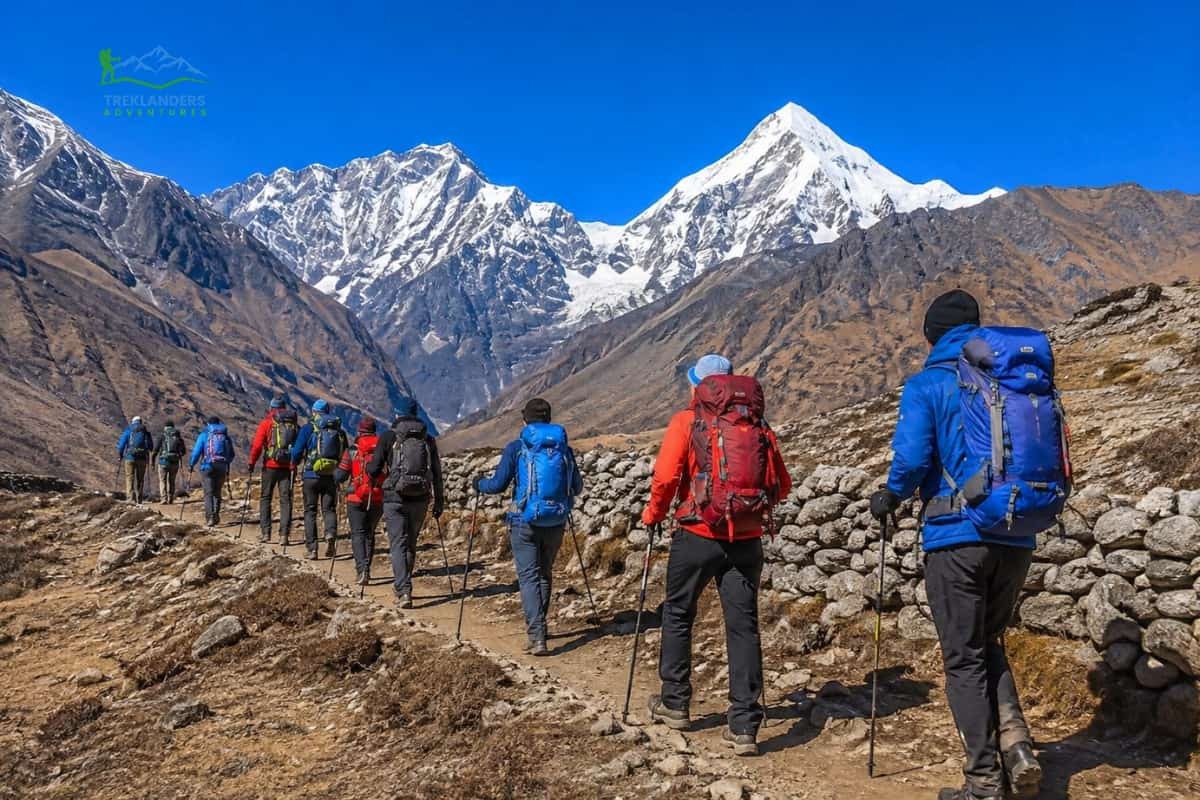
A group trek runs on a fixed departure date. Treklanders and most other operators publish a calendar of set dates for popular routes like Everest Base Camp, Annapurna Base Camp, and Langtang Valley. You book a seat on one of those departures, and you join whoever else has signed up for the same dates. Group sizes usually land somewhere between four and twelve people, though it varies by route and season.
Once you're on the trail, the itinerary is fixed. The operator has already mapped out the daily walking distances, the acclimatization days, the teahouses you'll stay in, and the end date. You don't renegotiate the schedule once the trek starts. If the group wakes up at 6 a.m., you wake up at 6 a.m. If the itinerary calls for a rest day in Namche Bazaar, everyone takes that rest day together, regardless of how anyone is feeling that particular morning.
The pace is set to suit the group as a whole, not any one person. A good guide will keep an eye on slower walkers and adjust the day's rhythm, so nobody gets left behind, but the overall structure doesn't bend much. If you're a fast, experienced trekker who wants to cover more ground each day, you'll be walking at the pace of the group's average ability. If you're newer to high-altitude trekking and want extra time to catch your breath on the climbs, you'll be pushed to keep up with people who trek regularly.
What you get in exchange is company. Trekking six to eight hours a day for one or two weeks is a long stretch of time, and having other people around changes the experience. You eat dal bhat together in the evening, swap stories about where everyone's from, and often end up with a small group of people you keep in touch with long after the trip ends. For solo travelers especially, this social layer is often the biggest draw. You don't walk the trail alone even if you booked alone.
Group treks also mean one guide and a support team shared across the whole party, rather than one dedicated to you. That's usually fine. Nepali trekking guides are experienced at managing groups of mixed fitness levels, and the guide-to-trekker ratio on most reputable operations stays reasonable enough that nobody gets ignored. But it does mean less one-on-one attention, less flexibility to stop and ask detailed questions about the local culture or route options, and a shared decision-making process if something needs to change mid-trek.
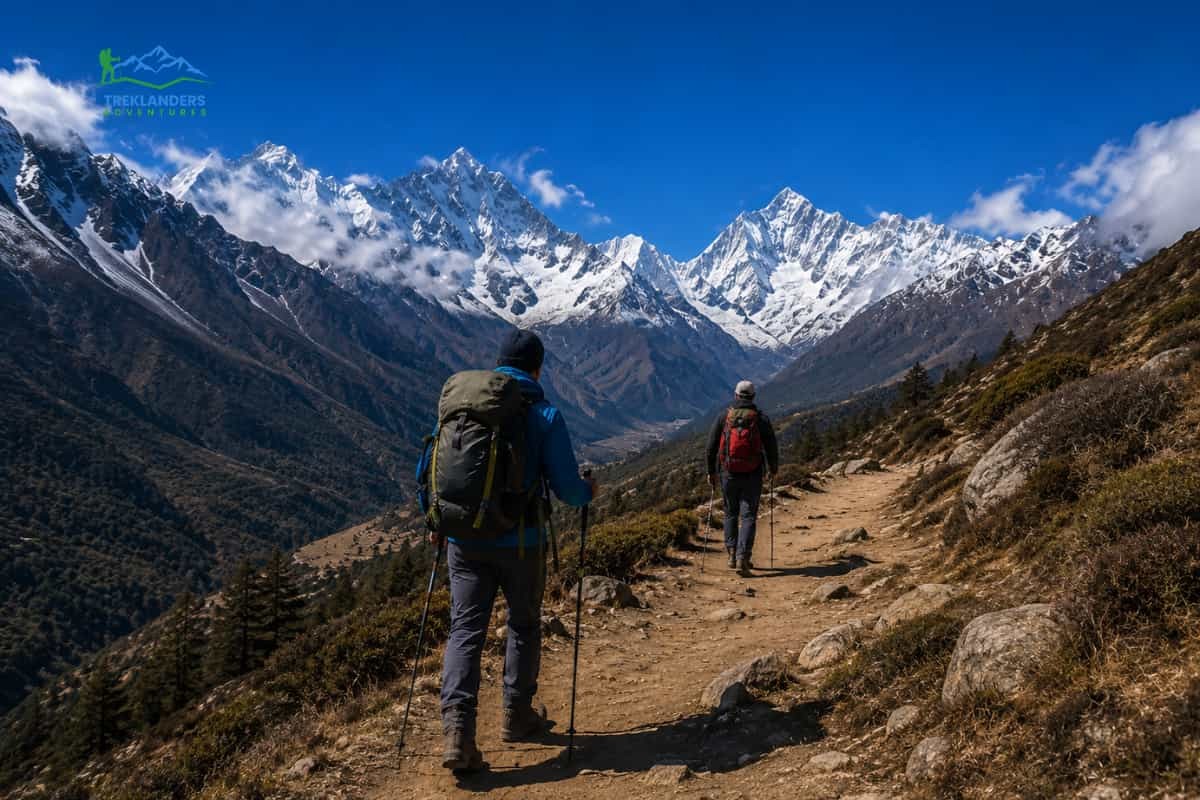
A private trek strips out the fixed schedule and shared decision-making. You choose your own start date, and the trek runs only for your party, whether that's one person, a couple, a family, or a group of friends who booked together on purpose. Nobody else joins.
The itinerary gets built around you. If you want to add an extra acclimatization day because you're worried about the altitude, you add it. If you want to shorten a route because you only have nine days off work instead of twelve, the operator adjusts the daily distances to fit. If you want to detour to a monastery that isn't on the standard route or spend an extra night in a village you liked, you can. This is the core difference, and it's the reason people choose private treks even when it costs more than a group seat: the itinerary answers to you, not to a published calendar.
Pace works the same way. On a private trek, you set the walking speed. If you want to stop every twenty minutes to take photos of the mountains, you stop. If you want to push hard and finish a stage in half the scheduled time because you're feeling strong, your guide will usually accommodate that too, within safe acclimatization limits. If altitude symptoms show up and you need to slow down or add a rest day on the spot, that decision doesn't require consulting anyone else's travel plans. It's just you, your guide, and whatever adjustment the day calls for.
This flexibility extends to logistics most people don't think about until they're mid-trip. Meal timing, when you start walking in the morning, how long you linger at a viewpoint, whether you take a side trip to a high lake or a lesser-known pass, whether you swap teahouses because the first one is full or you didn't like the look of it. On a group trek, these things are decided for the whole party. On a private trek, they're decided by you, in real time, on the ground.
The tradeoff is a social piece. You won't have a table of six other trekkers to share stories over dinner. Some people don't miss this at all, particularly couples, families, and those traveling with friends who already have their own built-in company. Others, especially solo trekkers who enjoy meeting people, find a private trek quieter than they expected. It's worth being honest with yourself about which type of experience you actually want before you book.
The word "flexibility" gets used loosely in trekking marketing, so it helps to break down exactly where group and private treks diverge in practice.
Start dates. Group treks run on fixed departure dates set months in advance. If none of the published dates line up with your available time off, you either wait for the next one or switch to a private booking. Private treks start whenever you're ready, which matters a lot if you're working around a narrow travel window, a specific festival you want to see, or a flight schedule that doesn't leave much wiggle room.
Trip length. A group departure for the Everest Base Camp Trek might run a fixed 12 or 14 days. If you only have 9 days available, that route as scheduled won't work for you unless the operator happens to run a shorter fixed departure. On a private trek, the operator restructures the daily stages to compress or extend the route to match the days you have, within the limits of safe acclimatization.
Rest and acclimatization days. This is one of the most practical differences, and it matters for safety, not just comfort. Group itineraries build in a standard number of acclimatization days based on the route's average altitude profile. That standard schedule works for most people most of the time. But altitude sickness doesn't care about your dinner reservation. If you're not adjusting well on day four of a group trek, you don't get an extra rest day just because you need one. The group moves on the next morning regardless, unless the situation becomes serious enough for the guide to pull you off the trail entirely. On a private trek, if you wake up with a headache and know it's early altitude symptoms, you can simply stay an extra night. Nobody else's schedule gets disrupted.
Route and detours. Fixed group itineraries follow a set path with little room for detours, because rerouting one trekker's request means rerouting everyone. Private treks handle this without friction. Want to walk to a specific viewpoint that adds two hours to the day? Want to skip a stretch of trail you've already done on a previous trip and take a different valley instead? A private itinerary can absorb that kind of change, sometimes even mid-trek, as long as it stays within what's safe and permitted.
Daily rhythm. Group treks run on a schedule that balances the needs of everyone in the party, which usually means a fairly standard wake-up time, breakfast window, and walking pace. Private treks let you decide whether you're an early starter who wants to be on the trail by 6 a.m. to catch the mountains in morning light, or someone who prefers a slower, later start with long breaks along the way.
Food and accommodation choices. On a group trek, the operator has typically pre-arranged which teahouses the group stays at each night, based on capacity and reliability for larger bookings. On a private trek, you have more room to choose a specific lodge, request a different one if you want more privacy, or adjust meal choices around dietary needs without coordinating with anyone else's preferences.
Permits and restricted areas. Certain regions in Nepal, including Upper Mustang, Manaslu, and Upper Dolpo, require restricted area permits and a minimum group size on paper, even though in practice this is often handled by the trekking agency regardless of whether you're technically traveling solo or as a pair. These regions tend to favor smaller, more controlled private-style logistics because the terrain permits paperwork, and remote infrastructure benefit from tighter planning. If you're set on one of these routes, talk to your operator early about how group size requirements get handled for your specific dates.
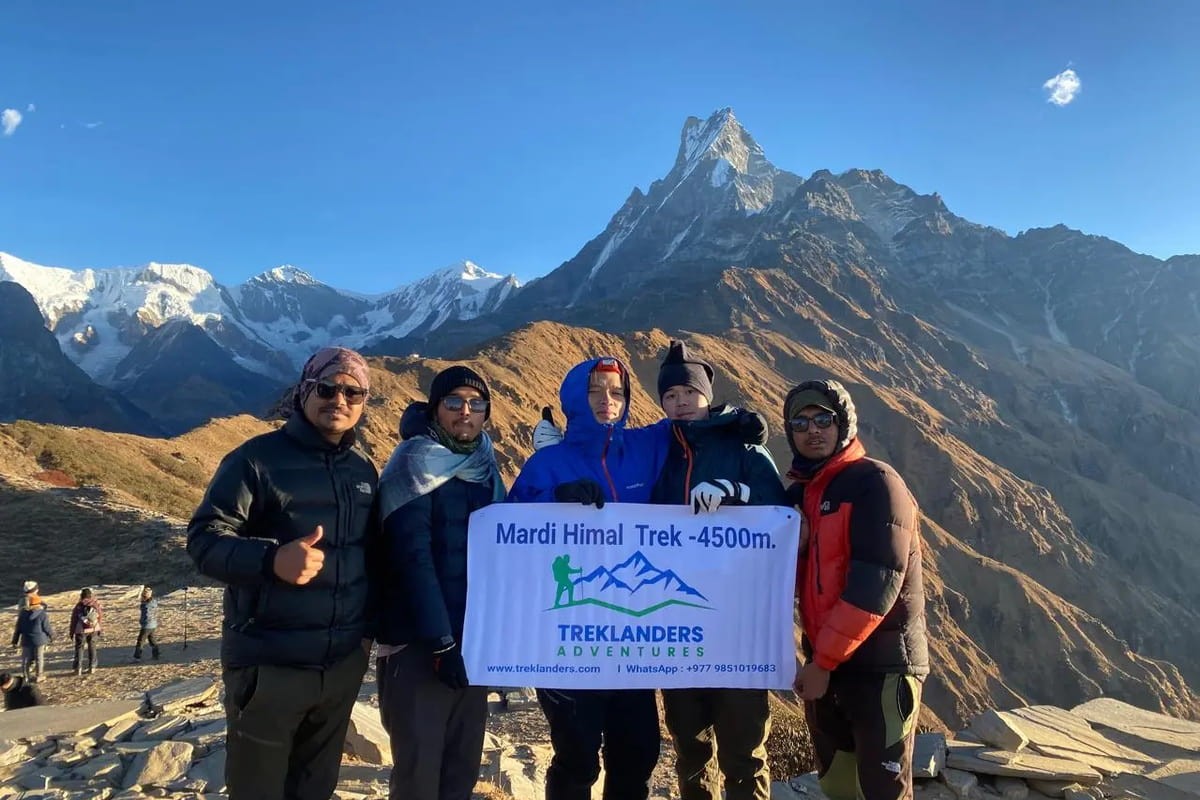
Group treks make the most sense for a specific kind of trekker, and there's no shame in recognizing yourself here.
Solo travelers who want company on the trail. If you're heading to Nepal by yourself and the idea of two weeks with no one to talk to sounds lonely rather than peaceful, a group trek solves that immediately. You'll have people to eat with, compare blisters with, and celebrate reaching base camp with. Many long friendships start on the trail to Everest or Annapurna.
First-time trekkers who want a tested structure. If this is your first high-altitude trek, there's real value in an itinerary that's been run dozens of times before, with acclimatization days already built in by people who know the route well. You don't have to think about pacing decisions. The structure is already proven.
Trekkers who want to split logistics costs across a larger party. Group departures spread the cost of guides, porters, permits, and transport across more people, which typically brings the per-person price down compared to booking the same route privately. If budget is a bigger factor than schedule flexibility, this matters.
People who enjoy structured group travel generally. Some people simply prefer knowing exactly what happens each day, having decisions made for them, and following an established plan without needing to weigh in on every choice. If that describes your travel style on other trips, it'll likely suit you here too.
Trekkers with flexible schedules. If your travel dates aren't locked to a narrow window and you can plan your trip around an existing departure date rather than the other way around, a group trek removes the need to negotiate a custom itinerary at all.
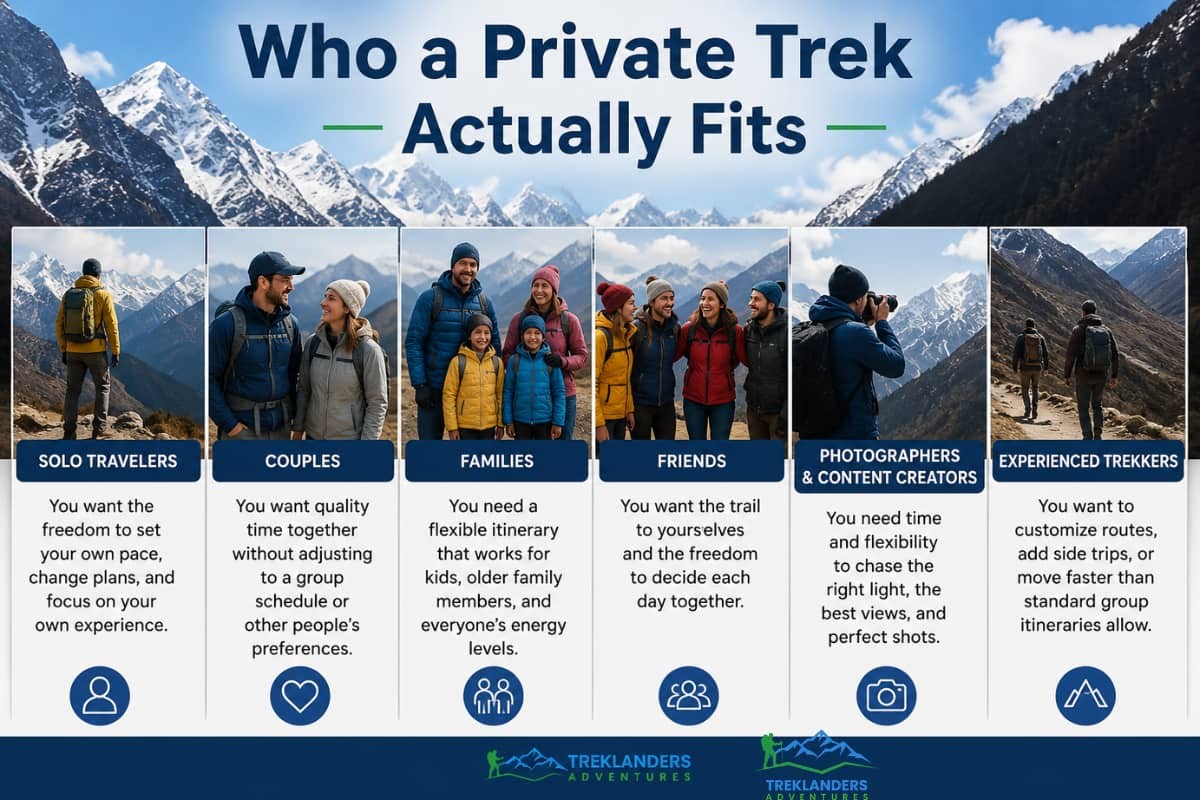
Private treks solve for a different set of priorities, and they tend to appeal to people in fairly specific situations.
Couples and families. If you're trekking with a partner, your kids, or extended family, you likely want the trip to move at a pace that suits your own group, not a mix of strangers. Kids and older family members especially benefit from a private trek's ability to slow down, take more breaks, and adjust the day if someone's tired.
Trekkers with a narrow or fixed travel window. If you've got exactly ten days off work and need the trek to start on a precise date to make your flights work, waiting for the right group departure isn't practical. A private trek starts when you need it to.
People managing health condition or fitness concerns. If you're managing joint issues, recovering from an injury, or simply know you're not as fast as an average trekking group, a private trek removes the pressure to keep pace with people you don't know. Your guide adjusts the day around your actual condition, not an average.
Photographers and slow travelers. If part of the appeal of trekking in Nepal is stopping constantly to shoot the mountains, the light, the villages, and the people, a group itinerary will frustrate you. Group guides can't hold up eight other trekkers, so you can wait for the right cloud formation over Ama Dablam. A private guide can.
Honeymooners and milestone trips. If you're trekking to mark something specific, whether that's a honeymoon, an anniversary, or a milestone birthday, most people want that experience to themselves rather than shared with strangers who happened to book the same week.
Trekkers heading into restricted or remote regions. Routes like Upper Mustang, Upper Dolpo, and parts of the Manaslu Circuit see far fewer group departures simply because demand is lower, and permit logistics are more specific. A private booking is often the more practical route into these areas regardless of your personal preference.
Corporate or friend groups who want their own trip. If you're organizing a trek with a group of coworkers or friends, you likely don't want strangers folded into your booking. A private trek for your existing group gets you all the social benefits of a group trek with none of the fixed-schedule downsides, since the itinerary still bends around your party's needs.
Beyond the planning stage, the two formats feel different once you're actually walking.
On a group trek, there's a rhythm to the day that comes from moving with other people. You start together, you take breaks together, and there's a kind of momentum that keeps everyone moving even on the tougher climbs, since nobody wants to be the one holding up the group. That peer pressure can be a genuine motivator on hard days. It can also be a source of stress if you're consistently at the back of the pack and feel like you're slowing everyone down, even when your guide insists it's fine.
Altitude management works differently too. A good group guide watches everyone for symptoms and will pull a trekker aside if something looks off, but the group's overall movement still follows the planned schedule as closely as possible. On a private trek, altitude decisions get made entirely around your body's actual response that day. If you're adjusting well, you can push a little. If you're not, the day bends to accommodate that without any group dynamic to factor in.
Weather handling is another practical difference. If a storm rolls in and the group needs to wait out bad visibility before crossing a high pass, that decision affects everyone's onward schedule, including flights booked for the end of the trip. On a private trek, a weather delay is easier to absorb because the whole itinerary can shift around it without needing to coordinate with anyone else's plans.
Conversations with your guide also change in depth. On a group trek, your guide is managing the whole party's questions, pace, and wellbeing at once, so one-on-one conversation happens in smaller pockets throughout the day. On a private trek, you get your guide's attention for the entire trip, which often means richer conversations about the region's culture, history, and daily life, especially if you're someone who likes asking a lot of questions along the trail.
Rest stops follow a similar pattern. On a group trek, breaks happen on a schedule that works for the whole party, usually a set number of tea stops built into the day with a rough time limit at each one. On a private trek, a break can last five minutes or forty, depending on what you actually want out of that moment. If you reach a ridge with a clear view of Annapurna South and want to sit there for half an hour taking photos, your guide will wait. On a group trek, that same view gets a few minutes before the party moves on, simply because ten other people are also waiting to keep walking.
Evenings look different, too. Group treks tend to have a built-in social evening at the teahouse, with the whole party gathered around the dining room table, playing cards, comparing the day's photos, and trading stories about the trail ahead. It's one of the most memorable parts of group trekking for a lot of people. Private treks trade that shared evening for a quieter one, usually just you, your travel companions if you have any, and your guide, which some trekkers find restful after a long day of walking and others find a little too quiet by day five or six.
Group size gets talked about mostly in terms of cost, but it shapes the actual experience of the trek just as much. A group of four moves and feels very different from a group of twelve, even on the exact same route with the exact same guide.
Smaller groups, somewhere in the four to six range, tend to keep more of the flexibility that people associate with private trekking. It's easier for a guide to adjust the pace for six people than for twelve, easier to find a table for everyone at a smaller teahouse, and easier to reach a group consensus if someone suggests a short detour or an extra viewpoint stop. Larger groups, eight to twelve or more, run more like a fixed operation. The itinerary holds firm; meal service takes longer since the kitchen is cooking for more people, and pace decisions default to whatever keeps the whole party moving safely and on schedule.
If you're drawn to group trekking for the social side but want to keep some of that flexibility, ask your operator about typical group sizes for the departure date you're considering. Shoulder season departures, in the weeks just before or after peak spring and autumn trekking season, tend to run smaller than the busiest weeks of October or April, which naturally makes them feel a bit more adaptable even within a fixed group format.
Private treks don't face this tradeoff, since your party size is whatever, you choose it to be. A private trek for two people has a completely different rhythm than a private trek for eight friends, but either way, the itinerary bends around your group specifically rather than around a fixed roster of strangers.
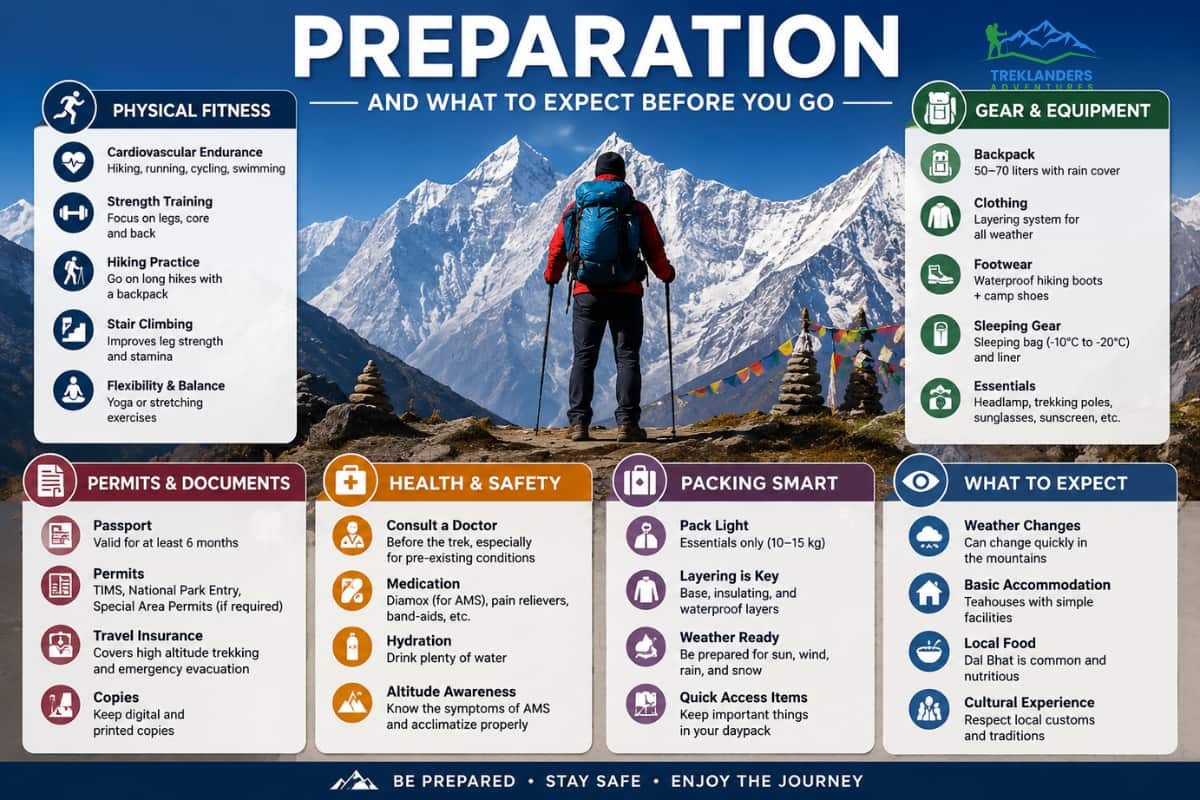
The lead-up to a group trek and a private trek looks slightly different too, and it's worth knowing what to expect before you commit.
For a group trek, once you've booked a seat on a published departure, most of the planning work is already done. You'll get a fixed itinerary, a packing list built for that specific route and season, and a departure date that won't move. Your main job is showing up prepared, physically and gear-wise, on the right day. This works well if you'd rather not spend weeks going back and forth on itinerary details and just want a solid plan handed to you.
For a private trek, there's more conversation upfront. You'll typically talk through your available dates, your trekking experience, any physical concerns, and what you want out of the route, whether that's a faster pace, extra rest days, a specific side trip, or a particular region you've had your eye on. A good operator uses that conversation to build the day-by-day itinerary around your answers rather than handing you something off the shelf. It takes a bit more back and forth before departure, but it means the plan you start walking on day one already reflects what you actually asked for.
Either way, the physical preparation matters just as much regardless of format. Cardiovascular fitness, some hiking with a loaded daypack in the weeks before you travel, and a realistic sense of your own pace all matter whether you're walking with eleven strangers or walking alone with your guide. Altitude doesn't treat private trekkers any differently than group trekkers. The flexibility of a private itinerary gives you more room to respond if something goes wrong, but it doesn't replace basic preparation.
Whether you book a group trek or a private one, the core support team looks similar. Reputable operators in Nepal, including Treklanders, use licensed, trained guides on every trek, group or private, and porters carry loads under the weight limits set by trekking associations regardless of group size. The quality of the guide, their knowledge of the route, and their ability to manage altitude and safety don't change based on whether you're trekking with two people or twelve.
What changes are ratio and attention. On a private trek, your guide's full focus is on your party alone. On a group trek, that same guide is splitting attention across everyone, though most operators keep group sizes manageable enough that this rarely becomes a real safety issue. Porter-to-trekker ratios are usually similar in both formats, since porter numbers scale with the total number of trekkers and their bags rather than the booking type. Safety protocols, permit handling, and emergency evacuation procedures also stay consistent across both formats with a reputable operator, since these depend on the operator's standards and training rather than on how many people happen to be walking together that week.
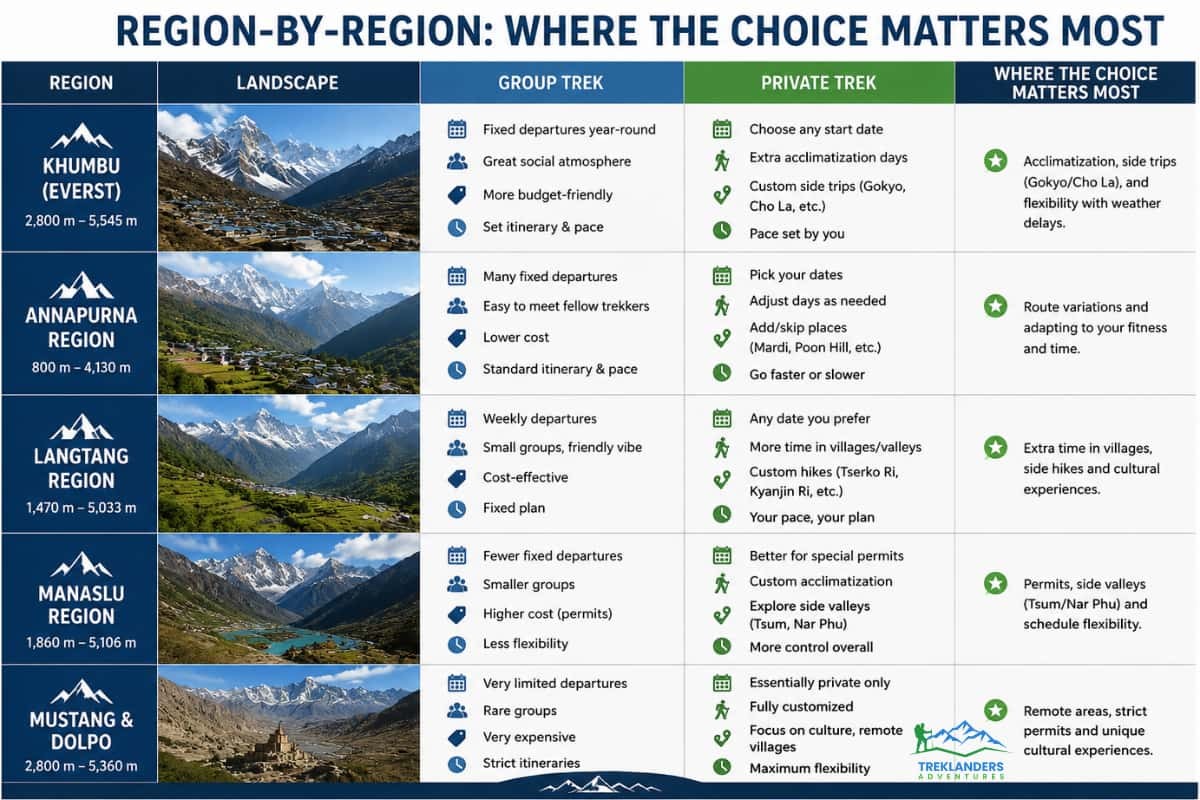
Not every trek in Nepal presents this decision the same way. Some routes are built around group departures. Others lean naturally toward private logistics.
Everest Base Camp and the Khumbu region. This is the most popular trekking area in Nepal, and it has the most group departures on the calendar. If you want the classic group trekking experience, with a full table of trekkers at Namche Bazaar teahouses and the busiest trail atmosphere in the country, EBC delivers that in spades. It's also a route where private trekking works just as well, since the trail infrastructure is well developed, and teahouses are plentiful even in peak season.
Annapurna region. Similar story. Annapurna Base Camp, the Annapurna Circuit, Ghorepani Poon Hill, and Mardi Himal all see steady group departures, particularly from Pokhara, and the region's well-established teahouse network makes both formats equally comfortable.
Langtang Valley. A shorter, closer-to-Kathmandu region that works well as a group trek for people with limited time, since the route is compact, and the teahouse infrastructure has recovered strongly since rebuilding after the 2015 earthquake. It's also a good private-trek option if you want to add on Gosainkunda or the Tamang Heritage Trail without matching a fixed group itinerary.
Manaslu Circuit. This route requires a restricted area permit, and group logistics here tend to be smaller and more tightly organized than in Everest or Annapurna. Many trekkers heading to Manaslu end up on smaller private-style bookings by default, simply because fewer large group departures run on this route compared to the more mainstream regions.
Upper Mustang and Upper Dolpo. These are the routes where private trekking becomes the practical default. Both require restricted area permits; both see much lower overall trekker volume, and both benefit from a tightly planned, flexible itinerary given the remoteness and the limited teahouse infrastructure in places. If you have your heart set on either of these regions, expect the private trek conversation to come up early with your operator.
Kanchenjunga and far-eastern Nepal. Similar to Upper Dolpo in terms of remoteness. Group departures exist but run less frequently, and the terrain rewards a flexible, private-style itinerary that can adjust to weather and trail conditions in a region with fewer support options along the way. If you're weighing a Kanchenjunga trek, this is where that conversation starts.
Across all of these regions, the underlying trail conditions, mountain views, and cultural stops stay the same no matter which format you choose. What shifts is how much room you have to respond to the terrain, the weather, and your own body as the trek unfolds. In well-trodden regions like Everest and Annapurna, that room matters less because the infrastructure absorbs most surprises anyway. In remote regions, it matters a great deal.
If you're still weighing the choice, run through these questions honestly.
Ask yourself how fixed your travel dates actually are. If you have to start on a specific day because of flights or work leave, and no group departure lines up, that alone settles the decision toward private trekking.
Ask yourself how you feel about pace pressure. If the idea of holding up a group of strangers on a steep climb makes you anxious, or if you know you like to move faster than average and don't want to be held back, private trekking removes that friction entirely.
Ask yourself whether you're trekking solo and want company or trekking with people you already like spending time with. Solo trekkers craving social contact tend to get more out of group treks. Couples, families, and friend groups already have their built-in company and often prefer a private itinerary that bends around their own pace.
Ask yourself how you handle altitude, historically. If you know you tend to need extra time to acclimatize, or you've had symptoms on previous high-altitude trips, the built-in flexibility of a private trek to add rest days on short notice is a real safety advantage, not just a comfort one.
Ask yourself which region you're set on. If you're drawn to Upper Mustang, Manaslu, or Upper Dolpo, private-style logistics are already the more natural fit for those routes regardless of your personal preference. If you're headed to Everest or Annapurna, both formats work well, so the decision comes down purely to how you want to trek.
Ask yourself how much say you actually want in the day-to-day plan. Some trekkers find it genuinely relaxing to hand over every decision to a fixed itinerary and just follow along. Others get frustrated the moment they can't adjust something that isn't working for them. Neither instinct is wrong, but it's worth being honest about which one describes you before you commit to a format that fights against your natural travel style for two straight weeks.
Ask yourself who you're trekking with and what they need. A mixed group of family members with different fitness levels, ages, or health considerations usually does better on a private itinerary that can slow down or split the day around the slowest member without anyone feeling like they're holding the whole trip back. A single fit adult joining a trek alone often gets more value from the shared momentum and company of a group.
Ask yourself, too, how much you value meeting new people specifically through the act of trekking rather than through your daily life at home. Some travelers use their yearly trip abroad as one of the only times they meet strangers outside their usual circle, and a group trek delivers that in a way a private trek simply can't replicate, no matter how good the guide is at conversation.
Treklanders runs scheduled group departures on the major routes across the Everest, Annapurna, Langtang, and Manaslu regions, alongside fully private, tailor-made itineraries for any trek in Nepal, Tibet, or Bhutan. Every trek, group or private, is supported by licensed guides and trained porters, and the team stays involved from planning through the final day on the trail.
If you know you want the social pace of a group and one of the published departure dates works for your schedule, that's a straightforward booking. If your dates don't line up, you're trekking with family, you want extra control over pace and rest days, or you're set on a remote region like Upper Mustang or Manaslu. A private itinerary gets built around exactly what you need. Either way, the trail, the mountains, and the experience of walking through the Himalayas stay the same. What changes is how much of the plan bends around you.
The right choice comes down to how you actually like to travel, not which option sounds more impressive. Some people do their best trekking surrounded by new friends and set schedules. Others need the freedom to slow down, speed up, or change plans on a whim. Neither approach is more serious or more authentic than the other. Get honest about which one fits the way you move through the world, and the rest of the planning gets a lot easier.
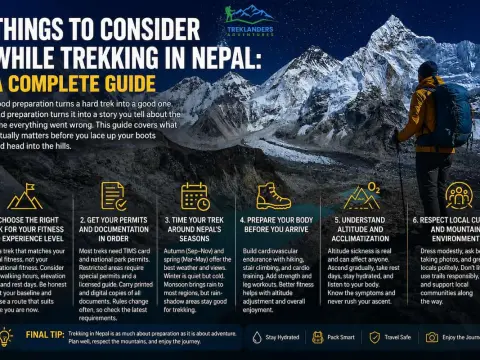
Plan your Nepal trek with confidence. Discover essential tips on permits, altitude, gear, seasons, safety, accommodation, and responsible trekking.
Learn how to reduce plastic waste while trekking in Nepal with simple zero-waste tips for water, food, gear, and responsible trail travel.
Prepare for the Manaslu Circuit Trek with essential tips on permits, altitude, Larke Pass, fitness, gear, weather, accommodation, and safety.



