
Trekking in Nepal During Monsoon: Is It Worth It? The Best Rain-Shadow Treks for June, July & August
5 Aug 2026
Discover the best rain-shadow treks in Nepal for a dry and scenic monsoon adventure.

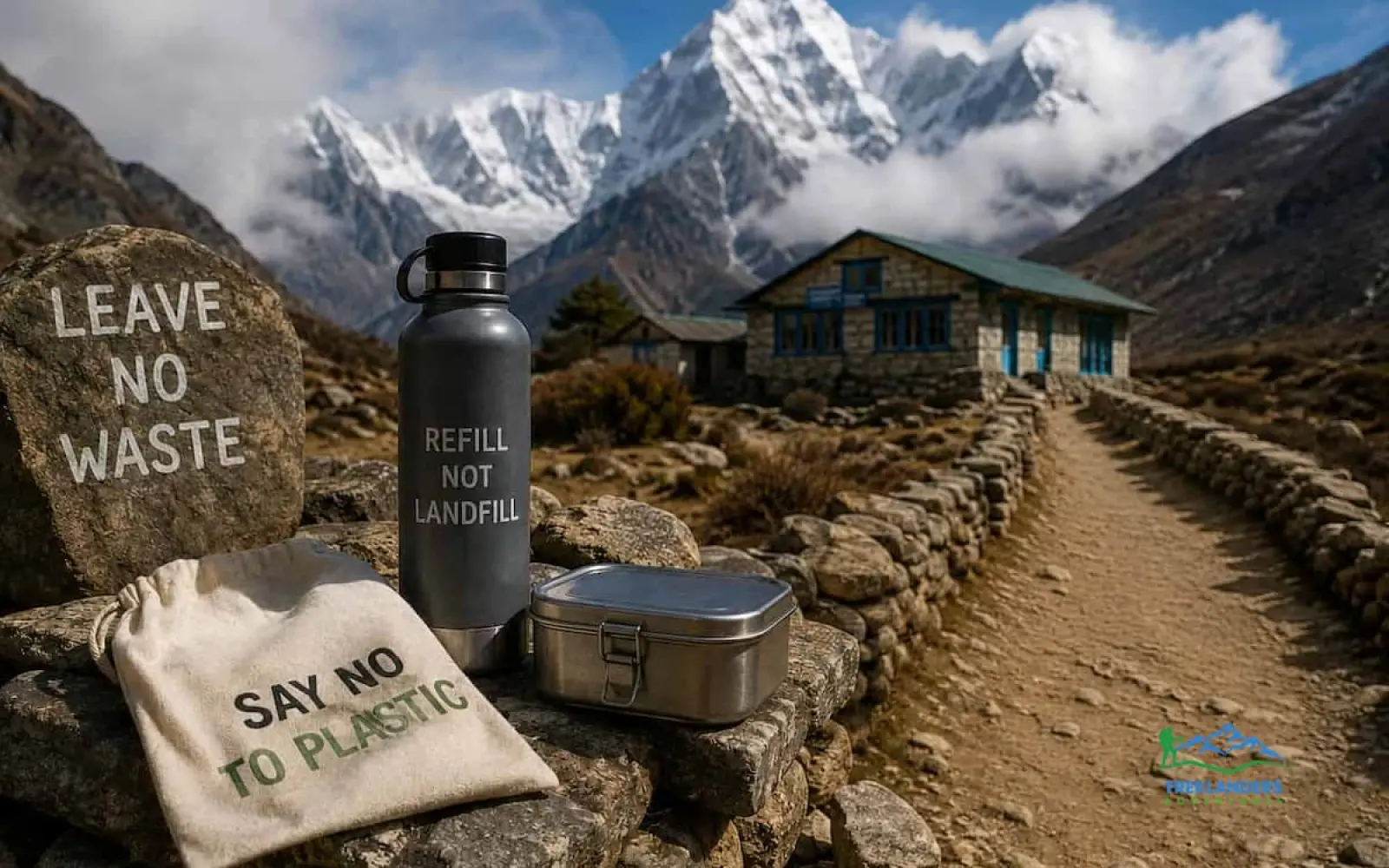
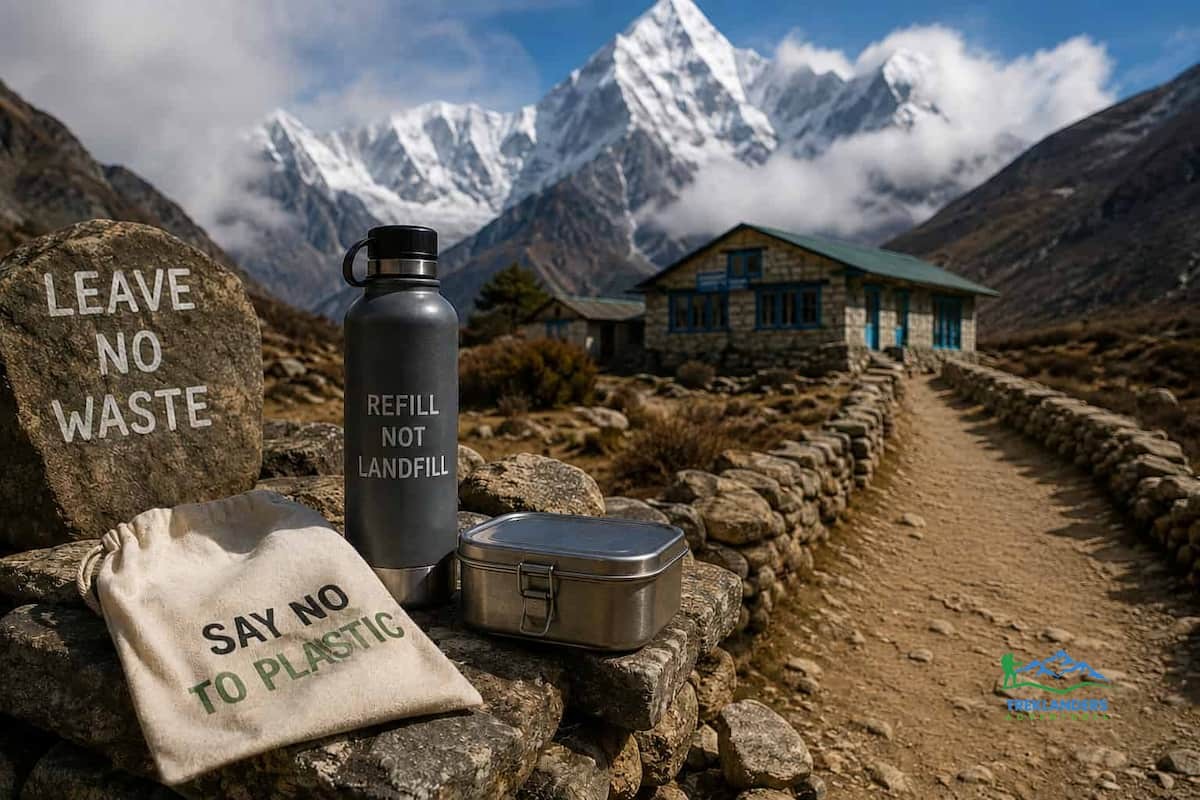
Every trekking season, thousands of hikers walk into the Himalayas carrying bottled water, wrapped snacks, and packaged toiletries. Most of that plastic never leaves the mountains the easy way. It gets burned in open pits behind lodges, buried under loose stone, or blown into rivers that feed drinking water for villages downstream. Nepal's trekking routes are some of the most beautiful trails on earth, and they are also collecting more plastic waste each year than the mountain communities can manage.
You can trek through Nepal without adding to that pile. It takes some planning before you land in Kathmandu, a few gear choices, and a willingness to say no to the easy plastic bottle at 4,000 meters. None of it makes your trek harder. Most of it makes your pack lighter and your trip cheaper in the long run, because you stop buying the same disposable items over and over on the trail.
This guide walks through where the plastic actually comes from on Nepal's trekking routes, what you can swap out before you leave home, and how to handle the waste you can't avoid. It covers the Everest, Annapurna, Langtang, and Manaslu regions specifically, since each has its own waste challenges depending on altitude, remoteness, and how many trekkers pass through each year.
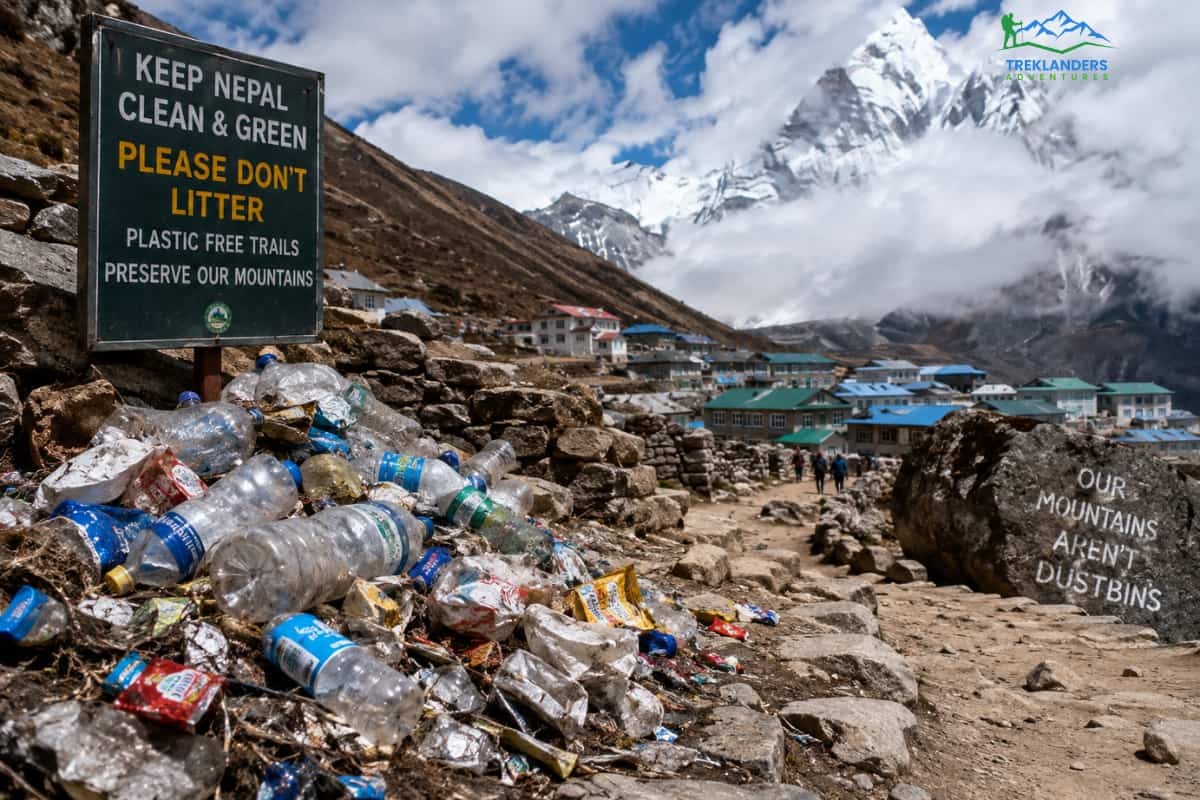
Nepal banned single-use plastic bags in Kathmandu back in 2015. The ban barely touched the mountains. Up on the trekking routes, plastic water bottles are still the biggest source of waste, followed by snack wrappers, instant noodle packets, and the plastic liners used in trekking gear.
The problem isn't that trekkers are careless. It's that the infrastructure to deal with waste in high mountain villages doesn't exist the way it does in cities. There's no municipal garbage truck coming through Namche Bazaar or Manang. Whatever gets thrown away has to be carried out by porters, burned on site, or left to sit. Burning plastic at altitude releases toxins into air that's already thin, and it does so right next to villages where children and elderly residents live year-round. Left unburned, plastic breaks down slowly in the cold and dry mountain air, sometimes taking centuries longer to degrade than it would at sea level.
The Sagarmatha (Everest) region sees over 40,000 trekkers a year passing through Lukla alone. Even if each trekker used just three plastic water bottles a day over a two-week trek, that's more than 1.6 million bottles moving through one region annually. Multiply that across Annapurna, which sees even higher trekker volumes, and you start to understand why cleanup expeditions on Everest have hauled out tons of garbage in a single season, much of it plastic.
Local nonprofits and community groups have been fighting this for years. The Sagarmatha Pollution Control Committee runs waste collection points along the Everest Base Camp route. The Annapurna Conservation Area Project enforces rules about what lodges can serve and how waste gets managed. These groups exist because trekkers created a problem that local communities didn't ask for and can't easily fix on their own. Reducing your own plastic footprint on the trail is one of the few things you can control directly, and it adds up faster than you'd expect once you multiply it across a whole trekking season.
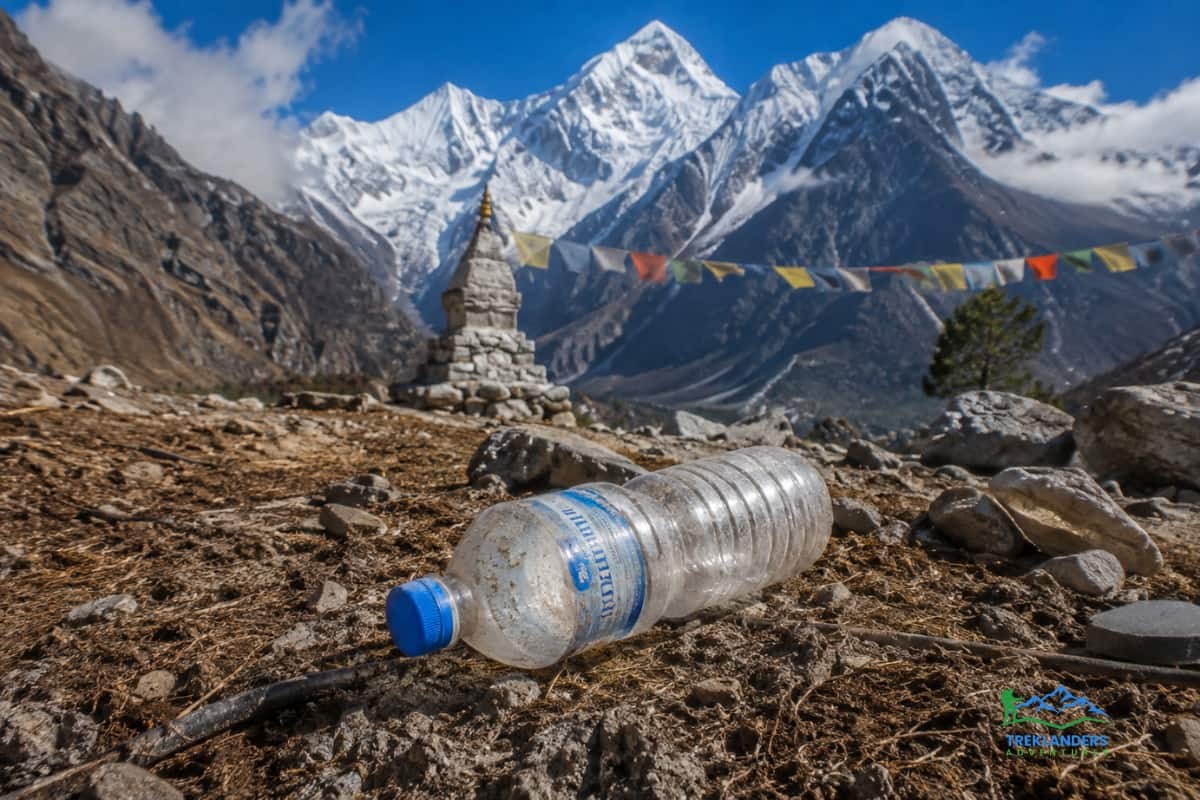
It helps to understand what happens to a plastic bottle once you're done with it on the trail, because the answer changes how you pack.
A bottle bought in Namche Bazaar or Lukla didn't start there. It was manufactured somewhere in the lowlands, trucked up to the roadhead, then carried the rest of the way by porter or mule over days of steep trail. That same bottle, once empty, has almost nowhere useful to go. There's no glass recycling plant at 3,500 meters. There's no truck coming to collect it next Tuesday. Lodge owners are left with three choices: burn it, bury it, or pay someone to carry it back down, which adds cost to an already thin margin business.
Burning is the most common option because it's the cheapest and fastest. But plastic doesn't burn clean. It releases dioxins, furans, and heavy metals into air that's already low in oxygen, and those fumes settle close to the ground in mountain valleys instead of dispersing the way they might at sea level. People who live in these villages breathe that smoke daily during trekking season.
Burying doesn't solve much either. Cold, dry mountain soil slows decomposition dramatically compared to warmer climates. A plastic bottle buried near a trail can sit there largely intact for a human lifetime, sometimes longer, slowly leaching chemicals into soil that's often close to water sources used for drinking or irrigation.
None of this is a reason to feel guilty about trekking in Nepal. It's a reason to bring a filter instead of buying a new bottle every day. The math is straightforward: one reusable bottle, filled dozens of times over a two or three week trek, replaces dozens of bottles that would otherwise need to be burned, buried, or carried out at real cost to someone else.
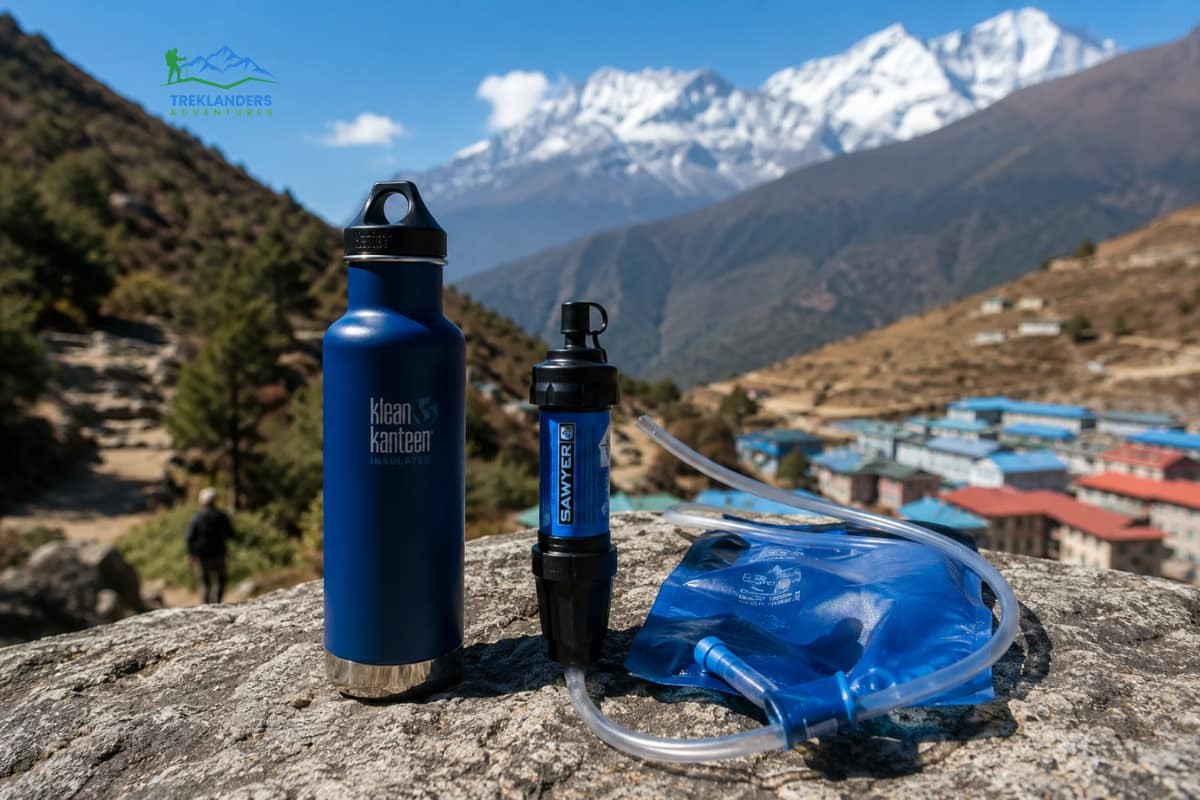
Water is where most of the plastic problem starts, and it's also where you can make the biggest difference with the least effort.
A trekker drinks between three and five liters of water a day at altitude, more if the trek involves serious elevation gain. Buying bottled water at every lodge means going through several plastic bottles daily, and prices climb the higher you go since everything has to be carried in by porter or mule. A liter of bottled water that costs very little in Kathmandu can cost several times more near Everest Base Camp, simply because of the labor required to get it there.
The fix is a water filter or purification system you carry yourself. Three options work well on Nepal's trails:
Pump or squeeze filters. Brands like Sawyer and Katadyn make lightweight filters that remove bacteria and protozoa from stream or tap water. The Sawyer Squeeze weighs almost nothing and works with any soft-sided water bottle. You fill a bag from a stream or tap, squeeze the water through the filter into your bottle, and you're done in under two minutes.
UV purifiers. A SteriPen or similar UV pen sterilizes water in about ninety seconds by killing pathogens with ultraviolet light. It doesn't filter out sediment, so you'll want to pair it with a simple cloth prefilter if the water source looks cloudy. UV pens run on batteries, which matters at altitude since cold temperatures drain battery life faster.
Purification tablets or drops. Chlorine dioxide tablets are the lightest option and the easiest backup if your filter breaks. They take longer to work, usually thirty minutes to four hours depending on water temperature and clarity, so you plan ahead rather than filling up right before you need to drink.
Most experienced trekking guides in Nepal carry a combination: a squeeze filter as the primary method and tablets as backup. Teahouses along every major route offer boiled water for a small fee, and boiling kills pathogens just as effectively as any filter. If you're staying in lodges each night, you can often refill a reusable bottle with boiled water at dinner and let it cool overnight, skipping filtration altogether on those days.
Bring a durable, reusable water bottle. A one-liter hard-sided bottle like a Nalgene handles rough treatment and doubles as a hot water bottle inside your sleeping bag on cold nights. Steel bottles work too, though they take longer to warm your hands around at high camps. Whatever you choose, the goal is the same: one bottle, filled and refilled for the entire trek, instead of a new plastic one every day.
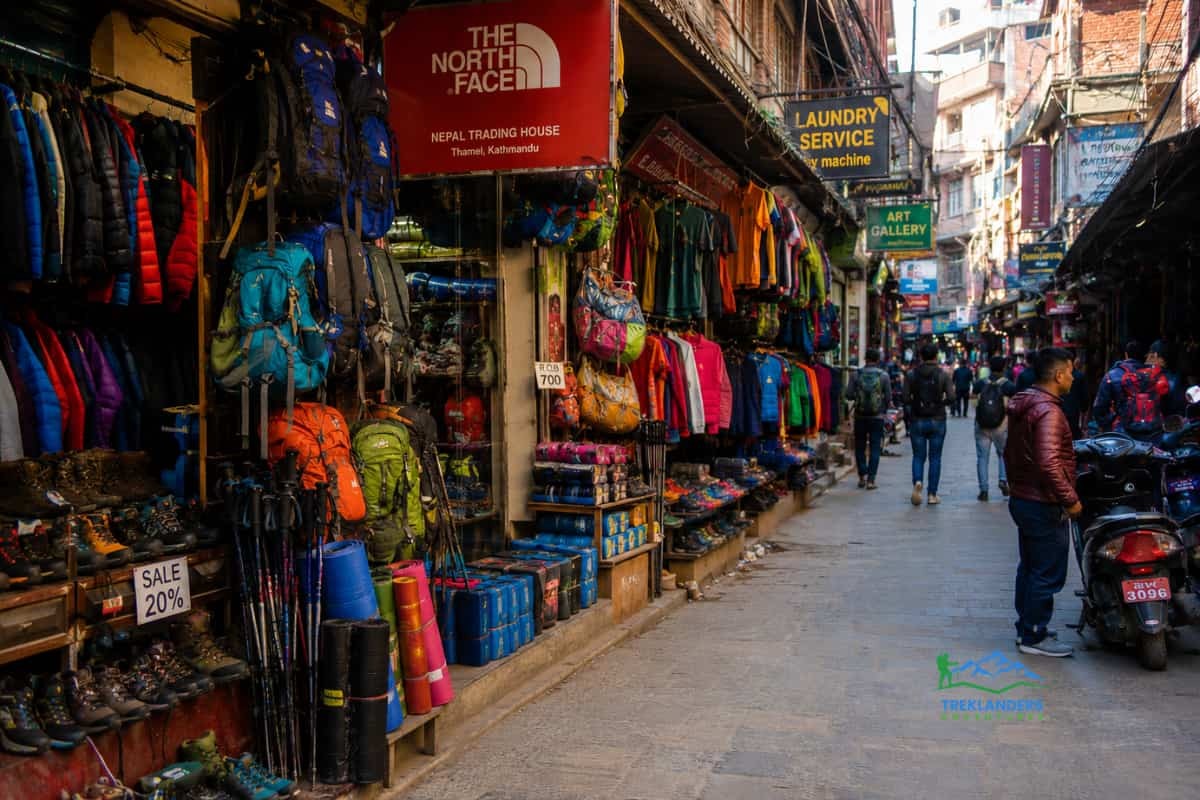
What you buy in Kathmandu before your trek starts shapes how much plastic you carry into the mountains, so it's worth spending an extra hour on this before you leave.
Thamel has dozens of trekking gear shops, and most of them sell the same imported energy bars and snack packs you could buy at home. Skip those in favor of the local markets a few streets over, where you'll find bulk bins of dried fruit, nuts, and roasted grains sold by weight. Bring your own bags. Vendors are used to trekkers doing this now, and it usually costs less than the packaged equivalent.
If you need to buy a water filter, purification tablets, or a reusable bottle, several gear shops in Thamel stock Sawyer filters and similar brands aimed specifically at trekkers, so you don't need to bring everything from home if your luggage is already tight. Prices vary by shop, so it's worth checking two or three before deciding.
Buy solid toiletries here too if you didn't bring them. A handful of shops now stock shampoo bars, solid toothpaste tablets, and bar soap specifically because trekking agencies have started recommending them to clients. Ask at your hotel or agency office if you're not sure where to look, since staff usually know which nearby shops carry these.
This is also the right time to buy any reusable containers or bags you'll use for bulk snacks on the trail, since options get much thinner once you're past Kathmandu and even thinner again once you're past whichever town has the last real market before the trailhead.
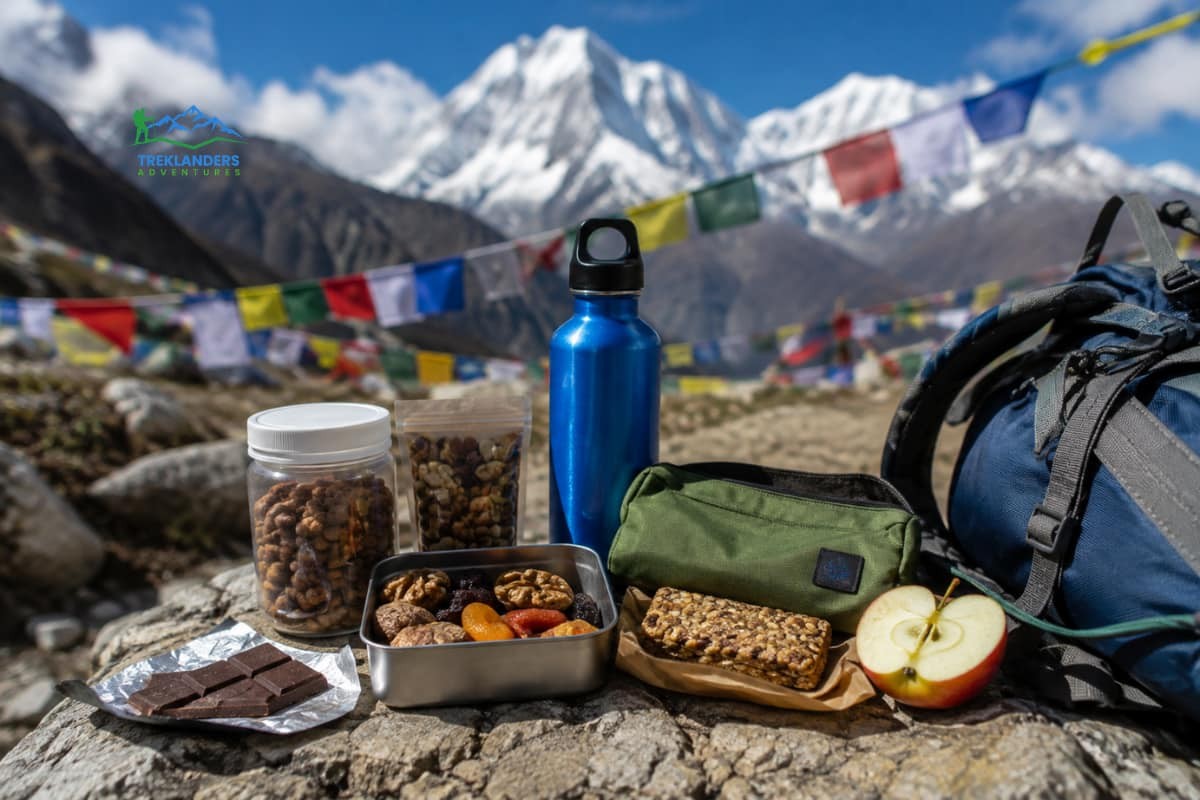
Packaged snacks are the second-biggest source of trail plastic after water bottles. Energy bars, chips, biscuits, and instant noodles all come wrapped in foil-lined plastic that can't be recycled anywhere in Nepal, let alone at altitude.
You don't need to give up snacks. You need to change how you carry them.
Buy in bulk before you leave Kathmandu. Thamel has several stores selling nuts, dried fruit, and local snacks like chiura (beaten rice) and dried yak cheese in bulk. Bring a set of reusable fabric or silicone bags and portion your snacks into daily servings before you start walking. This cuts down dozens of individual wrappers to a handful of refillable pouches.
Choose local food over imported packaged snacks. Nepali trail food like roasted soybeans, dhindo, and local biscuits sold loose in village shops usually comes with less packaging than imported energy bars. It's also cheaper and supports the local economy directly instead of a supply chain that trucked snacks in from Kathmandu or beyond.
Skip instant noodles when you can. Teahouse menus lean heavily on instant noodles because they're light to carry and quick to cook. Dal bhat, the traditional Nepali meal of lentils, rice, and vegetables, comes with zero plastic packaging and refills are usually included in the price. Ordering dal bhat instead of instant noodles at every meal you can is one of the simplest zero-waste choices you'll make on the trail, and it happens to be the meal most porters and guides eat themselves because it provides the most sustained energy for a day of walking.
Carry a reusable food container. A collapsible silicone container or a simple stainless-steel tiffin lets you buy snacks from bulk bins without taking a new plastic bag each time. Some trekking shops in Kathmandu now stock these specifically for eco-conscious travelers.
If you do end up with packaged snack wrappers, flatten them and carry them out in a dedicated trash bag rather than leaving them at a lodge, since most lodges have no way to dispose of them beyond burning or burying.
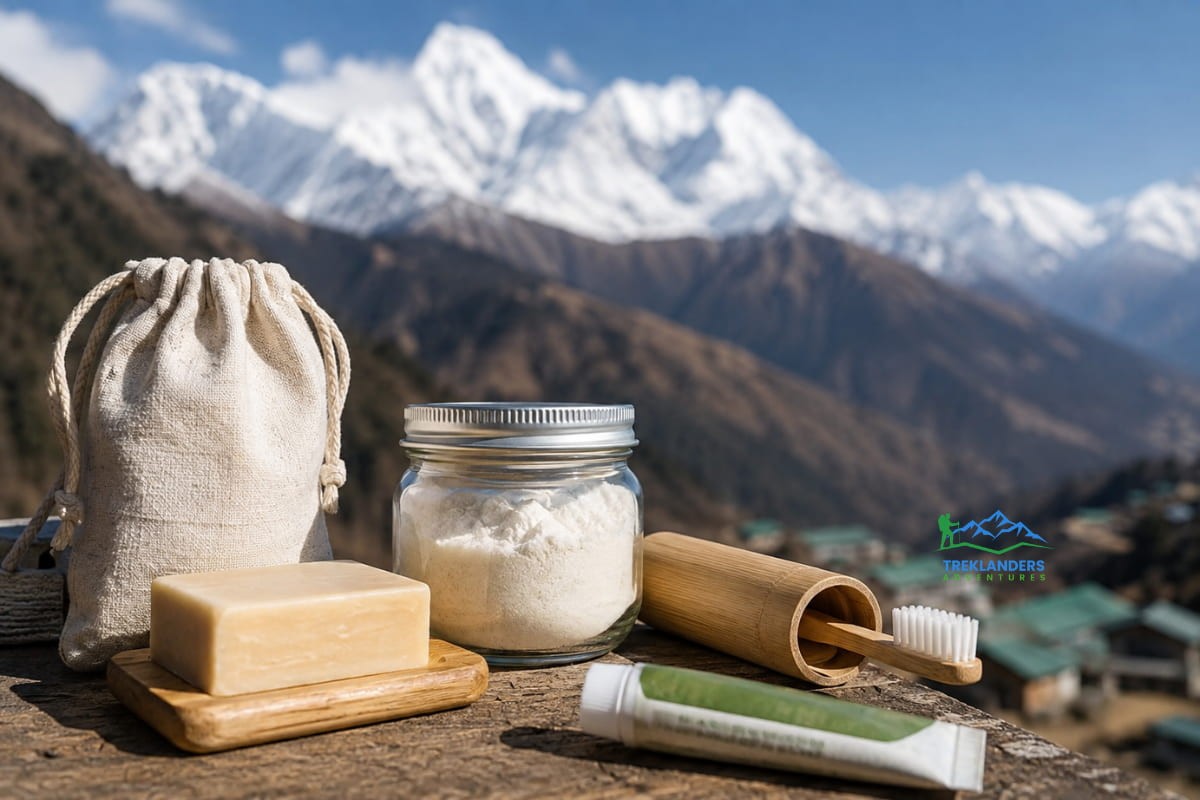
Personal care items are an underrated source of trail plastic. Travel-sized shampoo bottles, individually wrapped wet wipes, and disposable razors add up fast over a two or three week trek.
Solid toiletries solve most of this. Shampoo bars, solid soap, and solid toothpaste tablets pack lighter than their liquid counterparts and come in cardboard or compostable packaging instead of plastic bottles. They also don't count against liquid restrictions if you're flying with just carry-on luggage between international flights and your domestic Lukla or Pokhara connection.
Skip individually wrapped wet wipes. A quick-dry microfiber towel and a small bar of soap handle basic washing at teahouses, most of which offer a bucket of hot water for a small fee. If you want the convenience of wipes for quick cleanups during the day, look for compostable versions and pack out the used ones rather than leaving them on the trail, since they don't break down the way the packaging claims.
Reusable menstrual products cut down significantly on trail waste for anyone trekking through a cycle. A menstrual cup or reusable pads mean you're not carrying out (or worse, burying) disposable products in an environment with no proper disposal system. Pack a small amount of water and a discreet bag for cleaning and carrying.
Bring a razor you can reuse, not a disposable one. A safety razor with replaceable blades lasts the whole trek and produces far less waste than a plastic disposable razor you'd throw out after a week.
Sunscreen and insect repellent often come in plastic squeeze tubes with no alternative packaging readily available in Nepal. Buy the largest size you'll actually use for the whole trek rather than several small travel bottles, and share with trekking partners when you can to cut down on redundant packaging across your group.
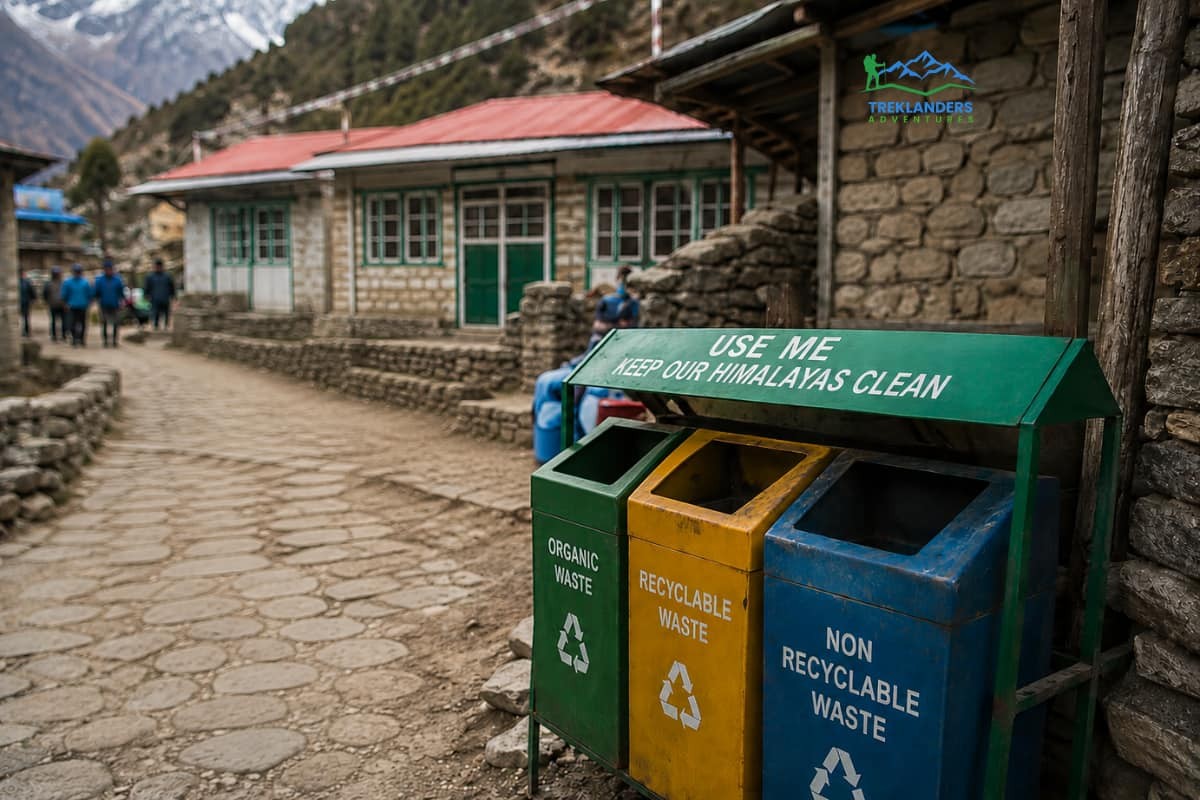
Even with every swap in this guide, you'll generate some waste on a multi-week trek. The goal isn't zero waste in the literal sense. It's minimizing what you produce and handling what's left responsibly.
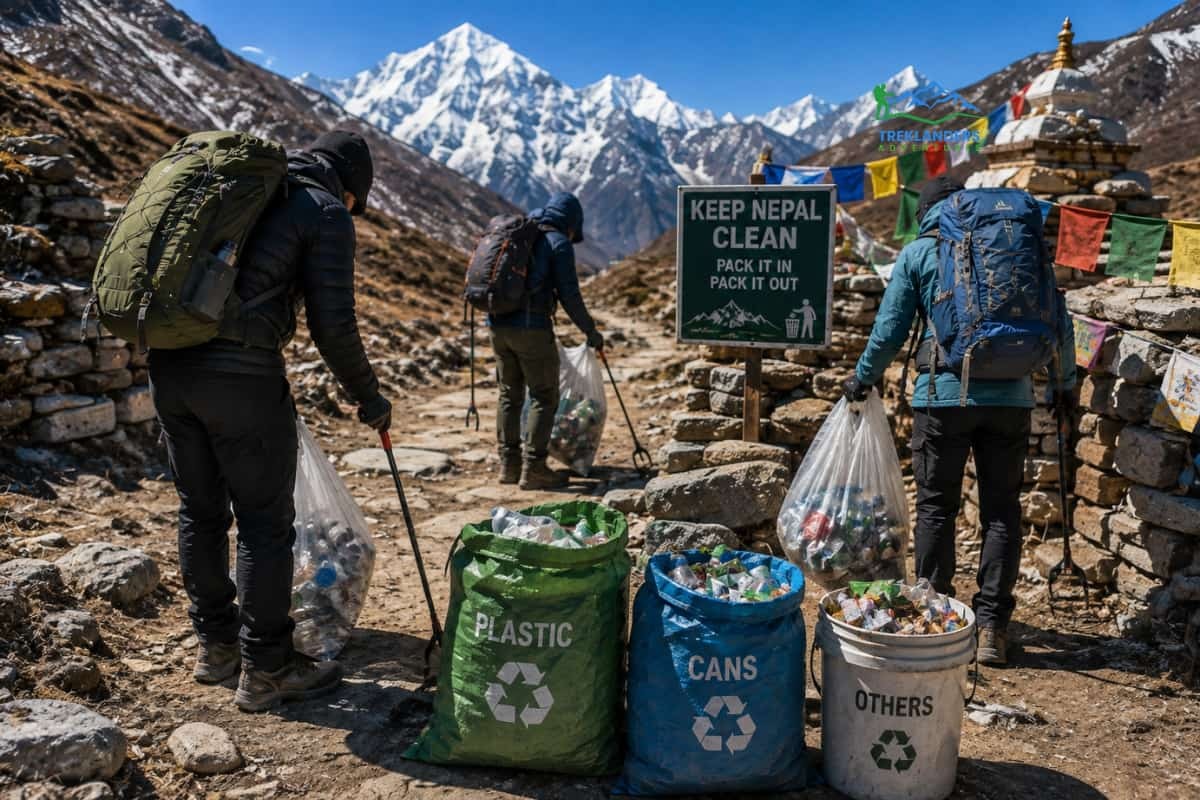
Pack it out, always. This is the single rule that matters most. If you brought it in, plan to carry it back out, whether that means to Kathmandu or to a designated collection point along the trail. Don't leave wrappers, bottles, or tissue at viewpoints, campsites, or teahouse dining rooms, even if you see other trekkers doing it.
Use designated collection points. The Everest region has garbage collection points in Namche Bazaar, Lukla, and other major stops, run by the Sagarmatha Pollution Control Committee. These points sort waste for what can be carried down to Kathmandu for proper disposal or recycling. The Annapurna Conservation Area Project runs a similar system through its checkpoints. Ask your guide or lodge owner where the nearest collection point is if you're not sure.
Never burn plastic yourself. Some lodges burn waste out of necessity, since there's no alternative at their altitude. That's different from a trekker tossing plastic into a cooking fire or a heater. Burning plastic releases dioxins and other toxins that are dangerous to breathe, especially in the thin air at altitude where your lungs are already working harder than usual.
Separate what you're carrying out. A simple system works well: one bag for recyclables like clean plastic bottles and cans, one for general trash, and a sealed bag for anything wet or organic. This makes it faster to sort and dispose of properly once you're back in a town with waste infrastructure.
Bring a dedicated trash bag from day one. A lightweight dry bag or a few heavy-duty ziplock bags reserved just for your own waste means you're never tempted to leave something behind because you didn't have anywhere to put it.
Group treks generate more waste than the same number of people trekking solo, mainly because cooking for a group at teahouses or camps means bulk supplies, which come with their own packaging.
If you're trekking with an agency in a group, ask before you leave how the trip handles kitchen waste, not just personal trash. On camping treks, where a crew cooks meals from scratch rather than ordering from a teahouse menu, this matters even more, since cans, oil containers, and bulk food packaging add up fast across a two or three week itinerary for a dozen people.
Some agencies now run a reusable container system for groups, where the kitchen staff portion out snacks and condiments into shared containers instead of handing out individually wrapped items to each trekker. If your agency doesn't already do this, it's worth suggesting, especially if you're booking a custom or private group trip where the agency has more flexibility to adjust standard practices.
Coordinate with your trekking companions before the trip on shared gear like a group water filter or a bulk supply of purification tablets, rather than everyone bringing their own. It cuts down on redundant packaging and gear weight across the group, and it usually means someone in the group has a backup if one filter fails partway through the trek.
If your group includes trekkers who aren't used to thinking about trail waste, a short conversation on day one about carrying out trash and using refill stations goes a long way. Most people are willing to adjust once someone explains why it matters, especially after they've seen a lodge's burn pit or a stretch of trail littered with wrappers firsthand.
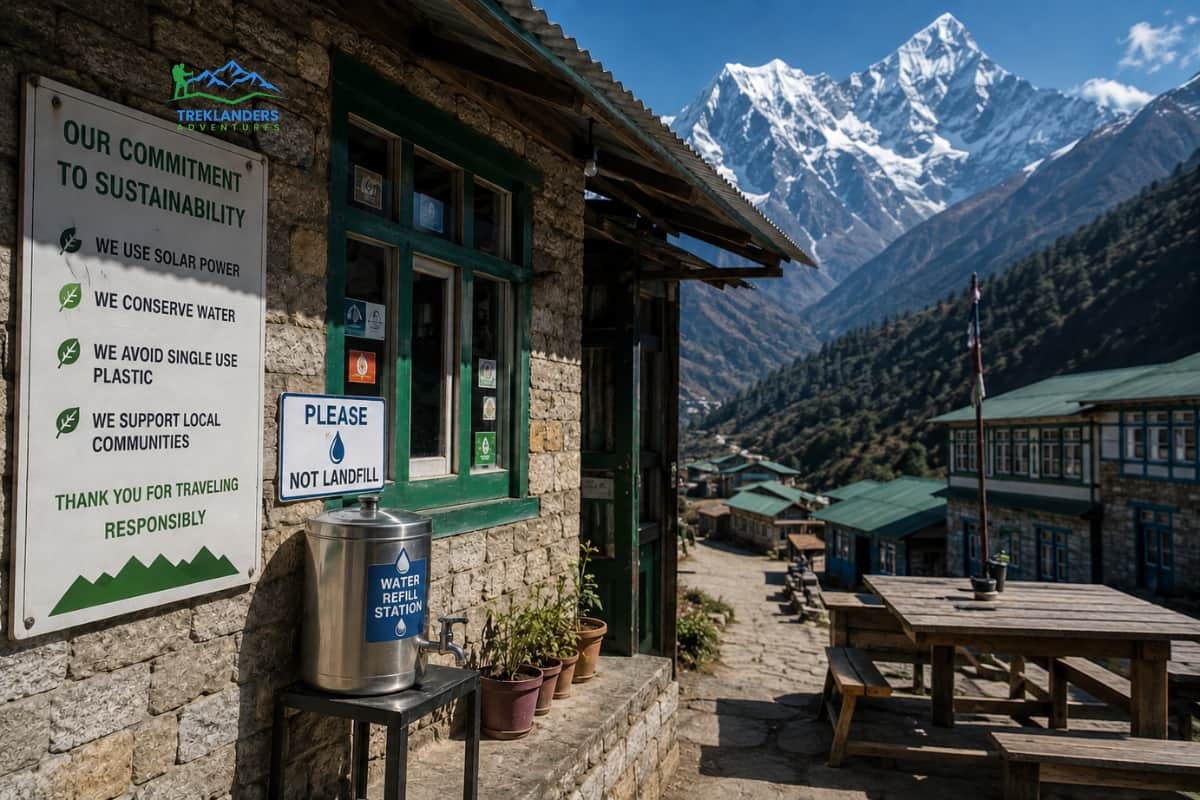
Not every teahouse handles waste the same way. Some have invested in better systems, either through their own initiative or because they're part of a conservation area with enforced standards.
Ask lodge owners directly whether they offer filtered or boiled water refills instead of selling bottled water. Many do, especially in the Annapurna and Everest regions where trekker demand has pushed lodges to adapt. Refilling costs a small fee, similar to what you'd pay for a bottle, but it eliminates the plastic entirely.
Look for lodges that have visible waste sorting, even something as simple as separate bins for burnable and non-burnable trash. It's a sign the owners are thinking about where their garbage actually goes instead of just getting it out of sight.
Some newer lodges, particularly in the Annapurna Base Camp and Mardi Himal areas, have started offering reusable water bottle refill stations with a small deposit system, similar to what you'd see in more developed trekking regions like the European Alps. If you come across one, use it and mention to your guide that you'd like to support lodges doing this, since guides often influence where groups stop for tea or lunch.
If you're booking through a trekking agency, ask them directly about their waste policy before you go. A responsible agency will brief porters and guides on carrying out plastic waste and will often have relationships with specific lodges known for better environmental practices. This is worth asking about at the booking stage rather than discovering on the trail that your itinerary doesn't account for it.
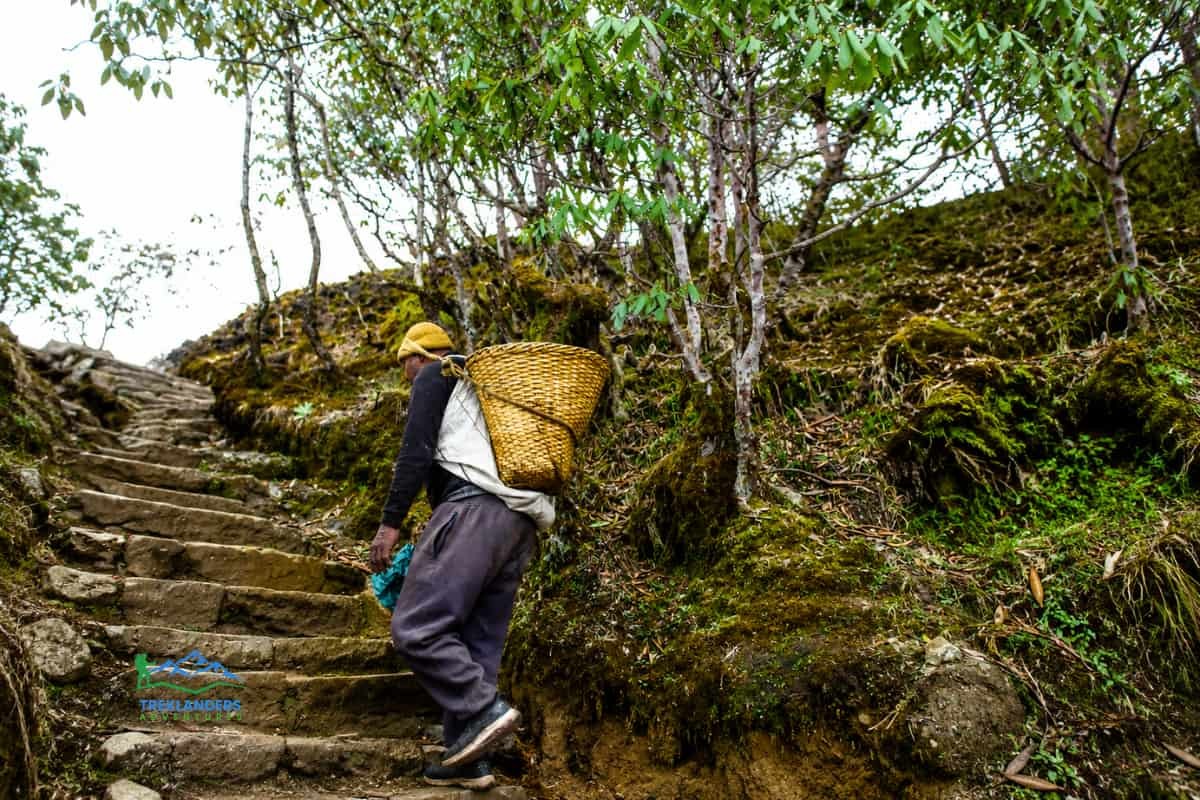
Your guide and porters know the trail far better than you do, and they're often more aware of the waste problem than trekkers assume, since they're the ones walking these routes dozens of times a season.
Talk to your guide before the trek starts about your intention to minimize plastic. Most guides are happy to help, whether that means pointing you toward lodges with refill stations, helping you find bulk food options in the last town before you lose phone signal, or reminding you which villages have proper collection points.
If your trek includes porters carrying group gear, ask whether the agency has a policy on carrying out group waste, not just personal waste. Group treks generate more trash collectively than the sum of what each trekker would produce solo, since cooking for a group produces its own packaging waste from bulk supplies. A good agency plans for this and builds waste carry-out into the trip logistics rather than leaving it to chance.
Tip guides and porters fairly if you notice them making an effort on waste, whether that's carrying out extra trash, choosing lodges with better practices, or teaching you about local conservation rules you wouldn't have known otherwise. It reinforces that trekkers value this effort and encourages agencies to keep prioritizing it for future groups.
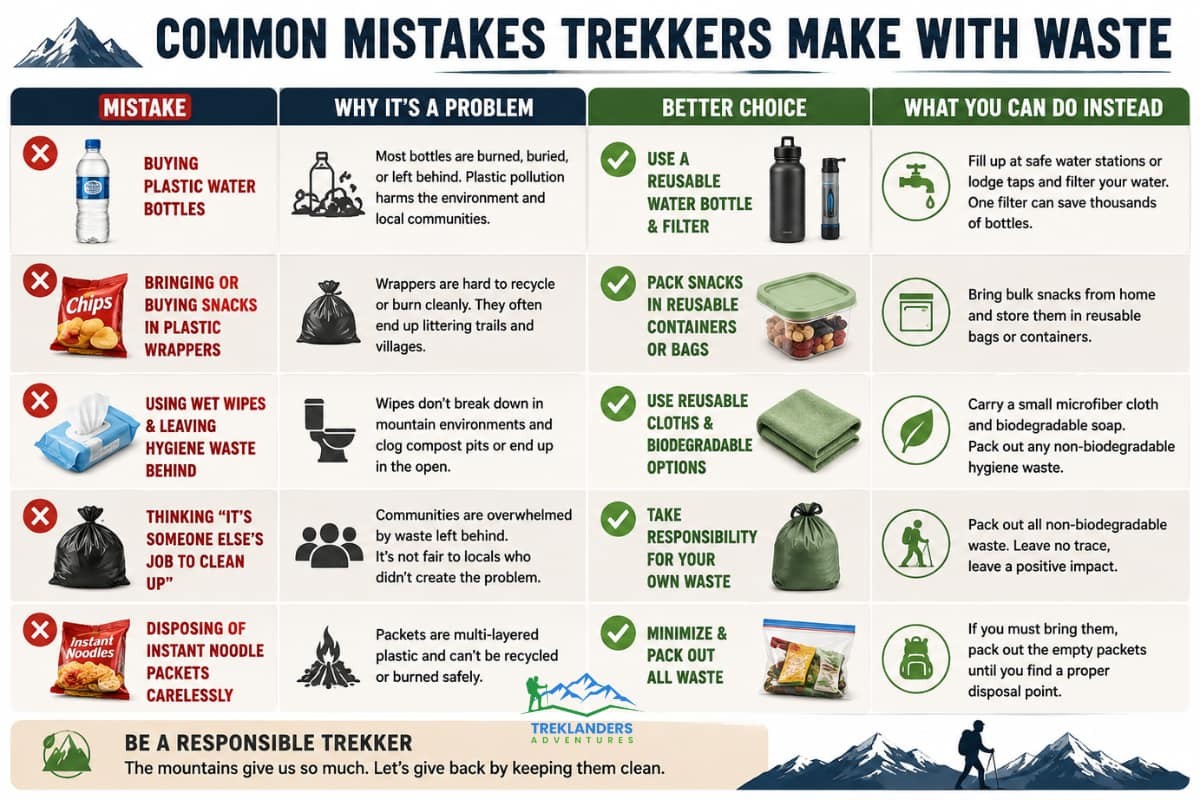
A few habits show up again and again on Nepal's trails, and most of them are easy to fix once you notice them.
Buying a new bottle "just this once." It's tempting when your filter clogs or you're too tired to deal with purification tablets at the end of a long day. One bottle turns into a habit fast, especially at higher altitude when everyone is more tired and less patient with extra steps. Keep your filter accessible in an outer pocket, not buried at the bottom of your pack, so it's never more convenient to buy plastic than to use what you already have.
Leaving snack wrappers at viewpoints. Trekkers often pause for a break at a scenic spot, eat a snack, and leave the wrapper tucked under a rock, assuming someone else will deal with it or that it'll blow away. It won't decompose there, and wind at altitude often carries litter further than people expect, spreading it well beyond the original spot.
Assuming lodges will handle it responsibly. Not every lodge has a good system, and it's not always obvious from the outside. A lodge with a clean dining room can still be burning plastic behind the building. Don't assume; ask, and use your own trash bag as backup regardless of what the lodge does with the rest of its waste.
Overpacking individually wrapped items. Trail mix in a dozen small snack-size bags, granola bars each wrapped separately, tea bags in paper and foil sleeves: these add up to a surprising amount of trash for something you could buy in bulk and portion yourself. Check your pack before you leave and count how many separately wrapped items you're carrying. If it's more than a handful, repackage into reusable containers before you start.
Forgetting batteries and small electronics count too. Headlamp batteries, phone chargers, and power bank packaging all generate waste that's easy to overlook because it doesn't feel like "trekking trash" in the same way a wrapper does. Bring rechargeable batteries where possible, and carry out any packaging from new batteries or gear you buy along the way rather than leaving it at a lodge.
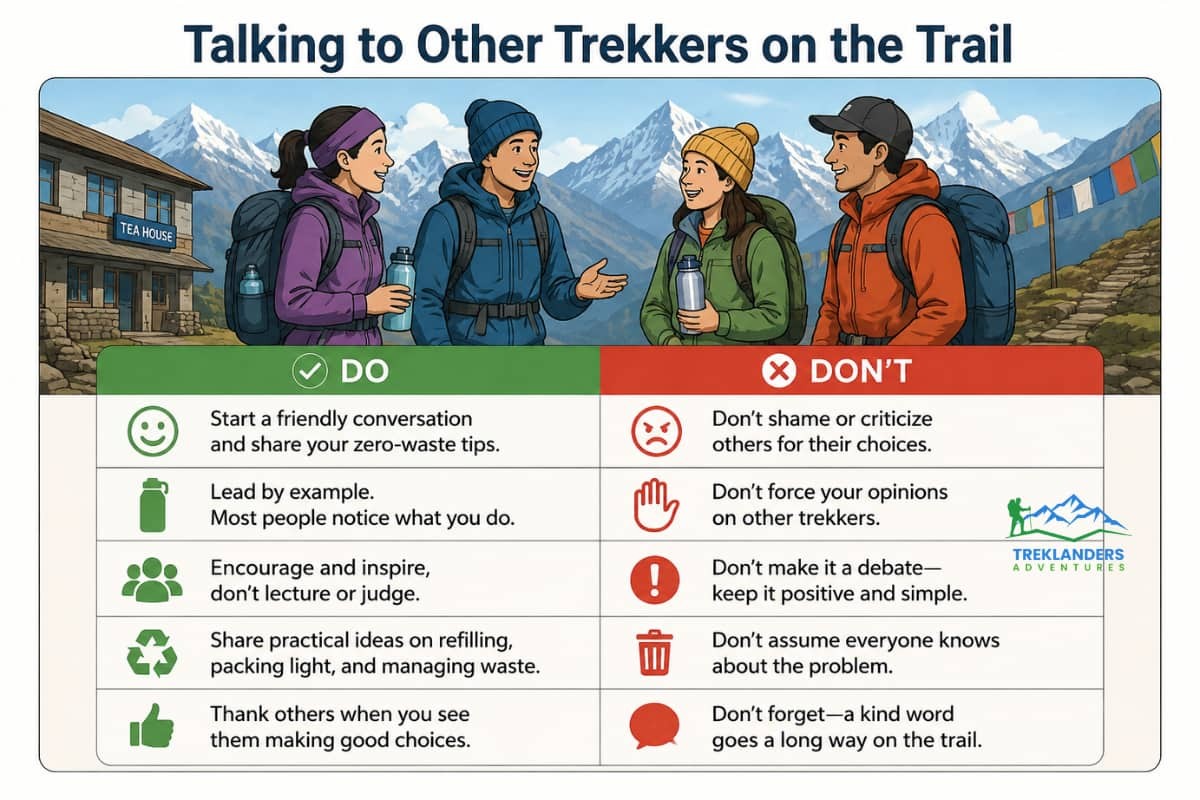
You'll meet other trekkers at teahouses, on the trail, and at viewpoints throughout your trip, and these interactions are a low-key opportunity to normalize better habits without lecturing anyone.
If you see someone about to buy a bottle of water and you have a filter, mention it. Most trekkers genuinely don't know filters work as well as they do in Nepal's mountain water sources, or they assume the setup is more complicated than it is. A two-minute demonstration at a water tap often changes someone's mind for the rest of their trip.
Share information about refill stations and collection points when you find them. Word travels fast on popular routes like Everest Base Camp and Annapurna Circuit, where trekkers often follow similar daily itineraries and end up at the same lodges. A tip passed from one trekker to another about which village has a good refill setup saves the next person from defaulting to bottled water out of habit.
If you're trekking with a guide, ask them to share this information with other groups they encounter, since guides often know each other and exchange trail conditions and lodge recommendations throughout the season anyway.
None of this requires being preachy about it. Most trekkers care about the mountains they're walking through. They just don't always have the specific information or gear to act on that in the moment, and a quick, practical suggestion from a fellow trekker lands better than any sign posted at a checkpoint.
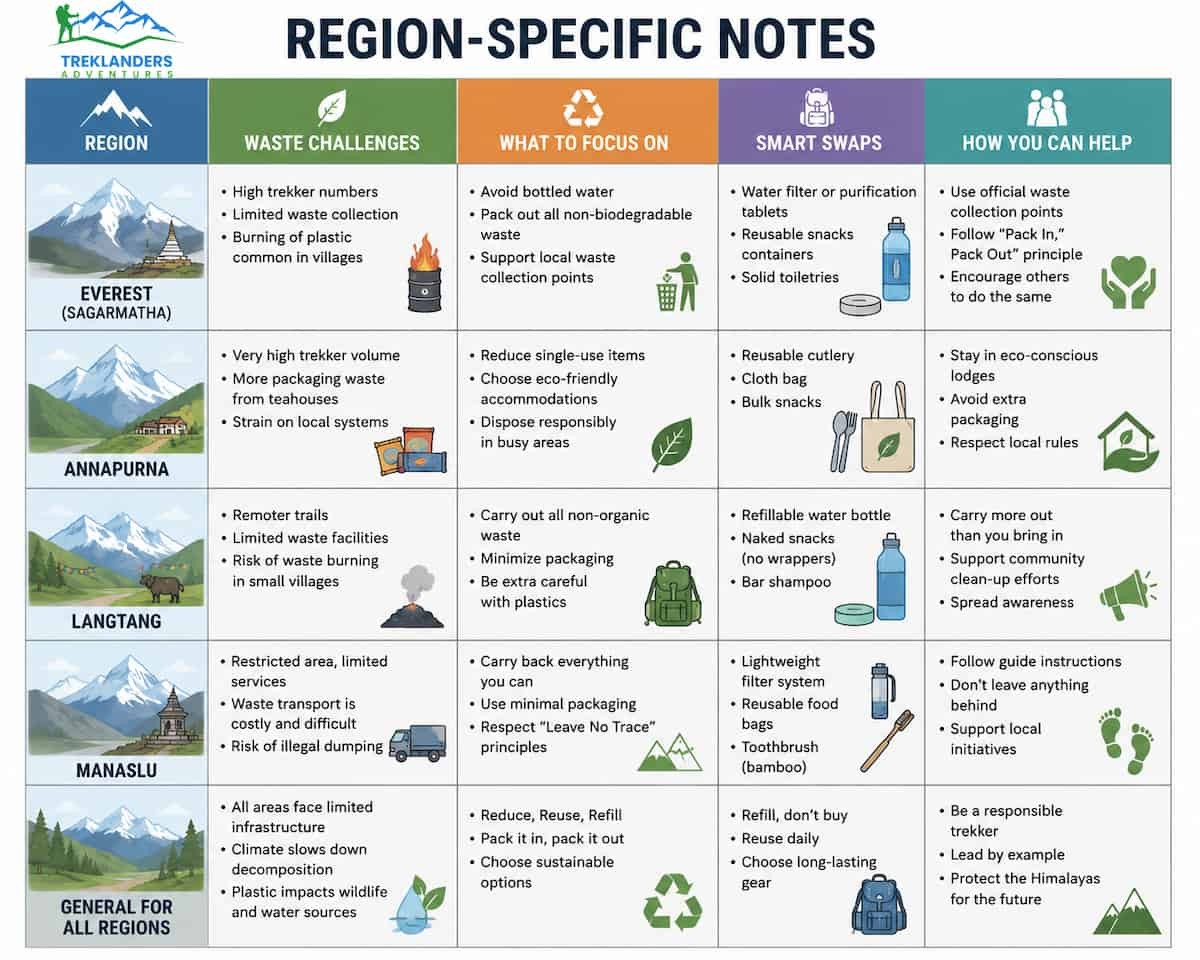
Everest (Sagarmatha) region. This is the most heavily managed region for waste, thanks to decades of cleanup expeditions and the Sagarmatha Pollution Control Committee's infrastructure. Namche Bazaar has the most developed collection system on any trekking route in Nepal. Above Namche, options thin out fast, so stock up on reusable containers and filtered water access while you're still in town. Above Dingboche and toward base camp, expect fewer refill options and plan accordingly.
Annapurna region. The Annapurna Conservation Area Project has some of the strictest rules in the country regarding lodge waste management, and enforcement has improved significantly over the past decade. Routes like Annapurna Base Camp, Ghorepani Poon Hill, and Mardi Himal see high trekker traffic, which means more lodges but also more competition, so many have adopted better practices to stand out. Ask about refill stations specifically in villages like Chhomrong and Ghandruk, which see heavy foot traffic and have invested accordingly.
Langtang and Gosainkunda. This region rebuilt much of its trekking infrastructure after the 2015 earthquake, and some lodges took the opportunity to set up better systems from scratch rather than patching old ones. It's less crowded than Everest or Annapurna, which means less waste overall, but also fewer formal collection points, so carrying out your own trash matters even more here.If you're planning a trip, see our Langtang Valley Trek and Gosaikunda Lake Trek packages.
Manaslu and remote routes. Manaslu, Kanchenjunga, and other restricted or less-trekked areas have minimal waste infrastructure. What you carry in, you carry out, full stop. There's no collection point to rely on once you're past the last major village. Pack accordingly and plan for a fully self-sufficient waste system for the entire trek.
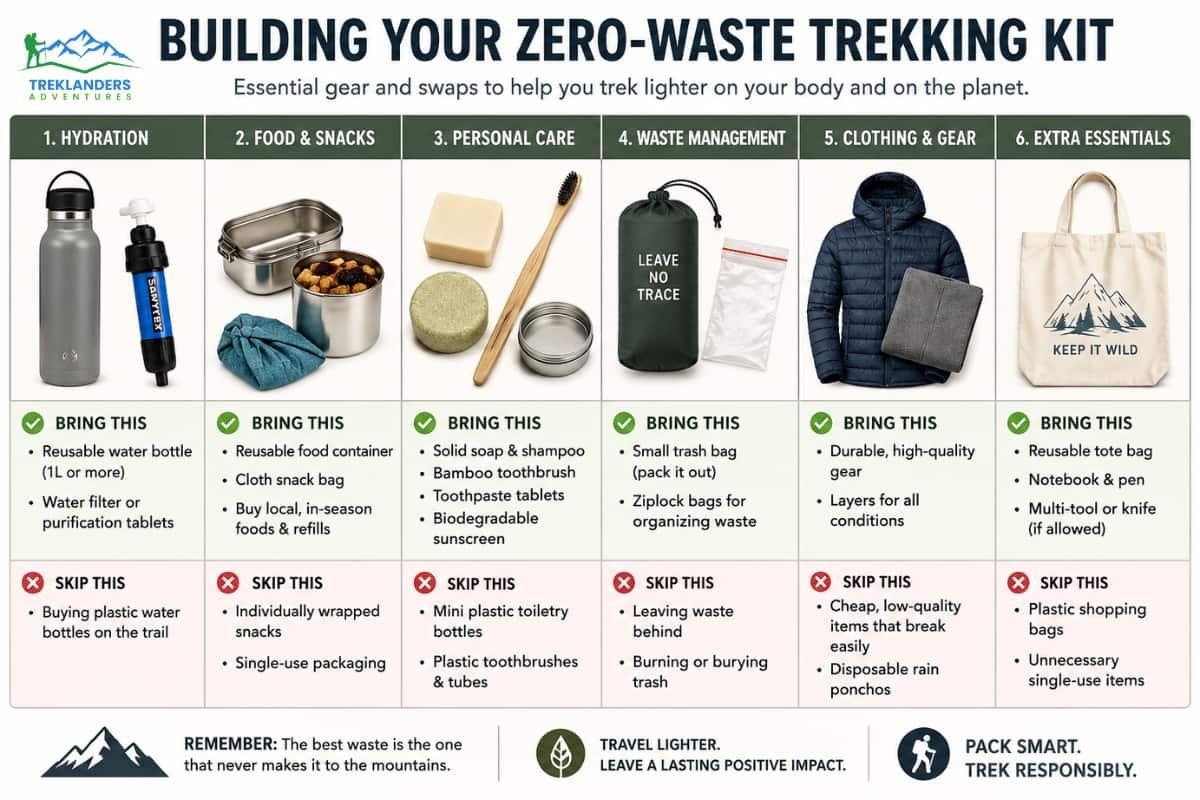
Pulling everything together, here's what a plastic-conscious trekking kit looks like before you head to the mountains:
A reusable one-liter water bottle, hard-sided or insulated depending on the season. A squeeze or pump filter as your primary purification method, with chlorine dioxide tablets as backup. Solid shampoo, soap, and toothpaste tablets instead of liquid versions. A safety razor instead of disposables. A reusable menstrual cup or cloth pads if applicable. A quick-dry microfiber towel. Several reusable fabric or silicone bags for bulk snacks. A stainless steel or silicone food container. A dedicated trash bag or dry bag for carrying out waste, ideally two, one for recyclables and one for general trash. A small set of reusable cutlery if you plan to eat snacks on the trail rather than at lodges.
None of this adds significant weight to your pack. Most of it actually reduces weight over the course of a multi-week trek, since you're not carrying empty plastic bottles and wrappers between towns waiting for a chance to dispose of them.
Test your setup before you fly out, not on your first day on the trail. Run your filter through a full liter at home so you know how long it takes and how much effort the squeeze requires when your hands are cold and tired. Check that your solid toiletries actually lather the way you expect, since some solid shampoo bars behave differently in hard water than they do at home. Pack your snack bags the way you plan to use them on the trail, so you know your system works before you're relying on it above 4,000 meters with no easy way to improvise a fix.
Weigh your kit once it's assembled. Most of these swaps come in lighter than their disposable counterparts once you account for the packaging you're no longer carrying, but it's worth confirming for your own pack rather than assuming. A filter, a hard-sided bottle, and a few solid toiletries typically add up to less than the equivalent week of bottled water and packaged snacks you'd otherwise be buying and discarding along the way.
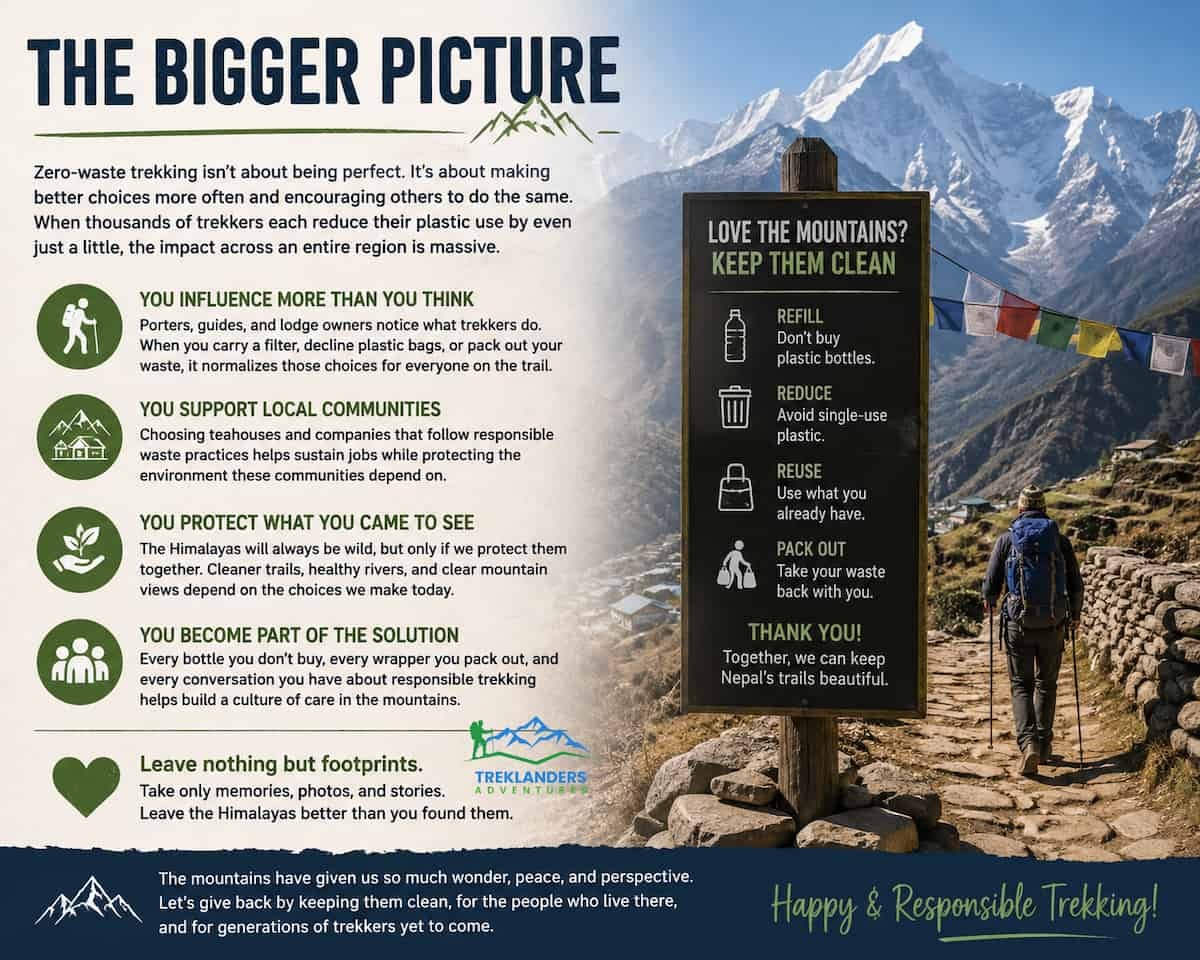
Reducing plastic on a single trek doesn't fix Nepal's waste problem on its own. The infrastructure gaps are real, and they need investment from the government, conservation area authorities, and trekking agencies working together over years, not individual trekkers making better choices on a two-week trip.
But trekker behavior shapes what lodges and agencies invest in. When trekkers ask for refill stations, order dal bhat instead of instant noodles, and carry out their own waste without being asked, lodge owners notice. Demand for better practices pushes supply, even in remote mountain villages where change moves slowly. Every trekker who shows up with a filter instead of buying bottled water at every stop is one less signal to a lodge owner that plastic bottles are what customers want.
Nepal's trails draw people back year after year because they offer something genuinely rare: high mountain scenery, warm village hospitality, and a physical challenge that rewards you the whole way up. None of that depends on plastic. If anything, the trekkers who plan ahead and travel lighter on waste tend to have a smoother trip overall, since they're not scrambling for bottled water at inflated prices in villages three days from the nearest road.
Pack the filter. Bring the solid soap. Order the dal bhat. Carry out what you bring in. Small choices, repeated across thousands of trekkers each season, add up to less plastic in villages that never asked to become dumping grounds for other people's convenience.
You'll notice the difference in your own trek too. Fewer stops to hunt down bottled water at inflated prices. Less weight in your pack by the second week, once you've stopped accumulating empty wrappers between towns with nowhere to dispose of them. A better sense of where your food and water actually come from, since you're filtering it yourself or asking a lodge owner directly instead of grabbing whatever's on the shelf.
Trekking through the Himalayas already asks a lot of your body. It shouldn't ask this much of the mountains themselves. The gear swaps in this guide take an afternoon to sort out before you fly to Kathmandu, and once they're part of your routine, you won't think about them much on the trail beyond the two minutes it takes to filter your next liter of water. That's a small trade for a trek that leaves the high, quiet trail closer to how you found it on that very first day. Ready to plan your own low-impact trek? Explore our Everest and Annapurna trekking packages and start planning a trip that leaves the trail the way you found it.
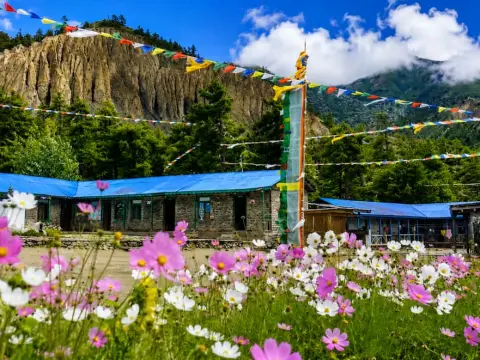
Discover the best rain-shadow treks in Nepal for a dry and scenic monsoon adventure.
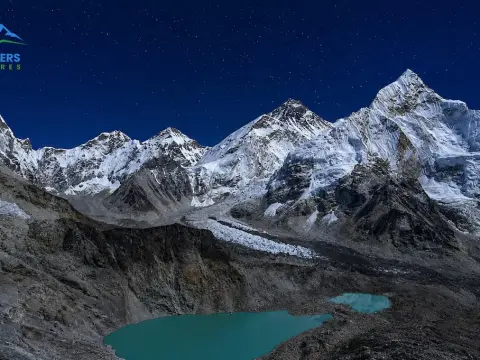
Discover why autumn is Nepal's best trekking season, with clear mountain views, stable weather, safer trails, and unforgettable Himalayan adventures.
Plan your Nepal trek with confidence. Discover essential tips on permits, altitude, gear, seasons, safety, accommodation, and responsible trekking.



