
Alternative Treks to Everest Base Camp: Nine Khumbu Routes Worth Your Time
26 Aug 2026
Discover nine incredible alternatives to Everest Base Camp, from Gokyo Lakes and Pikey Peak to remote valleys and challenging high passes.

The Annapurna region packs more variety into one trekking area than almost anywhere else in Nepal. You get glacier basins, terraced farmland, rhododendron forests, high desert plateaus, and villages that still run on yak trains and prayer flags. In a single trek, you can walk from subtropical valleys at 800 meters to icy passes above 5,000 meters.
That range is why the region draws first-time trekkers and seasoned mountain walkers alike. But it also means picking the right trek matters. Some routes demand weeks of stamina and altitude tolerance. Others fit into a long weekend and still deliver a full mountain panorama.
Local communities run nearly every lodge, farm, and trail junction in the region, and that human presence is part of what makes Annapurna different from a purely wilderness trek. You pass through villages that have hosted travelers for generations, share meals cooked over wood stoves, and watch daily life continue around you as you walk. The mountains draw you here, but the people and villages often stay with you longer.
This guide breaks down the five best treks in the Annapurna region: what each one involves, who it suits, and what makes it worth the walk. Whether you want a short taste of the Himalayas or a full circuit around one of the world's deadliest peaks, you will find your match here.
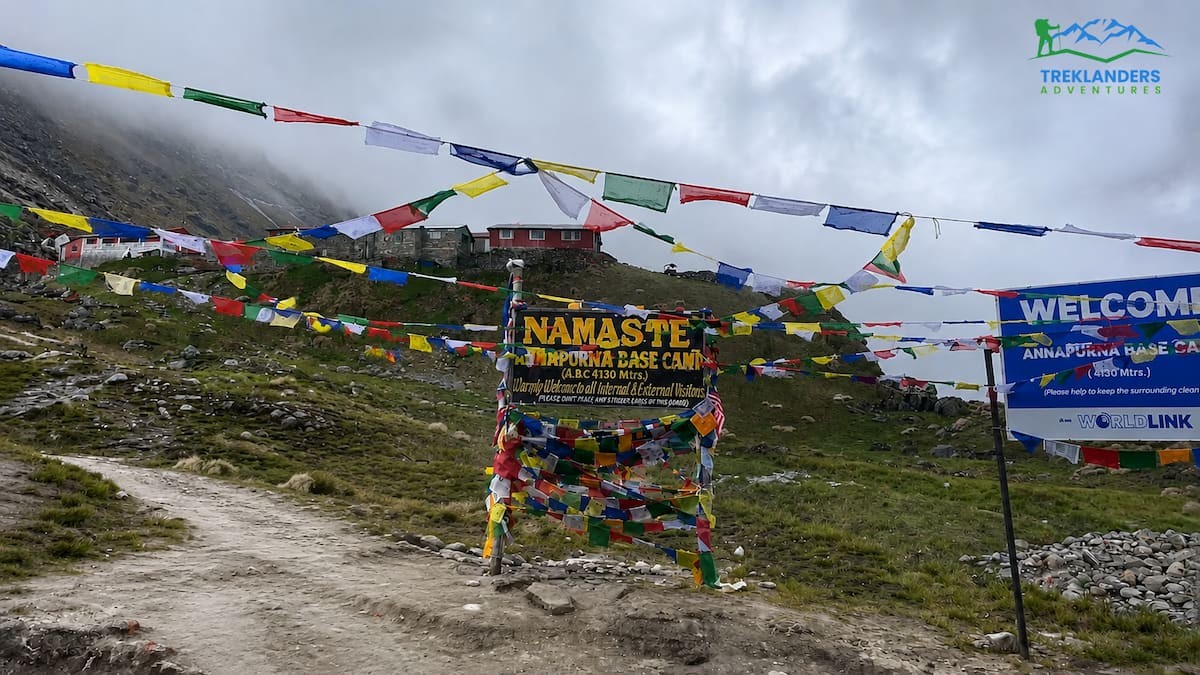
The Annapurna Base Camp (ABC) trek is the region's signature route, and for good reason. It takes you straight into the Annapurna Sanctuary, a natural amphitheater of ice and rock surrounded by Annapurna I, Machhapuchhre, Hiunchuli, and a ring of other 6,000-plus meter peaks. You reach 4,130 meters at base camp, but the trail never demands technical climbing skill. You just need legs, lungs, and about 7 to 12 days depending on your route and pace.
The trek usually starts from Nayapul or Kimche, near Pokhara. From there, the trail climbs through Ghandruk or Tikhedhunga, two of the most well-kept Gurung and Magar villages in the region. Stone houses with slate roofs line the paths, and you will pass mule trains carrying supplies up to the high lodges. The forest sections are dense with rhododendron, oak, and bamboo, and in spring the rhododendrons turn entire hillsides red and pink.
As you gain altitude past Chhomrong, the trail narrows and the landscape shifts fast. Bamboo forest gives way to open valley, then to the glacial moraine that leads into the Sanctuary itself. The final push from Machhapuchhre Base Camp to Annapurna Base Camp takes two to three hours and puts you inside a wall of peaks on every side. Many trekkers say this final stretch feels different from the rest of the trip. The scale of the mountains up close is hard to process from photos alone.
Machhapuchhre, or Fishtail Mountain, stays visible for most of the trek and gives you a constant reference point as you climb. Unlike Annapurna I, it remains unclimbed and holds spiritual significance for local communities, which adds another layer to the views beyond their sheer size. The mountain's twin-peaked summit resembles a fishtail from certain angles, which is how it earned its name among early trekkers and surveyors.
ABC works well for moderately fit trekkers with some hiking background. Altitude sickness is a real risk above 3,000 meters, so a gradual ascent and proper acclimatization matter more than raw fitness. Most itineraries build in rest days or shorter walking days near Chhomrong and Deurali to help your body adjust. The trek does not require permits beyond the standard Annapurna Conservation Area Permit (ACAP) and TIMS card, and lodges along the route offer basic but reliable food and shelter every few hours of walking.
What sets ABC apart from other treks in the region is the sense of arrival. You are not just gaining elevation for a viewpoint. You are walking into the heart of a mountain range and standing at the literal base of an 8,000-meter peak. Few treks in the world offer that kind of payoff for a moderate level of difficulty.
Wildlife sightings add another layer to the walk, especially in the lower forested sections. Langur monkeys move through the canopy near Ghandruk, and if you trek early or late in the season, you have a real chance of spotting Himalayan thar grazing on the steep grassy slopes above Deurali. Bird life is dense throughout the mid-hills, with sunbirds, laughing thrushes, and occasionally a lammergeier circling the higher ridgelines.
Food along the ABC route follows the standard teahouse menu found across most of Nepal: dal bhat, fried noodles, momos, and simple soups, with better bakery items available in the busier villages like Chhomrong and Sinuwa. Portions are generous, and dal bhat comes with free refills at nearly every lodge, which matters after a full day of climbing. Rooms are basic twin-share setups with shared bathrooms lower down and increasingly simple facilities as you climb toward base camp, where electricity and hot water become limited and sometimes cost extra.
If ABC is about arrival, the Annapurna Circuit is about transformation. This trek loops around the entire Annapurna massif, and over 15 to 20 days you pass through nearly every ecological zone Nepal has to offer. You start in subtropical lowlands, climb through pine and rhododendron forest, cross into high alpine desert that looks more like Tibet than Nepal, and finish in the arid Kali Gandaki valley, one of the deepest gorges on earth.
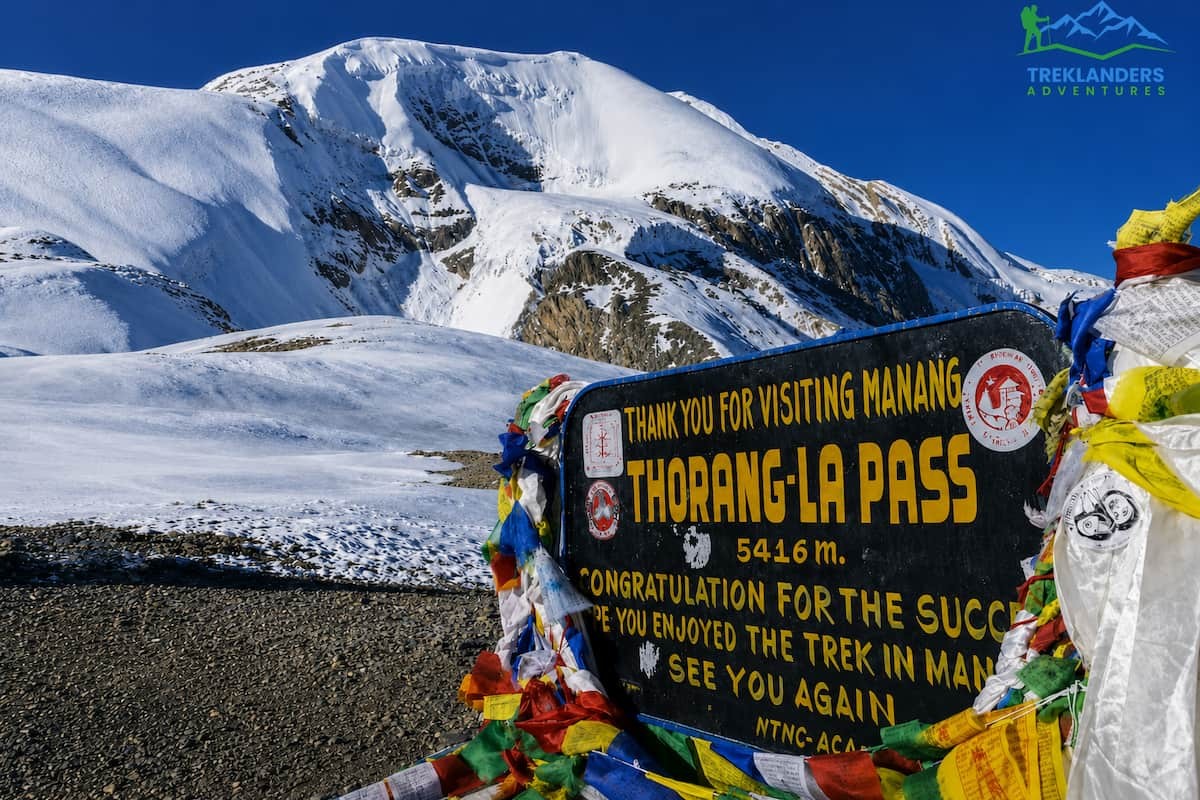
The trek's centerpiece is Thorong La Pass, sitting at 5,416 meters. Crossing it is a full-day effort that starts before dawn, often in freezing temperatures, and rewards you with sweeping views of the Annapurna and Damodar ranges before dropping you into Muktinath, a sacred site for both Hindus and Buddhists. The descent from Thorong La is steep and long, and by the time you reach the temple town, most trekkers feel a mix of exhaustion and genuine accomplishment.
The regions on either side of the pass could not look more different. On the eastern side, you walk through Manang, a Tibetan-influenced district with flat-roofed stone houses, monasteries, and dramatic views of Gangapurna and its glacial lake. On the western side, you drop into Mustang's rain shadow, where the landscape turns dry, wind-carved, and almost Martian. Villages like Kagbeni sit at the edge of this transition and give you a preview of Upper Mustang without needing the restricted area permit that region requires.
Road construction has changed parts of the classic circuit over the past decade, and some lower sections now run alongside jeep tracks rather than pure trail. Most modern itineraries account for this by using jeeps or buses for the least scenic stretches near Besisahar and Jomsom, keeping the trekking days focused on the sections that still deliver true wilderness walking. This adjustment actually makes the trek more efficient without cutting the parts that matter, and it has become the standard approach among agencies running the route today.
Because of its length and the altitude of Thorong La, this trek suits trekkers with prior high-altitude experience or at least a strong baseline of cardiovascular fitness. Acclimatization days in Manang are non-negotiable. The trek also requires both an ACAP permit and a TIMS card, and travelers moving through Manang district and the restricted Nar-Phu side valleys need additional paperwork if they plan to explore further off the main route.
The Annapurna Circuit remains one of the few multi-week treks in the world where you can complete a full loop without retracing your steps. That variety, combined with the drama of Thorong La, keeps it near the top of every serious trekker's list.
Culturally, the Circuit covers more ground than any other trek in this guide. You pass through Gurung villages in the lower Marsyangdi valley, Tibetan-Buddhist communities in upper Manang complete with old monasteries and mani walls, and finally the Thakali villages of the Kali Gandaki valley, known across Nepal for their distinctive cuisine and well-run lodges. Jomsom and Marpha, both Thakali strongholds, are known for apple orchards and locally distilled apple brandy, a welcome change of pace after days of higher-altitude walking.
Acclimatization hikes around Manang, including a walk up to Ice Lake or Gangapurna Viewpoint, are worth building into your schedule even though they add an extra day. These side trips help your body adjust to the thinning air and give you some of the best photography opportunities on the entire route, with turquoise glacial water framed against the Annapurna and Gangapurna ice walls.
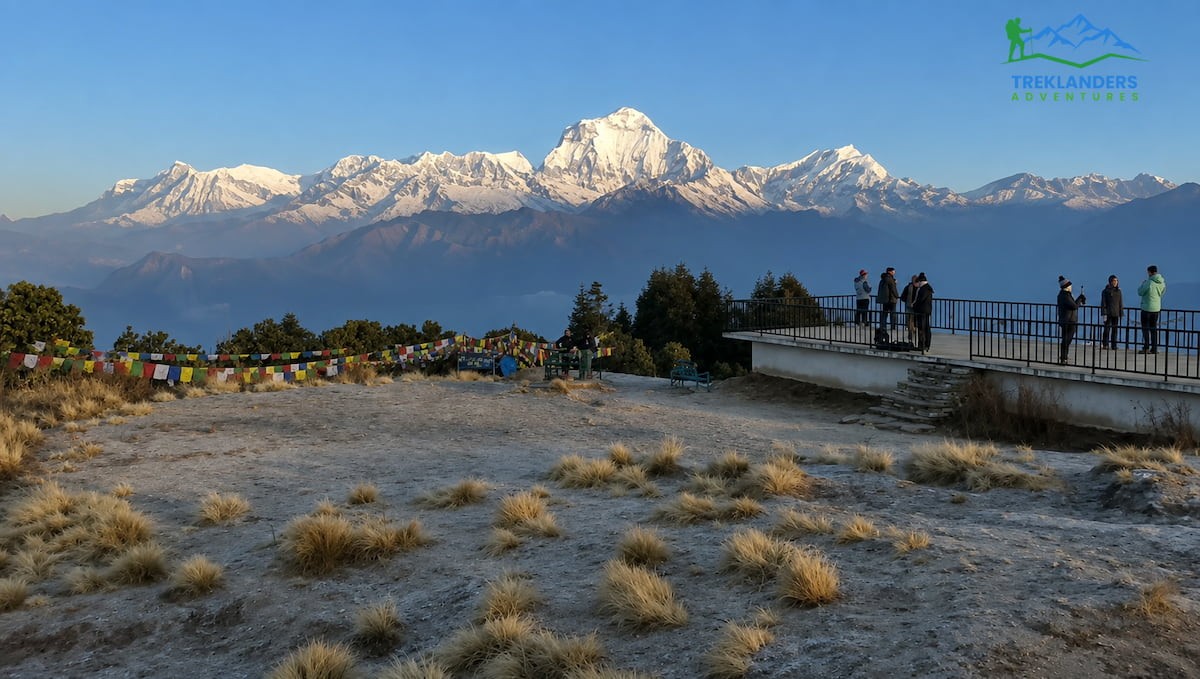
Not every trekker has two weeks and a tolerance for high-altitude passes. The Ghorepani Poon Hill trek solves that problem. At 4 to 5 days, it is the shortest trek on this list, and it remains one of the most rewarding for the time invested.
The route runs through Nayapul, Tikhedhunga, and Ulleri before reaching Ghorepani, a village perched at 2,860 meters. The climb to Ulleri alone involves over 3,000 stone steps, which tests your legs early and filters out anyone expecting a flat walk. But the payoff comes before dawn the next morning, when you climb another 45 minutes to Poon Hill at 3,210 meters.
From the summit, you get one of the widest mountain panoramas available on any short trek in Nepal. Dhaulagiri, Annapurna South, Annapurna I, Nilgiri, and Machhapuchhre all line up across the horizon as the sun rises and lights the peaks in sequence. Because the viewpoint requires so little technical effort relative to the reward, Poon Hill draws large numbers of trekkers, especially during October and November. If you want a quieter sunrise, aim for the shoulder seasons or start your climb slightly earlier than the main crowd.
Beyond Poon Hill, the trek continues through the Magar and Gurung villages of Ghandruk and Tadapani, both known for terraced fields and traditional architecture. The forest between these villages is thick with rhododendron, and in March and April the blooms turn the trail into a tunnel of red and white flowers.
This trek suits beginners, families with older children, and anyone short on time who still wants a genuine mountain experience. The altitude stays low enough that acclimatization is rarely an issue, and lodges along the route are comfortable and well-stocked, since the trail sees heavy traffic. You still need an ACAP permit and TIMS card, but the paperwork and logistics are simpler than the longer treks on this list.
Because the trek can combine easily with a few extra days in Pokhara, it works well for travelers building a shorter Nepal itinerary around other activities like paragliding, boating on Phewa Lake, or a quick flight to see Annapurna from the air.
Many trekkers extend the route slightly by continuing from Tadapani to Ghandruk before looping back to Nayapul, adding a day but exposing you to a wider stretch of Gurung villages and forest trail. This variation reduces the amount of repeated ground compared to a straight there-and-back route through Ulleri, and it gives you a second chance at mountain views if clouds move in on your original summit morning at Poon Hill.
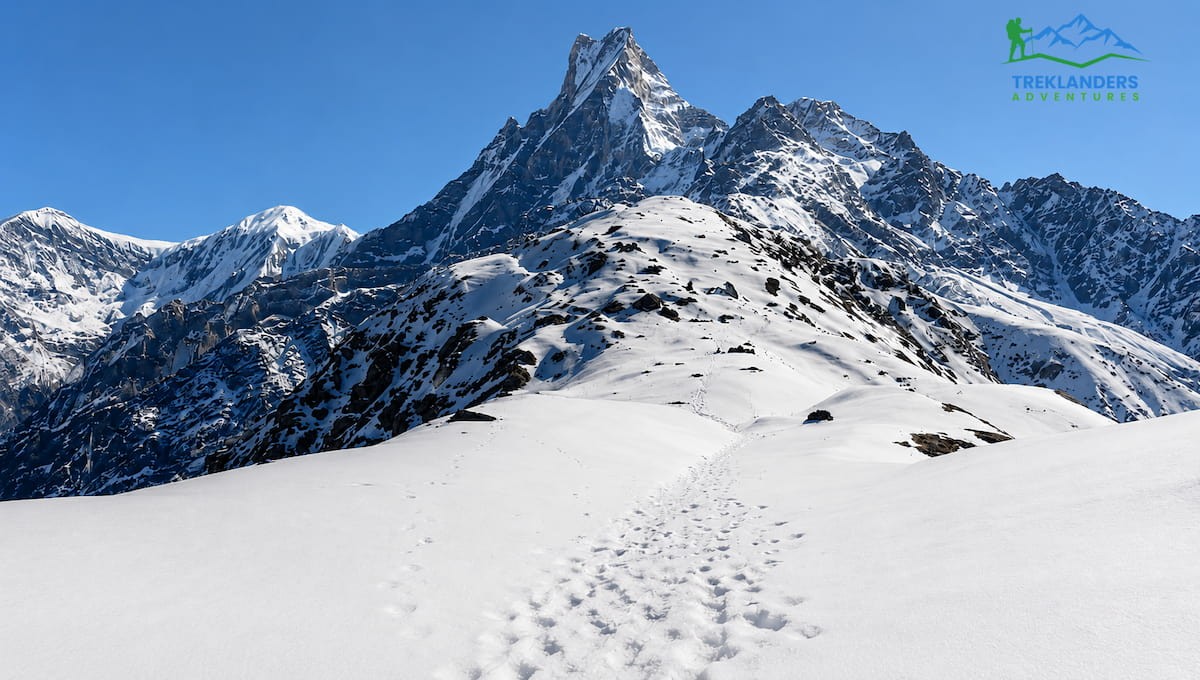
Mardi Himal is the region's rising star. It was largely overlooked until the mid-2010s, when trekking agencies began developing proper lodges along the ridge route. Today it offers something rare in Nepal: a genuine, jaw-dropping mountain trek that still sees a fraction of the traffic on ABC or the Circuit.
The trail runs along a narrow ridge that climbs steadily toward Mardi Himal Base Camp at 4,500 meters, with Machhapuchhre looming directly to one side and the Annapurna range filling the other. Unlike ABC, where the mountains stay somewhat distant until the final approach, Mardi Himal puts you close to Machhapuchhre's east face for most of the upper trek. The intimacy of that view is the trek's main draw.
Most itineraries take 5 to 7 days round trip from Pokhara. The trek starts through forested lower sections near Kande or Dhampus, climbs into rhododendron and oak forest around Forest Camp, then breaks above the tree line near Low Camp and High Camp. The final push to base camp crosses exposed ridgeline with steep drops on either side, which adds a bit of edge without requiring technical skill.
Because Mardi Himal is shorter and less developed than the bigger circuits, lodges are more basic, and some sections between High Camp and Base Camp still lack permanent teahouses, so timing your ascent to return to High Camp the same day is standard practice. This also means fewer crowds. You can walk for long stretches without passing another group, which is increasingly rare in the Annapurna region during peak season.
Altitude gain is moderate but real, topping out just above 4,500 meters, so a day of rest or a slower pace through Low Camp helps most trekkers avoid symptoms. The trek requires the same ACAP and TIMS permits as the rest of the region, and no special restricted-area paperwork.
If you want the drama of a high-altitude base camp trek but on a shorter timeline and without the crowds of ABC, Mardi Himal delivers. It has quickly become one of the most recommended alternatives for trekkers who already know the classic routes and want something a bit rawer.
The trail's newer status also means fewer villages along the route compared to ABC or Poon Hill. Most of your nights will be spent in small lodge clusters built specifically to serve trekkers, rather than established farming villages, which gives the trek a slightly more remote, expedition-style feel even though the walking itself stays non-technical throughout.
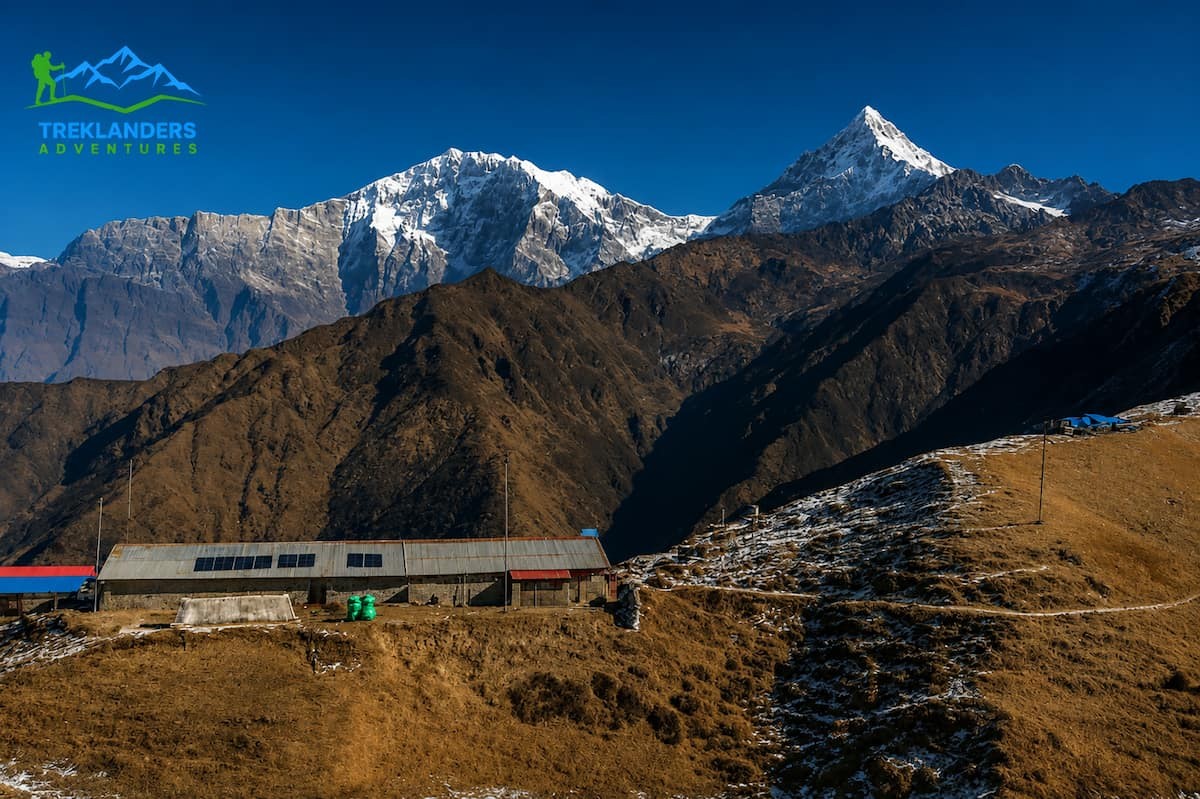
Khopra Ridge sits in the shadow of ABC and Poon Hill in terms of name recognition, but among trekkers who have done it, the route often gets rated as one of the best-kept secrets in the Annapurna region. It combines the panoramic payoff of Poon Hill with the solitude of Mardi Himal, stretched over 7 to 9 days.
The trek follows a similar starting point to ABC, moving through Ghandruk and Tadapani before branching off toward Khopra Danda, a high ridge at roughly 3,660 meters. From here, you get uninterrupted views of Dhaulagiri, Annapurna South, Nilgiri, and Hiunchuli without the crowds that gather at Poon Hill or Chhomrong. Because so few trekkers take this branch, the trail feels remote even though it sits close to more heavily trafficked routes.
Many itineraries extend the trek to include Khayer Lake, a sacred alpine lake at nearly 4,660 meters that sits below Nilgiri's south face. The walk up to the lake crosses open alpine meadow used for yak grazing in summer, and the setting feels closer to Tibet's high plateau than the forested lower valleys most trekkers associate with Annapurna.
The villages along this route, including Ghandruk, Tadapani, and Dobato, mix Gurung and Magar communities, and lodges here tend to be family-run with a more personal feel than the larger teahouses on ABC's main trail. Food is simple but reliable, and hosts are often willing to share details about local farming and seasonal migration that add real context to the trek.
Khopra Ridge suits trekkers who have already done one of the more popular routes and want something with a similar reward but far less foot traffic. The altitude tops out below 4,700 meters at Khayer Lake, which keeps the acclimatization requirements manageable for most fit trekkers, though the same rules about gradual ascent and hydration apply as on any trek above 3,500 meters. Standard ACAP and TIMS permits cover this route.
For photographers and trekkers who prioritize quiet trail time over checking off the most famous name, Khopra Ridge might be the best trek in the entire region that most visitors have never heard of.
The trek also works well combined with a short extension to Swanta village or a side trip toward the base of Dhaulagiri's south face for trekkers with extra days and a strong appetite for solitude. These extensions require no additional permits beyond the standard ACAP and TIMS documents, but they do add distance and altitude gain, so factor them in only if your schedule and fitness allow for the extra days.
With five strong options, picking one comes down to three factors: time, fitness, and what you want out of the experience.
If you have less than a week and want a genuine Himalayan payoff without heavy physical demands, Ghorepani Poon Hill is your best fit. It requires basic fitness, involves no serious altitude risk, and delivers one of the best sunrise views in Nepal for a fraction of the time commitment of the longer treks.
If you want to stand at the base of an 8,000-meter peak and don't mind 7 to 12 days of walking, Annapurna Base Camp is the clear choice. It balances difficulty and reward better than almost any other trek in Nepal, and its infrastructure makes it accessible to trekkers without prior high-altitude experience, as long as you build in proper acclimatization time.
If you have three weeks and want the full range of Nepal's landscapes in one trip, including a genuine high-altitude pass crossing, the Annapurna Circuit remains unmatched. It demands more preparation and a higher fitness baseline, but no other trek in the region offers the same diversity of terrain and culture in one continuous route.
If you have already done ABC or the Circuit and want something quieter with a similarly dramatic mountain view, choose between Mardi Himal and Khopra Ridge. Mardi Himal gives you the closest possible views of Machhapuchhre in a shorter window. Khopra Ridge trades a bit of drama for even more solitude and adds the option of a high alpine lake most trekkers never see.
None of these treks require technical climbing gear or mountaineering experience. What matters most is honest self-assessment of your fitness and your tolerance for multi-day walking at altitude. A realistic pace and proper acclimatization make far more difference to your experience than raw physical strength.
Think about crowd tolerance too. ABC, the Circuit, and Poon Hill see the heaviest trekker traffic in the region, particularly during October, November, and the peak spring weeks in April. If you prefer quiet trail time and don't mind trading a bit of name recognition for solitude, Mardi Himal and Khopra Ridge give you comparable mountain views with a fraction of the foot traffic.
Consider your travel companions as well. Families with young children or trekkers with limited hiking experience generally do best on Poon Hill, where daily walking hours stay shorter and the altitude risk stays low. Groups of experienced trekkers looking for a shared challenge tend to gravitate toward the Circuit or ABC, where the length and altitude create a stronger sense of collective achievement by the end of the trip.

None of these five treks require technical mountaineering skills, but all of them ask more of your body than a typical weekend hike. The single best preparation is time on your feet, ideally on varied terrain with some elevation gain, in the two to three months before you travel.
Focus on cardiovascular endurance first. Hiking, running, cycling, or stair climbing three to four times a week builds the base fitness you need for six to eight hours of daily walking. Add strength training for your legs and core, since steep descents on stone steps put real strain on your knees and stabilizing muscles, particularly on routes like Poon Hill and the drop from Thorong La into Muktinath.
Practice hikes with a loaded daypack help your body adjust to carrying weight over distance, even if a porter handles your main bag on the actual trek. Aim to walk consecutive days when possible, since trekking rarely gives you a full rest day between long stages, and your body needs to learn how to recover overnight and perform again the next morning.
If your trek includes altitude above 4,000 meters, such as ABC, the Circuit, or Mardi Himal, no amount of gym training fully prepares your body for reduced oxygen. What training does is give you a stronger baseline, so your body has more reserve to handle the adjustment. Combine fitness preparation with a sensible acclimatization schedule and you reduce your risk of altitude sickness significantly, regardless of which of these five treks you choose.
The Annapurna region is home to Gurung, Magar, Thakali, and Tibetan-influenced communities, each with its own customs and daily rhythms that continue whether or not trekkers are walking through. A few small habits go a long way toward respecting that.
Walk clockwise around mani walls, chortens, and prayer wheels, keeping them on your right side, following local Buddhist tradition. Ask before photographing people directly, particularly in smaller villages where tourism is newer and less constant than on the main ABC or Poon Hill trails. A simple greeting in Nepali, namaste, said with a small nod, is welcomed almost everywhere and often returned with genuine warmth.
Dress modestly, especially around monasteries and religious sites in villages like Manang and Muktinath. Remove your shoes when entering someone's home or a monastery, and avoid touching people on the head, which carries specific cultural significance in Hindu and Buddhist tradition. Tipping guides and porters at the end of a trek is standard practice and forms a meaningful part of their income, so budget for it as part of your overall trip planning.
Small gestures like these do not slow you down on the trail, but they shape how you are received in the communities you pass through, and they leave the door open for a warmer, more genuine exchange with the people whose home you are walking through.
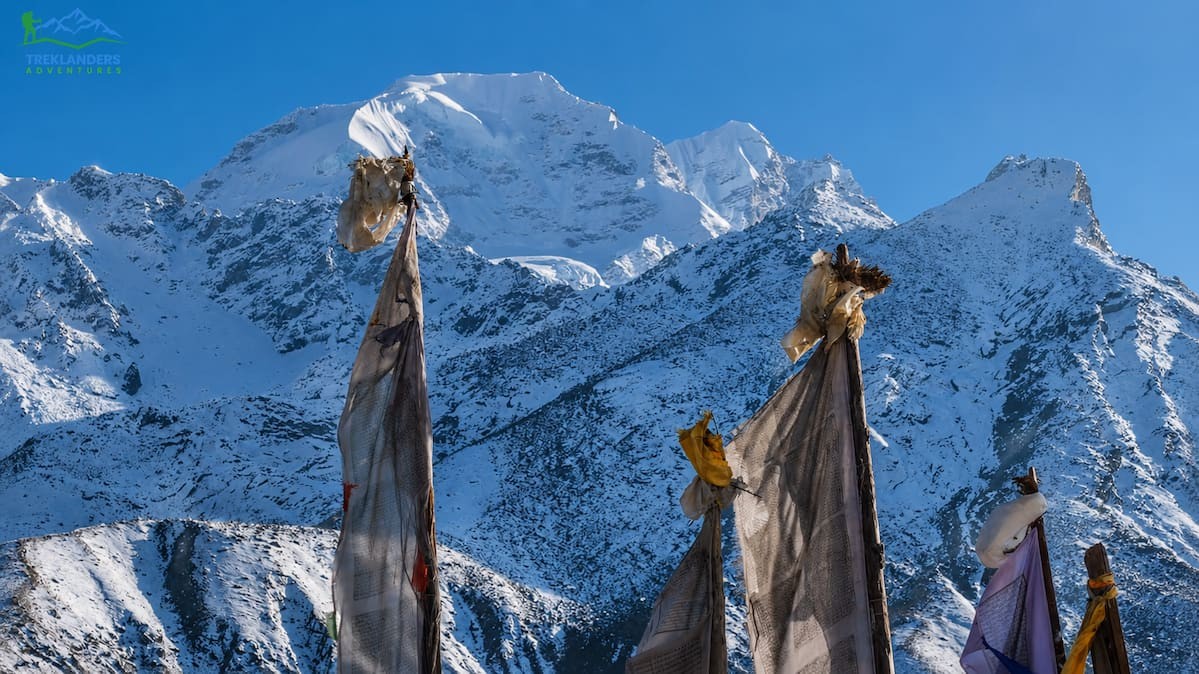
Two seasons dominate Annapurna trekking: pre-monsoon spring and post-monsoon autumn.
Autumn, from late September through November, offers the most reliable weather of the year. Skies stay clear, temperatures sit in a comfortable range for walking, and visibility on high passes and viewpoints is usually excellent. This is peak season for every trek on this list, which means more trekkers on the trail and higher demand for lodge space, especially around Poon Hill and Thorong La.
Spring, from March through May, brings warmer temperatures at lower elevations and the added bonus of rhododendron blooms across the mid-hill forests. Visibility can be slightly hazier than autumn due to increased humidity, but the trail conditions remain excellent, and the forest sections on routes like ABC, Poon Hill, and Khopra Ridge look their best during this window.
Winter, from December through February, is possible on the lower and moderate-altitude treks, particularly Poon Hill and the lower stages of ABC, but snow can close higher sections like Thorong La and Mardi Himal Base Camp. Trekkers comfortable with cold temperatures and shorter daylight hours can still enjoy a quieter trail with fewer crowds, but should check current trail conditions before committing to a route above 4,000 meters.
Monsoon season, from June through early September, brings heavy rain, leech-heavy lower trails, and frequently obscured mountain views, making it the least favorable time for most trekkers. The exception is the rain-shadow side of the Annapurna Circuit near Manang and Mustang, which stays comparatively dry even during monsoon months.
Every trek in this guide requires two documents: the Annapurna Conservation Area Permit (ACAP) and a Trekkers' Information Management System (TIMS) card. Both are standard requirements for foreign trekkers in the region and can be arranged in Kathmandu or Pokhara before you start walking.
The ACAP supports conservation efforts across the Annapurna Conservation Area, which covers the entire region discussed in this guide. The TIMS card exists to track trekker movement for safety purposes and helps rescue teams locate travelers in case of emergency.
If your trek extends into the Nar-Phu valleys off the Annapurna Circuit or into Upper Mustang beyond Kagbeni, you will need an additional restricted area permit, which comes with its own fees and requirements, including in most cases a licensed guide. None of the five treks in this guide require restricted area permits on their standard routes, which keeps the logistics relatively simple compared to trekking in Nepal's more remote regions.
Always trek with a licensed guide or through a registered trekking agency, particularly on the longer routes like the Circuit and ABC, where weather and altitude can shift quickly. Solo trekking without a guide is legally restricted in most of Nepal's conservation areas, and going with an experienced local team improves both your safety and your understanding of the culture you are walking through.
Bring several passport-sized photos and your passport itself when applying for permits, since both ACAP and TIMS require this documentation. Processing usually takes only a short time at the tourism offices in Kathmandu or Pokhara, and a registered trekking agency can handle the paperwork on your behalf, saving you a trip to multiple offices. Keep physical copies of your permits with you at all times during the trek, since checkpoints along every route in this guide verify them before allowing you to continue.
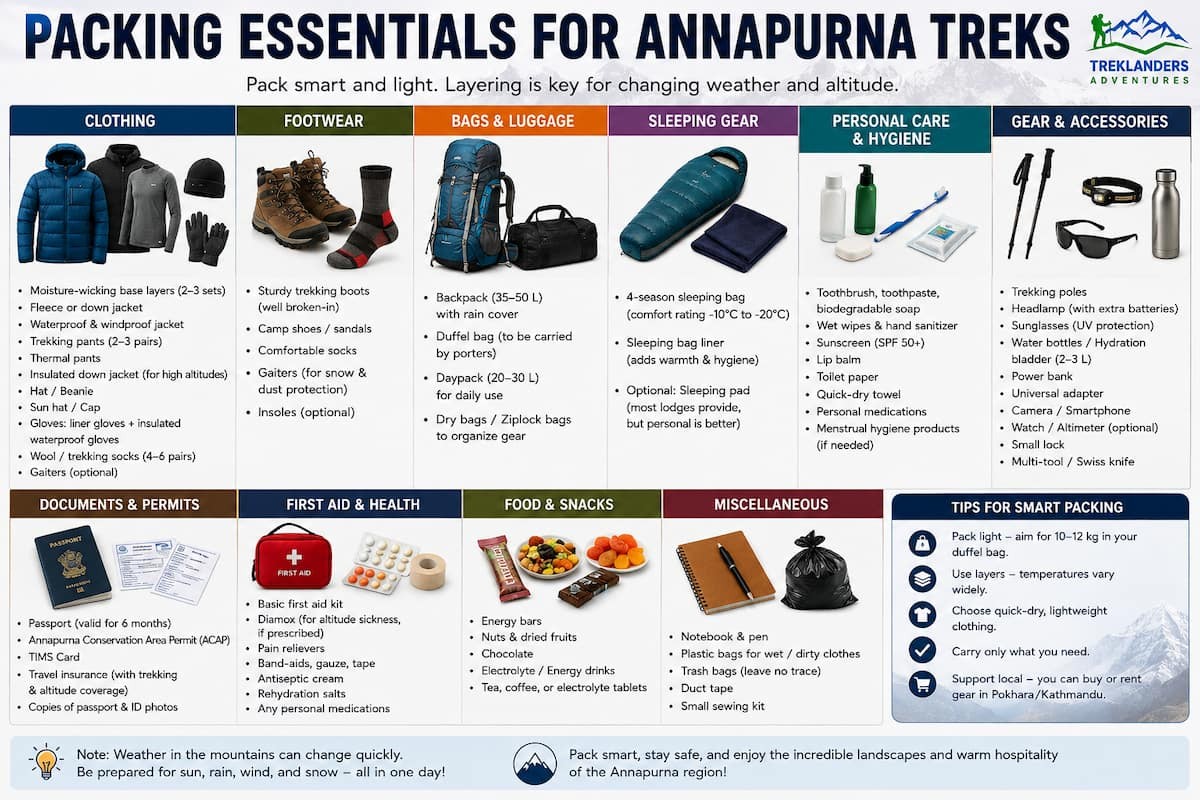
Layering matters more than any single piece of gear on these routes, since you will move through multiple climate zones in a matter of days. A moisture-wicking base layer, an insulating mid layer, and a waterproof, windproof outer shell cover most conditions you will face, from humid lower valleys to freezing high camps.
Footwear deserves the most attention in your packing list. Broken-in, waterproof trekking boots with solid ankle support handle the mix of stone steps, gravel trail, and occasional snow you will encounter on any of these five routes. Bring at least two pairs of moisture-wicking socks and rotate them daily to reduce blister risk.
A four-season sleeping bag rated for sub-zero temperatures is essential for treks that reach high camps, including ABC, the Circuit, and Mardi Himal. Even where lodges provide blankets, many trekkers find the extra warmth of a personal sleeping bag necessary for a good night's rest above 3,500 meters.
Trekking poles reduce strain on your knees during the steep descents that follow nearly every high point on these trails, particularly the stone staircases near Ulleri and the long drop from Thorong La into Muktinath. A basic first aid kit, water purification tablets or a filter, a headlamp with spare batteries, and sun protection round out the core list. UV exposure at altitude is stronger than most trekkers expect, even on cloudy days, so sunscreen and UV-rated sunglasses matter as much in December as they do in May.
Pack light where you can. Porters are widely available across the region and can carry the bulk of your gear, letting you focus on the walking itself rather than the weight on your back.
A lightweight duffel bag, rather than a rigid suitcase, packs down better for porters and mules and holds up to the wear of daily loading and unloading at teahouses. Bring a dry bag or waterproof liner for electronics and documents, since sudden rain showers are common even outside monsoon season, particularly on the lower, forested sections of ABC and Poon Hill. A power bank is worth carrying too, since charging outlets in higher lodges are limited and sometimes charge a small fee per device.
Snacks from home, like energy bars, nuts, or dried fruit, supplement the teahouse menu well on long walking days, especially on stretches between Chhomrong and Deurali or through the high camps of Mardi Himal where lodge options thin out. A basic altitude sickness medication, taken only after consulting a doctor before your trip, is worth having on hand for treks above 3,500 meters, alongside a plan for descending quickly if symptoms become severe.
Each of these five treks gives you a different version of the Annapurna region, from the intimate mountain wall at Base Camp to the sweeping cultural and geographic range of the full Circuit, the quick sunrise reward of Poon Hill, the raw ridge walking of Mardi Himal, and the quiet solitude of Khopra Ridge.
You do not need mountaineering experience to attempt any of them. What you need is honest planning: an accurate read on your available time, your fitness level, and the kind of experience you are looking for. Get that right, and the Annapurna region will hand you some of the most rewarding trail days you will ever walk.
Whichever route you choose, the fundamentals stay the same across all five treks. Build in acclimatization time wherever the altitude calls for it. Trek with a licensed guide who knows the current trail and weather conditions. Pack for the full range of temperatures you will face, not just the conditions at your starting point. And give yourself enough days on the trail to actually take in what you are walking through, rather than rushing toward the next viewpoint.
The Annapurna region has earned its reputation over decades of welcoming trekkers from every corner of the world, and that reputation holds up on every one of these five routes. Pick the one that matches your time and your goals, put in the preparation, and you will come away with a trek that stays with you long after you are back at sea level.
Discover nine incredible alternatives to Everest Base Camp, from Gokyo Lakes and Pikey Peak to remote valleys and challenging high passes.
Discover which trekking routes in Nepal remain safe and open after the recent floods, and which affected areas travelers should avoid for now.
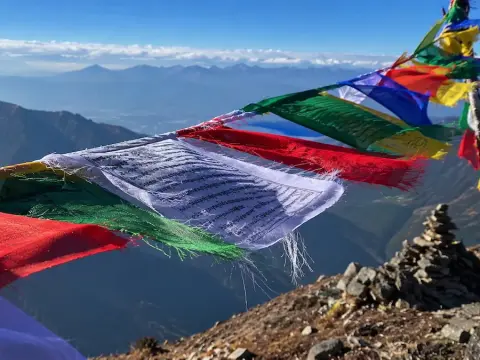
Discover the meaning behind Nepal’s prayer flags and mani walls, and learn the traditions, mantras, and trail etiquette every trekker should know.



