Can Beginners Really Do Everest Base Camp? An Honest Difficulty Breakdown
20 Aug 2026
Can beginners trek to Everest Base Camp? Learn about the difficulty, altitude, training, and preparation needed for a successful EBC Trek.

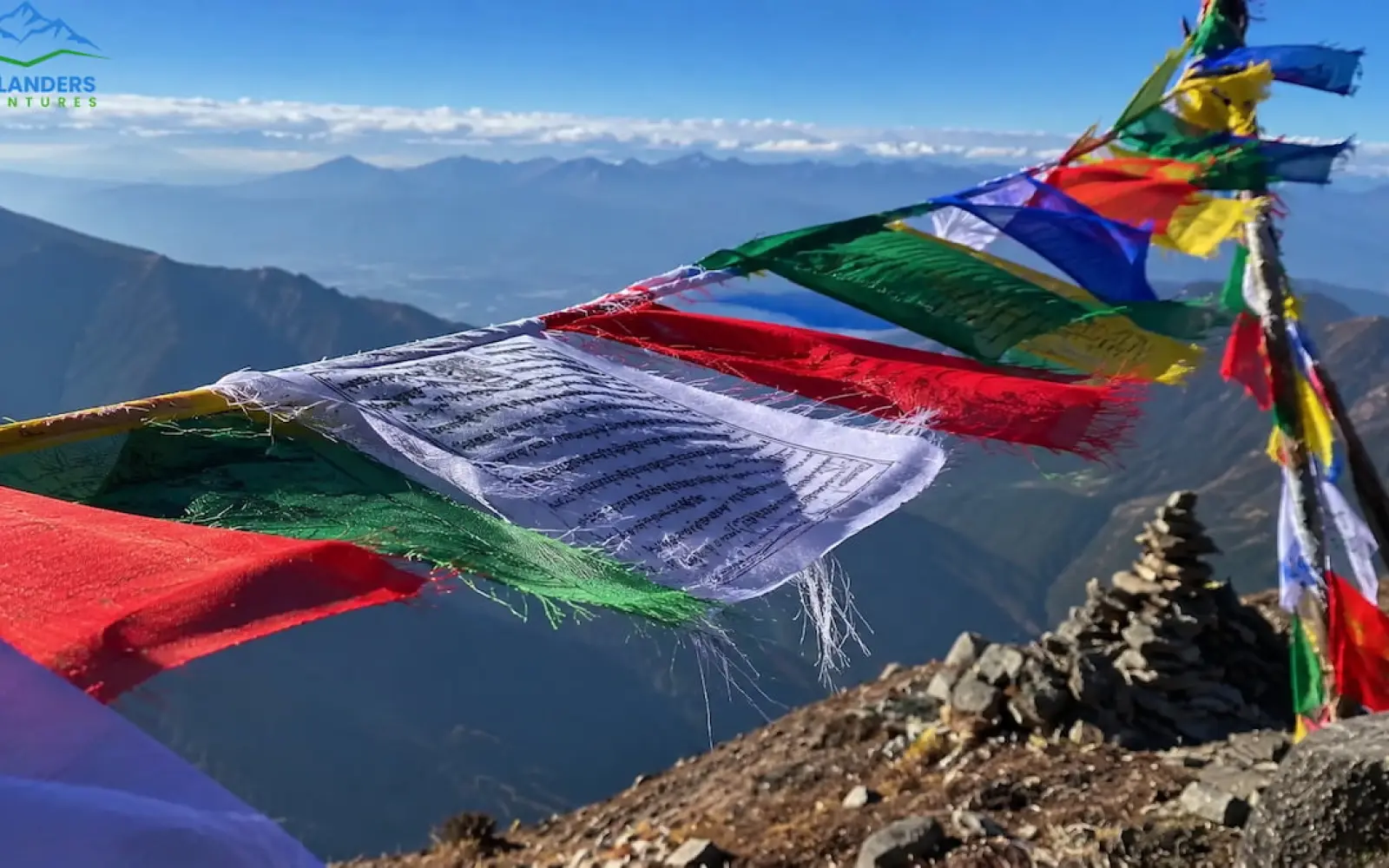
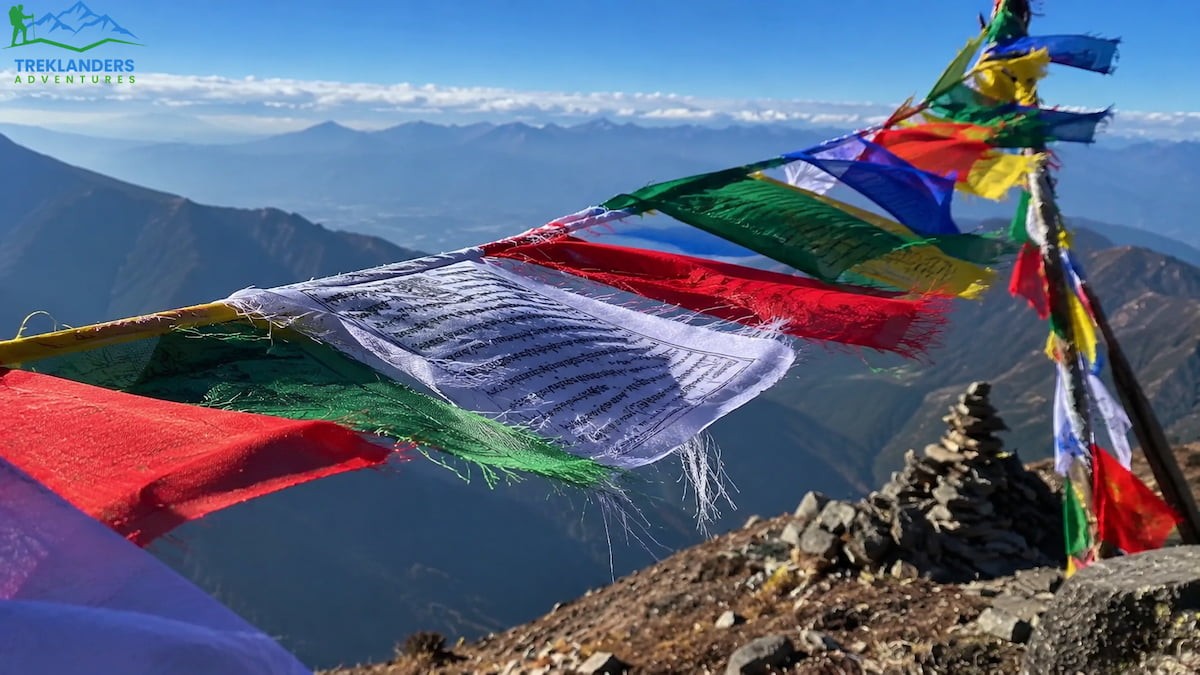
You see them within the first hour of almost every trek in Nepal. Strings of colored cloth stretched across suspension bridges. Stone walls stacked with carved slabs at the edge of a village. Piles of flat rocks circling a single boulder near a pass. Most trekkers walk past these without a second look, or they stop for a photo and move on without knowing what any of it means.
This guide breaks down what prayer flags say, what mani walls are built from, and how to read both as you would read trail signs. Once you understand the system, the trail itself starts talking to you. You will know when you are approaching a pass, a river crossing considered dangerous, a village boundary, or a site where someone died and is still remembered. None of this is decoration. It is a working language that has guided travelers through these mountains for centuries, long before route markers or GPS existed.
The Tibetan name for a prayer flag is lungta, which translates to "wind horse." The idea behind the name is simple and practical: the wind carries the prayers, mantras, and symbols printed on the cloth out into the world every time the fabric moves. A flag hanging still does nothing. A flag snapping in a mountain gust is considered active, doing its job with every gust that hits it.
This is why you find so many flags at passes, bridges, and ridgelines. These are the windiest points on any trek, and that is exactly the point. Villagers and monks do not hang flags in sheltered courtyards for looks. They hang them where the wind is strongest, because a flag that never moves is a flag that never prays.
The tradition traces back over a thousand years to Tibetan Buddhism, with roots that reach even further into the pre-Buddhist Bon religion of the Himalayan plateau. Bon practitioners used colored banners in nature worship rituals long before Buddhism arrived in the region. When Buddhism spread through Tibet and later into Nepal's high valleys through trade routes and migration, it absorbed many of these existing practices rather than erasing them. Prayer flags are one of the clearest examples of that blending. You are looking at a tradition with two religious lineages tangled together, still functioning exactly as intended.
One legend commonly told by guides and monks traces the practice back to Padmasambhava, also known as Guru Rinpoche, the eighth century figure credited with bringing tantric Buddhism into Tibet. According to this account, Padmasambhava used colored banners printed with mantras during ritual practices meant to pacify local spirits and protect travelers moving through dangerous mountain terrain. Whether or not the specific story is historically precise, it points to something true about the practice: prayer flags have always been tied to travel, protection, and the idea of covering hostile or unpredictable ground safely. Trekkers today are, in a real sense, walking the same routes this protective symbolism was designed for.
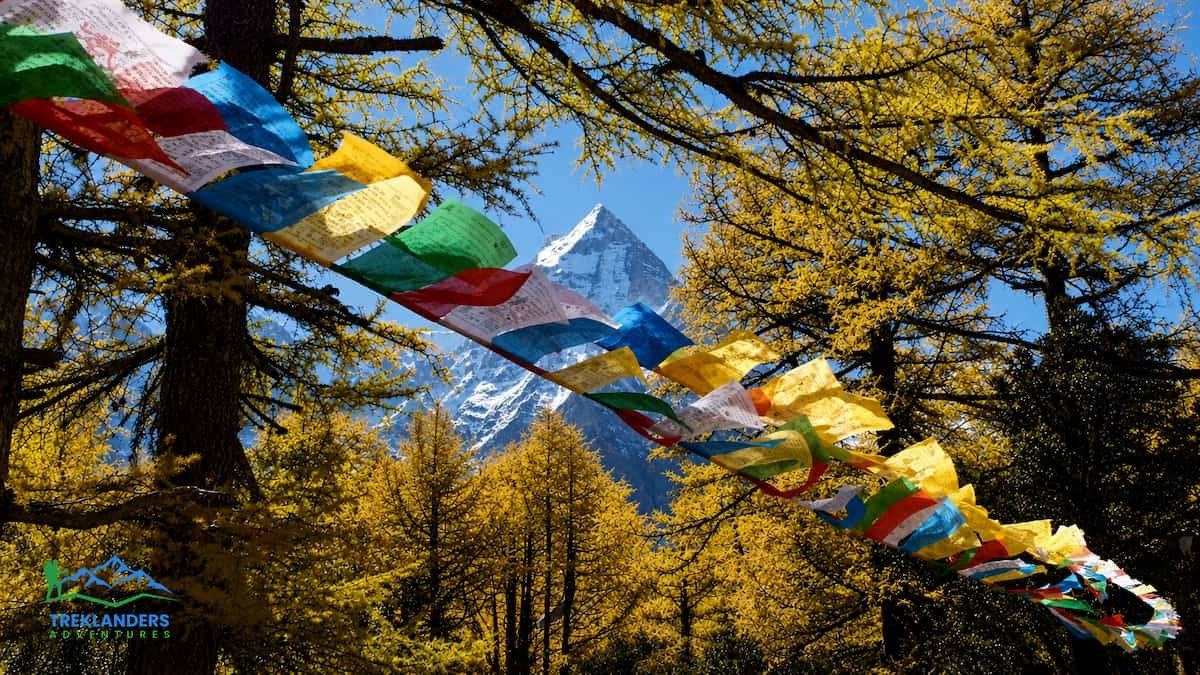
Every full string of prayer flags follows the same color order: blue, white, red, green, and yellow. This sequence is fixed. You will not find a string with the colors shuffled, because each color carries a specific meaning tied to one of the five elements.
Blue represents sky and space. White represents air and wind. Red represents fire. Green represents water. Yellow represents earth. Together, the five colors are meant to represent a complete and balanced universe, and stringing them together in that order is considered essential to the practice. A string missing a color, or with colors out of sequence, is seen as incomplete.
Buddhist philosophy also ties the five colors to a system called the five pure lights, each associated with one of five wisdom energies and one of five directions. This detail rarely comes up in casual trailside explanations from guides, but it is the layer of meaning underneath the more commonly cited element system. Both readings exist side by side, and neither cancels out the other.
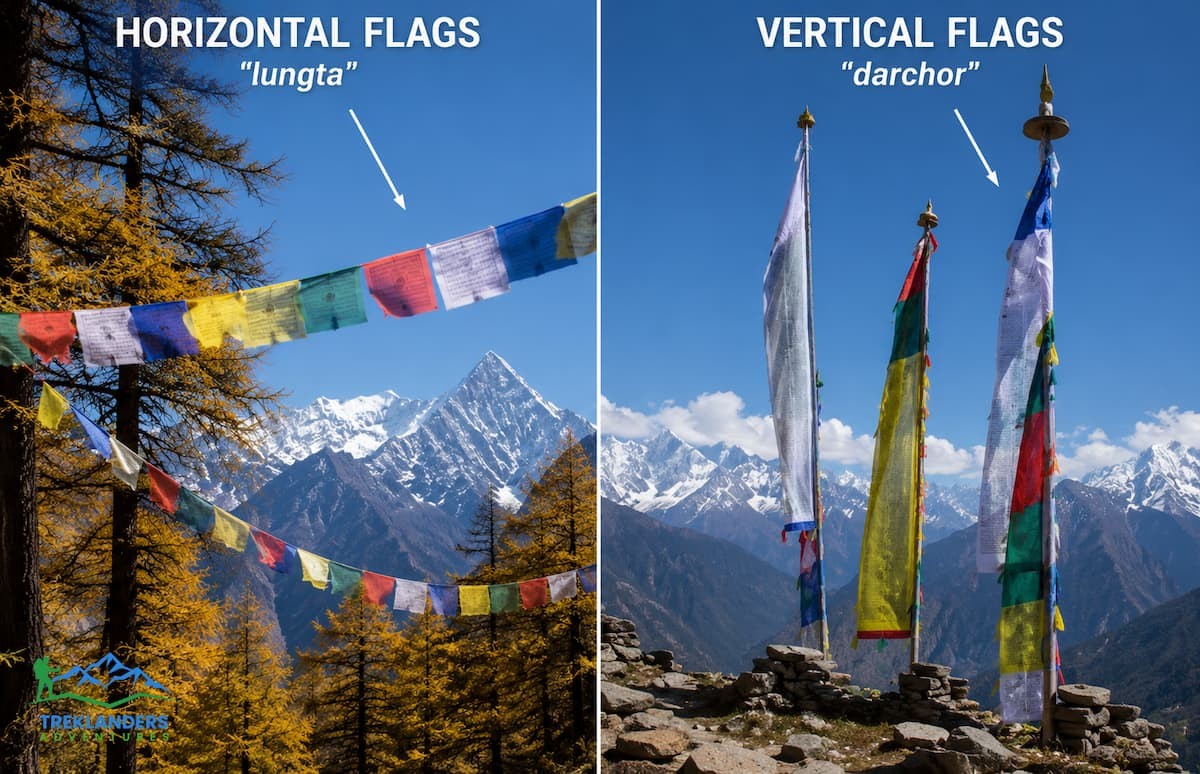
Trekkers usually see two distinct styles on the trail, and they serve different purposes.
Horizontal flags, called lung ta, are the strings you see draped between two fixed points: a bridge railing, two trees, a rooftop and a pole, a stupa and a nearby structure. These are the flags most associated with the wind horse concept. Printed at the center of each flag is usually the image of a horse carrying three flaming jewels on its back, surrounded by mantras and smaller protective animals in the corners, typically a garuda, dragon, tiger, and snow lion. These four animals represent the cardinal directions and specific virtues: the garuda for wisdom, the dragon for confidence, the tiger for confidence without arrogance, and the snow lion for fearless joy.
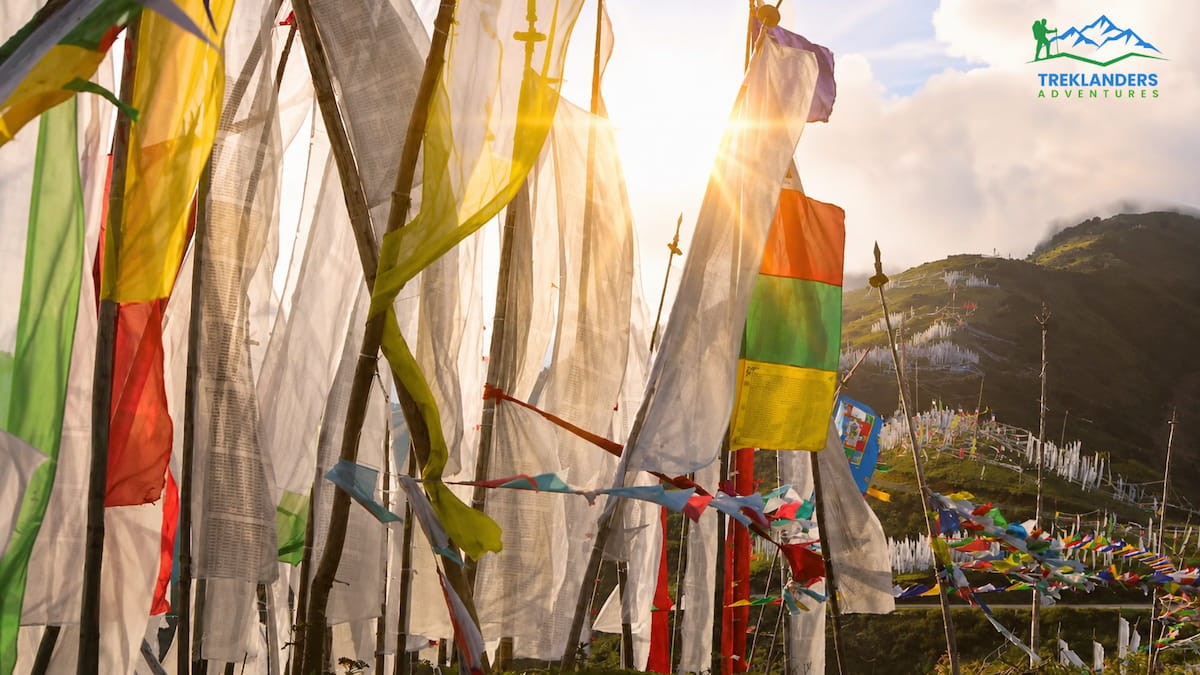
Vertical flags, called darchor, are mounted on a single tall pole, usually planted into the ground or wedged between rocks. You see these most often near monasteries, at the summit of passes, and around chortens. They tend to carry longer text blocks and are replaced or added to on specific auspicious days in the Tibetan calendar, often during Losar, the Tibetan New Year.
Knowing the difference matters because it tells you what kind of site you are near. A cluster of tall vertical poles usually signals a monastery, a significant pass, or a place where a ritual recently took place. A simple horizontal string across a footbridge is a more everyday, ongoing practice, often maintained by a single household or a small group of villagers.
Traditional prayer flags are block printed, a process that has changed very little over hundreds of years. A woodblock is carved with the mantra, the wind horse image, and the four corner animals, all in reverse so the print comes out correctly on the cloth. Ink, traditionally made from natural pigments, is applied to the block, and the cloth is pressed onto it by hand, one flag at a time. Monasteries that have produced flags for generations often still use woodblocks that are decades or even centuries old, passed down and maintained specifically for this purpose.
Cotton was the traditional material, chosen partly because it degrades naturally over time, which fits with the belief that a flag is meant to fade and eventually return to the elements rather than last forever. Many flags sold in trekking towns today use synthetic fabric instead, chosen for durability and lower cost, which changes how the flags weather but does not change the meaning attached to them. A synthetic flag carries the same mantras and holds the same significance as a cotton one. What changes is how it ages: synthetic fabric tends to fade in color faster than it physically tears, while cotton tends to shred and thin before it fully loses its printed color.
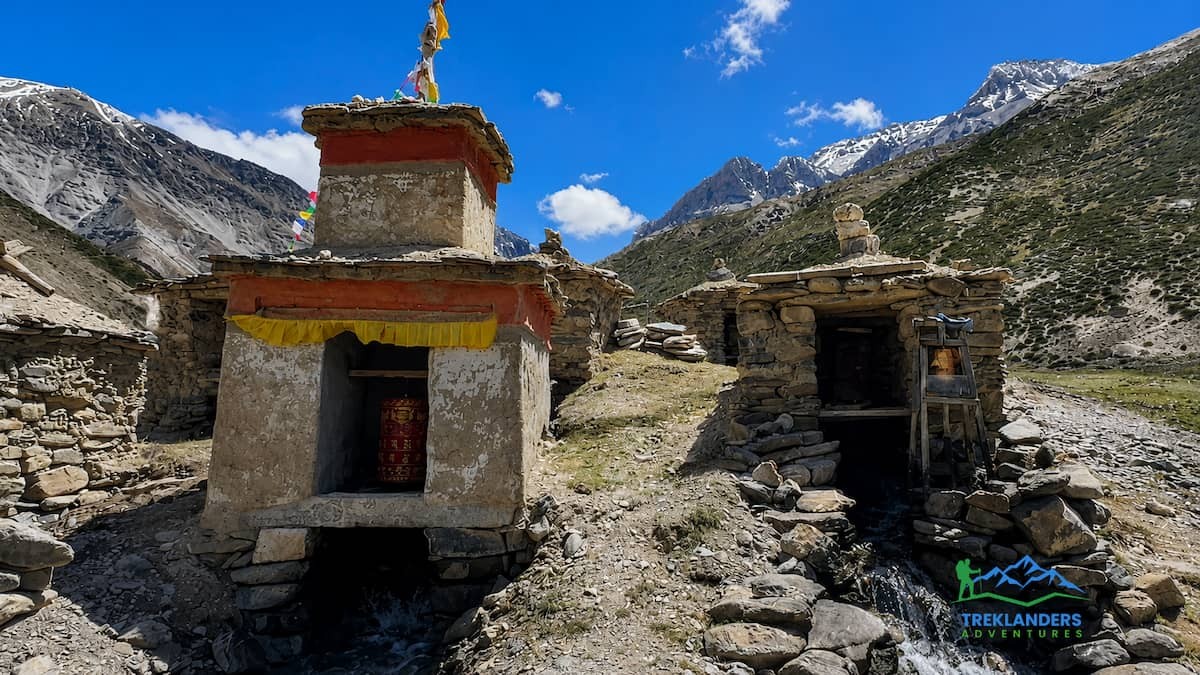
Trekkers often lump prayer wheels in with prayer flags and mani walls, and while the underlying logic is related, they are a distinct practice worth understanding on their own. A prayer wheel is a cylinder, ranging from handheld sizes to large fixed wheels built into monastery walls or standalone structures along the trail, packed with tightly wound paper printed with mantras, again most often Om Mani Padme Hum, repeated thousands or even millions of times on a single scroll inside.
Spinning the wheel clockwise is considered equivalent to reciting every mantra printed inside it. Large fixed wheels along trekking routes, often housed in small roadside structures with a roof to protect them from weather, are meant to be spun by anyone passing, not just by monks or serious practitioners. The same clockwise rule that governs walking past a mani wall applies here: spin the wheel in the same direction you would walk around a stupa, moving with the sun rather than against it.
You will find fixed prayer wheels at monasteries, at village entrances, and occasionally built directly into the flow of water from a stream, using a small waterwheel mechanism so the wheel spins continuously without anyone needing to touch it. This design, sometimes called a water-powered prayer wheel, reflects the same core idea behind flags moving in the wind: mechanical, ongoing repetition of the mantra, generating merit continuously without requiring constant human effort.
This is the part most trekkers never learn, and it changes how you look at every flag for the rest of the trip.
The most common text found on prayer flags is the mantra Om Mani Padme Hum, associated with Chenrezig, the bodhisattva of compassion. This is the same six-syllable mantra you will hear carved into mani stones, spun inside prayer wheels, and chanted quietly by older trekkers and porters as they walk. It is considered one of the most widely used mantras in Tibetan Buddhism, and its repetition, whether spoken, spun, or printed and flown in the wind, is believed to generate compassion and merit.
Beyond the central mantra, flags often carry a block of astrological and protective text specific to the wind horse tradition. This includes prayers for long life, prayers to increase luck and fortune, and dedications asking that the merit generated by the flag's movement benefit all sentient beings, not just the person who hung it. Some flags include the name of the person or family who commissioned the set, along with the date, though this is less common on flags sold commercially to trekkers and tourists.
Sets purchased at monasteries or from serious practitioners will often be printed from traditional woodblocks that have been used for generations, sometimes tracing back to specific monasteries in Tibet. Sets sold in trekking towns to tourists are frequently modern reproductions, still carrying the correct mantras and color order, but produced for a broader market rather than for a specific ritual purpose. Both are considered valid to fly. The tradition does not require monastic ordination to hang a flag. Any person can do it, and the merit generated is not restricted by who put the flag up.
New trekkers sometimes assume old, tattered flags are neglected or abandoned. The opposite is true. A faded, sun-bleached, wind-shredded flag has done exactly what it was meant to do. The fabric wearing down is proof of years of prayers being carried into the wind. Tradition holds that the flags should not be taken down when they fade. Instead, new flags are added on top of or alongside the old ones, letting the layers build up naturally over years.
This is why you sometimes see a single bridge or pole with dozens of strings in various states of decay, some barely more than threads, others bright and clearly new. That layering is not clutter. It is a visible record of ongoing devotion at that specific spot, sometimes spanning decades.
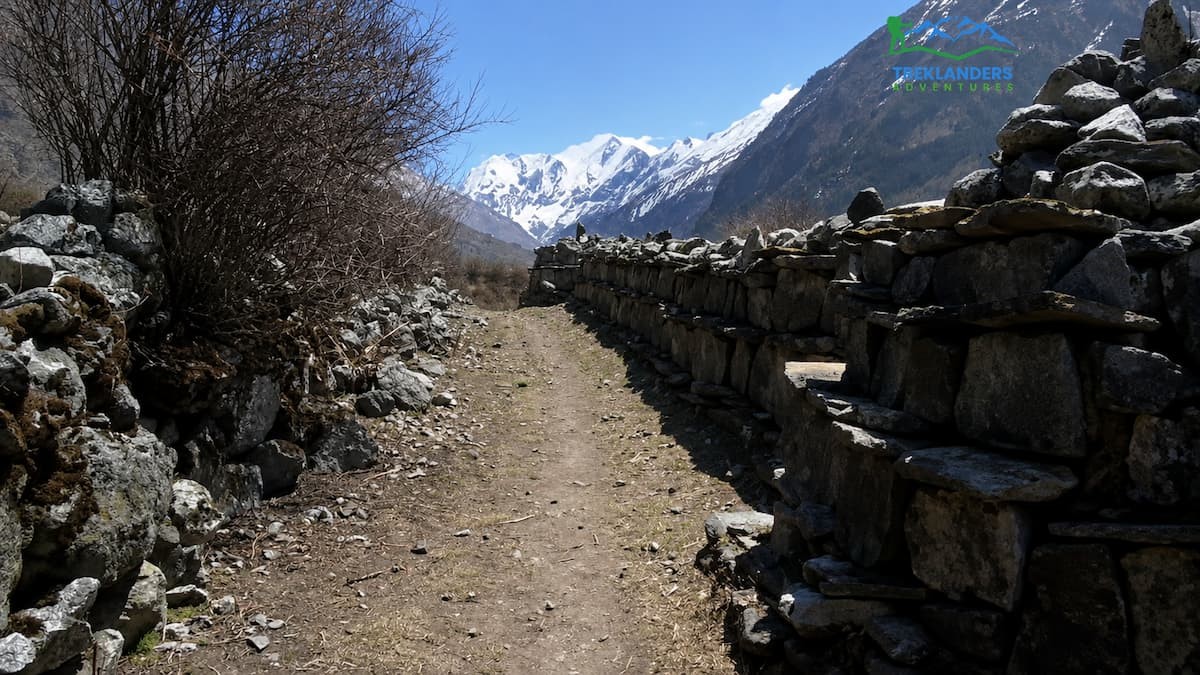
If prayer flags are prayers carried by wind, mani walls are prayers carried by stone. A mani wall is a long, low structure built from flat stones, each one carved or painted with a mantra, most often Om Mani Padme Hum, though other mantras and Buddhist texts appear as well. Some stones carry entire short sutras. Others carry images of deities alongside the text.
These walls run for anywhere from a few meters to well over a hundred meters, depending on how long the community has been adding to them. In villages with a strong Buddhist history, particularly in the Everest region, upper Mustang, Manaslu, and parts of the Annapurna region near Manang, you will find mani walls that have been built up stone by stone over generations, with new carved stones added by pilgrims, villagers, and sometimes visiting trekkers who commission a stone from a local carver.
The stones are not randomly placed. Each one represents an individual act of devotion, carved either by a professional stone carver hired for the purpose or by a person doing the carving themselves as a spiritual practice. Older stones, worn smooth by decades of weather, sit alongside crisp, recently cut ones. The wall grows outward and sometimes upward as more stones are contributed, and a well-established wall in a village with active religious practice is never really finished.
This is the single most important piece of etiquette tied to mani walls, and it is one that guides repeat constantly because visitors get it wrong so often.
You must always pass a mani wall with it on your right side, which means walking on the left side of the wall as you approach it. This keeps the wall on your right hand as you move past, which corresponds to the traditional clockwise circumambulation practiced around all sacred Buddhist structures, including stupas, chortens, and monasteries. The reasoning ties back to how these mantras are meant to be encountered: moving in the same direction as the perceived rotation of the mantra's spiritual energy, which is clockwise in Tibetan Buddhist practice.
On many trekking trails, particularly in the Everest region and around Manang in the Annapurna Circuit, the trail itself splits into two paths as it approaches a mani wall or chorten, precisely so trekkers and locals can choose the correct side without disrupting foot traffic. Guides will often call out "left side" or gesture without needing to explain the full reasoning, because for people trekking through repeatedly, this is instinct. For a first-time visitor, it looks like an arbitrary trail choice. It is not. Taking the wrong path, especially in front of local trekkers, monks, or pilgrims, reads as a visible cultural mistake, similar to walking into a place of worship with your shoes on. It will not usually draw a comment, but it is noticed.
If a mani wall sits directly in your path with no split trail, look for the worn path on the correct side. Locals maintain the correct habit even where the trail itself has not been formally divided.
A stray mani stone found along the trail should be left exactly where it is. These are not souvenirs. Removing a carved stone, even one that looks abandoned or discarded, is treated as a serious breach of respect, comparable to walking off with an object from inside a temple. If you want a memento of the mantras you have seen, buy a small carved stone from a shop in a trekking town, where the stone was made specifically for sale rather than placed as a devotional object.
The same rule applies to stacked stone cairns you sometimes see near passes, which are separate from mani walls but carry a related idea. Some cairns mark trail routes in poor visibility. Others are devotional, built by trekkers, pilgrims, or porters as a small act of merit-making or a marker of gratitude for a safe crossing. Adding a stone to an existing cairn is generally welcomed. Knocking one down or taking stones from it is not.
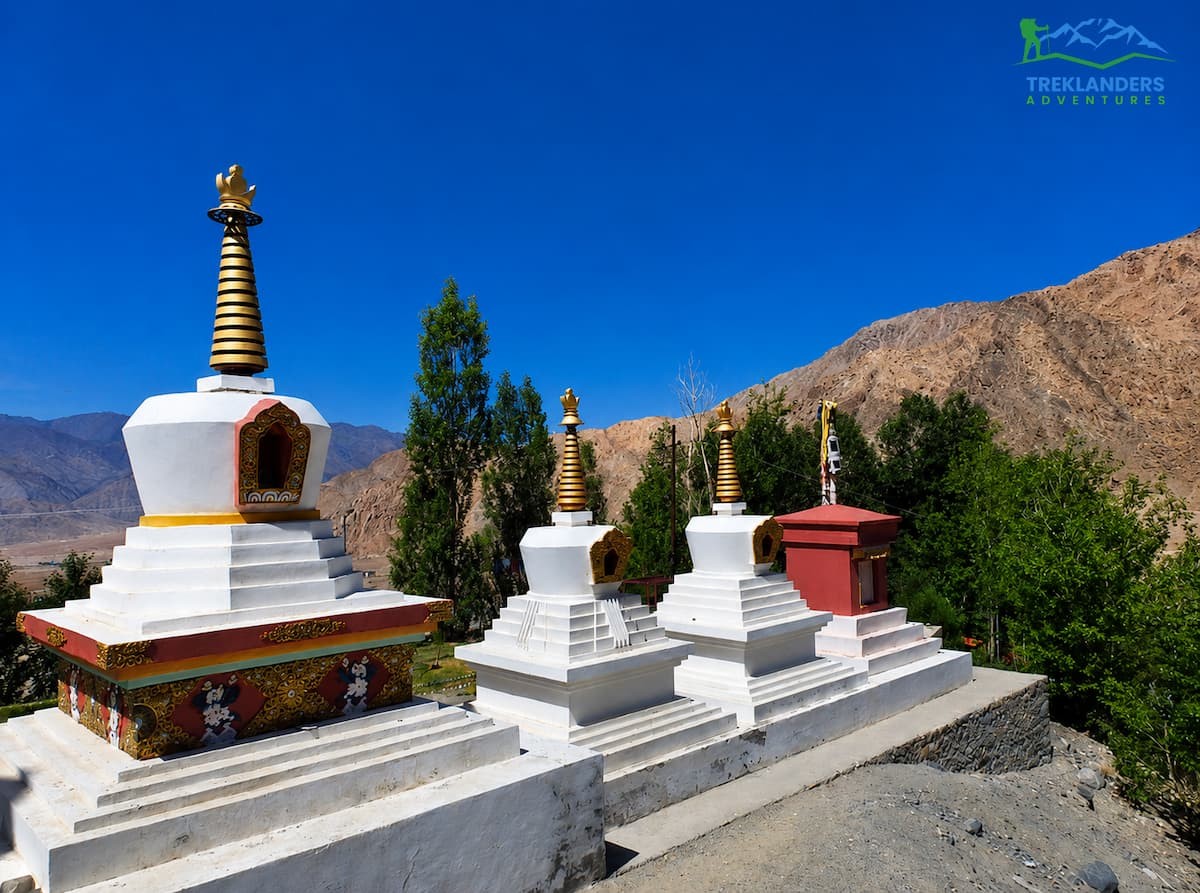
Mani walls rarely stand alone. They are usually found near chortens, the smaller Himalayan cousin of the large stupas found in places like Boudhanath and Swayambhunath in Kathmandu. A chorten is a solid, dome-topped structure, often whitewashed, built to house relics, sacred texts, or the remains of a respected teacher, and it follows a symbolic structure representing the path to enlightenment, from the square base representing earth up through a series of tiers to a spire at the top representing the dissolution of the physical world into pure awareness.
You pass a chorten the same way you pass a mani wall, keeping it on your right as you walk clockwise around it. On many trekking routes, chortens mark trail junctions, village entrances, and high points, functioning as both spiritual markers and, in practice, as physical landmarks trekkers and guides use for orientation. A chorten at a fork in the trail is rarely a coincidence. These structures were often placed deliberately at points where travelers needed both a physical marker and a moment of pause.
Larger monasteries sometimes host major stupas as their central structure, and these tend to accumulate the densest concentration of flags, mani stones, and prayer wheels in a given region. Tengboche Monastery in the Khumbu, aside from its role as a functioning monastery with resident monks, is also one of the best places on any Everest region trek to see this entire system working together at once: flags strung from the rooftops and surrounding poles, a mani wall along the approach path, and prayer wheels lining the entrance for visitors and pilgrims to spin on their way in.
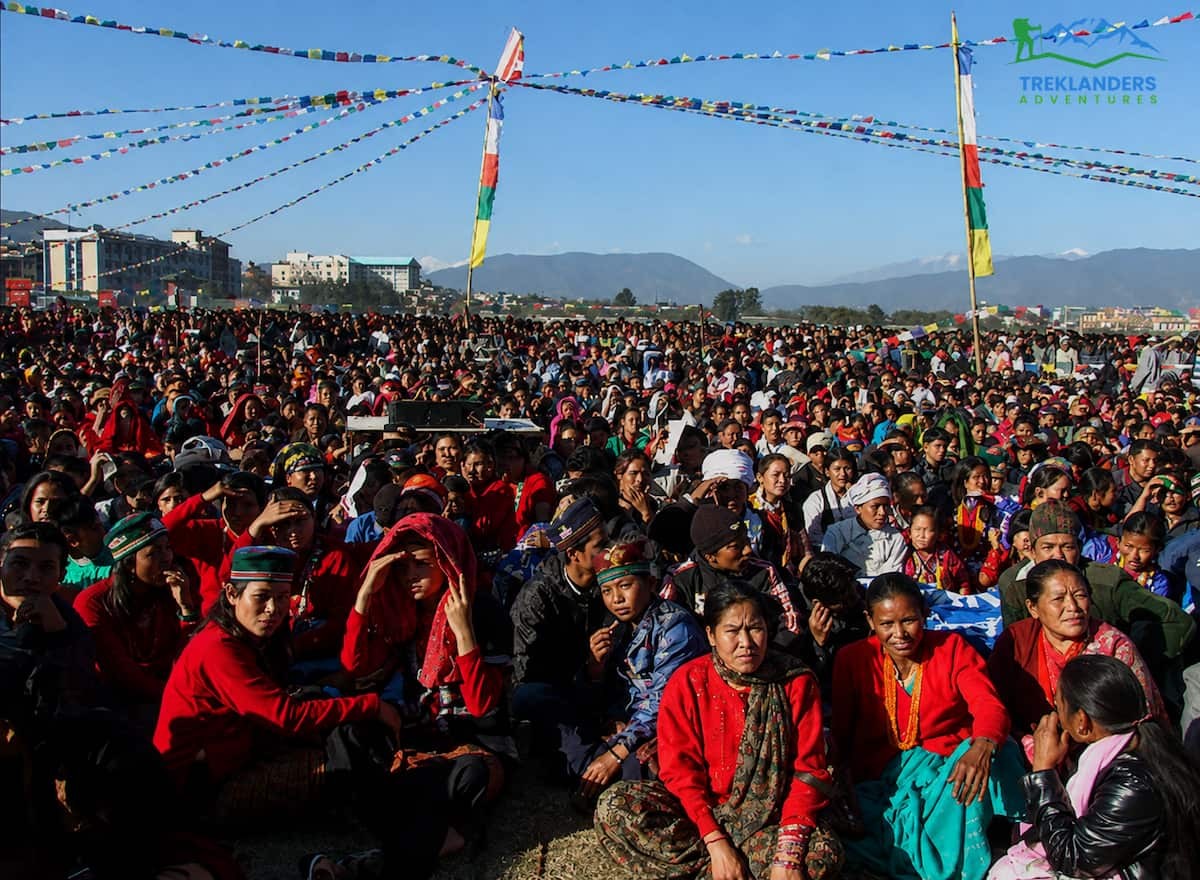
Certain days in the Tibetan Buddhist calendar are considered especially auspicious for hanging new prayer flags, and trekkers who happen to pass through a village during one of these periods often get to see the practice in action rather than just its results. Losar, the Tibetan New Year, typically falling in February or March depending on the lunar calendar, is the most significant of these occasions. Households replace old flags with new ones, and monasteries hold ceremonies that often include raising a large central flagpole, sometimes with the whole community present.
Mani Rimdu, a multi-day festival held at monasteries including Tengboche in the Khumbu region, combines masked dances, ritual performances, and blessings, and draws both local practitioners and increasing numbers of trekkers who plan their itinerary specifically to be in the area when it happens. While the festival itself centers on the dances and ceremonies rather than flag hanging specifically, the surrounding days often see a noticeable increase in new flags appearing around the monastery grounds, tied to the heightened religious activity of the period.
Trekkers who want to witness these events should plan the timing of a trek deliberately, since the dates shift each year based on the lunar calendar and are worth confirming directly with a guide rather than assuming a fixed calendar date.
Once you understand the basic system, prayer flags and mani walls become genuinely useful navigation and context clues, not just cultural background noise.
A dense cluster of vertical flags on a ridgeline usually marks a significant pass. High passes across Nepal, from the Thorong La on the Annapurna Circuit to the Renjo La and Cho La in the Everest three passes region, to the Larkya La on the Manaslu Circuit, are almost always marked with a thick concentration of flags at the highest point. This is partly practical, since passes are the windiest spots on any route and therefore the most effective place to fly a flag, and partly symbolic, since crossing a high pass safely has long been considered an accomplishment worth marking with an offering.
A mani wall or chorten at the entrance to a village signals you are crossing into a settlement with an established religious history, not just a random cluster of houses. Villages like Khumjung and Khunde near Namche Bazaar, Manang on the Annapurna Circuit, Lo Manthang in Upper Mustang, and Samagaon on the Manaslu Circuit all have prominent mani walls and chortens marking their approaches. Passing through the correct side of these structures as you enter a village is a small but visible sign of respect that locals notice, even if they say nothing.
Flags at a bridge crossing are common everywhere, but a noticeably dense concentration at a specific bridge, or a bridge with a small shrine attached, often points to a location with a history of difficulty or danger, such as a river known for flash floods or a crossing point where an accident occurred. Guides and porters will sometimes mention this history if asked directly, though it is not always volunteered.
Isolated shrines, small piles of stones, or single flags along an otherwise plain stretch of trail often mark memorial sites. In the Khumbu region near Thukla, on the trail toward Everest Base Camp, an entire hillside is covered in memorial chortens for climbers who died on Everest and nearby peaks. Walking through this area, framed by prayer flags snapping in the wind against a backdrop of Ama Dablam and the surrounding peaks, is one of the more affecting moments on the entire trek, and understanding what you are looking at changes the experience considerably.
A monastery is almost never hard to identify from a distance because of its flags alone. Gompas across the Everest region, including the well known monastery at Tengboche, are typically surrounded by tall vertical poles, often dozens of them, replaced and added to during specific festivals. If you see a concentration of vertical flags well beyond what a single household would maintain, you are very likely looking at a monastery or a major pilgrimage site even before the building itself comes into view.
Nepal is not religiously uniform, and the density and style of prayer flags and mani walls shifts noticeably depending on which region you are trekking through.
The Everest region, the Manaslu Circuit, upper sections of the Annapurna Circuit around Manang, and Upper Mustang are all areas with strong Tibetan Buddhist populations, largely descended from or culturally connected to Tibetan communities that settled these high valleys generations ago. In these regions, prayer flags and mani walls are dense, well maintained, and central to daily life. You will see them at nearly every home, not just at religious sites.
Lower sections of most trekking routes, particularly the middle hills below around 2,500 meters, tend to have mixed populations with Hindu, Buddhist, and animist traditions overlapping. Flag density drops noticeably here, and you are more likely to see other religious markers instead, including small Hindu shrines, Newari-style temples in larger towns, and local animist practices tied to specific mountains, rivers, or forests that predate both Hinduism and Buddhism in the region.
Langtang and Helambu sit in an interesting middle zone, with strong Tamang Buddhist cultural influence that produces a flag and mani wall density closer to what you find in the high Buddhist valleys, despite these treks starting much closer to Kathmandu than routes like Manaslu or Upper Mustang.
Kanchenjunga and the far eastern regions of Nepal show similar patterns to the Everest region, with a strong Tibetan Buddhist presence in the higher villages, though trekker traffic here is far lower, so the flags and walls you encounter feel less oriented toward outside visitors and more purely functional, maintained by and for the local community.
Recognizing these shifts as you move through different regions on a longer trek, or between different treks entirely, adds a layer of geographic and cultural understanding that most guidebooks skip over in favor of describing viewpoints and altitude gain.
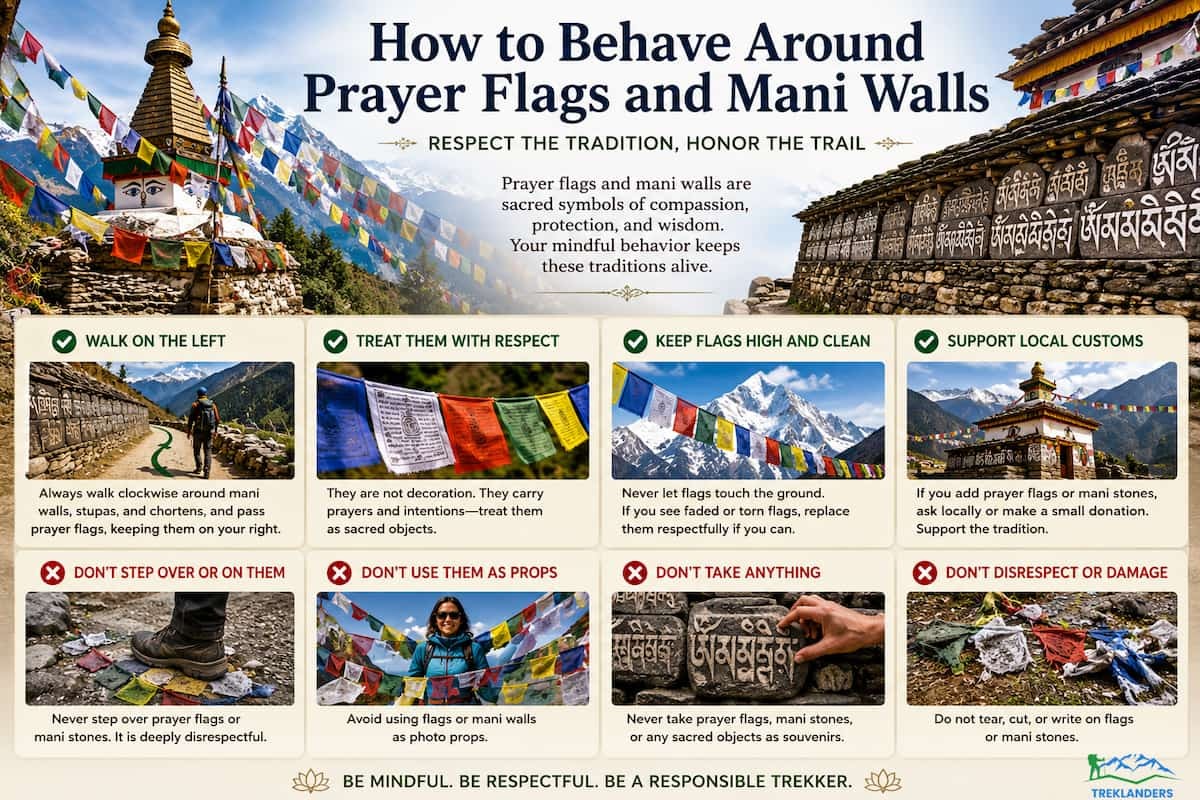
Respectful behavior around these structures is not complicated, but a few specific habits matter more than trekkers usually expect.
Walk on the correct side of every mani wall, chorten, and stupa you pass, keeping the structure on your right. This is the single habit worth memorizing before you ever set foot on a trail in Nepal.
Do not step over prayer flags that have fallen or are lying low across a path, and do not use flag lines as anchor points for your own gear, tent guy lines, or laundry, even temporarily. If a flag line is genuinely blocking a trail in a way that requires moving it, ask a guide or local person rather than handling it yourself.
Do not photograph people at private religious moments, including individuals spinning prayer wheels, prostrating near a monastery, or adding a new flag to a pole, without asking first. Photographing the structures themselves, the flags, the walls, the chortens, is generally fine and welcomed, since these communities are used to trekkers documenting the scenery. Photographing a person in the middle of a personal devotional act is a different situation and deserves a direct question first.
If you want to participate rather than just observe, ask your guide about purchasing a set of prayer flags to hang yourself. This is a common and welcomed practice for trekkers, particularly near passes or at lodges close to a monastery. A guide can walk you through hanging the flags correctly, including the color order and appropriate site, and can explain any specific customs tied to that location. This tends to be one of the more memorable small experiences of a longer trek, and it gives you a direct, hands-on understanding of the tradition rather than a passive one.
Avoid taking a mani stone, a piece of a chorten, or any small object from a religious site as a souvenir, no matter how insignificant it looks. If you want a physical memento, buy one made for sale in a trekking town or from a local shop, where the transaction is straightforward and nothing sacred is being removed from its intended place.
Finally, listen when your guide offers context you did not ask for. Many trekking guides in Nepal grew up in the villages and valleys they now lead treks through, and the explanations they give about a specific mani wall, a particular chorten, or a memorial site often carry family or community history that goes well beyond what any guidebook, including this one, can cover. Asking a simple, direct question, such as who built a particular wall or what a specific memorial site commemorates, usually opens up a much richer conversation than most trekkers expect.
A few misconceptions come up repeatedly among first-time trekkers, and clearing them up in advance saves you from small but avoidable mistakes on the trail.
Prayer flags are not sold in a specific color combination to match a person's mood or preference. The five-color set is fixed. A shop selling loose flags in random single colors for decoration is selling a tourist product disconnected from the religious set, not a valid alternative version of it. If you want to hang flags in the traditional way, buy a full set with all five colors in the correct order.
A tattered, sun-bleached flag is not a sign that the site has been abandoned or forgotten. As covered earlier, decay is the intended lifecycle of a flag, not evidence of neglect. Do not assume a heavily weathered site is less significant than one with crisp, new flags. Often the opposite is true, since a heavily layered site indicates decades of continuous devotion rather than a single recent visit.
Mani walls are not simply decorative stonework added to make a village look scenic for trekkers. They predate organized trekking tourism in Nepal by centuries in most established Buddhist communities, and their construction and maintenance continue independent of whether trekkers pass through at all. Treating them as a photo backdrop without understanding their function misses what they actually are.
Not every stone structure you see is a mani wall. Simple retaining walls, terracing for agriculture, and ordinary boundary walls are common throughout rural Nepal and look similar to an untrained eye. The distinguishing feature of a mani wall is the carved or painted text on individual stones. If you are unsure whether a wall in front of you is religious or purely functional, look closely at the stones themselves before deciding which side to walk on, or simply ask your guide.
Finally, hanging a prayer flag yourself as a visitor is not considered disrespectful or an act of cultural appropriation in the way some travelers assume. The practice has always been open to anyone willing to participate correctly, and local guides generally welcome the interest rather than viewing it as intrusive. The line that matters is not who is allowed to hang a flag, but whether it is done with attention to the color order, the site, and the basic etiquette involved.
Understanding prayer flags and mani walls does not just satisfy curiosity. It changes how the trail itself reads to you. A pass stops being just a high point with a good view and becomes a place people have marked as significant for centuries. A village entrance stops being an arbitrary cluster of buildings and becomes a threshold, marked the same way it has been marked for generations. A faded, tattered flag stops looking neglected and starts looking like proof of years of ongoing devotion.
None of this requires religious belief on your part to appreciate. It requires attention, and a willingness to walk past these structures correctly rather than around them without a thought. Every trekking route through Nepal, whether it is a short trek near Kathmandu or a multi-week crossing through Kanchenjunga or Upper Mustang, is threaded through communities that have been reading and adding to this landscape of flags, stones, and mantras for far longer than trekking tourism has existed. Learning to read it, even at a basic level, is one of the more direct ways to actually connect with the places you are walking through, rather than simply passing through them on the way to a summit or a viewpoint.
The next time you cross a suspension bridge strung with faded cloth, or pass a long stone wall stacked with carved slabs on the edge of a village, you will know what you are looking at. You will know which side to walk on. You will know why the flags are torn instead of new, and why that matters more than a fresh set would. That small shift, from walking past something to understanding it, is often what separates a trek that is just physically demanding from one that actually stays with you.
Can beginners trek to Everest Base Camp? Learn about the difficulty, altitude, training, and preparation needed for a successful EBC Trek.
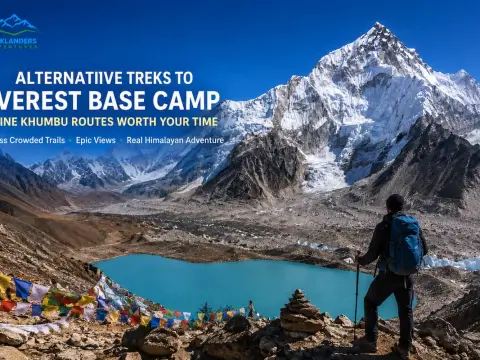
Discover nine incredible alternatives to Everest Base Camp, from Gokyo Lakes and Pikey Peak to remote valleys and challenging high passes.
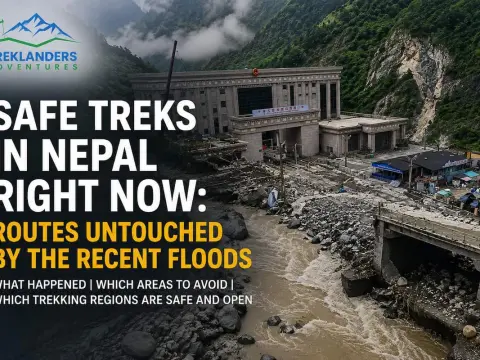
Discover which trekking routes in Nepal remain safe and open after the recent floods, and which affected areas travelers should avoid for now.



