Is Nepal Safe for Solo Female Trekkers? A Complete Safety Guide
19 Aug 2026
Discover how solo female trekkers can explore Nepal safely with practical advice on guides, permits, altitude, preparation, and trail safety.

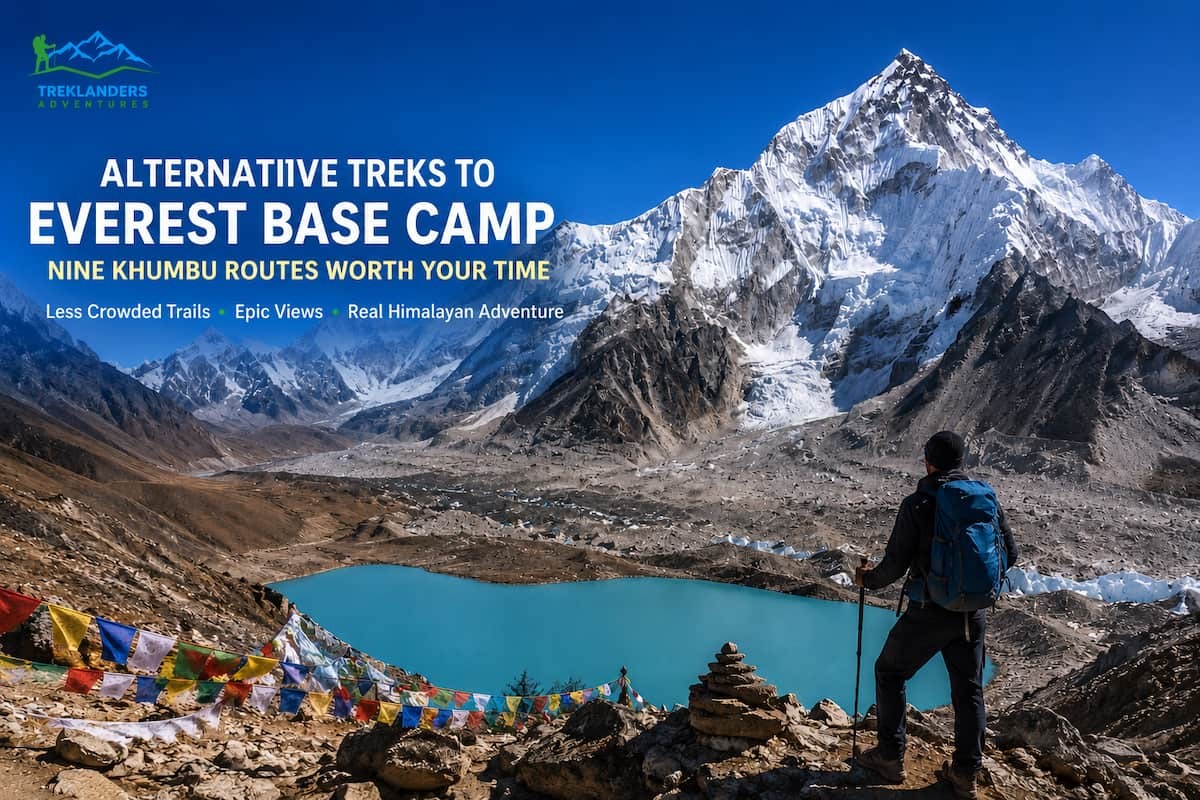
Everest Base Camp gets all the attention, and most of it is deserved. But after guiding groups through the Khumbu for years, we at Treklanders keep noticing the same thing: the trail to EBC is only one story this region tells. Walk a week either side of peak season and you'll share teahouse dining rooms with forty other trekkers in the same brand of down jacket, queue at the same suspension bridges, and photograph the same rock pile at 5,364 meters that half of Instagram has already posted.
None of that makes the classic trek bad. It makes it crowded, and crowding changes a trek. Lodges book out in October. Lukla flights stack up for hours when the weather turns. The trail gets so well trodden that the sense of discovery, the actual reason most people go trekking in the first place, gets diluted.
We've watched this shift happen in real time. A decade ago, "trekking to Everest" meant one route, full stop. Now a growing share of the trekkers who come through our office in Kathmandu already know they don't want that route, or they've done it once and are back for something different. They ask about Gokyo, about the passes, about that Pikey Peak sunrise photo a friend posted last year. This guide is more or less the answer we give them, written down.
The Khumbu and its neighboring valleys hold far more than one route to an Everest viewpoint. Some alternatives share the EBC trail for a few days before branching into quieter territory. Others avoid it almost entirely and deliver views that locals and mountaineers rate above the standard base camp panorama. A few demand more skill and stamina than the classic trek. A few demand less. Here are nine of them, what each one actually involves, and who they suit.
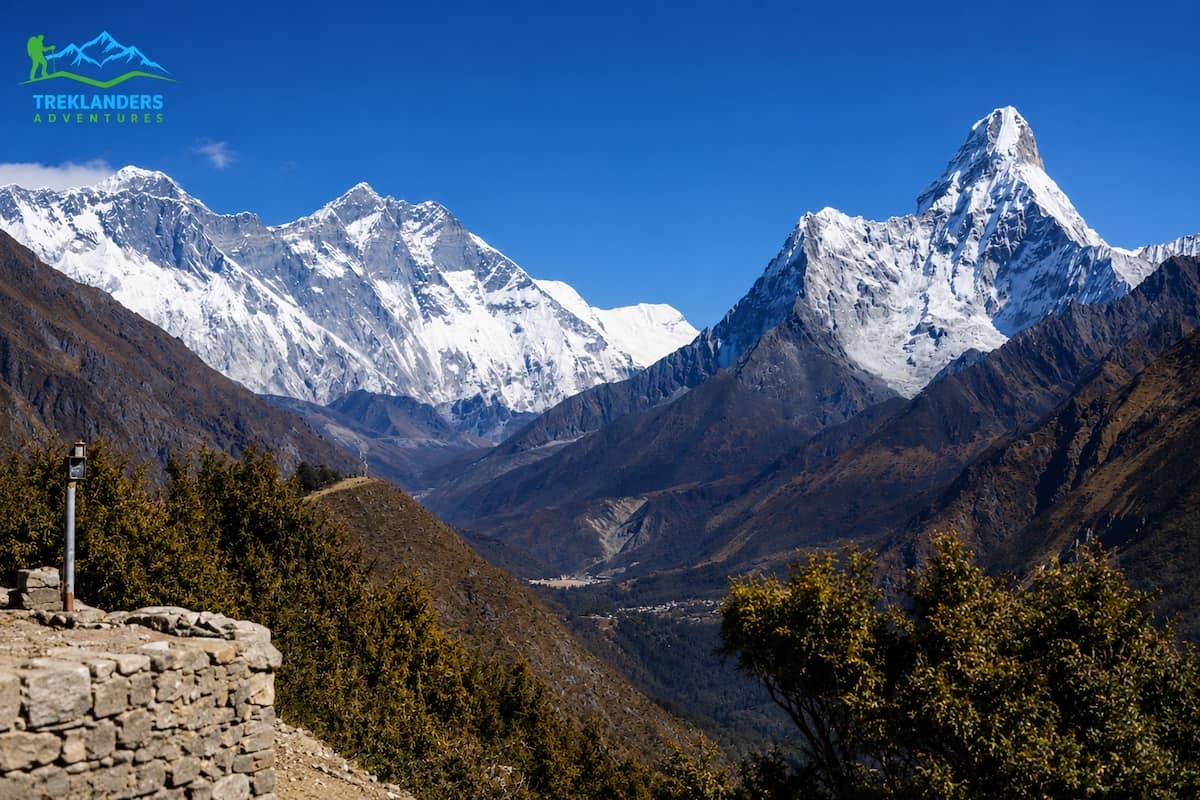
Three things push trekkers toward alternatives.
The first is crowding. Peak season, late September through November and again March through May, puts thousands of people on the same narrow trail at once. Teahouses in Namche Bazaar, Dingboche, and Gorak Shep fill early, meals take longer to arrive, and the solitude that draws people to the mountains gets hard to find on the busiest stretches.
The second is Lukla. Every EBC trek starts or ends with a flight into one of the most weather-dependent airstrips on earth. Fog rolls in, flights get delayed by hours or days, and during bad stretches the backlog can strand hundreds of trekkers in Kathmandu or Lukla at once. Routes that start on foot from a road-accessible town remove that single point of failure, even if they add a few days of walking.
The third is repetition, in a more personal sense. Trekkers who've already done EBC, or read every blog post about Kala Patthar sunrise before ever booking a flight, want a route that isn't already familiar from a hundred photographs. Gokyo Ri, Pikey Peak, and the high passes deliver views of Everest that arguably beat the base camp itself, from angles most people never see.
There's a quieter fourth reason, one trekkers rarely say out loud until they're three days into an alternative route: base camp itself is a bit of an anticlimax. It's a jumble of rock and glacier ice with no clear view of Everest's summit from the ground. The mountain hides behind the shoulder of Nuptse. Most of the famous photographs everyone associates with "Everest Base Camp" actually come from Kala Patthar, a separate viewpoint an hour's climb above camp. Trekkers who know this in advance often go looking for a trek where the main event and the best view are the same place. Several of the alternatives below deliver exactly that.
None of this argues against the classic trek. It's still a genuinely special walk, and for a first-time visitor to Nepal who wants the single most famous trekking route on the planet, it remains the obvious choice. But if you've got the days, the fitness, or just the curiosity to look sideways at the map, here's what else the Khumbu and its neighboring valleys offer.
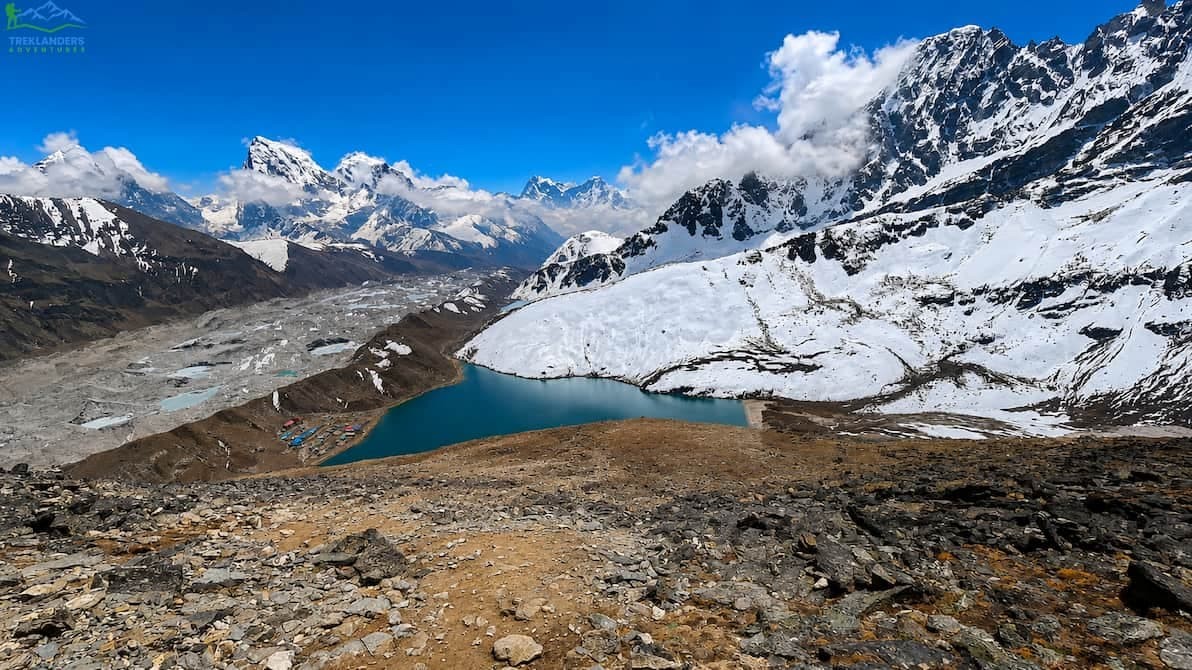
The Gokyo Valley runs parallel to the main EBC trail, separated by a wall of mountains and reached through Dole rather than Tengboche. Trekkers follow the EBC route as far as Namche Bazaar, then peel off westward along the Dudh Kosi's other branch, climbing through Machhermo before reaching Gokyo village on the shore of the third of six glacial lakes that give the valley its name.
What makes Gokyo worth the detour is the combination of water and altitude. The lakes sit at roughly 4,700 to 4,800 meters, an improbable turquoise against grey moraine and white peaks, sacred to both Hindu and Buddhist pilgrims. Beyond them runs the Ngozumpa Glacier, Nepal's longest, a slow-moving river of ice and rubble that most EBC trekkers never lay eyes on.
Then there's Gokyo Ri. At 5,357 meters, local guides frequently rate this viewpoint above Kala Patthar. From the summit you get Everest, Lhotse, Makalu, and Cho Oyu in a single sweep, four of the world's six highest peaks from one spot, with the Ngozumpa Glacier curling below and the lakes catching the morning light. We've stood up there before dawn more times than we can count, and it still stops the conversation.
A standard Gokyo Lakes trek runs 12 to 14 days round trip from Kathmandu, following the same acclimatization logic as EBC: gradual altitude gain, a rest day around Namche or Machhermo, an early departure for the Gokyo Ri summit push. The trail sees a fraction of the foot traffic the main EBC route does, even in high season, largely because most itineraries still default to Base Camp as the headline destination. That's slowly changing, but for now this remains one of the best ratios of reward to crowd in the whole region.
For trekkers who want both Gokyo and Everest Base Camp without committing to the full Three Passes circuit, a combined itinerary crossing the Cho La Pass (5,420 meters) links the two valleys. It's a harder trek than either alone. The pass involves a boulder field and, depending on conditions, some travel over snow and ice. But it turns two separate trips into one continuous loop and avoids backtracking down the trail you climbed.
Wildlife sightings tend to be better here too. The upper reaches around Gokyo see fewer boots on the ground, and it's not unusual to spot Himalayan tahr picking across the scree, or a lammergeier riding the thermals above the lake. Machhermo, one of the overnight stops en route, keeps a small yeti "museum," really a display about a reported 1974 attack on a local herder's yaks. It's more folklore curiosity than serious exhibit, but it's the kind of detail that gives the valley its own character instead of feeling like a Base Camp knockoff.
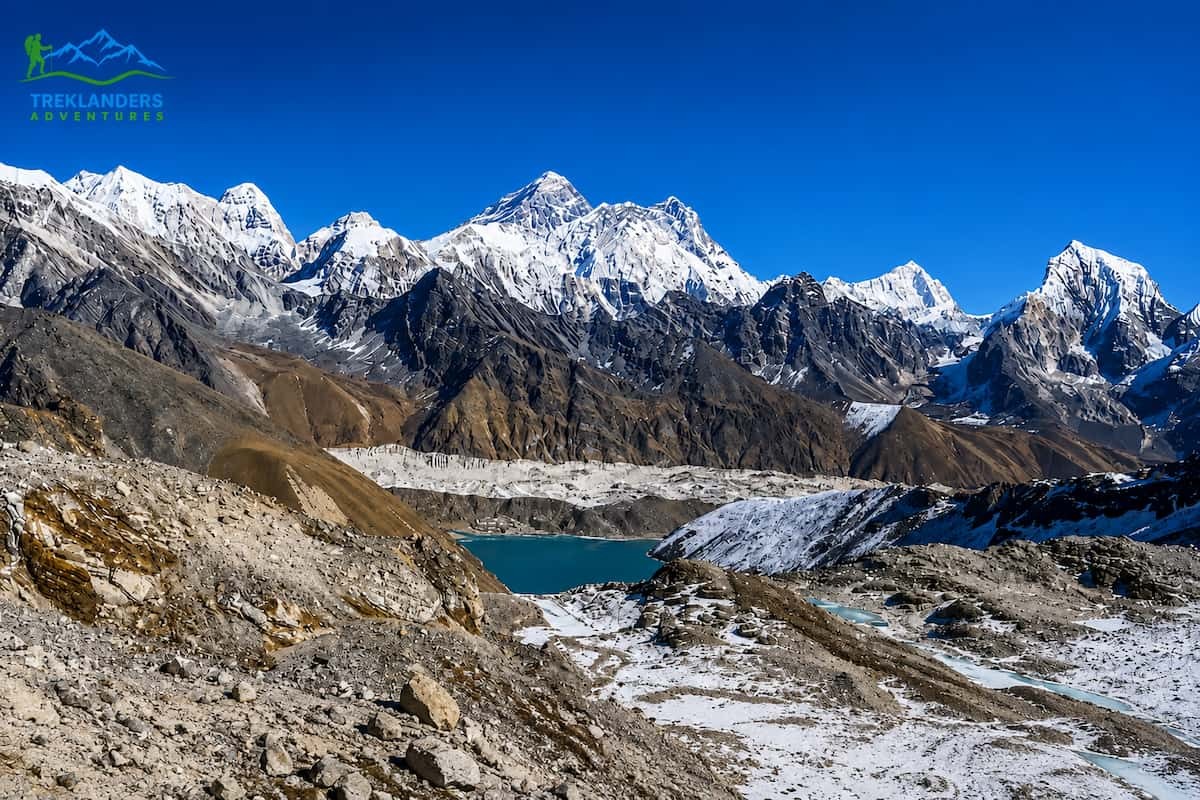
If Gokyo is the moderate alternative, Three Passes is the ambitious one. This route strings together Kongma La (5,535 meters), Cho La (5,420 meters), and Renjo La (5,360 meters), while still taking in Everest Base Camp, Kala Patthar, and Gokyo Ri along the way. Call it less a detour from the classic trek than an expansion of it. You get everything EBC offers, plus the Gokyo Valley, plus three mountain passes, plus villages like Thame and Chhukung that the standard itinerary skips entirely.
The appeal isn't subtle. Where the standard EBC trek is a there-and-back walk along one valley, Three Passes loops through the entire upper Khumbu. Crossing Kongma La means an early start over loose scree and a boulder-strewn descent into the Khumbu Glacier basin near Lobuche. Cho La adds a stretch of glacier travel that, depending on the season and recent snowfall, calls for microspikes or crampons. Renjo La rewards the effort with what might be the single best panorama of the whole trek: Everest and Cho Oyu framed together, Gokyo Lakes spread out far below, the kind of view that makes you stop reaching for your camera and just stand there.
Don't take this trek lightly. Most itineraries run 18 to 21 days, and the passes demand real fitness, cold-weather competence, and a guide who knows current trail and snow conditions. Pass crossings that are straightforward in good weather turn genuinely dangerous when a storm rolls in or snow obscures the route markers. We generally recommend it to trekkers who've already got at least one high-altitude trek behind them, ideally EBC or Annapurna Circuit, so the altitude and the daily rhythm of teahouse trekking aren't both new experiences at once.
What you get in return is a trek very few people finish. The numbers who attempt Three Passes are a small fraction of those who walk to Base Camp, and the sense of having earned every viewpoint, rather than simply walked to it, is hard to overstate.
There's also a logistical upside that surprises a lot of first-time Three Passes trekkers: because the route loops rather than backtracks, you spend far less time re-walking trail you've already seen. The classic EBC trek has you walking down through Dingboche, Tengboche, and Namche a second time on the way out, past the same suspension bridges and the same lodges you passed on the way up. Three Passes trades that repetition for new terrain almost every day. It stops feeling like a there-and-back walk and starts feeling like an actual journey across a mountain range.
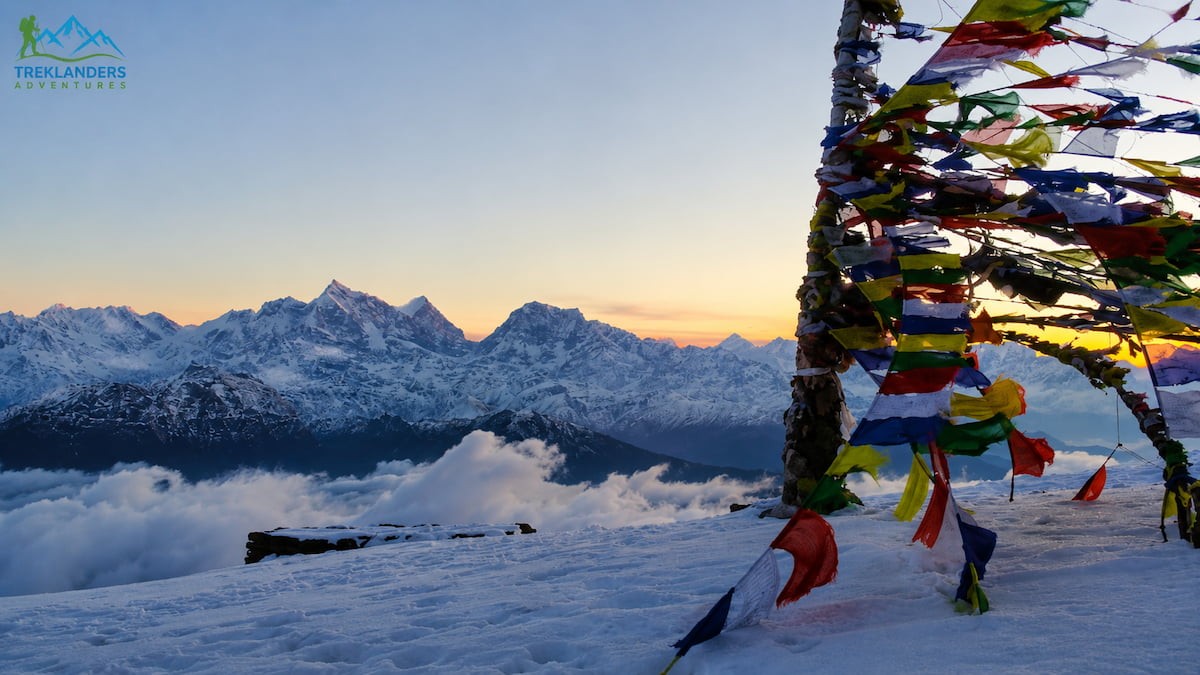
At the opposite end of the difficulty spectrum sits Pikey Peak, a trek Sir Edmund Hillary reportedly named as his favorite Everest viewpoint in the region. That claim gets repeated so often it's practically part of the trail's identity, but it holds up once you've stood there at sunrise.
Pikey Peak tops out at 4,065 meters, which puts the whole trek at an altitude most fit walkers handle without much trouble. The trailhead sits well south of Lukla, usually reached by a long jeep or bus ride from Kathmandu through Ramechhap or directly along the BP Highway, through hill country that feels more like rural Nepal than high-mountain Khumbu. Trekkers pass through Sherpa villages, Jhapre, the base camp area, Junbesi, with rhododendron forest, terraced fields, and mani walls rather than glacial moraine.
The reward is the summit sunrise: Everest, Lhotse, Makalu, and Kanchenjunga strung across the horizon along with the Numbur Himal closer at hand, without the queue of headlamps that forms at Kala Patthar on a clear October morning. Because the trek stays below 4,100 meters, altitude sickness risk is low, which makes it one of the few genuinely family-friendly options in the region. Older trekkers, younger ones, and anyone who wants Everest views without weeks of preparation can manage it.
Most itineraries run five to seven days, with shorter three- or four-day versions for trekkers tight on time, and longer versions that extend toward Junbesi and the old Jiri trail for those who want to keep walking. It won't replace standing at the foot of the mountain itself, and it isn't meant to. It offers a genuinely different kind of Everest trek: culturally rich, low-altitude, and quiet, the sort of route you'd recommend to someone who wants the mountains without the commitment.
The access route matters here too. Rather than flying into Lukla, most Pikey Peak itineraries start with an overland drive from Kathmandu toward Dhap or Jiri, with no dependence on a mountain airstrip that might or might not open depending on cloud cover. For trekkers who've heard the Lukla flight-delay horror stories and would rather not gamble their itinerary on them, that's a real reason to look at this route. It also means the trek can start and end more predictably, which matters if you're working around a tight flight home.
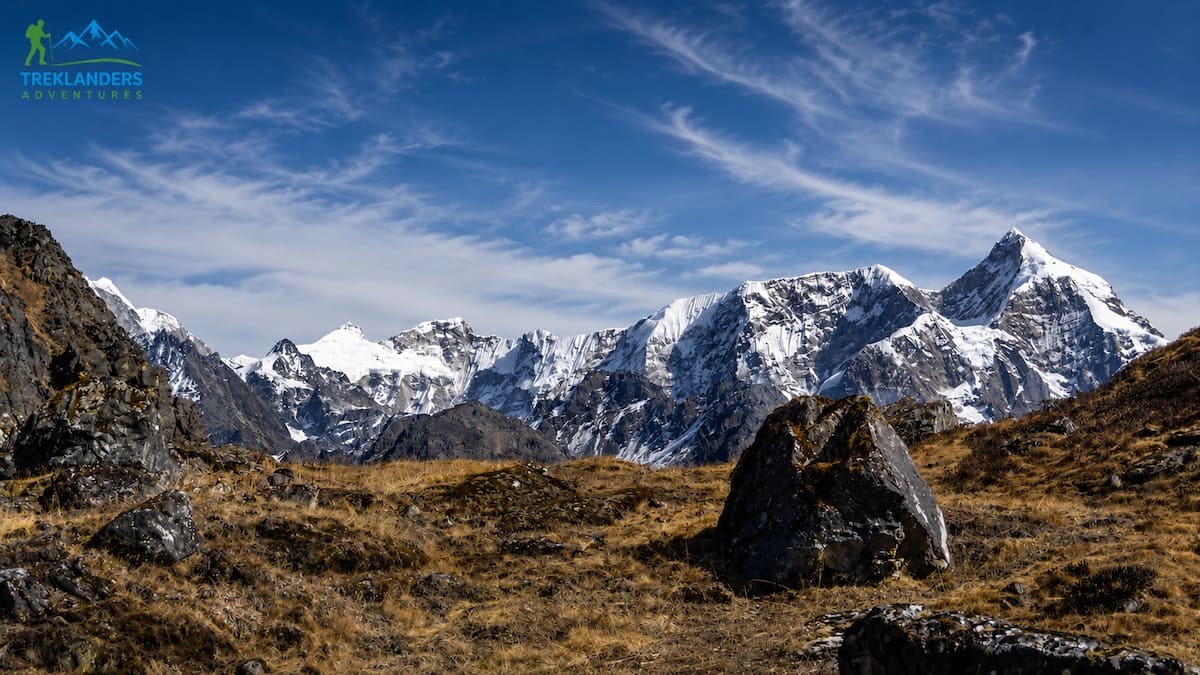
Fewer trekkers have heard of this one, which is largely the point. The Numbur Cheese Circuit loops through the Solu region south of the main Khumbu, taking its name from the Thodung cheese factory, a Swiss-established dairy operation that's been producing yak cheese in the hills since the 1950s and still draws trekkers curious enough to detour off the main trail to see it.
The trek moves through forested hillsides, terraced farmland, and villages that see foreign visitors rarely enough that the welcome feels personal rather than transactional. Maximum altitude stays in the 3,500 to 3,600 meter range around the Thodung ridge, low enough that altitude sickness is a minor concern. It suits trekkers who want mountain scenery without the physical and logistical demands of a high-pass crossing.
Views take in the Numbur Himal range up close, along with distant looks at Everest, Makalu, and the wider eastern Himalaya on clear days. The circuit typically runs seven to ten days and can be combined with a Pikey Peak extension, since the two routes share trailheads and overlap in places. Linking them into one longer trek is a natural fit.
What sets this circuit apart is less any single viewpoint and more the texture of the walking itself: working farms, village life that hasn't been reorganized around trekking tourism, and a pace that feels unhurried because there's no headline landmark pulling everyone toward it at the same hour. It's a trek for people who've done the marquee routes already and want to see what the hills look like when nobody's rushing toward a summit.
The Thodung cheese factory is worth a mention on its own. Swiss dairy technicians set up cheese-making operations in several parts of the Nepali hills in the mid-twentieth century, partly as a development project, and Thodung's version has outlasted most of the others. Trekkers who stop in can usually watch part of the process and buy a wheel to carry down with them, a strange, welcome contrast to the usual dal bhat and instant noodles of teahouse trekking.
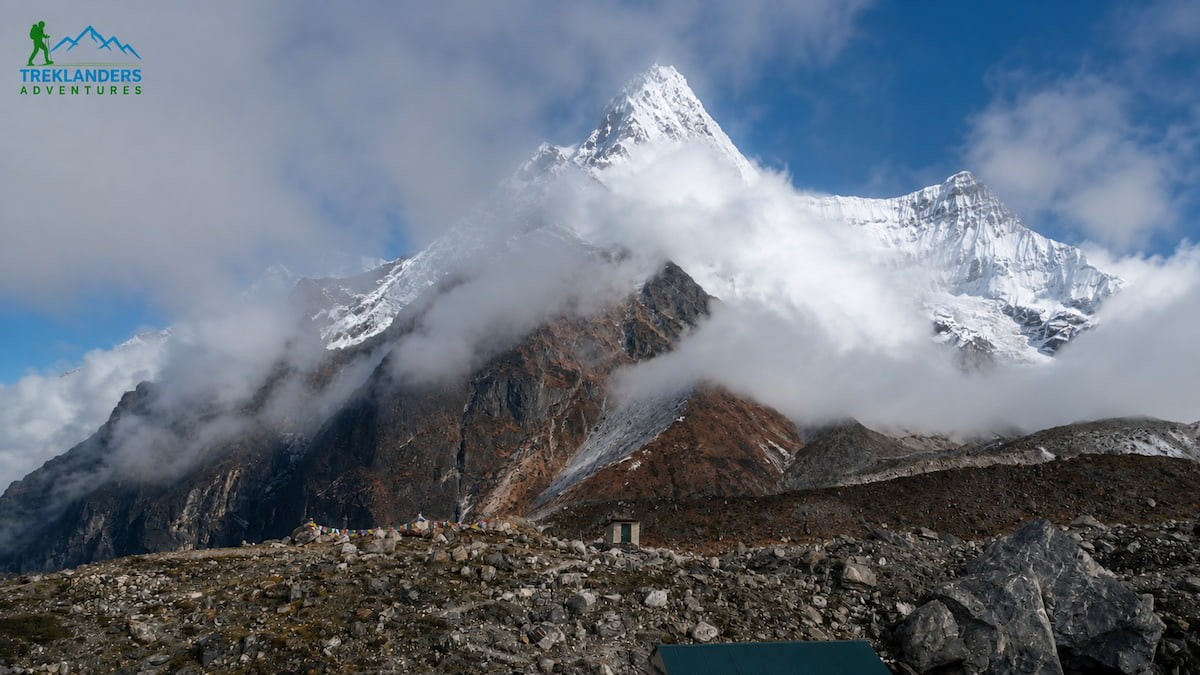
We recommend this trek cautiously, and only to trekkers who already know what they're capable of. Rolwaling is a remote valley sandwiched between the Langtang and Everest regions, walled in by Gauri Shankar (7,134 meters) and reached by a drive to Dolakha followed by days of walking through a valley that sees a fraction of the traffic of anywhere in the Khumbu.
The trek follows the Rolwaling River past villages like Simigaon and Beding, climbs to the glacial lake at Tsho Rolpa, then pushes into genuinely high, glaciated terrain toward the Trakarding and Drolambau glaciers. The crossing itself, Tashi Lapcha Pass at 5,755 meters, ranks among the highest trekking passes in Nepal and among the most technical. Depending on conditions, it can require rope work, crampons, and the kind of glacier travel experience that separates this trek from almost everything else on this list. It is not a trek for a first Himalayan outing, and reputable operators say so plainly rather than sell it to anyone who asks.
For trekkers with the right background, Rolwaling delivers something almost nothing else in Nepal does: total isolation followed by a dramatic emergence into the Khumbu. Cross Tashi Lapcha and you descend directly into the Thame Valley, one of the Khumbu's oldest Sherpa settlements, before rejoining familiar territory around Namche Bazaar. You've effectively trekked into the Everest region through its back door, having spent the previous ten days somewhere almost nobody else goes.
Itineraries generally run 18 to 22 days depending on acclimatization needs and side trips, and camping is required for at least part of the route since teahouses thin out well before the pass. This is expedition-style trekking wearing a trekking permit rather than a climbing permit, and it should be planned as such: with a guide experienced specifically on this crossing, not just an experienced Khumbu guide who's never done Tashi Lapcha.
Rolwaling also carries a reputation the rest of the Khumbu doesn't share. It's widely considered the ancestral homeland of the Sherpa people, and local folklore ties the valley to the yeti more persistently than almost anywhere else in Nepal. Whether or not that means anything to you as a trekker, it colors the atmosphere of the place. Villages like Beding and Na feel older and more insular than their Khumbu counterparts, and conversations with locals here carry a different weight than the more tourism-fluent exchanges you'll have in Namche Bazaar or Dingboche.
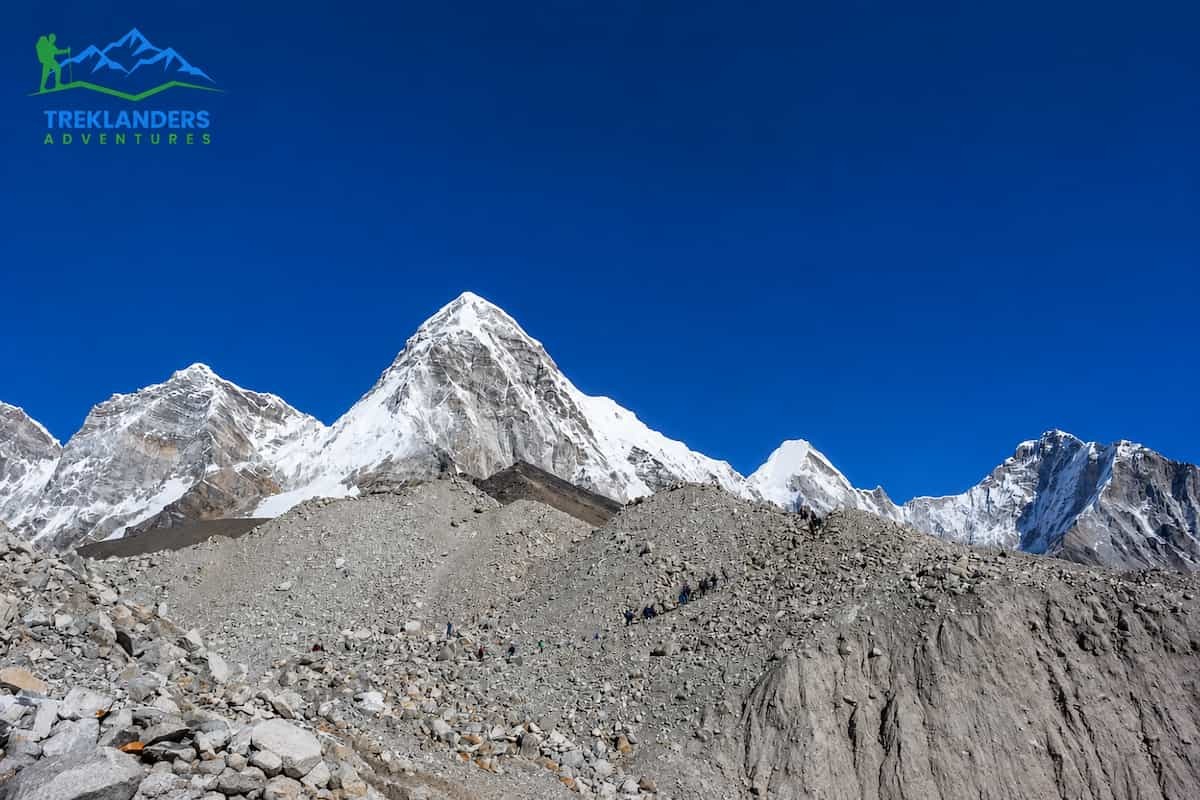
Before Lukla had an airstrip, this was the only way in. Sir Edmund Hillary and Tenzing Norgay's expedition, and every trekker for two decades after them, walked from Jiri, the roadhead reachable by bus from Kathmandu, through the middle hills of Solu before reaching the Khumbu proper. Once budget flights to Lukla became standard, most trekkers dropped this approach for the shortcut, and the trail quieted down.
Walking in from Jiri adds eight to ten extra days to the front end of your trek, crossing ridges and valleys through Sherpa, Rai, and Tamang settlements before joining the standard EBC route around Lukla or Phakding. It's harder in the cumulative sense: more days, more total elevation gain and loss as the trail rolls over ridge after ridge. But it's gentler on acclimatization, since the gradual approach from lower elevation gives your body far more time to adjust before the thin air of the upper Khumbu.
There's a case that this is simply the more honest way to see Everest: not a flight that drops you straight into high mountain terrain, but a walk that earns the transition, valley by valley, the way climbers did it for the first fifty years anyone attempted it. It also sidesteps the Lukla flight risk almost entirely on the way in, since you're walking to the airstrip rather than depending on it to start your trip.
Few operators run this route as their default itinerary anymore, which is exactly why it's worth asking for. Trekkers who've done EBC once already and want to see the mountain from a completely different angle, or who simply distrust mountain airstrips on principle, tend to find this one of the most rewarding ways back into the Khumbu.
There's a cultural dimension too. The Jiri approach passes through a wider mix of ethnic communities than the Khumbu alone, Tamang and Rai villages in the lower hills before the trail reaches Sherpa territory higher up, which gives trekkers a broader sense of Nepal's diversity than a route that starts and ends entirely within Sherpa country. For anyone whose interest in the trek extends beyond mountain views into the people and cultures along the way, that variety counts in its favor.
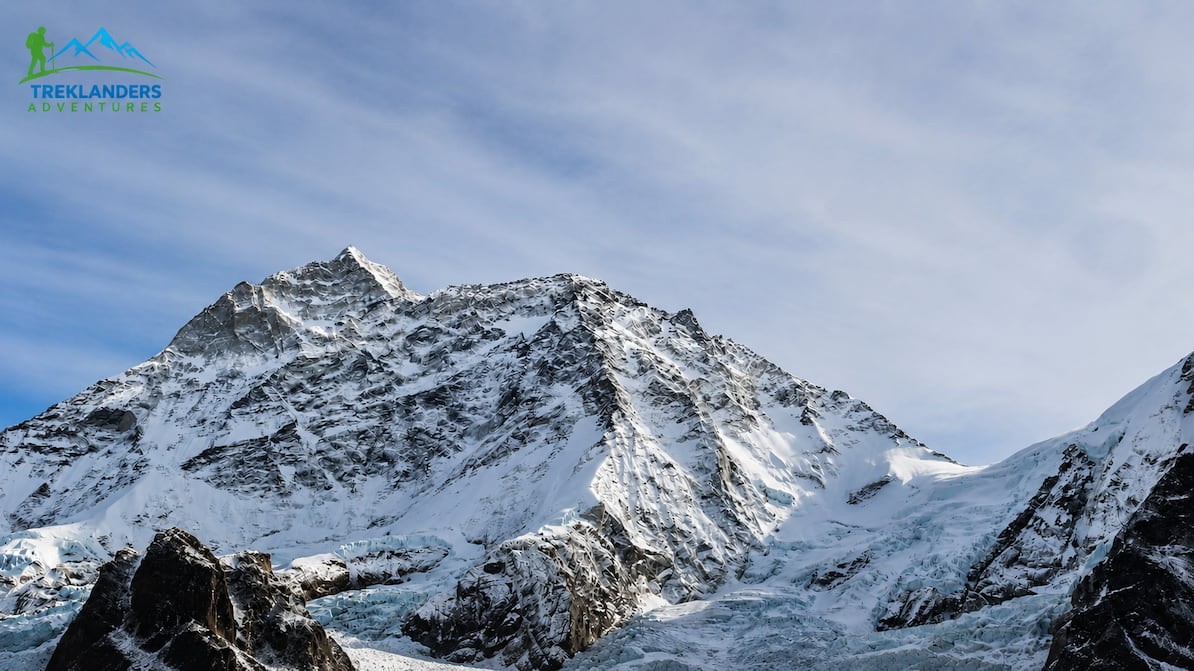
East of the Khumbu, across a ridge most Everest trekkers never look toward, sits the Barun Valley and the base camp of the world's fifth-highest mountain. Makalu Base Camp trek is a genuinely wild alternative. Restricted-area permits are required, infrastructure is minimal, and the trail moves through one of the most ecologically diverse stretches of protected land in Nepal, the Makalu Barun National Park, where the terrain shifts from subtropical forest to alpine desert within a matter of days.
The trek typically starts with a flight to Tumlingtar followed by days of walking through forest and farmland before the valley narrows and the trail climbs toward Base Camp, which sits around 4,870 meters beneath Makalu's distinctive four-sided pyramid. Along the way, the Barun Valley offers waterfalls, rhododendron forest, and views of Makalu, Chamlang, and Baruntse that most Everest trekkers have simply never seen from this angle, since the Khumbu and Barun valleys are separated by a substantial wall of mountains.
This isn't a trek for trekkers seeking teahouse comfort. Camping is standard for significant stretches, group sizes stay small since restricted-area rules require a minimum of two trekkers and a licensed guide, and the trail infrastructure is a fraction of what exists in the Khumbu. What it offers instead is genuine remoteness. Most days you'll pass more yaks than people, and the sense of having the mountains largely to yourself is rare anywhere in Nepal's trekking regions, let alone within reach of Everest.
At 18 to 20 days round trip, it's a serious time commitment, best suited to trekkers who've already built confidence at altitude and want a trek defined by wilderness rather than by any single iconic photograph.
For trekkers with the stamina and the schedule, there's also the option of continuing beyond Base Camp toward the Sherpani Col and West Col, a high-altitude connector that eventually links the Barun Valley to the Khumbu itself. That extension pushes well into technical mountaineering territory, with glacier travel and fixed ropes involved, and it's a fair distance beyond what most people mean by "trekking." But its existence says something about the Barun Valley: it keeps offering harder, wilder options the further you're willing to go.
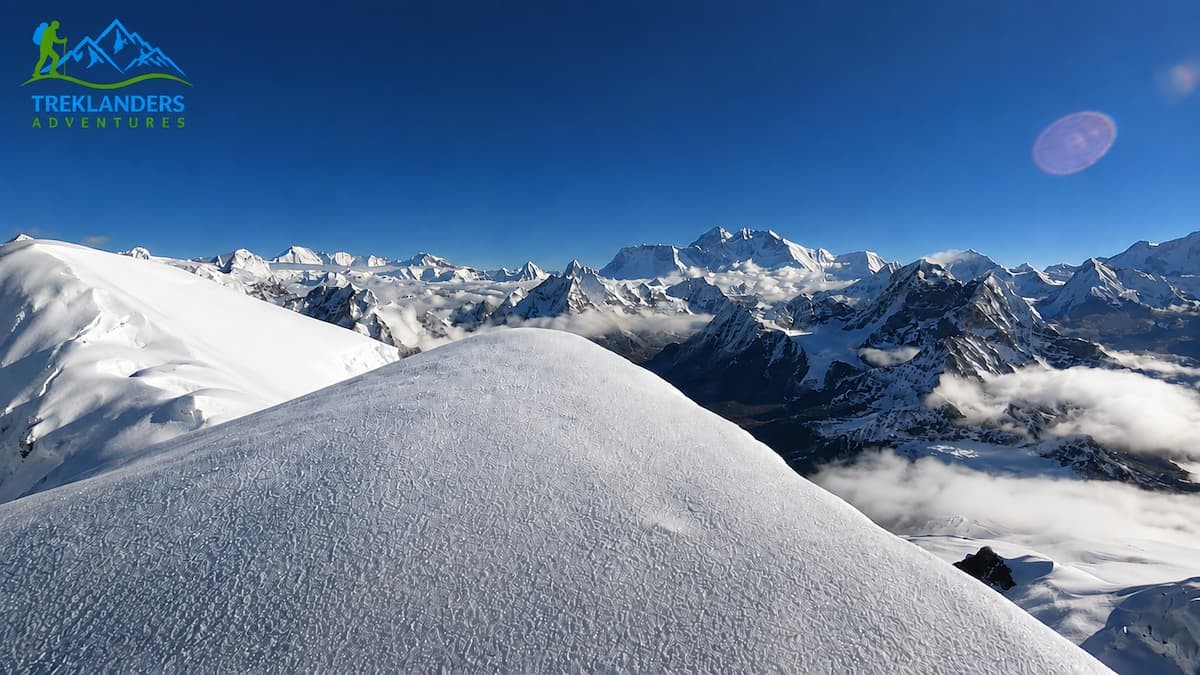
Technically a climb rather than a trek, Mera Peak deserves a place on this list because the summit view competes with anything the Khumbu has to offer. For trekkers who want to push past the standard trekking experience into something closer to genuine mountaineering, without the technical demands of a serious climbing objective, it fills a specific gap.
At 6,476 meters, Mera Peak is the highest of Nepal's officially designated trekking peaks. You can climb it without advanced technical skills, but it requires crampons, an ice axe, and roped glacier travel on summit day, along with prior training or a guide who walks you through the basics before the push. The approach trail runs through the Hinku Valley, quieter and less developed than the main Khumbu, before high camp and a pre-dawn summit attempt.
The view from the top is the payoff: Everest, Lhotse, Makalu, Kanchenjunga, and Cho Oyu all visible at once, five of the world's fourteen 8,000-meter peaks from a single summit, a wider sweep than Kala Patthar or even Gokyo Ri can offer, simply because Mera stands higher and sits at a vantage point that catches more of the eastern Himalaya.
Itineraries generally run 15 to 19 days including acclimatization and a weather buffer for the summit attempt, since a poor forecast can mean waiting a day or two at high camp. This is a step up in commitment and physical demand from any trek on this list, suited to trekkers who've already got solid teahouse-trekking experience and want to know what the next level feels like, without committing to a fully technical Himalayan peak.
Physically, Mera Peak asks more of you than any pure trek on this list, but technically it's more forgiving than its altitude suggests. The final slopes are steady rather than sheer, and the main obstacles are cold, wind, and thin air rather than rock climbing or exposed scrambling. That combination, genuinely high mountaineering altitude paired with moderate technical difficulty, is why it's become the trekking peak most operators recommend to first-time climbers who want to know if bigger objectives are for them before committing to something more serious.
Season affects these routes differently.
Gokyo Lakes and the standard Gokyo-to-EBC-via-Cho-La combination follow the same seasonal logic as the classic trek: pre-monsoon spring (March through May) and post-monsoon autumn (late September through November) are the reliable windows. Autumn tends to bring the clearest mountain views after the monsoon washes the dust and haze out of the air. Spring brings rhododendron blooms lower down the trail and slightly warmer nights, at the cost of occasionally hazier afternoon skies.
The Three Passes trek and Rolwaling's Tashi Lapcha crossing are far more season-sensitive because of the technical terrain involved. Both are best attempted in the stable weeks of autumn or spring, when snow cover on the passes is predictable and trail markers are visible. Winter crossings are possible for well-equipped, experienced parties but carry real risk from deep snow and reduced visibility. Most operators, us included, stay cautious about scheduling either route between December and February.
Pikey Peak and the Numbur Cheese Circuit are the most forgiving. Because neither climbs much above 4,100 meters, both can be walked comfortably across a wider stretch of the calendar, including parts of winter when lower temperatures come with exceptionally clear skies and near-empty trails. Monsoon season, June through August, is still worth avoiding everywhere on this list. Leeches, obscured views, and landslide risk on lower trails make it a poor time to trek almost anywhere in Nepal's hill country.
Makalu Base Camp and Mera Peak sit closer to the Three Passes end of the spectrum. Both benefit from stable pre- or post-monsoon weather, and Mera Peak's summit attempt in particular depends on a favorable weather window that a good guide builds flexibility around rather than forces on a fixed date.
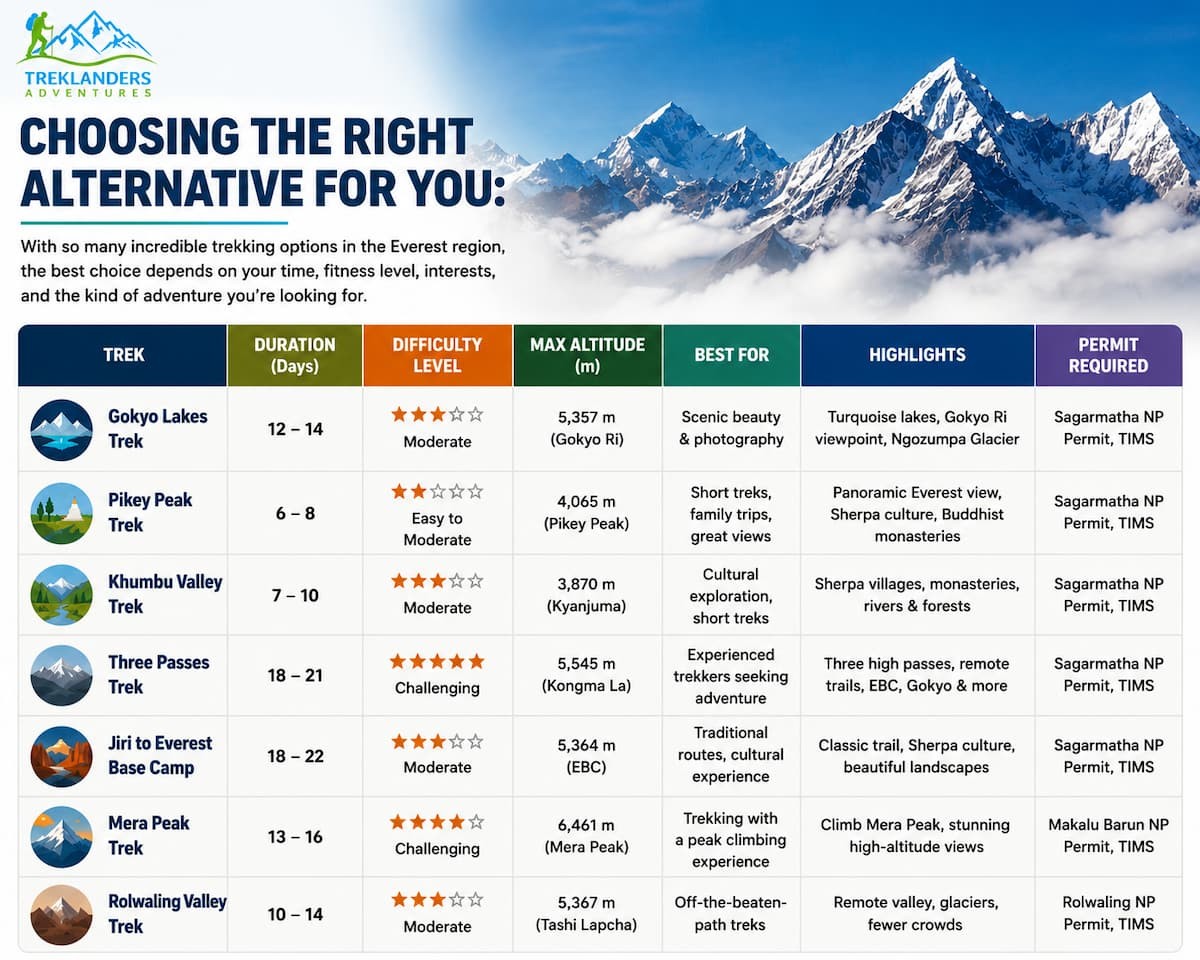
With nine routes on the table, which one you should do comes down to a handful of practical questions rather than any single best option.
Start with your timeline. Pikey Peak and the Numbur Cheese Circuit fit into a week or two and suit trekkers without a month to spare. Gokyo Lakes needs a similar window to standard EBC. Three Passes, Rolwaling, Makalu Base Camp, and Mera Peak all run closer to three weeks, and compressing them shortchanges both the acclimatization schedule and the experience itself.
Then consider your altitude experience. If you've never trekked above 4,000 meters, Pikey Peak or the Numbur Cheese Circuit are sensible entry points that build confidence without serious risk. If you've done EBC or a comparable trek and handled the altitude well, Gokyo Lakes or the Jiri approach are natural next steps. Three Passes, Tashi Lapcha, and Mera Peak should generally wait until you've got at least one high-altitude trek under your belt, ideally one involving a pass above 5,000 meters, so you're not learning how your body handles thin air and navigating a technical pass crossing in the same week.
Season matters more for some routes than others. The passes on the Three Passes trek and Tashi Lapcha are far more manageable in stable pre-monsoon or post-monsoon weather. Attempting them in winter or during unsettled shoulder-season weather adds real risk from snow-covered trail markers and reduced visibility. Pikey Peak and the Numbur Cheese Circuit, by contrast, stay low enough that a wider window of months works reasonably well.
Permits and guide requirements differ too. Makalu Base Camp sits in a restricted area requiring a licensed guide and a minimum group size of two. Rolwaling and Tashi Lapcha fall under the Gaurishankar Conservation Area with its own permit structure. The standard Sagarmatha National Park permit covers most of the Khumbu-based routes: Gokyo, Three Passes, Jiri to EBC. Always double-check current requirements before booking, since Nepal's park and permit rules have tightened in recent years and keep shifting.
Finally, be honest about what you actually want from the trek. If the goal is simply to see Everest up close with the least physical demand, Pikey Peak delivers that better than any high-altitude route can. If it's about earning a view through sustained effort, Three Passes or Mera Peak will satisfy that in a way a shorter trek never quite manages. If it's about escaping other trekkers entirely, Rolwaling and Makalu Base Camp go further than anything else on this list. There's no wrong answer here, just a mismatch to avoid between what a trek offers and what you're actually looking for.
Everest Base Camp earned its reputation honestly, and it will likely remain the first trek most visitors to Nepal put on their list. But treating it as the only route into the Khumbu misses most of what this part of the world actually offers: turquoise lakes reflecting four of the highest peaks on earth, sunrise views that a knighted mountaineer once called his favorite, glaciated passes that turn a trek into something closer to an expedition, and valleys quiet enough that you'll go entire days without passing another foreigner on the trail.
At Treklanders, we've walked most of these routes ourselves, more than once, and we still argue among our own guides about which one deserves the "best Everest view" title. That disagreement is sort of the point. Once you get off the single well-known trail, the Everest region turns out to hold more than one right answer.
If any of these routes caught your attention, get in touch with us. We can talk through logistics, timing, and which alternative actually fits the trek you're picturing, and help you plan a route into the Everest region that isn't the one everyone else is already walking.
Discover how solo female trekkers can explore Nepal safely with practical advice on guides, permits, altitude, preparation, and trail safety.
Explore Lo Manthang, Upper Mustang’s ancient walled capital, rich in royal history, Tibetan culture, monasteries, and Himalayan beauty.
Can beginners trek to Everest Base Camp? Learn about the difficulty, altitude, training, and preparation needed for a successful EBC Trek.



