UNESCO World Heritage Sites in Nepal: A Complete Guide to History, Culture & Things to Do
17 Aug 2026
Explore Nepal’s UNESCO World Heritage Sites, from ancient temples and sacred Lumbini to Chitwan’s wildlife and the spectacular Everest region.

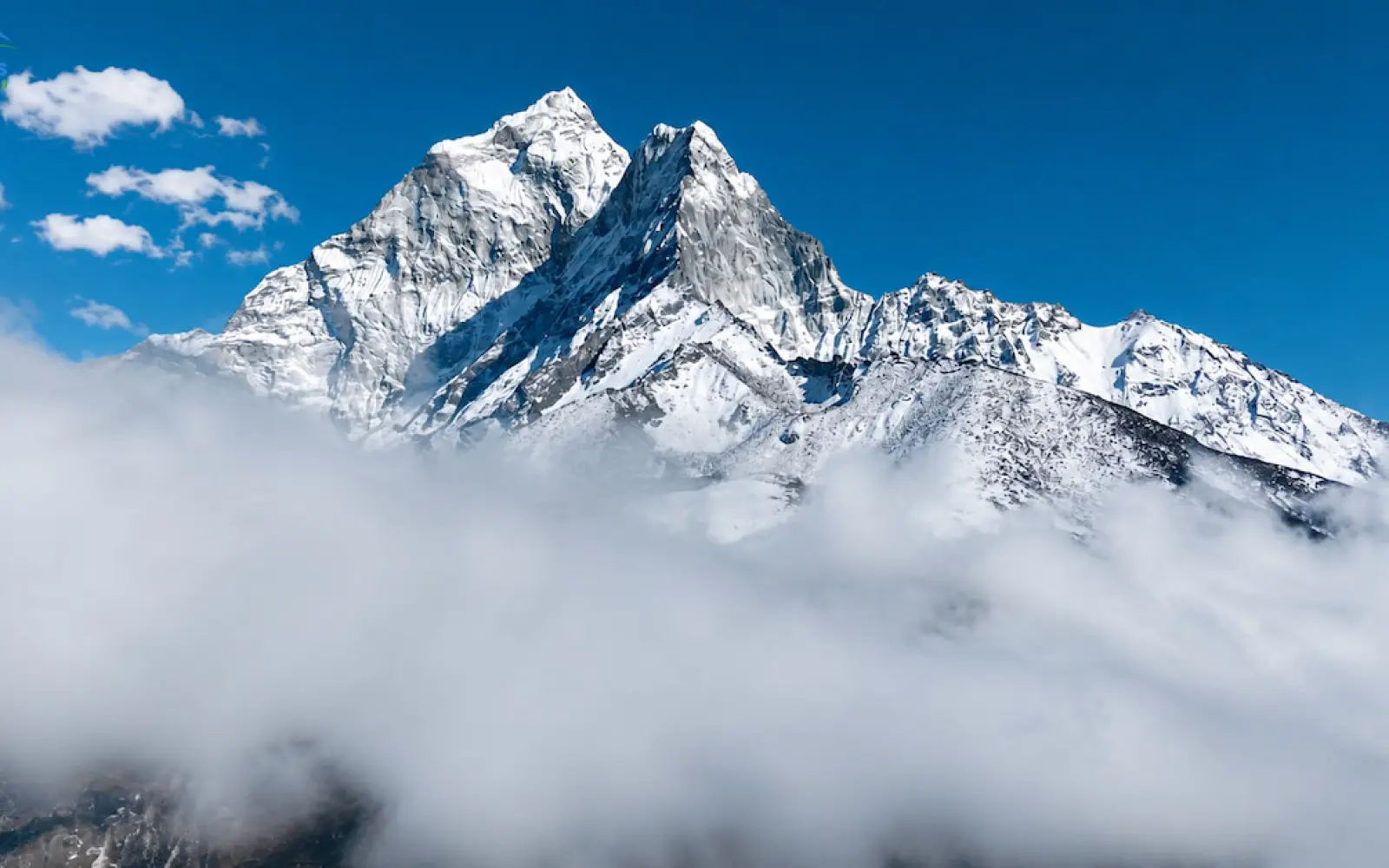
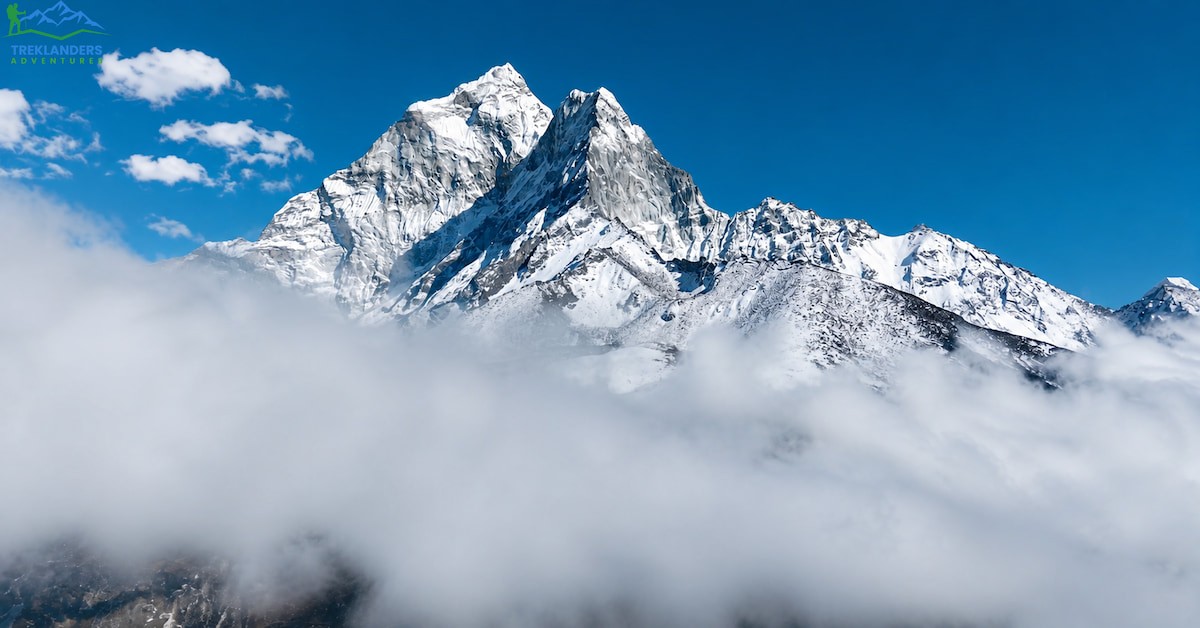
Yes, beginners complete Everest Base Camp every trekking season. Thousands of them, in fact. But that answer needs context, because "beginner" covers a wide range of people, and the trek punishes the ones who show up unprepared. This guide breaks down exactly what makes EBC hard, what it doesn't require, and what separates the beginners who finish from the ones who turn back at Namche.
You don't need mountaineering experience. You don't need to have summited anything before. What you need is honest self-assessment, a real training plan, and an understanding of what seventeen days at altitude actually does to your body. This article gives you that understanding in plain terms, without the marketing gloss you'll find on most trekking sites.
Every trekking company uses the word "beginner" differently, and that inconsistency causes real confusion. On EBC, a beginner is someone who has never trekked multiple consecutive days at altitude, not someone who has never exercised.
You can run marathons, lift weights five days a week, and still be a beginner on this trail if you've never carried a daypack for six hours through changing altitude. The trek tests a specific combination of stamina, altitude tolerance, and mental persistence that gym fitness only partially prepares you for.
This matters because a lot of people disqualify themselves before they start, assuming EBC is only for climbers or ultra-endurance athletes. It isn't. Guides at Treklanders lead office workers, retirees, and people who started hiking six months before their trip. What those trekkers had in common wasn't athletic background. It was preparation and pacing.
On the other end, some fit beginners fail because they treat EBC like a fitness challenge instead of an altitude challenge. They power up the trail on day two, arrive at camp exhausted, sleep badly, and then struggle when the air gets thin above 4,000 meters. Being a beginner isn't the obstacle. Misunderstanding what the obstacle actually is, that's the problem.
There's also a difference between a beginner trekker and a beginner traveler. Someone who has spent years backpacking through unfamiliar countries but has never hiked more than a few hours at a time brings a different kind of readiness than someone who hikes weekly near home but has rarely traveled far from it. Both profiles show up on this trail regularly, and both can succeed. The trek doesn't care about your travel resume. It cares about how your legs and lungs handle sustained daily effort at altitude, and how calmly you respond when the trail gets harder than you expected.
If you're weighing whether you count as a beginner in a way that matters here, ask yourself three practical questions instead of relying on a vague sense of your own fitness. Have you ever walked five or more hours in a single day, on consecutive days, while carrying a pack? Have you spent time above 3,000 meters and know how your body tends to respond? Are you comfortable moving at a pace set by someone else, even when it feels slower than what you'd choose on your own? If the answer to most of these is no, you're a genuine beginner for this specific trek, and that's fine. It simply means your preparation needs to be more deliberate than someone who can answer yes across the board.
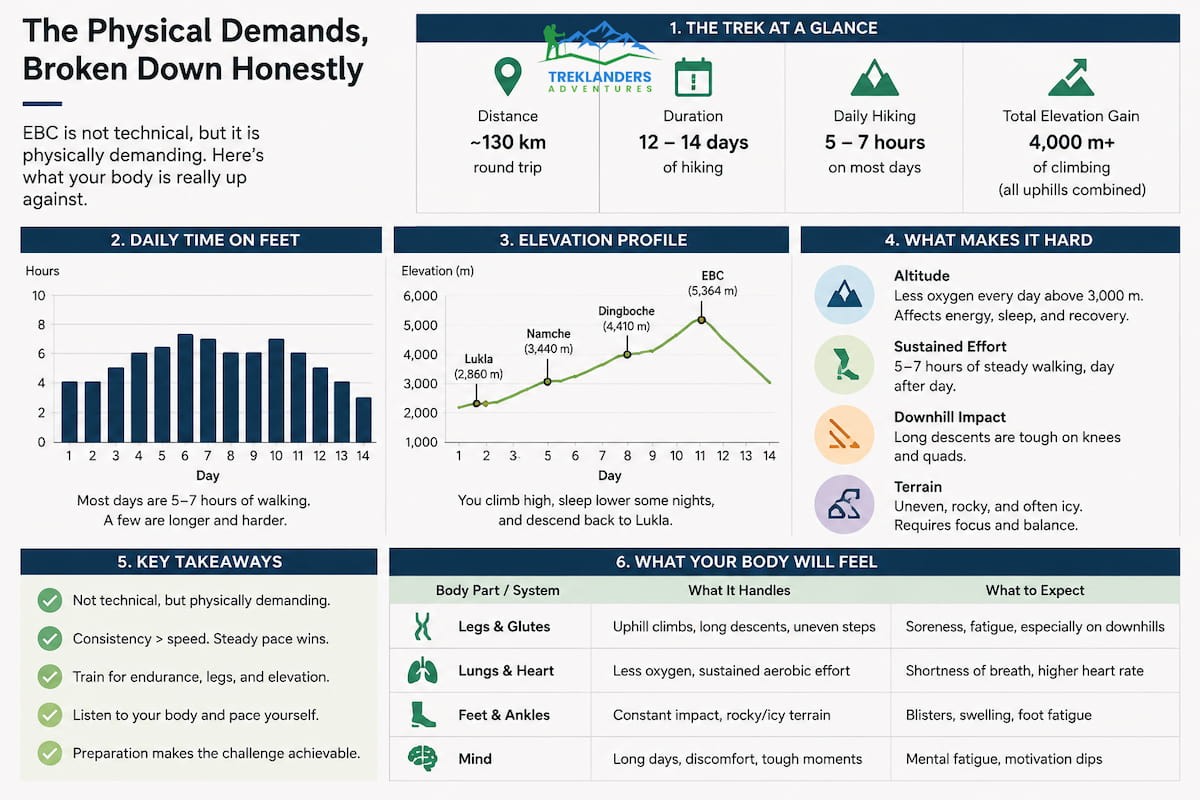
The EBC trek covers roughly 130 kilometers round trip, spread across twelve to fourteen days of walking. On paper, that sounds manageable. Most days involve five to seven hours of hiking, with a handful of longer, harder days mixed in.
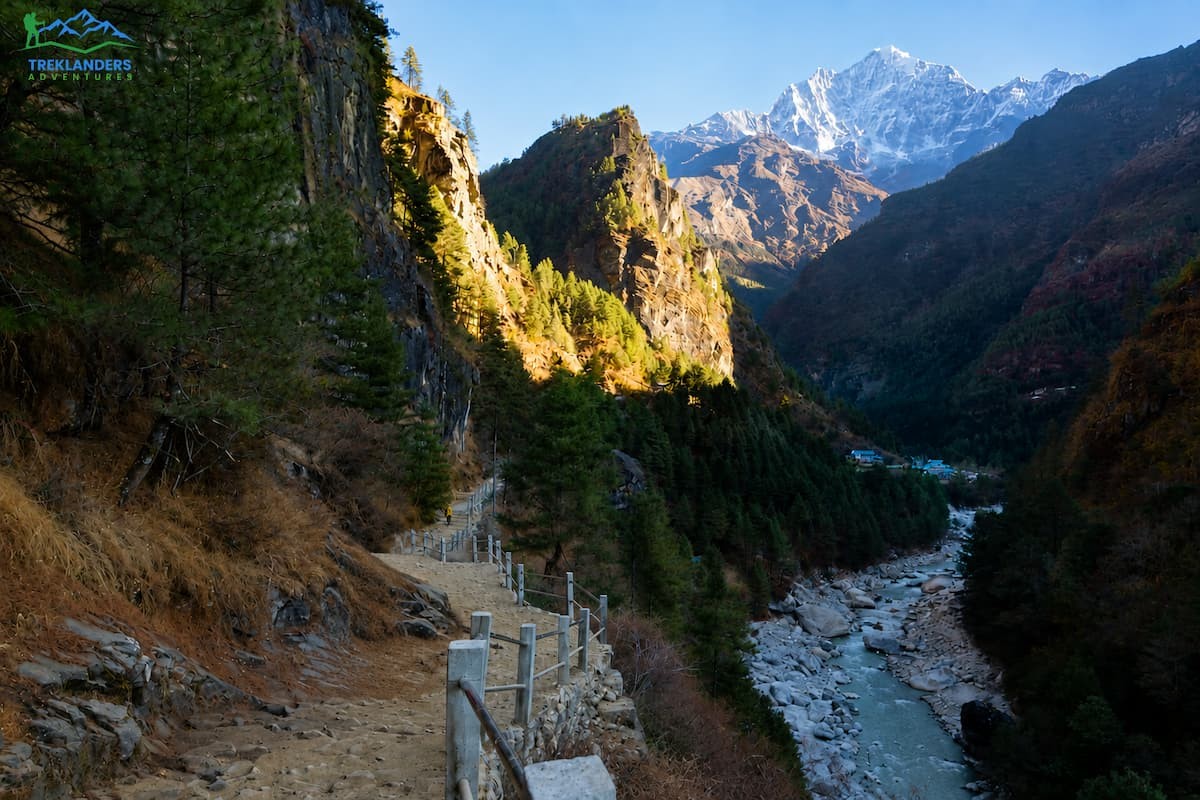
The terrain itself isn't technical. You won't need ropes, crampons, or scrambling skills. The trail is a well-established path used by locals, yaks, and porters every day. What makes it demanding is the combination of distance, elevation gain, and repeated days without full recovery.
Your legs will handle steady inclines and long descents on uneven stone steps. Your lungs will handle less oxygen with each day you climb higher. Your feet will handle twelve days of consistent impact, often on rocky or icy ground. None of these demands is extreme individually. Stacked together, day after day, they add up to a serious physical undertaking.
Expect sustained walking sessions rather than short bursts. Unlike a day hike where you push hard for two hours and rest, EBC asks for consistent, moderate effort spread across most of each day. That's a different kind of fitness than what a typical gym routine builds. It rewards people who can maintain a steady pace for hours, not people who can lift heavy weights or sprint fast.
Descending is harder on the body than most beginners expect. The trail includes significant downhill sections, particularly around Namche Bazaar and on the return leg. Your knees and quads take a beating on the way down, and fatigue from altitude makes controlled descent harder than it sounds. Trekking poles help here more than almost any other piece of gear.
Total elevation gain across the trek, when you add up every uphill section rather than just the net change from Lukla to base camp, comes to well over 4,000 meters of climbing. That figure surprises a lot of first-time trekkers who focus only on the final altitude number and don't account for the constant up-and-down nature of Himalayan trails. You'll climb out of river valleys and back up the other side repeatedly, which means your legs work harder than a simple elevation chart suggests.
Rest breaks matter more on this trek than on a typical day hike. Guides build short stops into each day, not just for photos but to let your heart rate settle and your breathing normalize before the next push. Beginners sometimes resist these breaks, feeling like they're wasting time or falling behind schedule. In reality, those pauses are part of what makes the daily distances manageable, and skipping them tends to backfire later in the day.
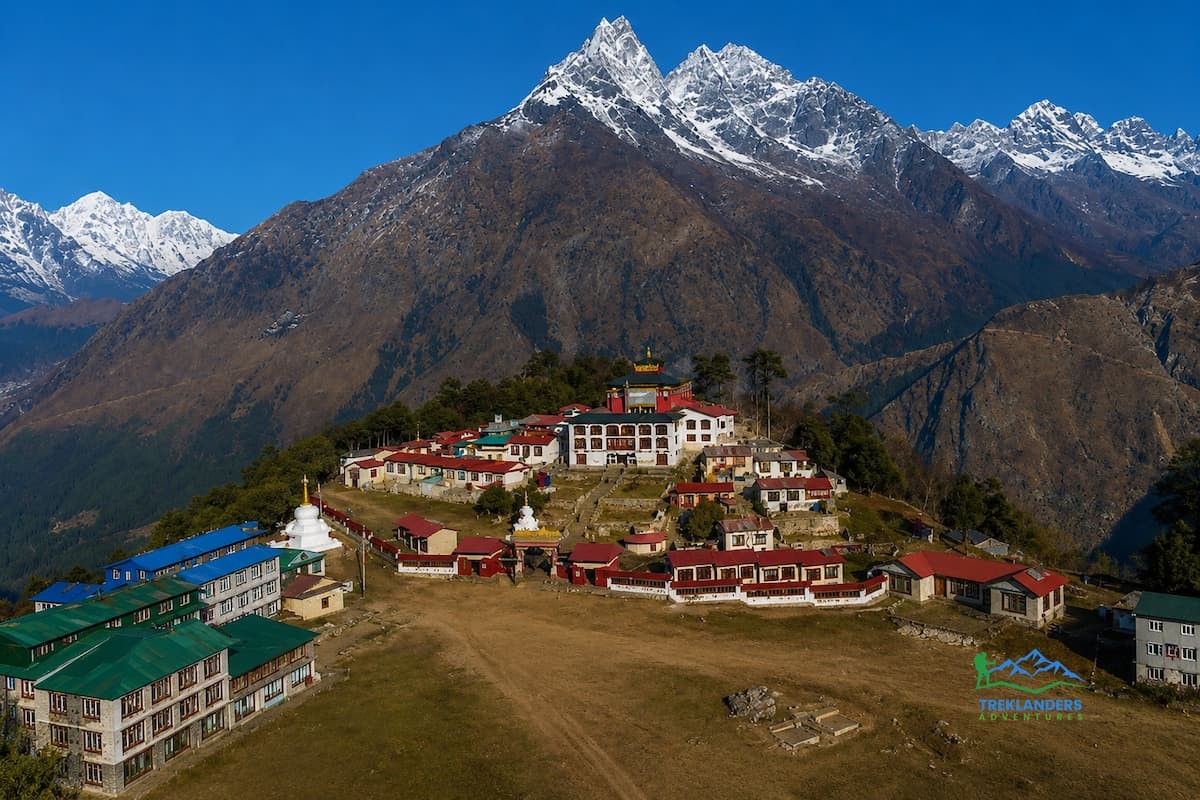
If you take one thing from this article, take this: altitude, not fitness, is what actually determines whether you finish EBC. You can be reasonably fit and still get turned around by altitude sickness. You can be moderately fit and finish comfortably if you acclimatize properly.
Kathmandu sits at 1,400 meters. Everest Base Camp sits at 5,364 meters. Along the way, you'll sleep at progressively higher elevations, and your body needs time to adjust to each one. Above 3,000 meters, the air holds meaningfully less oxygen than what you're used to, and your body responds with a set of predictable symptoms: headache, fatigue, mild nausea, disrupted sleep, shortness of breath on exertion.
Mild symptoms are normal and expected for nearly everyone. Severe symptoms, the kind that require immediate descent, are preventable with proper acclimatization and are why every reputable itinerary builds in rest days at Namche Bazaar and Dingboche.
This is where beginners get tripped up. Fitness doesn't protect you from altitude sickness. Some of the fittest trekkers on the trail struggle the most, because their fitness lets them move faster than their body can acclimatize. The trekkers who do best are the ones who walk slowly, drink enough water, and resist the urge to rush toward camp each day.
Diamox, the common altitude medication, helps some people acclimatize faster, but it isn't a substitute for a properly paced itinerary. Talk to a doctor before your trip about whether it makes sense for you. More important than any medication is the itinerary itself. A twelve-day itinerary with rushed acclimatization days puts you at higher risk than a fourteen-day itinerary that respects the "climb high, sleep low" principle.
Listen to your body above anything else on this trek. A headache that clears with rest and water is normal. A headache that gets worse, paired with confusion or loss of coordination, is not something to push through. Every experienced guide on this route has seen the difference and will make the call to descend if needed, even if it disappoints you in the moment.
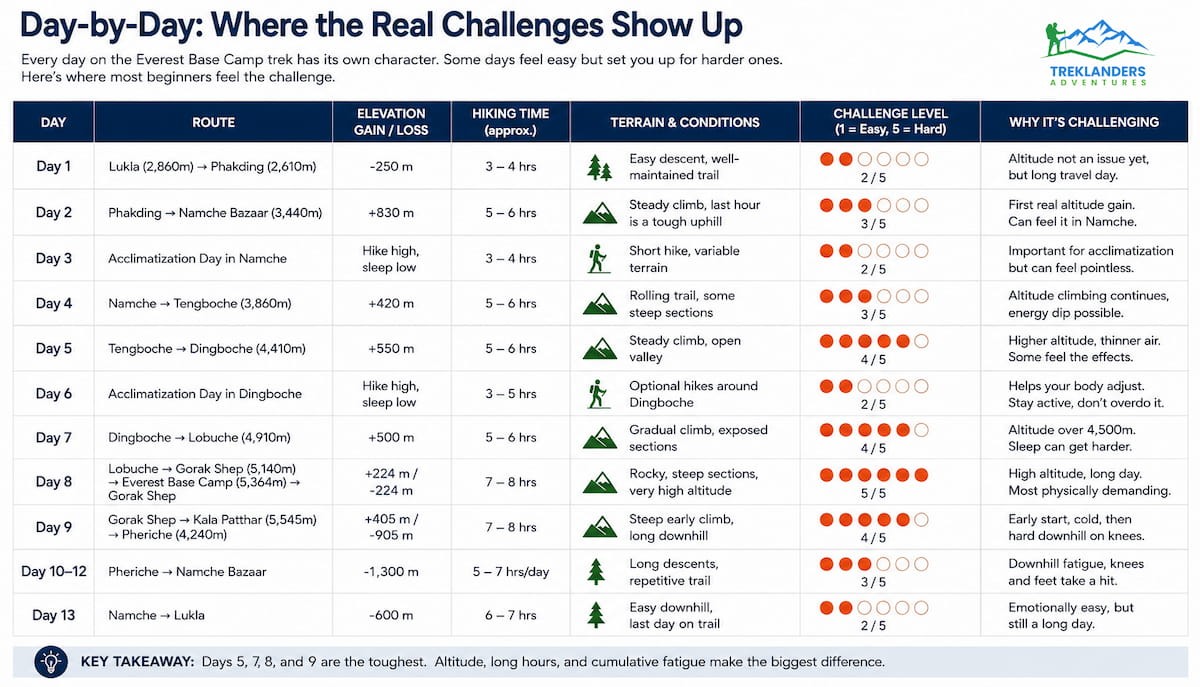
Breaking the trek into its individual days makes the difficulty easier to understand than vague warnings about "tough terrain."
Day one, the flight into Lukla and the walk to Phakding, is short and mostly downhill, but the Lukla landing itself is dramatic enough to rattle nervous flyers. It's a low-difficulty day physically.
The walk from Phakding to Namche Bazaar is where beginners get their first real test. It's a long, steady climb gaining roughly 800 meters over the day, crossing several suspension bridges over the Dudh Kosi river. The final push into Namche is steep and relentless, and this is usually the day beginners realize the trek is harder than the brochure photos suggested.
Namche itself hosts your first acclimatization day, which isn't a rest day in the way people expect. Guides typically take you on a hike up to the Everest View Hotel or the Khumjung area, higher than Namche itself, before returning to sleep at Namche's elevation. This "hike high, sleep low" pattern repeats throughout the trek and is one of the most effective tools against altitude sickness.
From Namche to Tengboche, the trail drops into a valley before climbing steeply back up to the Tengboche monastery, one of the most physically demanding single days on the route despite its relatively short distance. The elevation swing catches a lot of trekkers off guard.
Tengboche to Dingboche introduces trekkers to the thinner air above 4,000 meters. The trees disappear, the landscape turns to alpine scrub and rock, and the temperature drops noticeably. This is usually where trekkers first notice their pace slowing regardless of fitness level.
The second acclimatization day, usually at Dingboche, includes an optional climb to Nangkartshang Peak for further altitude adjustment. Trekkers who skip this hike and rest instead are choosing comfort over acclimatization, and it's worth pushing yourself to do the hike if your body allows it.
From Dingboche to Lobuche, the trail passes the Khumbu Glacier's edge and a memorial site for climbers who died on Everest, a sobering stretch that tends to shift the mood of the group. The terrain gets rockier and colder, and the altitude effects become more pronounced for most trekkers by this point.
The final push from Lobuche to Gorak Shep, followed by the walk to Everest Base Camp itself, is widely considered the hardest single day of the trek. You're walking at close to 5,300 meters, over loose rock and glacial moraine, with thin air making every step noticeably more effortful than it would be at sea level. Many trekkers describe this day as slow and grinding rather than technically difficult, which matches most people's experience.
Kala Patthar, often climbed the following morning for sunrise views of Everest, adds another demanding push at 5,545 meters, higher than base camp itself. It's optional on some itineraries but strongly recommended for the views, and it's genuinely tough given the altitude and early start.
The descent, spread across several days back to Lukla, is faster and easier on the lungs but harder on the knees. Most trekkers find the return trip more comfortable overall, since every day brings more oxygen, even though the accumulated fatigue from the trek is fully caught up with them by this point.
Weather changes the difficulty of this trek more than most people plan for. Spring (March to May) and autumn (September to November) are the standard seasons, and for good reason. Temperatures are manageable, trails are generally clear, and visibility supports the mountain views that make the trip worthwhile.
Outside these windows, difficulty increases substantially. Winter brings sub-zero temperatures at higher elevations, occasional trail closures, and demanding cold-weather gear requirements. Monsoon season brings rain, leeches at lower elevations, and clouded views that can make the whole trip feel anticlimactic despite the physical effort involved.
Even within the recommended seasons, weather at altitude is unpredictable. Mornings are typically clear, and afternoons often bring cloud cover or light snow at higher elevations. Guides plan hiking days around this pattern, starting early to take advantage of clearer morning conditions.
Cold exposure adds to the physical demand in ways beginners underestimate. Temperatures at Gorak Shep and Everest Base Camp regularly drop below freezing overnight, even in the warmer trekking seasons. Layering properly matters as much as physical conditioning, because staying warm preserves energy that your body would otherwise burn fighting the cold.
Wind at higher elevations, particularly around Kala Patthar and base camp itself, can make already cold temperatures feel significantly harsher. A trek that felt manageable at Dingboche can feel considerably harder at Gorak Shep purely because of wind chill, independent of any change in your fitness or acclimatization.
Check seasonal conditions with your trekking company before finalizing your dates, rather than relying on general advice alone. Snowfall timing shifts year to year, and a company running trips through the Khumbu region regularly will know current trail conditions better than any generic seasonal guide can.
Generic fitness advice doesn't prepare you well for this specific trek. What prepares you is training that mimics the actual demands: sustained walking, elevation gain, and time on your feet carrying weight.
Twelve weeks out, focus on building a walking base. Three to four sessions per week, starting at 45 minutes and building toward two hours, ideally on varied terrain rather than flat pavement. If you have access to hills or stairs, use them regularly. This is also the point to start breaking in your hiking boots, since blisters ruin more treks than altitude sickness does.
Eight weeks out, add weighted hikes. Carry a daypack with 4 to 6 kilograms, roughly what you'll carry on the actual trek, and start doing back-to-back long walks on weekends to simulate consecutive trekking days. Your body needs to learn what it feels like to walk hard two days in a row without full recovery in between.
Four weeks out, shift toward longer single sessions rather than adding more intensity. A four to five hour hike, even on relatively flat terrain, builds the mental and physical endurance for the long days you'll face on the trek. This is not the time to attempt new, aggressive training that risks injury before your trip.
Strength training supports the trek without needing to dominate your routine. Squats, lunges, step-ups, and core work two to three times a week build the stability your knees and ankles need for uneven, rocky terrain, especially during descents.
Cardiovascular fitness matters, but stair climbing and hiking-specific cardio transfer better to this trek than running does. Running builds lung capacity, which helps, but it doesn't train the specific muscle endurance and joint resilience that six to seven hours of trekking demands.
None of this training prepares your body for altitude directly, because altitude tolerance can't be trained at sea level in any reliable way. What good training does is make sure fatigue and weak fitness don't compound the challenges altitude already presents. A well-conditioned trekker still gets altitude symptoms. They just handle everything else the trek throws at them with more reserve.
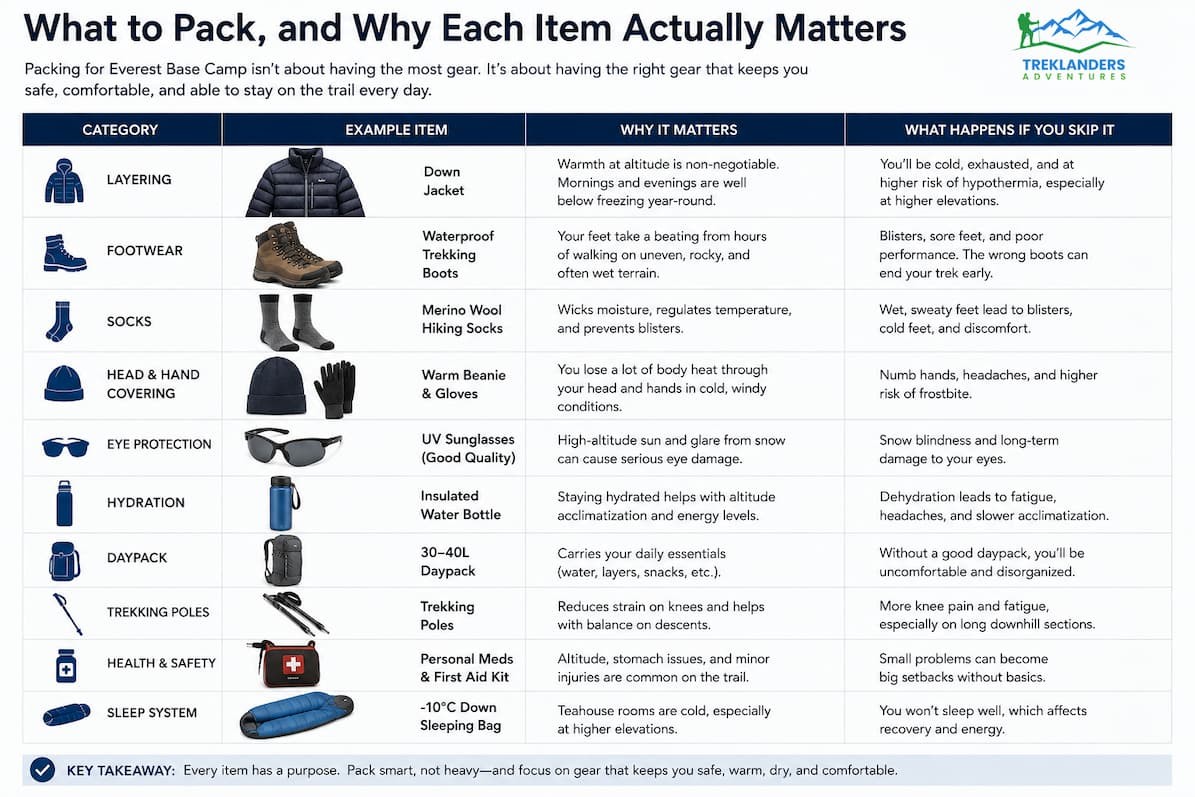
Gear choices affect difficulty more directly than most beginners realize before their first big trek. This isn't a full packing list, but it covers the items that make the biggest difference to how hard the trek feels day to day.
Footwear comes first. Choose broken-in hiking boots with ankle support and a sole built for uneven, rocky terrain rather than trail runners, which don't offer enough protection or warmth for the higher, colder sections of the route. Pair them with moisture-wicking socks and consider a thin liner sock underneath to reduce blister risk on long walking days.
Layering matters more than any single piece of clothing. A base layer that wicks sweat, an insulating mid layer, and a windproof, waterproof outer shell together handle the temperature swings you'll face between a warm midday climb and a freezing evening at a high-altitude teahouse. Down jackets earn their reputation here, particularly for the cold mornings around Gorak Shep and the Kala Patthar sunrise climb.
A four-season sleeping bag, rated well below freezing, makes a meaningful difference to your sleep quality and therefore your energy the next day. Teahouses provide blankets, but they're rarely enough on their own at higher elevations, and poor sleep compounds altitude fatigue fast.
Trekking poles deserve a second mention here because so many beginners skip them, assuming they're only for older or less fit trekkers. They reduce impact on your knees during long descents and improve stability on loose or icy sections of trail, which matters regardless of your age or fitness level.
A good headlamp, a reusable water bottle or hydration bladder, water purification tablets or a filter, sun protection given the intensity of UV exposure at altitude, and a basic first aid kit round out the essentials. None of this needs to be expensive or high-end gear. It needs to function reliably in cold, variable conditions for two weeks straight.
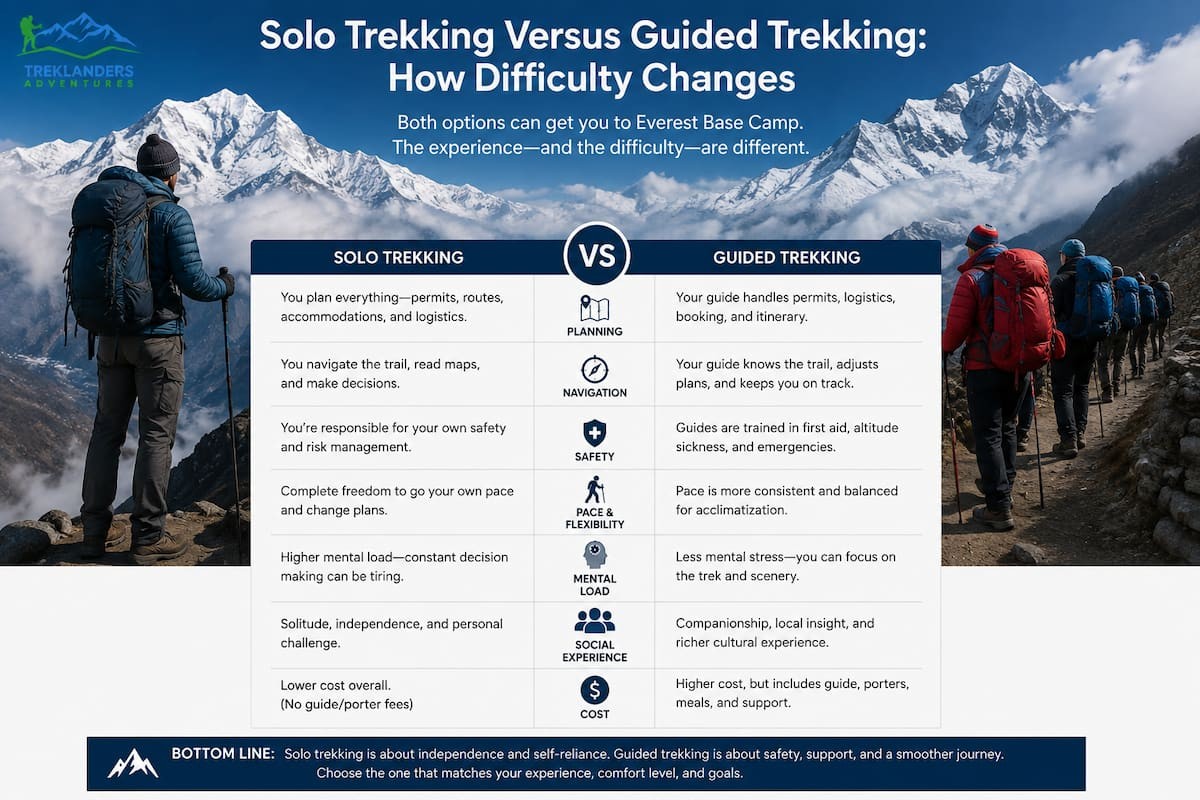
Some beginners consider trekking to EBC independently, without a guide, and it's worth addressing honestly how that choice affects difficulty. Independent trekking on this route is legally possible with the right permits, and the trail is well-marked enough that navigation alone isn't usually the main obstacle.
What changes is everything around the walking itself. You handle your own pacing decisions without an experienced second opinion, which matters most when altitude symptoms appear and you need to judge whether they're normal or serious. You carry more responsibility for logistics: finding accommodation each night, managing your own emergency plan, and making real-time decisions about weather and route conditions that guides make routinely based on years of pattern recognition.
Solo trekkers also lose the built-in accountability that comes with a group and a guide. It's easier to push through warning signs, skip a needed rest day, or make a poor decision under fatigue when there's no one else weighing in. This doesn't mean independent trekking is reckless. Experienced trekkers do it successfully. But for a genuine beginner, the added mental and logistical load stacks on top of an already demanding physical challenge, which is why most first-timers are better served by trekking with a guide, at least for their first attempt at this altitude.
Group treks with a shared guide bring a different dynamic. You benefit from the guide's judgment and the built-in acclimatization schedule, but you also need to be comfortable with a pace set for the group rather than purely your own preference. Most beginners find this trade-off works in their favor, since the structure and support outweigh the minor loss of flexibility.
Physical preparation gets most of the attention in trekking guides, but the mental demands of EBC catch as many beginners off guard as the physical ones do.
Twelve to fourteen days without normal comforts wears on people differently than a weekend hike does. Basic teahouse accommodation, limited hot showers, cold nights, and repetitive meals are part of the daily reality. None of it is unbearable, but the cumulative effect on your mood and motivation is real, especially by the second week.
Slow pacing frustrates people who are used to pushing through workouts at higher intensity. Guides deliberately keep the pace slow at altitude, and fit trekkers sometimes find this more mentally taxing than physically taxing. Learning to walk slowly and accept that pace is part of adjusting to the trek, not a failure of fitness.
Homesickness and fatigue compound each other around days seven through nine, roughly when the initial excitement wears off and the accumulated tiredness sets in, but before the excitement of reaching base camp kicks back in. This mid-trek slump is common enough that experienced guides expect it and know how to help trekkers through it.
Uncertainty about your own body is another mental challenge unique to this trek. Every headache or moment of breathlessness at altitude raises the question of whether it's normal acclimatization or something more serious. Trusting your guide's judgment, and being honest with them about symptoms, takes some of that uncertainty off your shoulders, but it requires a level of vulnerability some trekkers aren't used to.
Trekkers who finish successfully tend to share a mental approach more than a physical one. They accept discomfort as part of the experience rather than fighting it. They focus on the day in front of them instead of the full distance remaining. They ask for help or flag concerns early instead of pushing through silently.
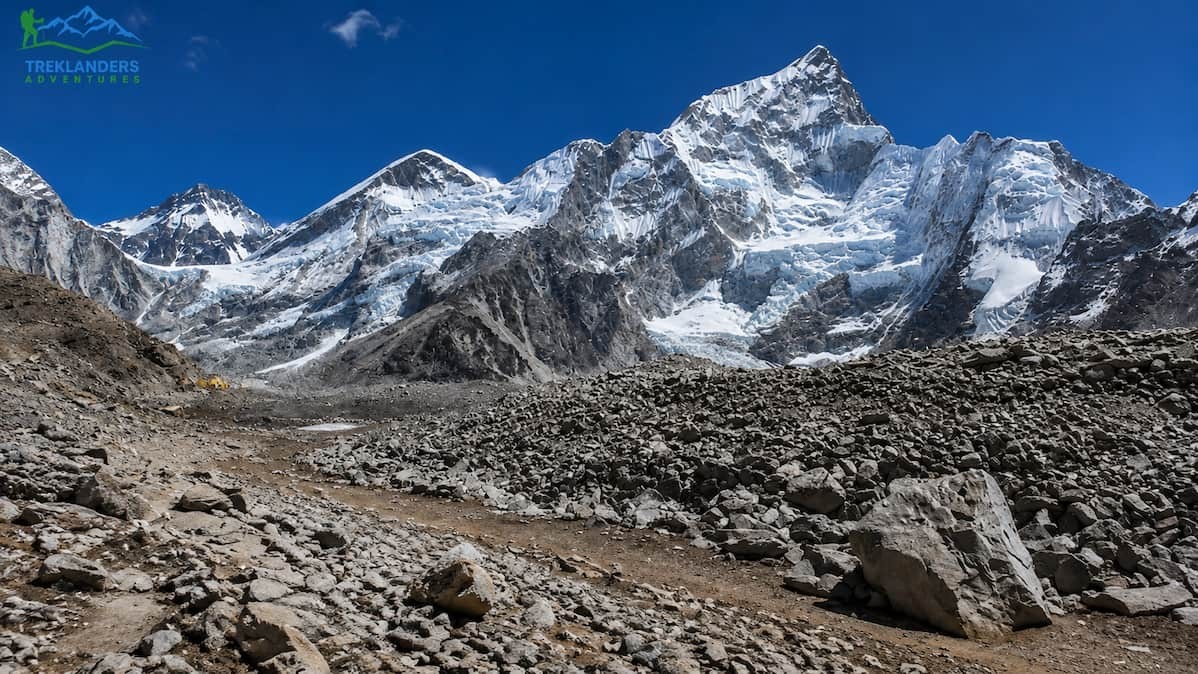
Understanding common failure points helps you avoid them. Altitude sickness that isn't managed properly is the most common reason trekkers turn back, and it's almost always connected to pace. Trekkers who rush the acclimatization days, or who ignore early symptoms because they don't want to fall behind their group, are the ones most likely to develop serious symptoms that force a descent.
Poor gear choices cause more problems than most people expect. Boots that haven't been broken in, sleeping bags rated for the wrong temperature, or inadequate layering systems turn manageable discomfort into genuine suffering, which wears down motivation fast.
Underestimating the cold is a specific version of this problem. Beginners from warmer climates sometimes pack based on daytime trail temperatures and get caught unprepared for nighttime cold at higher elevations, particularly around Dingboche, Lobuche, and Gorak Shep.
Unrealistic expectations about pace and difficulty set some trekkers up to feel like they're failing even when they're doing fine. If you expect EBC to feel like a strenuous day hike, the reality of sustained multi-day exertion at altitude can feel discouraging, even when your progress is completely normal for the trek.
Illness unrelated to altitude, most commonly stomach issues from food or water, sidelines a meaningful number of trekkers each season. Sticking to boiled or treated water, being cautious with unfamiliar foods, and maintaining good hand hygiene reduces this risk significantly.
Finally, some trekkers simply don't train enough beforehand and discover on day three that their body isn't ready for six-hour walking days. This is the most preventable failure point on the entire list, and it's the one within your full control before you ever land in Lukla.
Group pressure plays a quieter role in some failed attempts than people admit afterward. Trekking with friends or a partner, some beginners push past their own comfortable pace to keep up, or feel embarrassed asking the group to slow down. A good guide manages this dynamic, but it's worth deciding before the trip that your own pace and safety take priority over matching anyone else's speed, including people you're close to.
A smaller number of trekkers turn back not because of altitude or fitness but because of the Lukla flight, or the isolation of being far from familiar comforts for two weeks straight. These are real factors worth being honest with yourself about before booking, since no amount of physical training addresses them directly.
Age matters less than most people assume, within reason. It's a question guides field constantly, and the honest answer disappoints anyone hoping for a hard cutoff. Trekkers in their sixties and seventies complete EBC every season, often outperforming younger trekkers who assume fitness alone will carry them through. What matters more than age is consistent activity level and a realistic training commitment in the months before the trip.
That said, age-related factors like joint health, recovery speed, and any existing cardiovascular conditions deserve honest evaluation with a doctor before booking. This isn't about disqualifying yourself. It's about making informed decisions and, where needed, adjusting your itinerary to include extra acclimatization days.
Prior hiking experience helps, but recent, relevant training matters more than accumulated experience from years ago. Someone who hiked regularly a decade ago but hasn't trained recently is often less prepared than someone newer to hiking who has trained consistently for the past three months.
People who succeed on this trek tend to share a few traits regardless of age or background. They train consistently rather than in occasional bursts. They pack appropriately instead of cutting corners on gear. They listen to their guides and their own bodies instead of pushing through warning signs. And they approach the trek with patience, understanding that slow, steady progress beats aggressive pacing at altitude every time.
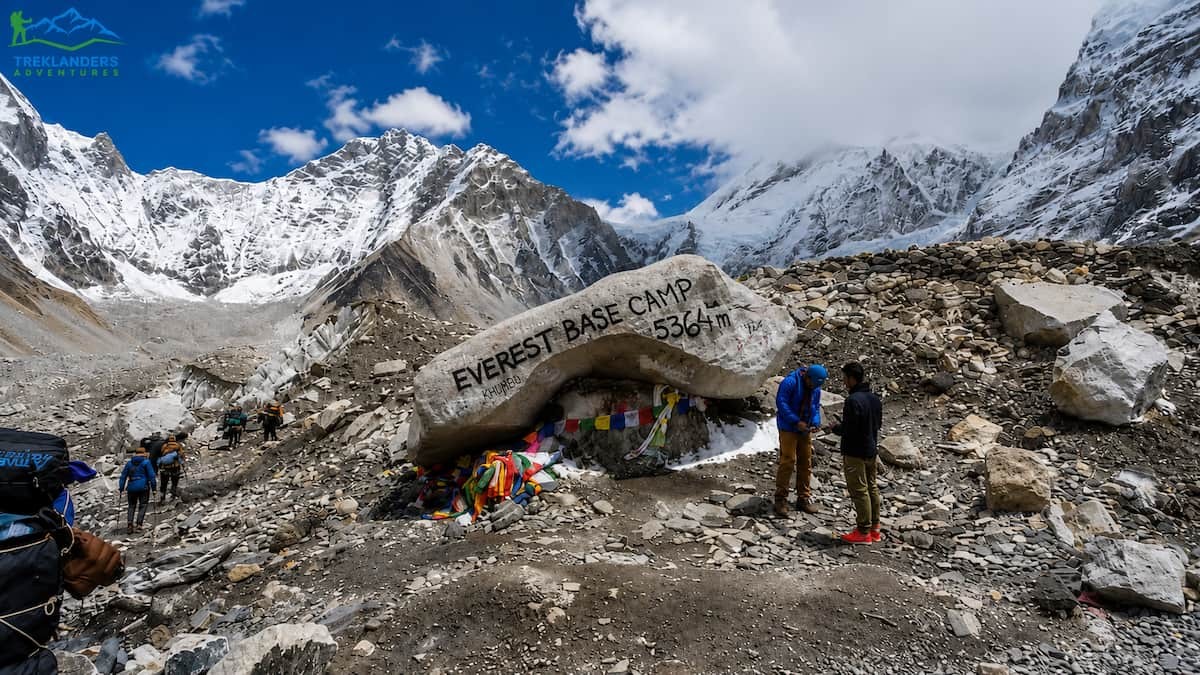
Trekking with an experienced guide changes the difficulty of EBC substantially, and this is one of the most underrated factors in whether beginners succeed. A good guide reads your pace, watches for early altitude symptoms, and adjusts the day's plan based on how you're actually doing rather than sticking rigidly to a schedule.
Porters carrying your main bag mean you only need to manage a daypack with water, snacks, and layers during the day, which meaningfully reduces the physical load compared to carrying full gear yourself. This alone makes a significant difference in daily fatigue levels for most trekkers.
Guides also handle the logistics that add stress to an unsupported trek: arranging teahouse accommodation, managing permits, navigating route decisions in poor weather, and coordinating emergency evacuation if it becomes necessary. Beginners attempting the trek independently take on all of this themselves, on top of the physical demands already discussed.
Local knowledge from guides who have walked this route dozens or hundreds of times catches problems before they become serious. They recognize the difference between normal altitude discomfort and something that needs attention faster than a first-time trekker can, simply because they've seen the pattern before.
None of this means guided trekking eliminates the difficulty. It means the difficulty gets managed by someone with direct experience handling it, which shifts real risk away from beginners who don't yet have the judgment that comes from altitude experience.
Start your training at least twelve weeks before departure, and be consistent rather than intense. Steady, regular effort beats sporadic hard sessions for building the specific endurance this trek demands.
Break in your boots properly before the trip. Wear them on every training hike, in varied conditions, so you know exactly how your feet respond before you're three days from the nearest road.
Pack layers rather than one heavy jacket. Temperature swings throughout the day at altitude mean you'll add and remove layers constantly, and a flexible layering system handles this better than a single bulky piece of gear.
Hydrate more than feels necessary. Altitude increases fluid loss through breathing and can mask normal thirst signals, so aim for three to four liters of water daily rather than waiting until you feel thirsty.
Walk slowly, especially in the first few days. Resist the urge to keep pace with faster trekkers in your group. Your guide will support a pace that matches your acclimatization needs if you communicate honestly about how you're feeling.
Eat enough, even when altitude reduces your appetite, which it commonly does above 3,500 meters. Your body needs the calories to maintain energy and support acclimatization, and skipping meals compounds fatigue faster than most trekkers expect.
Sleep as much as your schedule allows. Altitude disrupts sleep quality for almost everyone, and prioritizing rest whenever possible helps offset that disruption.
Communicate symptoms honestly with your guide rather than minimizing them. Early, mild altitude symptoms are manageable. Symptoms that get ignored or hidden are what turn into serious problems requiring emergency descent.
Bring trekking poles and use them, particularly on descents. They reduce strain on your knees significantly over the course of the trek and help with balance on uneven terrain.
Accept that some days will be harder than others, mentally and physically, and that this is normal rather than a sign that something is wrong. Expecting a smooth, easy experience sets you up for unnecessary discouragement.
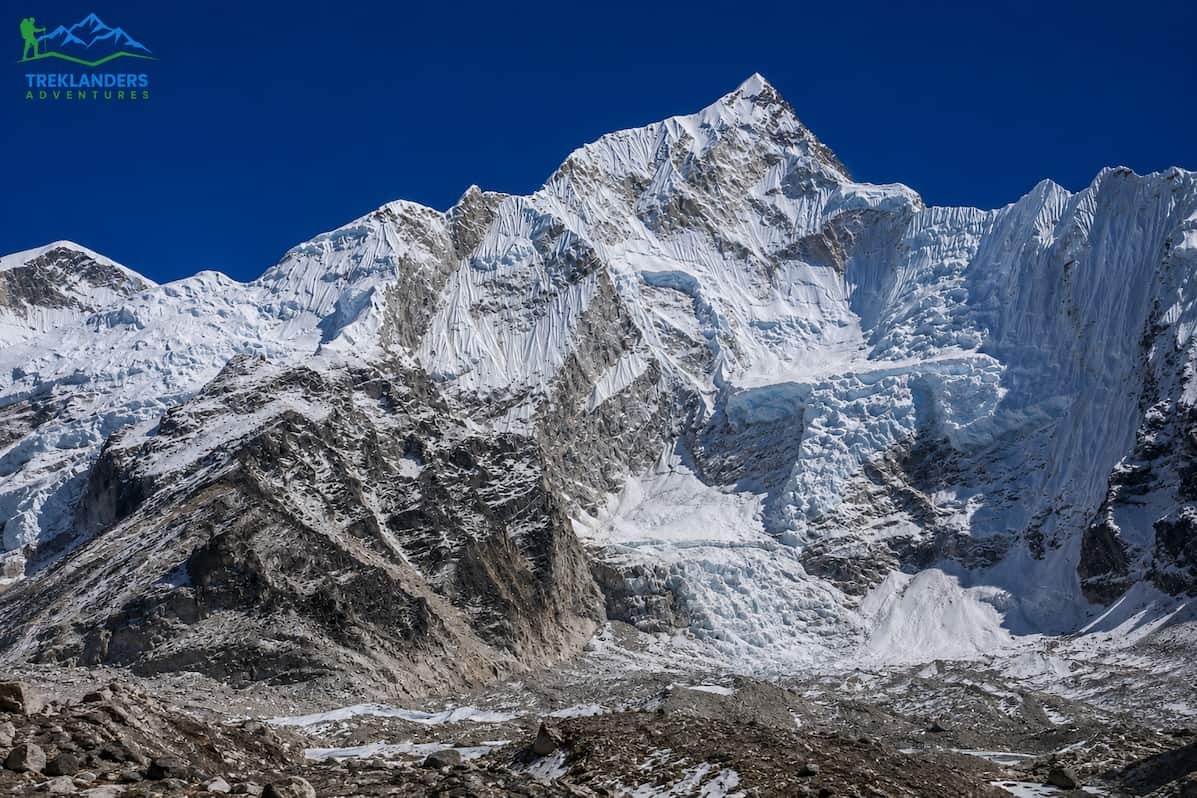
Beginners can do Everest Base Camp, and most who prepare properly do finish. The trek doesn't require technical climbing skills, elite athleticism, or prior high-altitude experience. It requires genuine preparation, realistic expectations, and the discipline to walk slowly and listen to your body when it matters most.
The people who struggle most aren't usually the least fit ones. They're the ones who underestimated altitude, skipped proper training, or ignored early warning signs because they didn't want to slow down. Respect those three factors, and your fitness level going in matters less than you might think.
This trek rewards patience over power, and steady preparation over last-minute intensity. If you commit to a real training plan, choose an itinerary with adequate acclimatization days, and trek with guides who know the route well, you're giving yourself a genuinely strong chance of standing at Everest Base Camp, looking up at the mountain that started it all.
Treat the twelve or so weeks before your departure as part of the trek itself, not just preparation for it. Every training walk, every weighted hike, every early night of good sleep adds up to the version of you that handles day six or day nine with steadiness instead of struggle. The mountain doesn't care how experienced you were before you arrived. It responds to how well you prepared, how honestly you read your own body along the way, and how willing you were to walk slowly when slow was exactly what the trail asked of you.
Beginner status fades quickly on this trail. By the time you're standing at Gorak Shep, looking toward the Khumbu Icefall with base camp still ahead of you, you've already handled more sustained physical and mental demand than most people ever do in a single stretch. That version of you isn't a beginner anymore, regardless of what you were when you booked the trip.

Explore Nepal’s UNESCO World Heritage Sites, from ancient temples and sacred Lumbini to Chitwan’s wildlife and the spectacular Everest region.
Discover how solo female trekkers can explore Nepal safely with practical advice on guides, permits, altitude, preparation, and trail safety.
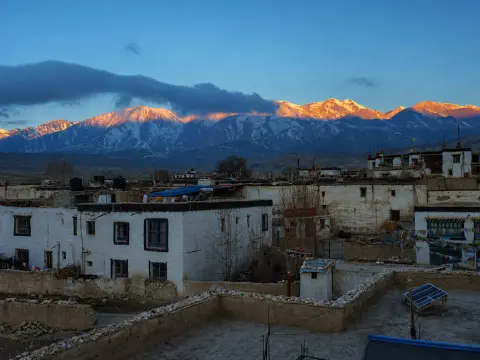
Explore Lo Manthang, Upper Mustang’s ancient walled capital, rich in royal history, Tibetan culture, monasteries, and Himalayan beauty.



