Thorong La Pass vs Kongma La Pass: Which Himalayan Trekking Pass is Harder?
5 Jun 2026
Compare Thorong La Pass and Kongma La Pass to discover which Himalayan trekking pass is harder, higher, and more challenging.

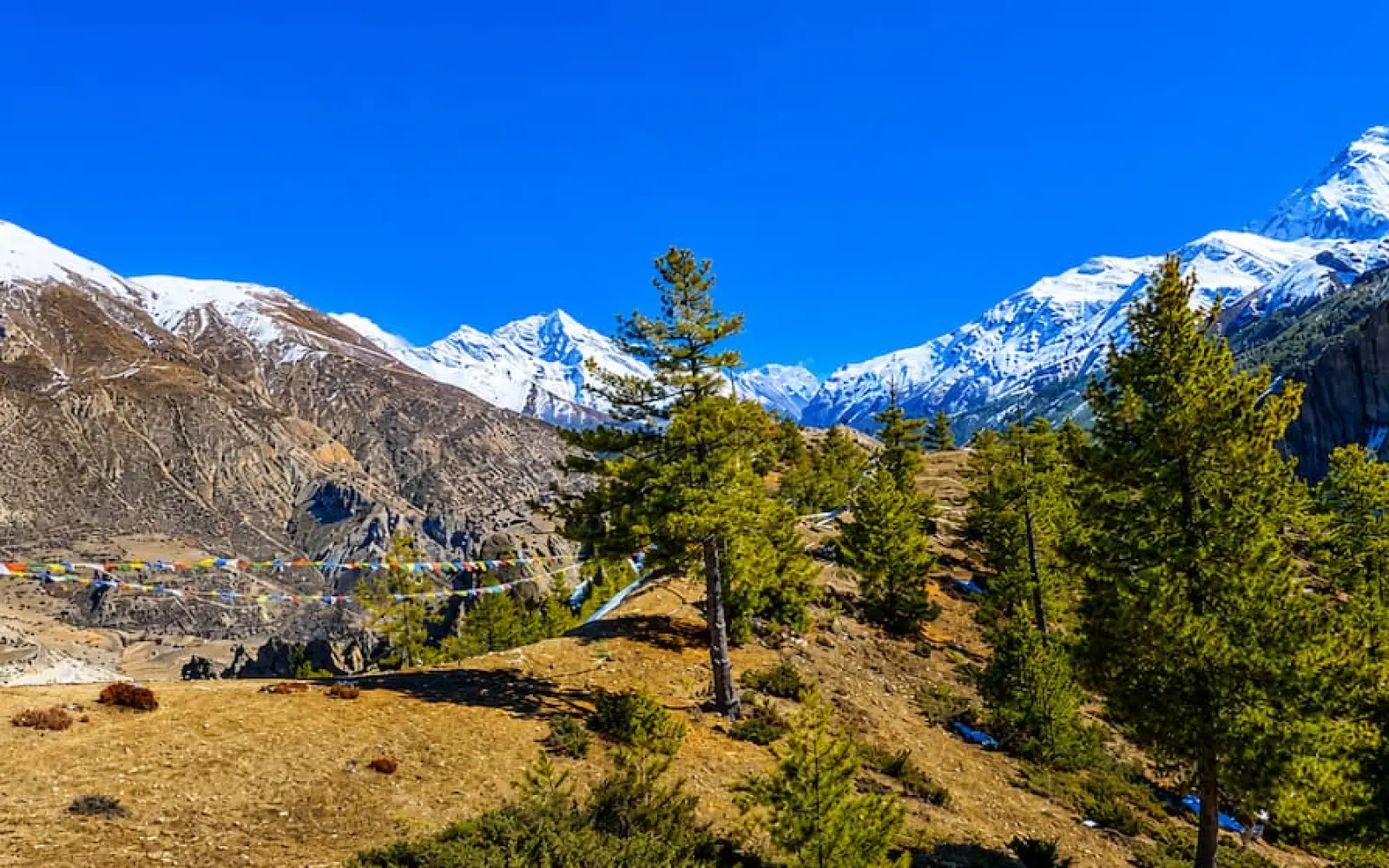
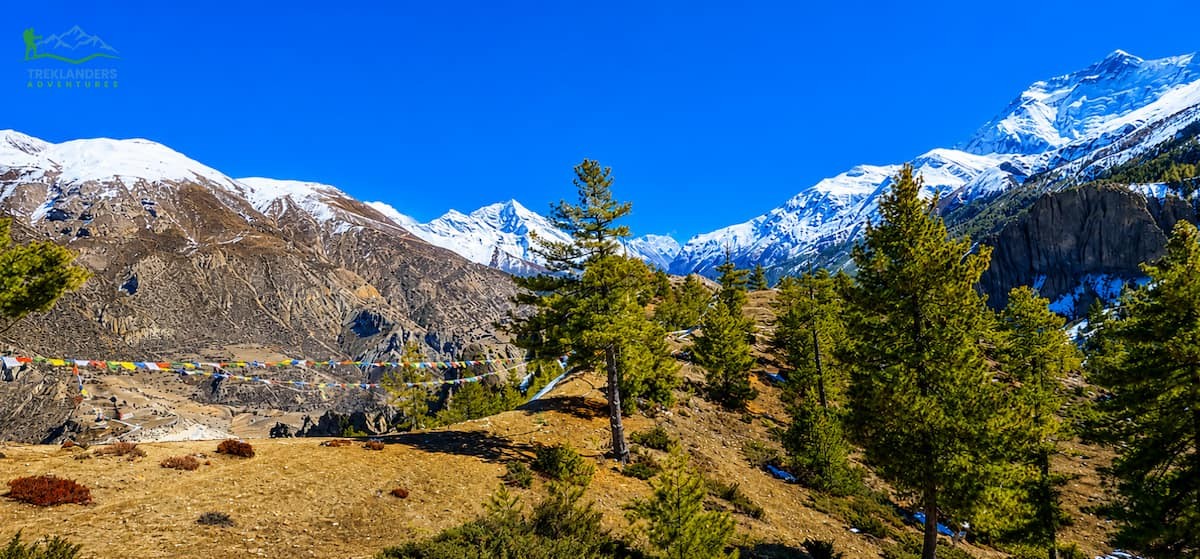
The route from Manang to Thorong La Pass is unquestionably the main attraction of the Annapurna Circuit. Still, this is also the section where most trekkers are forced to turn back. It's not because the paths are extremely challenging; on the contrary, the oxygen levels drop very quickly, the weather may change entirely in a matter of minutes, and most people really don't understand how their bodies will react to the crossing of the 5,416-meter high pass.
This part only takes a little more than three days of walking: One day for acclimatization in Manang, the next day for Yak Kharka and Thorong Phedi, and the last day for the summit cross to Muktinath. Each day plays a part in the final success, and what you decide to do each day will determine if you make it to the top or not. If your acclimatization day is wasted by doing nothing or by not going up for a short trek to help your body adjust to the altitude, then the effects will be seen on your summit day. Getting to Thorong Phedi tired rather than resting will make the 3 AM start very hard for you.
You can find in this guide everything you need for this part of the trek: having proper acclimatization in Manang, the walking route between Yak Kharka and Thorong Phedi, the right time for starting your summit point attempt, the essentials that you should carry, and the symptoms of altitude sickness that you need to be aware of before it becomes dangerous. These tips are also valid if you are joining the 23-day Annapurna Circuit Trek with Treklanders or if you opt for the shorter 13-day version, as this part of the route requires very attentive preparation.
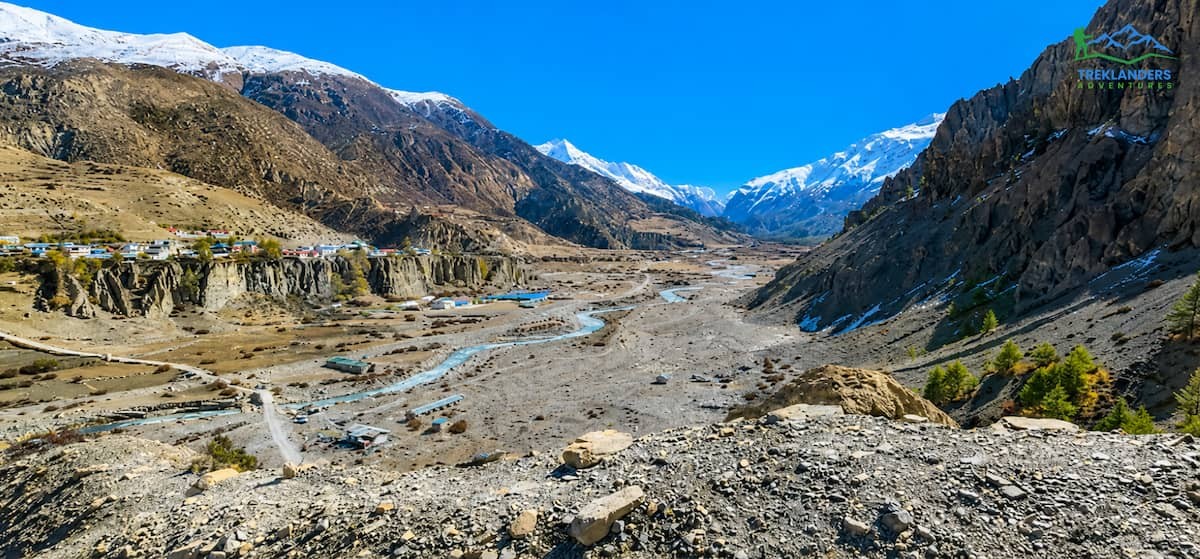
Before getting close to Manang, the majority of the Annapurna Circuit involves a slow ascent through subtropical forests, riversides, and pine-infused hills. Villages hustle, teahouses have a variety of goods, and the path is quite clear. Then, when you get to Manang at 3, 500 meters, a totally new scene unfolds.
The terrain becomes dry and exposed. The Tibetan plateau effect can be seen in the prayer walls, the flat-roofed stone houses, and the yaks grazing on the dry hills. Manaslu and Gangapurna rise on the horizon. The air is a lot scarcer. From this point onwards, every upward step towards the pass is a step further away from the conditions most trekkers have been comfortable in for the past week.
The Manang district houses the Manangi Gurung, a community deeply connected with Tibetan Buddhism and possessing a very ancient tradition of long-distance trading. Prayer wheels, chortens, and temples are what you'll find on every corner. The Treklanders Annapurna Circuit trek will take you to this area and will allow you to have a full day of acclimatization, which is actually necessary and non-negotiable.
The locally practiced tradition of Tibetan Buddhism is the main distinguishing factor of the culture in Manang when compared to the lower Gurung villages of southern Annapurna. Prayer flags are everywhere, mani walls decorate the streets, and the monastery in Bhraka is a place where you might, if done properly, join in their ceremonies. We at Treklanders have knowledgeable guides who understand local customs thoroughly and will show you how to behave properly in these environments.
Most trekking itineraries include one rest day in Manang. The Treklanders 23-day itinerary has allocated Day 10 for this purpose. How you spend this day is actually more important than most people think.
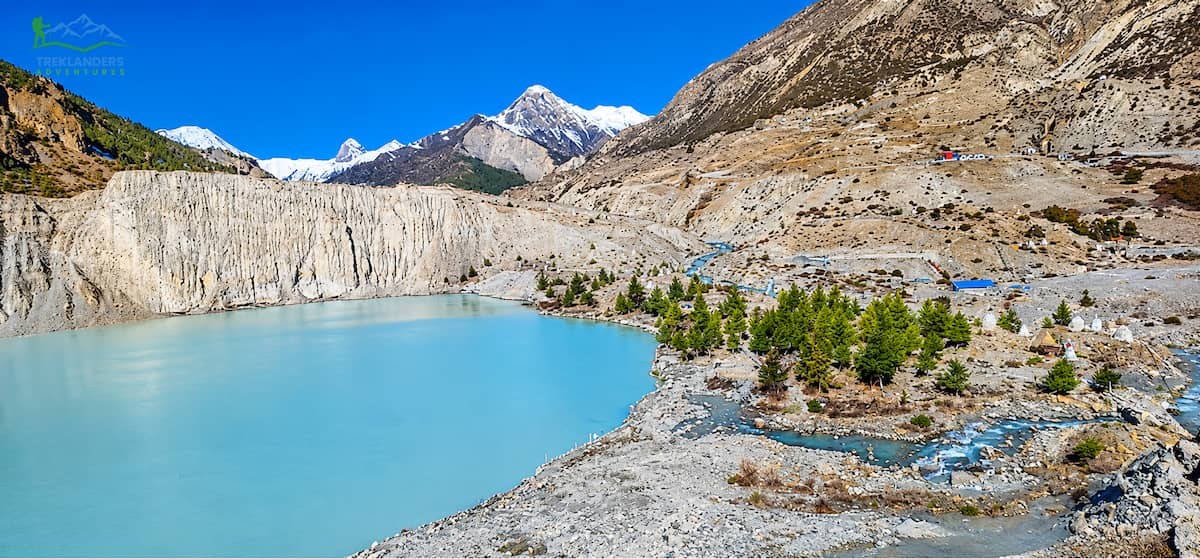
The main principle at high altitudes is to climb high and sleep low. An acclimatization day should not be a day to just sit around. Rather, you should get up. Most trekkers will do a half-day hike to Gangapurna Glacier viewpoint, Ice Lake (Kicho Tal) at about 4600 meters, or Praken Gompa monastery above the village. All three options offer an 800 to 1,100 meters elevation gain, the experience of being in the air at over 4,000 meters, and a safer sleep back in Manang in the evening.
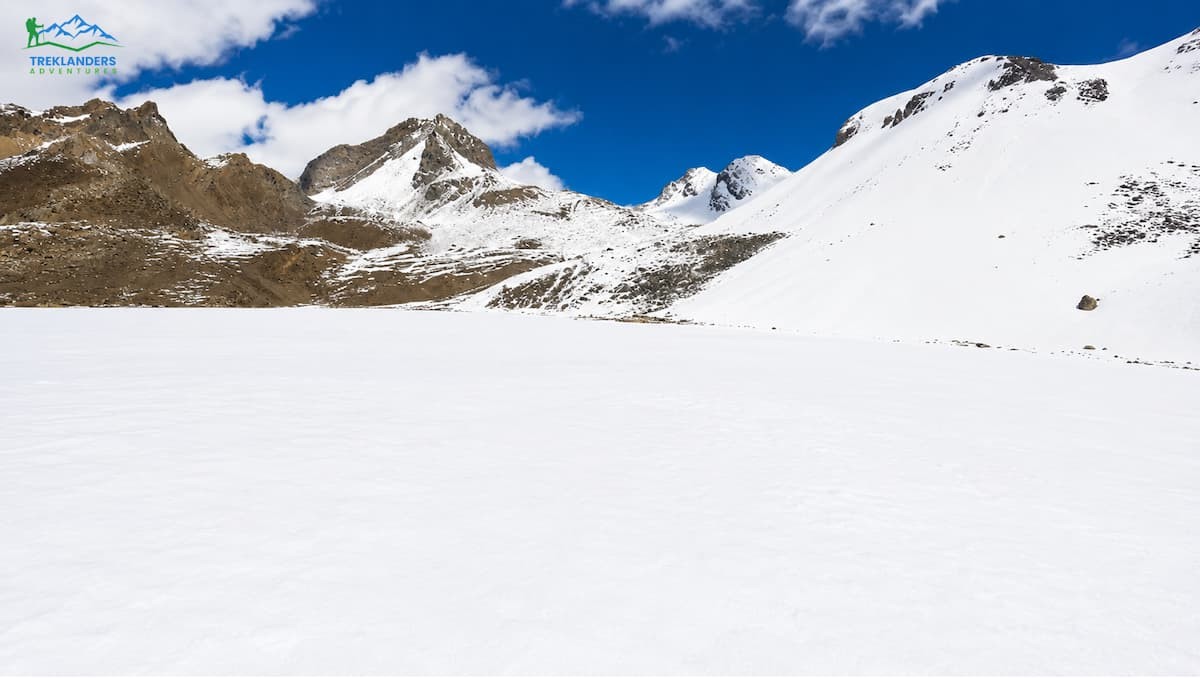
Kicho Tal (Ice Lake) is the most sought-after option. It is a challenging four-to-five-hour round trip with stunning views of Annapurna III, Gangapurna, and the Manang Valley below. If you can get to the lake without your oxygen saturation falling to a dangerously low level, that is a good indication your body is getting used to the environment.
Here are a few things you could do in Manang while acclimatizing
Additionally, the Gangapurna Glacier is a nice spot for a short stroll. Besides enjoying the fascinating sight of the glacier slowly withdrawing into the barren hillside, which offers a striking visual of how this area has been altered over the past few decades, it also lends an excellent motive for slower, more thoughtful travel.
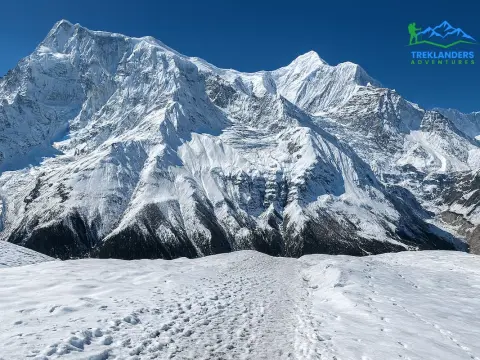
Day 11 of the Treklanders standard itinerary, you are leaving Manang and heading to Yak Kharka at an altitude of 4,110 meters. It's a walk for three to four hours, and the elevation gain is pretty easy at about 600 meters.
From Manang, the path initially ascends through Tengi village, and then it goes along the valley in a north direction. The scenery changes rapidly to a more barren one. The pine trees vanish almost immediately. And what comes in their place are low shrubs, bare rocks, and very large vistas of the Chulu peaks on the east side. If the weather is clear, you can even enjoy the view of the very distant peaks that open up the Manang Valley.
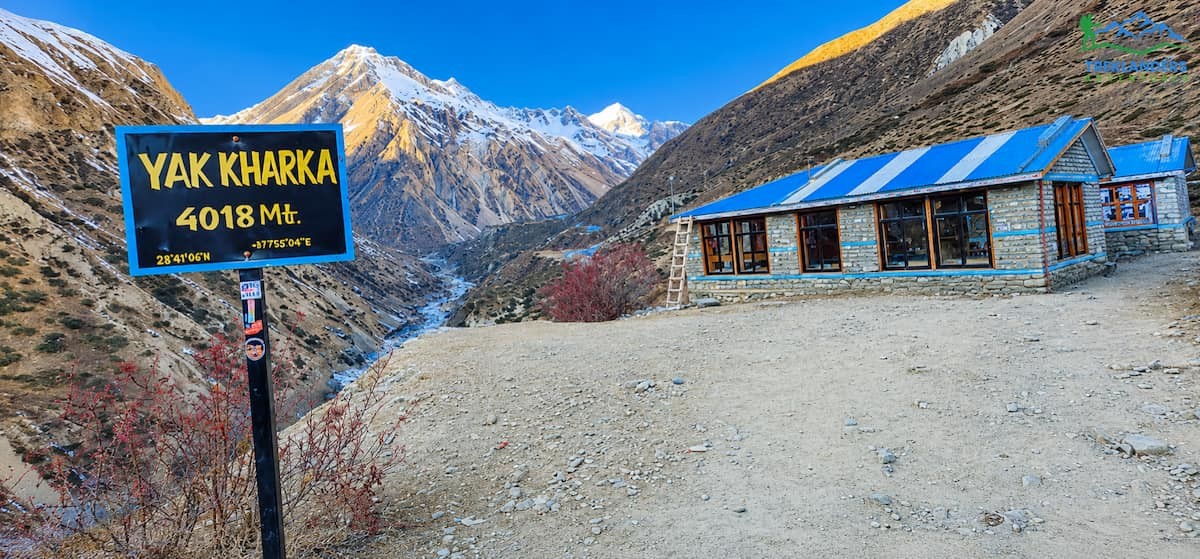
Yak Kharka, just like the name indicates, is a high pasture where yak herders usually come with their animals for grazing. At 4,018 meters, the altitude will be very apparent to you when doing any kind of physical activity. Even stairs, small uphill walks, and going at a fast pace will give you a feeling of slight breathlessness. This is a common phenomenon. You should rest, drink plenty of water, and go to bed early.
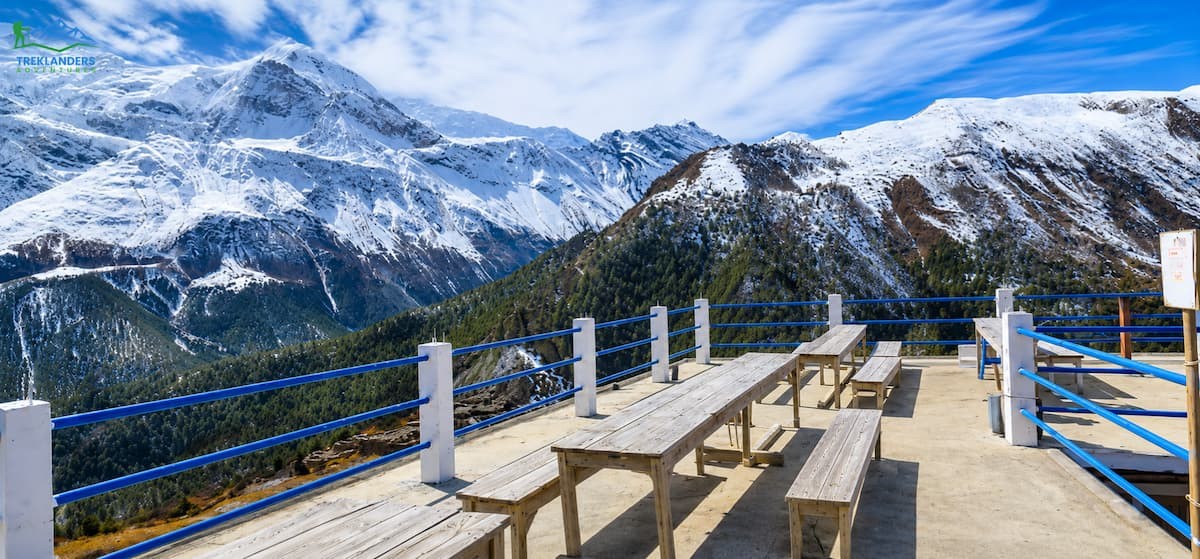
Day 12 takes you from Yak Kharka to Thorong Phedi at 4,420 meters. The Treklanders itinerary schedules this as a three-to-four-hour walk, but the terrain is uneven. The trail descends to cross a river before climbing again, so do not expect an easy morning.
Thorong Phedi translates roughly as "foot of Thorong." The name is accurate. You are now at the base of the pass, and High Camp sits about 300 meters above you at 4,850 meters. Most trekkers stay at Thorong Phedi rather than High Camp, though High Camp has become increasingly popular because it cuts roughly 45 minutes off the summit day. Talk to your guide about which option suits your pace and fitness level.

Wind is really the chief danger on the pass, rather than cold. The parts of the ridgeline that are most exposed become extremely risky if the wind is blowing continuously at over 60 km/h. Your guide will review the weather and, if necessary, postpone the decision to cross the pass. Have confidence in that decision.
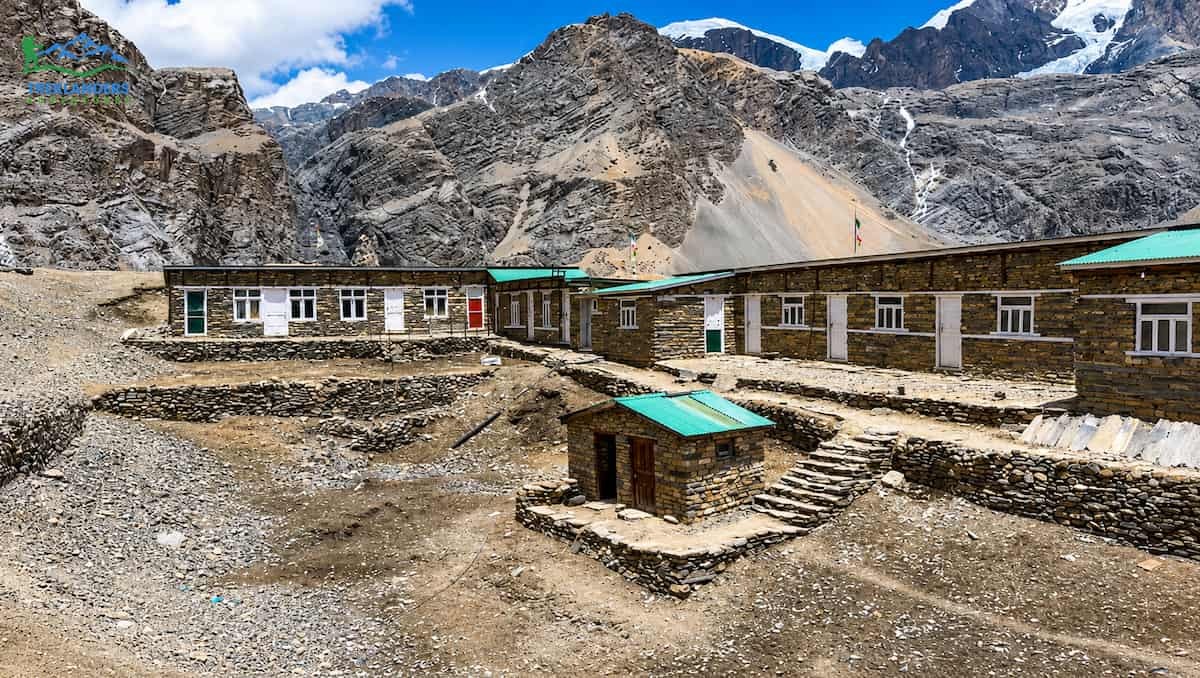
The last day and the summit day on the Annapurna Circuit are the longest and also the highest days of the trek. According to the Treklanders itinerary, Day 13 is a seven-to-eight-hour hike from Thorong Phedi via the pass and down to Muktinath at 3800 meters elevation.
4:00 to 4:30 AM. You leave the house with your headlamps on in the dark. The first part of the trail from Thorong Phedi to High Camp is very steep and rocky. From there, you have to go up a rocky switchback trail to reach High Camp. The trail here is very clear and well-used.
6:00 to 8:00 AM. As you move to higher elevations over 5000 meters, each step becomes more of an effort. Your guide sets the pace. Match it and do not try to go faster. Most of the time, trekkers make the mistake of starting very strongly and getting very tired till the summit. The right pace is always slower than what you think it is going to be.
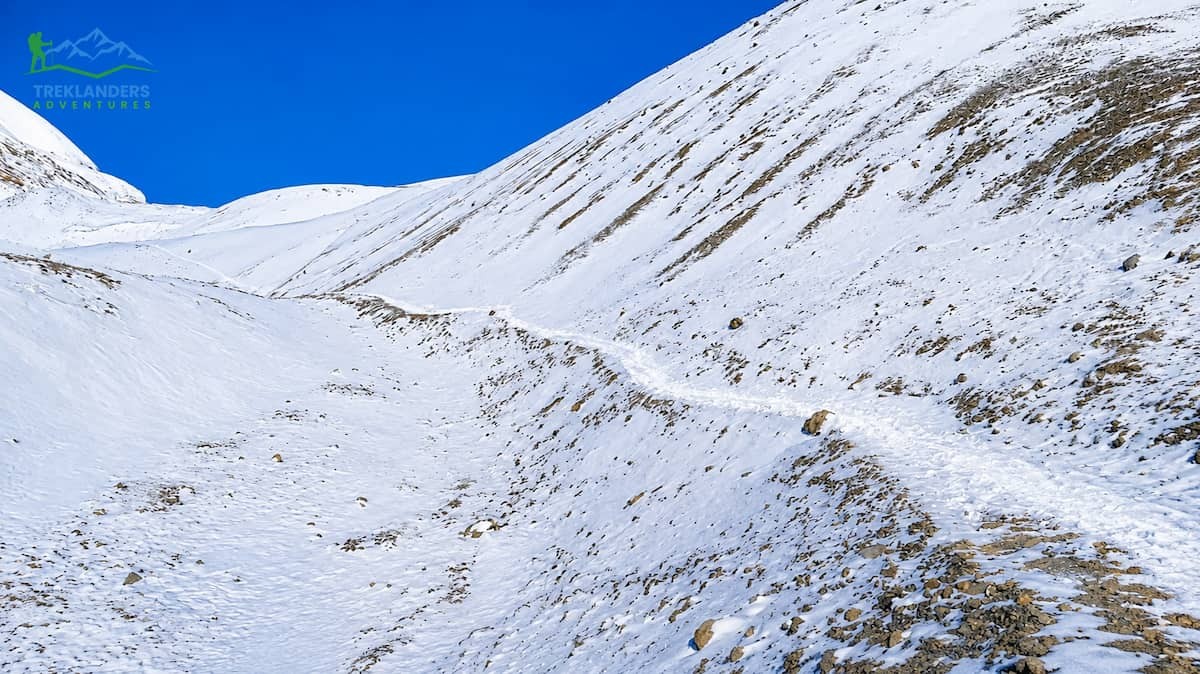
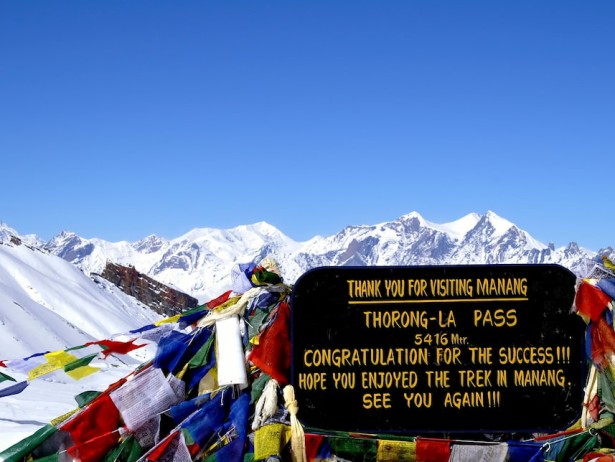
8:00 to 9:00 AM. The last piece before the pass is very steep, loose, and exposed. This is basically where you experience the most altitude. Short steps, slow breathing, no rushing. The prayer flags and chortens which mark the summit of Thorong La come quite clearly on the horizon. Once you get there, you have reached an elevation of 5416 meters, the highest point of the Annapurna Circuit.
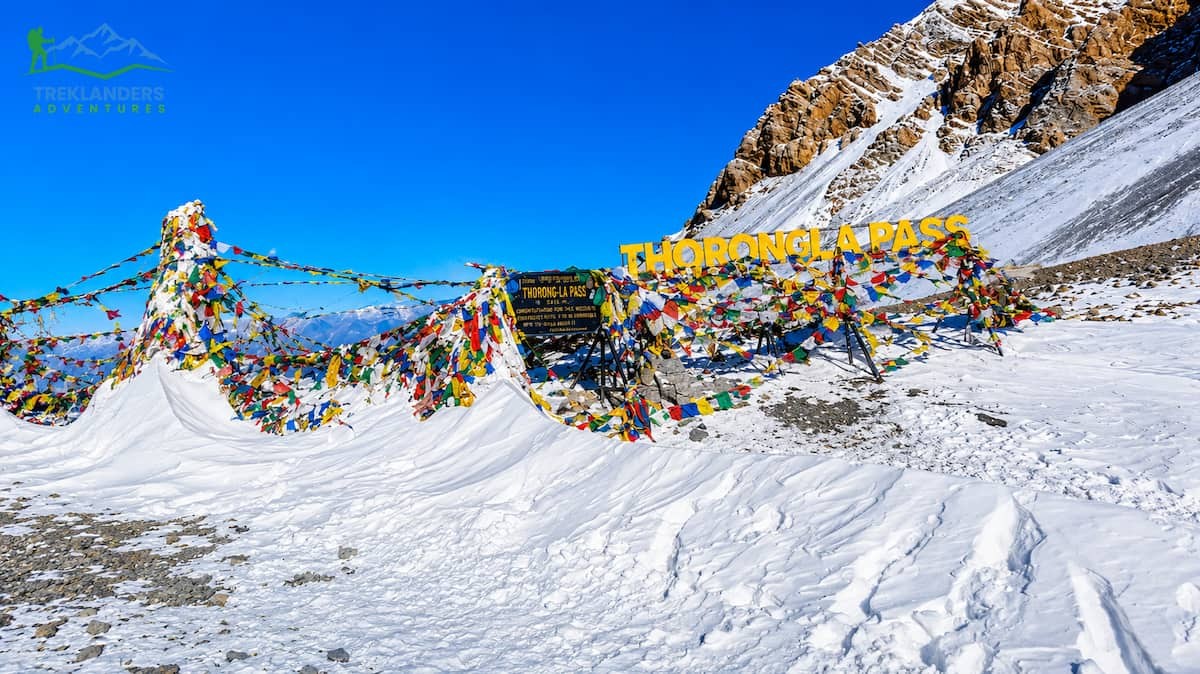
The panoramic scenes on a clear day are just magnificent. Annapurna, Dhaulagiri, and Muktinath village in the brown valley are the main sights. You should take a lead picture, have a short rest, drink some water, and eat a snack. Do not stay for more than 15 to 20 minutes.
9.00 AM onwards: Going down the mountain is quite a long way and hard on the knees. Over the next three to four hours, you will descend 1, 600 meters. The path is very steep at times and loose in others. Your legs will also feel extremely tired. Make use of your hiking poles and do not rush your walk. Firstly, Muktinath at 3, 800 meters will give you a warm and friendly feeling. You will be very proud of the fact that you have reached the bottom.
Muktinath is an important spiritual place for both the Hindu and Buddhist faiths. The temple of Muktinath is famous for its 108 water streams and the perennial flame inside, attracting devotees from the whole of South Asia. One step here, after the summit day that was so hard, is like entering a totally different world. It is a good idea to let yourself have a proper recovery before you depart. Have a good meal, drink lots of water, and if you feel your body needs it, take a rest for the rest of the day. Your legs, heart and lungs will have been very stressed by the descent from the pass. Resting at Muktinath is a part of the trek and not a delay.
After Muktinath, the Treklanders' itinerary follows the south direction along the Kali Gandaki Valley. The route goes down through Marpha, Kalopani, and Tatopani, and then it comes up to Ghorepani and finally Pokhara. According to some measurements, the Kali Gandaki Gorge may even be the deepest river gorge on earth. The scenery of Dhaulagiri and Annapurna as seen from this valley is absolutely different from the northern approach through Manang. You are looking at the same mountains from another side, and the contrast in scale and perspective is definitely worth mentioning.
Marpha is famous for its apple orchards and apple brandy. Further south, Tatopani is the place where natural hot springs can be found and in which many trekkers take a half-day soak before the final ascent to Ghorepani and the well-known sunrise walk to Poon Hill at 3, 210 meters.
The Poon Hill sunrise on Day 19 of the standard itinerary is the last main highlight before the trek finishes in Pokhara. From Poon Hill, the view of the Annapurna ranges from the side facing south is available: Annapurna I, Annapurna South, Hiunchuli, Dhaulagiri, and Machhapuchhre are all clearly seen in the morning light. This is a totally new perspective, differing from anything seen in the northern parts of the circuit. After the crossing of Thorong La, this downward view is an excellent closure to the entire circuit.
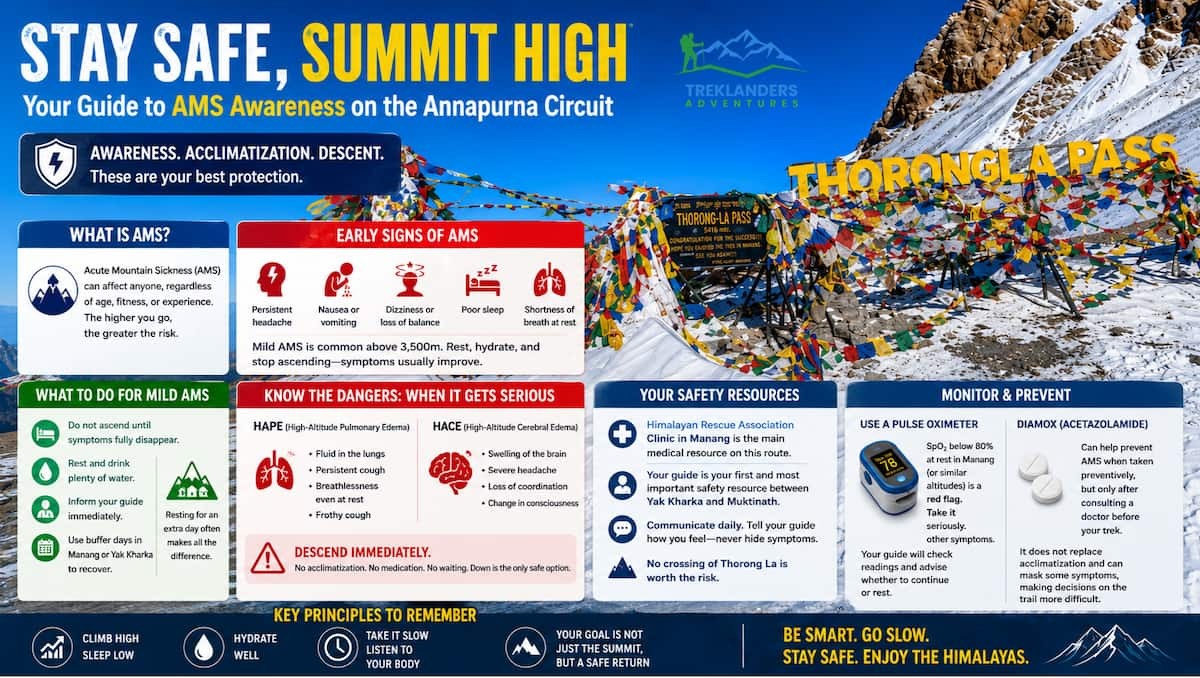
The main danger of this part of the Annapurna Circuit is a condition called acute mountain sickness (AMS). It can hit literally anyone, no matter how fit they are. Even if you are a young and very physically fit person, you can still get it. The only thing you should do is not let the symptoms get better of you.
Some of the earliest signs of being affected by AMS are headaches that will not disappear even with taking ibuprofen, nausea or throwing up, dizziness or the sensation of losing balance, not being able to sleep well, and being short of breath even when at rest. Mild AMS happens quite often at altitudes above 3, 500 meters and if the person stops and rests, drinks plenty of water, and refrains from further ascent, it usually goes away.
If you have mild AMS symptoms, it is very important that you don't keep going up until your symptoms have fully disappeared. Just rest, have plenty of water, and let your guide know at once. The guides of Treklanders are not only experienced and certified to recognize the symptoms of AMS, but they will also modify the program in case it becomes necessary. Many people with mild AMS get better simply by taking another day of rest in Manang or Yak Kharka. That is why the schedule includes buffer days. It helps to deal with situations like this.
Severe AMS, along with the extremely dangerous forms of high-altitude pulmonary edema (HAPE) and high-altitude cerebral edema (HACE), require one to descend without delay. In HAPE, fluid accumulates in the lungs and symptoms include persistent cough, breathlessness even when resting, and a frothy cough. HACE results from swelling of the brain, and symptoms include severe headache, loss of coordination, and a change in consciousness. Both are life-threatening situations. Going down is the only right thing to do. No acclimatization, no medication, no waiting: down you go.
The Himalayan Rescue Association clinic in Manang is the main medical resource on this stretch. When trekking between Yak Kharka and Muktinath, your guide will be your first and most important safety resource. Tell them every day about how you feel. Seriously, do not go ahead with symptoms just because you don't want to disappoint or worry about others. No crossing of Thorong La is worth such a risk.
A pulse oximeter can be very helpful on this trek. Blood oxygen saturation levels drop below 80% at rest in Manang, or similar altitudes raise a red flag that should be taken seriously, even if there are no other symptoms. Your guide will be the one who checks the readings and will give you advice on whether it is a good idea to continue for a while or to rest.
Diamox (acetazolamide) can help prevent AMS when taken preventively but only use it after consulting a doctor before your trek. It does not eliminate the need for acclimatization, and it masks some symptoms while suppressing others, which can complicate decision-making on the trail. If you are considering Diamox, discuss it with a physician before you leave for Nepal.
Thorong La is a high-altitude crossing, not a technical climb. You do not need mountaineering equipment. You do need the right gear in your day pack on summit day.
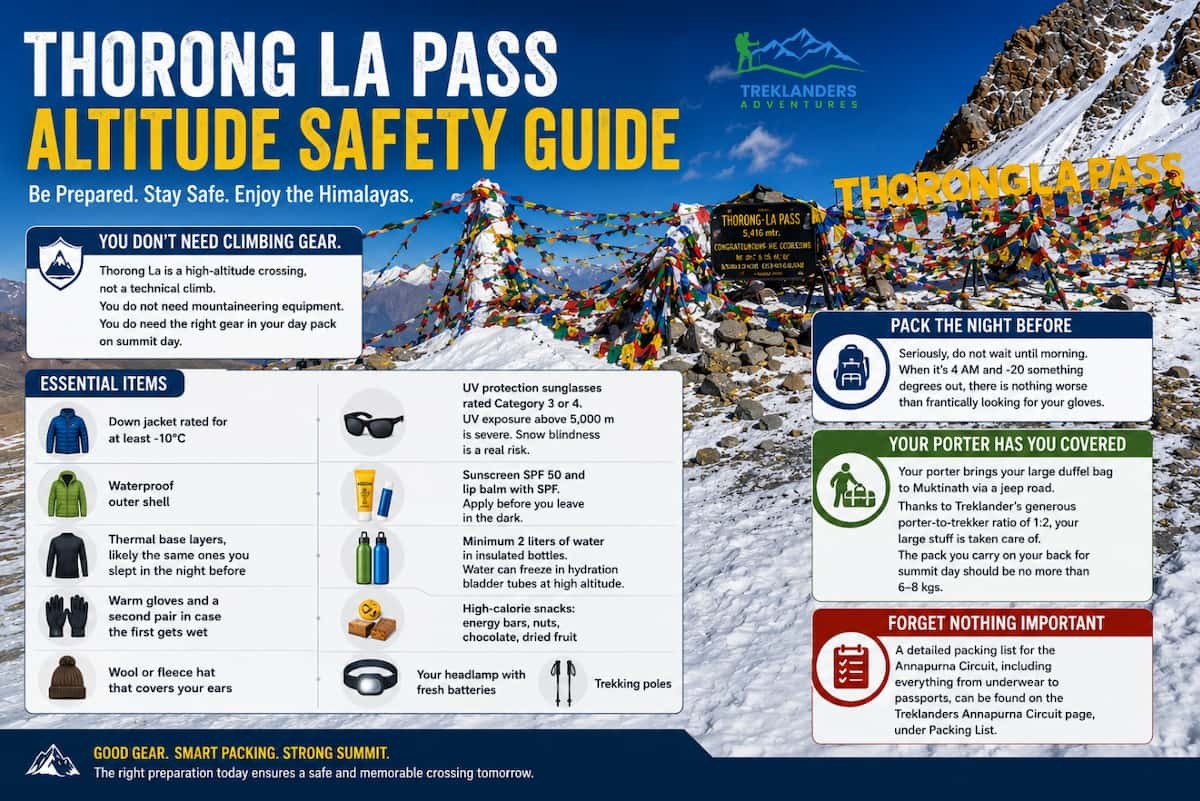
Pack the night before. Seriously, do not wait until morning. When it's 4 AM and -20 something degrees out, there is nothing worse than frantically looking for your gloves.
Your porter brings your large duffel bag to Muktinath via a jeep road. Thanks to Treklander's generous porter-to-trekker ratio of 1:2, your large stuff is taken care of. The pack you carry on your back for summit day should be no more than 6-8 kgs.
A detailed packing list for the Annapurna Circuit, including everything from underwear to passports, can be found on the Treklanders Annapurna Circuit page, under Packing List.
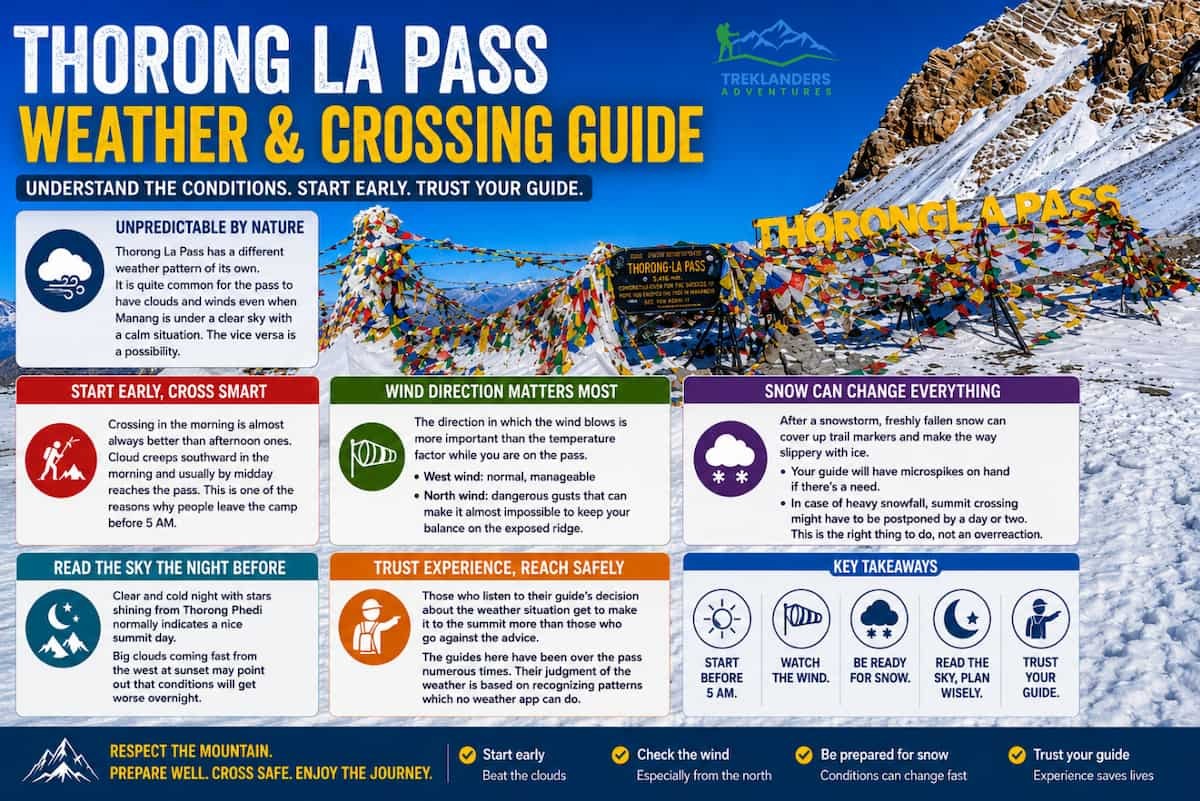
Thorong La Pass has a different weather pattern of its own. It is quite common for the pass to have clouds and winds even when Manang is under a clear sky with a calm situation. The vice versa is a possibility. Besides depending on the weather your guide tells you about on this route, learning to recognize the local weather in advance will be helpful.
Crossing in the morning is almost always better than afternoon ones. Cloud creeps southward in the morning and usually by midday reaches the pass. This is one of the reasons why people leave the camp before 5 AM.
The direction in which the wind blows is more important than the temperature factor while you are on the pass. If the wind blows from the west, it is normal, and we can deal with it. However, if there are strong winds from the north, the gusts could be so powerful that it would be almost impossible to keep your balance on the exposed ridge.
Snow on the trail really throws a wrench in your plans, doesn't it? After a snowstorm, freshly fallen snow can cover up trail markers and make the way slippery with ice. Your guide will have microspikes on hand if there's a need. In case of heavy snowfall, summit climbing might have to be postponed by a day or two. This is the right thing to do, not an overreaction.
The sky, the night before, is a great way to forecast a bit. Clear and cold night with stars shining from Thorong Phedi normally indicates a nice summit day. Big clouds coming fast from the west at sunset may point out that conditions will get worse overnight.
Those who listen to their guide's decision about the weather situation get to make it to the summit more than those who go against the advice. The guides here have been over the pass numerous times. Their judgment of the weather is based on recognizing patterns which no weather app can do.
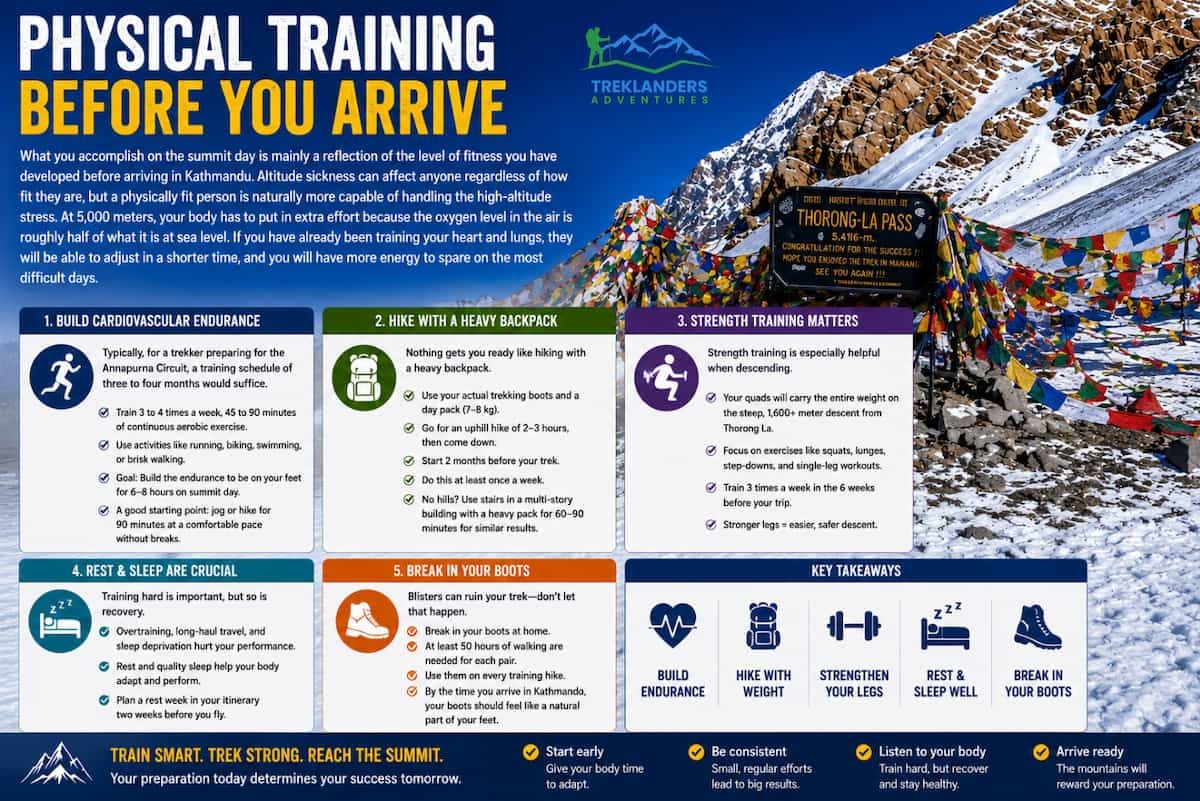
What you accomplish on the summit day is mainly a reflection of the level of fitness you have developed before arriving in Kathmandu. Altitude sickness can affect anyone regardless of how fit they are, but a physically fit person is naturally more capable of handling the high-altitude stress. At 5,000 meters, your body has to put in extra effort because the oxygen level in the air is roughly half of what it is at sea level. If you have already been training your heart and lungs, they will be able to adjust in a shorter time, and you will have more energy to spare on the most difficult days.
Typically, for a trekker preparing for the Annapurna Circuit, a training schedule of three to four months would suffice. The key is to develop cardiovascular endurance - this can be achieved by doing three to four workouts a week, each lasting between 45 and 90 minutes of continuous aerobic exercise. Running, biking, swimming, and brisk walking are all effective. The aim is to create the overall aerobic capacity that the trail requires on the summit day, when you will be on your feet for six to eight hours straight. It is a good starting point if you are able to jog or hike for a duration of 90 minutes at a pace suitable for conversation without any breaks.
Nothing gets you ready like hiking with a heavy backpack. Bring your actual trekking footwear, your day pack filled with the typical seven or eight kilograms and go for an uphill hike of two to three hours, then come down. Starting from two months before your trek, this is a must-do exercise at least once a week. In case you don’t have access to hills, then climbing up and down stairs in a multi-story building while carrying a heavy pack for 60 to 90 minutes will give you results comparable to hiking and is a trick frequently used by city-based trekkers.
Strength training is especially helpful when descending. Your quads will carry the entire weight as you make your way down from Thorong La, which is over 1,600 meters of a very steep, rock-loose trail. Exercises like squats, lunges, step-downs, and single-leg workouts help in developing the knee strength and stamina that are simply necessary. If you do strength training three times a week in the six weeks before your trip, the descent will be much easier on your body.
In addition to the volume of training, rest and quality of sleep are equally important. Those who come to Nepal already overtrained, exhausted from long-haul travel or sleep-deprived do not perform well on the trail. Plan a rest week in your itinerary two weeks before you fly.
Start breaking in your boots when you are still at home. At least 50 hours of walking are necessary for each pair of trekking boots to adjust to the shape of your feet. If your boots are stiff and unfamiliar, you will get blisters initially. This is totally preventable. Use them for every training hike. When you arrive in Kathmandu, you should feel like they are a natural part of your feet.
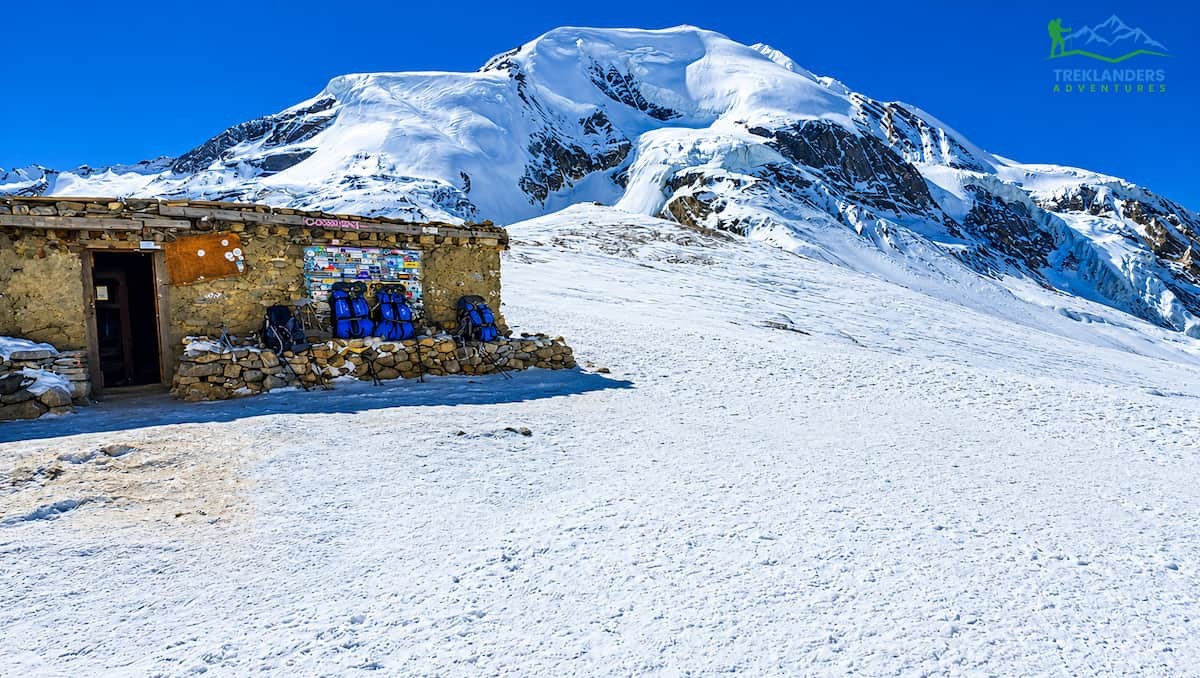
The Manang to Thorong La stretch is where the Annapurna Circuit earns its reputation. It demands preparation, patience, and honest communication with your guide about how your body is responding to the altitude. Most trekkers who fail to cross the pass do so not because of poor fitness but because of rushed acclimatization, ignored symptoms, or a late start on summit day. Get those three things right, and the crossing is within reach for most reasonably fit people.
Crossing Thorong La Pass at 5,416 meters and descending into Muktinath is one of the most satisfying days you can have on a trail anywhere. The hard part is everything that leads up to it: the disciplined acclimatization hike above Manang, the early night at Thorong Phedi, the 4 AM alarm in the cold dark.
Treklanders has guided hundreds of trekkers through this exact section of the Annapurna Circuit. Their guides know the trail, the weather patterns, and how to read a trekker who is struggling before that trekker knows it themselves. If you are planning the circuit, book a team that knows this route well. The pass will still be hard. It should be. That is the point.
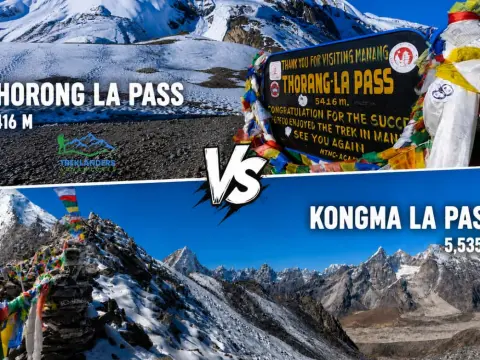
Compare Thorong La Pass and Kongma La Pass to discover which Himalayan trekking pass is harder, higher, and more challenging.

Compare Gokyo Ri and Kala Patthar for the best Everest views and Himalayan trekking experience.
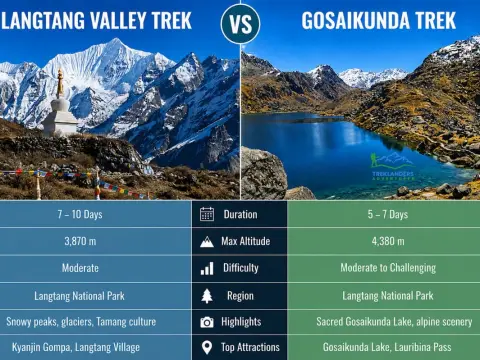
Compare the Langtang Valley Trek and Gosaikunda Trek to choose the best Himalayan trek in Nepal.



