Tamang Heritage Trail vs Langtang Valley Trek: Which Trek Offers the Best Cultural Experience in Nepal?
4 Jun 2026
Compare the Tamang Heritage Trail and Langtang Valley Trek for culture, villages, and stunning Himalayan views in Nepal.

Both treks are located in the same national park. Both of them start with the same bus ride out of Kathmandu. Both of them take you through the Tamang villages, Rhododendron forests, and high-altitude terrains that are quite different from city life.
But they are not the same. Neither in what they provide, nor in what they require, nor even in what you take back from them.
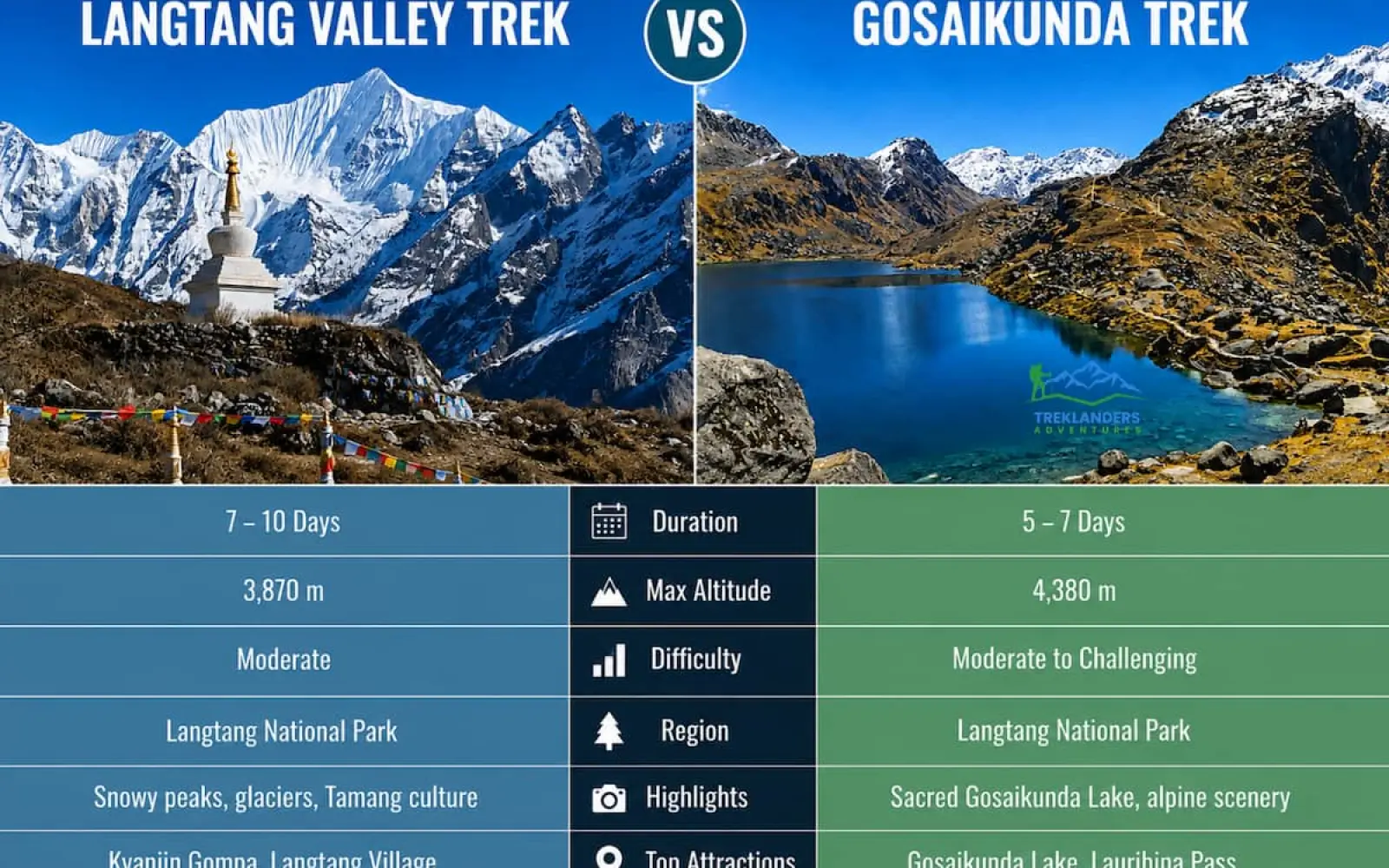
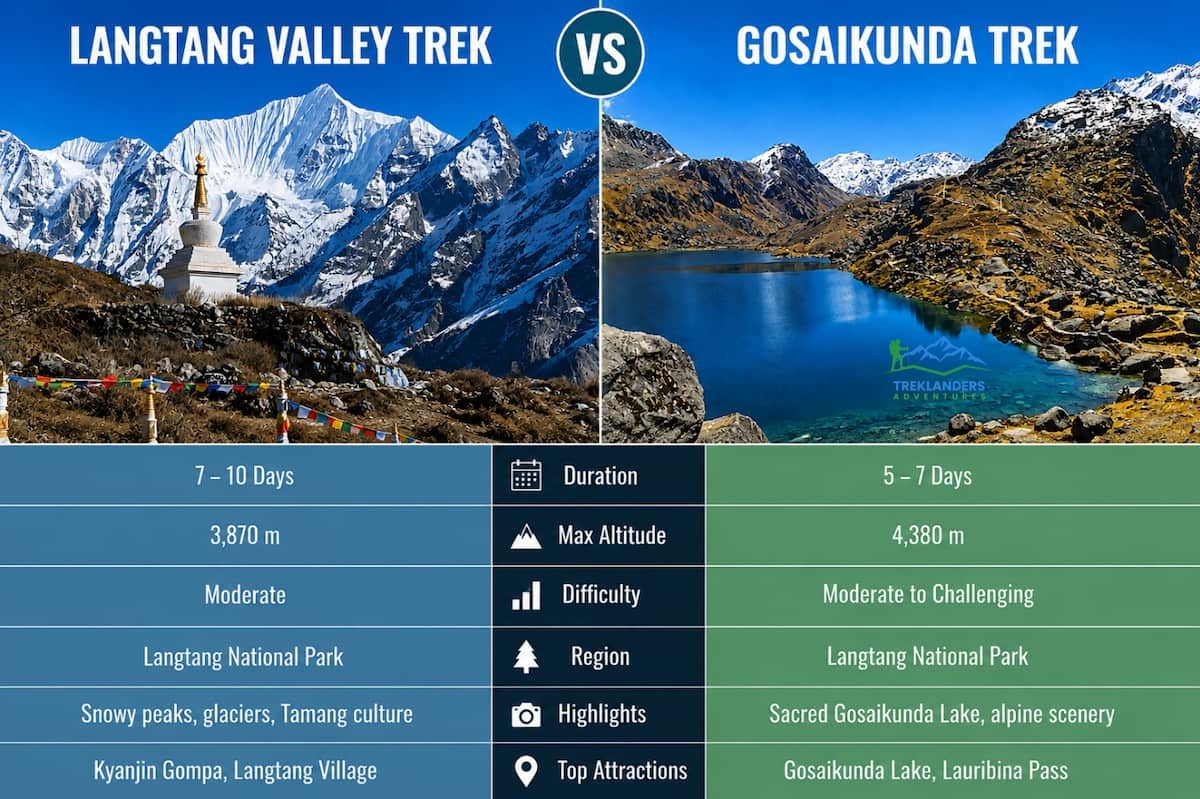
The Langtang Valley Trek takes you deep into a glacial valley, where you will see one of the most stunning mountain walls in Nepal. On the other hand, the Gosaikunda Lake Trek will take you on a steep climb to a sacred alpine lake at 4, 380 meters, where Hindu pilgrims have been coming for centuries.

Deciding between them is really a matter of the kind of trekker you are and what you expect from your mountain experience. The Langtang area is located about 80 kilometers north of Kathmandu in the Rasuwa district of Bagmati Province. Being close to the capital city, it is one of the most easily accessible high-altitude trekking destinations in Nepal. However, from the very first day on the trail, the terrain of the area is a real mountain country. The national park covers more than 1,710 square kilometers and protects a variety of habitats from subtropical river gorges to permanent glaciers and alpine lakes that are located above 4,000 meters.
This has led to both treks being the most favored by trekkers who cannot afford three weeks in the Everest Base Camp route or Annapurna regions but still want a genuine Himalayan experience. Both of them can provide that. However, they cannot give you the same experience. This guide is here to equip you with everything you need to make the correct decision.
Before going deep, here is the shape of each trek.
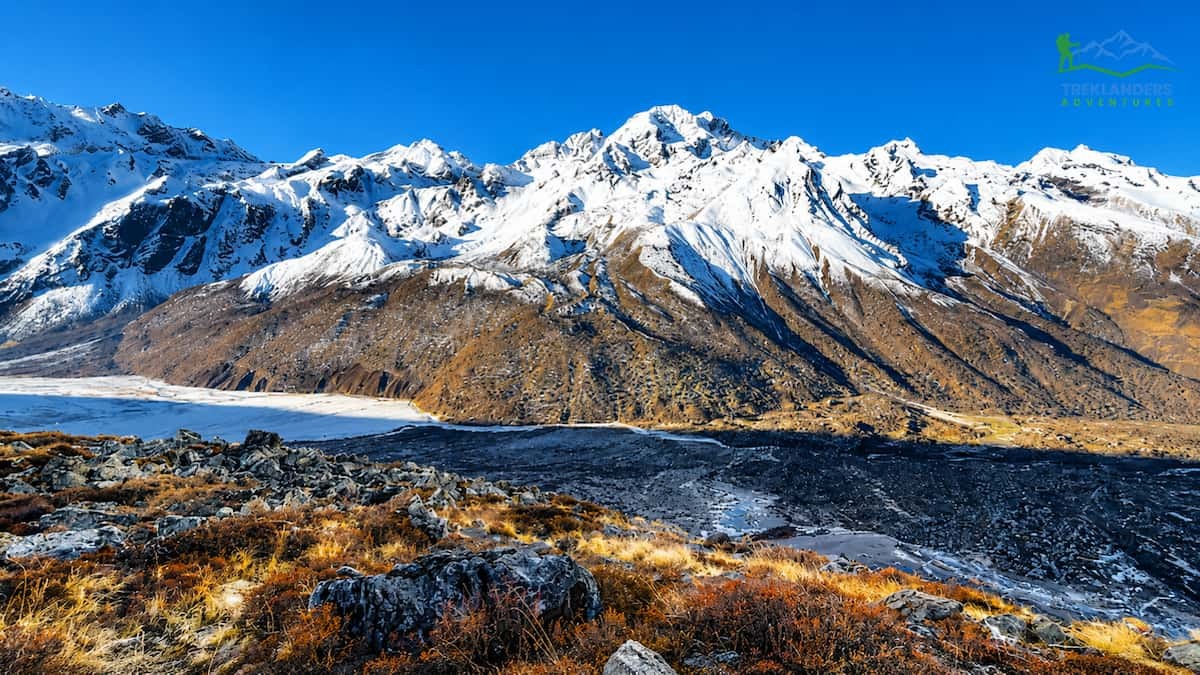
Langtang Valley Trek begins at Syabrubesi (1, 550m) and gradually moves along the Langtang Khola river, first flowing through dense forests, then passing traditional Tamang villages, and finally entering the open alpine area of Langtang Village (3, 430m) and Kyanjin Gompa (3, 870m).
From Kyanjin Gompa, it is possible to take short hikes to Kyanjin Ri (4, 773m) or Tserko Ri (4, 984m), which reward you with a spectacular view of the surrounding peaks such as Langtang Lirung, one of the highest and most majestic peaks in Nepal, with an elevation of 7, 227m.
The typical trek covers anywhere between 65 and 77 kilometers in total and lasts for 7 to 10 days. You spend around 5 to 7 hours walking each day, and the altitude gain is gradual.
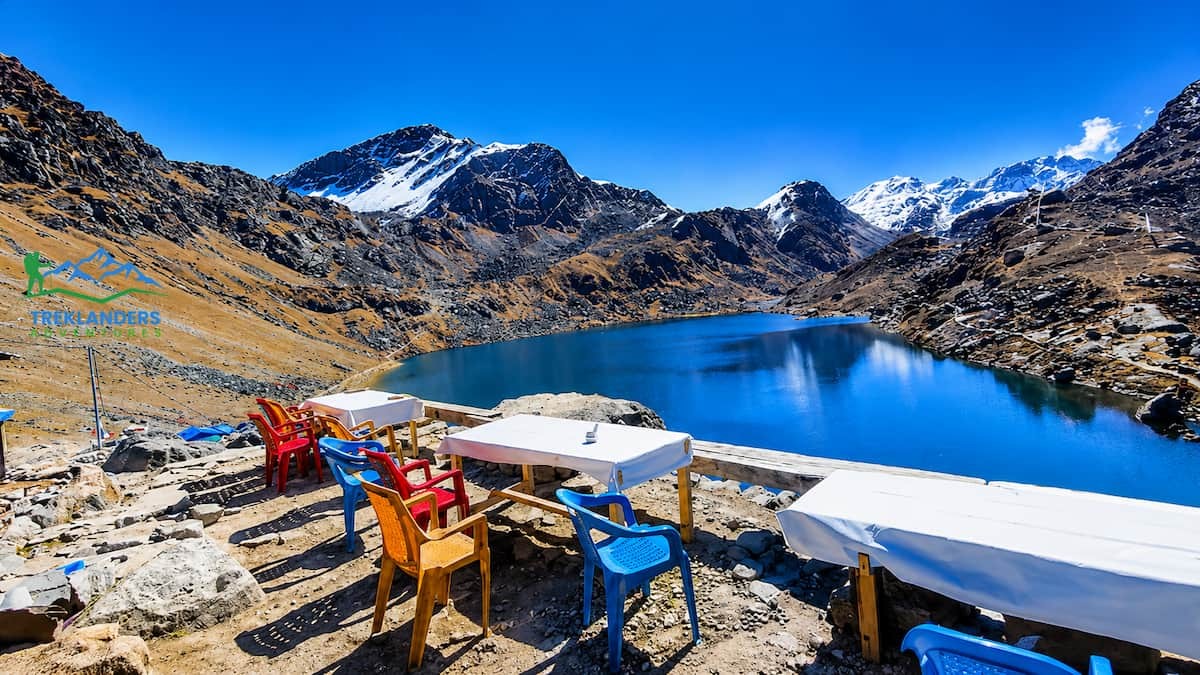
Gosaikunda Trek can be initiated either from Dhunche (2,000m) or Syabrubesi (1,550m). It involves an initial steep climb through forested ridges all the way to Sing Gompa (3,330m) and Lauri Binayak (3,910m) before the final arrival at the Gosaikunda Lake (4,380m). The lake is located in a stone basin enclosed by snow-covered ridges, and there are also several smaller sacred lakes in the vicinity.
The trek in total involves 35 to 45 kilometers and is usually done in 5 to 7 days. Compared to Langtang Valley, the daily climb is steeper, and you will be gaining altitude faster as well.
You need to have a Langtang National Park Entry Permit for both treks, and it costs NPR 3, 000 for foreigners. Over the years, the rules of the Trekkers' Information Management System (TIMS) card have been altered, so before you depart, check with a registered trekking agency for the latest requirements.
If you are taking the Gosaikunda route and going out to Sundarijal, then you will also need a permit for Shivapuri Nagarjun National Park. Since 2023, the rule is that all foreign trekkers in Nepal must trek with a licensed guide; therefore, this is usually the case, where permits are given through your guide or agency. Always keep with you your passport and permit copies in both routes because check posts are continuously doing document checks.
The two treks are, however, connected by a 12 to 14-day circuit that will take you through the valley and the lake before you exit via Helambu, thus experiencing the whole Langtang region in one trip.
Walking these paths won't be a simple stroll for beginners. To complete either trek, one must have a decent level of fitness and a certain understanding of high-altitude environments. But the nature of the difficulty is not the same for both.
The Langtang Valley Trek is considered moderate. The route from Syabrubesi to Kyanjin Gompa gradually increases in height over multiple days, which helps your body acclimate. The highest sleeping altitude along the main path is Kyanjin Gompa at 3,870m. If you decide to go for the Tserko Ri hike, you will be at 4,984m during the day, but you will come down to rest at a lower altitude, which is great for acclimatization.
The total elevation gain per day follows the guideline of 900 to 1,200 meters, spread over 5 to 7 hours of walking. The landscape includes a mixture of riverside trails, wooded hills, rocky parts, and alpine meadows. Those who are used to hiking at sea level for 5 to 6 hours a day without any problems will most likely be able to do this trek if they prepare properly. Having some experience with hiking is beneficial, but it is not a must. The path is clearly marked and quite frequented, which means it is not only easy to follow, but also that there will be other trekkers and guides around.
How fit you are will make a difference. Doing cardiovascular workouts 4 to 6 weeks before the trip and strengthening your legs by stair climbing or walking uphill will really help with the steep parts. Those who have not trained arrive at the trek and think the first days are too difficult for them.
Most people say that the Gosaikunda Trek is moderate to challenging. The real challenge is indeed not the distance but the speed of ascent.
Unlike the Langtang Valley trek, where you can cover a good distance each day, the Gosaikunda trek gives you a rapid altitude gain each day. From Dhunche at 2,000 meters, you are at Gosaikunda at 4,380 meters within just 2 to 3 days of walking. This quick ascent means your body will have very little time to get used to the altitude.
On the way, you will find that there are very few level terraces. Most of the trail is composed of steep stone steps and forested uphill paths. By the time you reach midday, your legs will be screaming at you. At an altitude of around 4000 meters, your respiration without any doubt will be slower, and your breathing will be heavier. Even seasoned trekkers walk more slowly here, and this is the right thing to do. Trying to take a rapid pace at altitude is the main cause of altitude sickness in even the healthiest individuals.
It is worth noting that roughly 5 percent of trekkers on guided Gosaikunda departures turn back due to AMS symptoms, typically at Lauri Binayak around 3,910m. That number rises with shorter itineraries that compress the ascent further.
If you have completed a high-altitude trek before and understand how your body responds to altitude, Gosaikunda is manageable. If this is your first time above 4,000m, the Langtang Valley route gives you a safer and more gradual introduction.
Altitude is a critical consideration when planning these two treks. Here's the altitude comparison:
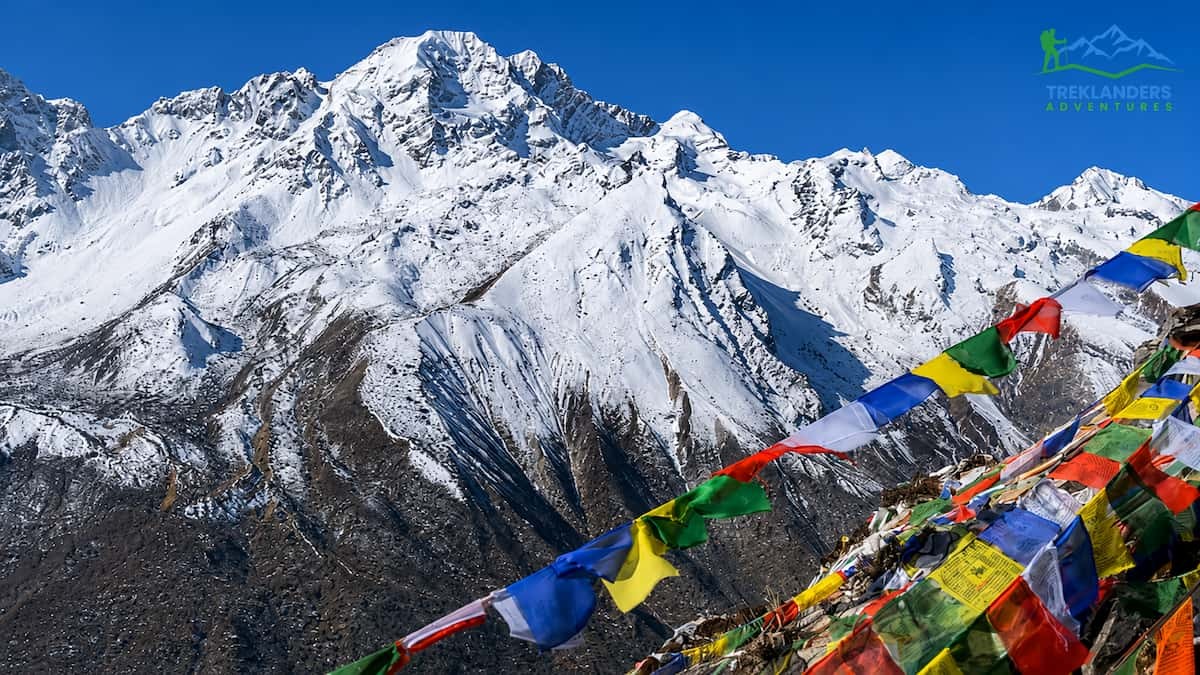
The main lodging altitude remains under 4, 000m for the majority of the trek. On the days you visit the viewpoint, you "climb high and sleep low", which is the right way to acclimatize.
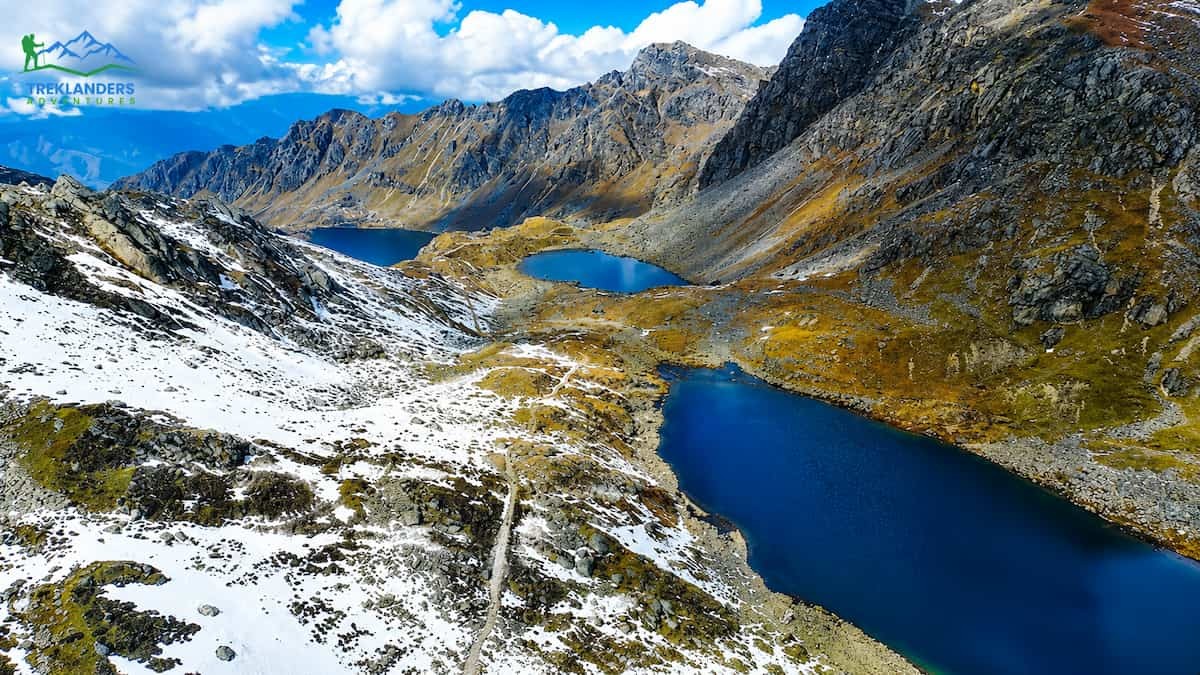
You sleep at 4,380m at the lake, which is higher than any overnight stop on the standard Langtang Valley route. For some trekkers, sleeping at that altitude can cause headaches, disrupted sleep, and early signs of acute mountain sickness (AMS). Proper pacing and hydration matter more here.
Altitude sickness (AMS) can begin at around 2,500m for some people. Common symptoms include headaches, nausea, dizziness, and fatigue. The standard rule applies to both treks: if symptoms worsen, descend. Do not push through worsening AMS.
For trekkers planning the combined Langtang Gosaikunda route, which connects both destinations in a 12 to 15-day circuit, the altitude management becomes part of a longer acclimatization strategy, and Tserko Ri at 4,984m becomes the highest point.
Reading altitude numbers and distances only gives you factual information. It does not tell you what the experience of hiking feels like day by day.
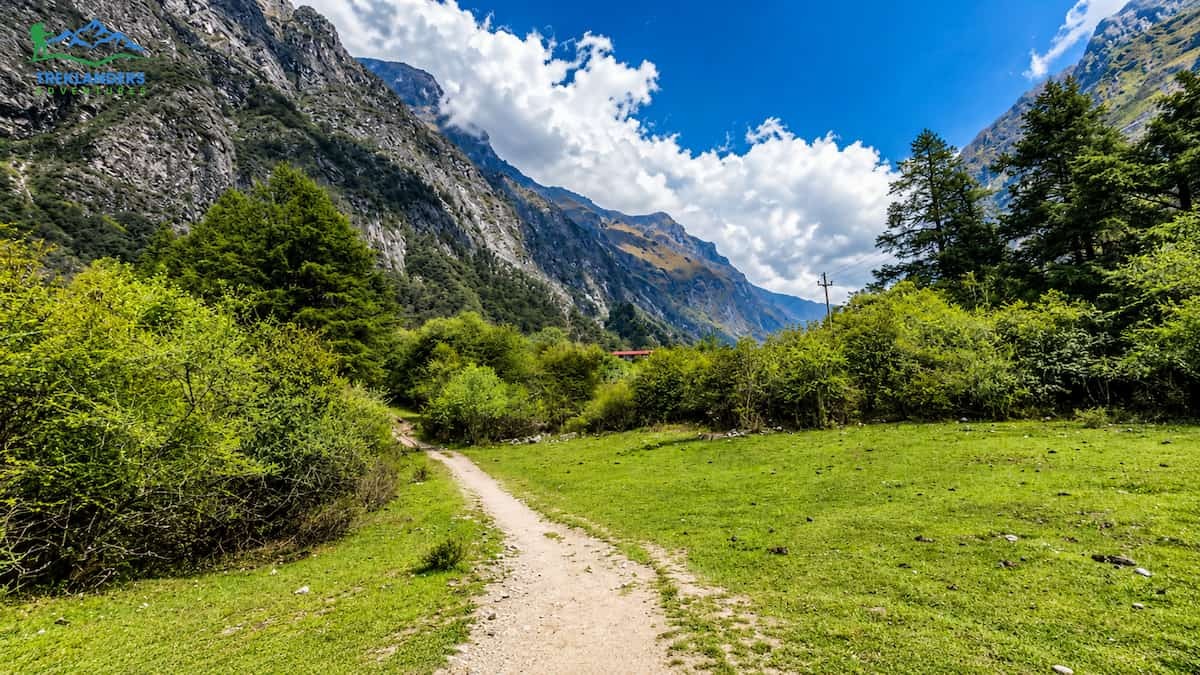
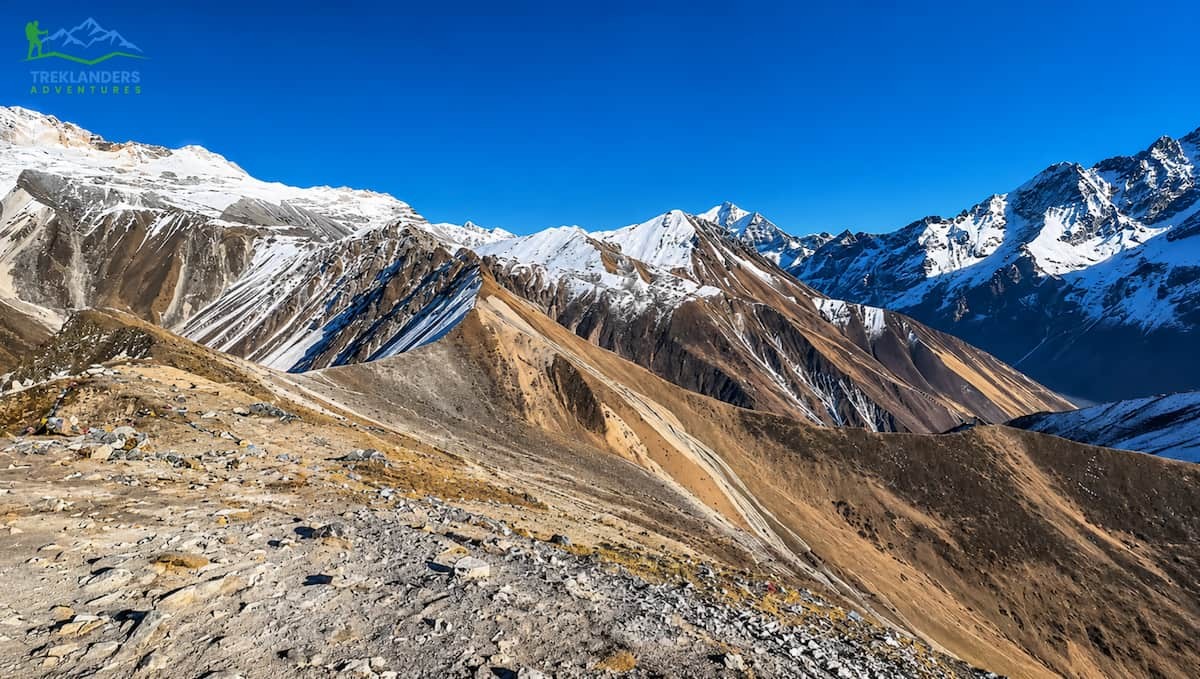
Langtang Valley Trek is composed of a clear storyline. You begin in a subtropical river gorge where you can spot langur monkeys in the trees above the trail. As you gain altitude, the forest gradually gives way to open land. By the third or fourth day, you will be surrounded by wide alpine landscapes, with views of glacier peaks on both sides of the valley. The mountain face above Kyanjin Gompa, with Langtang Lirung as the centerpiece, is one of the most spectacular sights one can see on a trek in Nepal.
Along the valley, the trail rarely rises above the river level, so there are no sections that can cause fear of heights or feelings of vertigo. It is a hike in the direction of the eventual endpoint, but there are nice stops for each night's lodging. Adding a whole day for Kyanjin Gompa acclimatization is not something you only do out of a sense of medical necessity; you actually enjoy it.
The cheese factory of Kyanjin Gompa, which is operated by the local cooperative, produces yak cheese that is distributed throughout Nepal. You can even get a glimpse of the cheese-making process and purchase a chunk that you can carry with you for the remainder of the trek. The small but lively monastery at Kyanjin Gompa is a peaceful cultural refuge at the end of the valley.
The 2015 Gorkha earthquake severely damaged Langtang Village, and a landslide buried quite a lot of it, too. If you happen to visit the rebuilt village these days, you'll notice the recovery and the new scars at the same time. New stone houses are put up alongside the old debris fields. The fact that the villagers didn't run away but stayed and rebuilt gives Langtang Village a very human element, one that you hardly find on other trekking routes.
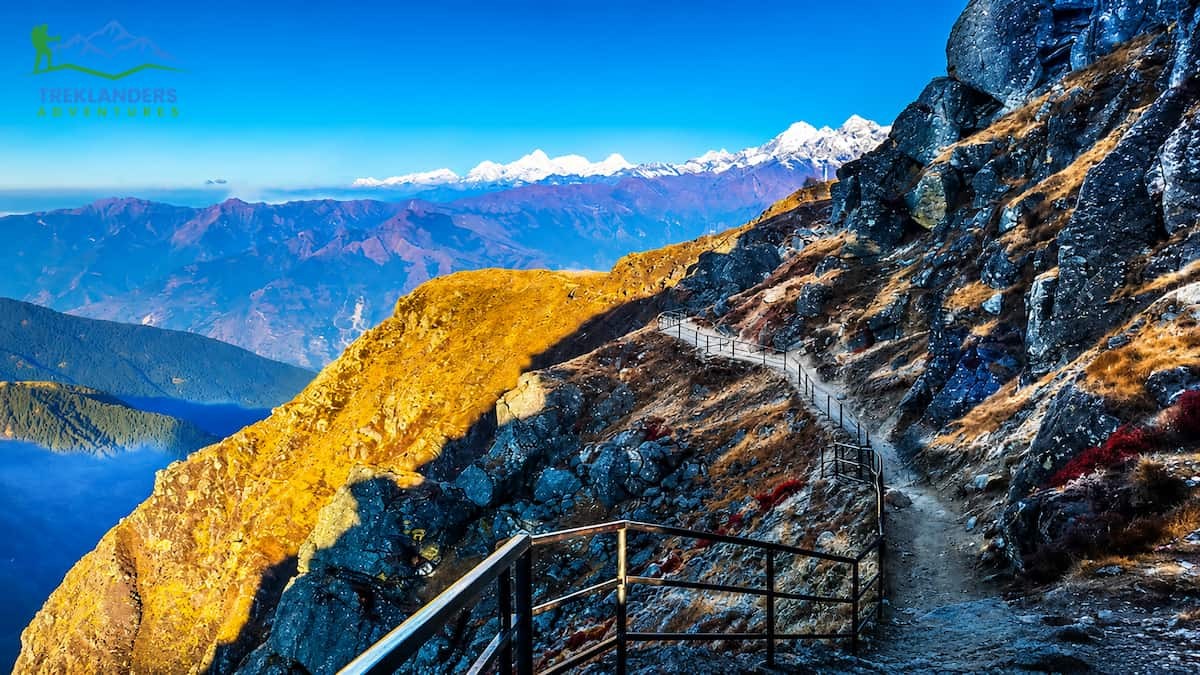
Gosaikunda Trek is more raw, primordial, and less straightforward. The path from Dhunche goes up very fast through dense rhododendron and oak woods. First, the tall trees shelter you from the elements, then they give way to ridges exposed to wind and with magnificent views of the Langtang mountain range. The last stretch of the journey to get to Gosaikunda is on rocky, boulder-strewn ground above the timberline.
The lake in question is quite different from the others on the Langtang Valley trail. It is perched in a high rocky basin, encircled by smaller peaks with prayer flags fluttering on the nearby ridges and several other small lakes visible from the main shoreline. Suryakunda, Bhairavkunda and Saraswati Kunda are the other devotional lakes in the group, each bearing a different essence through Hindu and Buddhist mythology. There is a tiny temple right by the lakeside where worshippers make their offerings.
Most likely, it is quite a difficult task to properly capture the stillness of Gosaikunda. The area indeed has some sort of gravity, that is, on one hand, due to the high altitude and, on the other hand, because of its long history of being a pilgrimage place. Situated at a height of 4,380 meters, the lake, surrounded by the ridge that even blocks the view of the horizon, also has a very rare landscape carrying the feeling of a newly discovered place.
Walking along the Langtang Valley through the ever-changing natural scenes and a well-told valley story is indeed what you will get on this trek. On the other hand, if trekking to a place that is quite a walk but also gives you a feeling of spiritually being present is your thing, then Gosaikunda is the right choice.
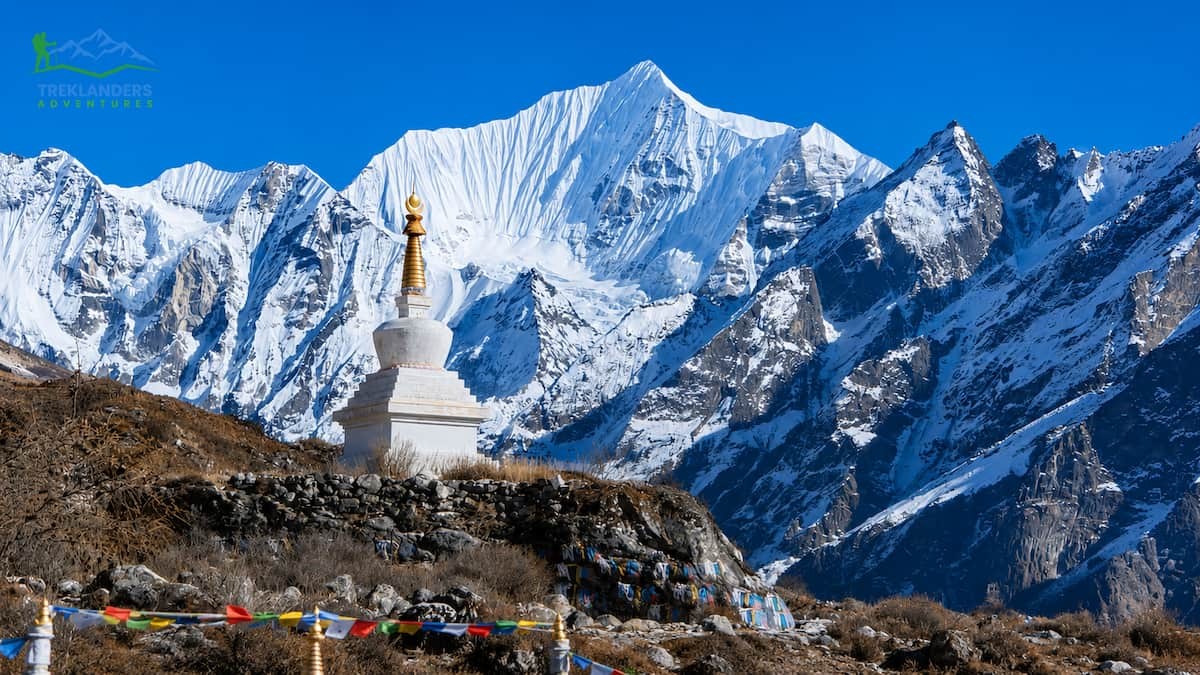
Both treks pass through the Langtang area and give you the chance to meet the Tamang community. However, the culture you will experience on each trek is different.
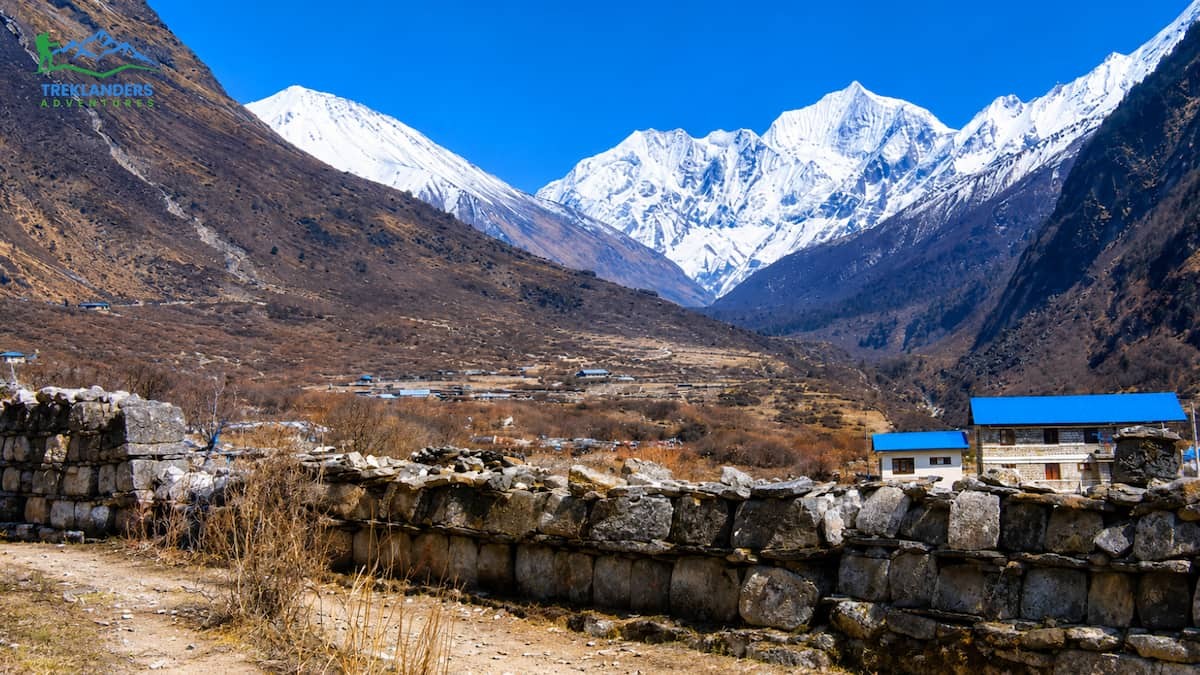
The Langtang Valley Trek, most of the time, is a showcase of Tamang Buddhist culture. The villages along the trekking trail, from Syabrubesi to Rimche, Lama Hotel, Ghora Tabela, Langtang Village and Kyanjin Gompa, are all Tamang communities deeply rooted in Tibetan Buddhist traditions. Mani walls, chortens, and prayer wheels appear along the way. At Kyanjin Gompa, you can see a monastery where they still do rituals and a yak cheese factory, which makes the kind of cheese that you would associate very much with these mountains in Nepal.

The rebuilding of Langtang Village, which was almost totally wiped out in the 2015 Gorkha earthquake and landslide, is giving the area a kind of human emotion through story.
It is walking through the rebuilt village with locals who stayed and returned that gives more meaning beyond the beauty of the scenery.
Gosaikunda Trek introduces a different element of Hindu pilgrimage that you would not get with the Langtang Valley Trek. Gosaikunda Lake is one of the most important places for Hindus in Nepal.
According to Hindu myth, Lord Shiva, with his trident, made a hole in the ground, and from there the water came, and the lake was formed. The lake is considered to be a residence of Lord Shiva, and thousands of Hindu pilgrims visit the lake every year.
During the Janai Purnima festival, which falls on the full moon of August, thousands of Hindu pilgrims from Nepal and India trek to the lake to bathe in its waters and change the sacred thread (Janai) worn by Hindu men. The lake is also respected by Buddhist communities, who associate it with Bodhisattva Avalokiteshvara.
Trekking to Gosaikunda outside the festival season gives you quiet access to the lake and the smaller sacred lakes nearby. Trekking during Janai Purnima immerses you in one of Nepal's most vivid religious gatherings at high altitude.
Both treks offer genuine cultural depth. The Langtang Valley gives you Buddhist village life. Gosaikunda adds a Hindu pilgrimage dimension that is unique in the region.
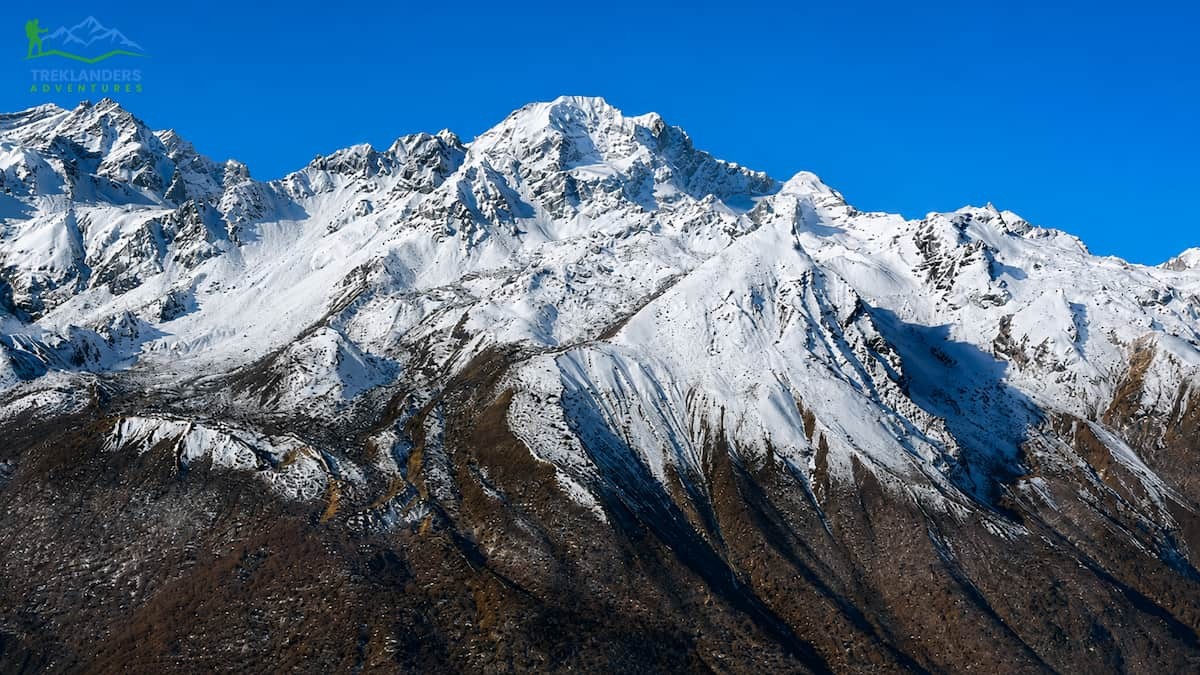
Both routes fall within Langtang National Park, which is an area of over 1,710 square kilometers that conserves a variety of ecosystems from low subtropical valleys to high permanent glaciers.
The Langtang Valley Trek exposes you to the complete vertical spectrum of ecosystems. At the lowest elevation, you walk in the subtropical forest region where you find bamboo and giant rhododendrons. Then at mid-point, the temperate forest of oak, maple, and rhododendron appears, and the final stage is sub-alpine and alpine near Kyanjin Gompa. The glacier-fed Langtang Khola river accompanies the trail for a major part of the journey, and the sound of the river becomes the constant background to your walk.
The view of the mountains from Kyanjin Gompa and the nearby areas is some of the best that can be had of Langtang Lirung (7, 227m), Dorje Lakpa (6, 966m), Ganesh Himal, and other peaks of the Langtang Himalaya. The glacier above Kyanjin Gompa can be seen even from the village, and really being at this altitude makes one realize the immense size of the surrounding mountains.
Wildlife can be found throughout the valley, but the chance of sighting varies with season and time of day. Among the numerous regions in Nepal, Langtang National Park is one of the rare places where red pandas still have a chance to thrive. Early morning is the best time for red panda sightings, which happen mostly along the wooded sections from Lama Hotel to Langtang Village. Besides red pandas, the park is home to Himalayan tahr, langur monkeys, Himalayan black bears, and more than 250 bird species.
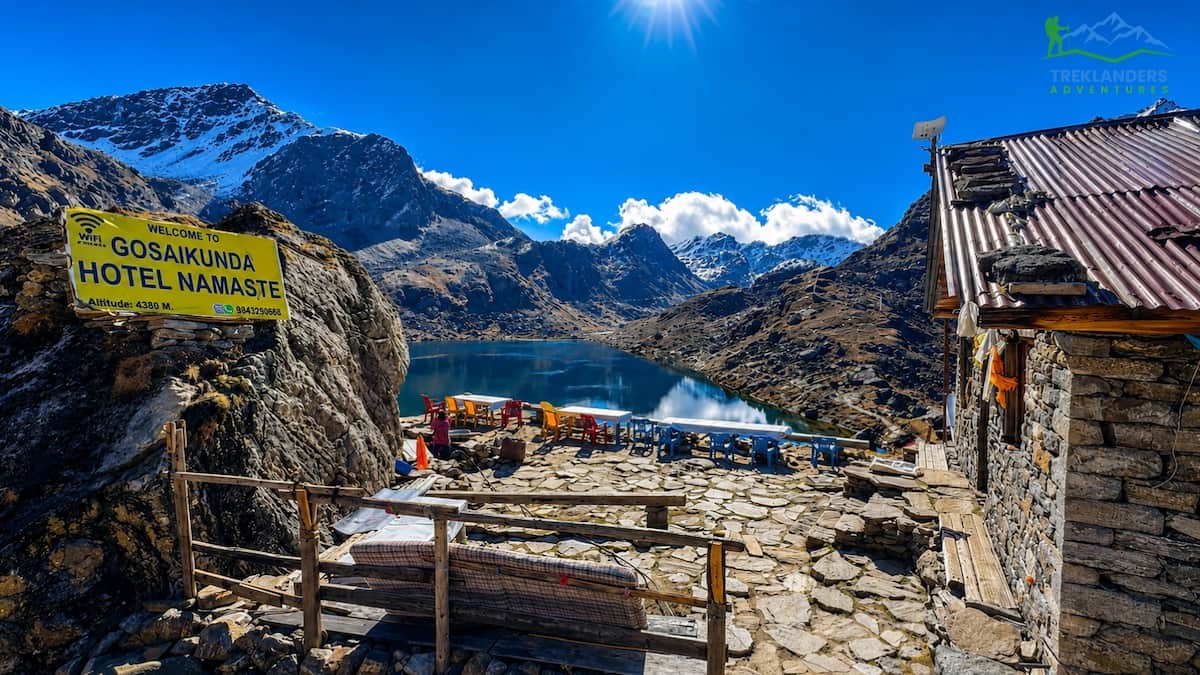
The Gosaikunda Trek begins in a similar environment, but the top segment has its own character. The ridge line higher up, Lauri Binayak at about 3, 900m offers a great view of several mountain ranges. If the weather is clear, you can even catch a glimpse of Tibet. The terrain here is open, stony, and shaped by winds. One also finds no trees. The path here is vulnerable to changing weather from different directions.
The lake setting is the visual highlight of the area. Gosaikunda is a glacier-fed lake located at an elevation of 4,380m. It changes its shade depending on the sky and season, from deep blue on sunny days to dark grey under thunder clouds. In very cold years, the water surface can remain frozen until late April. The towering mountains and the cluster of smaller holy lakes in the vicinity form a scene that photographers try to portray but hardly ever do.
Spring on both treks fills the lower and mid-elevation forests with blooming rhododendrons, creating corridors of red, pink, and white that are among the most distinctive visuals in Nepal trekking. October and November offer the clearest mountain views on both routes. Photographers in particular favor October on the Langtang Valley route for the combination of sharp views and late afternoon light on the peaks above Kyanjin Gompa. Both seasons are valid choices for different reasons.
The amount of time you have is usually the biggest factor that determines which trek you can do, more than anything else. So, it might be a good idea to consider this realistically even before you start looking at the trail grades and the scenery.
Langtang Valley Trek requires at least 7 to 10 days if you want to experience it properly. A 7-day trek would be a very tight schedule, but still feasible for well-conditioned trekkers who get acclimatized quickly. The 9 to 10-day version includes a separate day of rest and exploration at Kyanjin Gompa, plus optional viewpoint hikes, which is the better option for most people.
Gosaikunda Trek can be done in 5 to 7 days as a separate trip. A few itineraries are as short as 4 days; however, that rapid ascent will make you more susceptible to altitude sickness and is not advisable unless you have high-altitude experience.
The starting point of both of these treks is a drive from Kathmandu. The journey to Syabrubesi takes about 7 hours, covering a distance of approximately 120 kilometers on mountain roads. Dhunche, which is the departure point for some Gosaikunda routes, is about 2 hours less. Both travel along the Trishuli River to the north from Kathmandu.
The return journey mirrors the approach for most itineraries. Some Gosaikunda routes exit via Sundarijal, which adds trekking through the Shivapuri Nagarjun National Park, requires an additional park permit, and puts you on the edge of Kathmandu with a much shorter final drive back to the city. This exit route is a genuine option worth considering if you want variety on the return and do not want to retrace your steps.
If you have 5 to 6 days available, Gosaikunda is the practical choice. If you have 8 to 10 days, Langtang Valley gives you a more complete experience. If you have 12 to 14 days, consider the combined Langtang Gosaikunda circuit, which connects both destinations and gives you the full range of the region.
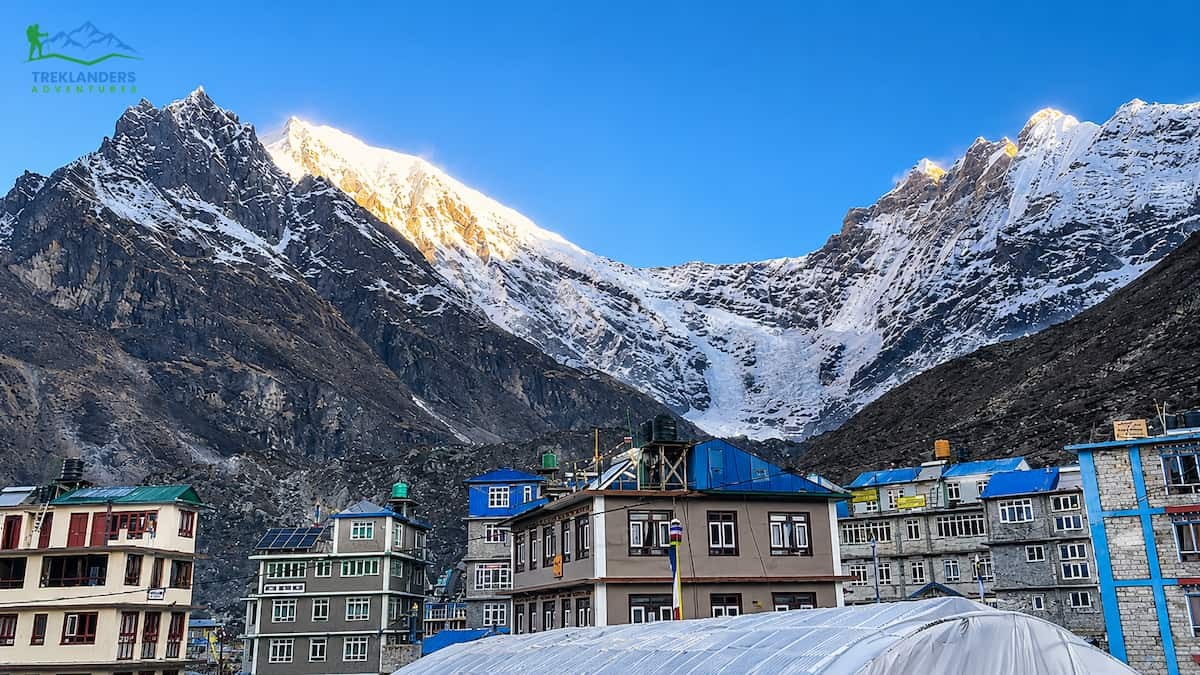
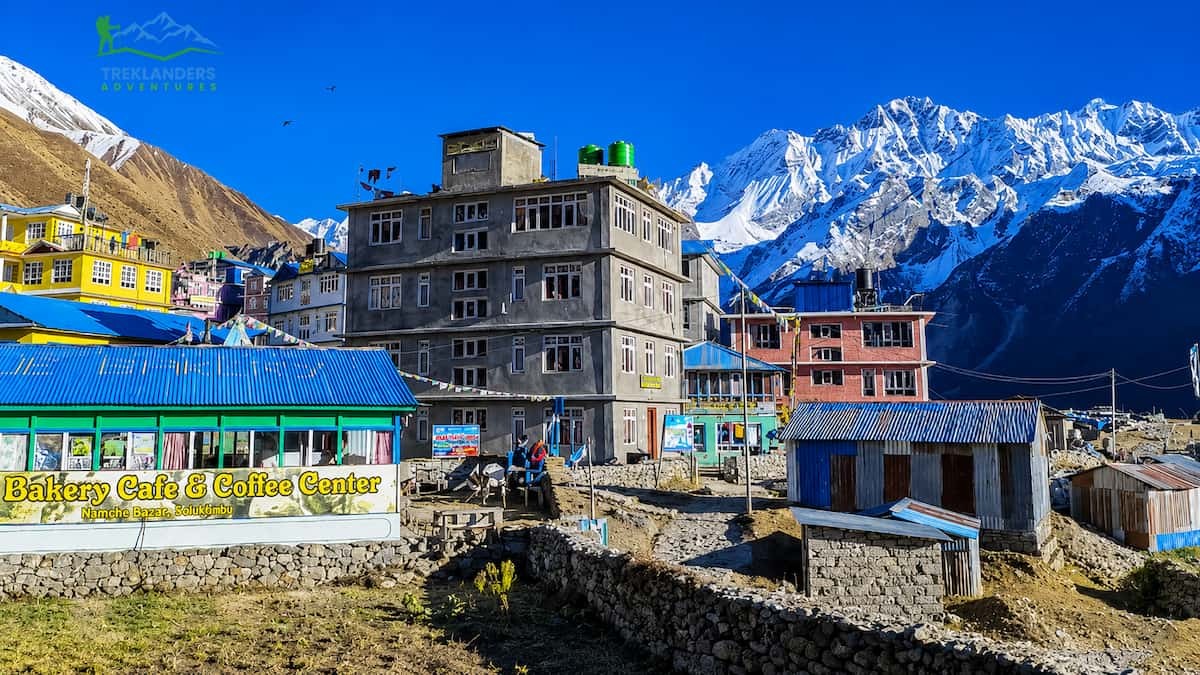
Langtang Valley Trek boasts its modern teahouse facilities thoroughly along the trek route. From Syabrubesi to Kyanjin Gompa, at every major stopping place, teahouses and lodges continue their businesses: Rimche, Lama Hotel, Riverside, Ghora Tabela, Langtang Village, and Kyanjin Gompa all offer multiple capacities.
More amenities are available at the lower altitude stops, including attached bathrooms in some lodges, Wi-Fi access (mainly charged around NPR 300 to 600 per day), and charging facilities for electronics (usually NPR 200 to 500 per device).
Several teahouses at Kyanjin Gompa serve delicious food, and the rooms are quite suitable. Most stops provide hot water showers for a small fee. The teahouses are mainly operated by Tamang families, and meals are usually a combination of Nepali local foods as well as the standard trekking staples like dal bhat, noodle soups, pasta, and the yak cheese locally made that Kyanjin Gompa is famous for.
There are fewer teahouses along the Gosaikunda trek, especially after Sing Gompa. Your choice of lodges/places to stay really diminishes once you reach the lake. Basic and functional lodges with simple rooms and very limited menu options are what you will find at Gosaikunda. You will get bedding, but nights at 4, 380m are very cold even in the warm seasons. If you are planning to stay the night at the lake, a sleeping bag with a temperature rating of at least -10°C is your best bet.
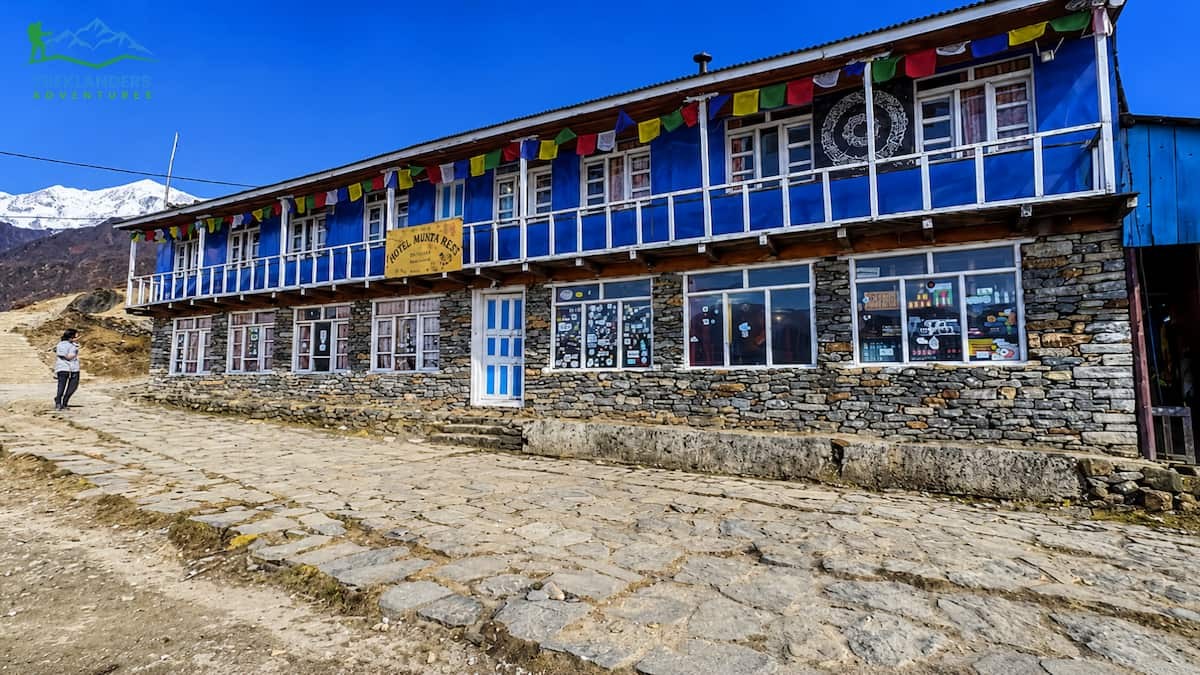
Main overnight stops between Dhunche and Gosaikunda are Deurali, Sing Gompa, and Lauri Binayak. These are small, quaint villages and only have a few teahouses. If you are travelling in the peak season, it would be a wise decision to have your guide check the availability beforehand, especially if you are a group. The meals are wholesome and satisfactory, though their variety is not as wide as on the Langtang Valley route.
The two treks will keep you well within the teahouses network. You won't have to camp or carry food and shelter with you, which means minimal logistical concerns.
The two trekking seasons are almost the same for these routes, as both wind around in a single national park and hence share similar weather.
Spring (March to May) is the main season for these two treks. March and April are when flowering rhododendrons decorate the lower and middle levels of the forests; wildlife is most active, the temperature range is a comfortable 12°C to 18°C, and one can have the best of mountain views. April is generally considered the best time for the Langtang Valley trek in spring. The lodging houses are open during the springtime, and the path is dry. There are more chances of spotting the red pandas, Himalayan tahr, langur monkeys, and Danphe (Nepal's national bird) in spring since they are more active in the warmer weather.
Autumn (September to November) is the most widely chosen season among all. After the monsoon, the skies are the clearest of the year, allowing for the best mountain views. October is the time when most people are on the trails. The temperature is pleasantly cool, the festivals of Dashain and Tihar, which take place in October, add to the attraction, and a combination of good weather and clear skies makes autumn a very popular time for first timers.
Monsoon season (June to August) brings heavy rainfall, slippery trails, and poor visibility. The Gosaikunda Trek is especially challenging during the monsoon as the steep paths become dangerous when wet. Gosaikunda Lake is also the area where the Janai Purnima festival is celebrated in August, which is the one exception: if seeing the pilgrimage is your main focus, this is the time to do it, regardless of the weather. The combination of pilgrim crowds, incense, ritual bathing, and the high mountain environment during Janai Purnima is one of Nepal's most remarkable cultural events. Experienced trekkers who are ready to handle the trail conditions find this very rewarding.
Winter (December to February) gets very cold at high altitudes along both routes. Snow covers the higher passes and viewpoints of both treks, and Gosaikunda Lake can be completely covered and inaccessible during deep winter. Only experienced trekkers desiring utter solitude go in winter, but they must have the right cold-wear clothing, be very well acclimatized to altitude, and realize that some teahouses may cut down services or close completely. The Tamang Lhosar (New Year) festival occurs in February and provides a great cultural opportunity to visit the area off-season.
Both the Langtang Valley Trek and the Gosaikunda Lake Trek are excellent choices, but they offer different experiences. Choose Langtang Valley if you want an 8-to-10-day journey through diverse landscapes, gradual altitude gain, comfortable teahouses, and iconic highlights like Kyanjin Gompa and Langtang Lirung. It is ideal for first-time trekkers above 3,500m and those who enjoy flexible side hikes.
Choose Gosaikunda if you have 5 to 7 days and want a shorter trek focused on reaching a spectacular high-altitude destination. The sacred lakes combine alpine beauty with deep religious significance, making the trek especially rewarding for those with some previous altitude experience.
If you have 12 to 14 days, combining both routes offers the best of the Langtang region. You will experience glacier valleys, sacred lakes, and varied mountain scenery while benefiting from better acclimatization before reaching higher elevations.
The valley and the lake are both memorable. Your available time and trekking goals should guide the choice.
Compare the Tamang Heritage Trail and Langtang Valley Trek for culture, villages, and stunning Himalayan views in Nepal.
Compare Thorong La Pass and Kongma La Pass to discover which Himalayan trekking pass is harder, higher, and more challenging.
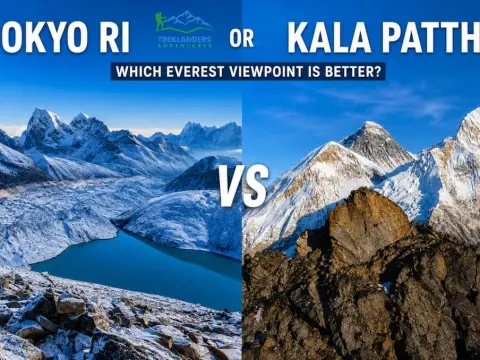
Compare Gokyo Ri and Kala Patthar for the best Everest views and Himalayan trekking experience.



