Everest Base Camp via Cho La Pass vs Standard EBC Trek: Complete Comparison Guide for Trekkers
1 Jun 2026
Everest Base Camp or Cho La Pass? Compare both routes to choose the best Everest trekking experience in Nepal.

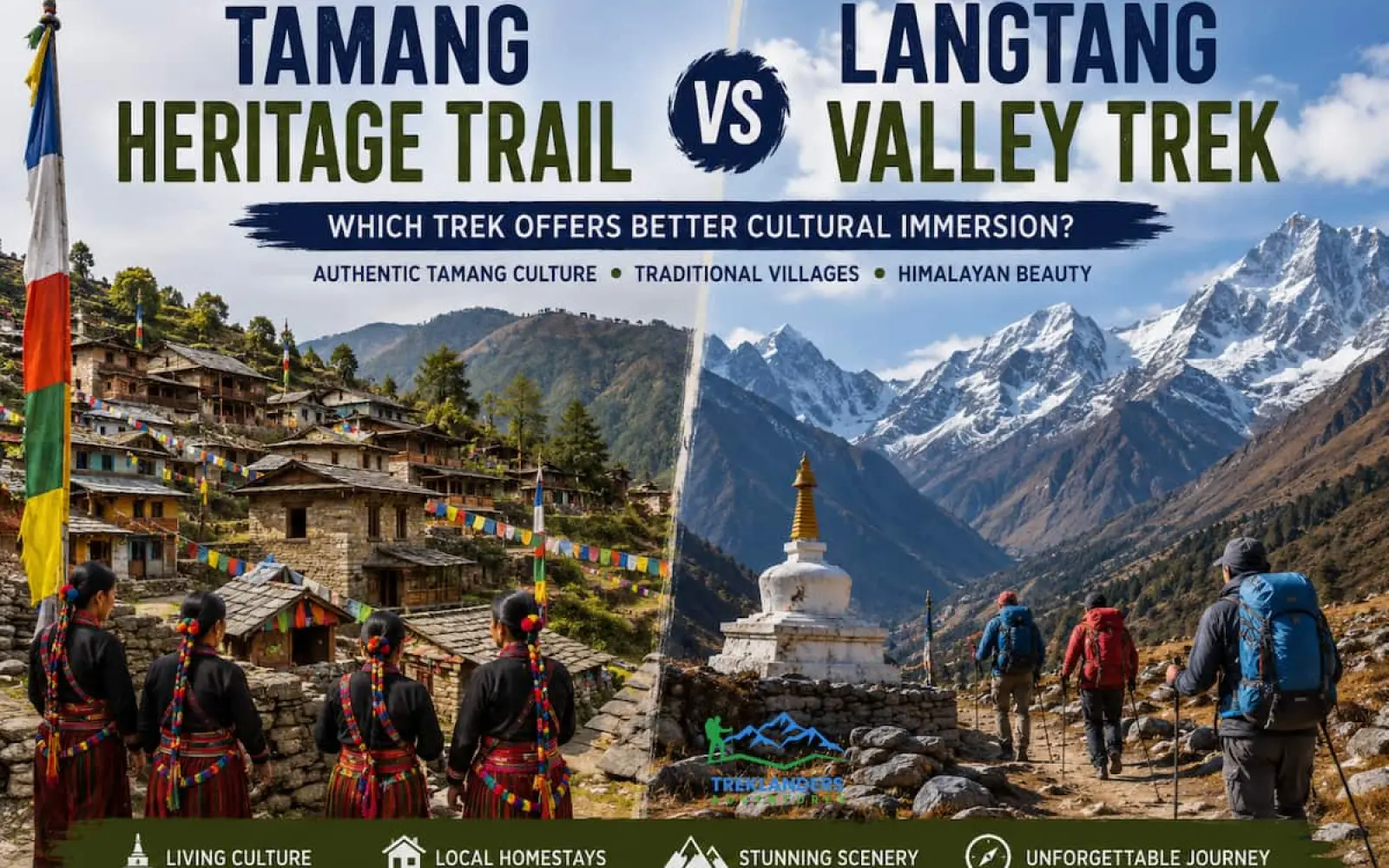
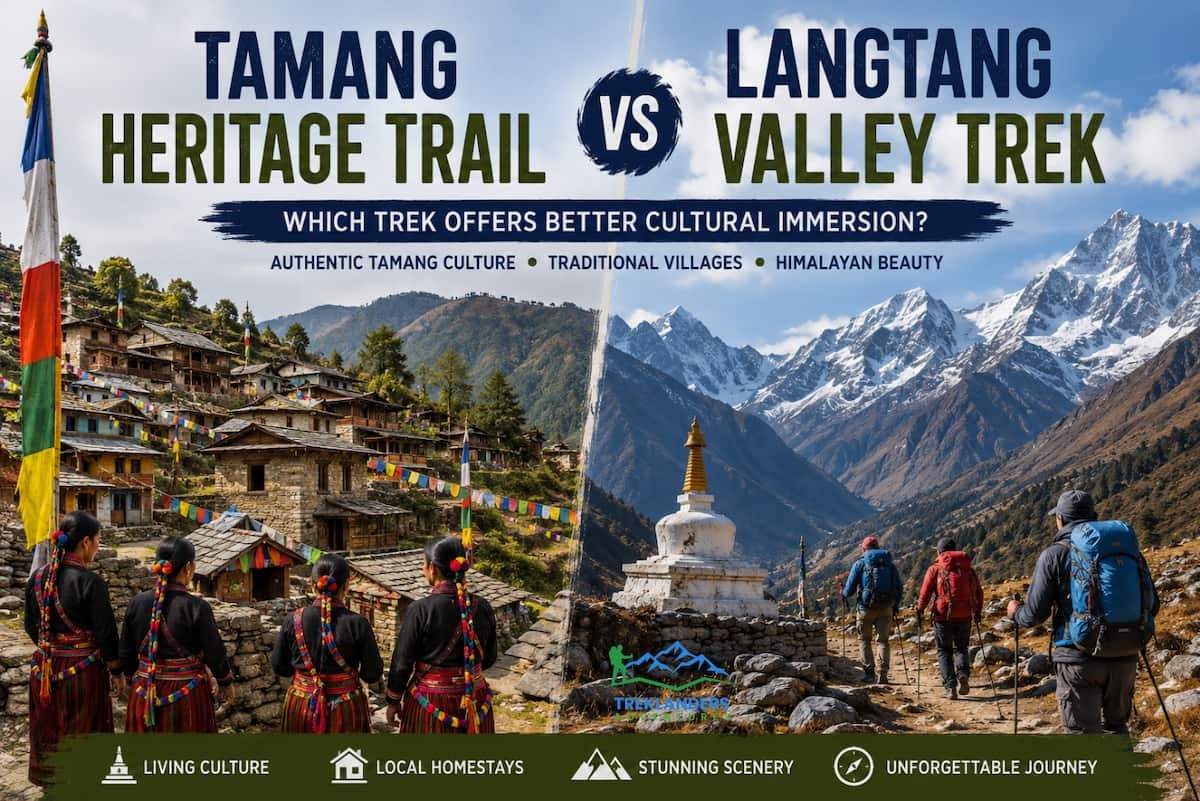
Nepal is home to hundreds of trekking routes. Most of them offer beautiful landscapes. A few combine the cultural experience with natural beauty, and only a handful use culture as the main theme throughout the whole journey.
The Tamang Heritage Trail and the Langtang Valley Trek are the two in Nepal that are at that last stage. Besides that, they share the same district, the same national park and the same indigenous community.
They both start from Syabrubesi in Rasuwa district, just north of Kathmandu. They both pass through Tamang and Tibetan Buddhist villages. They both reach the alpine landscape of Langtang Valley. However, they do not offer the same experience.
One walking tour will take you to its cultural side before the mountain. The other one will take you to the culture as the main event, and the mountains will be there at the end. Knowing the difference is the key to making the right choice.
This comparison is based on the extensive research of Treklanders Adventures on both routes to give you a comprehensive view of what each trek really offers and which one corresponds to the question in this title.
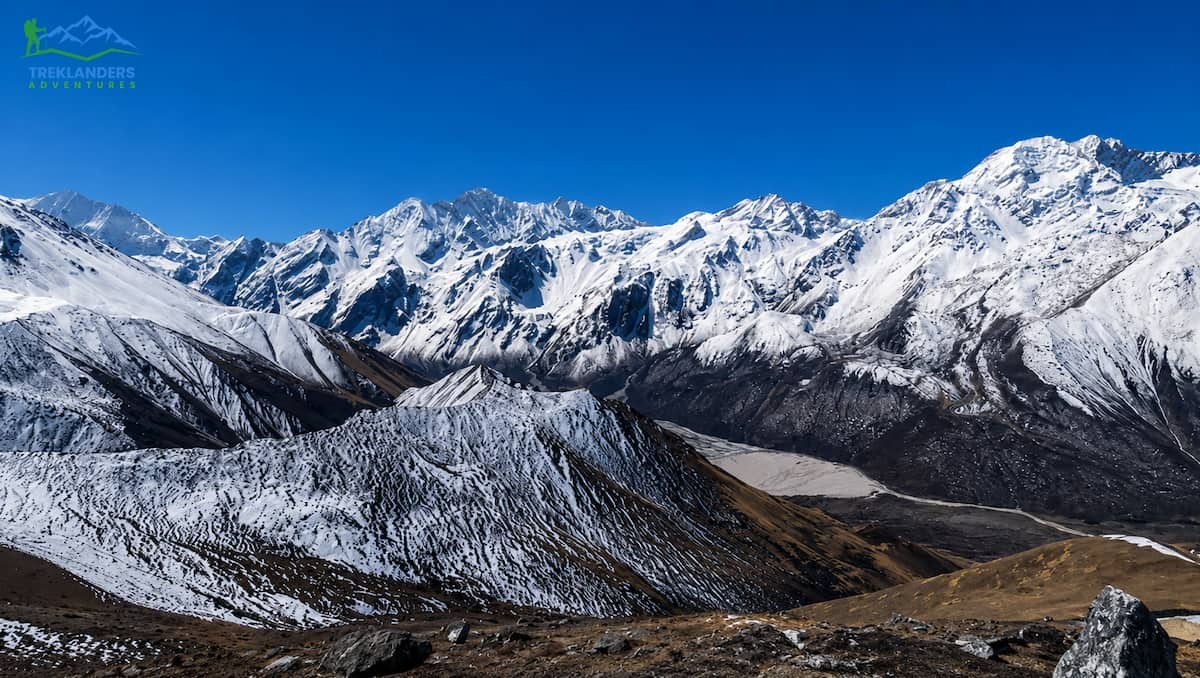
Throughout the world, Langtang Valley Trek definitely ranks as one of the most popular mountain treks in Nepal, just after Everest and Annapurna.
As for Treklanders, it operates this route as a 12-day itinerary. Initially, it starts with a seven-hour car ride to Syabrubesi. Later, walking along the Langtang Khola river northwards through rhododendron and pine forest, passing Lama Hotel and Mundu, finally reaching Kyanjin Gompa at an altitude of 3,800 meters. Besides, it is possible to get some rest lying at the same place and after that go up to Kyanjin Ri at an altitude of 4,773 meters or Tserko Ri at an altitude of 5,033 meters, being the highest point of the trip.
The Tamang Heritage Trail, which is operated by Treklanders as the 14-Day Tamang Heritage with Langtang Valley Trek, also offers a unique diversion through the Tamang Heritage villages loop before it merges with the typical Langtang Valley route. The additional part that takes us through Gatlang, Tatopani, Thuman, and Briddim touches the sacred Nagthali Danda ridge at 3,165 meters. After finishing the heritage portion via Sherpa Gaon, the path re-enters the main Langtang track and heads to the same destination at Kyanjin Gompa.
The 14-day merged itinerary is just an extension of the Langtang Valley experience. It gives you two more days and six more villages before the spectacular view of the mountains takes over.
This arrangement is important for the cultural comparison because the regular Langtang Valley Trek sees culture as the surrounding, while the Tamang Heritage Trail sees it as the baseline.

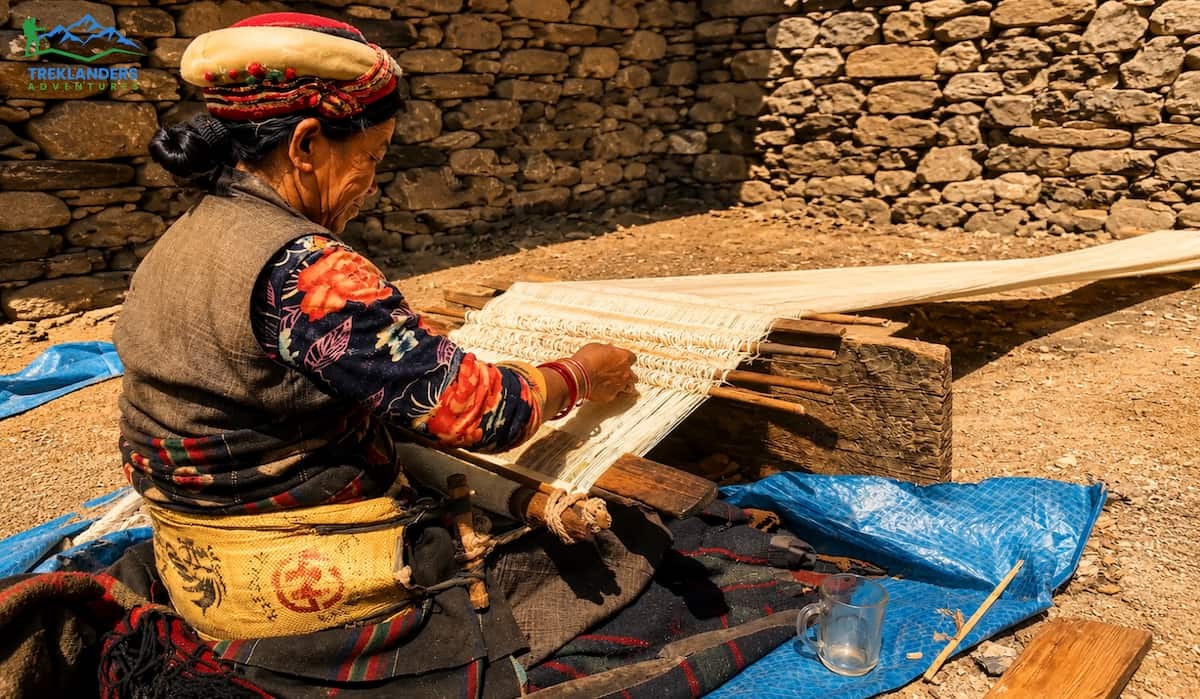
It is impossible to judge the level of cultural immersion in both Treks without first identifying the Tamang people and learning what their culture entails.
The Tamang are considered one of Nepal's earliest ethnic groups. Their language is a member of the Tibeto-Burman family and shares a common source with Tibetan. Their religion is based on Tibetan Buddhism, mainly according to the Nyingma and Kagyu traditions. They have a social organization of more than 120 independent sub-clans, each with its own internal traditions and territorial identity.
The Tamang can be uniquely identified not only by their long history. It is also the way their culture has remained so well preserved. For example, even after the numerous changes in the political landscape of Nepal, as well as the growing impact of urbanization, the Tamang villages in the Langtang area still mainly base their life on their own traditional religious calendars, community festivals, and ancestral customs, which in no way have been turned into tourism products.
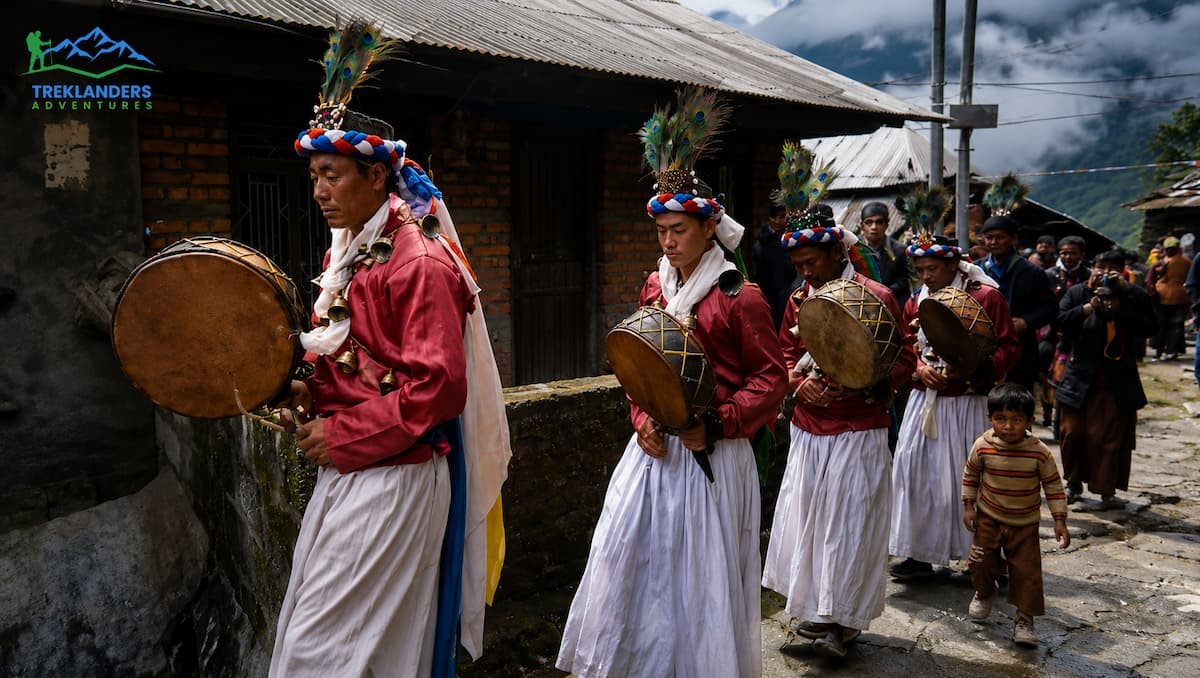
Sonam Lhochhar is the greatest Tamang festival that celebrates the New Year according to the Tibetan Buddhist lunar calendar. It is held in January or February and unites communities in commemorating their heritage by singing, dancing, and acting out ceremonial rites. The damphu drum, being a round frame drum, signifies the essence of Tamang musical culture. It is found at every important event, such as weddings, community festivals, and spiritual gatherings. Songs that are sung with damphu tell tales of ancestors' migration, mountain scenery, and religious belief.
The Tamang dress, particularly for women, mainly involves hand-woven fabrics. Decorative accessories indicate social ranking and clan identification. The distinctive style of Tamang villages is marked by stone houses with wooden carvings, flat roofs, and terraced arrangements of the villages that fit the mountain landscape.
Treklanders claim that over 80% of the people living in the Langtang region are Tamang. Both treks are carried out within the home territory of this community. The only distinction is the degree to which each route reveals the community's everyday life to you.
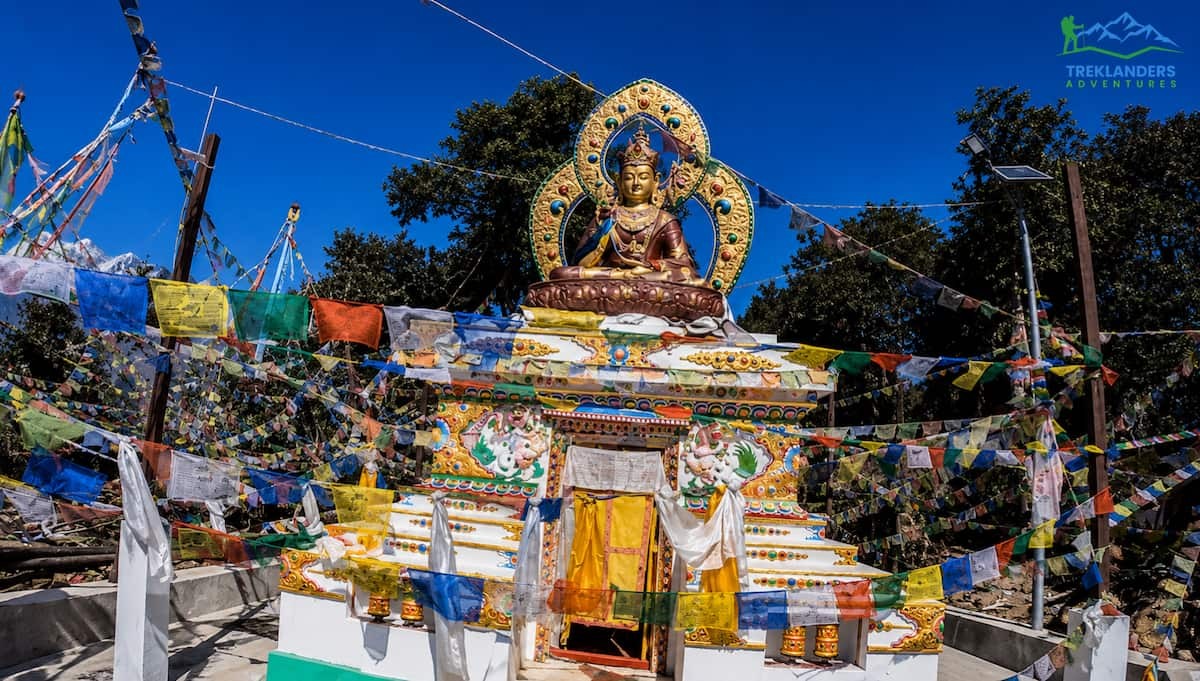
The Tamang Heritage Trail threads through particular villages, each with its unique charm, and collectively represents a cultural opening which the Langtang Valley Trek fails to offer.
At an altitude of 2,238 meters, Gatlang is the first great heritage village on the way from Syabrubesi. The Tamang culture here is one of the best preserved in the region. The inhabitants live in stone houses piled one on top of the other with flat roofs, beautiful carved wooden windows, and their whole style has been the result of living in the mountains for centuries, rather than being influenced by the latest construction trends. The monastery complex in this place has been looked after by the Tamang community for years. A homestay in Gatlang run by locals will allow visitors to sit down for a meal in the traditional kitchen, enjoy the family gathering place, and be in touch with the daily routine of a Tamang village going about its business.
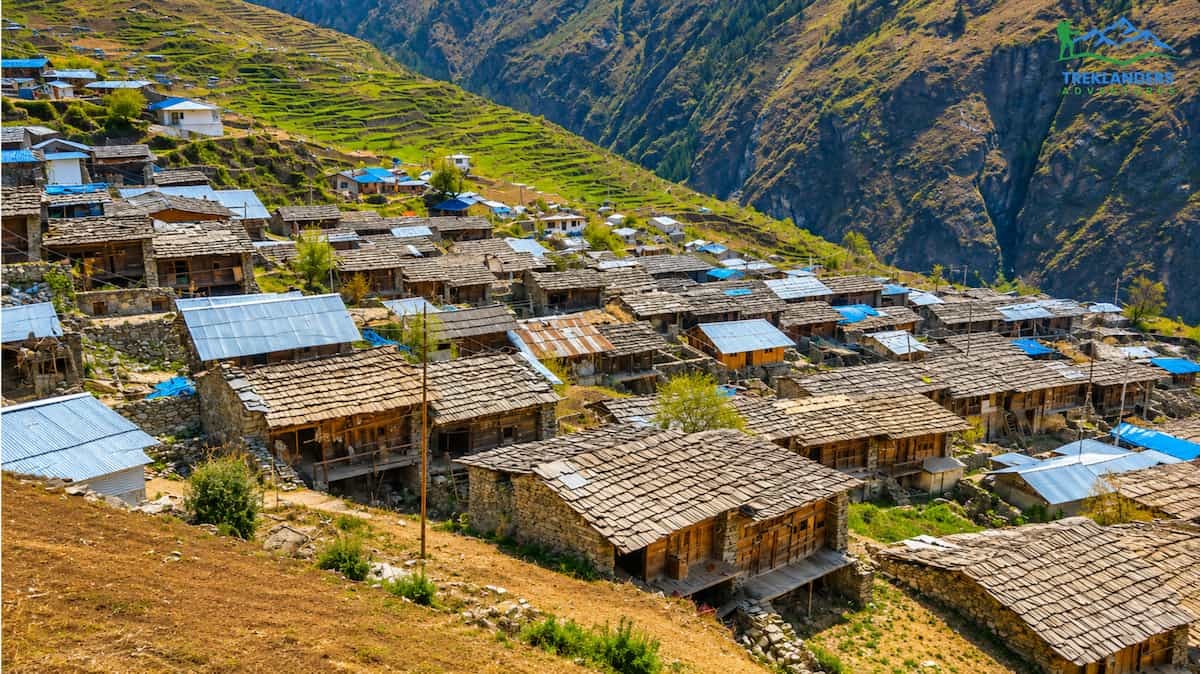
The springs in Tatopani at an elevation of 2,607 meters have got their name from the Nepali words meaning hot water. The natural geothermal hot springs here are really a characteristic feature of this place. Since it is located in proximity to the Tibetan border, Tatopani is quite influenced by Tibetan culture both in terms of its buildings and religious ceremonies. The hot springs are not a contrived tourism draw. They are an integral part of the village's natural setting, and the locals, as well as wanderers, use them.
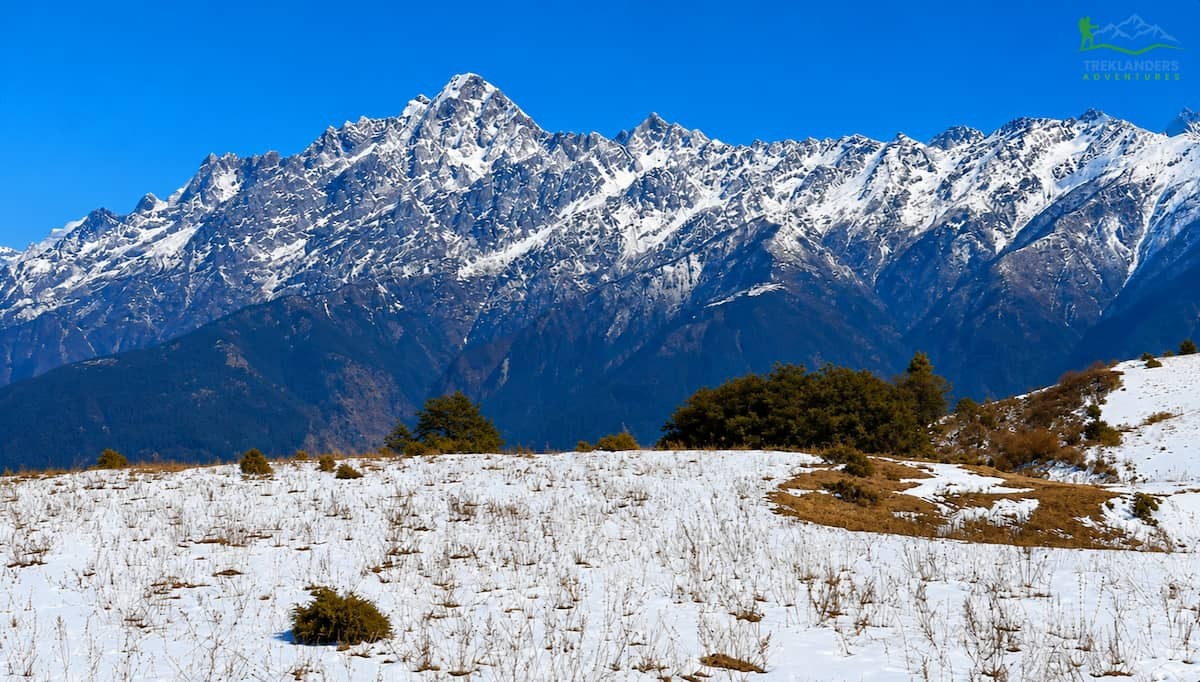
Nagthali Danda at 3,165 meters is a sacred ridge crossed on the trail between Tatopani and Thuman. From this viewpoint, you see Langtang Lirung, Ganesh Himal, and peaks across the Tibetan border, from an angle that the valley floor does not offer. The ridge holds spiritual significance for local communities.
Thuman at 2,338 meters carries a strong reputation for traditional Tamang music and dance culture. The damphu drum performs at community gatherings here, and trekkers staying overnight at local homestays sometimes witness or participate in performances. These are not staged shows. They are practices the community sustains for its own reasons.
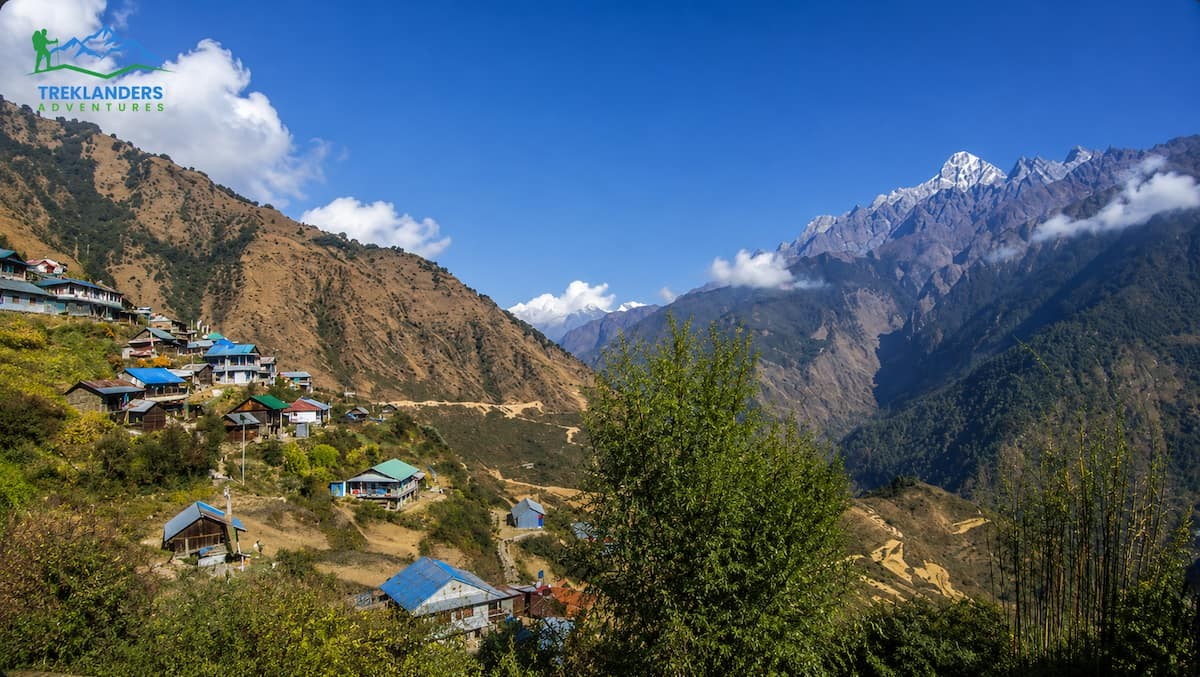
Briddim at 2,229 meters is described by Treklanders as a model community-based tourism village. Well-managed homestays and strong Tibetan Buddhist cultural identity define the village. Locals here welcome trekkers in a way that reflects personal hospitality rather than commercial transactions.
None of these villages appear on the standard Langtang Valley Trek. Missing them means missing the most concentrated cultural content the Langtang region holds outside of Kyanjin Gompa.
The standard Langtang Valley Trek is not culturally empty. That needs to be stated clearly.
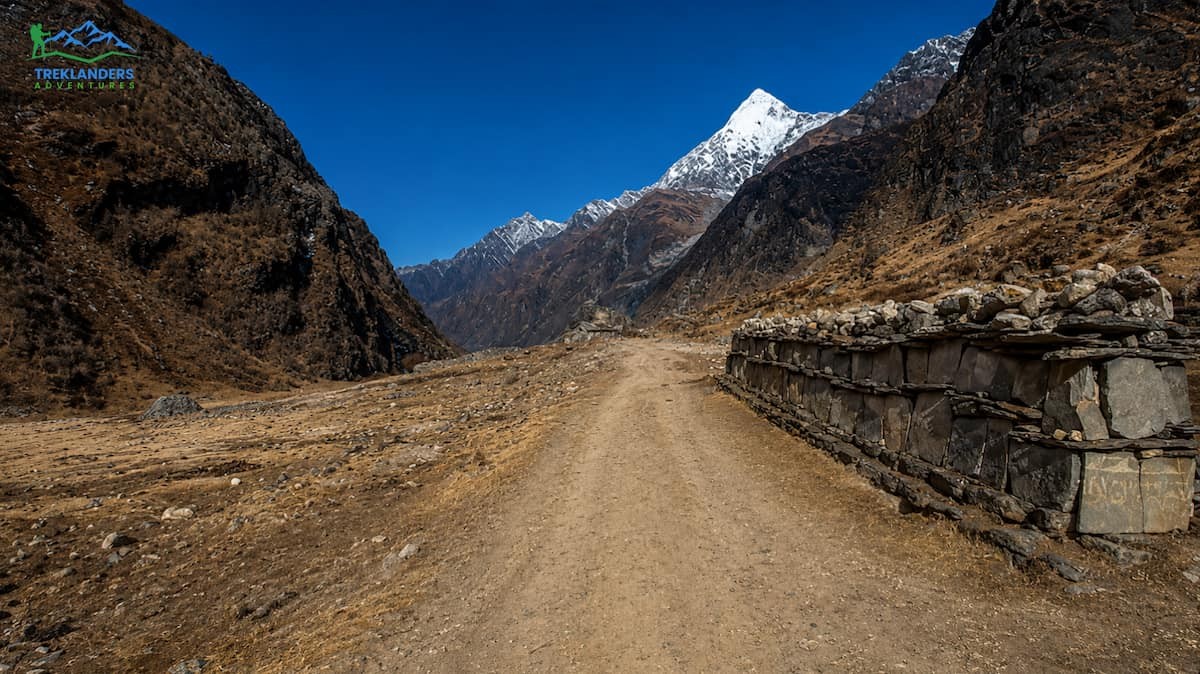
The first day of the trek is marked by the trail leading you right into the Tamang villages. Those colourful prayer flags regularly span the trail. Mani walls with inscriptions of Buddhist mantras are present alongside the path. Chortens can be found at trail junctions as well as entrances of villages. The constant companions in the lower valley are the sounds of the river water and the wind in the prayer flags.
The trekking route beyond Ghora Tabela leads through an area that was a Tibetan resettlement, but now it is a Nepal Army post that also serves as a station for the national park warden. At Mundu, the Tamang community's spirit can be felt in the new settlement as well as the traces of the 2015 earthquake that linger in the physical structures. The original Langtang Village had been totally wiped out due to an avalanche set off by an earthquake in April 2015. When you walk through the new village, you are face-to-face with the community that has decided to rebuild both their way of life and their cultural heritage institutions at the very same location.
At Kyanjin Gompa, a monastery is still occupied at a high altitude of 3,800 meters. Nearby, there is a government cheese factory producing yak cheese, a traditional product of the locals, for many years. This cheese factory is not a museum of culture, but rather a live economic unit operating in harmony with the pastoral way of life of the yak-herding people of the Langtang valley. If you wish, you can explore the two during your rest day for acclimatization.
What the Langtang Valley Trek really brings to you is cultural immersion within the framework of mountain trekking. The path leads to the alpine high point, and culture, represented by the environment, the signs, and the people, is scattered all through the way. It is authentic. It is continuously maintained. Yet, it does not linger anywhere long enough to allow for a full-fledged immersion.
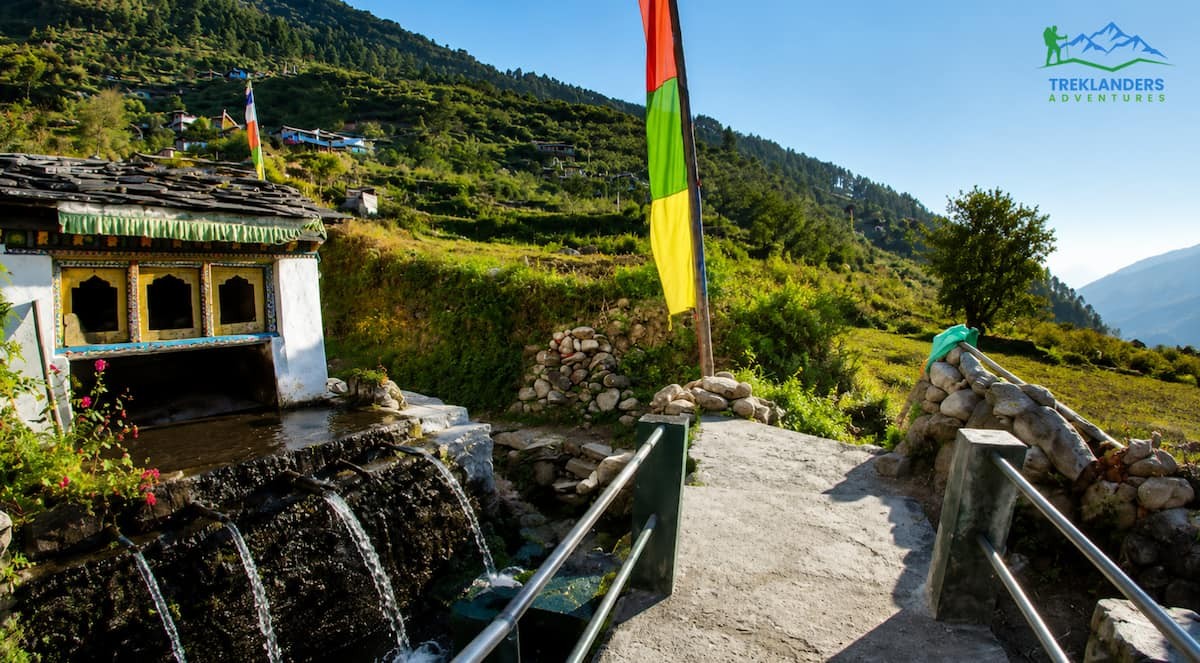
Tibetan Buddhism is the spiritual basis of the whole Langtang area. Both paths are set within this religious milieu, but the Tamang Heritage section quite uniquely highlights religious heritage, which the direct valley route cannot do at all.
Most villages on the Tamang Heritage Trail have a functioning monastery. Local lamas perform rituals every day. The villagers also regularly participate in ceremonies. The religious calendar distinctly shapes village life. Morning prayers are heard in Gatlang just before the trekkers start their day. Butter lamps are lit at the shrine entrances in Briddim. To move clockwise around mani walls and stupas, as visitors are expected to do, is not a tourist practice. It is the daily way in which Tamang Buddhists normally engage with their own sacred territory.
The Nyingma and Kagyu traditions that are the main ones among the villagers have an unbroken line, even from Tibetan teachers. Religious structures are not only historical buildings. They also serve the community as education centers, places for holding ceremonies, and venues for mediating disputes.
During the usual Langtang Valley Trek, you will find the same religious setting, only it will be at Kyanjin Gompa and not along a series of villages. The monastery in Kyanjin is a working one and one that you can open to.
The lodge rest day for acclimatization to the altitude will revolve around visiting that monastery, as it's one of the main attractions. However, this temple is just one religious site at one point, which is the terminating point of the trail's rise, rather than being a part of the whole journey.
The Tamang Heritage trail offers a religious experience at every overnight, while the regular trail only has it at the final destination.
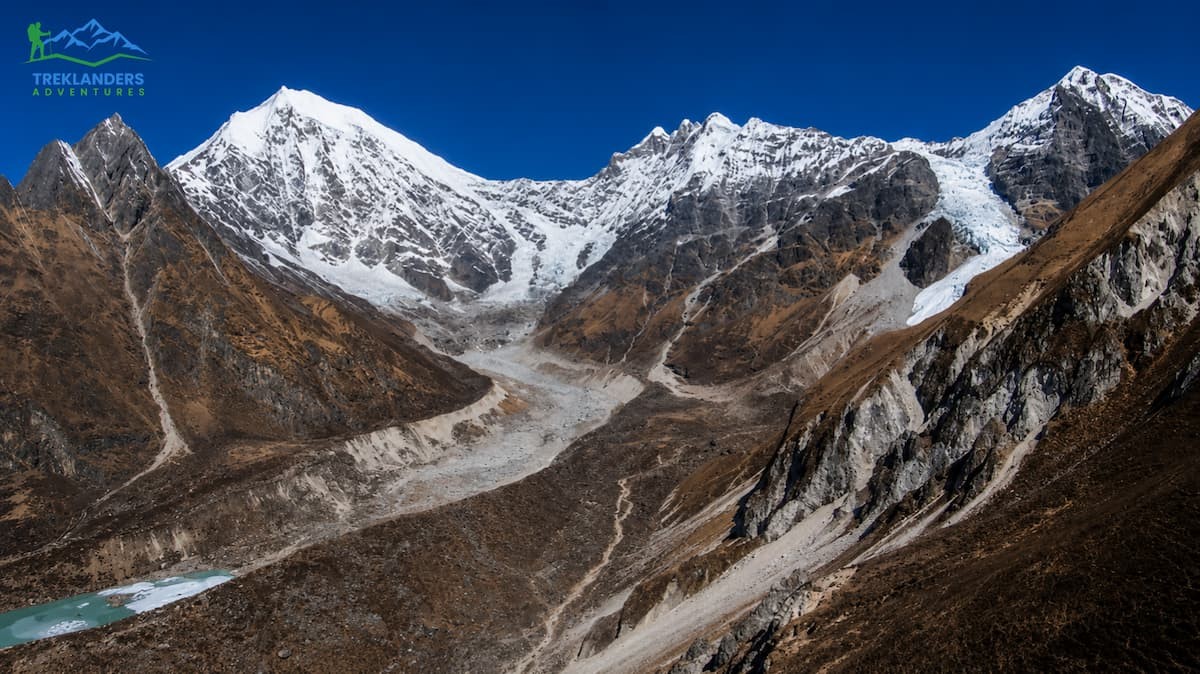
Both trails offer the same stunning views. It's only fair to indicate that opting for the Tamang Heritage Trail does not mean you have to sacrifice seeing mountains for experiencing culture. You actually get both.
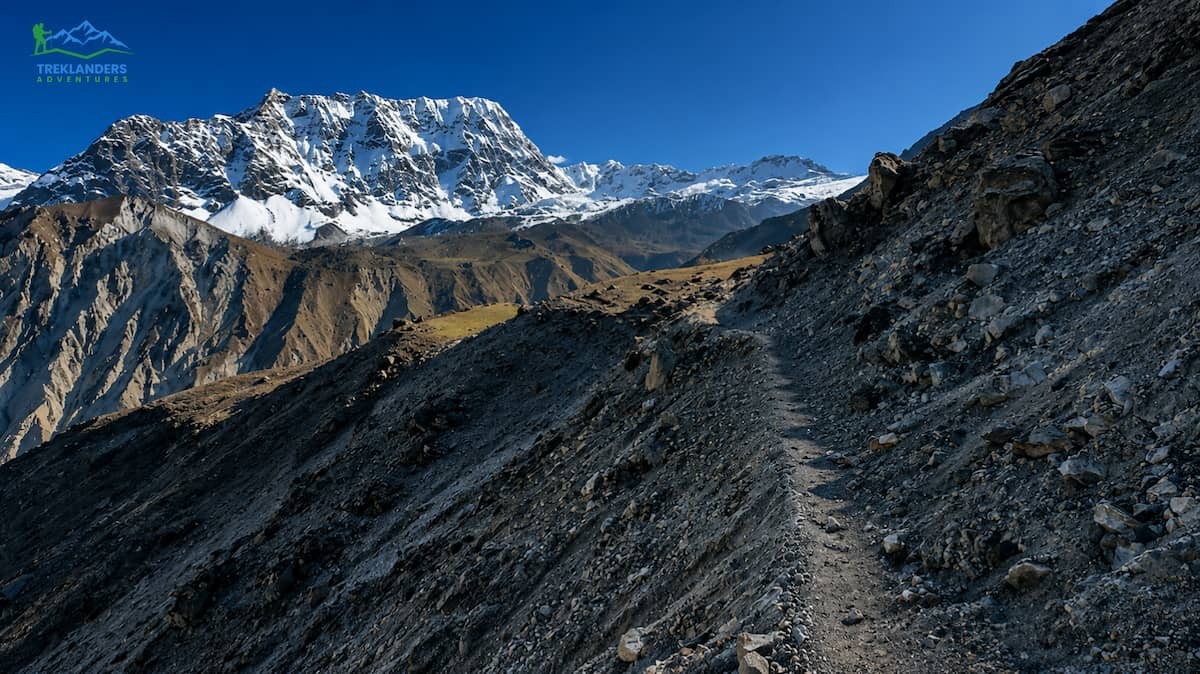
On the Langtang Valley Trek, the scenery generally becomes more impressive as the path gradually ascends. At first, you are surrounded by thick sub-tropical forest, which eventually changes to rhododendron and bamboo groves, and, finally, to wide open alpine meadows near Mundu. From Kyanjin Gompa, you can see the surrounding mountain peaks from every angle. The two highest peaks, Langtang Lirung at 7,234 meters and Langtang-Ri at 7,205 meters hang over the northern skyline while Ghengu Liru, Kimshun, Shalbachum, and Dorje Lakpa at 6,966 meters complete the picture. Kyanjin Ri and Tserko Ri are carrying that view east toward Jugal Himal and north across the Tibetan border.
The Tamang Heritage combined route additionally includes Nagthali Danda at 3 165 meters as a mid-route viewpoint, letting you see Ganesh Himal and Langtang Lirung at an early stage and from an alternate angle. Then it comes to the same Kyanjin Gompa with the same high views. Tserko Ri at 4,984 meters gives the same grand vista as the Langtang range.
Where the mountain scenery varies significantly between the two tracks is not the endpoint. It's a journey. The normal route tracks the river valley upstream. The heritage route adds a ridge-top crossing and a wider geographic arc before the final descent to the valley. Both are worth the effort.
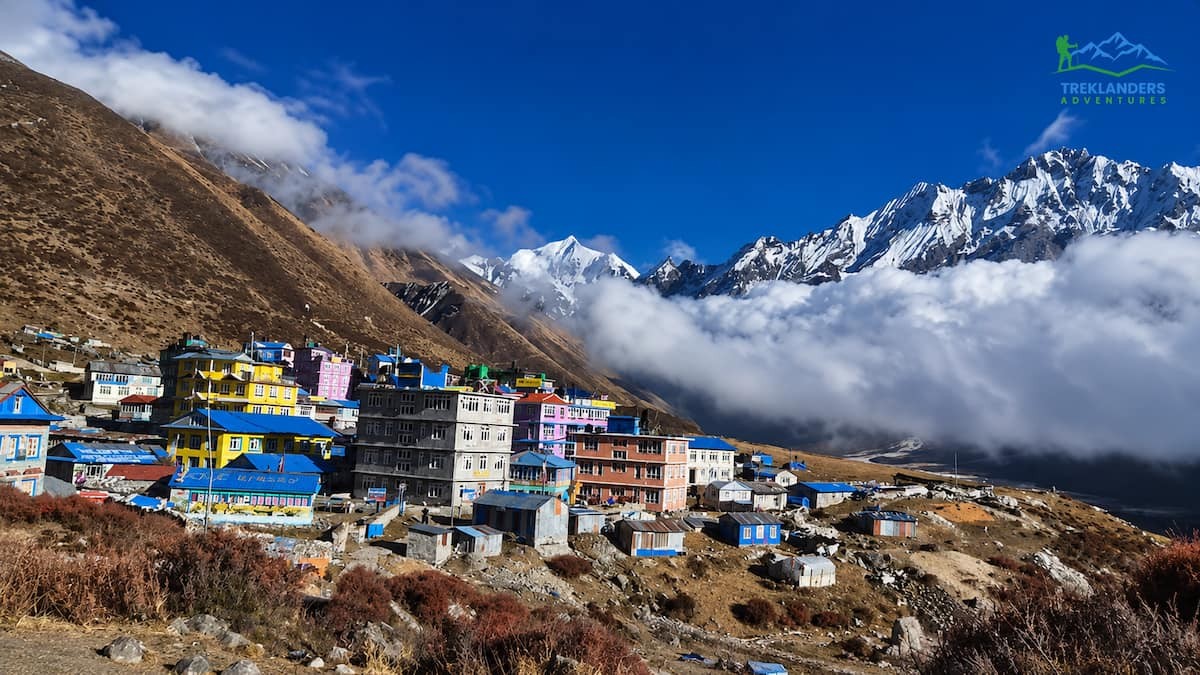
Accommodation model is a practical and most tangible means through which cultural immersion differs from one another in nature.
It is the typical trekking section of Langtang Valley that is entirely dependent on the teahouse model for accommodation facilities. One of the features of these teahouses is that they are run by families who have their rooms that provide twin-sharing, shared bathrooms, a central heated dining area, a menu covering Nepali, Indian, Chinese, and basic Western dishes, etc. In this way, Lama Hotel, Mundu, and Kyanjin Gompa are operating. The teahouse model is the most authentic system of mountain hospitality. These local families own and operate them. The food is freshly cooked. Interaction with the hosts is very genuine. However, the structure is commercial: you are a guest purchasing a service.
The Tamang Heritage route in Gatlang, Thuman, and Briddim changes that model. The villagers of these places have community-run homestays that accommodate visitors in people's homes instead of bringing them to dedicated lodging businesses. It's the family that cooks meals in their own kitchen. The guests sit in their dining space with the family. Rooms are basic and clean, with shared bathrooms, but the context is completely different from a teahouse transaction. In fact, you are inside someone's home. You hear the family's conversations. You see their religious objects on the walls. You share the space they live in every day.
Treklanders pinpoint Briddim's homestay system as the best community-based tourism model of Nepal. The financial advantage of the homestay earnings almost entirely reaches the households. It is the family's ticket to continuing the traditional ways of building, cooking, and hosting their practices instead of switching to the more generic hospitality formats.
If you go through the heritage section and enter the Langtang Valley section, you will see that the accommodation is back to the teahouse model. Sherpa Gaon, Langtang Village, and Kyanjin Gompa are all teahouse users. The change alone signifies the transition between two totally different trekking experiences.
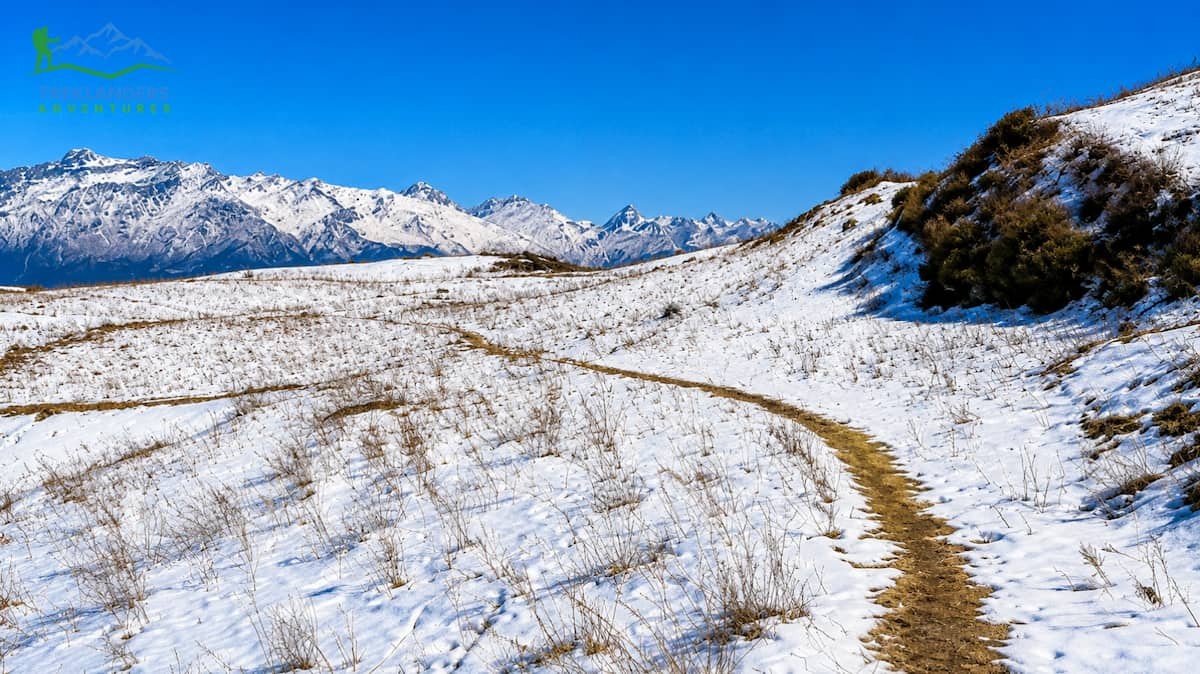
Compared to the Everest Base Camp or Annapurna regions, Langtang attracts a much smaller number of trekkers. In fact, this is considered one of the main characteristics of the place. However, inside the region, the two routes have different kinds of crowds that can influence cultural experiences in a very real way.
If you do the basic Langtang Valley Trek, you will be going in mainly one direction in the valley from Syabrubesi, through Kyanjin Gompa and back. This single corridor sees quite a lot of traffic at the teahouses and on the trail during the spring and autumn peak seasons when people come the most. You will have several encounters with other trekkers. Besides, the trail is very clearly marked, so it is hard to get lost. Besides that, the teahouse staff are very familiar with foreign visitors. The interaction style is based on a trail which has continually been a host to trekkers for many decades.
The Tamang Heritage part of the combined route gets fewer visitors. The loop through Gatlang, Tatopani, Thuman, and Briddim is located away from the main valley corridor. Very few trekkers opt for the longer route. This practically means that when you get to the villages, the locals are not mainly oriented toward trekking tourism. Hence, their daily life goes on around you rather than them changing it to fit you. This results in a totally different level of cultural exposure than a well-travelled trail would offer.
Quieter trails also mean more personal interactions with guides, who have more time to explain what you are seeing and answer questions without managing a large group dynamic. Both routes support small groups and solo travel. But the heritage section rewards curiosity in a way that a busier trail does not.

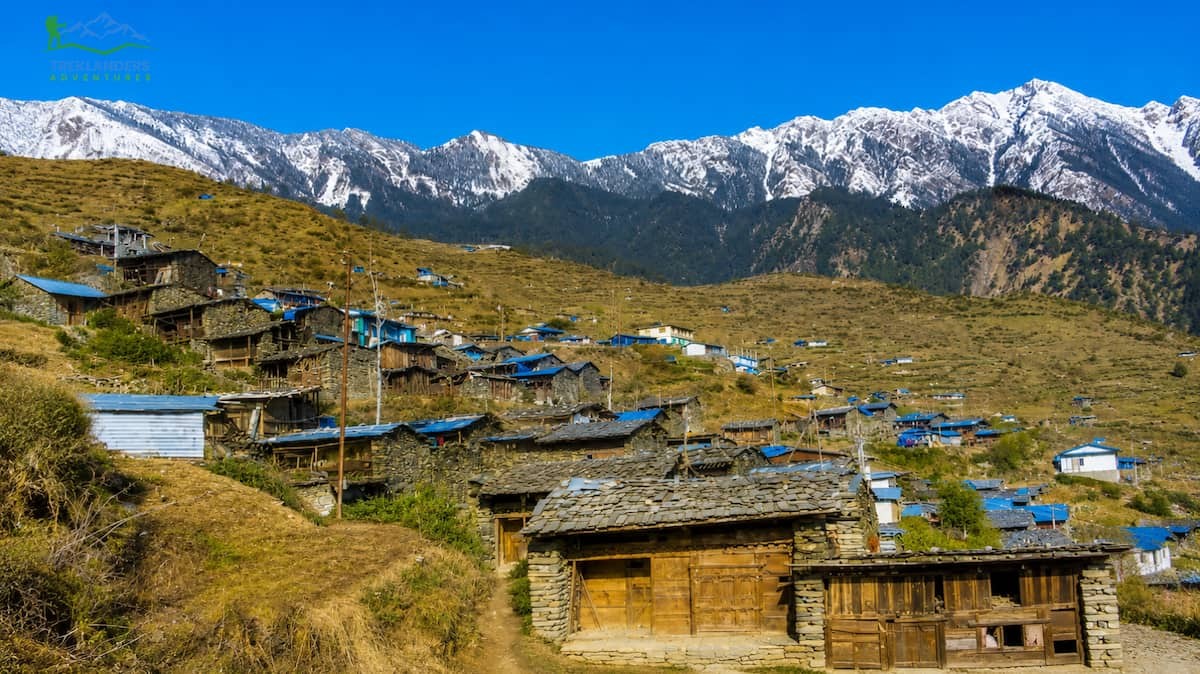
Your trekking money benefiting local communities depends heavily on the route you choose. However, each route has its own distinct mechanism of channeling income to locals, which in turn determines the extent of your contribution to the communities.
Langtang Valley Trek, the usual route, mainly benefits the teahouse businesses. Operating teahouses, families earn mainly from trekkers. Besides, engaging porters and guides mainly provides local men with the means to earn. Park fees go towards conservation efforts. This economic pattern is simple and has been successfully working for the region for several decades.
The Tamang Heritage homestay system leads to a wider distribution of economic benefits. Physically coming to a Gatlang household, eating there, and purchasing their products moves money directly into that family rather than the hospitality business. The contrast is particularly significant in villages where the majority of households are not running commercial operations. Homestay income helps farming and livestock-raising households. It is an incentive that motivates families to preserve traditional architecture, cooking, and hosting practices, which may otherwise be replaced by modern conveniences.
Treklanders specifically frame the Tamang Heritage route as a trek that supports rural livelihoods and earthquake recovery in the Langtang region. The 2015 earthquake displaced communities and destroyed infrastructure that took years to rebuild. Trekking revenue, particularly through the homestay model that keeps money in individual households, has been part of that recovery. Choosing the longer heritage route is a direct vote for this economic model.
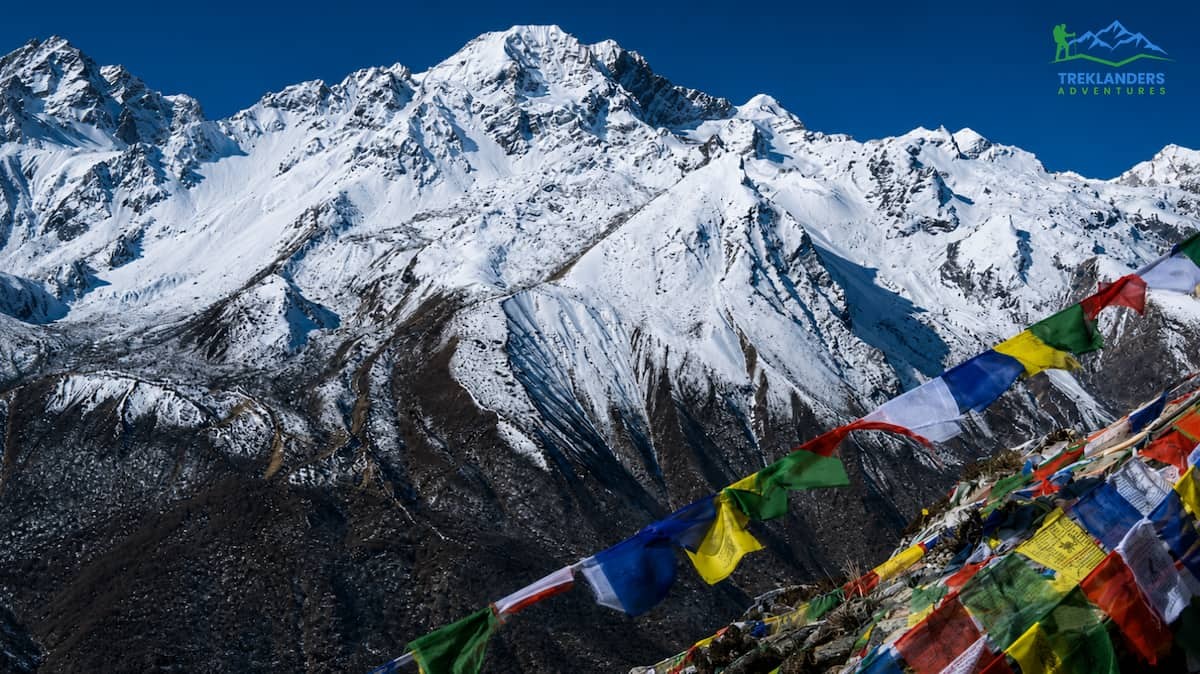
Both routes are rated moderate. Neither requires technical climbing, specialized equipment, or prior high-altitude experience. Both are suited to first-time Himalayan trekkers with reasonable fitness and a willingness to walk five to six hours per day.
The standard Langtang Valley Trek gains elevation gradually along the river corridor. The steepest sections occur on the approach to Kyanjin Gompa and on the optional hikes to Kyanjin Ri and Tserko Ri. The daily walking rhythm is consistent, and the acclimatization rest day at Kyanjin Gompa gives the body time to adjust before the high viewpoint hikes.
The Tamang Heritage section adds more varied terrain to the first several days. The Nagthali ridge crossing at 3,165 meters is the most demanding single stretch of the heritage loop. The trail between villages involves both climbs and descents rather than a single progressive ascent. This variety makes the heritage section slightly more demanding in terms of daily terrain change, though the overall elevation profile stays lower than the Langtang Valley section until the routes merge.
Families with older, more active children may follow both routes. Solo travelers frequently use both routes. Treklanders mention that age is never an issue for either of the treks if one's fitness level and health are good. Changing a licensed guide is mandatory for all trekking activities in Langtang National Park, according to Nepal's 2023 regulations. Treklanders have taken into consideration the concern, and therefore, both their packages include licensed guides and one porter for every two trekkers.
Physical preparation for either of the routes may be started about two or three weeks before boarding and should involve daily walking, stair climbing, and cardiovascular workout. The main health risk on both routes once you have crossed the 3, 000 meters mark is altitude sickness. Knowledge of the condition, slow movement, proper hydration, and reporting any discomfort to the guide are the best practical measures that are applicable to both treks equally.
Spring (March to May) and autumn (September to November) are the best seasons for both routes. This also applies to all Langtang trekking. However, the two seasons provide different cultural experiences, especially in the Tamang Heritage part.
Springtime is the rhododendron flowering season. The paths through forests between Tamang villages are adorned with blooming magnolias, rhododendrons, and wildflowers from March to May. The lower parts of the heritage route, where the altitude remains between 2,000 and 3,000 meters, display this blooming most spectacularly. The mountain views are the clearest in the mornings of the spring, and there is usually some cloud formation in the afternoons, which disappears by the next day. Spring is also the period when local communities are occupied with community preparations associated with the agricultural and herding cycle. Therefore, the cultural aspect of the villages is highly visible and vibrant.
Autumn has the clearest mountain views of the year. Thanks to the post-monsoon air clarity, Langtang Lirung and Ganesh Himal can be seen from ridge viewpoints with great detail. The trails are firm and dry. Dashain and Tihar, the major Nepali festivals, fall in October and November. If your heritage section dates match with either festival, village life will take on an even more fascinating element. Community celebrations, ritual preparations, and festive decorations will offer a rich cultural experience to your overnight stays in Tamang villages that no other season can provide.
If you go trekking in winter (Dec to Feb), it might be a little chilly as the temperatures will be below freezing at higher altitudes. The Tamang Heritage villages at lower elevations will still be accessible, but the upper parts around Kyanjin Gompa will have freezing nights, and there might be some snowfall. During winter, a few teahouses at the higher elevations may also cut down on their services. Only those experienced in cold-weather trekking, along with proper equipment, can manage to do both routes in the winter on the quiet trails.
The monsoon period from June to August is the time when there is heavy rain, paths become very slippery, and often the mountains are not visible due to cloud cover. Also, landslide risk on the road sections gets quite high. During the monsoon, neither route is advisable.
If cultural interaction is the main goal, the timing of festivals in autumn gives the Tamang Heritage Trail a certain edge that is not fully complemented by spring. However, the forest scenery in spring on the heritage section provides a more beautiful and natural setting than the dry conditions after the monsoon in autumn. In fact, both seasons are beneficial for the two trekking routes.
Well, the truth is simple: if you want to really immerse yourself in the culture, it's the Tamang Heritage Trail that should be your choice. Yet, on the other hand, the Langtang Valley Trek is also a solid path leading to cultural exposure, although wrapped in the adventure of mountain trekking.
This differentiation is very important as both experiences carry their own worth. Langtang Valley Trek, for instance, is not culturally devoid. Along the trek, you will come across the Tamang villages, and the almost continuous presence of the Tibetan Buddha will unfold before you. What is more, the route culminates in a monastery situated in a high valley that has sustained human habitation by mountain people for countless generations. So, a trekker who does the basic itinerary indeed learns about the Tamang and Buddhist cultures in the Himalayan region.
On the contrary, the Tamang Heritage Trail treats culture as the core around which the whole trip is planned, whereas culture on the standard trail is merely the scenery. The very existence of your overnight stays on the heritage stretch depends solely on what that particular village stands for culturally. For instance, Gatlang for its stone building style and the monastery, Tatopani for the hot springs and the proximity to the Tibetan border influences, Thuman being the center for the drum culture, Briddim for its community homestay concept, etc. These are not simply places on the way to a famous viewpoint; they are the actual spots you want to visit.
Accommodating yourself in the tandem Tamang families rather than in the teahouses elevates the cultural interaction to a different level. Dining at the family table instead of a large canteen is going to reveal different things to you. Travelling through the villages with fewer trekkers means changes in how the locals engage with you. All these small changes, when put together throughout the six days of the heritage section, will bring about a degree of immersion far beyond what the twelve days of the standard run can offer.
Both treks reach Kyanjin Gompa. Both offer the same mountain payoff at the end. The Tamang Heritage combined route gives you both the deepest cultural engagement the Langtang region holds and the same alpine conclusion. If you have fourteen days and want to understand the Tamang people rather than pass through their territory, the Tamang Heritage Trail is the answer.
If your time is limited, or the mountains are your primary goal, the standard Langtang Valley Trek delivers an honest, worthwhile, and genuinely cultural trekking experience. It is the right choice for trekkers who want the Langtang Valley directly.
The two routes are not competitors. They are the same region at different depths. The question is how deep you want to go.
The Langtang region's proximity to Kathmandu makes either route one of the most accessible serious trekking experiences in Nepal. Unlike Everest or Annapurna, where the journey to the trailhead requires a domestic flight and the peak season creates trail congestion, Langtang operates at a quieter scale. The culture is equally authentic. The mountains are equally dramatic. The difference is that fewer people have found it, and in that relative quietness, both routes offer something increasingly hard to find in Himalayan trekking: contact with communities that are not primarily oriented toward tourism.
The Tamang Heritage Trail takes full advantage of that quality. It moves slowly through a sequence of villages where daily life continues alongside the trekker's passage rather than reorganizing around it. Gatlang is not a village that exists for trekking. Thuman is not a performance venue. Briddim is not a hotel complex built for foreign visitors. These communities existed long before the trekking industry arrived, and they will continue long after any individual trekker passes through. Spending time inside them, staying in their households, eating their food, and observing their religious and cultural practices is a form of encounter that the mountain-focused Langtang Valley route, for all its genuine qualities, does not replicate.
For trekkers whose primary question is cultural, the Tamang Heritage Trail answers it fully.
For trekkers whose primary question is about the mountains, the Langtang Valley Trek answers it directly. For trekkers who want both, the combined 14-day route from Treklanders delivers exactly that combination in a single itinerary.
Everest Base Camp or Cho La Pass? Compare both routes to choose the best Everest trekking experience in Nepal.
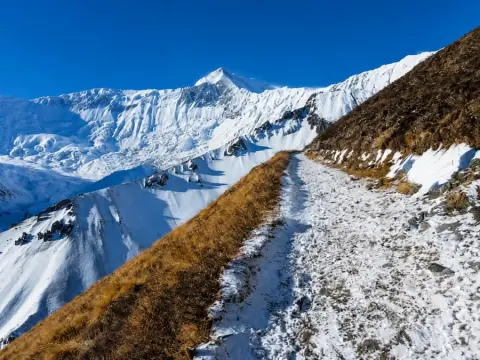
Compare Tilicho Lake and Thorong La Pass on the Annapurna Circuit and discover which challenge is tougher.
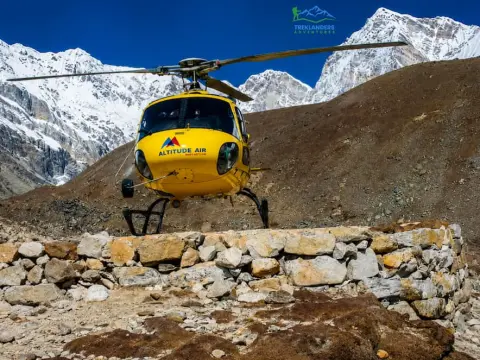
Compare the 9-Day and 12-Day Everest Base Camp Helicopter Trek and find the best Everest adventure for your schedule and fitness.



