Langtang Valley Trek: 10 Best Things to Do & Complete Guide in Nepal
26 Feb 2026
Discover the Langtang Valley Trek in Nepal — a stunning Himalayan journey to Kyanjin Gompa, Tserko Ri (4,984m), and close-up views of Langtang Lirung.

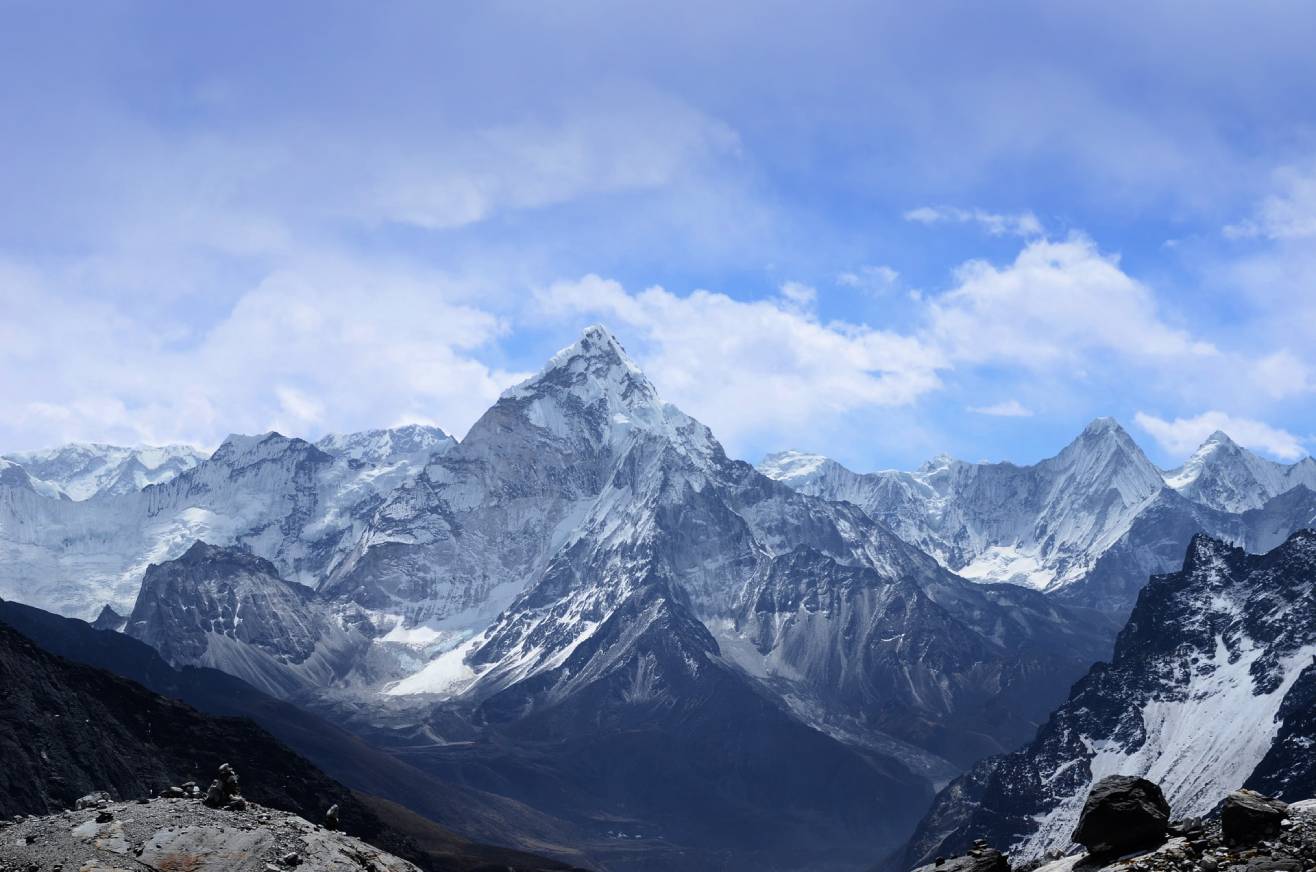
If you head just 58 kilometers north of Kathmandu, you will find one of Nepal's easiest to reach yet dramatically wild trekking destinations - the Langtang region. Langtang region trekking is a wonderful mix of breathtaking high-altitude views, unspoiled forests, glaciers, and the most culturally authentic community interactions in the Himalayas - all just a day's drive from Kathmandu. Those who are unwilling to make lengthy journeys to the Everest Base Camp or Annapurna regions but still want a real Himalayan experience will find that the Langtang region trek in Nepal offers a great alternative.
The Langtang Valley Trek is the main trek of this area. Along the way, which shows the Langtang Khola river through dense rhododendron and bamboo forests, the trail rises from Syabrubesi (1,550 m) up to Kyanjin Gompa (3,870 m), a holy monastery village surrounded by glaciers and dominated by Langtang Lirung (7,227 m). The usual Langtang Valley Trek is 7-9 days long and is a moderate-level trek, so it can be done by first-time Himalayan trekkers having a basic level of fitness.
The Langtang region opens a world of hiking opportunities beyond just the main valley route. For instance, the Gosainkunda Lake Trek (11 days) leads you up to the sacred high-alpine lake of Gosainkunda at 4,380 m, which is a spiritual pilgrimage site for both Hindu and Buddhist faiths. The 15-Day Langtang Gosaikunda Lake Helambu Trek is a journey that weaves together three different ecosystems and cultural zones in one long circuit. However, the Tamang Heritage Trek invites you to experience a deeply immersive 14-day trek in Tamang villages where traditional culture is hardly influenced by outsiders. Starting from the Kathmandu Valley rim, the Helambu Trek is a relatively lower-altitude path through the terraced fields and ethnic Sherpa-Hyolmo villages.
The Langtang region is where the Tamang and Langtang Sherpa people have lived for generations. The Tamang, whose name loosely means 'horse trader' deeply rooted Buddhist culture with various unique festivals and prayer ceremonies, as well as vividly decorated monasteries. Trekking villages like Gatlang, Nagthali, and Briddhim, you can enjoy real homestay experiences by getting involved in daily life, tasting authentic local food and drinks like chang (barley beer) and thukpa (noodle soup), and discovering old traditions that haven't really changed even after hundreds of years.
The best time to go trekking in Langtang is either in the spring months (March-May) or in the autumn (September-November). Rhododendron woods, which lie at an altitude of 2,000 m-3,500 m, look very beautiful in March and April. In autumn, you get to enjoy very clear views, and it is pretty comfortable temperature-wise for walking. Langtang valley lies along a direction that is from east to west, so it gets a bit less monsoon rainfall compared to the south-facing slopes, which is why the lower parts of the trek are still viable even in June. Winter trekking is possible on lower paths, but Kyanjin Gompa can experience heavy snowfall from December to February.
A major part of the recent history of the Langtang region is the earthquake of April 2015 that led to a destructive avalanche that destroyed Langtang Village. The people of the community have shown great spirit in rebuilding, and it is safe to trek the Langtang Valley now with the support of the locals. If you decide to trek in Langtang, you will be giving a big economic boost to those communities that were affected - this is something responsible trekkers should think about.
The most remarkable features of trekking in the Langtang region are: Kyanjin Gompa with its historic monastery; the ascent to Kyanjin Ri (4,773 m) where you get a stunning view of Langtang Lirung and the other glaciers; Kyanjin's cheese factory making local yak cheese; Gosainkunda Lake, a place of Hindu pilgrimage a million miles away; Mundu Village(3,543 m) a tranquil beauty along the valley trail; and Ghoda Tabela (3,030 m), a great place for acclimatization in the alpine meadows.
Trekking in the Langtang region means accommodation in teahouses. These teahouses have been rebuilt and greatly improved since 2015. The facilities here are simpler compared to those in the Everest and Annapurna regions, which are more frequented by tourists. Still, this is one of the factors that make the area more authentic. The permits needed are the Langtang National Park entry permit and a TIMS card. Both these can be easily obtained through Treklanders Adventures in Kathmandu. Syabrubesi, which is the starting point, can be reached approximately 7-8 hours by road from Kathmandu. The route is a beautiful mountain drive along the Trishuli River valley.
Treklanders Adventures gives the full variety of Langtang region treks: 7-Day Langtang Valley Trek, 9-Day Langtang Valley Trek, Gosainkunda Lake Trek, 15-Day Langtang Gosaikunda Lake Helambu Trek, 14-Day Tamang Heritage with Langtang Valley Trek, and the Helambu Trek. View all Langtang Region Trek and find out why this 'valley of glaciers' has been mesmerizing adventurers from all over the world for so long.
The Langtang region is one of the closest major trekking destinations from Kathmandu․ It is around 7 to 8 hours away by vehicle․ The main entry point Syabrubesi (1‚550 m) can be accessed through the Trishuli river valley and the town of Dhunche 15 km north of Trishuli․ Unlike the rest of the major trekking regions in Nepal‚ Langtang can be reached without the need for a domestic flight․ Trekkers can start the trek the morning after leaving Kathmandu․
Langtang Valley Trek is a moderately strenuous trek‚ which reaches an elevation of 3‚870 m (12‚697 ft) at the Kyanjin Gompa or an elevation of 4‚773 m (15‚659 ft) at Kyanjin Ri on an optional half day extension․ Walking for 5-7 hours a day on well-marked trails makes the trek suitable for reasonably fit beginners․ Experienced trekkers looking for more high-altitude experiences may be tempted to climb Tserko Ri (4‚984 m) from Kyanjin‚ adding a strenuous day to the trek․
Permits required for the Langtang region include: the Langtang National Park Entry Permit (NPR 3000/person); and a TIMS (Trekkers' Information Management System) card (NPR 2000 for individual trekkers and NPR 1000 for group trekkers)․ Treklanders Adventures applies for these permits in Kathmandu before departure․ Unlike Upper Mustang or Manaslu‚ Langtang does not require a special restricted area permit‚ making the paperwork simpler for visiting the region․
Gosainkunda is a high altitude lake located at an elevation of 4380 m in Langtang National Park․ According to Hindu mythology Lord Shiva created the lake after impressive the ground with his trident‚ and so the lake is considered sacred by the Hindus․ During the full moon of the Shrawan month (July- August)‚ thousands of Hindu pilgrim come here to bathe in the lake‚ making it one of the most spectacular religious festivals in Nepal․ The lake is also highly revered in the Buddhist tradition․ The region is achingly beautiful and there are many other sacred lakes in the region․
The Tamang are one of the major indigenous nationalities of Nepal․ Most Tamang people reside in the hilly and mountainous regions around the Kathmandu Valley and the Langtang region․ Tamang people follow the religion of Tibetan Buddhism‚ and possess rich traditions of music‚ dance‚ weaving and different festivals․ The trail also passes by Tamang villages with slate-roofed houses‚ community monasteries (gompas)‚ prayer wheels and mani walls‚ which offer understanding into Tamang culture․ Treklanders offer a combined 14-Day Tamang Heritage with Langtang Valley Trek‚ which follows the Tamang Heritage Trek and then joins the classic Langtang Valley Trek․
Absolutely not. It is 100% safe to trek in the Langtang region. There was a tragic earthquake in April 2015 that caused a huge avalanche, which destroyed Langtang Village. Though, since then, trail facilities, teahouses, and the village communities have been largely rebuilt and even improved with the help of international aid agencies and the income from trekking.
For trekkers with 10-15 days, the 15-Day Langtang Gosaikunda Lake Helambu Trek is the most rewarding combination, linking three distinct areas: the glaciated Langtang Valley, the sacred Gosainkunda Lakes, and the Helambu highlands above Kathmandu. This circuit offers maximum cultural diversity, altitude variation, and scenery, finishing back within easy reach of Kathmandu. For shorter trips, the 7-Day Langtang Valley Trek is the most efficient way to experience the region's spectacular glacial landscapes and Tamang culture.

Discover the Langtang Valley Trek in Nepal — a stunning Himalayan journey to Kyanjin Gompa, Tserko Ri (4,984m), and close-up views of Langtang Lirung.
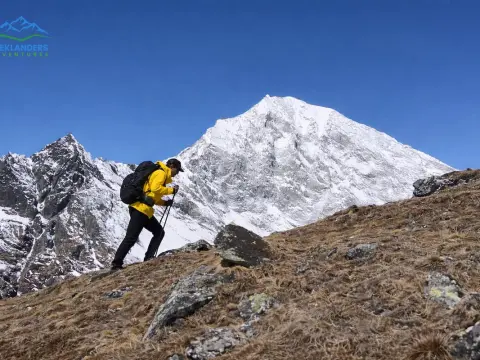
Langtang Valley Trek packing list and preparation guide with essential gear, permits, and altitude tips.

Langtang Valley Trek in autumn is the best season for clear mountain views, stable weather, and a safe, unforgettable Himalayan trekking experience.

Langtang Valley blends Tamang culture, Tibetan Buddhism, and ancient Himalayan heritage beyond trekking.
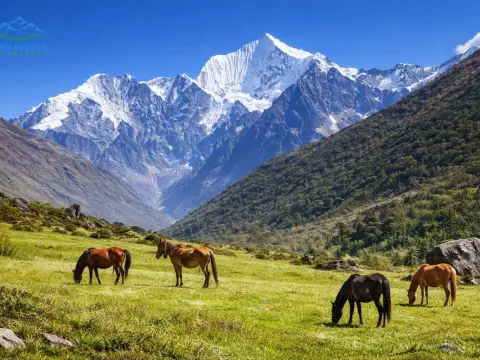
Explore the flora, fauna, and biodiversity of the Langtang Valley Trek in Nepal, from rhododendron forests to rare Himalayan wildlife.
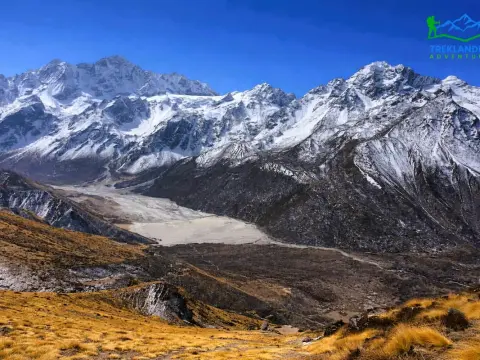
Explore the Langtang Valley Trek in spring with clear Himalayan views, blooming rhododendrons, and ideal trekking conditions near Kathmandu.
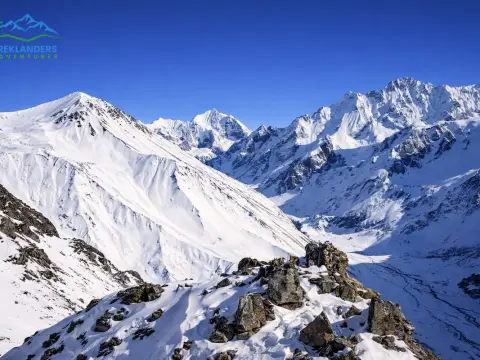
Experience the Langtang Valley Trek in February with quiet trails, winter scenery, plus weather, Itinerary, packing list, and safety tips.
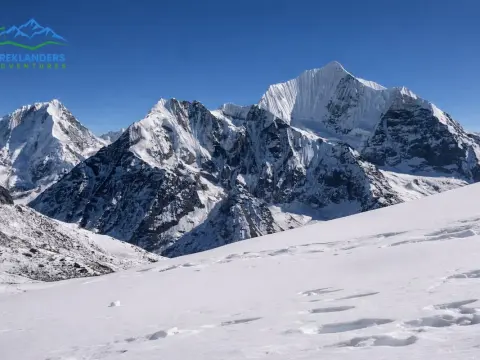
Discover the highlights of the Langtang & Gosaikunda Trek, including Kyanjin Gompa, Lauribina La Pass, and sacred Himalayan lakes.
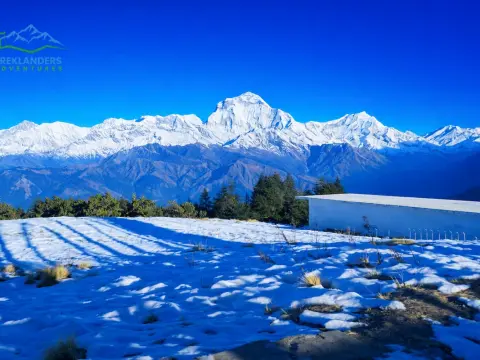
Langtang Valley vs Ghorepani Poon Hill Trek 2026: altitude, difficulty, scenery, culture, and best choice.



