
Kala Patthar at Dawn: Is the Extra Climb Worth It on a 12-Day Everest Base Camp Trek?
21 Nov 2026
Is Kala Patthar worth the climb? Discover stunning Everest sunrise views, altitude challenges, and trekking tips.

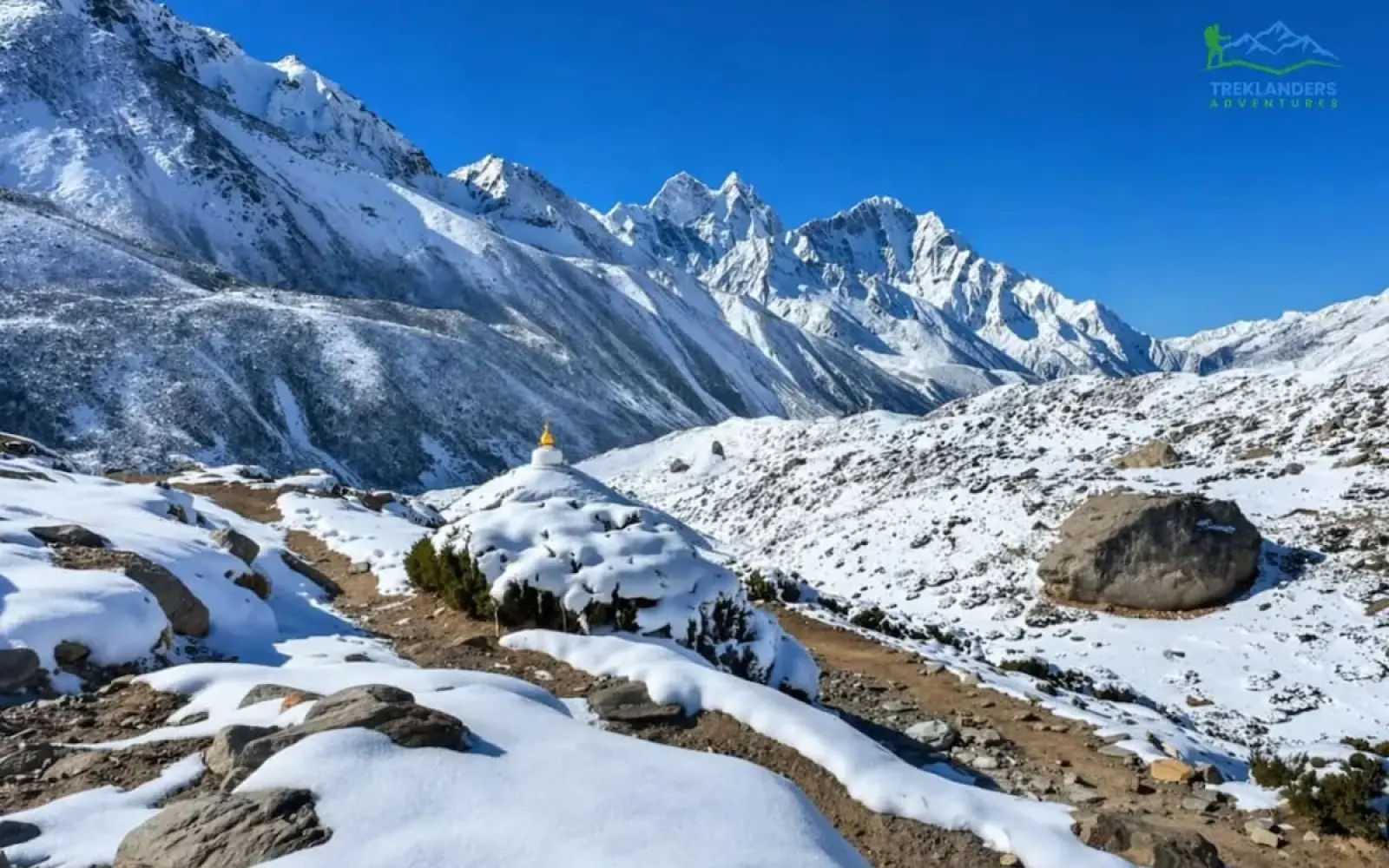
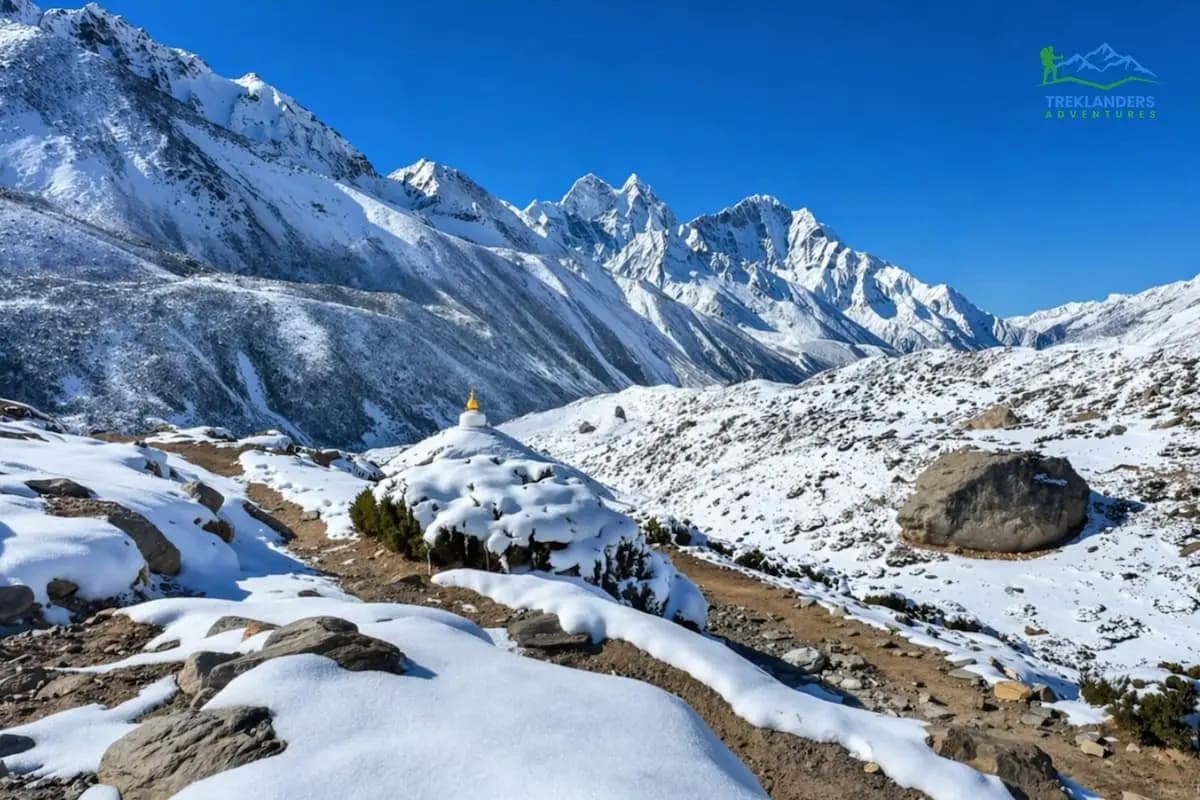
Winter gives you the clearest mountain views of the year in Nepal. The air is dry, the sky stays blue for most of the day, and the trails carry far fewer people than in October or April. You pay for that with cold mornings, short days and frozen water bottles. The right route and the right gear handle all three.
This guide covers the five best winter treks in Nepal: the 12-Day Everest Base Camp Trek, the 4-Day Ghorepani Poon Hill Trek, the 5-Day Mardi Himal Trek, the 6-Day Pikey Peak Trek and the Helambu Trek. Each route follows the itinerary on the Treklanders website, written as a trail narrative so you can picture every day before you book. Altitudes, walking hours and permits match the current trip pages.
Winter runs from December to February. Rain is rare, so the haze that softens the mountains in spring and the mud that slows the trail in monsoon are both gone. Mornings start sharp and clear. On the Everest trail, the Treklanders trip page describes winter days as often clear and sunny, with far fewer trekkers than in spring or autumn.
Crowds change a trek more than most people expect. In autumn you share the lodge dining room and the sunrise viewpoint with large groups. In January you share them with a few other walkers. Guides have time to talk, lodge owners have time to cook, and you get a seat beside the stove.
Cold is the main drawback. Nights fall below freezing at Namche Bazaar and drop much lower at Lobuche and Gorakshep. Daylight is short, so walking days end by late afternoon. Some lodges above Dingboche reduce service or close during the coldest weeks. A prepared trekker handles all of this, but it changes how you plan, which is why the five treks below sit at five different altitudes. You can match the route to your fitness, your gear and your tolerance for cold.
If you want a wider list of seasonal options, the Treklanders guide to beginner treks for December covers the lower trails in more detail, and the page on trekking in Nepal lists every route by region.
December is the mildest month. The post-monsoon air is still dry, the sun is warm below 3,000 m, and snow stays mostly on the high ridges. It is also the busiest winter month, especially around Christmas and New Year. The Treklanders guide to trekking in Nepal in December gives a month-specific look at weather and Everest itineraries.
January is the coldest month. High camps get hard frost, water can freeze overnight, and snow can cover the upper trail at Poon Hill, Mardi Himal and Pikey Peak. The views are also at their sharpest. If you want empty trails and can handle low temperatures, January suits you.
February starts cold and warms slowly. Days lengthen, and the snow line moves higher by the end of the month. You get most of the winter clarity with slightly longer walking hours.
Whichever month you choose, plan around three facts. Mornings are the coldest part of the day, so start layered. Afternoon cloud arrives early on some ridges, so reach your viewpoint at sunrise. Daylight ends early, so aim to reach each lodge by mid-afternoon. These habits apply to all five treks, from the high Khumbu trail to the low hills near Kathmandu. Short days also change your schedule. A walk that takes six hours in October still takes six hours in January, so you need to leave at first light and keep your breaks short.
The Everest Base Camp trek is the best-known walk in Nepal, and winter is a quiet time to do it. The 12-Day Everest Base Camp Trek reaches Base Camp at 5,364 m and Kala Patthar at 5,643 m, with two acclimatization days built in. The route starts and ends in Kathmandu and uses tea house lodges every night.
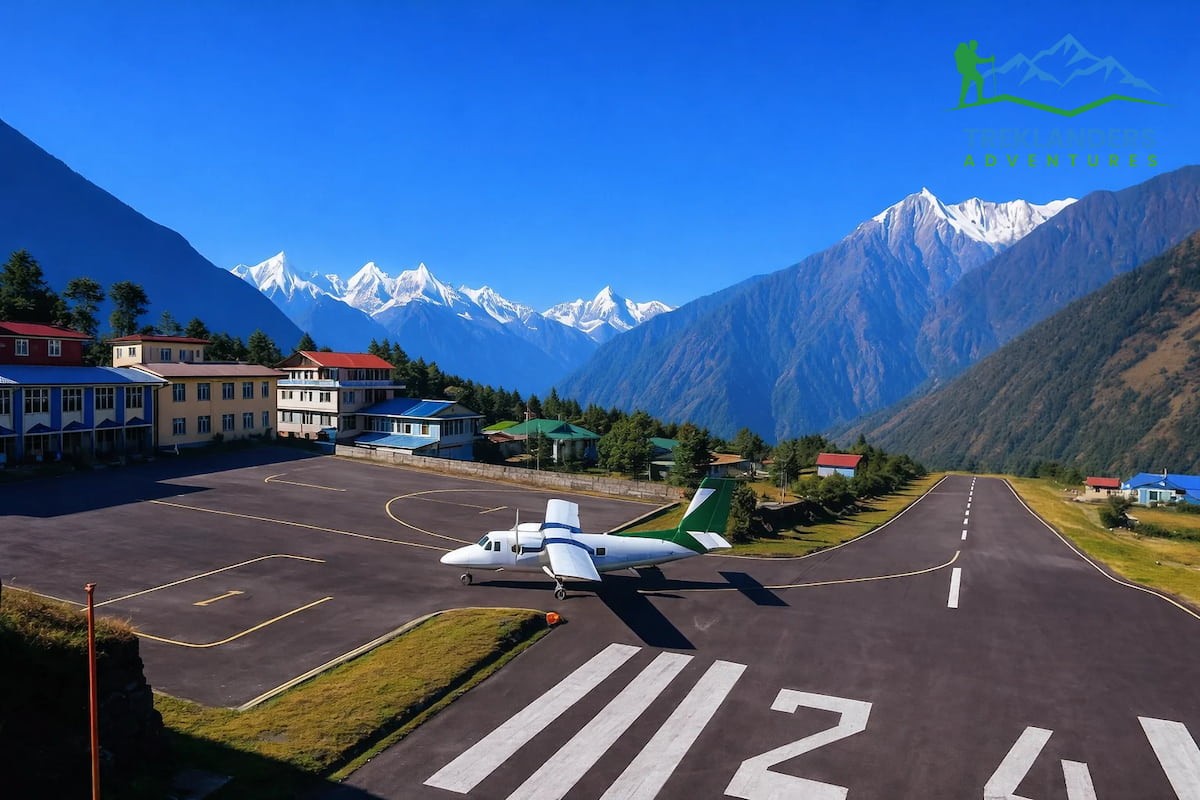
You fly from Kathmandu to Lukla on a small plane. The flight lasts about 35 minutes and gives you views of Everest, Lhotse and Makalu before you land at 2,860 m. After a short rest you walk down through Lukla town and past villages to Phakding at 2,610 m, a walk of about four hours.
Day two climbs to Namche Bazaar at 3,440 m on the standard Everest route. The trail crosses bridges to Monjo, where you enter Sagarmatha National Park, then follows the Dudh Koshi River to Jorsalle for lunch. The afternoon passes through rhododendron and pine forest to a high bridge, followed by a few hours of steady climbing. Namche is the main trading town of the Khumbu, with bakeries, gear shops and a museum on Sherpa culture.
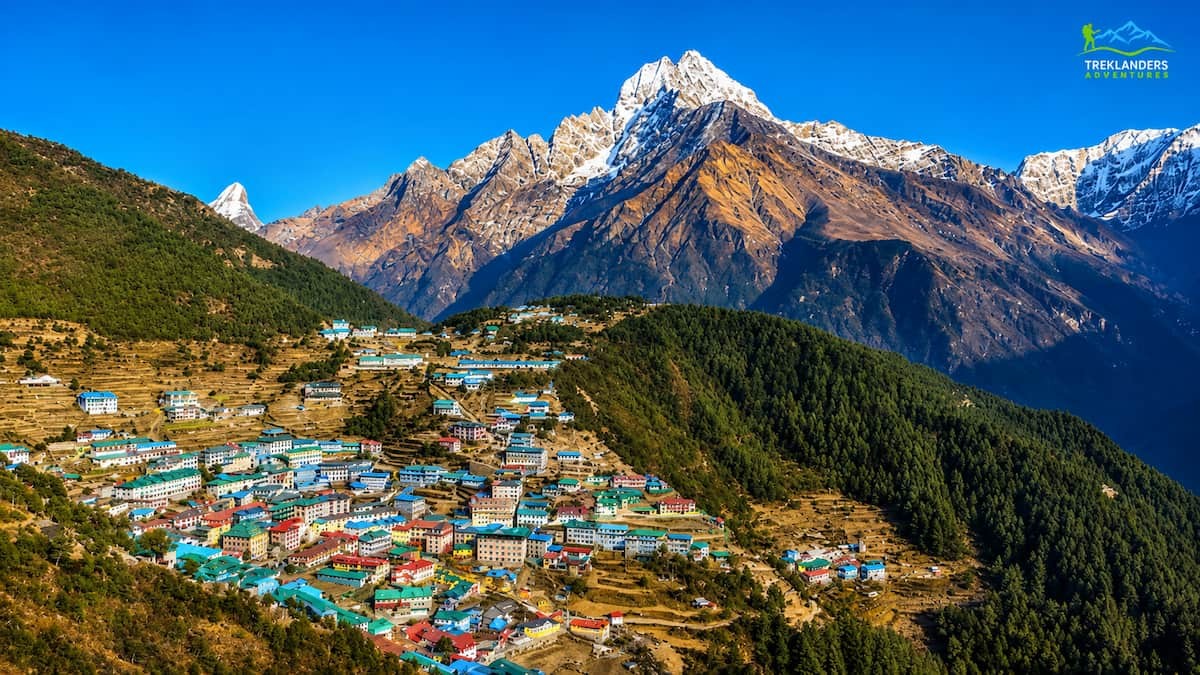
You spend day three in Namche on a rest day. A short hike takes you to the Everest View Hotel for your first look at Everest, Lhotse and Ama Dablam. The rest day matters in winter. Cold air dries your throat and makes you drink less, so use the day to drink, eat and sleep well.
On day four you walk to Tengboche at 3,867 m through Phunki Tenga, with the monastery as the reward. Everest, Lhotse and Ama Dablam rise behind the courtyard on a clear day. Read the Treklanders guide to Tengboche Monastery for four stops worth your time.
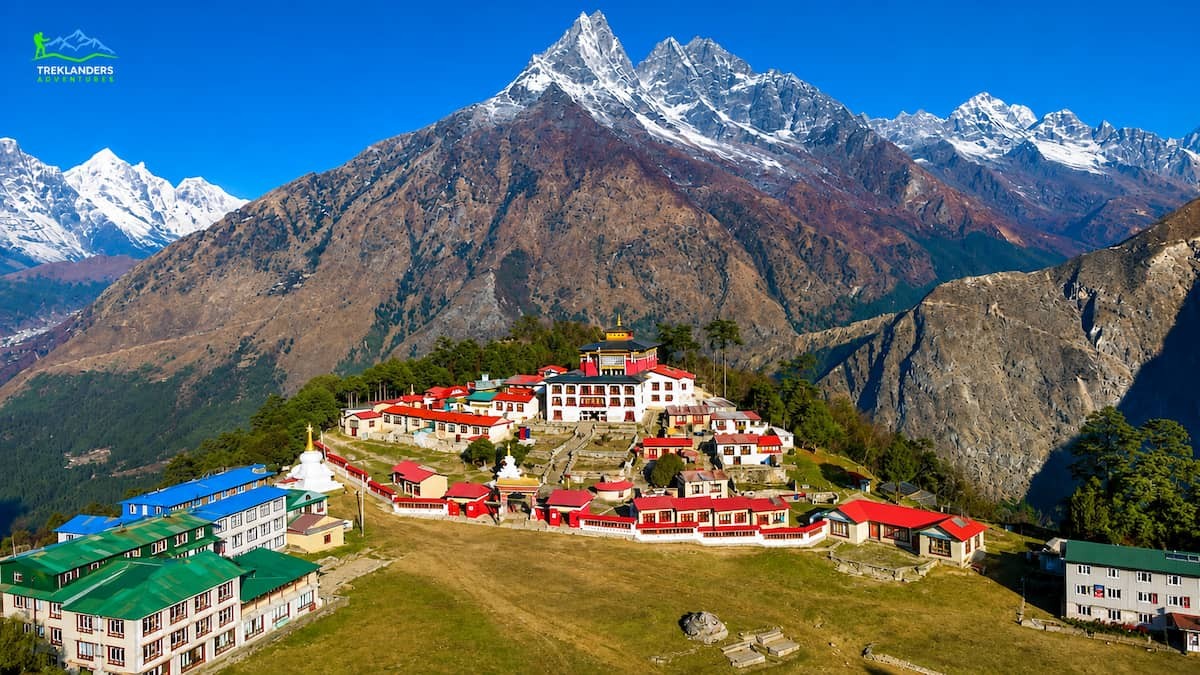
Day five takes you past Pangboche, the last permanent settlement on the route, and on to Somare for lunch. The trail climbs onto open ground below Ama Dablam and reaches Dingboche at 4,410 m. Day six is a second rest day with a morning hike to the Nakarjung ridge, which shows you Ama Dablam, Island Peak and Makalu. You can read more about the nearby peak on the Island Peak trek and climb page.
Day seven moves you to Lobuche at 4,928 m via Thugla. The air thins and the walk slows. On day eight you leave early with a packed lunch, cross the rocky ground above the Khumbu Glacier, and reach Gorakshep at 5,180 m. From there you walk to Everest Base Camp at 5,364 m, stand beside the glacier below Lhotse, Nuptse and Pumori, and return to Gorakshep for the night.
Day nine starts in the dark. You climb Kala Patthar to watch the first sun touch Everest, then descend to Gorakshep for breakfast. The route continues through Lobuche and Thugla to Pheriche and then to Pangboche for the night. The Kala Patthar sunrise guide explains whether the extra climb is worth it for you, and the answer in clear winter weather is usually yes.
The last three days retrace your steps. Day ten goes through Tengboche to Namche, day eleven reaches Lukla, and day twelve brings you back to Kathmandu by air.
The Treklanders trip page notes that nights fall below freezing at Namche and get much colder at Gorakshep and Lobuche. It also warns that some lodges above Dingboche reduce service or close in the coldest weeks, so confirm lodge availability with your guide before you book a winter date.
Pack a sleeping bag rated for minus 10 to minus 20 degrees Celsius, a heavy down jacket, insulated gloves and a warm hat. Microspikes and gaiters are useful if snow covers the trail. Keep batteries in an inner pocket at night because cold drains them quickly.
Flights between Kathmandu and Lukla depend on weather. The Manthali rerouting described on the trip page applies to the busiest spring and autumn months, so winter travelers meet it less often, but a buffer day before your international flight still protects you. You need two permits, the Sagarmatha National Park permit and the Khumbu Pasang Lhamu Rural Municipality permit, and Treklanders arranges both.
Fitness decides how much you enjoy this route. The EBC training guide sets out a 12-week plan, and the first-timer guide explains the daily rhythm. If you want more days, the 14-Day Everest Base Camp Trek adds buffer time, the Gokyo Valley trek swaps Base Camp for glacier lakes, and the Everest Base Camp luxury trek upgrades the lodges. If you prefer to skip the walk back, the helicopter return option shortens your return. You can also read the complete 12-day guide or the Chasing Everest overview before you commit.
The Ghorepani Poon Hill trek is the best winter choice for a first Himalayan walk. The 4-Day Ghorepani Poon Hill Trek from Pokhara tops out at 3,210 m, covers about 40 km on foot, and needs no altitude experience. Stone steps, forest paths and Gurung and Magar villages fill the route. The Treklanders trip page lists winter trekking as possible, with clear skies and sharp views, and it asks you to bring warm clothing because Ghorepani gets very cold.
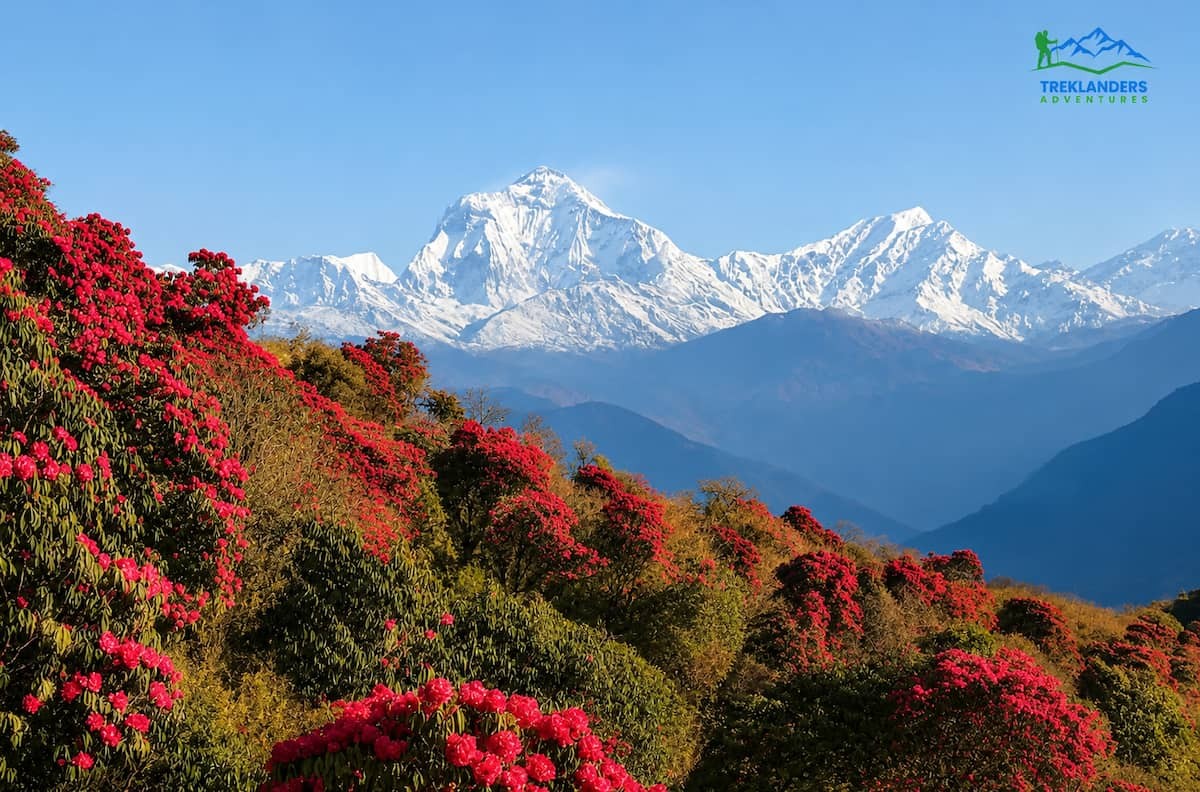
You start in Pokhara and drive through Nau Danda and Kande, then down to Nayapul. A rougher road takes you to Tikhedhunga at 1,425 m, a farm village with waterfalls. After a three-hour ride you cross a bridge and climb a long stone staircase for about two hours to Ulleri at 2,050 m. The lodge faces the Annapurna peaks over green hills.
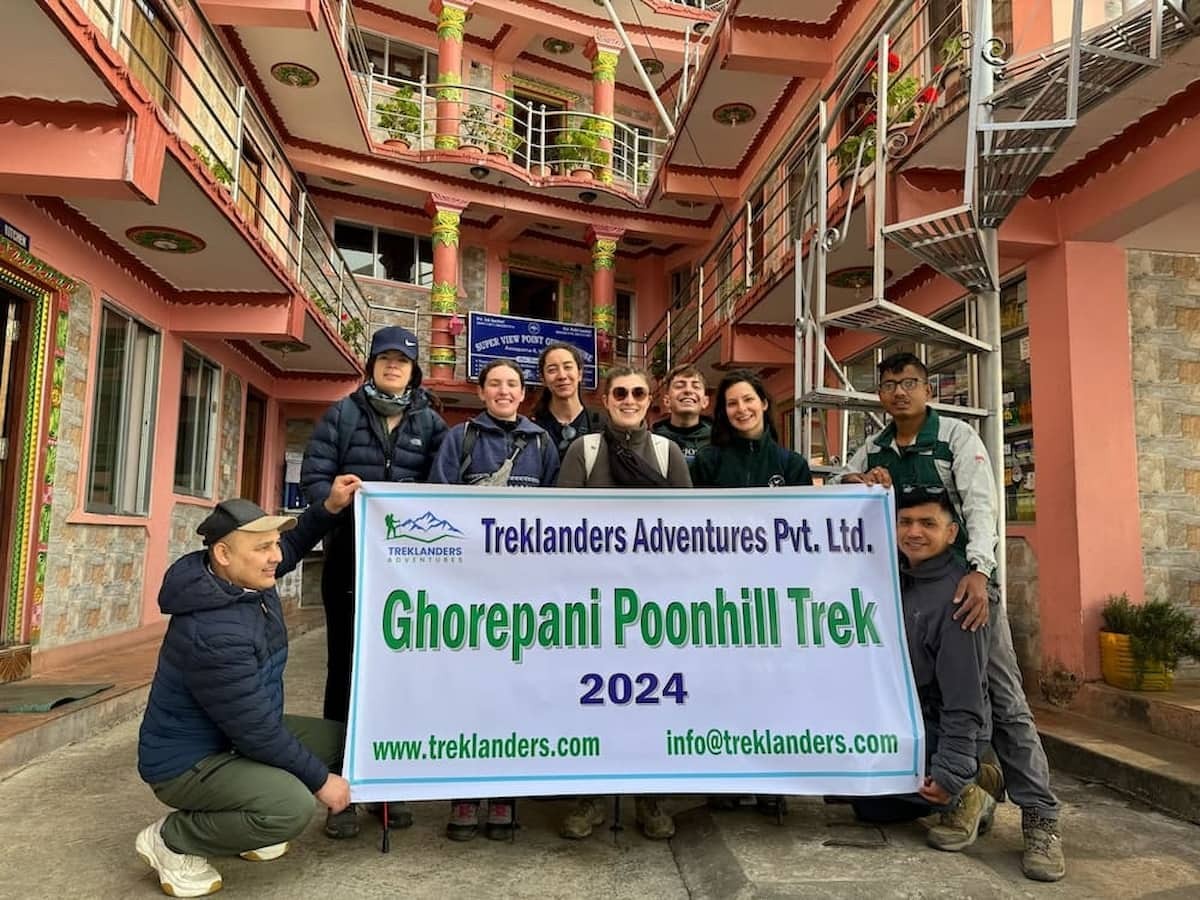
Day two takes you to Ghorepani at 2,874 m in about four hours. The trail enters cool forest of rhododendron and pine, climbs a few short steep sections, and passes the lower entrance gate. A final climb brings you to Deurali ridge and the village of Ghorepani, where the lodge looks out at Dhaulagiri and the Annapurna peaks. The forest still gives you shelter from wind.
Day three begins before dawn with a climb of about an hour to Poon Hill at 3,210 m. You watch the sun light up Dhaulagiri, Annapurna, Manaslu and the sharp point of Machhapuchare, the Fish Tail peak. Bring a headlamp, because the stone steps are dark at that hour. After breakfast in Ghorepani you climb through forest to a second hilltop called Deurali, drop to Bhanthati for lunch, cross a bridge and climb for an hour to Tadapani at 2,640 m. The lodge looks at Annapurna South, Hiunchuli and Machhapuchare.
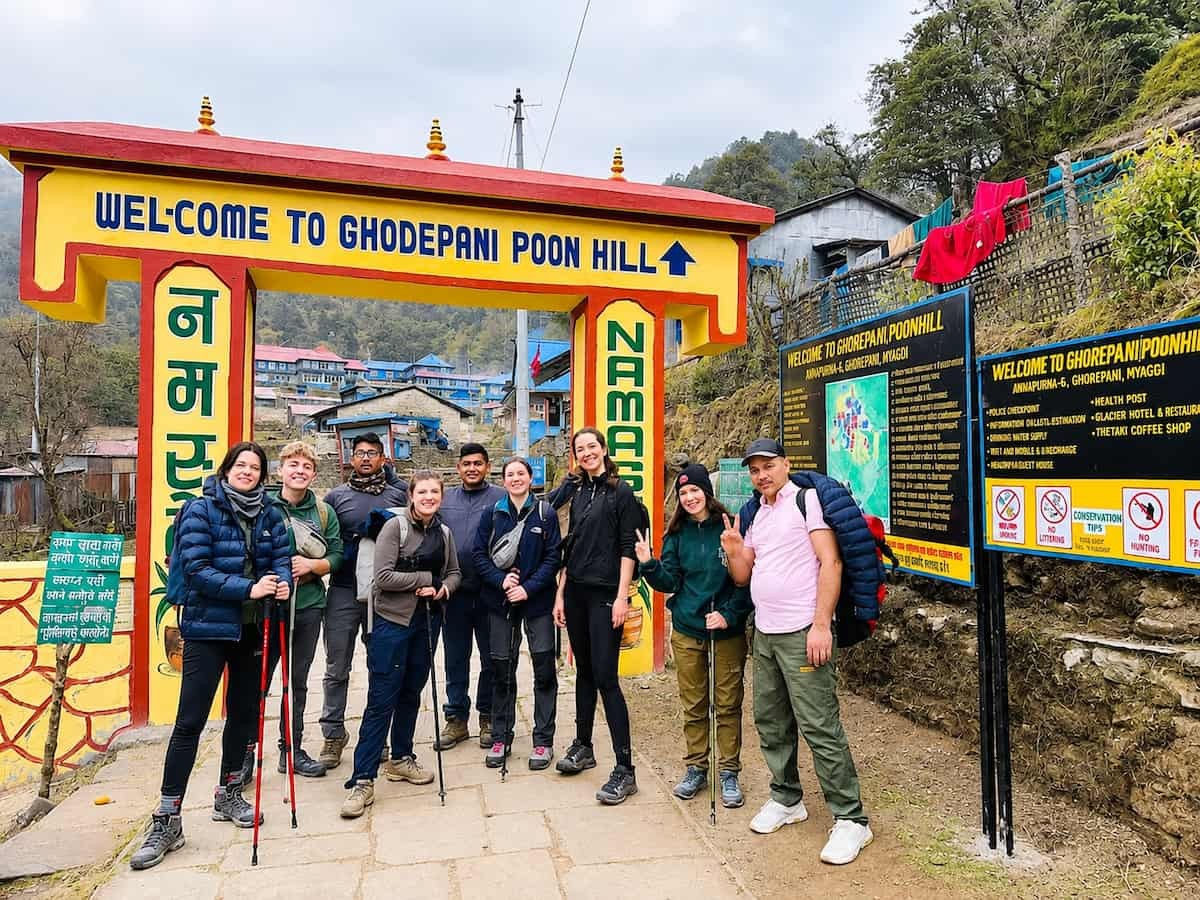
On day four you wake early for sunrise at Tadapani, then follow a forest path through Bhaise Kharka and downhill to Ghandruk, a large Gurung village with views of the Annapurna peaks. After lunch you walk a short distance to the road and take a jeep through Bhirethati and Nayapul back to Pokhara.
Wear your warmest layers for the hour on the summit and bring a flask of hot tea. You need a three-season sleeping bag rated 0 to minus 5 degrees Celsius for Ghorepani, a warm hat, gloves and a down layer. Dining rooms at Ghorepani and Ghandruk have fireplaces, so you spend your evenings beside the fire. Permits are the Annapurna Conservation Area Permit and the TIMS card, and Treklanders handles both.
The route suits all age groups, and the steepest climbs come early. If you want a longer version, the 11-day Ghorepani Poon Hill trek adds time in the hills, and the 10-day Ghorepani Poon Hill with Annapurna Base Camp trek continues to the sanctuary. If you want the shortest option to the sanctuary, the 7-Day Annapurna Base Camp Trek from Pokhara gives you that, though winter snow near the sanctuary calls for more care. The 11-Day Annapurna Base Camp Trek and the 14-day Annapurna Base Camp trek give you more time.
Two quieter alternatives share the same region. The Mohare Danda trek and the Khopra Ridge and Khair Lake trek follow quieter ridge routes, while the Annapurna Region treks page lists the rest. You can spend the days before or after your walk on the 3-Day Pokhara Sightseeing Tour to see Phewa Lake.
The Mardi Himal trek follows a high forest ridge to a viewpoint at 4,200 m, directly below Machhapuchare and Mardi Himal. The 5-Day Mardi Himal Trek from Pokhara is the short version and covers about 35 km on foot. Winter brings snow above 3,500 m and long cold nights, but it also brings clear mornings and fewer people on a trail that is crowded in spring and autumn. The Treklanders post on Mardi Himal in winter answers the main questions about snow and safety.
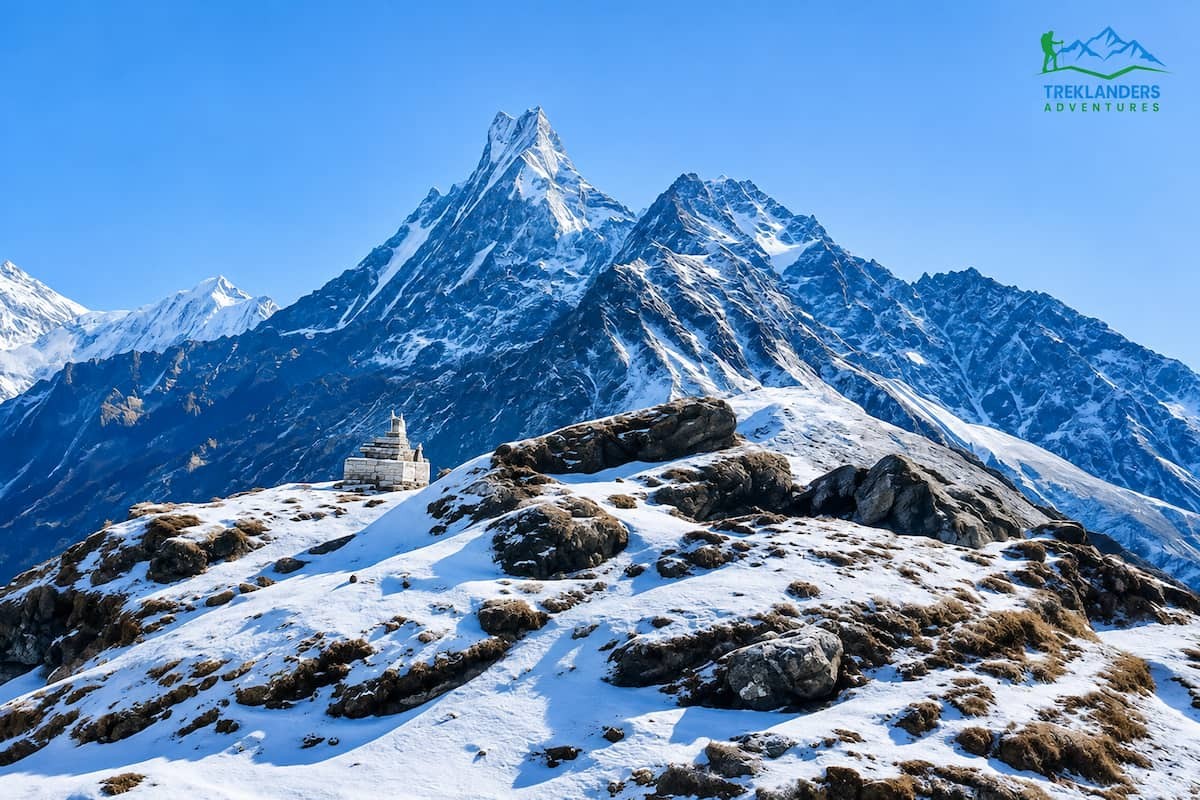
On day one you drive from Pokhara to Dhampus at 1,580 m, then continue by road to Potana and Pritam Deurali at 2,040 m. The route leaves the main Annapurna trail at Deurali and goes into dense forest of oak, pine, fir and rhododendron. The walk takes about seven hours in total and ends at Forest Camp, 2,520 m.
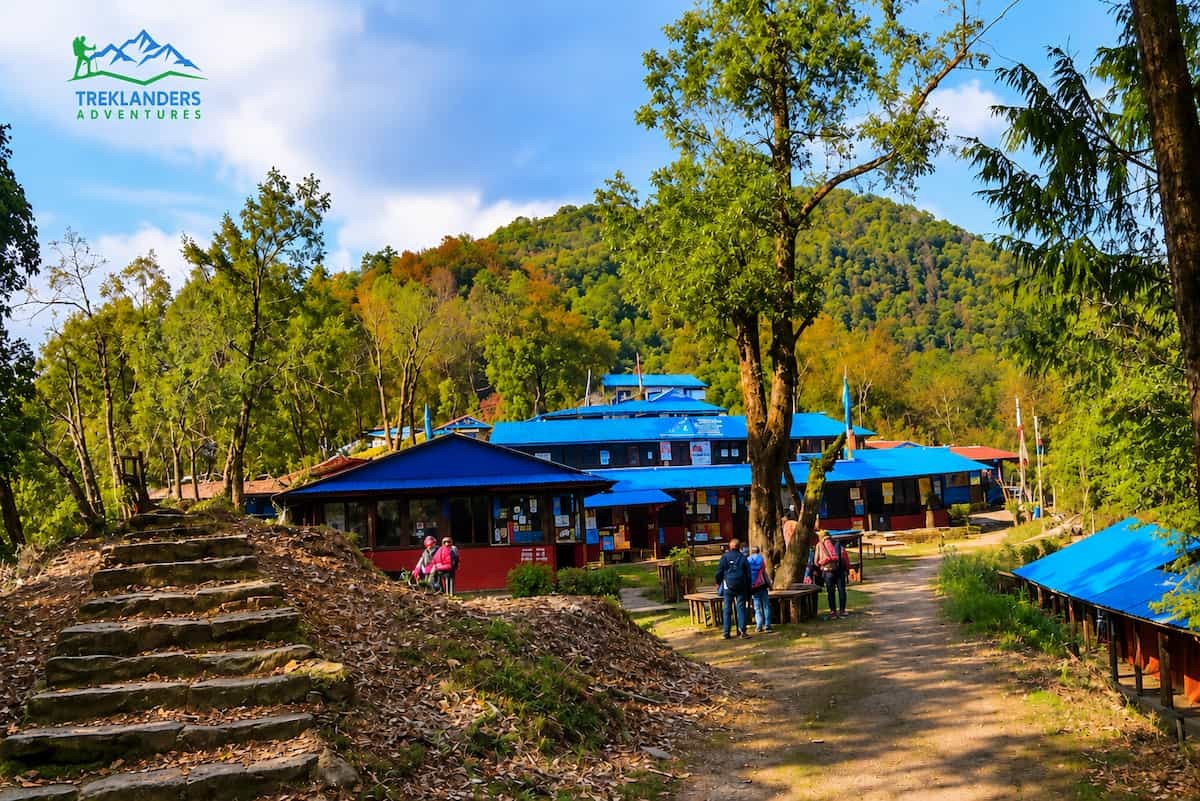
Day two climbs steeply to Low Camp at 2,970 m in about four hours. The trail runs through forest, and the views of the Annapurna range open as you gain height. The air cools with every hour.
Day three goes to High Camp at 3,700 m in about six hours. You leave the dense forest behind and climb onto an open ridge. High Camp is the highest overnight stop on the route, so use the afternoon to rest and drink water.
Day four is the longest. You leave early and follow the ridge to Mardi Viewpoint at 4,200 m. Machhapuchare fills the sky, black rock marks Mardi Himal, and the Annapurna range spreads to the west. After time at the top you return to High Camp and continue down to Badal Danda at 3,210 m for the night. The name Badal means cloud, because mist often covers this area.
Day five descends for about six hours, through Low Camp, by a different path to Siding Village at 1,750 m. A two-hour drive then takes you back to Pokhara and your hotel by Phewa Lake.
The Treklanders trip page lists winter trekking as possible but very cold above 3,500 m, with snow and freezing nights. Bring a sleeping bag rated minus 5 to minus 10 degrees Celsius, a down jacket, waterproof shell layers, gloves and microspikes for icy sections. Lodges are simple, rooms at High Camp are small, and hot water may be unavailable in the coldest weeks.
Snow can slow the climb to High Camp, so allow extra time and turn back if the weather closes in. Your guide makes that call with you. A guide is worth the effort here. The trail near Forest Camp, Badal Danda and High Camp can be hard to read in fog, rain or snow, and a guide checks conditions before each push. Permits are the Annapurna Conservation Area Permit and the TIMS card.
If you want more time on the same ridge, the 9-Day Mardi Himal Trek adds slower days, and the Mardi Base Camp trek extends the route to the base camp. Each walker's pace differs, and a longer plan gives you a spare day for weather.
The Pikey Peak trek reaches a viewpoint at 4,065 m in the Solu region of eastern Nepal. Sir Edmund Hillary admired the viewpoint on his way to Everest. From the top you see Everest, Lhotse, Makalu and Kanchenjunga in the east, and Manaslu and Ganesh Himal in the west. The 6 Day Pikey Peak Trek keeps the walking short and the altitude moderate, and it keeps you away from the Everest crowds.
Day one is a drive. You leave Kathmandu early and travel by jeep through Dhulikhel and Ghurmi, where you stop for lunch, then climb through pine and rhododendron forest to Dhap Bazaar at 2,910 m. The trip takes about seven hours and covers about 250 km. On a clear day you can see Numbur Chuli above the village.
Day two begins on a newly built road and passes through Sigane to Jhapre at 2,920 m, a village above a deep valley with views of Everest and the Khumbu Himal. A Buddhist gompa is worth a visit. The trail then climbs through cool forest to Bhulbhule at 2,815 m after about six hours of walking.
Day three goes to Pikey Base Camp at 3,640 m. The route climbs to Lhamuje, crosses ridges, and passes a green pasture where yaks graze beside a long mani wall. A short steep climb brings you to the base camp lodge, where a local yak cheese factory is nearby.
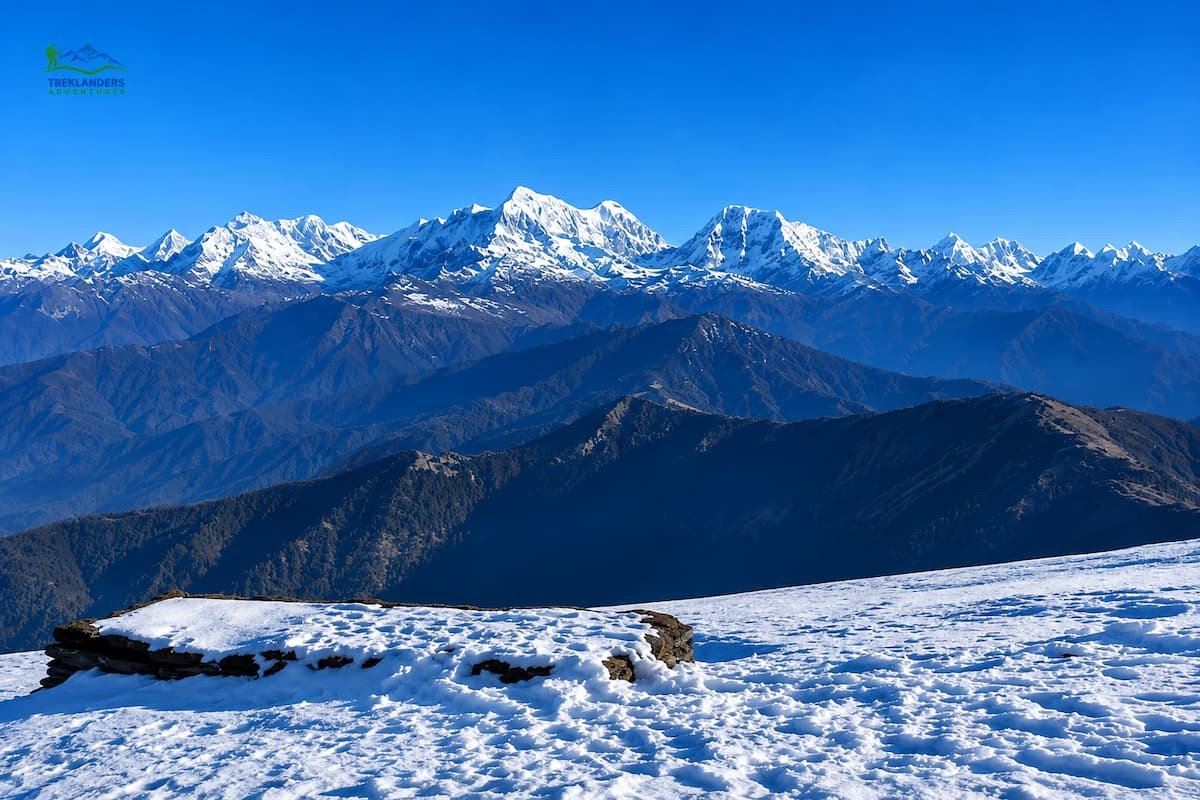
Day four is the main day. You rise early and climb winding forest trail for about an hour to Pikey Peak at 4,065 m. From the top you watch sunrise light the Himalayan range, from Everest and the Khumbu Himal to Makalu and Kanchenjunga in the east, and from Ganesh, Manaslu, Langtang, Jugal Himal, Gaurishankar and Dorje Lakpa in the west. You then descend through Jase Bhanjyang and Lamjura, down through fir and rhododendron forest to Taktor, and along a path past mani walls to Junbesi at 2,701 m. The day takes about six hours.
Day five is a rest day at Junbesi. You hike to Thubten Choling Monastery, a large Buddhist complex that houses hundreds of monks and nuns, and you spend the night in the village. Day six is a drive of about seven hours back to Kathmandu.
The Treklanders trip page says the summit can fall as low as minus 10 degrees Celsius in winter, with colder wind chill, and nights at the base camp stay below freezing. Daylight is short, so the long descent on day four benefits from trekking poles. Bring a warm sleeping bag, a thick down jacket and thermal layers. Lodges at the base camp are basic, and showers there may be cold.
The trip page also lists winter among the seasons for this trek, since most days bring sunshine and clear views. For another low-traffic Everest view, the 8-Day Everest Panorama Trek and the Everest Panorama trek walk through Sherpa villages without a high pass. If you plan to continue to the high Khumbu later, you can read about the Everest Three Passes trek, the Cho La Pass route, or the Everest Base Camp trek from Jiri, which follows the old approach.
The Helambu trek starts less than an hour from Kathmandu and reaches 3,597 m at Thadepati. It passes through Tamang and Hyalmo villages, Buddhist monasteries, and forest of rhododendron, oak and pine. In winter the views of Langtang, Jugal Himal and Ganesh Himal are clear, and the trail stays quiet. The package runs 12 days from arrival to departure, with eight days of trekking and a heritage tour in the city.
You arrive in Kathmandu on day one and meet your guide for the briefing and a welcome dinner. Day two covers the heritage sites of the city. The Kathmandu full-day sightseeing tour and the seven UNESCO heritage sites tour show how this works, and the Patan and Bhaktapur tour fills a free day.
On day three you drive to Sundarijal, about 15 km east of the city, and climb past waterfalls to the Shivapuri National Park entrance. The path goes through farm villages and then forest to Chisapani at 2,165 m in about four hours. The ridge looks over Annapurna, Manaslu, Ganesh Himal and Langtang, and sunset lights the whole range. The Chisapani to Dhulikhel hiking trip and the Nagarkot sunrise tour cover the same ridge on shorter schedules.
Day four descends to Pati Bhanjyang, climbs a ridge, and reaches Gul Bhanjyang at 2,125 m in about five hours. This Tamang village has a small bazaar, stupas and prayer flags. Day five goes through Chipling to Kutumsang at 2,446 m, a village of Sherpa, Hyalmo and Tamang families, in about four hours.
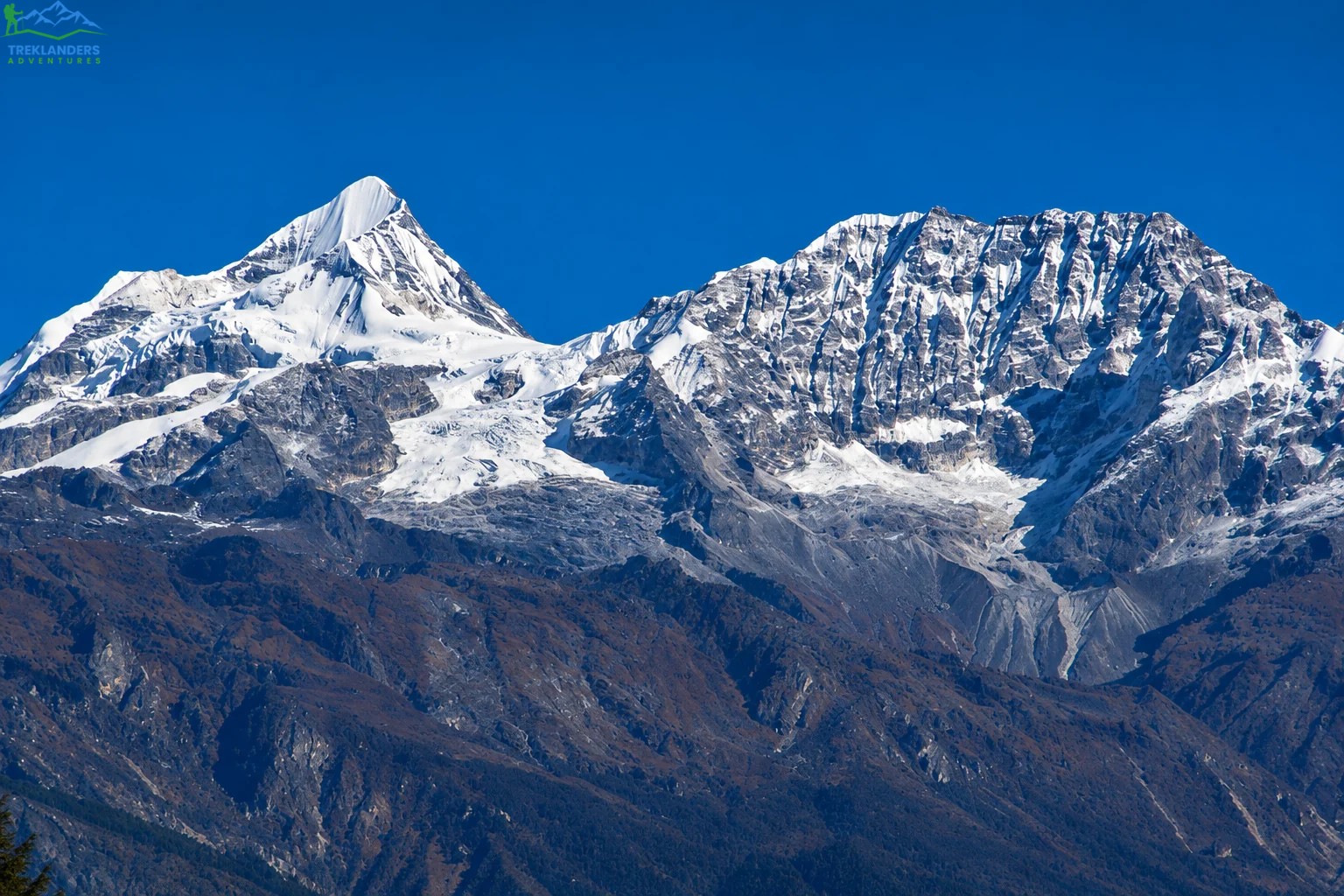
Day six is the high point. You climb Yurin Danda at 3,510 m through rhododendron, pine and oak, drop to a meadow at Mange Goth, and climb to Thadepati at 3,597 m. The village sits midway between the Gosainkunda lakes and Tarke Gyang. You see the Langtang and Jugal Himal ranges from the lodge. For a longer route in this area, the Gosainkunda Lake trek and the 15-Day Langtang, Gosaikunda and Helambu trek build on this ridge.
Day seven drops through dense forest to Melamchi Gaon at 2,530 m in about five hours, crossing the Chyodi Khola along the way. Day eight crosses a suspension bridge and climbs to Tarke Gyang at 2,550 m, the main village of the Hyalmo people. You walk through the village, see the carved wooden doors and windows, and visit the monastery above, associated with the goddess Ama Yangri.
Day nine is a short walk through forest to Sermathang at 2,693 m, where you visit the gompa. On day ten you walk to the road, drive to Melamchi Bazaar at 846 m, then continue through Dhulikhel and back to Kathmandu. Day eleven is free, and day twelve is your departure.
The Treklanders trip page lists winter as a good season for this short trek, with clear late sunshine, cold mornings and nights, and occasional snow at Thadepati. Bring a sleeping bag rated to minus 10 degrees Celsius, a down jacket, and layers for the cold hours before sunrise. Mobile signal weakens near Thadepati, so tell your family to expect a quiet day or two.
Permits are the Shivapuri-Nagarjun National Park entry and the TIMS card. Because of the route's closeness to the capital, Helambu works for a short winter holiday. The 4-Day Trekking Adventure near Kathmandu and the Nagarkot day hike cover even shorter plans, and the Namobuddha day tour, the Nagarjun Jamacho day hike and the Chandragiri cable car tour work for a rest day. Check current trail conditions with the team before you leave, since flood damage in the Langtang region in 2026 affected some access routes.
Start with altitude. Everest Base Camp reaches 5,643 m at Kala Patthar. Mardi Himal reaches 4,200 m, Pikey Peak 4,065 m, Helambu 3,597 m and Poon Hill 3,210 m. Higher routes need more acclimatization and more warm gear. Lower routes need less preparation and give you more flexibility if the weather turns.
Match the route to your goal. Choose Everest Base Camp if you want the famous destination and can commit 12 days. Choose Poon Hill if you want a short first trek with a rewarding sunrise. Choose Mardi Himal if you want a ridge walk with mountain views and fewer lodges. Choose Pikey Peak if you want an Everest panorama and Sherpa villages without a high-altitude push. Choose Helambu if you want culture, forest and monasteries close to Kathmandu.
Think about travel time too. Poon Hill and Mardi Himal start from Pokhara, where a day of rest suits you before or after the walk. Pikey Peak starts with a seven-hour drive in each direction. Helambu starts less than an hour from the city. Everest needs a flight, and winter flights can slip a day.
Pairing treks also works. A short Poon Hill walk can follow the Chitwan wildlife tour and the Everest mountain flight gives non-trekkers a view of the peaks. If you want a bigger objective in another season, the Manaslu Circuit, the 13-day Annapurna Circuit, the Tilicho Lake trek, the Annapurna semi circuit, the Langtang Valley trek and the Tamang Heritage trail each need separate planning. The Manaslu winter guide and the Manaslu itinerary guide explain why high passes need special care in winter.
For climbers, the Everest Base Camp trek with Lobuche East climbing and the peak climbing options list technical choices, but they need experience and different timing. The Upper Mustang trek suits another season, the Everest heli tour gives you a flight option on days when you prefer not to walk, and the Nepal destinations page lists the rest.
Tea houses run every route in this guide, and winter changes how you use them. The dining room is the warm room. A central stove heats the space on the Everest trail, and the Ghorepani and Mardi Himal lodges keep a fireplace in the dining hall. Bedrooms have no heating, so you move to your room only when you are ready to sleep.
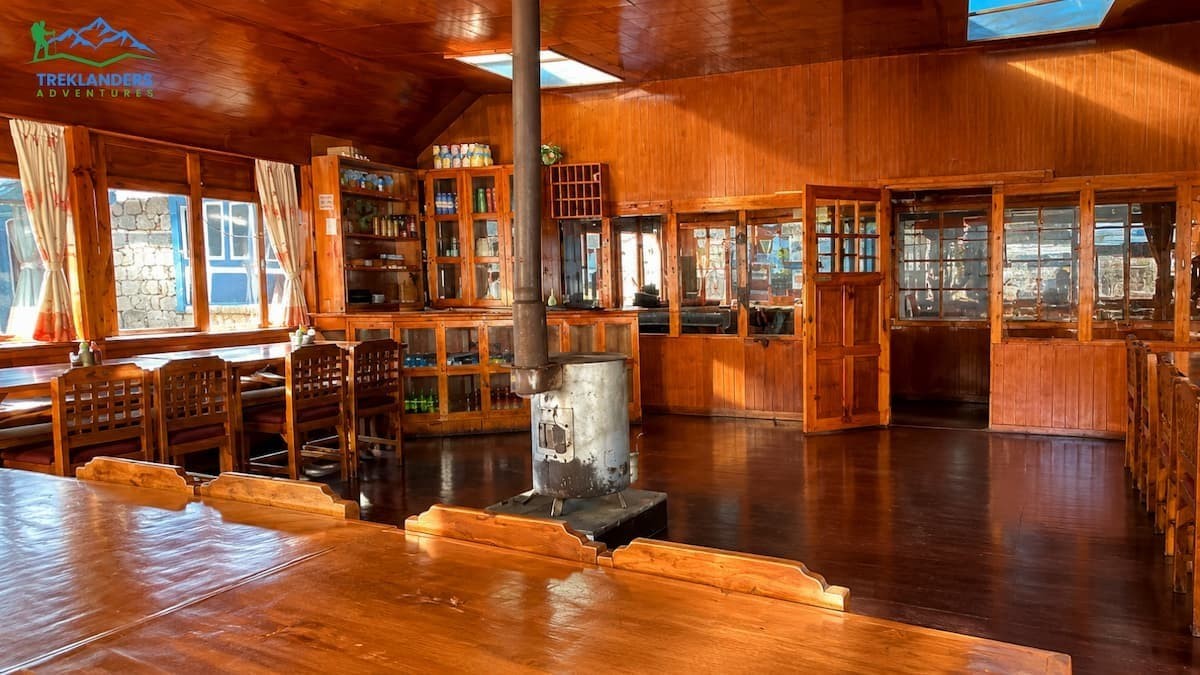
Meals follow the same pattern on all five treks. Breakfast offers porridge, eggs, pancakes and Tibetan bread. Lunch and dinner offer dal bhat, noodle soup, fried rice and momo. Dal bhat is the best winter order because you can ask for refills, and the rice and lentils give you energy for long days. Tea, ginger lemon honey and hot chocolate are available at every stop. Drink them often, because cold air hides how much water you lose.
Showers become a luxury in winter. Most lodges charge extra for hot water, and it may not run at all in the coldest weeks. Wet wipes and a quick-dry towel keep you clean without the shower.
Layers matter more than any single item. Wear a moisture-wicking base layer, a fleece or light down mid layer, and a windproof and waterproof shell. Add a heavy down jacket for any walk that reaches 4,000 m. Pack a warm hat, a buff, insulated gloves and a thin pair of liner gloves. Sunglasses rated for high altitude matter in winter because snow increases glare.
Boots need ankle support and must be broken in before you arrive. Wool socks, a spare pair and sock liners help prevent blisters and cold feet. Camp shoes or sandals let your boots dry in the lodge. Trekking poles protect your knees on long descents, and they help most on the Pikey Peak and Mardi Himal days.
Your sleeping bag is the most important winter purchase. Use these ratings from the trip pages as a guide: minus 10 to minus 20 degrees for Everest, minus 5 to minus 10 for Mardi Himal, minus 10 for Helambu and 0 to minus 5 for Poon Hill. You can rent a bag in Kathmandu or Pokhara if you do not own one.
Carry two one-liter bottles and a thermal flask. Lodges sell boiled water, and a hot bottle in your sleeping bag keeps your feet warm at night. Add water purification tablets, a headlamp with spare batteries, a power bank and a small first aid kit. Sunscreen and lip balm stay on your list because the sun is strong at altitude even when the air is cold.
The 12-Day Everest Base Camp Trek page includes a full packing list that applies to every route in this guide.
Winter light stays low and golden for much of the day, and the dry air keeps the peaks sharp. Each trek has a few places where the camera earns its weight.
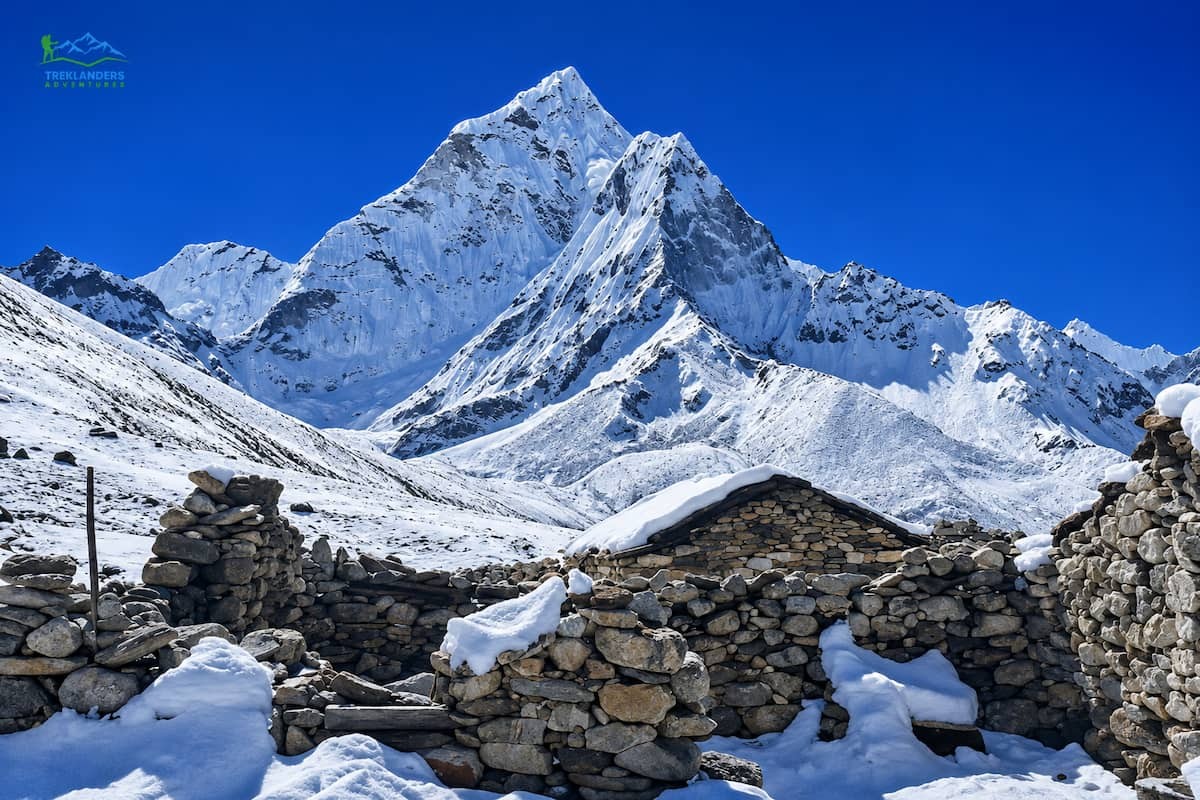
Poon Hill at sunrise gives you Dhaulagiri, Annapurna and Machhapuchare in one frame. Mardi Viewpoint at first light puts Machhapuchare directly above you. The Pikey Peak summit shows Everest, Makalu and Kanchenjunga along one horizon. Chisapani at sunset catches the Langtang and Ganesh ranges, and the courtyard at Tengboche frames Ama Dablam. On the Everest trail, Kala Patthar at dawn is the single best frame of the walk. In Helambu, the carved doors and prayer flags of Tarke Gyang suit close-up work.
Keep your camera battery in an inner pocket until you need it, and carry a spare. Cold shortens battery life quickly. Wipe the lens before each shot, since breath and mist leave marks. Browse the Treklanders photo gallery for more ideas on framing before you go.
Altitude affects different people differently. Walk slowly, drink plenty of water and sleep well. Headache, nausea, dizziness and tiredness are early signs of altitude sickness. Tell your guide at once, and do not climb higher if symptoms get worse. Descend if they continue. Diamox should be used only if your doctor prescribes it.
Insurance is required for the higher routes. Your policy should cover trekking to at least 6,000 m for Everest, to about 4,500 m for Mardi Himal and Pikey Peak, and to about 4,000 m for Helambu, plus emergency helicopter evacuation. Carry a copy of the policy and share it with your guide before you start.
Winter adds a few habits. Start walking early to use the warm hours. Eat hot meals and drink hot drinks often. Change out of sweaty layers as soon as you stop, because wet clothing cools you fast. Keep your phone and batteries inside your jacket. Ask your guide to check trail conditions and lodge status each evening.
A licensed guide makes every route in this guide safer. Guides carry first aid kits, read the weather, and book rooms when lodges fill up. Treklanders works with government-licensed guides and one porter for every two trekkers, so you carry only a daypack. Before you book, you can read the reviews from trekkers who completed these routes and browse more advice on the Treklanders blog.
Pick one of the five routes, choose your month, and tell the team about your fitness and gear. The Plan My Trip form lets you adjust an itinerary, and the contact page gives you the email, phone and WhatsApp details. You can also read about the company on the about page, then compare the full list on the trekking in Nepal page and the Everest region page, or look at the Langtang region and Manaslu region for the next season.
Winter treks reward careful planning with quieter trails and clear skies. Start with the route that matches your experience, and book a date early enough to leave room for weather.
Is Kala Patthar worth the climb? Discover stunning Everest sunrise views, altitude challenges, and trekking tips.
Explore four must-see experiences at Tengboche Monastery on the Everest Base Camp Trek.
Explore the 5 best beginner-friendly treks in Nepal for December, with stunning Himalayan views and essential winter trekking tips.



