
12-Day Everest Base Camp Trek: The Complete Guide to Reaching the Foot of Everest
9 Nov 2026
Explore the 12-Day Everest Base Camp Trek itinerary, difficulty, altitude, acclimatization, best seasons, permits, and essential trekking tips.

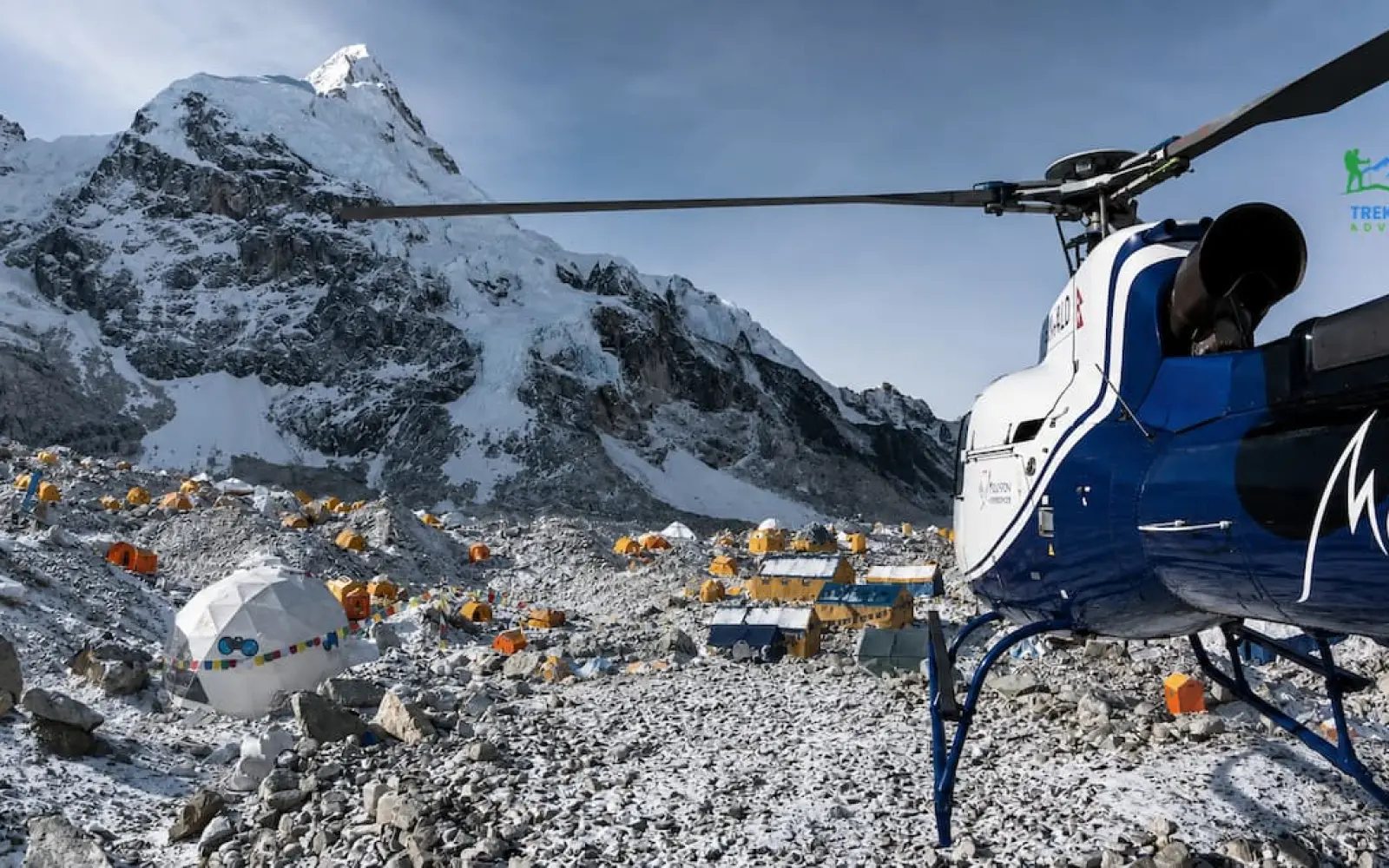
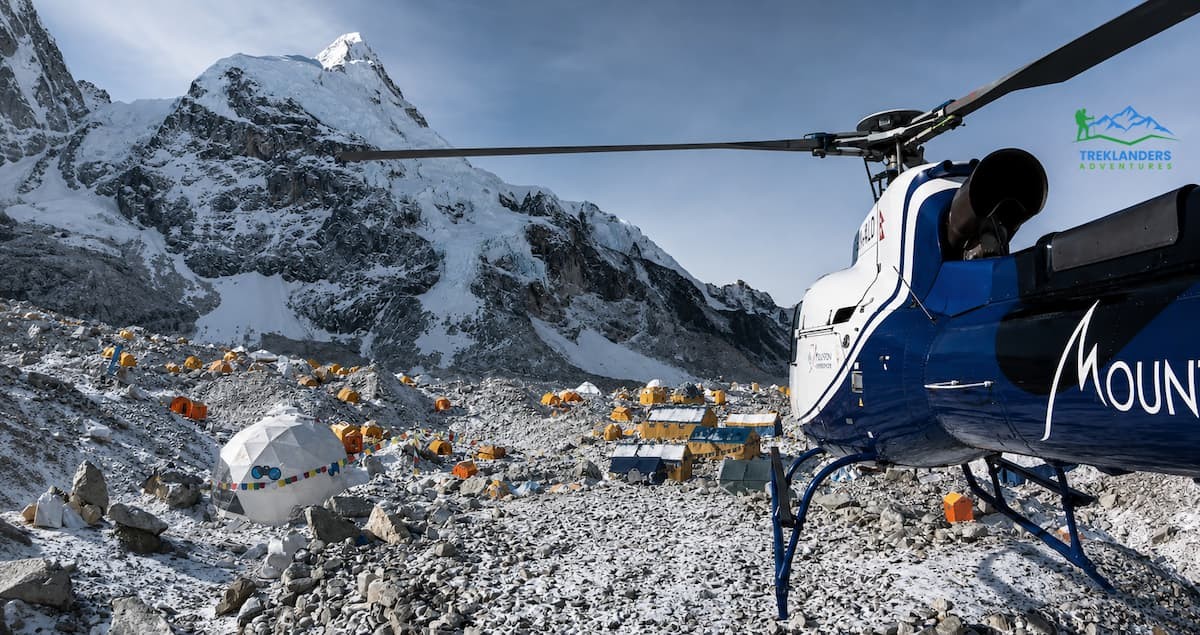
EBC trek training starts at home, months before you land in Kathmandu. The 12-Day Everest Base Camp Trek takes you from Lukla to Everest Base Camp and Kala Patthar in 12 days. You walk four to six hours on every trekking day. You sleep above 4,000 meters for four nights. You climb Kala Patthar to 5,643 meters before sunrise. Your legs, lungs and feet need to be ready for that load before you board the flight to Lukla.
This guide shows you how to prepare for the Everest Base Camp trek in a way that fits the 12-day schedule. It covers a 12-week training plan, practice hikes, strength work, gear, altitude habits, permits and the full trail day by day. It also links to related Treklanders guides, so you can go deeper on any topic. Read the Everest Base Camp trek guide for first-time trekkers next if this is your first Himalayan trek.
The 12-day itinerary keeps the two rest days that matter. You spend two nights in Namche Bazaar and two nights in Dingboche. You still reach Everest Base Camp at 5,364 meters and Kala Patthar at 5,643 meters. What the plan removes is slack. A trekker who arrives under-trained has no spare days to recover, so the fitness you build at home decides how much of the route you enjoy.
Other schedules give you more room. The 14-Day Everest Base Camp Trek adds days to the route, and the standard Everest Base Camp Trek adds more. The 9-Day Everest Base Camp Trekking with Helicopter Return and the Everest Base Camp Trek and Returning via Heli swap the walk down for a flight. The climb up stays the same on all of them, so the training in this article applies to each one.
Treklanders grades the 12-day route as moderate to challenging. You need no ropes, crampons or climbing skills. Altitude is the main difficulty, not technical terrain. The Everest Base Camp trek guide covering altitude, distance and permits gives the numbers, and the complete guide to the 12-day trek explains the route. If you want to compare the effort with other treks, the Nepal treks ranked by difficulty guide shows where Everest Base Camp sits.
Most trekkers between 12 and 65 years old, with reasonable fitness and a few months of preparation, complete this trek. That range is wide, and your training decides where in it you finish.
Five things decide how you feel on the trail: aerobic fitness, leg strength, core stability, load tolerance and a calm mind. Train all five.
Aerobic fitness comes first. Thin air at 4,900 meters makes every step harder, and a strong aerobic base lowers your breathing effort at any altitude. Hill walking, stair climbing and cycling build this base.
Leg strength protects your knees on the long stone staircases above and below Namche Bazaar. Squats, lunges and step-ups do the work. You use the same muscles on the descent from Kala Patthar to Pangboche on Day 9, which is the longest descent of the trek.
Core stability keeps your posture upright under a daypack and reduces back fatigue on six-hour days. Planks, side planks and dead bugs take 15 minutes.
Load tolerance means walking with the daypack you will carry. A porter carries your main bag, and each group has one porter for every two trekkers. You carry the daypack only. Even so, water, a jacket, a camera and snacks add weight, and your shoulders need to know it.
A calm mind matters because the trek has slow days, cold mornings and long stretches of rocky moraine. Mental training is the habit of finishing sessions when you do not feel like it.
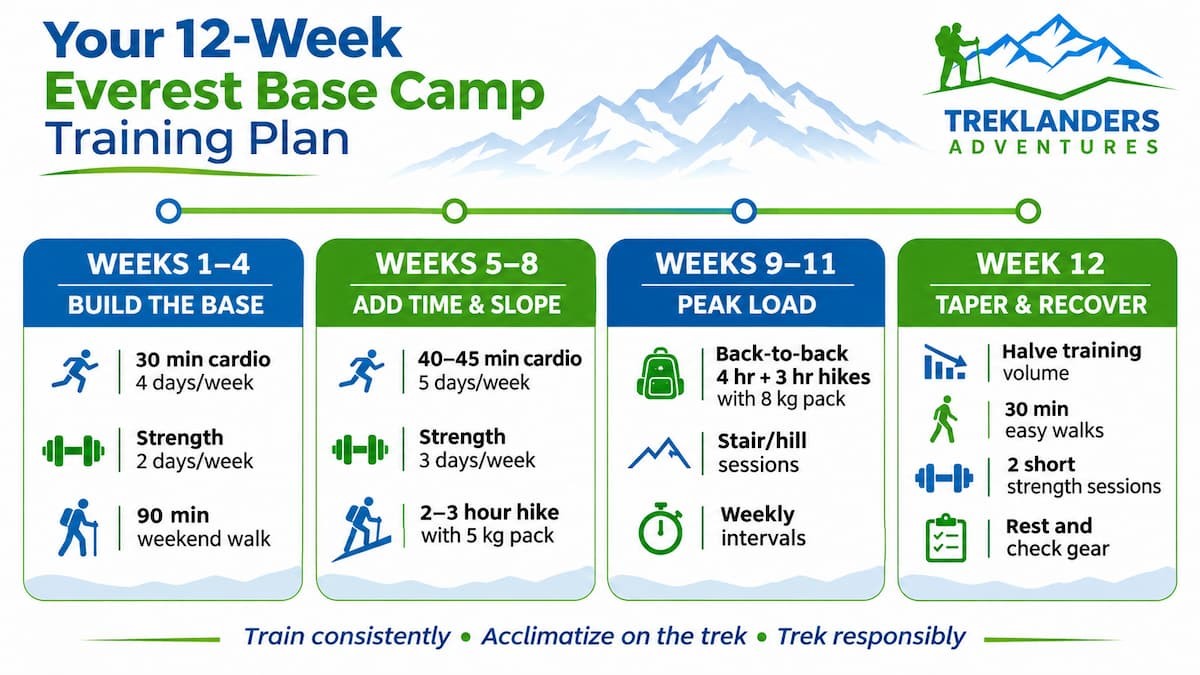
Start 12 weeks before your departure date. Eight weeks works for trekkers who already exercise four times a week, but 12 gives you room for a missed week. The plan below has four phases. Adjust the volume to your fitness, and see your doctor first if you have a heart, lung or joint condition.
Walk or cycle for 30 minutes on four days each week. Add two strength sessions with squats, lunges, step-ups and calf raises. Do three sets of 12 repetitions of each. On the weekend, walk for 90 minutes on a trail with some slope. Sleep at least seven hours a night. The goal in this phase is consistency, not intensity.
Raise cardio sessions to 40 to 45 minutes on five days a week. Choose hills or stairs for at least three of them. Increase strength work to three sessions a week and add weight, such as a loaded backpack or dumbbells. Add core work for 15 minutes, three or four times a week. On weekends, hike for two to three hours with a daypack loaded to about 5 kg.
This phase matches the demands of the trail. Hike on back-to-back days: four hours on Saturday and three on Sunday, with a daypack of 8 kg. Climb stairs or hills with the same pack once during the week. Keep one interval session each week, using hard efforts of one minute on a steep slope with two minutes of easy walking between them. The intervals train your breathing at high effort. They do not copy altitude, so they cannot replace the acclimatization days on the trail.
A typical peak-phase week looks like this:
Cut training volume by about half. Walk for 30 minutes on most days and keep two short strength sessions. Check your boots, poles and packing list. Sleep seven to nine hours. Arrive in Kathmandu rested instead of sore.
Practice hikes predict how you will handle the trail better than any gym session. Do four to six of them with the daypack you plan to carry, and include steep climbs and long descents.
If you live near hills, use them. Walk the same loop each week and add time or weight. If you live in a flat city, use stairs in a tall building, a stair-climbing machine, or a treadmill set to a steep incline.
If you reach Nepal a few days early, use Kathmandu as a training ground. The Nagarkot Day Hike gives you a ridge walk with climbing. The Nagarjun Jamacho Day Hiking route takes you through forest on a steady incline. The Chisapani-Nagarkot to Dhulikhel Hiking route spreads the effort over several days, and the 4-Day Trekking Adventure near Kathmandu gives you a short multi-day trek with a daypack. Browse the one day hiking options for more training days around the valley.
For a bigger warm-up, consider a shorter high-altitude trek before Everest. The 6 Day Pikey Peak Trek climbs above 4,000 meters in the Solu Khumbu region, and the 7-Day Annapurna Base Camp Trek from Pokhara reaches a similar height. If you have fewer days, the 5-Day Mardi Himal Trek from Pokhara and the 4-Day Ghorepani Poonhill Trek from Pokhara in the Annapurna region give you shorter practice treks. Any of them shows you how your body reacts to thin air. Keep the days after such a trek light, so you start Everest fresh.
Aim for 30 to 45 minutes of steady aerobic work on four or five days each week. Keep the effort at a pace where you can speak in short sentences. This is the intensity at which you will walk on the trail.
Pick activities that match the trek. Uphill walking is best because the trail climbs more than it runs flat. Cycling and rowing build the same engine with less impact on your joints. Running works if your knees tolerate it, but you do not need to add running for the trek.
Track progress by heart rate or by time on the same hill. When the same climb feels easier after four weeks, extend it. Your guide sets the daily pace on the trail, and your training should teach your body to hold a slow pace for many hours.
Breathing practice helps too. Breathe in through your nose and out through your mouth during climbs, and link your breath to your steps. A habit built at home is easier to keep at altitude.
Do leg strength training two or three times a week. Squats, lunges, step-ups and calf raises cover the muscles you use on the trail. Add weight gradually. Work up to step-ups onto a bench while carrying your daypack.
Downhill strength gets less attention than uphill power, yet descents put heavy load on your knees. Slow, controlled lunges and step-downs teach your quadriceps to absorb impact. Spend time on them in weeks five to eleven.
Core work three or four times a week keeps you upright. Planks, side planks and dead bugs for 15 minutes cover it. Strong hips and a stable trunk make trekking poles more effective, and poles reduce the strain on your knees on steep stone steps.
A broken-in pair of waterproof trekking boots with ankle support matters more than almost any other piece of gear. Wear yours on every practice hike for at least a month. Wear the socks you plan to use, and carry blister tape. Any hot spot you feel in training will grow on the trail.
Train with the daypack you will carry. A pack of 30 to 35 liters suits most trekkers on the 12-day route. Load it with the real items: water, a warm layer, a rain shell, sunscreen, snacks and a camera. Adjust the hip belt so the weight sits on your hips instead of your shoulders.
If you plan to use poles, train with them. Poles help on the staircases to Namche and on the descent from Kala Patthar. Practice setting the length shorter for climbing and longer for descending.
Training breaks your body down, and sleep and food rebuild it. Sleep seven to nine hours each night. Eat meals that combine protein and carbohydrate, and drink water through the day. Take one full rest day each week, and stretch after long hikes.
Practice the food you will eat on the trail. Lodges serve porridge, eggs, pancakes and Tibetan bread for breakfast, and dal bhat, noodle soups, fried rice and momo for lunch and dinner. Many lodges add pizza and pasta, though choices narrow as you climb. Try dal bhat and noodle soup before long hikes at home, so your stomach knows them. The 12-day itinerary page lists the meals planned for each day.
Listen to pain. A sore muscle improves with a rest day. A sharp pain in a joint that lasts more than a few days needs a physiotherapist, not more miles. The 10 essential tips for trekking in Nepal blog adds more habits that keep you healthy on the trail.
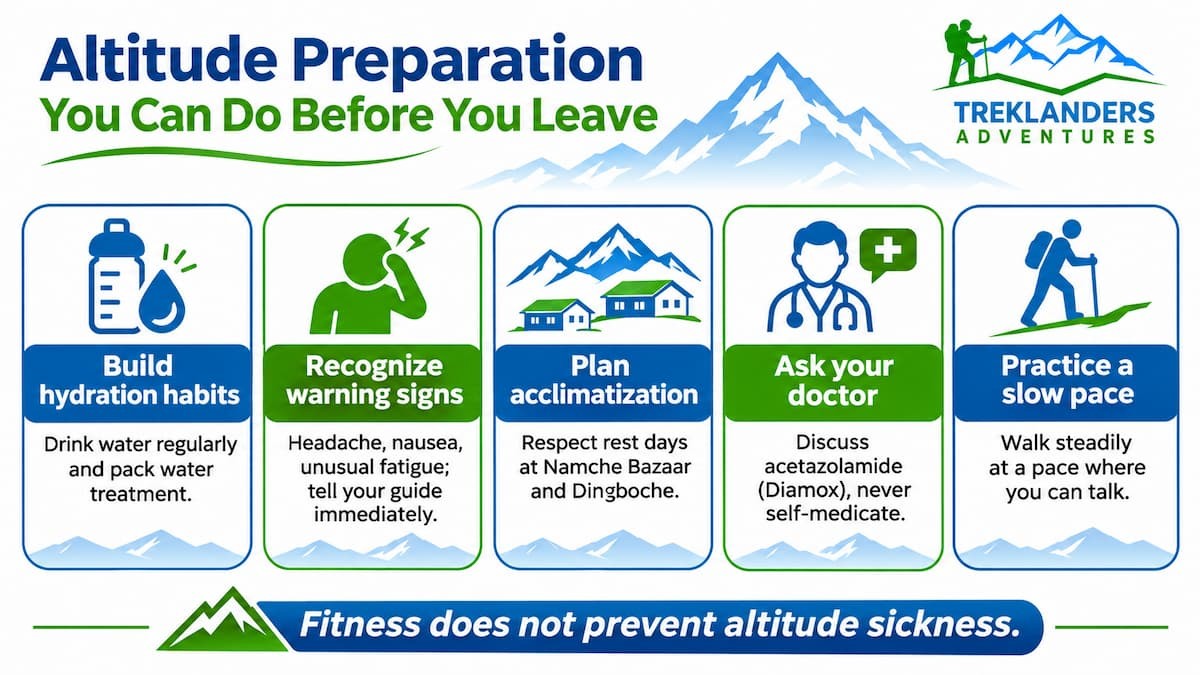
You cannot train altitude out of your system. Altitude sickness can affect anyone, including very fit trekkers. What you can do is learn the habits that lower your risk.
Hydrate early. Drink water through the day in training, so drinking at altitude is routine. Bring a reusable bottle and water purification tablets or a filter, and refill with boiled or treated water at your lodge each morning. The zero-waste trekking guide explains how to cut plastic on the trail.
Learn the warning signs: headache, nausea and unusual fatigue. Tell your guide at once if you notice any of them. Your guide monitors your condition throughout the trek, and the rest days at Namche Bazaar and Dingboche are built into the 12-day plan to give your body time to adjust. The Dingboche acclimatization guide explains why the second rest day matters, and the Lobuche village guide describes the last major stop before base camp.
Ask your doctor about Diamox (acetazolamide) before you travel. Take it only if your doctor advises it. Do not start any medicine on your own.
Walk slowly. A steady pace that keeps you able to talk is the best habit you can practice. Trekkers who feel they are walking too slowly on the first three days are usually pacing correctly.
This section follows the Treklanders itinerary and ties each day back to your training. Use it as a checklist of what your preparation must cover. You can check dates and details on the 12-Day Everest Base Camp Trek page.
You leave Kathmandu on a 35-minute flight to Lukla at 2,860 meters. The plane passes a line of Himalayan peaks, and you may see Everest, Lhotse and Makalu from the window. After you collect your bags and rest briefly, you follow your guide through Lukla town and over small ups and downs through villages to Phakding at 2,610 meters. The walk takes about four hours.
This day is easy. Use it to set your pace. Walk slower than feels necessary, and notice how your pack sits.
The trail follows the Dudh Koshi River, crosses bridges and reaches Monjo, where you enter Sagarmatha National Park. Lunch is at Jorsalle. After lunch, the path follows the river bank through rhododendron and pine, crosses a high bridge and then climbs for a few hours to Namche Bazaar at 3,440 meters. The day takes about six hours, and the final climb is the first real test of your training.
If you did your stair sessions with a loaded pack, this climb feels controlled. If you did not, expect to stop often. The park has protected this part of the Khumbu since 1976, and UNESCO listed it as a World Heritage Site in 1979. The Seven UNESCO Heritage Sites Day Tour in Kathmandu and the guide to UNESCO World Heritage Sites in Nepal cover the cultural sites around Kathmandu if you have time before or after the trek.
You stay in Namche and take a short hike for acclimatization. The usual choice is the walk to the Everest View Hotel, a few hours above town, where you see Everest, Lhotse and Ama Dablam. You can also visit the Sherwi Khangba museum, which covers Khumbu culture, flora, fauna and mountaineering history. Namche also has shops, bakeries and cafes for the afternoon.
A rest day does not mean lying in bed. Light movement helps you adjust, and the hike gives your legs a chance to feel the altitude without a heavy load. The town takes its name from the Saturday market that has run here for generations.
The trail leaves Namche on a gradual path with views of Everest and other snow peaks, then drops to Phunki Tenga for lunch among rhododendron and pine. The afternoon is a slow climb of a few hours to Tengboche at 3,867 meters. The walk takes about five hours.
You visit the monastery, the largest Buddhist monastery in the Khumbu. Everest, Lhotse and Ama Dablam are visible from its courtyard on a clear day. The current building dates from 1993, after the original 1916 structure burned. The Sherpa culture guide explains how to behave at monasteries and mani walls, and why you pass them on the left.
The drop to Phunki Tenga followed by a long climb is a pattern you repeat several times on this trek. Hills that go down and then up make the best training for it.
You walk down to cross a bridge and climb to Pangboche, the last permanent settlement on the route. After Pangboche, a gentle climb leads to Somare for lunch, with close views of Ama Dablam. The afternoon is an open, exposed trail that drops to a stream and climbs for an hour into the Imja Valley, where Dingboche sits at 4,410 meters. The day takes about five hours.
Wind and cold become real here. Practice your layering in training by hiking in different conditions and adding or removing layers before you feel too hot or too cold.
This is your second acclimatization day. You hike to the Nakarjung ridge for views of Ama Dablam, Island Peak and, to the east, Makalu. The rest of the day is free. Sleep, drink and eat well.
Peak climbing packages such as the Island Peak Trek and Climb and the Mera Peak Trek and Climb suit trekkers who want to follow this trek with a climb later. The Everest Base Camp Trek with Lobuche East Peak Climbing Expedition combines the trek and a climb in one plan.
A short steep climb leads above the Imja Valley, followed by a gradual climb to Thugla, which sits midway between the Dingboche and Pheriche routes. You stop for lunch there. In the afternoon, a steep climb of under an hour brings you to a high ridge, and gradual uphill slows your pace as you reach Lobuche at 4,928 meters. The walk takes about five hours.
At this altitude every step takes more effort, and appetite drops. Eat even when you do not feel hungry. Your fitness base gives you a margin, and your pace protects it.
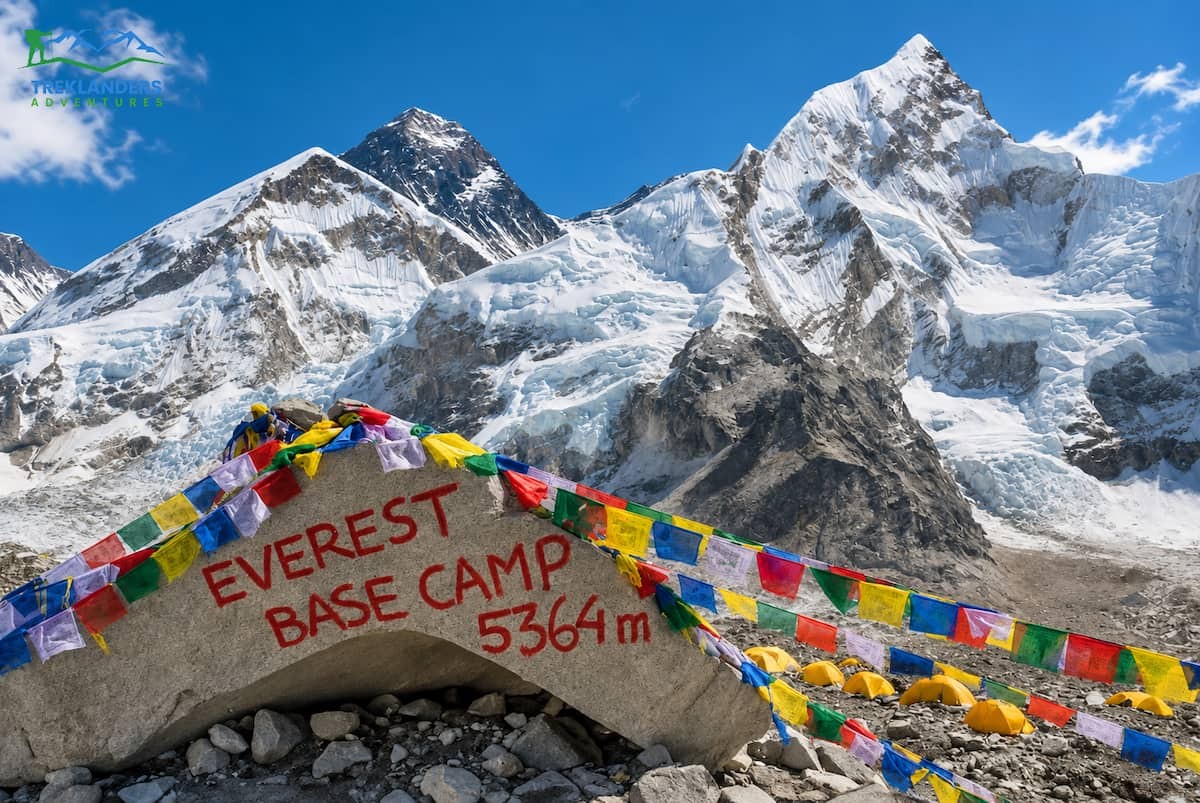
You start early with a packed lunch. The trail leaves Lobuche on a pleasant path, climbs above the Khumbu Glacier and drops to Gorakshep at 5,180 meters, a small settlement with a few lodges at the foot of Pumori and Kala Patthar. After a short stop you continue to Everest Base Camp at 5,364 meters along a winding path between rocks and ice. You stand on the Khumbu Glacier, with Lhotse, Nuptse and Pumori around you and the Khumbu Icefall ahead. You return to Gorakshep for the night. The day takes about six hours.
This is the hardest day for your lungs, and the 12 weeks of training pay off here. The Chasing Everest guide to the 12-day base camp trek gives another account of what to expect.
You leave in the cold dark for the steep climb to Kala Patthar at 5,643 meters. The name means black rock in Nepali. From base camp, Nuptse blocks the view of Everest's summit, so this ridge gives you the closest clear view on the trek, with Pumori in front of you. Many trekkers aim to arrive for the first light on Everest, Nuptse and Pumori.
After the summit you return to Gorakshep for breakfast, then walk down to Lobuche and Thugla, take the alternate route to Pheriche for lunch, and continue over a ridge and a long descent to Pangboche at 3,900 meters. The itinerary lists six hours for the day.
This day asks the most from your legs. You climb steeply above 5,000 meters in the dark, then descend roughly 1,700 meters from the summit to your lodge. Your downhill training from weeks five to eleven earns its place here.
You walk down to a bridge, climb to Tengboche and descend through forest to Phunki Tenga before the final climb to Namche Bazaar. The trail returns to trees, and the thicker air makes the day feel easier than the numbers suggest. The day takes about six hours.
You follow the Dudh Koshi valley down through Jorsalle and Monjo to Phakding, where you stop for lunch, then make the last climb to Lukla by late afternoon. The walk takes about six hours. Tired legs and loose stones make this a day for trekking poles and careful footing. Spend the last night in Lukla with your guide and porter team.
A morning transfer takes you to Tenzing and Hillary Airport for the flight to Kathmandu. You return to your hotel, and the rest of the day is yours. Build a buffer day into your onward travel, because weather can delay Lukla flights. The Kathmandu Full Day Sightseeing Tour and the Everest Mountain Flight from Kathmandu fill a spare day well.
Prepare your documents early, the same way you prepare your body. You need two permits for this route, the Sagarmatha National Park entry permit and the Khumbu Pasang Lhamu Rural Municipality entry permit. Both are checked at Monjo. Treklanders arranges both permits before the trek for the 12-day package, so you carry your passport and a few passport-size photos.
Flights between Kathmandu and Lukla depend on weather and air traffic. During the spring and autumn peaks, flights may be rerouted through Manthali Airport in Ramechhap. In that case you drive for three to four hours, often early in the morning, to catch the flight. Plan a spare day, and do not book an international flight home for the day you land back in Kathmandu.
Travel insurance must cover high-altitude trekking up to at least 6,000 meters and emergency helicopter evacuation. Many standard policies exclude trekking above a set altitude, so read the fine print. Carry a printed or digital copy of your policy with the emergency number, and give your guide a copy before you start walking. If flight cancellations require a helicopter transfer between Lukla and Kathmandu, that transfer is arranged separately.
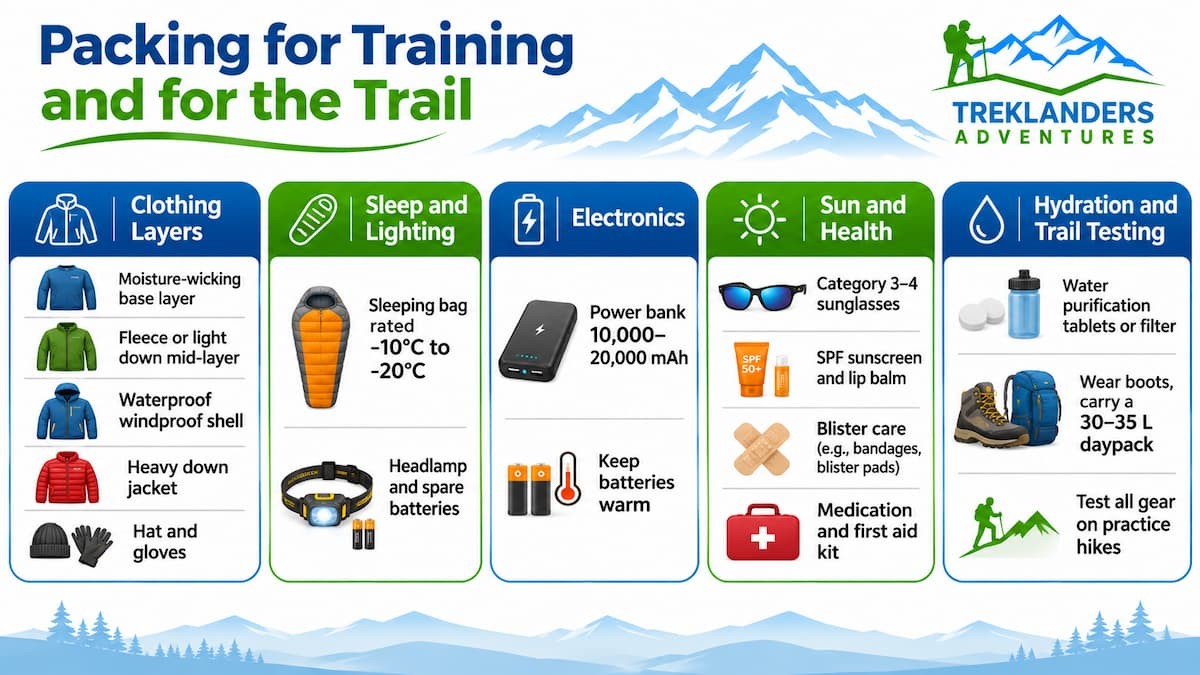
Use your practice hikes as a gear test. Layers work better than a few heavy items. Pack a moisture-wicking base layer, a fleece or light down mid layer, and a windproof, waterproof outer shell. Add a warm hat, gloves and a heavy down jacket for the days above Lobuche, where nights fall well below freezing and early climbs start in the dark.
Your sleeping bag should be rated for -10°C to -20°C. Tea houses supply blankets, but nights above 4,000 meters are cold. Bring a headlamp with spare batteries, because you climb Kala Patthar before dawn. Add a power bank of 10,000 to 20,000 mAh, since lodge power comes from solar panels and micro-hydro systems and cold drains batteries quickly. Keep batteries in an inner pocket at night.
Other items include sunglasses rated category 3 or 4, sunscreen and lip balm with SPF, blister treatment, water purification tablets or a filter, personal medication and a basic first aid kit. Your guide also carries a first aid kit for the group. The packing list on the trek page sorts every item by category.
The 10 essential tips for trekking in Nepal blog and the things to consider while trekking in Nepal guide cover more on packing and trail habits.
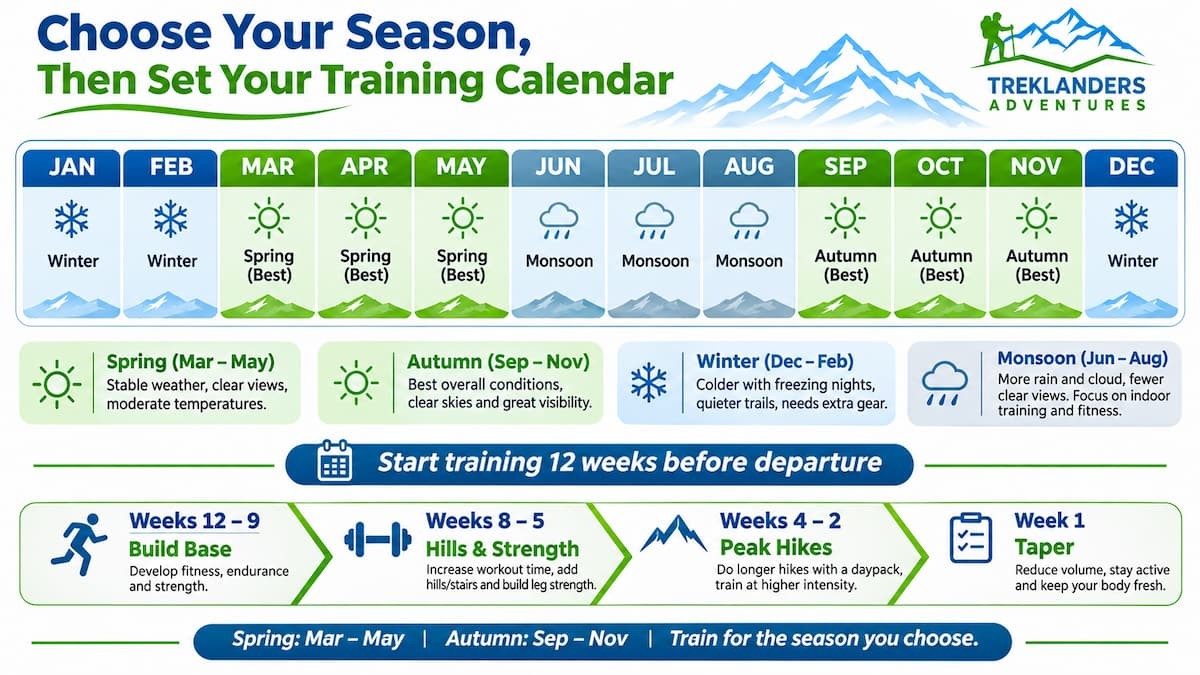
Work backward from your departure date. Spring (March to May) and autumn (September to November) give the most stable weather. In spring the rhododendron forests bloom between Lukla and Namche. Autumn brings clear air after the monsoon and the festivals of Dashain and Tihar. The best trekking seasons in Nepal month-by-month guide and the benefits of trekking in Nepal during autumn explain the differences, and the Dashain 2026 guide for trekkers describes how the festival affects travel. For an early autumn departure, read the 10 best treks in Nepal for September too.
Winter (December to February) brings quiet trails, clear days and freezing nights, and some lodges above Dingboche reduce services or close in the coldest weeks. Check with your guide before you book a winter trip. The monsoon (June to August) brings heavy rain on the lower trail, leeches in forest sections and cloud-covered views. Few trekkers go then, though the trail and lodges stay open. The monsoon trekking guide lists rain-shadow routes for those months.
Count back 12 weeks from your start date and mark week one on your calendar. If your training weeks fall in the monsoon, move cardio indoors and keep hills and stairs for sessions you can do safely. A treadmill on a steep incline and a stair machine both work well.
Start on time. A trekker who begins three weeks before departure has little time to build the base this route asks for, so mark week one 12 weeks out.
Train on slopes. Flat walking builds fitness, but the Khumbu trail climbs and drops all day. Find hills, stairs or an incline.
Break in your boots early. New boots invite blisters by Day 3. Wear yours for a month of practice hikes.
Respect the rest days. You may feel strong on Day 3 in Namche, and the 12-day schedule still asks you to rest. Skipping an acclimatization day removes the protection the plan gives you. The first-time trekker guide repeats this point, and the Everest Base Camp trek guide explains the altitude numbers behind it.
Days 7 to 9 ask for the most patience. You walk slowly in thin air, you eat when you are not hungry, and you sleep lightly at 5,180 metres in Gorakshep. Practice discomfort in training. Do one session a week in poor weather. Finish long hikes when you are tired. Learn what your body feels like at hour four.
Break each day into segments, as the itinerary does: breakfast, morning walk, lunch stop, afternoon walk, lodge. Think about the next lunch stop instead of the summit. Keep a short count or phrase for the steepest sections.
Learn a few words of the local language. Namaste works anywhere on the trail, and lodge owners speak enough English for menus and bookings. Sherpa is both an ethnic group and a language, and Nepali is the common language across the Khumbu. Small efforts improve your contact with the people you meet. The 10 questions with a Treklanders guide blog shows how a guide sees trekkers prepare.
Your training plan also prepares you for longer Everest region treks. The Everest Base Camp via Cho La Pass from Gokyo Valley, the Gokyo Valley Trekking, the 11 Days Gokyo Valley Trekking and the Everest Three Passes Trekking demand more days and higher passes. Each asks for the base you build here, plus extra weeks of hill work. The Gokyo Lakes vs Everest Base Camp comparison walks through the differences in difficulty, views and route.
For a gentler option, the Everest Panorama Trek and the 8-Day Everest Panorama Trek reach Tengboche and suit moderate walkers. For a version of the base camp trek with upgraded lodges, see the Everest Base Camp Luxury Trek and read the benefits of a luxury Everest Base Camp trek. For a longer walk-in, the Everest Base Camp Trekking from Jiri adds days through hill villages. Trekkers who prefer a road route to a base camp can look at the 13 Day Lhasa Tour from Kathmandu via Everest Base Camp, which approaches from the Tibet side.
If crowds worry you, the Manaslu Circuit vs Everest Base Camp comparison and the guide to why the Manaslu Circuit is quieter than Everest Base Camp help you decide, and the 13-Day Manaslu Circuit Trekking package follows that route. The top 7 less crowded treks in Nepal lists others. If you are weighing a flight over the mountain, the Everest Heli Tour vs trekking to base camp guide and the Everest Heli Tour page show the trade-offs.
Solo trekkers can read the safety guide for solo female trekkers before they book. If you are deciding between a private or group departure, the private trek vs group trek guide compares flexibility and pace. Families can start with the top 10 family-friendly treks in Nepal list and use the training plan above at an easier volume.
Group size on the 12-day trek runs from one to 30. The itinerary stays the same for any size: the same route, the same two acclimatization days and the same safety-first pace. Train for the route, and the group size will not change what you need. Trekkers who want a custom plan can start with the Plan My Trip form, and those who want to compare routes can browse the Everest Region Trek page.
Treklanders operates the trek with government-licensed guides who know the Khumbu and carry a first aid kit. The guides have training in altitude health and emergency first aid. Each group has one porter for every two trekkers, and guides and porters receive fair wages, food, lodging and insurance for the whole trek. Your guide handles permits, lodges and daily pacing, so you can focus on walking.
You can meet the people behind the trek on the Treklanders team page and learn more about the company on the about us page. The Everest Region Blog collects every Everest guide in one place, and the full Treklanders blog covers other regions. If you want to compare other routes, browse the Everest region treks and the full list of trekking in Nepal packages. Climbers can look at peak climbing options for a later season.
When you are ready to plan, use Plan My Trip to adjust the 12-day itinerary to your dates, or book the 12-Day Everest Base Camp Trek directly. If you have a question before you decide, contact the Treklanders team and the travel experts will reply with the details you need.
Start your first training week now. Twelve weeks is enough time to build the base this trail asks for, and the 12-Day Everest Base Camp Trek will be waiting when you finish.
Explore the 12-Day Everest Base Camp Trek itinerary, difficulty, altitude, acclimatization, best seasons, permits, and essential trekking tips.
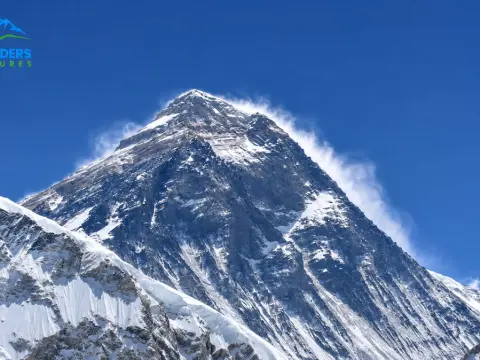
Explore our first-timer’s Everest Base Camp Trek guide covering the 16-day itinerary, difficulty, altitude, acclimatization, and essential tips.
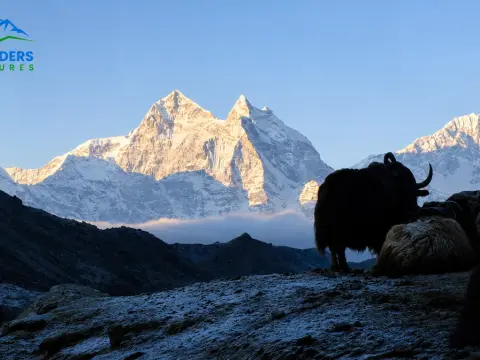
Explore the 12-day Everest Base Camp Trek itinerary, stunning Himalayan views, difficulty, acclimatization, best seasons, and essential trekking tips.



