
Everest Base Camp Trek: Complete Guide for First-Time Trekkers
14 Nov 2026
Explore our first-timer’s Everest Base Camp Trek guide covering the 16-day itinerary, difficulty, altitude, acclimatization, and essential tips.

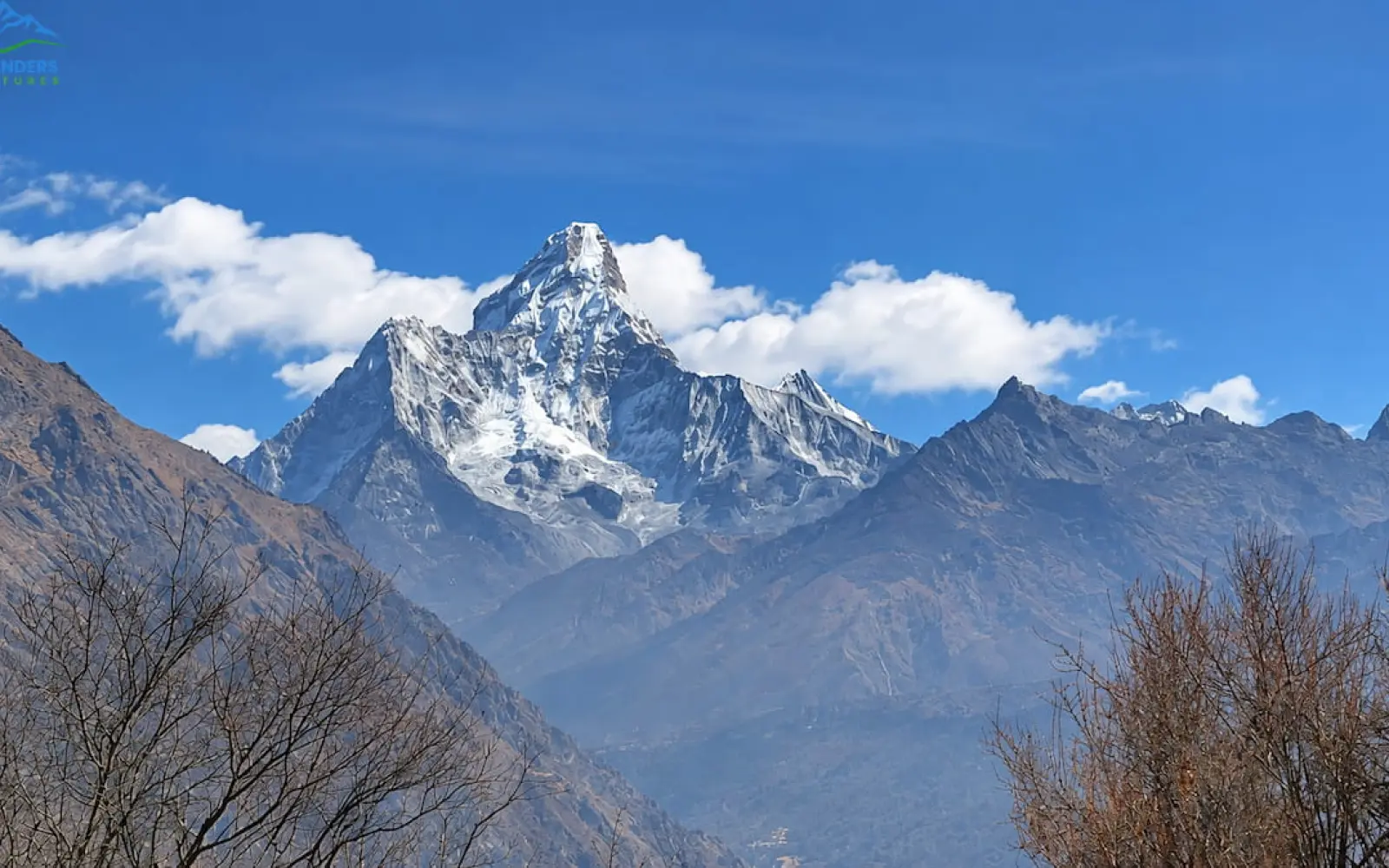
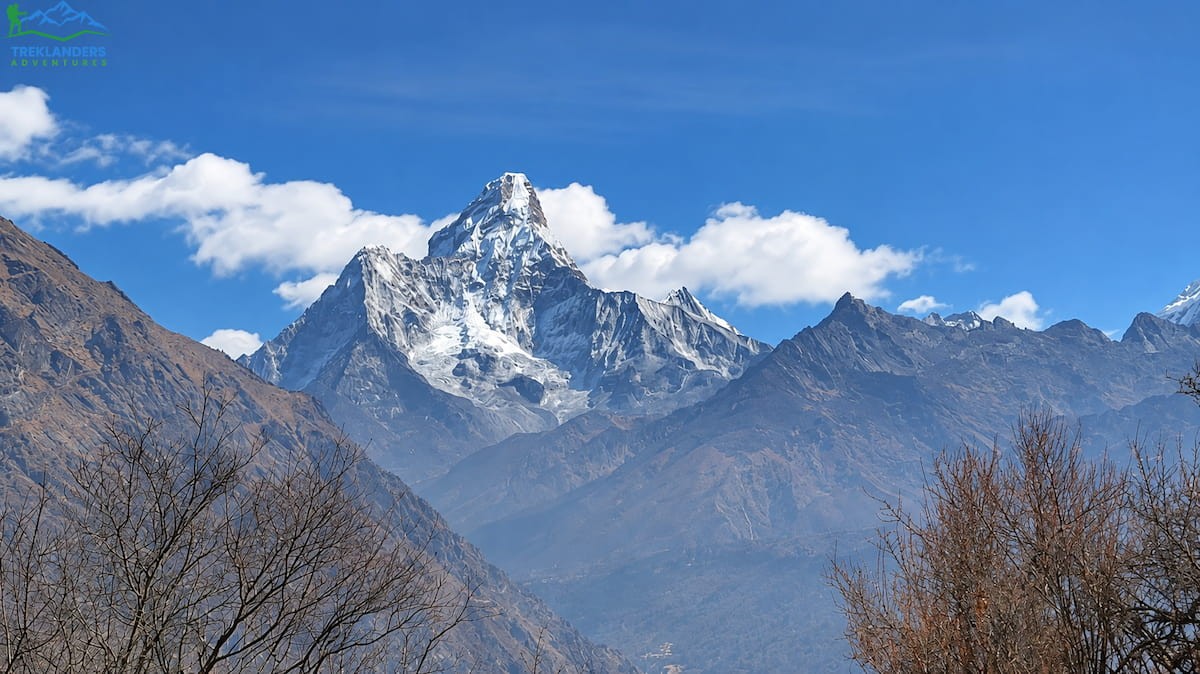
December is the first month of the Nepali winter, and it changes how trekking in Nepal feels. The monsoon haze is gone. The autumn crowds have left. The air is dry, and on most mornings the peaks stand clear from the first light. If you want a Nepal trek with open views and quiet trails, December gives you both, and it asks one thing in return: you prepare for the cold.
This guide covers trekking in Nepal in December from the ground up. You will find the weather by altitude, the treks that work best this month, and a full trail narrative of the 12-Day Everest Base Camp Trek, which has two acclimatization days built into the schedule. You will also get notes on Lukla flights, altitude, packing, training, lodges, permits, and the days you spend in Kathmandu before and after the trail.
Treklanders Adventures is a Kathmandu-based operator with licensed guides and one porter for every two trekkers. Every route mentioned below has its own page on the site, so you can check the details as you read.
Weather in December depends on altitude more than on the date. In Kathmandu the days run mild, around 18 to 20 degrees Celsius, and the nights fall close to 4 degrees. Pokhara sits lower and stays a few degrees warmer. Rain is rare across the country in December, so you walk on dry trails and wake to long, clear mornings.
Above 3,000 meters the picture changes. Namche Bazaar at 3,440 meters drops below freezing at night, and the temperature falls further as you climb. Lobuche at 4,928 meters and Gorak Shep at 5,180 meters record the coldest nights of the Everest trek, often minus 15 degrees Celsius or lower. Daytime in the sun feels pleasant, but the temperature drops the moment a cloud or a ridge shadow crosses the trail. Wind adds to the cold on exposed ground, especially near Dingboche and above Lobuche.
Snow falls in the high Himalaya in December, though the heaviest snowfall usually arrives in January and February. Light snow can cover the trail above Namche for a day or two, and your guide adjusts the schedule when it does. Daylight lasts about ten and a half hours, so you start early, reach your lodge by mid-afternoon, and spend the evening beside the dining room stove. In valleys such as Dingboche the sun leaves the lodge earlier than the clock suggests, because the surrounding peaks block the low winter sun.
Early December carries the stable weather of autumn with a little more cold. Late December, around Christmas and New Year, brings the lowest temperatures. If you plan your trip around the holidays, pack for the coldest case. Our complete guide for first-time Everest trekkers explains how the seasons compare on the same route.
December has clear advantages. Trails see far fewer trekkers than in October or April, so you find rooms without trouble and share the path with villagers, porters, and mule trains instead of large groups. Dry air gives sharp views. Ama Dablam, Lhotse, Nuptse, and Pumori show their full outlines in the morning, and in the Annapurna region the sunrise at Poon Hill lights Dhaulagiri and the Annapurna range without monsoon haze.
The month also fits travelers who have time off at year end. Many people use the Christmas and New Year break to walk to Everest Base Camp, and the quiet trail suits that plan.
The month has limits, and you should know them before you book. Short days reduce the walking window. Cold nights call for a warm sleeping bag and a proper down jacket. Some lodges at higher elevations reduce services or close in the coldest weeks, and passes such as Thorong La and Larkya La can close after heavy snow. Flights to Lukla can delay when cloud or wind builds. A good plan accepts these facts and keeps a buffer day at the end of the trip.
Choose treks that match the month. Low and mid-altitude routes keep you comfortable and give you the best chance to finish the itinerary. High passes belong in October or March. Our guide to the Manaslu Circuit in winter explains why Larkya La turns risky once snow settles, and the same logic applies to other high crossings. Check the forecast two days before departure, and ask your guide whether recent snow has changed the plan for the high camps. Adjust your gear list accordingly.
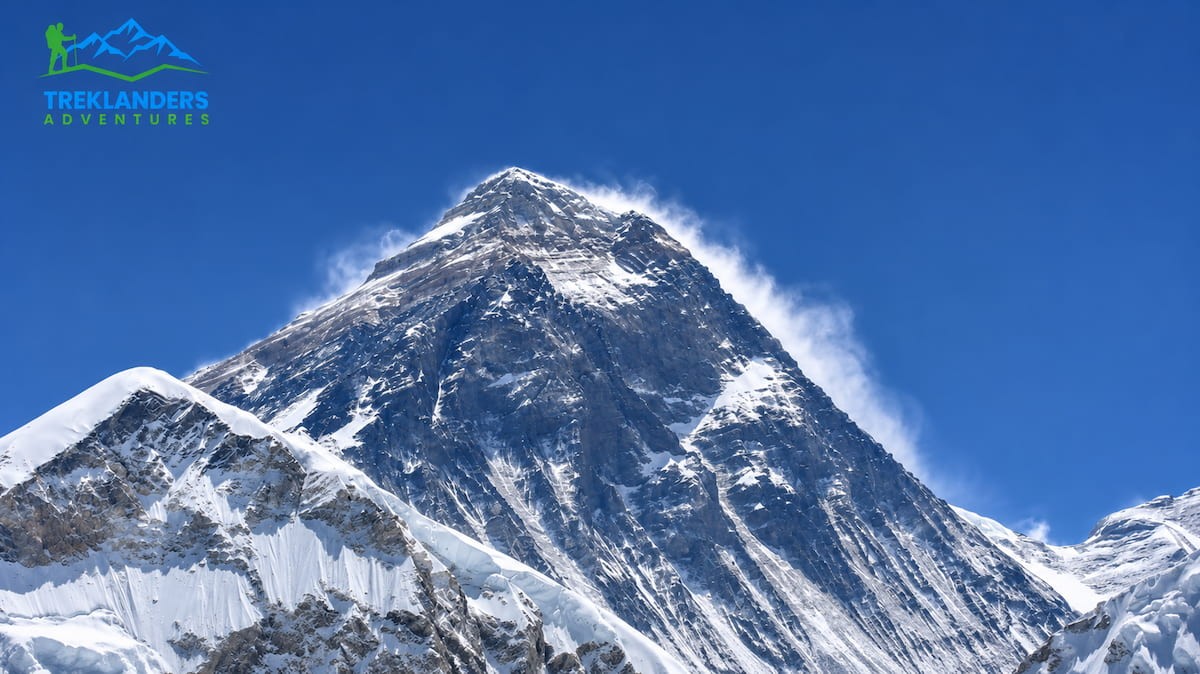
The Everest region works well in December if you respect the cold. The 12-Day Everest Base Camp Trek is the main route, and the next section walks through it day by day. If you want extra time for acclimatization and weather, the 14 Day Everest Base Camp Trek and the 16-day Everest Base Camp Trek give you more days between stops. Trekkers who want to skip the walk back down can pick the 9-Day Everest Base Camp Trekking with Helicopter Return or the Everest Base Camp Trek and Returning via Heli, where a helicopter lifts you from Gorak Shep after the climb to Kala Patthar. If you prefer better lodging in the cold months, the Everest Base Camp Luxury Trek suits December well.
A shorter option is the Everest Panorama Trek and its 8-Day version, which reach Namche Bazaar and the viewpoints above it without going to the highest camps. The 6 Day Pikey Peak Trek climbs a ridge in the lower Solu region where you see Everest, Makalu, and Kanchenjunga at sunrise, and the altitude stays moderate. If you want a slower approach, the Everest Base Camp Trekking from Jiri follows the old walking route through Sherpa and Rai villages and adds several days.
Skip the high passes in December. Routes such as the Everest Three Passes Trek and Everest Base Camp via Cho La Pass from Gokyo Valley cross glaciated ground where snow and ice change the risk. The Gokyo lakes freeze in winter, and the 11 Days Gokyo Valley Trekking can run with an experienced guide, but you must accept cold nights and some closed lodges. For details on the standard route, read our complete guide to the 12-Day Everest Base Camp Trek.
Poon Hill and the lower Annapurna routes give December trekkers warm midday walks and clear morning views. The 4-Day Ghorepani Poonhill Trek from Pokhara and the Ghorepani Poonhill Trek climb through rhododendron forest to Ghorepani, then to Poon Hill at 3,210 meters for sunrise over Dhaulagiri and the Annapurna range. Snow can settle near Ghorepani in December, which adds to the scenery and slows the stone steps. If you want to continue to the base camp, the 10-Day Ghorepani Poonhill with Annapurna Base Camp Trek links both goals.
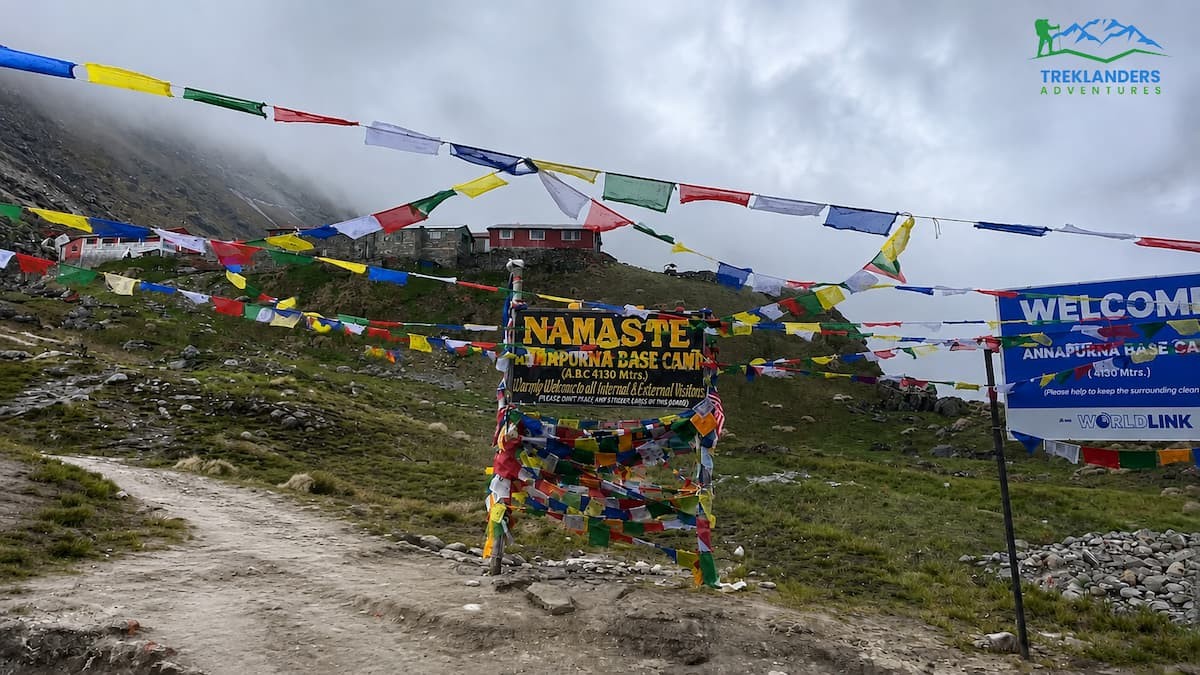
The 7-Day Annapurna Base Camp Trek from Pokhara, the 11 Day Annapurna Base Camp Trek, and the Annapurna Base Camp Trekking route reach 4,130 meters inside the Annapurna Sanctuary. December brings snow to the upper sanctuary, and avalanche risk rises after storms, so your guide decides each day whether to continue above Deurali. Check conditions with us before you go.
Mardi Himal suits the month better than most people expect. The 5-Day Mardi Himal Trek from Pokhara, the 9 Day Mardi Himal Trek, and Mardi Base Camp Trekking climb a ridge with close views of Machapuchare. Lodges at the lower camps operate through much of winter, and your guide confirms conditions at High Camp before you commit. Our blog post Is Mardi Himal Trek in Winter Possible covers snowfall and trail conditions in detail. If you want a gentle ridge walk, look at the Mohare Danda Trekking route, and if you want a higher ridge with more snow risk, look at Khopra Ridge and Khair Lake Trekking.
The 13-Day Annapurna Circuit Trek and the Annapurna Circuit Trek cross Thorong La at 5,416 meters, and wind and snow make that crossing risky in December. The Annapurna Semi Circuit Trek and the Tilicho Lake Base Camp Trek face similar limits at height. Browse the full Annapurna region list and ask which routes your guide would run this month.
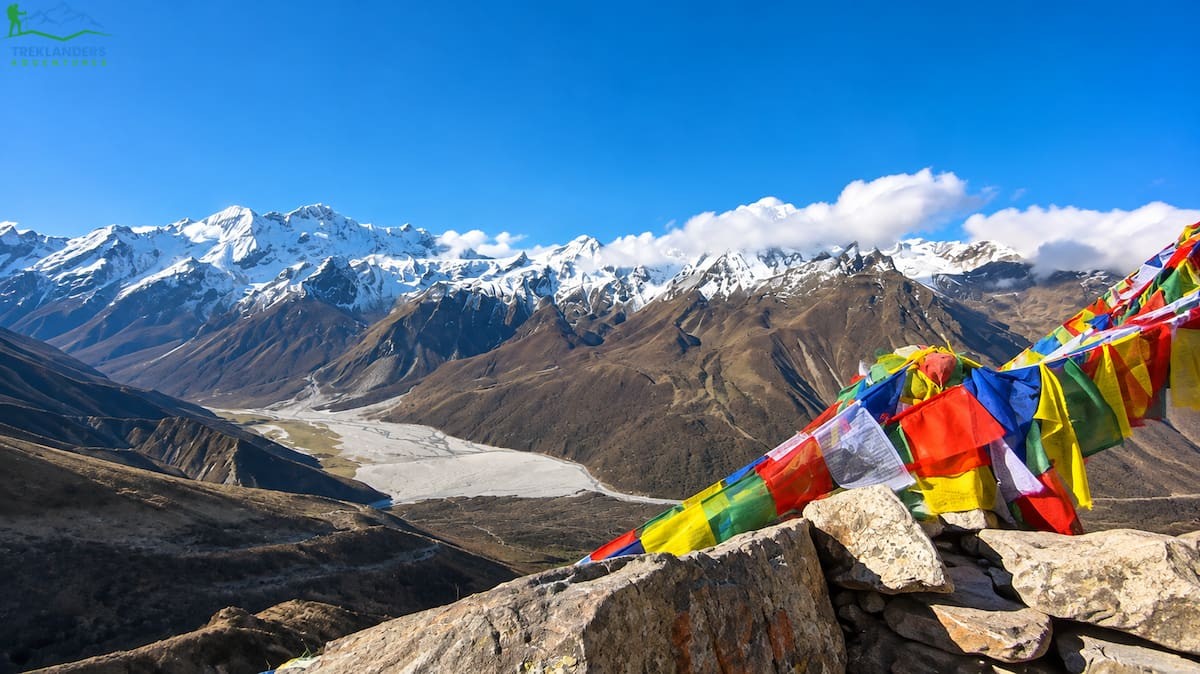
Langtang gives you a close mountain valley within reach of Kathmandu by road. The 7-Day Langtang Valley Trek, the 9-Day Langtang Valley Trek, and the Langtang Valley Trek climb to Kyanjin Gompa at 3,870 meters, where nights run well below freezing in December. The 14 Day Tamang Heritage with Langtang Valley Trek adds Tamang villages and hot springs, and the 15 Day Langtang Gosaikunda Lake Helambu Trek adds the high lake. Gosaikunda freezes in winter, so the Gosainkunda Lake Trek suits experienced trekkers only.
The 2026 monsoon floods changed the approach and trail conditions in Langtang. Read our Langtang route update and our trail status update for Langtang, Manaslu, and Tsum Valley before you choose dates, and confirm the current situation with the team.
The Helambu Trek stays lower than Langtang and keeps its route below 3,600 meters. It makes a reliable December choice when you want mountain views and simple logistics. The Langtang region page lists every route.
Manaslu and the far routes ask for more cold tolerance. The 13-Day Manaslu Circuit Trekking and the Manaslu Circuit Trek cross Larkya La at 5,106 meters, and December snow often blocks it. Our itinerary comparison for the Manaslu Circuit and our difficulty comparison with the Annapurna Circuit help you pick a season, and why the Manaslu Circuit is quieter than Everest Base Camp describes the trail in the better months. Upper Mustang Trekking sits in the rain shadow and stays dry, but cold and wind run strong and some lodges close. The Kanchenjunga Trek and the Upper Dolpo Trek belong to spring and autumn.
If you have only a few days, the 4-Day Trekking Adventure near Kathmandu, the Chisapani-Nagarkot to Dhulikhel Hiking route, the Nagarkot Day Hike, and the Nagarjun Jamacho Day Hiking route give you clear December views of the Langtang and Ganesh Himal ranges without altitude. These hikes also work as a warm-up before a longer trek. Browse the one day hiking options now, and the peak climbing list if you want more height later in the year, such as Island Peak or Mera Peak.
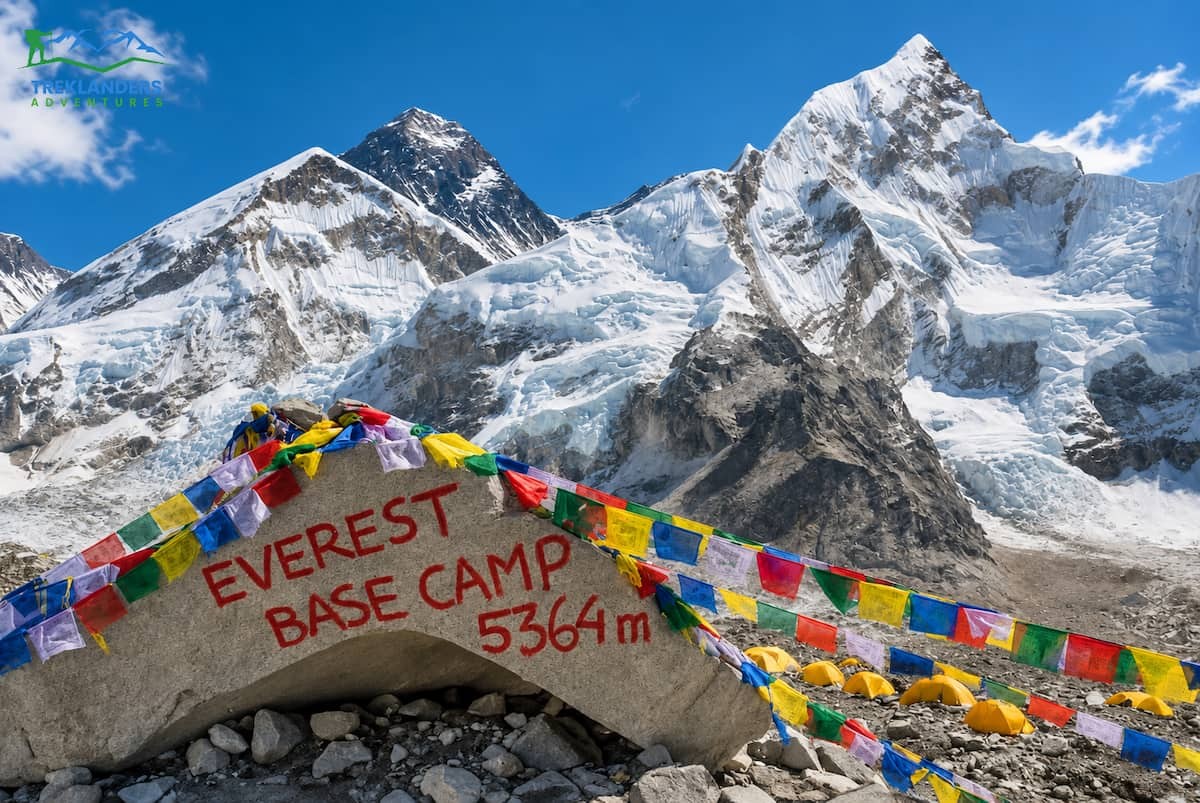
The 12-Day Everest Base Camp Trek runs from Kathmandu to Kathmandu over 11 nights, with rest days at Namche Bazaar and Dingboche. You stay in tea house lodges, you eat three meals a day on the trail, and one porter carries gear for every two trekkers. Kala Patthar at 5,643 meters is the highest point. Everest Base Camp sits at 5,364 meters. The sections below follow the route in December conditions, and the 12-day base camp trek guide on our blog adds more background on the same itinerary.
You leave your Kathmandu hotel early, drive to the domestic airport, and board a small aircraft for the 35-minute flight to Lukla at 2,860 meters. December mornings usually give a clear window, and from your seat you see Everest, Lhotse, and Makalu. After you land at Tenzing-Hillary Airport and collect your bags, you rest briefly and walk out through Lukla town. The trail drops and rises past farms and villages for about four hours to Phakding at 2,610 meters, where you sleep. The air feels cool but not cold at this height, and you walk in a light fleece by midday. Put on your warm layers the moment the sun drops.
After breakfast you follow the Dudh Koshi River on easy ground, climb briefly, and cross suspension bridges to Monjo. At Monjo you enter Sagarmatha National Park, where your guide registers your permits. You stop at Jorsalle for lunch, then walk along the riverbank through rhododendron and pine and cross a high bridge. A steady climb of a few hours takes you to Namche Bazaar at 3,440 meters, where you stay two nights. The walk takes about six hours. In December the trail runs dry, and frost lingers in shaded sections in the morning. Namche is the first stop where nights fall below freezing.
You spend a second night in Namche to acclimatize. After breakfast you hike above town for views of Everest, Lhotse, and Ama Dablam, and you can continue to the Everest View Hotel, a few hours up the slope, which is listed among the highest hotels in the world. A small museum near the top of town covers Khumbu culture, wildlife, and climbing history. In the afternoon you walk the market street, with its bakeries, gear shops, and cafes. The name Namche Bazaar comes from the Saturday market that still draws traders from across the region. If you forgot gloves or a hat, buy them here, because the choice shrinks above Namche.
A gradual trail leads out of Namche with views of Everest and a line of snow peaks. The path descends to Phunki Tenga, where you eat lunch among rhododendron and pine. In the afternoon you climb slowly for a few hours to Tengboche at 3,867 meters, which takes about five hours of walking in total. Tengboche Monastery is the largest in the Khumbu and the spiritual center for Sherpa communities. You tour the interior, where paintings cover the walls, and if your arrival matches the monks' daily prayers, your guide can arrange for you to sit in. The ridge sits in the open, so the December wind at dusk is strong. Wear your windproof shell before you step outside.
You start with the morning panorama, walk down to a bridge, and leave the forest behind. The trail climbs to Pangboche, the last permanent village on the route, and continues gently to Somare for lunch, with Ama Dablam close overhead. After lunch the trail runs across open, exposed ground, dips to a stream, and climbs for about an hour into the Imja Valley. Dingboche at 4,410 meters sits beneath the north face of Ama Dablam, and Island Peak shows to the east. The walk takes about five hours. The December wind crosses this open valley without anything to slow it, so keep your hat and gloves within reach.
You rest again at Dingboche and take a short hike to the Nakarjung ridge. From the top you see Ama Dablam, Island Peak, and Makalu to the east. The rest of the day is free. Use it to drink fluids, wash small items, and charge your power bank while the sun still warms the solar panels. In December the water in your bottle freezes in an unheated room, so store the bottle upside down in your sleeping bag overnight. Ice then forms at the base, and the cap stays free.
A short steep climb opens the day, and from the top you look back over the Imja Valley. A gradual uphill walk leads to Thugla, a small place halfway between the Dingboche and Pheriche routes, where you stop for lunch. In the afternoon you climb for less than an hour to a high ridge, then continue on gradual ups. Altitude slows your pace, and the walk of five hours feels longer than it reads. You reach Lobuche at 4,928 meters for the night. December nights here run among the coldest of the trek, and some lodges above Dingboche reduce services in the coldest weeks, so your guide confirms rooms and meals in advance.
You start as early as possible and carry a packed lunch. The trail begins on pleasant ground, then climbs over rocky terrain above the Khumbu Glacier and makes a short descent to Gorak Shep at 5,180 meters. Gorak Shep is a small settlement on a wide sandy glacial plain, beneath Pumori and the dark ridge of Kala Patthar. After a short rest you follow a winding path between rocks and ice to Everest Base Camp at 5,364 meters. You stand in front of Everest among ice, snow, and moraine, with Lhotse, Nuptse, and Pumori around you. The climbing teams leave in early summer, so in December you see the glacier and the Khumbu Icefall without expedition tents. You return to Gorak Shep for the night. Sleep in your base layers and a warm hat, and expect the thin air to interrupt your sleep.
The day starts in the dark and in the cold. You climb steeply to Kala Patthar at 5,643 meters, the best place on the trek to see the summit of Everest. Nuptse blocks the summit from base camp, which makes this viewpoint necessary. Wear your heavy down jacket, insulated gloves, and a face covering, and keep your camera battery in an inner pocket. When the sun reaches Everest, Nuptse, and Pumori, you see the Khumbu Glacier below and the Tibetan peaks beyond the border to the north. You descend to Gorak Shep for breakfast, walk back through Lobuche and Thugla, and take an alternate trail into the Pheriche valley, where you stop for lunch. In the afternoon the route rolls over a high ridge and descends to Pangboche at 3,900 meters. The walk takes about six hours. The lower altitude brings thicker air and, for most trekkers, better sleep.
Ama Dablam fills the view as you walk downhill to the bridge, then climb to Tengboche Monastery. The trail returns to the forest and drops toward Phunki Tenga, then climbs slowly past a few settlements and winds into Namche Bazaar. The walk takes about six hours. Namche feels warm after the high camps. Take a hot shower if the lodge offers one, and eat a bakery meal after the long days above.
You spend your last full day on the trail walking down the Dudh Koshi valley. The route passes Jorsalle, short climbs near the national park entrance, and Monjo, then crosses the bridge to Phakding for lunch. A winding, gentle path leads to the final climb into Lukla, where you arrive by late afternoon. The walk takes about six hours. This is your last night in the Khumbu. Thank your guide and porter, and check the weather forecast for the morning flight.
You transfer to Lukla airport and board the small plane for the short flight to Kathmandu. After you land, a vehicle takes you to your hotel. The rest of the day is free, and the team arranges a farewell dinner on the last night in Kathmandu. Our complete 12-day guide lists the same itinerary with additional trail notes.
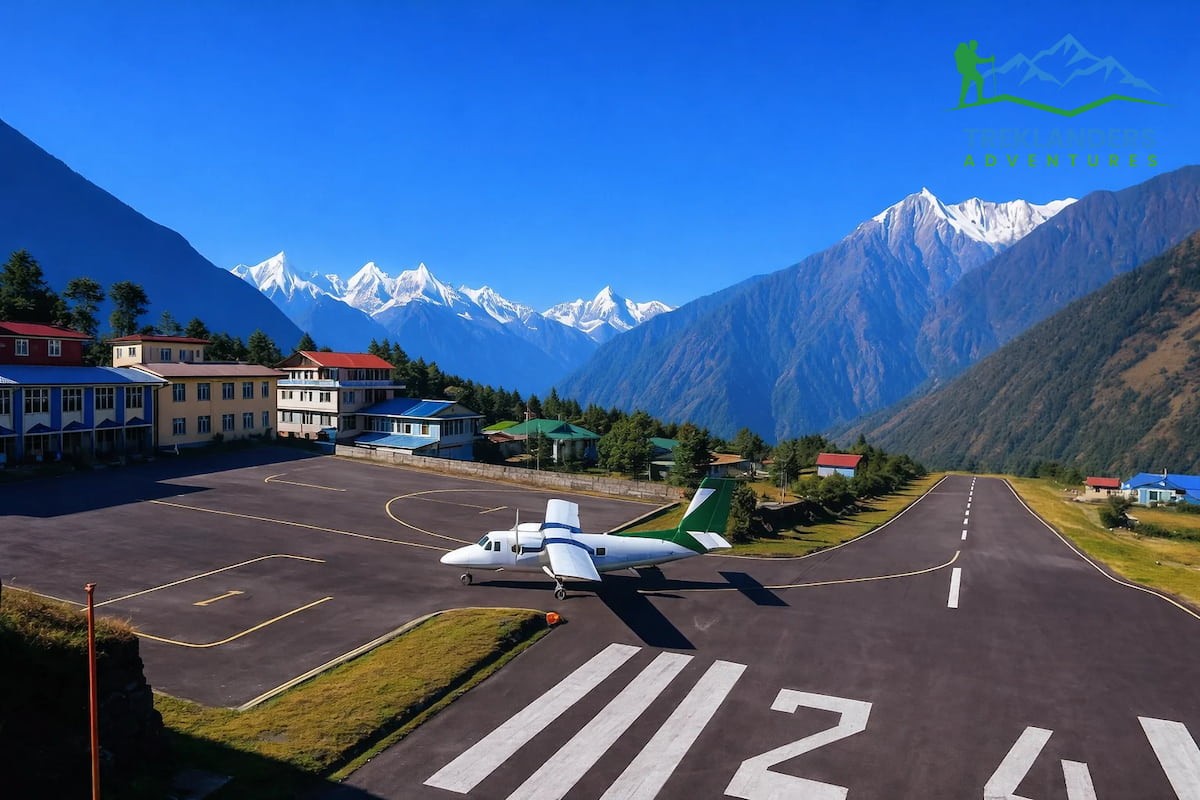
Flights between Kathmandu and Lukla depend on weather and air traffic. In busy months, flights may reroute through Manthali Airport in Ramechhap, about three to four hours by road from Kathmandu, which turns your first morning into an early drive. December traffic runs lighter than October traffic, but cloud and wind still cause delays. In the worst weather, delays and cancellations can last several days in a row.
Add a buffer day to your plan before any international flight home. Your guide and the Treklanders office track the schedule and rebook flights when a delay occurs. If cancellations continue, a helicopter transfer between Lukla and Kathmandu is possible when conditions allow, and the team explains the options on the day. If you prefer to avoid the Lukla flight, the Jiri route starts by road and walks into the Khumbu.
Many trekkers plan their December trek around the holidays. The Khumbu stays open through Christmas and New Year, and the lodges in Namche Bazaar and Tengboche host guests who spend the holidays on the trail. Dining rooms bring trekkers from several countries together, and the evenings pass with card games, shared stories, and hot drinks beside the stove. Book your dates early, because rooms and Lukla seats can tighten in the last week of December, even with fewer visitors than in autumn. A departure in the first half of December gives you the same clear skies with slightly milder temperatures and a looser flight schedule. Tell the team your preferred dates when you plan your trip, and they will suggest the window that fits your plans.
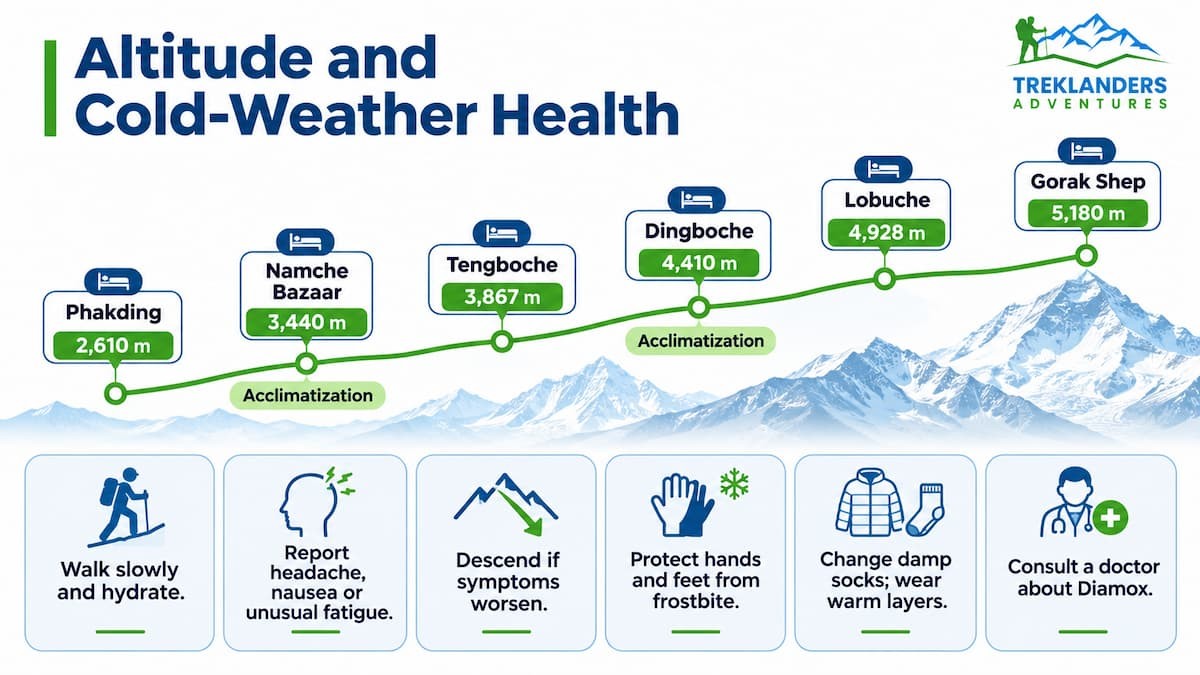
Altitude sickness affects fit trekkers as often as beginners. The schedule gives you rest days at Namche Bazaar and Dingboche so your body adjusts before you go higher. Walk at a steady pace, drink water through the day, and tell your guide at once if you feel a headache, nausea, or unusual fatigue. Your guide checks your condition each morning and carries a first aid kit for the group. If symptoms worsen, you descend, because descent is the treatment that works.
The itinerary raises your sleeping altitude in steps. You sleep at 2,610 meters in Phakding, 3,440 meters in Namche, 3,867 meters in Tengboche, 4,410 meters in Dingboche, 4,928 meters in Lobuche, and 5,180 meters in Gorak Shep. The rest days at Namche and Dingboche come before the two largest jumps, and on the rest days you hike higher than your lodge and return to sleep lower. After Kala Patthar you descend about 1,300 meters from Gorak Shep to Pangboche in a single day, which relieves most altitude symptoms.
December adds cold risks. Frostbite and hypothermia become real concerns above 4,000 meters, so keep your fingers and toes warm, change damp socks at lodges, and wear a hat in bed. You feel less thirst in cold air, which makes dehydration easy to miss. Drink tea, soup, and boiled water at every meal. Take Diamox only if a doctor advises it before you travel. If you have a heart, lung, or severe joint condition, see your doctor before you book.
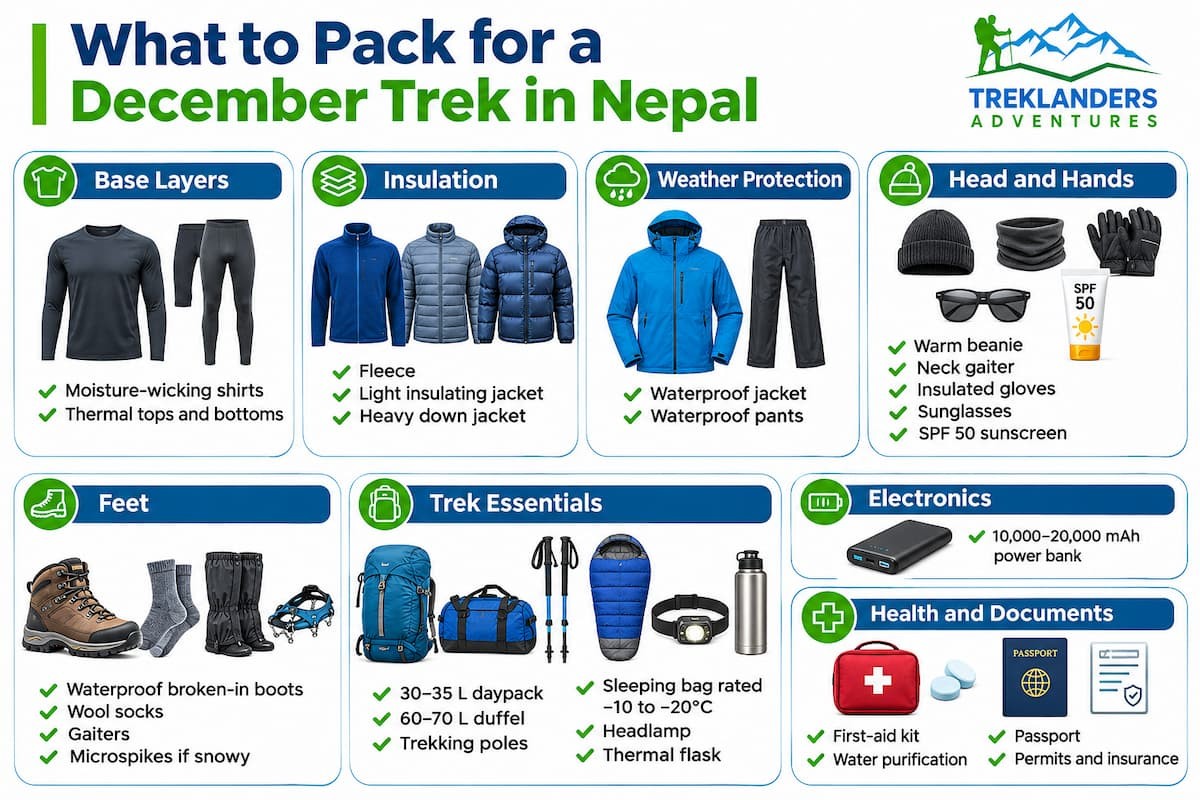
Pack in layers rather than a few heavy items. For your base layer, take two or three moisture-wicking T-shirts in synthetic or merino fabric, one or two long-sleeve thermal tops, one or two thermal bottoms, and three or four pairs of underwear. For your mid layer, take a fleece jacket, a light down or synthetic jacket, and insulating pants. For your outer layer, take a waterproof hard-shell jacket and pants, and a heavy down jacket, which is essential at 5,000 meters in December.
Your hands, head, and face need their own set. Pack liner gloves, heavy insulated gloves or mittens, a wool beanie, a neck gaiter, a sun hat, and sunglasses rated category 3 or 4. Snow reflects strong ultraviolet light at altitude, so add sunscreen with SPF 50 and a lip balm with SPF.
For your feet, take sturdy waterproof boots that you have already worn on several hikes, camp shoes, two or three pairs of wool socks, and one pair of thick socks for cold mornings. Add gaiters and Microspikes if you expect snow. Take trekking poles, a 30 to 35 liter daypack, and a 60 to 70 liter duffel bag. Your sleeping bag should carry a rating between minus 10 and minus 20 degrees Celsius. Add a headlamp with spare batteries and a thermal flask.
For electronics, bring a power bank of 10,000 to 20,000 mAh and your charging cables. Cold drains batteries fast, so keep them in an inner pocket at night. Pack a personal first aid kit, pain relievers, blister tape, water purification tablets or a filter, and any prescription medication. Carry your passport, permits, small bills, and your insurance details. A reusable water bottle replaces the plastic bottles that pile up in the Khumbu.
You sleep in tea house lodges every night. Rooms are usually twin share with shared bathrooms. Phakding, Namche, and Tengboche have some rooms with attached bathrooms, and above Dingboche you find shared facilities only. The dining room is the warm place in each lodge, because a central stove burns wood, dung, or kerosene depending on altitude. Bedrooms have no heating, so you spend your evenings in the dining room and go to bed once the stove cools.
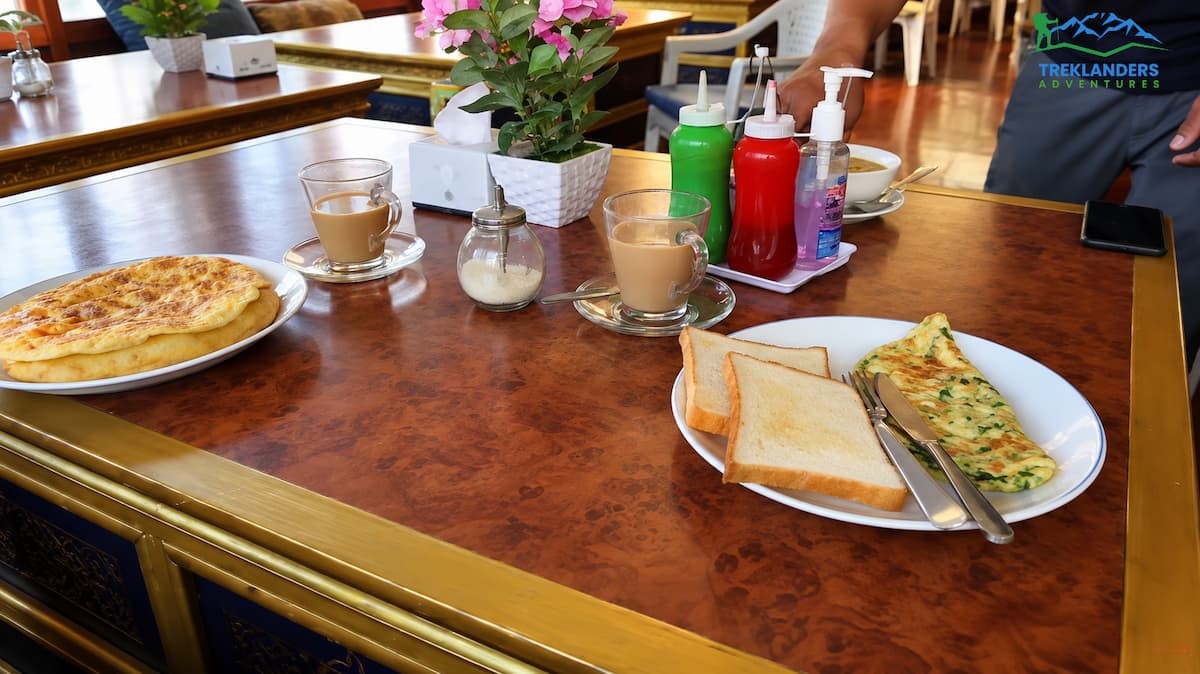
The menu stays similar along the route. Breakfast brings porridge, eggs, pancakes, and Tibetan bread. Lunch and dinner bring dal bhat, noodle soup, fried rice, and momo, and lower lodges also serve pizza and pasta. The choices shrink as you climb. Lodges boil or treat drinking water, so refill your bottle each morning. Ask for a bottle of boiled water at bedtime and put it in your sleeping bag as a hot water bottle.
A typical day starts at six with a hot drink and breakfast. You walk by half past seven, eat lunch around midday, and arrive at the next lodge between two and three in the afternoon. You spend the late afternoon in the dining room with tea and a book, eat dinner early, and sleep by eight. Electricity comes from solar panels or micro-hydro, and Wi-Fi gets weaker as you climb, with no signal at all above Lobuche in many cases. Plan to use your phone mainly as a camera above Namche.
Start your training at least eight to twelve weeks before departure. Build your cardio base with hill walking, stair climbing, or cycling for 30 to 45 minutes, four to five days a week. Add leg strength with squats, lunges, and step-ups two to three times a week. In the last weeks, complete four to six practice hikes with the daypack you plan to carry, and include steep climbs and descents. If you can train outdoors in cold weather, do it, so you learn how your layers perform before you reach Nepal.
Our blog post EBC Trek Training: How to Prepare for the 12-Day Everest Base Camp Trek gives a full 12-week plan. Most trekkers between 12 and 65 years old, with reasonable fitness and a few months of preparation, finish this trek successfully.
The Everest route needs two permits: the Sagarmatha National Park entry permit and the Khumbu Pasang Lhamu Rural Municipality entry permit. Officials check both at Monjo. Treklanders arranges them before the trek, and you carry your passport and a few passport-size photos. Annapurna and Langtang routes use their own permits, and your guide handles those as well.
Buy travel insurance that covers high-altitude trekking up to at least 6,000 meters and includes emergency helicopter evacuation. Many standard policies exclude trekking above a set altitude, so read the terms before you pay. Carry a printed or digital copy of the policy with the emergency number, and share a copy with your guide before you start.
Winter treks put extra strain on the people who work on the trail. Porters and guides walk the same cold mornings you do, and your choices affect their conditions. Treklanders provides its guides and porters with fair wages, food, lodging, and insurance for the length of the trip, in line with Nepal's responsible tourism policy. You can help by packing a duffel that stays within the weight limit your guide gives you, by wearing your own warm layers, and by treating your team with respect in the cold. Plastic bottles remain a problem in the Khumbu, so carry a reusable bottle and refill it with boiled water at your lodge. Carry your trash back down the valley, including used batteries, because cold weather drains them fast and they pile up along the trail.
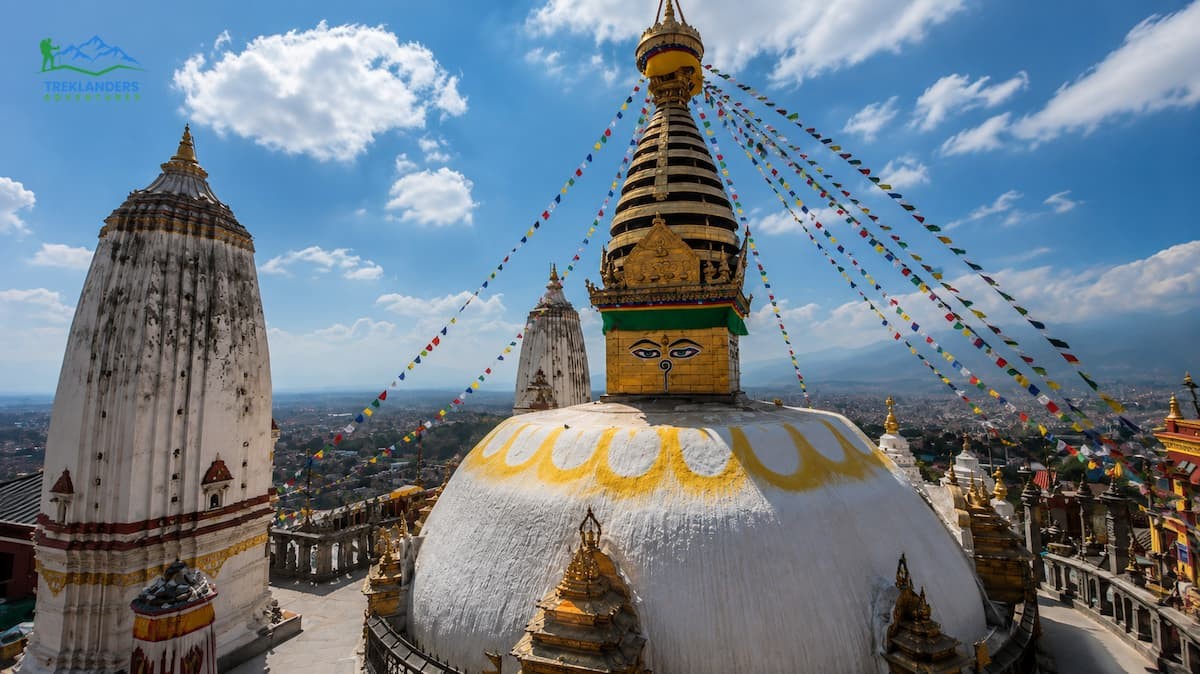
Most December itineraries give you at least a day in Kathmandu before and after the trail. Use the first day to sort your gear, rent a sleeping bag or down jacket if you need one, and meet your guide. Use the extra days for sightseeing while the skies stay clear.
The Kathmandu Full Day Sightseeing Tour and the Seven UNESCO Heritage Sites Day Tour in Kathmandu cover the main temples and squares, and the Patan and Bhaktapur Sightseeing Tour adds two old royal cities. The Nagarkot Sunrise Tour gives you a December sunrise over the Himalaya in one morning, and the Chandragiri Cable Car Tour lifts you to a ridge west of the city. For an aerial view of Everest without the walk, the Everest Mountain Flight from Kathmandu and the Everest Heli Tour fit a free day. The Momo Making Class in Thamel makes a good last evening.
December also suits lowland trips. The 3-Day Pokhara Sightseeing Tour and the 3-Day Chitwan Wildlife Tour run in cool, dry weather, and the 7-Day Kathmandu Pokhara and Chitwan Wildlife Tour and the Nepal Round Trip of Kathmandu-Pokhara-Lumbini and Chitwan Tour combine them. Browse all tours in Nepal to pair a trek with a few days of culture.
Pick your route by altitude and by how much cold you accept. If you want the classic Himalayan trail, book the 12-Day Everest Base Camp Trek. If you prefer to stay lower, choose an Annapurna or Mardi Himal route from the list above. Read reviews from past trekkers to see how the team handles weather and altitude, and browse the photo gallery for December light on the trail.
Use Plan My Trip for the 12-Day Everest Base Camp Trek to tell the team your dates, group size, and fitness, and the guides will adjust the plan for December. Questions about trail conditions go through the contact page, and you can learn about the people behind the treks on the About Us page. Treklanders confirms current trail status, lodge availability, and flight plans before you leave, so you set out with the facts for your dates.
Explore our first-timer’s Everest Base Camp Trek guide covering the 16-day itinerary, difficulty, altitude, acclimatization, and essential tips.
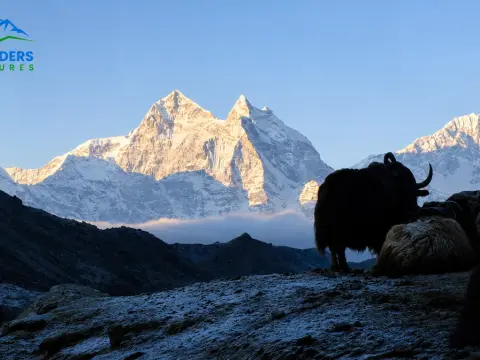
Explore the 12-day Everest Base Camp Trek itinerary, stunning Himalayan views, difficulty, acclimatization, best seasons, and essential trekking tips.
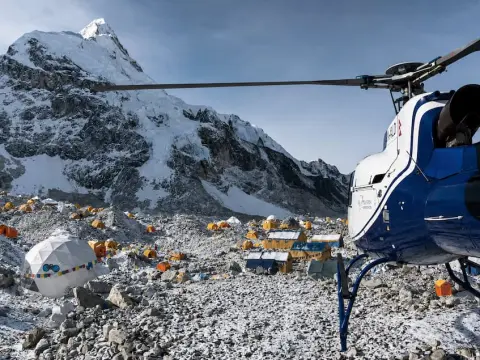
Prepare for the 12-Day Everest Base Camp Trek with a 12-week training plan, fitness tips, altitude preparation, and essential trekking advice.



