EBC Trek Training: How to Prepare for the 12-Day Everest Base Camp Trek
17 Nov 2026
Prepare for the 12-Day Everest Base Camp Trek with a 12-week training plan, fitness tips, altitude preparation, and essential trekking advice.

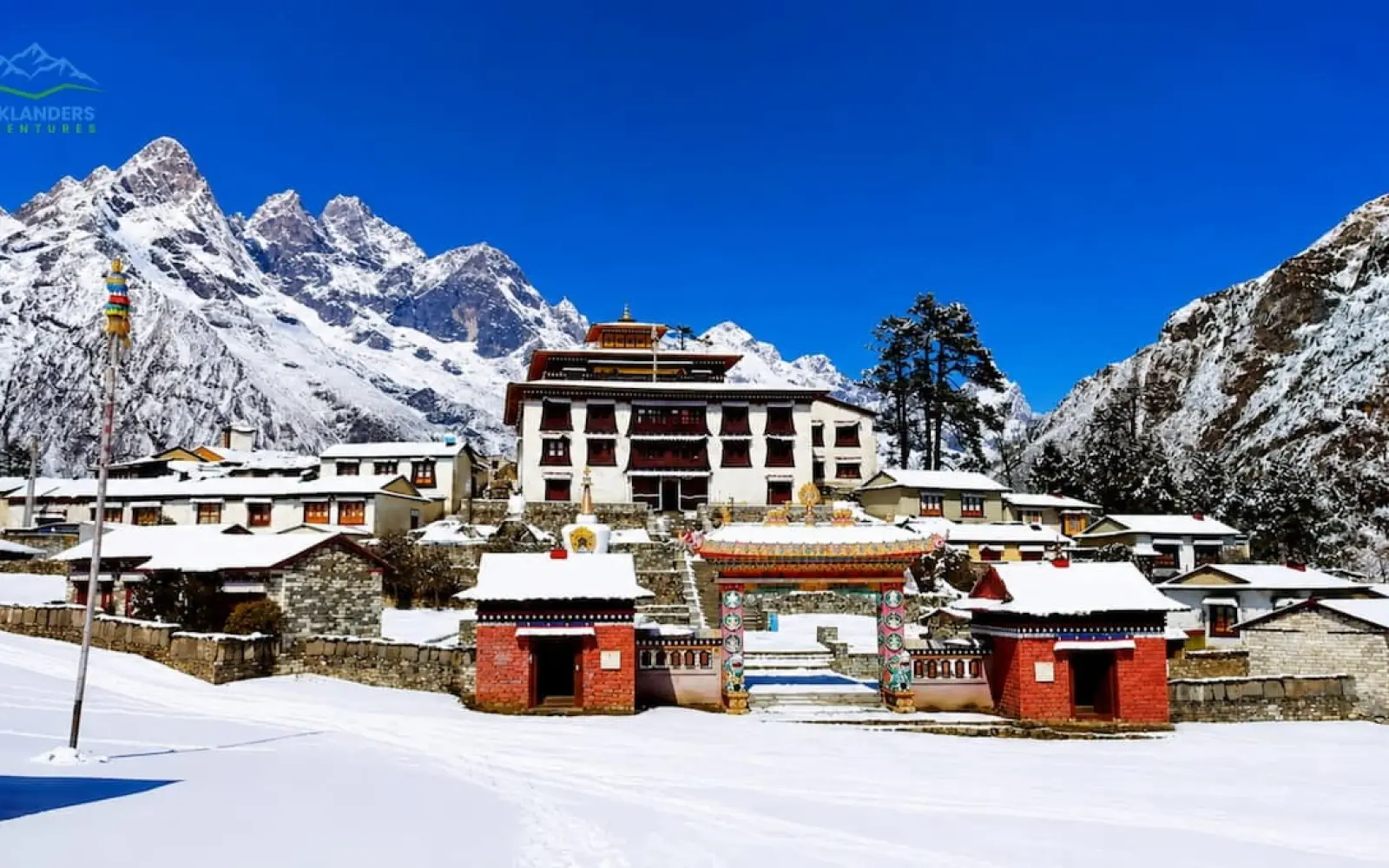
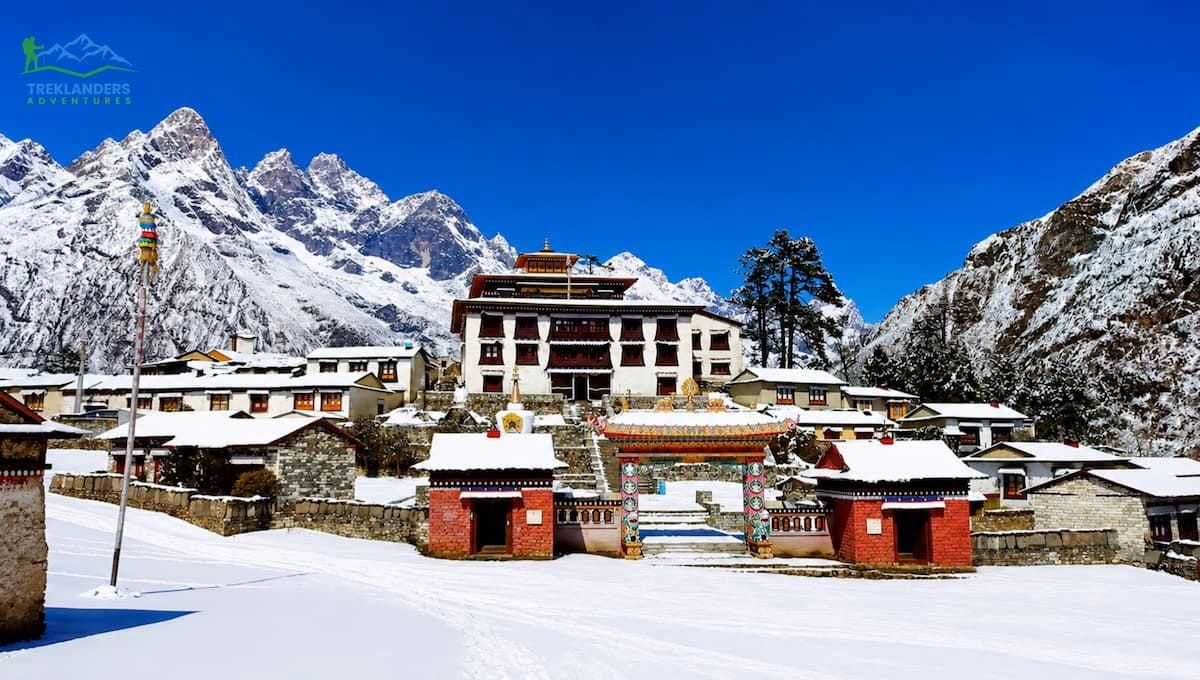
Tengboche Monastery sits on a forested ridge at 3,867 meters, and every Everest Base Camp trek on the standard route passes through it. Many trekkers treat it as a lunch stop or a place to drop their bags. That undersells it. The monastery is the largest Buddhist monastery in the Khumbu, the spiritual center for Sherpa villages across the region, and one of the few places on the trail where Everest, Lhotse, and Ama Dablam share a single view.
This guide breaks Tengboche into four stops that suit a four-photo post and a real day on the trail. You will see the monastery exterior with Ama Dablam behind it, the interior during a puja, the trail that carries you up from Namche Bazaar, and the sunrise or evening light on the peaks that closes the visit. Each stop has its own timing, its own light, and its own reason to slow down.
The route details come from the 12-Day Everest Base Camp Trek, where Tengboche appears on Day 4 on the way up and again on Day 10 on the way down. That gives you two chances at the monastery, each with different weather and a different mood. The 14 Day Everest Base Camp Trek and the longer Everest Base Camp Trek add buffer days around the same stop, which helps if you want more time with a camera.
Treklanders Adventures runs these treks with government-licensed guides who know when the monks pray, where the best photo positions sit, and how to pace a group so nobody arrives at the monastery exhausted. If you want the full picture of the route before you read about one stop, the blog on the complete 12-day Everest Base Camp guide covers the whole itinerary, and the first-timer guide covers the basics of altitude and planning.
Each section below matches one photo. Later sections cover the day-by-day walk, the best season, and preparation.
Tengboche is the fourth stop on the 12-day plan. It is also the first place above Namche Bazaar where you sleep in a forest instead of a market town. The 12-Day Everest Base Camp Trek flies you from Kathmandu to Lukla on Day 1, walks you to Phakding, and climbs to Namche Bazaar on Day 2. Day 3 is a rest day in Namche. Day 4 is the walk to Tengboche, about five hours, ending at 3,867 meters.
The gain from Namche at 3,440 meters is roughly 430 meters. The trail does not make that number feel small, because it drops to a river and climbs again. Even so, your body handles this day better than the ones above 4,000 meters. Treat it as the first night when the big mountains feel close.
You return on Day 10. After Kala Patthar and the long descent to Pangboche on Day 9, the walk back up to the monastery feels short. If you want the sunrise from Kala Patthar fully explained, the blog on Kala Patthar at dawn walks through that morning in detail. Trekkers who prefer to skip the return walk can look at the Everest Base Camp Trek and Returning via Heli, which ends the trek at Gorakshep with a helicopter flight. Those who want a different route to the same valley can compare the Everest Base Camp Trekking from Jiri, a 22-day approach through the mid-hills of Solu.
Two permits cover the route: the Sagarmatha National Park entry permit and the Khumbu Pasang Lhamu Rural Municipality permit. Both are checked near Monjo, well below Tengboche, and Treklanders arranges them before you start walking. You carry your passport and a few passport-size photos.
The monastery is where Sherpa culture is easiest to see on this route, and the Namche to Tengboche day is where the scenery shifts from valley walking to high-mountain viewing. Both reasons are enough to plan the stop on purpose. The Everest region treks page lists every route that crosses this ridge.
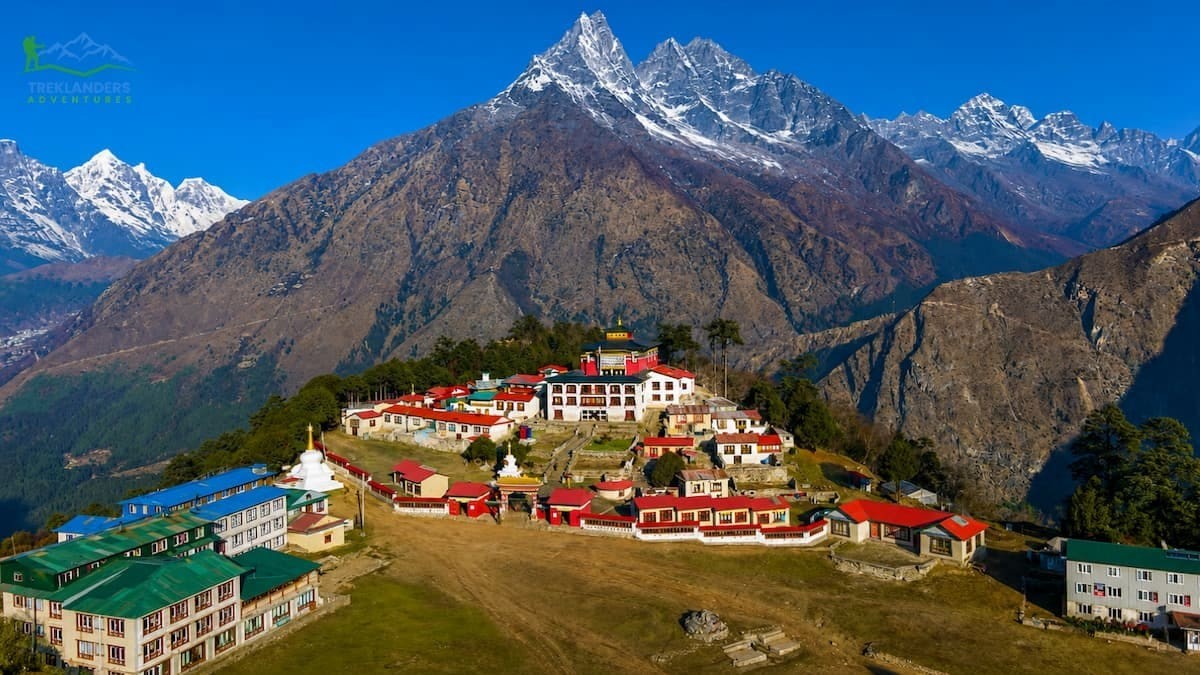
The first stop is the picture everyone expects, and it earns its reputation. You arrive after a slow afternoon climb through rhododendron and pine, and the forest opens onto a wide grassy shelf. The monastery sits in the middle of it. Behind the roofline, Ama Dablam rises as a sharp pyramid of rock and ice, and on a clear day Everest and Lhotse show above the ridges to the north.
The current building dates from 1993. Fire destroyed the earlier monastery, and the community rebuilt it on the same ridge. That history matters because it explains why the place feels both old and new. The painted walls and gilded roof ornaments are fresh, but the site has held a religious community for more than a century. It remains the largest Buddhist monastery in the Khumbu, which is why guides often describe it as the spiritual center of the region.
For photographs, the best position is the open courtyard in front of the main hall, where you can place the monastery on one side of the frame and Ama Dablam above it. Walk about thirty paces back from the entrance to avoid the wide-angle distortion that makes the mountain look small. A phone camera handles this scene well in the late afternoon, when the light turns the stone gold and the shadows add depth to the peak. A dedicated camera helps if you want to pull Everest forward, because the summit sits far behind Nuptse and a longer lens brings it closer.
Weather changes the picture quickly. Clouds often build in the valley by mid-afternoon and can cover Ama Dablam within minutes. If the sky is clear when you arrive, take the photo immediately and look for a second version in the morning. The monastery looks different in the early light, with frost on the grass and smoke rising from the lodge chimneys.
Mani Rimdu, the autumn festival, brings masked dances to this courtyard. Monks and villagers gather for several days, and the space fills with color and sound. If your trek lines up with the festival, you see the courtyard at its busiest. If it does not, you see it at its quietest, which suits a photograph of the monastery alone. Either version is worth the walk. The Trekking in Nepal in December blog describes how the same stop looks in the winter months, when the trail is quiet and the air is sharp.
Plan your arrival with the group pace in mind. The 12-Day Everest Base Camp Trek puts you at the monastery by late afternoon on Day 4, which leaves time for the courtyard before dinner. The Everest Panorama Trek and the 8-Day Everest Panorama Trek are shorter options for travelers who want the Khumbu views without the altitude of base camp. Those who prefer a wider loop can see how the Everest Three Passes Trekking route links the same villages with high-pass crossings, or how Gokyo Valley Trekking reaches the glacial lakes on a separate branch.
Keep one practical rule in mind. Walk the monastery grounds clockwise and pass mani walls and chortens on the left, as local custom asks. That small habit shows respect and keeps you in step with the Sherpa families who live around the monastery.
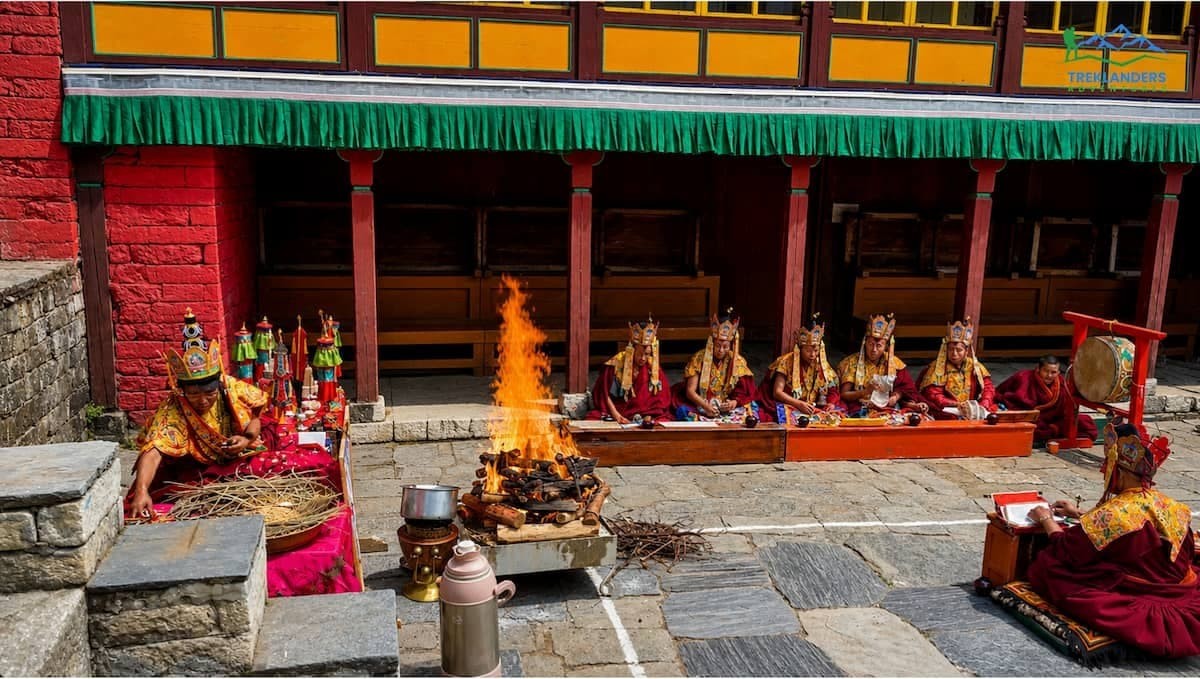
The second stop takes you indoors. The 12-day itinerary lists a tour of the monastery interiors on Day 4, and the interiors carry vibrant paintings, carved wood, and statues that reward a slow look. If your arrival lines up with the monks' daily prayer session, your guide can often arrange for you to sit in. This is the part of the visit that stays with people longest.
A puja is a ritual of prayer and offering. Monks sit in rows facing the altar, chant in low voices, and punctuate the chanting with drums, cymbals, and long horns. The sound fills the hall. You do not need to know the texts to feel the rhythm. Sit near the back, keep your voice off, and let the session run its course.
Photography here calls for more care than any other stop on the trail. Rules vary by hall and by day, so ask your guide before you lift a camera. Ask again if a monk looks your way. Turn off the flash, switch off the shutter sound on your phone, and do not photograph anyone during the prayers without clear permission. If you are allowed to take one frame, choose a wide shot of the hall rather than a close portrait. The butter lamps, the painted pillars, and the red robes already make the picture. A respectful image from the back of the room says more than a tight crop of a face.
Etiquette matters as much as technique. Remove your shoes where the hall asks for it. Cover your shoulders and knees. Do not point your feet toward the altar or the monks, and do not touch religious objects. Move clockwise inside the building, as you would around a mani wall outside. A small donation in the box near the entrance is customary, and guides will tell you the right place to leave it.
The monastery also anchors the Mani Rimdu festival, held each autumn. Masked dances, ceremonies, and prayers run for several days and draw monks and villagers from the surrounding settlements. If you can match your dates to the festival, you see the interior and courtyard in full use. The blog on chasing Everest in 12 days gives a wider view of how seasons and festivals shape this itinerary. For a trek that adds a different kind of challenge to the monastery stop, the Everest Base Camp Trek with Lobuche East Peak Climbing Expedition pairs the same villages with a peak climb.
Timing the visit takes a little planning. Prayer sessions follow a daily schedule that your guide can confirm. Arrive in the afternoon, check into your lodge, and ask your guide to confirm the evening session. If the afternoon session is already finished, ask about the morning of Day 5 before you leave. The walk to Dingboche on Day 5 is a five-hour day, but you can still fit a short visit before breakfast if you wake early.
Sherpa culture runs through every village on this route, and the monastery is its clearest expression. Smaller gompas appear at other stops, and prayer wheels turn at the entrance to most villages. If you want to see more of Nepal's religious heritage before you fly to Lukla, the Seven Unesco Heritage Sites Day Tour in Kathmandu and the Kathmandu Full Day Sightseeing Tour cover the valley's major temples and stupas, and they make a good rest day before the mountains. For travelers who want to extend the spiritual side of the journey into Tibet, the 13 Day Lhasa Tour from Kathmandu via Everest Base Camp connects the Himalayan monasteries with the Tibetan plateau.
You leave the monastery with a better sense of the people who live below Everest. That context changes how you read the rest of the trail, from the mani stones at Pangboche to the prayer flags at Kala Patthar.
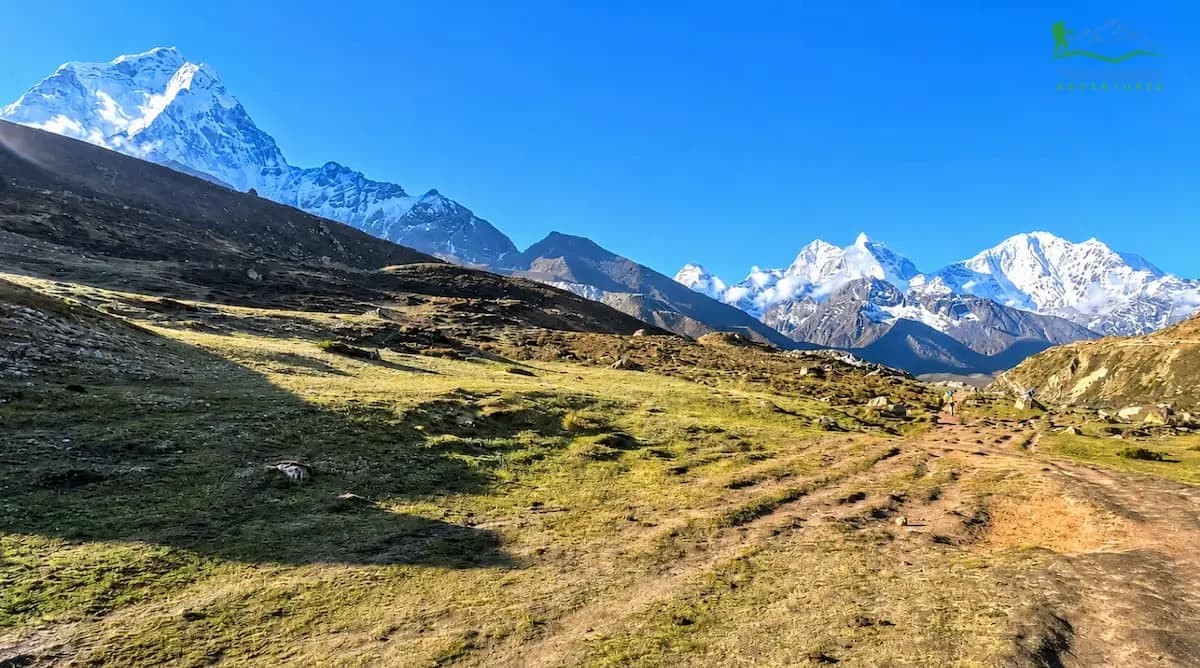
The third stop is the walk itself. Many people remember Tengboche for the monastery and forget that the five-hour trail to reach it is one of the best days on the Everest Base Camp route. If you rush it, you lose the part that makes the arrival feel earned.
Day 4 begins after a rest day in Namche Bazaar. The rest day matters, because it gives your body time to adjust at 3,440 meters before you climb. The 12-Day Everest Base Camp Trek uses that day for a short hike above town, usually to the Everest View Hotel for a first look at Everest, Lhotse, and Ama Dablam, and a visit to the museum that explains Khumbu culture and climbing history. By the time you leave on Day 4, your legs know the altitude and your eyes know what to look for.
The first half of the morning follows a gradual, scenic trail out of Namche. The path contours along the hillside with long views of Everest and a line of snow peaks. Walk slowly here. This stretch is gentle, and it is the best place to take wide photographs of the valley without stopping a group. Then the trail turns downhill toward a small settlement called Phunki Tenga, where you stop for lunch beside the river. The forest around the village is full of rhododendron and pine, and the sound of water follows you from the trail to the table.
The river gorge is the visual center of the day. The Dudh Koshi cuts a deep channel below the path, and the trail crosses it on suspension bridges strung with prayer flags. Bridges on this route sway under foot traffic, and they carry yak trains, porters, and trekkers in both directions. Follow a few simple rules. Stand on the uphill side of the trail when yaks approach, never the cliff side. Let porters with heavy loads pass first. Cross one at a time on the longer spans, and keep your camera strap short so it does not swing into the cable. The high bridge on Day 2 gives you a preview of the style, and the Day 4 crossings feel more familiar because you now have the rhythm.
After lunch the work begins. The afternoon is a slow climb of a few hours through woods to reach Tengboche. The grade is steady rather than brutal, but it asks for patience after a meal and a river crossing. Take short breaks and drink water at each one. The trail passes through shade for most of the climb, and the temperature drops as you gain height. Keep a warm layer in your daypack for the moment you reach the ridge, because the wind on the monastery shelf can be sharp.
Photographers should plan three frames on this stop. The first is a wide shot of the trail leaving Namche with the peaks behind it. The second is a bridge shot, ideally with a trekker or porter crossing for scale and prayer flags in the foreground. The third is a forest shot, with sunlight breaking through the rhododendrons on the climb. Together they tell the story of the approach without repeating the monastery image.
This is also the stretch that separates well-paced groups from tired ones. If you have trained properly, the climb feels like a long, honest walk. The blog on EBC trek training lays out a twelve-week plan that covers the cardio and leg work this day demands. Trekkers who want a gentler first Himalayan experience can look at the Langtang Valley Trek or the 9-Day Langtang Valley Trek, which build similar walking skills at a lower altitude, and the Helambu Trek stays close to Kathmandu.
If you prefer to start further down the valley and build up slowly, the Everest Base Camp Trekking from Jiri route walks the older approach from the hills of Solu. It adds many days, but it lets you see how the landscape changes from terraced farms to alpine forest before you meet the Sherpa villages. For a different Himalayan landscape with a similar trail rhythm, the Annapurna Base Camp Trekking route offers its own gorge walks and suspension bridges. Both options work well as a second trek after Everest.
You arrive at Tengboche with sore legs and a clear sense of how far you have come. The monastery looks different when you have walked into it, and that is the best argument for taking this stop slowly.
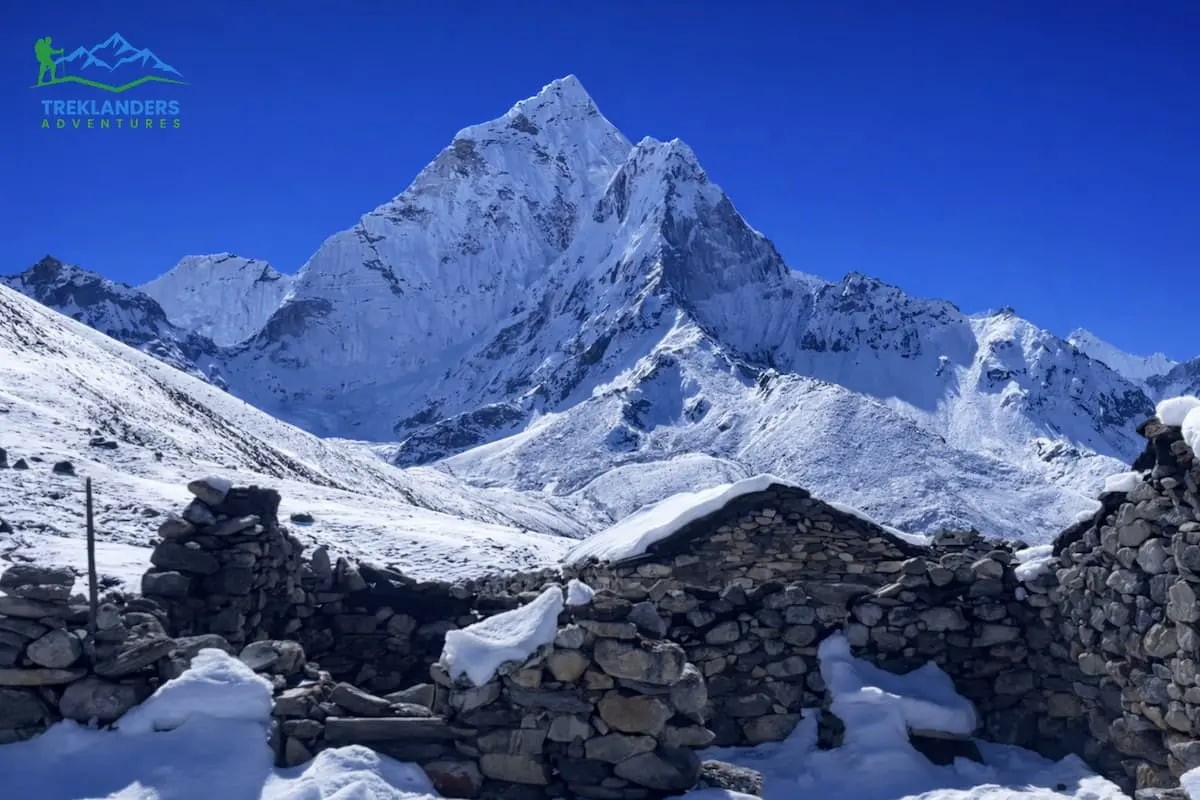
The fourth stop closes the visit and asks only for a little discipline. You sleep at Tengboche, so you have two light windows that day trekkers never see: the evening glow after the monastery crowds thin out, and the sunrise before breakfast. Both are worth setting an alarm for.
Evening light comes first. After dinner preparations begin in the lodge, step outside about an hour before sunset. The valley falls into shadow while the upper ridges stay lit, and the peaks pick up warm color. Ama Dablam holds the light longest, because its summit is so tall and so sharply cut. Lhotse and Nuptse glow a little later and fade a little sooner. The air cools fast at this altitude, so bring your down jacket and gloves. Stand near the edge of the shelf where the ground drops away, and the view opens across the Imja and Dudh Koshi valleys.
Morning light is quieter and often clearer. Wake before dawn, dress in all your layers, and walk to the same spot. The first color touches the summit of Everest and Lhotse, then slides down the ridges. Frost sits on the grass and breath hangs in front of your face. The monks begin their day with prayers that float across the courtyard, and the sound pairs well with the light. You rarely see this scene from a day hike, because it requires a night on the ridge.
Technique helps. Use a tripod if you carry one, or rest your phone on a stone wall and use the timer to avoid shake. Thin gloves help you work cameras. Lock exposure on the sky so the peaks do not blow out. Keep spare batteries in an inner pocket overnight, because cold drains them faster than you expect. Lodges below Dingboche often offer charging, but the supply is limited and sometimes charges a fee per device, so a power bank is a sensible backup.
The mountains behind Tengboche also set up your next day. On Day 5 you walk down through the forest to a bridge, then climb to Pangboche, the last permanent human settlement on the route, and continue to Dingboche. Ama Dablam stays in view for most of that day, and the lodge at Dingboche sits beneath its north face. If you take the sunrise at Tengboche seriously, you will notice how the mountain changes shape as you walk, from a clean pyramid to a broad wall.
Everest itself waits further up. At Kala Patthar on Day 9, you stand at 5,643 meters for the first rays of sunlight on Everest, Nuptse, and Pumori. The Kala Patthar at dawn blog explains that climb and whether the early start is worth it. Tengboche offers warmth, culture, and a gentle approach. Kala Patthar offers the closest summit view in exchange for a freezing, steep pre-dawn ascent.
If you want more mountain light on a longer trek, the Everest Base Camp via Cho la Pass from Gokyo Valley Trekking route links Gokyo's glacial lakes with the base camp trail, and the 11 Days Gokyo Valley Trekking stays on the Gokyo side with its own sunrise viewpoints. Climbers can look at the Island Peak Trek & Climb or the Mera Peak Trek & Climb, both of which reward the early starts with some of the largest views in Nepal. The Peak Climbing page lists more options for trekkers ready to add a summit.
If you only have a day and cannot walk, two flight-based choices let you see the same ranges from the air. The Everest Mountain Flight from Kathmandu covers the Himalayan skyline in about an hour, and the Everest Heli Tour offers a helicopter view. The Heli Tours page lists more flight options. Neither replaces a night at Tengboche, but they work for travelers with limited time.
When you leave the ridge on Day 5, take one last look back. The monastery shrinks behind the trees, and the peaks stay visible above the forest. That final glance often becomes the picture people print.
The monastery makes more sense when you see where it sits in the full route. The 12-Day Everest Base Camp Trek runs eleven nights from Kathmandu to Kathmandu, and Tengboche appears twice. Tengboche appears on Day 4 and again on Day 10.
Day 1 starts with a short drive to the domestic airport and a scenic flight to Lukla at 2,860 meters. The plane passes views of Everest, Lhotse, and Makalu, then lands at Tenzing and Hillary Airport. After a short rest, you walk through Lukla and down to Phakding at 2,610 meters for the first night, about four hours of easy trail.
Day 2 is a six-hour walk to Namche Bazaar at 3,440 meters. The trail enters Sagarmatha National Park near Monjo, crosses the Dudh Koshi at a high bridge, and climbs for a few hours through rhododendron and pine. Lunch comes at Jorsalle. The final climb into Namche tests your lungs for the first time.
Day 3 is the acclimatization day. You stay in Namche, hike above town, and explore the market street with its bakeries and gear shops. The hike to the Everest View Hotel gives a first view of the big peaks. This day is the quiet preparation for Tengboche.
Day 4 is the monastery day described above. You walk five hours to Tengboche at 3,867 meters, with lunch at Phunki Tenga, a long afternoon climb, and the interior tour at the monastery.
Day 5 takes you to Dingboche at 4,410 meters. You descend to a bridge, climb to Pangboche, rest at Somare for lunch with close views of Ama Dablam, and finish across the open trail into the Imja valley. Day 6 is the second rest day, with a short hike to the Nakarjung ridge for views of Ama Dablam, Island Peak, and Makalu.
Day 7 climbs to Lobuche at 4,928 meters through Thugla, with a steep push to a high ridge in the afternoon. Day 8 is the long day to Everest Base Camp at 5,364 meters via Gorakshep at 5,180 meters, about six hours, with a return to Gorakshep for the night. You stand beneath the Khumbu Icefall and look at Lhotse, Nuptse, and Pumori.
Day 9 starts in the dark. You climb Kala Patthar at 5,643 meters for first light on Everest, return to Gorakshep for breakfast, and then walk down through Lobuche, Thugla, and Pheriche to Pangboche at 3,900 meters. The lodge at Pangboche has a grand view of Ama Dablam, and the long descent after a high morning is a relief.
Day 10 climbs back to Tengboche and continues to Namche Bazaar. You pass the monastery again, this time with different light, and many trekkers find they notice details they missed on the way up. Day 11 is a long walk down the river valley to Lukla. Day 12 is the flight back to Kathmandu and a transfer to your hotel.
That sequence shows why Tengboche works as a pivot. It is the last forested place before the trail opens into high country, and it is the first place where the return journey feels like a homecoming. If you want to compare this schedule with alternatives, the blog on trekking in Nepal in December covers winter planning, and the Everest Base Camp Luxury Trek runs the same route with upgraded lodging for travelers who want more comfort.
Trekkers who like the idea of a high base camp but want a different region can also see how this route compares. The 11 Day Annapurna Base Camp Trek and the 7-Day Annapurna Base Camp Trek from Pokhara reach the Annapurna sanctuary on shorter schedules, and the Ghorepani Poonhill Trek offers a sunrise viewpoint with lodge stays and forest walking. The 4-Day Ghorepani Ponnhill Trek from Pokhara fits a tight calendar, and the 9 Day Mardi Himal Trek adds a high ridge walk with big views. For long loops, the 13-Day Annapurna Circuit Trek and the Tilicho Lake Base Camp Trek cover the Annapurna side in more depth.
The Everest trail gives you the monastery, but other regions give you different cultures. The Manaslu Circuit Trek, the 13-Day Manaslu Circuit Trekking, and the 14 Day Manaslu Circuit Trek run through Buddhist villages with fewer crowds, and the 20 Day Manaslu Circuit with Tsum Valley Trek adds a remote side valley. The blog on why Manaslu is quieter than Everest Base Camp explains the difference in trail traffic, and the Manaslu Circuit itinerary options compare the schedules side by side.
Season shapes the monastery visit more than any other factor. The Everest Base Camp trek works in four seasons, and each one changes how Tengboche feels.
Spring runs from March to May. The lower forests bloom with red, pink, and white rhododendron, and the trail from Namche to Tengboche is at its prettiest. Days are mild and the skies are often clear. Spring is also the main climbing season, so you may meet expedition teams on the way up or down.
Autumn runs from September to November and is the busiest period. The monsoon has washed the air, so the views from Namche onward are crisp. Daytime temperatures are comfortable at lower elevations, and nights turn very cold above Dingboche. Dashain and Tihar fall in this window, and the Mani Rimdu festival at the monastery takes place in autumn. Book early for this period, because lodges and flights fill fast.
Winter runs from December to February. The trails are far quieter, and days are often clear and sunny, but nights drop below freezing at Namche and far below at Gorakshep and Lobuche. Some lodges above Dingboche reduce service or close in the coldest weeks, so confirm availability with your guide. The monastery in winter is peaceful, and the light on Ama Dablam is sharp. The Trekking in Nepal in December blog covers weather and lodge conditions in more detail.
Monsoon runs from June to August. Rain affects the lower trail, leeches appear in the forest, and cloud hides most views. The trail stays open and lodges operate, but few trekkers choose these months for Everest.
If you want a different seasonal picture, the winter guides for other regions show how conditions change. The Mardi Himal trek in winter blog covers snow and trail conditions on the Annapurna side, and the Manaslu Circuit in winter blog explains why Larkya La becomes a hard crossing in cold months. The 12-day Manaslu Circuit safety blog covers a shorter schedule, and the Manaslu Circuit difficulty comparison blog sets it against the Annapurna Circuit.
For a quieter month on the lower Everest region, the 6 Day Pikey Peak Trek offers sunrise views of Everest, Kanchenjunga, and Makalu without the altitude of base camp.
The trek to Tengboche is moderate, and the altitude, not technical terrain, sets the challenge. You walk five to seven hours on most days across stone steps, rocky moraine, and forest paths. No ropes or crampons are needed. Start training eight to twelve weeks ahead with hill walking, stair climbing, or cycling, add squats, lunges, and step-ups, and finish with practice hikes in your daypack. The EBC trek training blog gives a full plan.
Pack in layers. A moisture-wicking base, a fleece or light down mid-layer, and a windproof, waterproof shell cover most conditions. Add a warm hat, gloves, and a heavy down jacket for the nights at Tengboche and above. Broken-in boots matter more than any other item. A sleeping bag rated for cold nights, a headlamp, and a power bank round out the kit. Keep batteries in an inner pocket overnight.
Your guide watches your condition daily, and the two rest days at Namche and Dingboche reduce the risk of altitude sickness. Report headaches, nausea, or unusual tiredness at once. Travel insurance should cover trekking up to 6,000 meters and include emergency helicopter evacuation. Carry a copy of the policy and share it with your guide.
Flights to Lukla depend on weather and air traffic. During busy months, flights can be rerouted through Manthali Airport in Ramechhap, which adds an early drive of three to four hours. Build a buffer day into your plans if you can, especially before an international flight home.
If you are weighing one route against another before you commit, the Everest Base Camp Trek, the 14 Day Everest Base Camp Trek, and the 9-Day Everest Base Camp Trekking with Helicopter Return give three different schedules, and the Annapurna Semi Circuit Trek and Kanchenjunga Trek show how far Nepal's trekking map extends. The Upper Mustang Trekking route offers a high desert alternative, and the Gosainkunda Lake Trek, the 15 Day Langtang Gosaikunda Lake Helambu Trek, and the 14 Day Tamang Heritage with Langtang Valley Trek cover the Langtang side.
Tengboche rewards trekkers who arrive with a plan. Walk the Namche trail slowly, photograph the monastery in late light, sit through a puja with respect, and wake before dawn for the sun on the peaks. Those four stops make Tengboche more than a lunch break.
Treklanders Adventures is a Kathmandu-based operator with licensed guides, a porter for every two trekkers, and a team that arranges permits, lodging, and daily pacing. The 12-Day Everest Base Camp Trek gives you two visits to the monastery, two acclimatization days, and the Kala Patthar sunrise. If you want to adjust the schedule, the plan my trip page lets you build your own version, and the contact page connects you directly with the team.
Browse the full list of trekking routes in Nepal to compare regions, or read more on the Treklanders blog before you decide. Whichever route you choose, give Tengboche the time it deserves. The monastery is on the way anyway, and it will be one of the pictures you keep.
Prepare for the 12-Day Everest Base Camp Trek with a 12-week training plan, fitness tips, altitude preparation, and essential trekking advice.
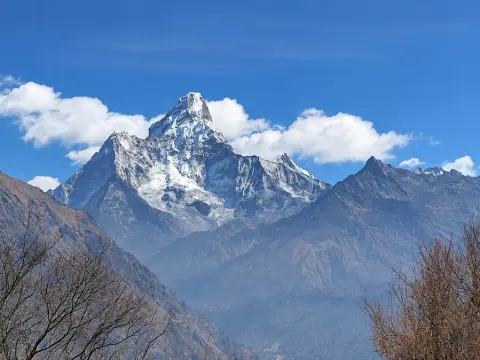
Discover the best treks in Nepal in December, including Everest Base Camp, winter weather, itineraries, and essential trekking tips.
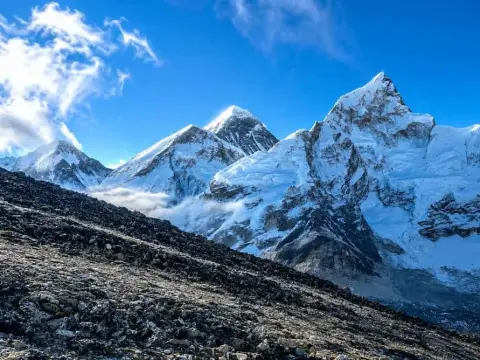
Is Kala Patthar worth the climb? Discover stunning Everest sunrise views, altitude challenges, and trekking tips.



